Can Your Daily Sudoku Habit Help Make You Smarter?

Sudoku has firmly established itself as one of the most celebrated and enduring puzzle games in modern culture. Found on smartphone screens, dedicated gaming websites, and the back pages of morning newspapers worldwide, its minimalist grid of numbers draws in millions of solvers daily. In the United States alone, an estimated 100 million people solve Sudoku regularly, and more than half of the national population has attempted a puzzle at least once. With a virtually infinite catalog boasting more than 1 billion distinct puzzle configurations, players can spend a lifetime tackling unique challenges without ever encountering the exact same layout twice.
Because the game revolves around structured numbers and demands rigorous concentration, players often associate the habit with high-level intellect. This persistent reputation raises an intriguing scientific question: does dedicating time to a daily Sudoku grid actually make you smarter, or does it simply make you exceptionally good at solving Sudoku? Delving into recent cognitive research reveals a nuanced picture, showing that while puzzle-solving is not a magic shortcut to a higher general intelligence quotient, it delivers tangible benefits for mental speed, working memory, and day-to-day cognitive resilience.
Key takeaways
- Large-scale research demonstrates that regular number-puzzle solvers over age 50 maintain cognitive performance matching individuals nearly a decade younger.
- Controlled laboratory trials show that practicing puzzles does not automatically raise overall IQ test scores or expand broad general intelligence.
- Sudoku actively engages working memory, attention to detail, and deductive reasoning without requiring any mathematical or arithmetic calculations.
- Completing a puzzle stimulates positive brain chemistry, offering a regular sense of accomplishment and improved daily focus.
- Cognitive health thrives most when daily puzzle habits are paired with adequate sleep, balanced nutrition, physical exercise, and lifelong learning.
The Origins and Structural Mechanics of Sudoku
Although Sudoku feels like a thoroughly modern digital pastime, the conceptual framework behind the game dates back to the late 19th century. Following its early origins, the game experienced a protracted dormant period where it remained largely unnoticed on the global stage. It was not until the late 1990s that Sudoku experienced an explosive international resurgence, quickly transforming into a staple of daily mental routines across multiple generations.
At first glance, the game appears deceptively straightforward. A standard Sudoku layout consists of a 9x9 framework partitioned into nine distinct 3x3 subgrids. The solver's goal is to populate every empty space with numbers ranging from 1 through 9. The critical restriction is that no digit may appear more than once within any single horizontal row, vertical column, or bounded 3x3 internal box. Because the board begins with several pre-placed numbers, the solver must work backward from these fixed clues to systematically deduce the only valid position for each remaining digit.
Because the puzzle is built entirely with numerical symbols, beginners frequently mistake it for a complex arithmetic test. In practice, mathematics plays no role in finding the solution. The digits 1 through 9 are simply arbitrary distinct markers; letters of the alphabet, distinct geometric shapes, or colored symbols could serve the exact same purpose without changing the rules. Solving a board requires deductive logic and process-of-elimination reasoning, training the brain to analyze complex conditions rather than crunch numbers.
The Scientific Debate: Can Daily Puzzles Expand Human Intelligence?
The relationship between daily brain games and improved mental faculties has sparked intense curiosity within the scientific community. Neuroscientists and geriatric researchers have investigated whether working through logic grids produces transferable mental benefits or merely develops a narrow, task-specific skill. The resulting literature offers compelling insights from two contrasting analytical angles.
One of the most comprehensive investigations into puzzle-solving was published in the International Journal of Geriatric Psychiatry. Led by Dr. Anne Corbett, the study examined an expansive cohort of more than 19,000 participants aged 50 to 93. Researchers tracked participants' puzzle habits alongside their performance across various standardized cognitive evaluations. The findings were remarkably striking: older adults who engaged with word and number puzzles on a daily basis demonstrated cognitive capabilities typical of individuals nearly ten years younger than their chronological age.
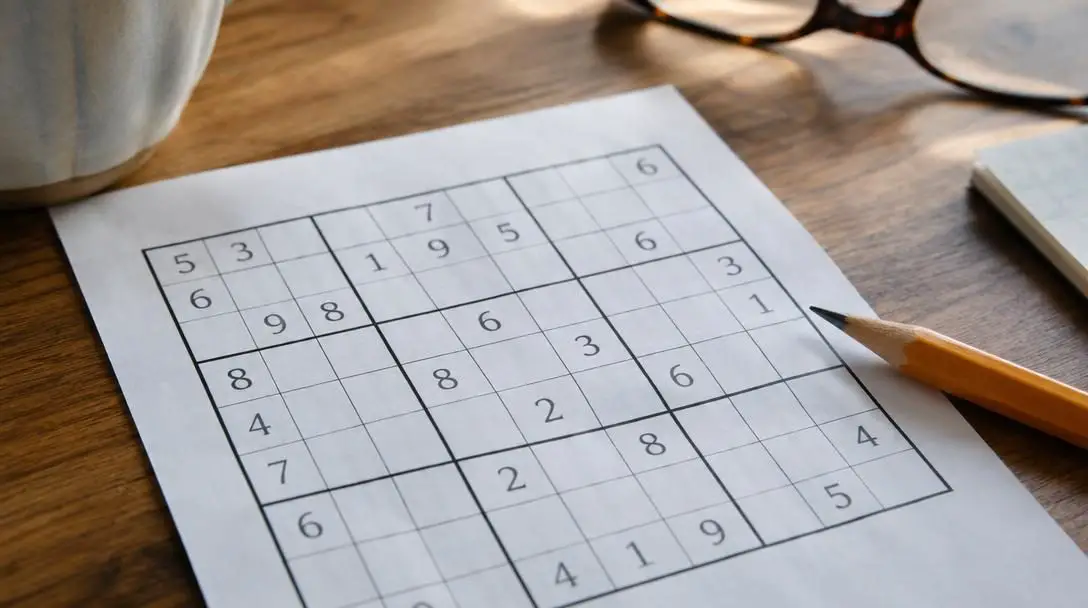
While solving logic grids cannot miraculously inflate an IQ score, keeping your mind systematically challenged helps preserve the cognitive speed and accuracy that define everyday mental agility.
Dr. Anne Corbett highlighted that these cognitive dividends were especially pronounced in the speed and precision with which participants handled information processing. In select cognitive areas, the performance improvements were substantial. However, Dr. Corbett maintained appropriate scientific caution regarding chronic degenerative illnesses, pointing out that researchers cannot state that playing puzzles directly prevents or reduces the risk of dementia in later life. Even so, the study provided powerful confirmation that consistent engagement with number puzzles helps keep our cognitive architecture functioning at a higher level for longer.
Conversely, a distinct study conducted at Western University in London, Ontario, Canada, offered a skeptical counterpoint regarding general intelligence. Led by author Bobby Stojanoski, the Western University study examined whether intensive puzzle practice produced measurable transfers to overall cognitive capacity. Working with a focused group of just over 70 participants over a 20-day timeframe, researchers split subjects into two cohorts. One group completed 13 full hours of puzzle training, including Sudoku, while the control group engaged in no puzzle games. Both groups underwent comprehensive IQ testing immediately before and after the trial period.
When the results were tabulated, the puzzle-trained group showed no noticeable increase in overall IQ scores compared to the control group. Bobby Stojanoski noted that researchers had tested the hypothesis that deliberate, repetitive practice on specific puzzle mechanics might transfer broader cognitive improvements to unrelated tests. Ultimately, the data offered no evidence to validate that transfer. Rather than viewing puzzle apps as a comprehensive shortcut to higher intelligence, Stojanoski emphasized that individuals seeking genuine cognitive vitality should prioritize foundational lifestyle factors, such as prioritizing restorative sleep, maintaining consistent exercise, adopting nutritious diets, and pursuing ongoing formal or informal education.
| Research Study | Participant Scale | Duration & Focus | Primary Cognitive Finding |
|---|---|---|---|
| International Journal of Geriatric Psychiatry (Dr. Anne Corbett) | Over 19,000 volunteers (ages 50–93) | Long-term daily engagement with word and number puzzles | Participants showed cognitive function nearly a decade younger, with clear gains in processing speed and accuracy. |
| Western University Study (Bobby Stojanoski) | Just over 70 participants | 20 days; 13 total hours of puzzle gameplay vs. control group | No noticeable change in standard IQ test scores, indicating lack of transfer to generalized intelligence. |
How Sudoku Directly Exercises the Brain
Even though targeted puzzle play will not magically inflate standard IQ scores, daily engagement with Sudoku provides a rigorous workout for essential neurological functions. Solvers do not need to wait until middle age or retirement to reap these cognitive rewards; the mental mechanics required to crack a difficult grid activate several core cognitive networks at any age.
The primary faculty exercised during Sudoku is working memory. To determine whether a particular digit belongs in an open square, your mind must temporarily hold multiple pieces of spatial and numerical data at once. You must track which numbers already occupy the intersecting horizontal row, assess the contents of the vertical column, and cross-reference the remaining possibilities inside the local 3x3 box. This continuous cycle of storing, updating, and discarding information strengthens working memory pathways and sharpens short-term retention.
Furthermore, regular solvers demonstrate noticeably higher levels of concentration. Because a single misplaced digit can silently disrupt an entire board, Sudoku penalizes careless oversights and demands prolonged, undivided attention. In an era dominated by rapid media consumption and persistent digital notifications, sitting quietly with a logical problem trains your brain to sustain deep, uninterrupted focus on a complex system.

Beyond analytical mechanics, Sudoku provides measurable psychological benefits. The rhythmic process of discovering hidden patterns, testing possibilities, and reaching a definitive logical deduction encourages the brain to release positive neurochemicals associated with satisfaction and focus. The act of completing the final square offers a clean, undeniable victory. That small moment of mastery provides a genuine mood boost, transforming an ordinary break in the day into an empowering mental reset.
How to Build a Sustainable Daily Sudoku Routine
Integrating a consistent puzzle habit into your daily schedule is an accessible way to support memory, refine your focus, and enjoy a reliable mental workout. Establishing a clear, structured routine ensures the practice remains both challenging and mentally rejuvenating.
- Select your preferred puzzle medium. Determine whether you prefer solving tactile puzzles printed on paper—such as those in a morning newspaper or a dedicated paperback puzzle anthology—or using an interactive mobile app or computer interface.
- Establish a dedicated daily time slot. Set aside a calm window of 10 to 20 minutes each day, such as during your morning coffee or right after finishing work, ensuring you can focus on the board without external interruptions.
- Reinforce the fundamental constraints. Before placing your first entry, mentally review the core premise: each row, column, and 3x3 block must contain every number from 1 to 9 without any duplicate values.
- Scan the grid systematically by number. Rather than staring haphazardly at the entire board, focus your attention on a single digit at a time. Trace where that digit already appears across adjacent rows, columns, and boxes to uncover obvious open placements.
- Utilize light pencil marks or candidate notes. When a cell has only two or three potential answers, record small candidate notes in the corner of the square to reduce unnecessary cognitive strain and safeguard your working memory.
- Pause to appreciate each completed board. After placing the final number, take a moment to absorb the sense of accomplishment, acknowledging the structured mental exercise you provided your brain.
Common Solving Pitfalls to Avoid
Approaching Sudoku without an organized strategy can quickly produce frustration, turning what should be a stimulating mental exercise into an aggravating chore. Staying mindful of common mistakes will keep your daily puzzle sessions enjoyable, productive, and mentally beneficial.
- Guessing instead of deducing: Sudoku is fundamentally a puzzle of absolute certainty. Placing a number based on intuition rather than logical deduction creates hidden errors that inevitably break the board several steps later.
- Ignoring the internal 3x3 subgrid boundaries: Solvers frequently develop tunnel vision, focusing exclusively on balancing long rows and columns while failing to track constraints inside the bounded 3x3 boxes.
- Rushing through simple placements: Attempting to fill in numbers too quickly leads to careless duplicate entries, ruining an otherwise sound logical progression and undermining the game's focus benefits.
- Fixating on a single stubborn square: Staring endlessly at an unyielding cell drains mental energy. When progress stalls, shifting your gaze to a completely different quadrant almost always reveals fresh clues.
- Attempting overly punitive difficulty levels too early: Tackling master-level grids before mastering intermediate deduction techniques causes discouragement and strips away the motivating sense of accomplishment.
- Viewing puzzles as a substitute for total wellness: Treating Sudoku as an isolated guarantee against mental decline ignores the foundational biological habits necessary for lifelong neurological health.
Integrating Puzzles into a Broader Brain-Health Lifestyle
To extract the greatest value from your daily Sudoku practice, it is crucial to position the game within a comprehensive framework of overall wellness. As cognitive scientist Bobby Stojanoski noted during the Western University study, specialized mental games cannot replace the broad physical pillars that preserve human brain function over time.
True cognitive longevity requires combining intellectual puzzles with physical exercise, which promotes cerebral blood flow and encourages the generation of new neural connections. Similarly, prioritizing seven to eight hours of quality sleep each night allows the brain to clear metabolic waste products and consolidate memories formed throughout the day. When paired with a nutrient-rich diet and a genuine commitment to lifelong education, solving a daily Sudoku puzzle serves as an ideal, engaging catalyst for maintaining sharp mental focus and agile deductive reasoning.
Frequently asked questions
Do I need to be good at math to play Sudoku?
No mathematical skills or arithmetic calculations are needed to solve Sudoku. The game relies entirely on deductive logic and structural reasoning, using numbers simply as distinct symbols to fill rows, columns, and subgrids without repetition.
Can solving daily Sudoku puzzles prevent dementia?
Scientific researchers, including Dr. Anne Corbett, clarify that studies cannot confirm puzzle-solving directly prevents or lowers the risk of dementia. However, regular puzzle practice helps keep cognitive faculties working better, faster, and more accurately as people age.
Why did the Western University study conclude Sudoku does not raise IQ?
The Western University study revealed that while participants became proficient at the puzzle games they practiced, those skills did not transfer to generalized cognitive tests. IQ measures broad mental capacity, which does not shift based on playing specific puzzle games alone.
How many unique Sudoku puzzles exist?
There are more than 1 billion distinct Sudoku puzzle configurations possible, ensuring that players have access to a virtually limitless variety of challenges without repeating identical grids.
What lifestyle habits should accompany a daily puzzle routine?
To support long-term cognitive vitality, researchers recommend pairing puzzle solving with regular physical exercise, restorative sleep, balanced nutrition, and continuous participation in learning and education.
The Bottom Line
Sudoku may not deliver a higher IQ score, but calling it a simple waste of time ignores the substantial cognitive and emotional benefits demonstrated by real-world research. Engaging daily with a 9x9 grid sharpens working memory, hones attention span, and reinforces systematic logical thinking. When woven into an active lifestyle characterized by good sleep, balanced nutrition, and physical activity, your daily Sudoku habit serves as a delightful, accessible, and rewarding discipline that keeps your mind engaged and resilient every day.