Comic Book Crossovers: The Good, The Bad, and The Ugly
Comic book crossovers have remained a defining fixture of the sequential art industry for decades. By drawing characters out of their native continuities, ongoing series, or entirely separate publishing stables to inhabit the same panels, these events offer readers the singular thrill of seeing distinct worlds collide. What began in the industry's early eras as straightforward guest appearances has gradually transformed into massive, high-stakes multimedia publishing spectacles designed to drive community engagement and expand readership.
Yet bringing disparate mythologies under a single narrative banner is a notoriously delicate balancing act. When two creative universes merge, creative teams must maintain the integrity of both properties while justifying the logistics of the event. Some creative teams achieve a legendary balance of action, theme, and tone, while others collapse under manufactured conflict, tonal dissonance, and poor execution.
Key takeaways
- Successful comic crossovers balance distinct narrative tones while treating both participating universes with equal creative respect.
- Forced inter-team hostilities that lack foundational emotional motivations inevitably alienate dedicated readers.
- Technical mechanics like art unification, power-level balancing, and inter-company rights management govern a project's behind-the-scenes feasibility.
- Revisiting inherently flawed crossover premises without introducing fresh narrative depth typically reproduces previous creative failures.
At a glance: Notable crossovers examined
To see how different creative combinations fare under pressure, it helps to examine how historical projects across major publishers were received.
| Event Title | Release Year | Participating Entities | Assessment | Primary Focus or Catalyst |
|---|---|---|---|---|
| Marvel vs. DC | 1996 | Marvel Comics and DC Comics | The Good | Major hero clashes across distinct company rosters |
| Batman/Teenage Mutant Ninja Turtles | 2015 | DC Comics and IDW Publishing | The Good | Shared martial arts traditions and iconic villains |
| Archie Meets Punisher | 1994 | Archie Comics and Marvel Comics | The Bad | A mismatched clash of wholesome teen comedy and vigilante violence |
| X-Men/Fantastic Four | 1987 | Marvel Comics (Intra-company) | The Bad | A contrived custodial conflict over young Franklin Richards |
| Superman/Aliens | 1995 | DC Comics and Dark Horse Comics | The Ugly | Extraterrestrial horror undermined by sluggish narrative pacing |
| Punisher/Archie Redux | 2018 | Archie Comics and Marvel Comics | The Ugly | A derivative retread that repeated earlier tonal blunders |
The good: Crossovers that respected their worlds
When an inter-company event succeeds, it does not simply drop characters into an arena for superficial spectacle. Instead, it weaves a cohesive narrative that honors the rich traditions of both participating properties, allowing the distinct personalities of the cast to shine against unfamiliar backdrops.
Marvel vs. DC (1996)
- Release Year: 1996
- Publishers: Marvel Comics and DC Comics
- Key Matchups: Spider-Man vs. Superboy, Wolverine vs. Lobo, Batman vs. Captain America
As one of the most ambitious undertakings in sequential art history, Marvel vs. DC achieved what many industry observers considered impossible: bringing the flagship icons of two rival publishing powerhouses into direct conflict without compromising their core characteristics. Rather than allowing one company's storytelling philosophy to overshadow the other, the narrative established an editorial symmetry that pleased both factions of the divided comic book fandom.
The project tackled long-debated playground matchups directly. Readers were treated to head-to-head confrontations like Spider-Man taking on Superboy, Wolverine crossing blades with Lobo, and Batman testing tactical wits against Captain America. By giving genuine weight to each confrontation and weaving them into an expansive narrative framework, the creative teams delivered a memorable event that validated decades of reader speculation while honoring both companies' publishing legacies.
Batman/Teenage Mutant Ninja Turtles (2015)
- Release Year: 2015
- Publishers: DC Comics and IDW Publishing
- Primary Antagonists: Shredder and Ra's al Ghul
- Setting: Gotham City
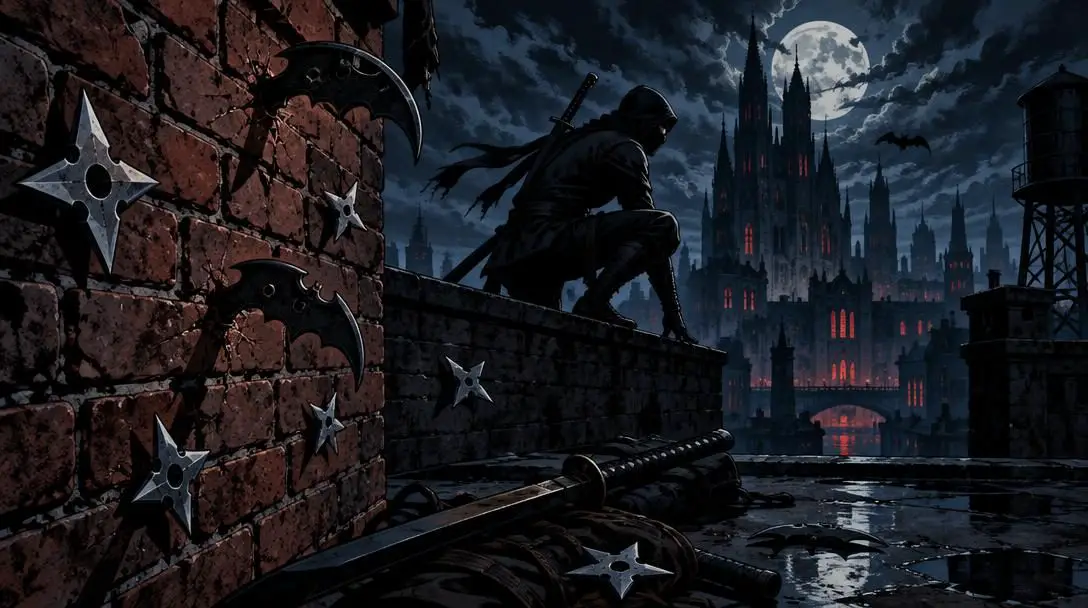
On paper, pairing the gritty gothic realism of Gotham City with anthropomorphic martial artist reptiles sounds like a recipe for a disjointed novelty book. In execution, however, Batman/Teenage Mutant Ninja Turtles emerged as a standout modern crossover. The narrative transported the four brothers into Gotham, where they teamed up with the Dark Knight to dismantle a joint threat orchestrated by Shredder and Ra's al Ghul.
What allowed this pairing to flourish was the recognition of deep thematic overlap. By focusing heavily on the ninjutsu heritage and rigorous martial arts discipline fundamental to both properties, the creators established an organic kinship between the characters. Watching the Turtles navigate Batman's iconic rogues gallery provided authentic narrative energy rather than empty fan service, elevating the mini-series well past its surface-level novelty.
The bad: Clashing tones and forced conflict
A crossover can stumble even with celebrated properties on the marquee if the creative direction lacks narrative cohesion. When publishers construct unnatural conflicts or force irreconcilable tones together without a bridge, the resulting story feels jarring and artificial.
Archie Meets Punisher (1994)
- Release Year: 1994
- Publishers: Archie Comics and Marvel Comics
- Tone Conflict: Wholesome teenage comedy vs. gritty vigilantism
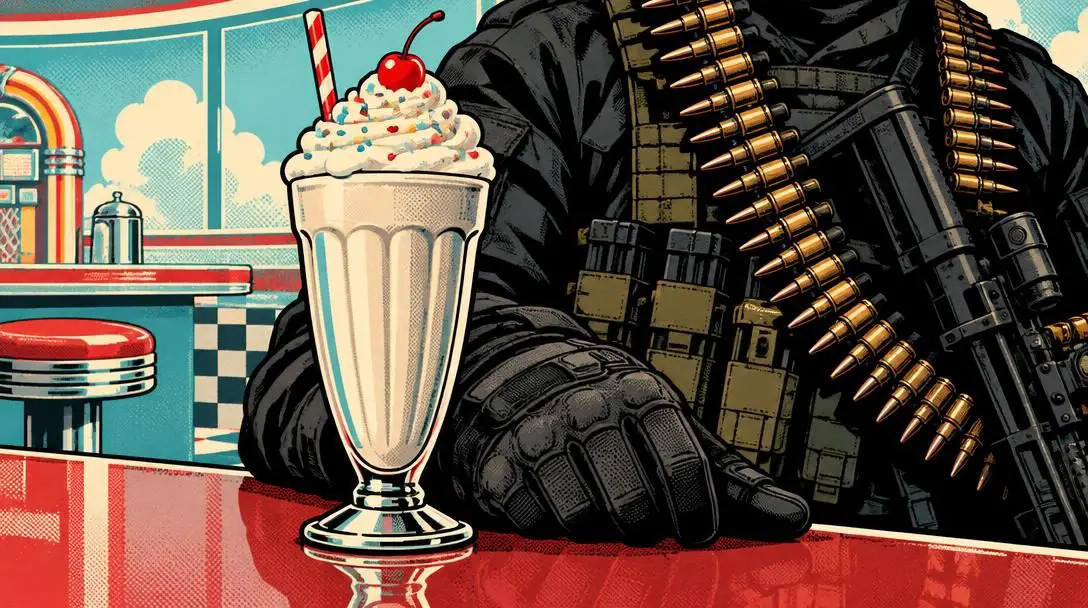
Perhaps no comic project illustrates tonal dissonance quite like Archie Meets Punisher. The one-shot placed Marvel's ruthless, heavily armed vigilante directly into the pastel, milkshake-sipping environment of Riverdale. The narrative continually struggled to determine what it wanted to be, wavering haphazardly between high school comedy, genuine street-level action, and awkward parody.
Because the project failed to develop a unified creative voice, readers on both sides were left stranded. The Punisher's trademark violence felt sanitized and out of place, while the wholesome innocence of Archie's supporting cast was compromised by the intrusion of lethal weapons and organized crime. Without an underlying tonal anchor, the book became an oddity that alienated readers seeking either genuine superhero action or classic Riverdale antics.
X-Men/Fantastic Four: The 1987 Annuals
- Release Year: 1987
- Publisher: Marvel Comics
- Central Focus: Franklin Richards custody dispute
- Format: Annual tie-in event
Even intra-company crossovers taking place within the exact same shared universe can fall prey to bad storytelling habits. The X-Men/Fantastic Four 1987 annuals crossover remains infamous because the central hostility between the two legendary superhero teams felt completely hollow. The plot pitted Marvel's first family against the mutant heroes in an escalating dispute over whether young Franklin Richards, the son of Reed Richards and Sue Storm, should remain with his parents or train alongside the X-Men.
Rather than crafting an ideological rift rooted in character growth, the script forced both teams into immediate, uncharacteristic hostility purely to generate mandatory battle sequences. Readers quickly recognized that the emotional stakes were artificially inflated to serve the editorial mandate for a crossover, undermining the established intelligence and maturity of both rosters.
Forced disputes that contradict established character traits solely to trigger action scenes will inevitably alienate discerning readers.
The ugly: Missed potential and unnecessary retreads
At the lowest end of the spectrum sit the crossovers that squander fascinating premises through poor mechanical execution, or those that double down on past creative failures without learning from prior mistakes.
Superman/Aliens (1995)
- Release Year: 1995
- Publishers: DC Comics and Dark Horse Comics
- Antagonists: Xenomorphs
The concept of placing the Man of Steel against H.R. Giger's terrifying extraterrestrial creations had remarkable storytelling promise. Superman/Aliens could have generated profound narrative tension by testing an omnipotent moral paragon against an unreasoning, parasitic biological nightmare. Instead, the final product proved to be a muddled, sluggish misfire that failed to capitalize on the horror elements of the Alien franchise.
The creative execution suffered from lethargic pacing and visual storytelling that lacked dynamic tension. By sidelining the visceral atmospheric terror that made the Xenomorphs cinematic icons, the miniseries reduced an apocalyptic premise to an uninspired, forgettable adventure.
Punisher/Archie Redux (2018)
- Release Year: 2018
- Publishers: Archie Comics and Marvel Comics
- Context: Follow-up published nearly 25 years after the original
If the original 1994 meeting between the Riverdale gang and Frank Castle proved that the two properties lived on entirely different creative wavelengths, Punisher/Archie Redux proved that revisiting an unworkable idea rarely improves it. Arriving nearly a quarter-century after the first meeting, the project failed to provide any fresh creative justification for pairing the characters together once more.
Riddled with clunky dialogue and jokes that consistently missed their mark, the 2018 release lacked novelty and narrative substance. By repeating the structural missteps of the initial project without updating the conceptual framing or offering self-aware depth, the book served as an unnecessary reminder of why the initial pairing was flawed in the first place.
How comic book crossovers work behind the scenes
To appreciate why some crossovers read seamlessly while others disintegrate into disjointed chaos, it is essential to understand the complex operational logistics required to bring these books to retail shelves. Producing an inter-company event demands coordination across distinct corporate and creative ecosystems.
First, publishing and rights coordination requires legal teams to construct explicit agreements regarding intellectual property management, distribution revenue, royalty sharing, and creative oversight. Editors must continually negotiate to ensure their company's characters are not diminished or permanently altered by rival creative teams.
Next comes story integration and scaffolding, where writers must engineer an inciting incident that brings the casts together. Whether using inter-dimensional rifts, temporal displacement, or newly discovered shared geography, the mechanism must provide a plausible context for the narrative.
Additionally, creative teams must tackle balancing power levels and abilities. When bringing godlike beings into the same panels as street-level vigilantes, writers must craft scenarios where every hero contributes meaningfully without stretching credibility.
Finally, visual teams must navigate unifying contrasting art styles so that characters originally drawn with wildly different aesthetics look natural alongside one another, all while maintaining editorial alignment to protect established continuities.
How to approach reading crossover storylines
Approaching a vast library of comic crossover storylines can be daunting. Following a methodical reading process ensures you invest your time in structurally sound, satisfying stories rather than commercial misfires.
- Identify the crossover classification: Determine whether the storyline is an intra-company event occurring within a unified continuity (such as Marvel or DC) or an inter-company crossover bridging entirely distinct corporate entities.
- Familiarize yourself with baseline lore: Review the core motivations, standard supporting casts, and power sets of the headlining characters before opening the book to understand where the crossover deviates from standard continuity.
- Establish the correct reading sequence: Crossovers often span standalone miniseries, core series tie-ins, and one-shot annuals. Verify the chronological reading order in advance to prevent confusion.
- Assess tonal compatibility: Ask yourself whether the fundamental genres and tones of the featured properties possess enough common ground to support a unified story without excessive tonal whiplash.
- Locate complete collected editions: Seek out comprehensive trade paperbacks or hardcovers that compile all relevant issues and tie-ins in proper narrative sequence, avoiding the frustration of tracking down disparate single issues.
Pitfalls that derail collaborative storylines
The comic industry's extensive catalog of shared events reveals recurring storytelling errors that regularly compromise otherwise promising books. Writers and editors consistently risk stumbling into specific traps:
- Relying on novelty over plot: Treating the simple visual presence of two iconic characters sharing a panel as a substitute for meaningful character arcs and structured plotting.
- Manufacturing artificial misunderstandings: Forcing allied heroes to exchange blows over flimsy miscommunications that contradict their standard intelligence and experience.
- Imposing tonal extremes without mediation: Merging grim, violent themes with lighthearted, comedic worlds without constructing a narrative bridge to smooth the transition.
- Showing clear corporate favoritism: Granting one publisher's roster the most impressive triumphs while relegating the co-starring cast to secondary roles or humiliation.
- Compromising pacing and visual consistency: Allowing sluggish plot progression or mismatched illustration styles to sap visual energy from dynamic concepts.
- Resurrecting unworkable pairing concepts: Reissuing failed crossover concepts under the guise of nostalgia without addressing the foundational narrative flaws of the original run.
Frequently asked questions
What is the difference between an intra-company and an inter-company crossover?
An intra-company crossover features characters owned by the same publisher sharing a storyline across different series, such as the X-Men meeting the Fantastic Four. An inter-company crossover involves characters owned by distinct, often competing publishers, such as Marvel and DC collaborating to have Spider-Man meet Superboy.
Why did the 1996 Marvel vs. DC event succeed with readers?
The event succeeded because the creative teams struck a careful editorial balance that respected both publishers equally. Instead of letting one company's storytelling dominate, the miniseries delivered classic matchups like Wolverine versus Lobo and Batman versus Captain America while maintaining narrative coherence.
What caused the Archie and Punisher crossover to stumble?
The project faltered primarily due to severe tonal whiplash. The story struggled to reconcile the lighthearted, wholesome teenage comedy of Riverdale with the brutal, gun-toting vigilantism of the Punisher, resulting in an unfocused narrative that satisfied neither fanbase.
Why was the conflict in the 1987 X-Men and Fantastic Four Annuals criticized?
Critics and fans found the conflict contrived because the battle over young Franklin Richards lacked genuine emotional justification. The dispute felt artificially engineered by writers simply to fulfill the requirement for a superhero battle rather than emerging organically from character motivations.
How do creative teams reconcile different power levels in crossover battles?
Writers balance abilities by designing specific scenarios, environmental conditions, or plot-driven handicaps so that street-level characters can operate alongside godlike heroes without stretching narrative credibility or rendering human-level heroes irrelevant.
The bottom line
Comic book crossovers represent the sequential art medium at its most ambitious and volatile. When executed with precision, an event comic honors decades of lore while delivering the unmatched thrill of seeing legendary universes collide. The difference between an enduring classic and an embarrassing footnote comes down to creative intentionality. Memorable crossovers respect the distinct identities of their characters, derive conflict from authentic motivations, and weave collaborative storytelling that stands up long after the initial novelty fades.