Fun and Creative Science Experiments You Can Do at Home
Many children struggle to develop an interest in science when concepts are confined to textbook diagrams, abstract equations, and multiple-choice tests. The underlying mechanics of chemical reactions, natural atmospheric cycles, and physical densities can feel distant from everyday life without direct sensory involvement. Bringing science off the chalkboard and into the home transforms these theoretical ideas into lively, tangible experiences that spark natural curiosity and develop critical observation skills.
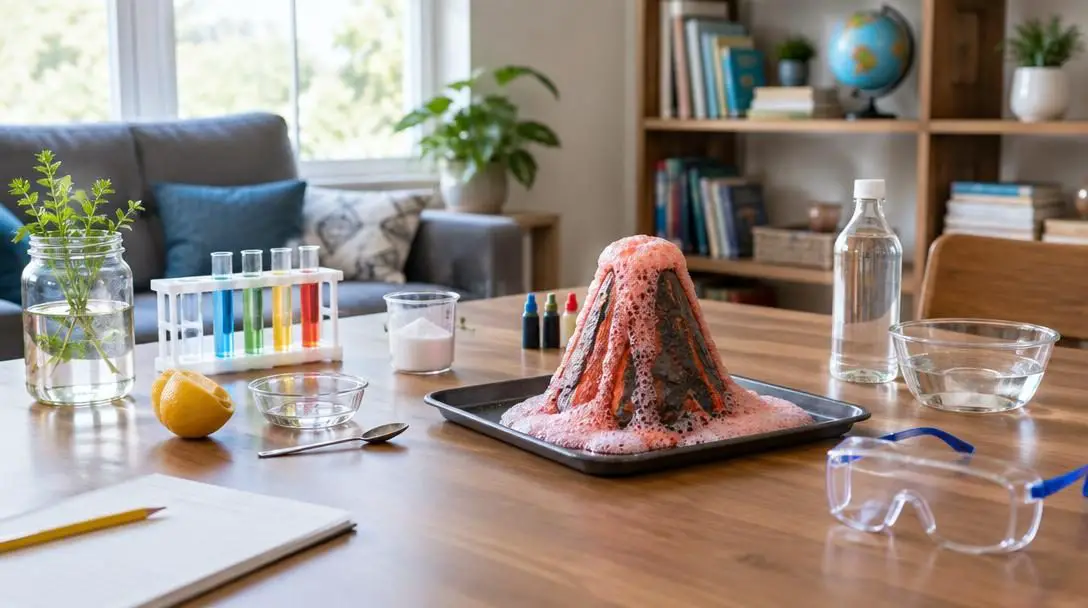
Everyday domestic spaces can easily become temporary research stations using accessible grocery items and standard kitchen utensils. By engaging in tactile projects such as erupting model volcanoes, generating foaming columns of foam, crafting tabletop lava lamps, revealing hidden messages, and bottling the atmospheric water cycle, families can bridge academic lessons with memorable entertainment. Exploring the scientific principles behind these five classic demonstrations shows that science is happening all around us.
Key takeaways
- Familiar kitchen supplies can reliably demonstrate foundational principles of chemistry, physics, and meteorology without expensive lab equipment.
- Gas production, chemical catalysts, liquid densities, and thermal oxidation drive the immediate, visible transformations in these home experiments.
- Adhering to basic safety practices, such as wearing eye protection and managing work zones with trays, prevents spills and keeps activities enjoyable.
- Simple procedural adjustments, like testing reactant temperatures or recording observations in a notebook, introduce children to formal scientific inquiry.
At a glance: Household science projects compared
| Project | Primary Science Concept | Key Reactants & Materials | Reaction Mechanism | Work Area Setting |
|---|---|---|---|---|
| The Classic Erupting Volcano | Acid-base neutralization | Baking soda, vinegar, dish dye | Carbonic acid yields carbon dioxide gas | Outdoors or deep rimmed tray |
| Elephant Toothpaste | Catalytic decomposition | 20-volume hydrogen peroxide, dry yeast, dish soap | Catalyst accelerates rapid oxygen release | Washable basin or outdoor ground |
| Homemade Lava Lamp | Density & immiscibility | Water, vegetable oil, fizzy tablet, food coloring | Gas bubbles temporarily alter droplet density | Flat, stable tabletop surface |
| Invisible Ink Messages | Thermal oxidation | Lemon juice, water, paper, lamp bulb | Heat breaks down and darkens carbon compounds | Desk near an active electric lamp |
| Water Cycle in a Sealed Bag | Hydrologic phase changes | Plastic storage bag, water, permanent marker | Solar energy drives evaporation and condensation | Bright, sunny window pane |
Step-by-step household science demonstrations
Executing domestic science activities successfully requires an appreciation of the invisible mechanics at work alongside precise step-by-step execution. Each of the following five projects features a distinct scientific phenomenon that can be brought to life on kitchen counters or patio tables.
The Classic Erupting Volcano
- Scientific principle: Acid-base neutralization
- Gas produced: Carbon dioxide
- Primary reactants: Baking soda and vinegar
- Protective gear: Safety glasses
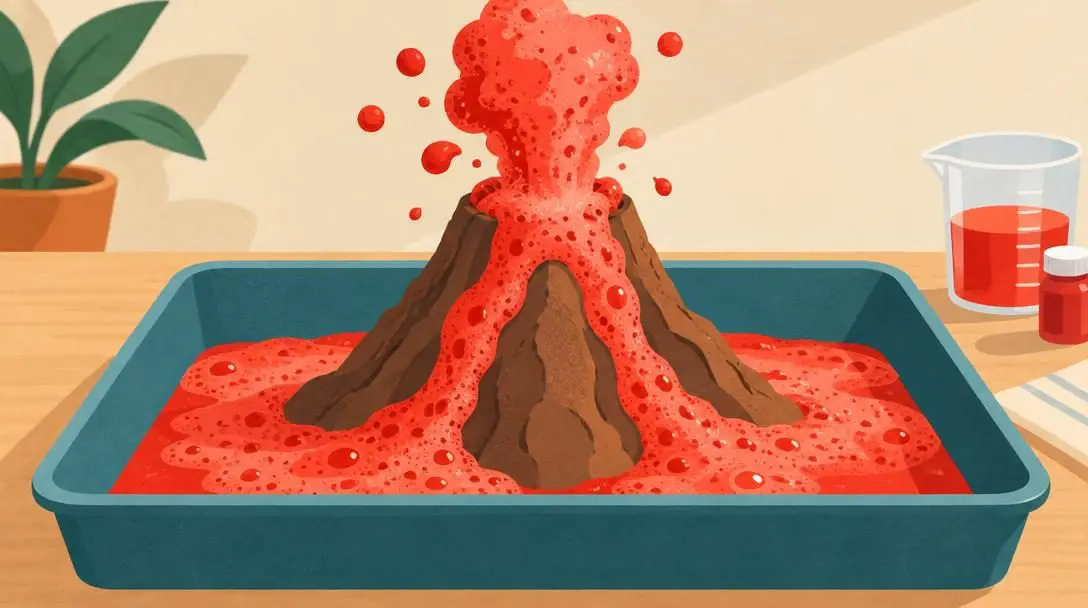
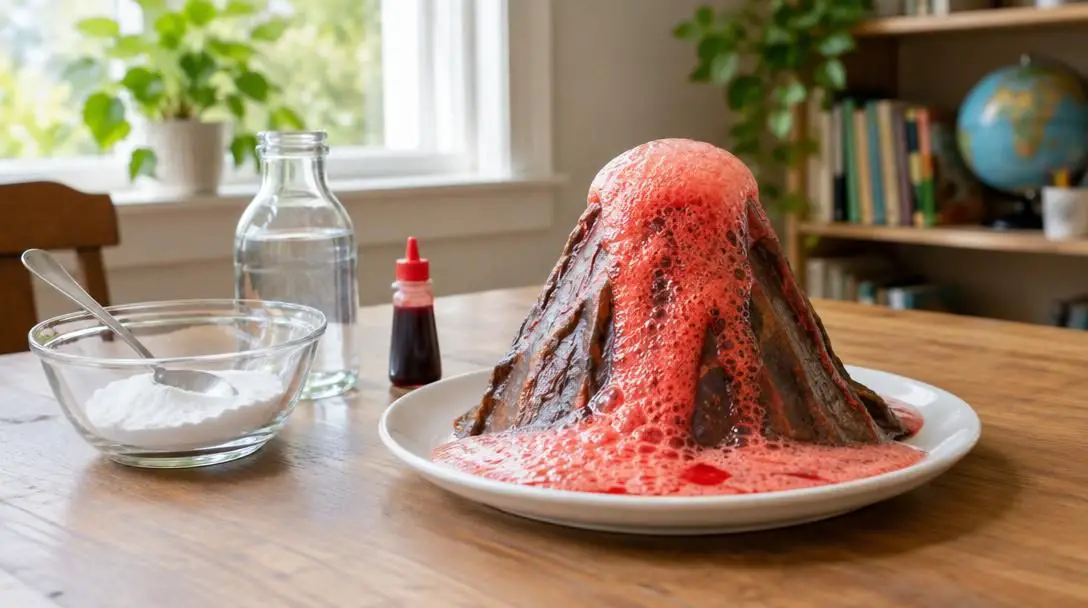
The miniature volcano is an enduring classic that demonstrates an acid-base neutralization reaction. Vinegar contains acetic acid, whereas household baking soda is sodium bicarbonate, a base. When the two substances come into contact, they undergo a rapid two-step transformation: the initial acid-base reaction produces carbonic acid, which is inherently unstable. It instantly decomposes into water and rapidly expanding carbon dioxide gas. Trapped inside the narrow neck of your volcano vessel, this sudden volume of gas propels liquid upward in a vigorous, frothy display.
- Select an outdoor space, deep rimmed tray, or an easily sanitized workspace, and put on protective safety glasses.
- Shape a mountain structure around a small plastic container or empty soda bottle using playdoh, ceramic molding materials, or other safe creative items.
- Spoon dry baking soda straight into the central opening of the bottle structure.
- In a separate cup, stir vinegar together with a generous squeeze of red food coloring to imitate molten lava.
- Pour the colored vinegar briskly into the central opening, step backward, and watch the foaming eruption bubble over the slopes.
Elephant Toothpaste
- Scientific principle: Catalytic decomposition
- Active catalyst: Dissolved dry yeast
- Core reagent: 20-volume hydrogen peroxide
- Foaming agent: Liquid dish soap
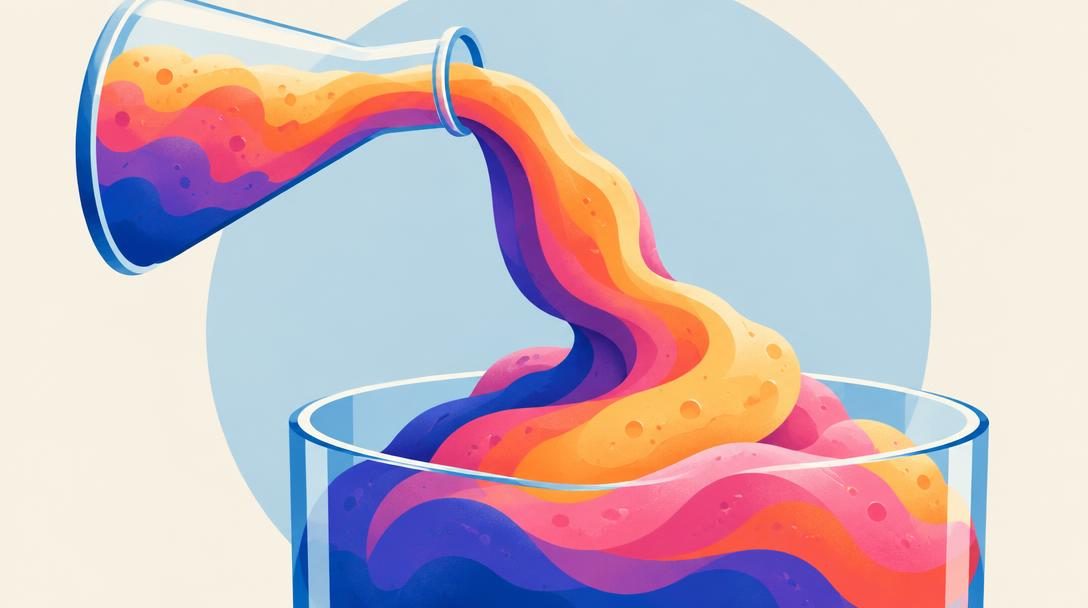
Elephant toothpaste produces a dramatic fountain of foam through catalytic decomposition. Hydrogen peroxide naturally breaks down into water and oxygen gas over time, but this transformation typically unfolds at an imperceptibly slow rate. Adding baker's yeast introduces a biological catalyst that accelerates this breakdown exponentially. Liquid dish soap incorporated into the hydrogen peroxide instantly traps the escaping oxygen gas, locking the surging molecules into millions of tiny, warm soap bubbles that erupt in a thick column resembling oversized toothpaste.
- Arrange an open plastic container inside a washable basin or on an outdoor surface, and put on protective safety goggles.
- Pour 20-volume hydrogen peroxide into the clean plastic container.
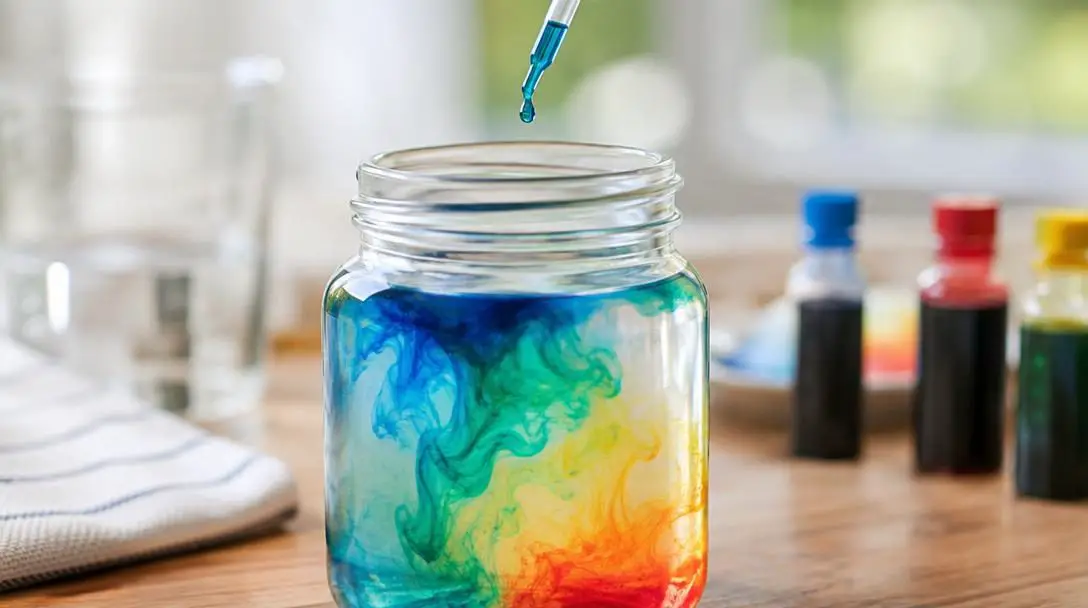
- Add a squirt of liquid dish soap and several drops of your chosen food coloring directly to the peroxide, swirling the container gently to blend them.
- In a separate small cup, mix dry yeast with warm water, stirring thoroughly until the yeast has dissolved completely.
- Allow the dissolved yeast solution to rest undisturbed for approximately 30 seconds.
- Pour the activated yeast liquid into the peroxide vessel and observe the dense column of warm foam burst out of the bottle.
Homemade Lava Lamp
- Scientific principle: Density and molecular polarity
- Immiscible fluids: Tap water and vegetable oil
- Gas generator: Fizzy effervescent tablet
- Optional enhancement: Handheld flashlight
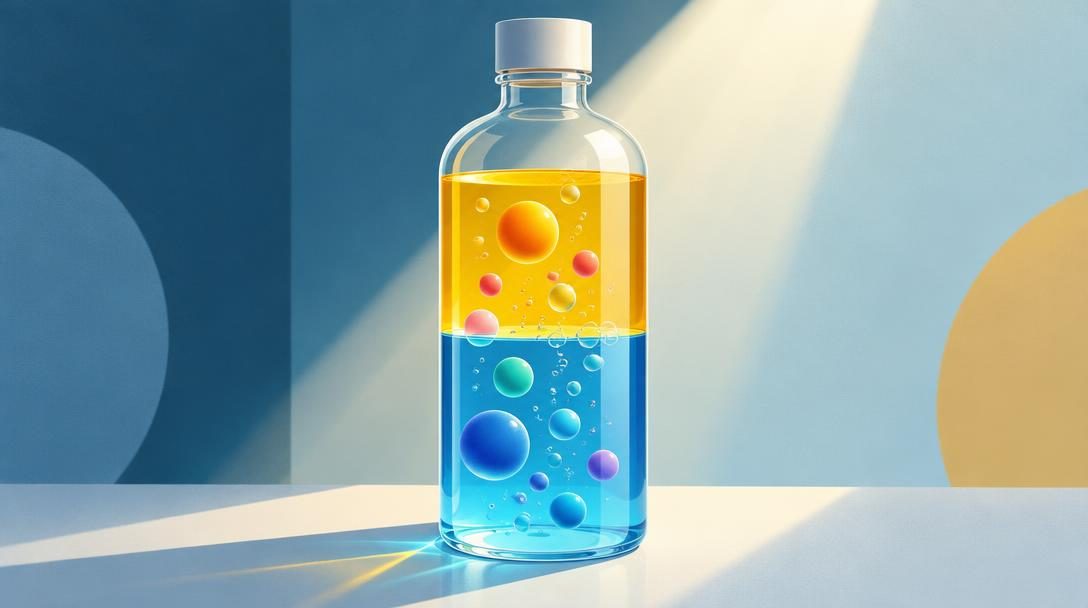
The tabletop lava lamp highlights two fundamental physical concepts: liquid density and molecular polarity. Water and vegetable oil cannot blend together because water molecules are polar while oil molecules are nonpolar. Furthermore, because water possesses a higher density than vegetable oil, it sinks directly to the base while the lighter oil rests smoothly on top. When a fizzy effervescent tablet dissolves in the bottom layer, it releases carbon dioxide bubbles that attach to the tinted water droplets. These aerated drops become temporarily lighter than the oil, floating to the surface. Once the bubbles burst into the open air, the colored water droplets regain their original density and sink back down.
- Place a clean, transparent plastic bottle or container upright on a sturdy, level surface.
- Fill the container approximately one-fourth full with clean tap water.
- Pour vegetable oil into the container until it is nearly full, leaving a small buffer of empty space at the rim.
- Allow the mixture to settle for several moments until the oil and water form two completely separate, distinct layers.
- Add several drops of liquid food coloring and watch them sink through the top oil layer to tint only the water underneath.
- Drop a fizzy tablet down into the liquid to trigger the undulating bubble cycle, illuminating the vessel from underneath with a flashlight if desired.
Transforming everyday household spaces into temporary testing grounds allows children to see that the rules governing physics, biology, and chemistry are present right where they live.
Invisible Ink Messages

- Scientific principle: Thermal oxidation of organic matter
- Application tool: Cotton bud
- Reagent base: Lemon juice diluted with water
- Development method: Heat from an active lamp
Writing concealed correspondence demonstrates the chemical process of thermal oxidation. Lemon juice consists of organic carbon compounds that dry down nearly clear when brushed lightly onto paper. Because these organic compounds possess a lower decomposition temperature than the cellulose fibers of the surrounding paper, applying gentle heat causes the dried citrus residues to break down and react with oxygen in the air. This oxidation turns the carbonaceous residue brown, exposing the hidden text while leaving the surrounding white sheet untouched.
- Squeeze a couple of tablespoons of lemon juice into a small shallow dish and stir in a few drops of tap water.
- Dip the end of a clean cotton bud into the lemon solution until the cotton fibers are thoroughly moistened.
- Draw a picture or print a message across a clean sheet of white paper, redipping the cotton bud whenever the tip runs dry.
- Allow the paper to dry completely at room temperature until the fluid vanishes entirely from view.
- Hold the dried paper close to the warm light bulb of an active electric lamp, allowing the heat to slowly warm the surface until the hidden markings turn brown.
Water Cycle in a Sealed Bag
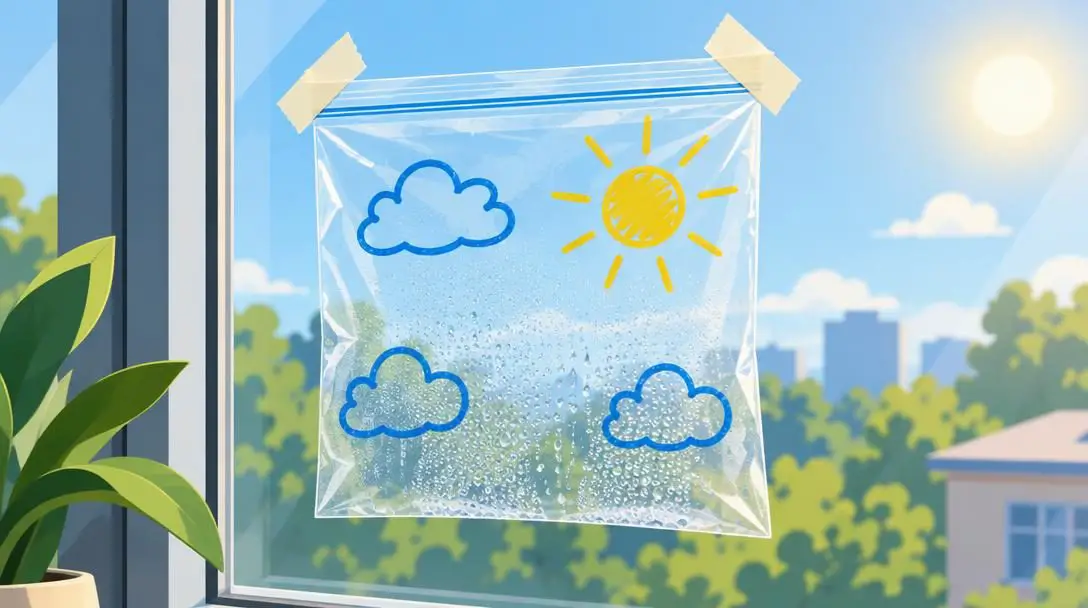
- Scientific principle: Hydrologic cycle phases
- Phases simulated: Evaporation, condensation, precipitation
- Primary equipment: Zip-topped clear plastic bag
- Energy source: Direct solar radiation
This simple window project builds a closed terrarium that mimics Earth's hydrologic cycle in miniature. Solar radiation striking the window transfers thermal energy through the plastic, heating the shallow pool of water sitting at the bottom of the bag. As the liquid absorbs warmth, evaporation transforms it into invisible water vapor that rises through the internal air pocket. When this humid air encounters the cooler plastic walls near the top of the bag, condensation occurs, turning the vapor into tiny liquid beads. As cooling continues, these beads merge, grow heavy, and fall down the walls as precipitation, replenishing the water reservoir below.
- Use permanent markers to draw decorative clouds, a shining sun, and water waves across the outside of a clear, zip-topped plastic storage bag.
- Pour a shallow measure of water into the bag so that it coats only the bottom edge.
- Use a marker to draw a clear line marking the exact starting water level.
- Press the zip-topped track completely shut to create an airtight seal that prevents air and moisture from escaping.
- Secure the sealed bag to a sunny window using strong tape, monitoring the interior over several hours to watch evaporation, cloud droplet condensation, and rainfall drops occur.
Mistakes to avoid when running home experiments
Even though kitchen science projects use common pantry staples, minor procedural missteps can diminish the visual results or produce unnecessary cleanup. Keeping these common pitfalls in mind will keep your demonstrations running smoothly:
- Neglecting protective gear: Foregoing safety glasses or goggles during dynamic activities like the volcano or elephant toothpaste risks splashing acidic vinegar or concentrated hydrogen peroxide into sensitive eyes.
- Using incorrect water temperatures for yeast: Pouring scalding water into dry baker's yeast destroys the delicate enzymes needed for catalysis, while chilled water leaves the yeast inactive, stalling foam production.
- Pouring ingredients out of sequence: When building the homemade lava lamp, pouring oil into the bottle before the water produces a cloudy, emulsified suspension; pouring water first guarantees a crisp, clear separation of layers.
- Overheating the invisible ink paper: Holding the paper too close to a scorching lamp bulb can singe the surrounding paper fibers before the carbonized lemon juice has a chance to gently brown.
- Failing to seal the water cycle bag: Leaving even a tiny gap along the zip-topped seam lets ambient humidity escape into the room, stopping the closed greenhouse condensation cycle from forming.
- Working without an outer perimeter: Forgetting to position deep trays or basins beneath bubbling displays can lead to dyed fluids and soapy froth overflowing onto furniture and floors.
Deepening the learning through scientific inquiry
Completing these five introductory projects provides an excellent baseline, but learning expands when children begin to test variables. Introducing controlled changes encourages young scientists to form hypotheses, execute comparative trials, and evaluate why variations occur.
One practical avenue for testing is measuring the influence of temperature on chemical reaction rates. In the classic volcano demonstration, families can compare chilled vinegar kept in the refrigerator against vinegar that has been warmed slightly on the counter. The resulting difference in eruption speed illustrates how thermal energy excites reacting molecules. Similarly, with the homemade lava lamp, you can compare the bubbling rate produced by a solid effervescent tablet against one crushed into a fine powder to investigate the role of surface area.
Young learners can also explore chemical variations in the invisible ink demonstration by testing other common kitchen liquids. Substituting orange juice, whole milk, or plain vinegar allows children to evaluate which organic fluids oxidize most rapidly under lamp heat and which produce the clearest contrast against white paper. Keeping a simple laboratory notebook to record starting measurements, sketch visual changes, and log results builds analytical discipline, turning playful domestic kitchen activities into lasting scientific knowledge.
Frequently asked questions
Why does the volcano demonstration froth so quickly when vinegar meets baking soda?
The eruption happens rapidly because baking soda is a base (sodium bicarbonate) and vinegar is an acid (acetic acid). Their union triggers an instantaneous neutralization reaction that generates carbonic acid. Because carbonic acid is inherently unstable, it immediately breaks down into water and expanding carbon dioxide gas, which forces the liquid out of the bottle opening in an energetic foam.
What makes the foam in the elephant toothpaste experiment warm to the touch?
The rapid decomposition of hydrogen peroxide catalyzed by the yeast is an exothermic reaction, meaning it releases thermal energy alongside oxygen gas and water. The escaping oxygen gas is trapped by the liquid dish soap, creating warm, dense foam bubbles.
Why don't the oil and water layers combine inside the homemade lava lamp?
Water and vegetable oil are chemically immiscible because water molecules are polar while vegetable oil molecules are nonpolar. Because these two types of molecules repel rather than bond, and because water has a higher physical density than oil, the water remains resting entirely beneath the oil layer.
How does heat make dry lemon juice appear on white paper?
Lemon juice contains carbon compounds that dry down nearly invisible on paper. When warmed near a hot lamp bulb, these organic compounds break down and undergo thermal oxidation, turning brown at a temperature lower than what is required to burn the surrounding paper sheet.
Why must the zip-topped water cycle bag be attached to a sunny window?
The hydrologic demonstration requires solar thermal energy to operate. Sunlight warming the shallow water inside the bag initiates evaporation; without that heat source to turn liquid water into rising water vapor, the subsequent condensation and precipitation stages cannot occur.
The bottom line
Demystifying science does not demand expensive laboratory instruments or sterile testing facilities. By utilizing standard household items to replicate natural cycles and chemical reactions, parents and educators can make foundational STEM principles accessible, memorable, and fun. Approaching these experiments with careful preparation, appropriate safety measures, and an inquisitive mindset turns the home kitchen into an inspiring launchpad for lifelong scientific curiosity.