How Can We Avert Global Conflict? Exploring the Growing Tensions Between the United States and China
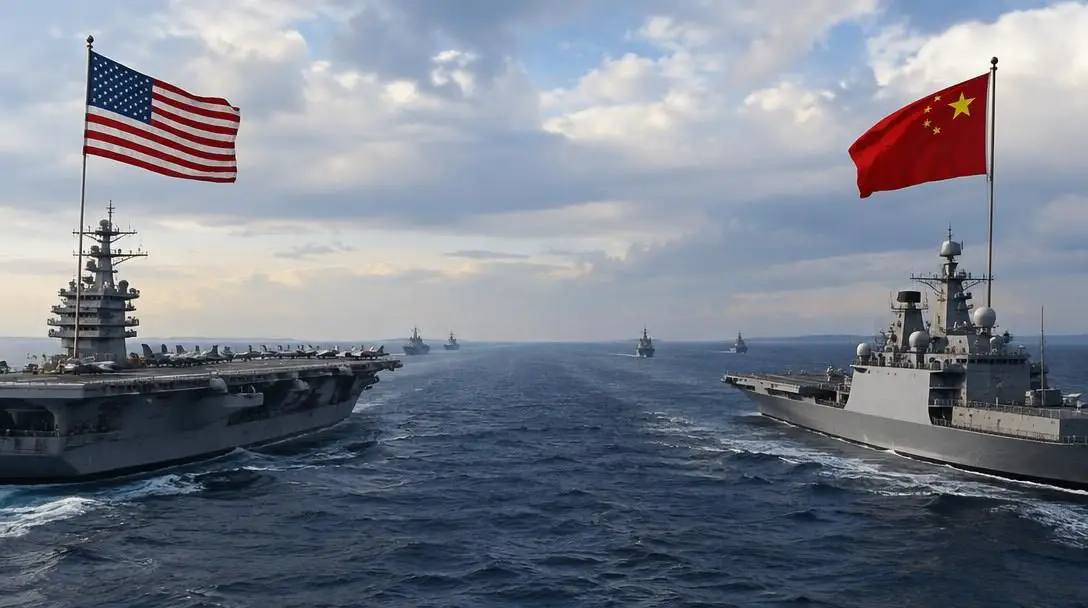
The contemporary international system is experiencing a profound transformative phase defined by shifting power balances and intensified strategic rivalries. Across the globe, nations are competing with heightened urgency for technological supremacy, vital resources, and geopolitical influence, with the complex relationship between the United States and China standing at the center of this dynamic.
While the polarizing friction between these two superpowers poses a significant challenge to international stability, military conflict is not an inevitable outcome. History demonstrates that major powers can navigate profound structural realignments peacefully when reliable diplomatic channels, mutual crisis management frameworks, and clear strategic boundaries are maintained.
Key takeaways
- Armed conflict between the United States and China is not inevitable if both powers maintain structured, continuous diplomatic channels.
- Friction stems primarily from contrasting economic frameworks, high-stakes technological competition, and fundamentally opposing political systems.
- Effective conflict prevention requires strategic compartmentalization to isolate intractable ideological disputes from shared global priorities.
- Collaborative initiatives on climate change, healthcare, and scientific innovation provide practical pathways toward bilateral stability.
- Fatalistic assumptions of war and zero-sum economic calculations represent the most hazardous analytical traps facing decision-makers today.
Understanding the two major powers shaping global stability
To grasp the trajectory of contemporary geopolitics, analysts must examine the core attributes and governing philosophies of both dominant nations. Their contrasting structures inform their foreign policy behavior, commercial priorities, and approaches to domestic security.
United States

- Political Structure: Constitutional democracy
- Strategic Focus: Preserving national security boundaries and international influence
- Diplomatic Stance: Openness to strategic dialogue while countering human rights concerns
The United States operates within a constitutional democracy, anchoring its domestic and foreign policy in democratic legal principles, market-driven commerce, and public accountability. In its dealings with Beijing, Washington seeks to protect cutting-edge technological advancements, uphold fair market access, and defend fundamental civil liberties globally. American leaders face persistent domestic political pressures to counter state surveillance practices and advocate against human rights abuses abroad while attempting to maintain necessary diplomatic off-ramps.
China

- Political Structure: Totalitarian political framework
- Strategic Focus: Economic ascent, technological leadership, and domestic population monitoring
- Key Regions of Scrutiny: Xinjiang province, home to the Uighur community
Governed under a totalitarian political framework, China has leveraged rapid economic ascent to reshape global trade networks and commercial partnerships. Beijing treats economic vitality and technological self-reliance as indispensable pillars of domestic security and regime preservation. The Chinese state has deployed an expansive internal surveillance apparatus to monitor its population and has faced severe international condemnation for arbitrary detention camps targeting ethnic minorities, most prominently the Uighur community in Xinjiang province.
Comparing the systemic drivers of US-China rivalry
The bilateral friction between Washington and Beijing is not a superficial dispute over single events; it is grounded in deeply divergent economic models, competing views of technical innovation, and opposed governance structures.

| Dimension | United States | China | Core Friction Point |
|---|---|---|---|
| Economic Model | Market-oriented capitalism and private enterprise | State-led economic expansion and trade strategies | Market access, foreign investment rules, and trade terms |
| Technological Ambition | Protection of intellectual property and competitive edge | Pursuit of cutting-edge mastery and tech transfer | Zero-sum rivalry over dual-use technologies and national security |
| Political Governance | Constitutional democracy with open institutional checks | Totalitarian framework with centralized party control | Ideological divergence regarding civil liberties and international norms |
| Domestic Security Policies | Constitutional rights protections and public oversight | Expansive domestic surveillance and minority detention camps | Human rights disputes, particularly regarding Xinjiang and Uighurs |
How conflict prevention mechanisms operate between superpowers
Averting direct confrontation between heavily armed nuclear states demands institutionalized diplomatic architectures that function even during diplomatic freezes. Preventing war does not require eliminating competition, but rather managing rivalry so it does not spill into unintended violence.
Conflict prevention functions across three coordinated operational layers:
- Structured and continuous communication: High-level leadership summits establish overarching boundaries, while working-level bureaucratic discussions resolve operational disagreements before they mature into international crises. Consistent communication removes dangerous ambiguities surrounding sovereign security thresholds.
- Strategic deconfliction protocols: When military assets operate in overlapping geographic regions, standard operating procedures prevent tactical miscalculations. Confidence-building measures, operational conduct protocols, and direct military hotlines serve as indispensable safety nets.
- Strategic compartmentalization: This mechanism separates unresolvable ideological or territorial disagreements from mutual global challenges. By isolating deadlock in sensitive areas, both powers preserve the diplomatic space required to advance constructive work elsewhere.
Averting armed confrontation requires building diplomatic mechanisms that remain functional even during periods of elevated tension.
Practical steps to defuse bilateral tensions
Transitioning from escalating friction toward sustainable equilibrium requires concrete policy shifts from both capitals. Rather than relying on sporadic overtures, decision-makers should follow a disciplined diplomatic progression.
- Expand continuous diplomatic engagements: Institutionalize regular bilateral consultations across economic, military, and environmental departments so communication survives sudden political shocks.
- Prioritize dialogue over coercive measures: Moderate provocative rhetoric and public ultimatums in favor of direct, private consultations that reduce the domestic political pressure to escalate.
- Construct mutually beneficial economic frameworks: Rebalance commercial terms, trade agreements, and market access guarantees to deliver tangible mutual security rather than viewing commerce as a zero-sum defeat.
- Form joint initiatives on critical global challenges: Pool analytical, scientific, and financial resources to counter shared planetary crises, prioritizing coordinated policies on climate change.
- Advance shared healthcare and scientific innovations: Partner on biomedical and healthcare technologies that serve broad public welfare, fostering professional trust and durable institutional goodwill.
- Safeguard core security boundaries while seeking alignment: Clearly define non-negotiable defensive interests so both nations can collaborate safely without fearing compromises to basic sovereignty.
Common mistakes in managing great power rivalries
History illustrates that major power relationships frequently degrade due to predictable analytical blind spots and misjudged escalations. Avoiding catastrophic conflict requires identifying and eliminating these strategic traps.
- Embracing fatalistic notions of inevitable war: Assuming conflict is preordained creates a self-fulfilling dynamic that accelerates military buildup at the expense of diplomatic compromise.
- Viewing all economic advancements through a zero-sum lens: Interpreting standard commercial transactions or third-party investments as existential security losses blocks mutually advantageous trade opportunities.
- Disregarding domestic ideological and governance realities: Assuming external economic or rhetorical pressure will easily force an adversary to abandon its deeply rooted governing structure produces defensive entrenchment rather than reform.
- Allowing ideological disputes to block practical cooperation: Permitting profound friction over domestic governance to halt joint action against common threats like resource scarcity and environmental degradation harms both nations.
- Neglecting early warning signs and minority rights protections: Ignoring state surveillance overreach or the arbitrary detention of minority populations erodes the foundational credibility needed to maintain a predictable, rules-based international system.
- Over-relying on aggressive posturing as a deterrent: Assuming that unilateral shows of force or punitive measures will force an opponent to capitulate overlooks domestic political incentives to resist coercive behavior.
What to consider next: Navigating the path ahead
As the international community confronts growing polarization, strategic planners and citizens must evaluate the long-term stakes of bilateral choices. The decisions reached in Washington and Beijing will dictate whether the coming decades are characterized by cooperative problem-solving or destructive military friction.

Foremost among future considerations is the management of borderless global threats. Accelerating planetary climate shifts, deep systemic poverty, and depleting natural resources cannot be contained or mitigated by any single nation. If the two largest global economies refuse to coordinate their technical and financial capacities, vulnerable populations worldwide will bear the brunt of unaddressed ecological and economic catastrophes.
Furthermore, analysts must keep the human and material toll of superpower warfare in clear view. A direct armed clash between advanced nuclear powers would dismantle global supply chains, destroy vital infrastructure, and inflict structural damage that would set human progress back by generations. Sustaining peace requires an elevated collective consciousness that values shared human security over transient geopolitical dominance.
Frequently asked questions
Is direct military conflict between the United States and China unavoidable?
No, war is not an inevitable outcome. Major powers throughout history have managed deep structural shifts peacefully, and both Washington and Beijing have demonstrated a continued willingness to use diplomatic channels and strategic dialogue to address specific disputes.
What are the main causes of friction between the two nations?
The rivalry is driven by contrasting economic models, an intense contest for cutting-edge technological supremacy, divergent governance structures between a constitutional democracy and a totalitarian system, and international condemnation of Chinese human rights violations, including state surveillance and detention camps in Xinjiang.
What role does Xinjiang play in bilateral diplomatic tensions?
Xinjiang province is the site of widespread arbitrary detention camps targeting ethnic minority populations, primarily the Uighurs. These policies, combined with expansive state surveillance, draw sustained condemnation from international observers and create serious moral and diplomatic obstacles in bilateral negotiations.
How does strategic compartmentalization help prevent armed confrontation?
Strategic compartmentalization allows diplomats to separate intractable ideological or geopolitical disagreements from shared practical interests. This ensures that deadlock over sensitive issues does not paralyze joint work on critical global challenges like climate change and public health.
Why is zero-sum economic thinking considered dangerous in foreign policy?
When every trade arrangement, technological advancement, or commercial investment is viewed as an automatic security loss for the opposing nation, standard economic competition becomes militarized, preventing mutually advantageous agreements and heightening hostility.
Which shared global challenges offer the best opportunities for cooperation?
Mitigating climate change, pooling scientific capacities for healthcare innovations, and addressing global resource scarcity represent primary areas where both powers can coordinate resources for shared international benefit without compromising core security boundaries.
The bottom line
The competition between the United States and China represents the defining geopolitical dynamic of the twenty-first century, yet hostility remains a choice rather than a destiny. By moving away from fatalistic assumptions of war, rejecting zero-sum economic mindsets, and protecting foundational communication channels, both nations can safeguard their vital security boundaries while collaborating on pressing planetary emergencies.
Preserving international stability requires principled, steady diplomacy that prioritizes long-term human security over short-term political posturing. Through institutionalized dialogue, strategic deconfliction, and responsible competition, the two superpowers can successfully avoid armed confrontation and maintain global peace.