How Computing Is Revolutionizing the Agricultural Industry
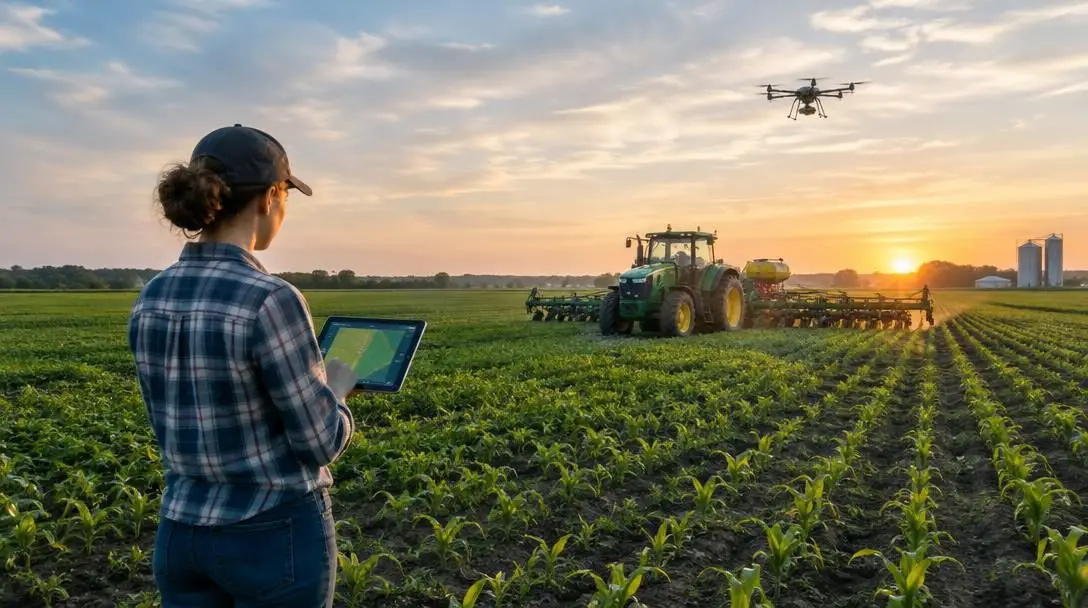
The agricultural industry is undergoing a profound structural shift driven by modern digital technology. For generations, farming practices relied on manual labor, animal power, and standardized field treatments that applied uniform amounts of water, seed, and chemical fertilizers across entire acreages regardless of subtle variations in soil quality or topography.
Today, computing serves as the central brain of modern farm management. By integrating computational hardware, specialized software, connected sensors, and advanced data processing, growers can analyze their acreage meter by meter. This digital transformation turns intuition-led fields into highly analytical, data-informed operations capable of maximizing output while protecting critical natural resources.
Key takeaways
- Computing transforms agriculture from uniform, intuition-based field management into targeted, data-informed decision-making.
- Core applications such as precision agriculture, robotics, IoT sensors, big data, and machine learning optimize resource allocation across the growing cycle.
- Proactive technology adoption enhances crop yields, lowers chemical input costs, minimizes environmental runoff, and improves overall farm profitability.
- Long-term operational success requires strategic planning, phased implementation, diligent hardware maintenance, and reliable connectivity.
From Draft Animals to Digital Fields: The Evolution of Farm Technology
Agricultural history is defined by successive waves of modernization. The earliest eras depended entirely on manual human labor and draft animals to till soil, sow seeds, and haul harvest loads. The industrial era introduced mechanical machinery such as combustion-engine tractors, combines, and mechanical planters, vastly multiplying the acreage a single farm family could manage. Later, the mid-twentieth century brought advanced chemical inputs, including synthetic fertilizers, selective herbicides, and pesticides, which elevated baseline crop productivity worldwide.
Despite these mechanical and chemical advances, traditional farming maintained a significant limitation: standardized field practices. Because farmers lacked granular insight into their land, they applied uniform management protocols across hundreds or thousands of acres. An entire field received identical fertilizer volumes and irrigation schedules, regardless of whether certain sections suffered from moisture deficits or nutrient saturation.
Modern agricultural computing fundamentally breaks with this uniform approach. Computational agriculture integrates digital processors, satellite coordinates, networked field monitors, and predictive algorithms to evaluate acreage at micro-levels. Rather than treating an entire farm as a single monolithic block, computing enables growers to manage small zones individually, tailoring irrigation, nutrition, and crop protection to specific ground conditions.
Five Core Technologies Transforming Agricultural Workflows
The computational modernization of agriculture relies on several interrelated hardware and software systems. Working together, these tools gather biological and physical indicators from the field and translate them into actionable operational steps.
| Technology | Primary Tools and Components | Key Agricultural Function | Core Operational Benefit |
|---|---|---|---|
| Precision agriculture | GPS mapping units, field navigation systems, variable rate applicators | Zoned resource distribution | Reduces input waste and balances field fertility |
| Robotics and automation | Automated tractors, robotic harvesters, programmed monitoring units | Autonomous mechanical task execution | Decreases reliance on manual field labor |
| Internet of Things (IoT) | Soil moisture probes, atmospheric monitors, wireless telemetry hubs | Continuous real-time microclimate tracking | Enables responsive, data-driven irrigation schedules |
| Big data and analytics | Farm management platforms, yield history databases, predictive software | Aggregated trend identification | Informs multi-season crop and resource planning |
| Machine learning and AI | Computer vision tools, predictive neural networks, classification algorithms | Automated diagnosis and weed identification | Speeds up field scouting and targeted weed control |
Precision agriculture
Precision agriculture combines satellite positioning systems, geographic information systems, and specialized field equipment to optimize crop production. By deploying GPS mapping alongside detailed soil sampling, operators divide fields into discrete management zones. Instead of spreading seed or chemicals uniformly, tractors equipped with variable-rate applicators adjust distribution volumes dynamically as they traverse the acreage. This targeted approach prevents over-application in rich soils and provides supplemental support to deficient zones, lowering input costs while promoting consistent yield quality.
Robotics and automation
Automation and robotic machinery address persistent labor shortages and reduce operational variability in field management. Guided by on-board computers, digital vision, and satellite navigation, automated implements perform labor-intensive tasks such as seed planting, selective mechanical weeding, and harvesting. These automated units execute repetitive field passes with continuous spatial accuracy, minimizing soil compaction along designated tracks and freeing farm operators to focus on business administration, logistics, and equipment strategy.
Internet of Things (IoT)
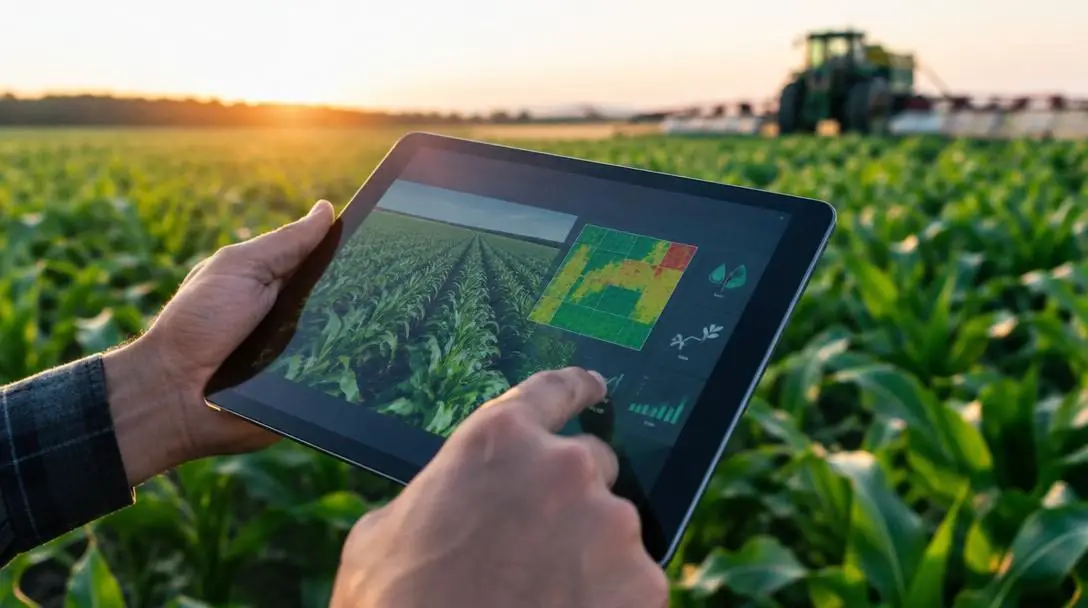
The Internet of Things connects field hardware into unified wireless communication networks. IoT systems rely on dense sensor arrays placed directly in the soil, across crop canopies, and within atmospheric weather stations. These monitors transmit continuous data streams regarding soil moisture, ambient temperature, humidity, and solar exposure back to centralized dashboards. Rather than manually inspecting distant plots, farm operators can track hydrological trends remotely and trigger automated irrigation valves when soil moisture dips below prescribed thresholds.
Big data and analytics
Modern farm equipment and sensors produce extensive volumes of operational data every day. Big data platforms collect, clean, and analyze these disparate datasets, synthesizing historical yield maps, mechanical fuel burn rates, chemical application logs, and multi-year precipitation records. By identifying long-term patterns across consecutive seasons, data analytics helps growers project crop yields with greater precision, optimize supply chain timing, and formulate risk-mitigation strategies for future crop rotations.
Machine learning and artificial intelligence
Artificial intelligence and machine learning introduce automated evaluation and predictive capability to field workflows. Machine learning models analyze aerial and ground imagery to detect crop stress, identify nutrient deficiencies, and distinguish between crop seedlings and invasive weeds. Autonomous sprayers running computer-vision algorithms can identify and target individual weeds in real time, delivering localized chemical droplets while sparing surrounding plants. Furthermore, predictive AI systems evaluate historical weather and crop health data to recommend ideal planting windows and harvest dates.
Operational and Ecological Benefits of Computational Agriculture
Integrating computing into agricultural operations generates tangible advantages across economic, operational, and ecological domains.
By converting biological indicators into actionable metrics, computing transforms farms from intuition-led operations into analytical, data-informed businesses.
Financially, precision technology significantly improves operational margins. By reducing the overall volume of synthetic fertilizers, chemical herbicides, and irrigation water, growers cut substantial input expenditures. Concurrently, improved crop monitoring and uniform growth conditions result in higher-quality harvests that command premium pricing in wholesale and commodity markets.
Operationally, automation and computing elevate farm efficiency. Routine scouting, record-keeping, and machinery navigation can be partially or fully automated, lowering labor requirements during peak planting and harvest windows. Equipment telemetry enables managers to track machinery performance, schedule preventative maintenance, and optimize field transit routes to reduce fuel use.
Ecologically, computational farming is an indispensable asset for environmental sustainability. Excessive fertilizer use has historically contributed to chemical runoff that enters local streams and groundwater systems. By applying soil amendments only where and when crops require them, precision systems reduce nutrient runoff, mitigate greenhouse gas emissions related to field passes, and conserve regional water supplies through optimized irrigation schedules.
Step-by-Step Guide to Adopting Computing on the Farm
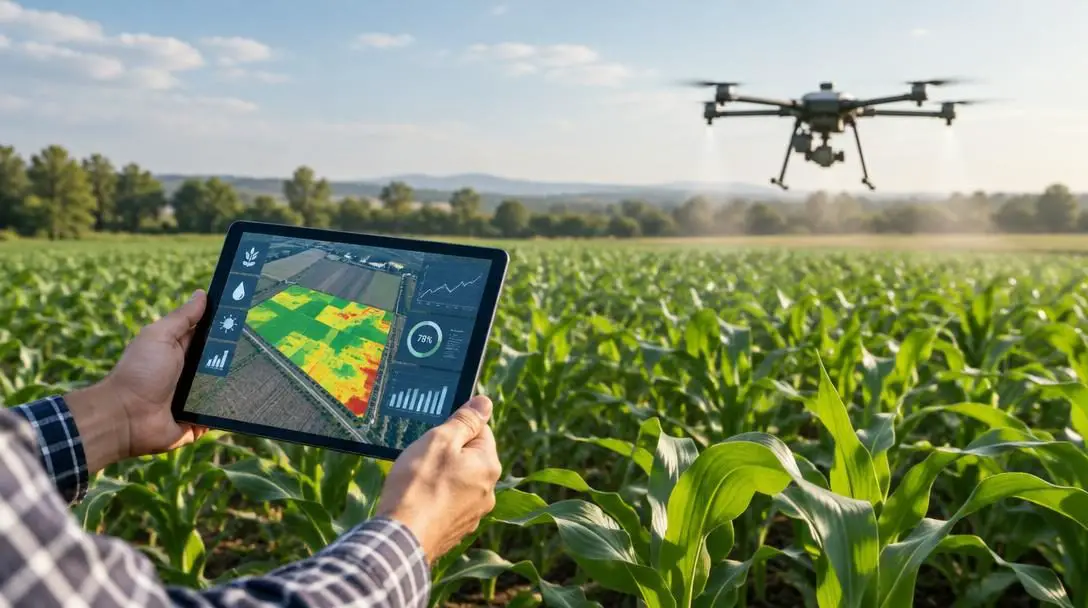
Transitioning from conventional farm practices to a digitally enabled operation requires deliberate planning and phased execution. Rather than attempting a sweeping operational overhaul, growers achieve better outcomes by implementing technologies through a structured progression.
- Evaluate farm operational needs: Conduct an operational audit to identify primary production bottlenecks, such as high irrigation bills, chemical expenditure, labor shortages during harvest, or unexplainable yield dips in specific zones.
- Audit current equipment and infrastructure: Check existing tractors, combines, sprayers, and electrical infrastructure for computational compatibility, assessing whether older machinery supports GPS guidance, electronic control units, or ISOBUS communication standards.
- Start with foundational data collection: Introduce entry-level hardware such as in-field soil moisture probes, weather stations, and tractor-mounted GPS loggers to establish an empirical baseline of field variations before investing in complex automated machinery.
- Implement dedicated farm management software: Consolidate disparate data sources onto a centralized software platform capable of processing incoming telemetry from sensors, equipment, and satellite imagery to provide unified visual maps and reporting.
- Introduce targeted automation and precision tools: Gradually invest in automated hardware, such as variable-rate chemical applicators, automated section control on planters, or robotic field-monitoring devices tailored to the farm's primary bottlenecks.
- Review outcomes and refine processes: Regularly compare post-harvest yield maps, input expenses, and labor logs against pre-adoption baselines, utilizing machine learning analytics to fine-tune nutrient recipes and operational schedules for upcoming seasons.
Common Pitfalls in Agricultural Technology Adoption
While computing provides clear advantages, digital transformations can falter when operational pitfalls are overlooked during the setup and management phases.
- Collecting data without an application plan: Installing numerous IoT probes and logging gigabytes of field metrics yields no value if the operation lacks software or management procedures to turn that information into practical field adjustments.
- Attempting to automate everything all at once: Purchasing multiple sophisticated systems simultaneously can overwhelm field staff and capital reserves; phased rollouts ensure the farm team masters one system before introducing another.
- Neglecting equipment compatibility: Procuring hardware, implements, and software from uncoordinated vendors can result in fragmented systems that cannot exchange data, generating operational delays and duplicate manual entries.
- Overlooking calibration and physical maintenance: Soil sensors, optical cameras, and GPS antennas face persistent moisture, mud, dust, and temperature swings; uncalibrated sensors generate flawed readings that undermine precision algorithms.
- Disregarding user training: Advanced computational software cannot generate efficiency gains if machinery operators, agronomists, and field hands lack adequate training to interpret alerts, configure controllers, and troubleshoot technical errors.
Navigating Operational Hurdles: Connectivity, Capital, and Data Ownership
Widespread digital adoption across rural farming communities faces several real-world obstacles. Addressing these structural challenges is necessary to ensure computing tools deliver on their full potential.
The upfront financial investment remains a significant barrier for many operations. Outfitting commercial machinery with precision controllers, installing multi-node IoT sensor networks, and subscribing to proprietary farm management platforms require substantial capital. Farm managers must carefully calculate payback periods by modeling reductions in seed and chemical costs alongside projected yield gains.
Another prominent operational obstacle is rural connectivity. Real-time agricultural computing relies on steady data transmission between in-field sensors, autonomous machinery, and cloud-based analytical servers. In regions with sparse cellular coverage or limited broadband infrastructure, data synchronization can experience latency, requiring local edge-computing systems that cache data offline until a stable network connection is re-established.
Finally, data governance and ownership have become vital industry topics. As modern farming machinery logs continuous information regarding soil fertility, precise harvest yields, and application methodologies, questions arise over who controls that proprietary information. Farm managers must ensure that software service agreements preserve their ownership rights and prevent farm-specific data from being shared or monetized without explicit authorization.
Frequently asked questions
How does precision agriculture differ from traditional farming practices?
Traditional farming applies uniform management practices, delivering equal amounts of water, fertilizer, and seed across an entire field. Precision agriculture uses GPS mapping, soil sensors, and data analytics to divide fields into distinct zones, tailoring input applications to the unique soil conditions and topography of each location.
What role do IoT devices play in everyday farm management?
Internet of Things devices, including wireless soil probes and microclimate weather stations, continuously monitor physical conditions such as soil moisture, ambient humidity, and temperature. These devices automatically transmit live readouts to central dashboards, enabling growers to schedule precise irrigation and protect crops from environmental stress.
How does machine learning assist with weed and pest management?
Machine learning uses computer-vision models trained to distinguish between crop seedlings and unwanted weeds. Integrated into automated sprayers, these algorithms detect weeds in real time and trigger micro-doses of herbicide directly on invasive plants, significantly reducing overall chemical use across the field.
Why is rural connectivity a common challenge for digital agriculture?
Digital farming platforms rely on continuous communication to sync data between field sensors, machinery navigation systems, and cloud analytics platforms. In rural areas lacking reliable cellular or broadband coverage, data streams can stall, necessitating specialized offline-capable hardware and delayed data-syncing protocols.
How does computing improve the environmental sustainability of farms?
By optimizing input management through sensors and predictive analytics, computing ensures that water, nitrogen, and chemical treatments are applied only where plants can absorb them. This precision prevents excessive chemical runoff into local watersheds, cuts fuel emissions from unneeded tractor passes, and protects long-term soil health.
The bottom line
Computing is no longer an optional accessory in modern agriculture; it has become foundational infrastructure for competitive, sustainable food and fiber production. By unifying precision positioning, automated field robotics, connected IoT telemetry, big data analytics, and artificial intelligence, modern operations can systematically lower input overhead while boosting harvest quality.
While challenges such as initial capital costs, hardware maintenance, and rural network connectivity require methodical planning, the long-term trajectory is clear. As digital tools continue to mature, operations that embrace analytical, data-informed farm management will be best positioned to meet growing global resource demands efficiently and sustainably.