How to Cook Perfectly Fluffy Couscous Every Time
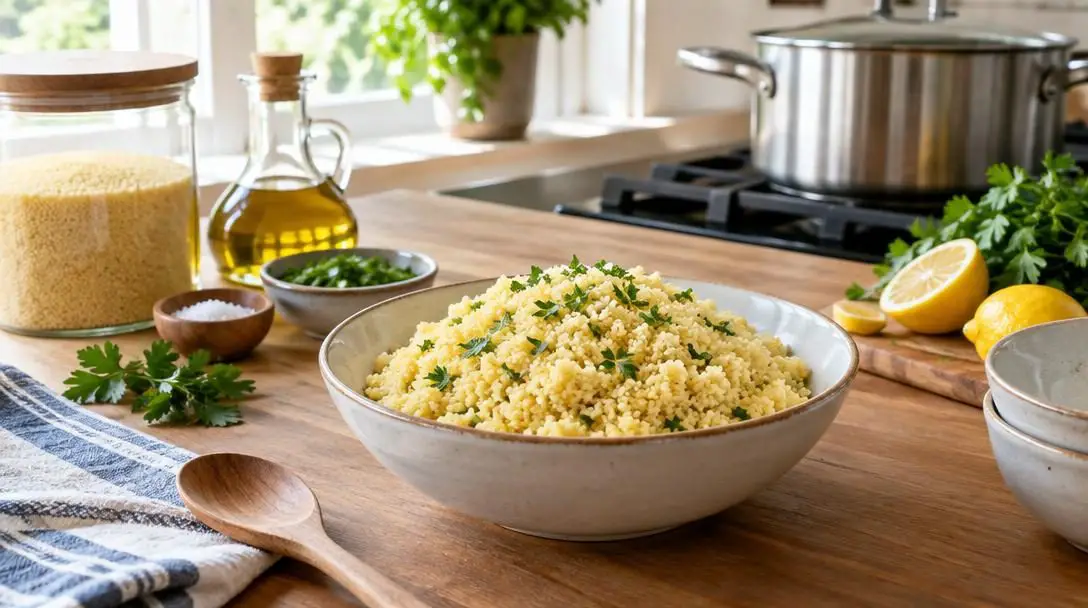
Couscous stands as a pillar of North African culinary heritage, where cooks have perfected the art of rolling damp semolina flour and durum wheat into microscopic culinary pearls for centuries. Today, it is celebrated globally as one of the most versatile, economical, and rapid-cooking pantry staples available. Serving as an exceptional canvas, couscous readily absorbs savory braising liquids, bright citrus vinaigrettes, and richly spiced broths, functioning equally well as a fast weeknight dinner base or as the centerpiece of an elaborate celebration feast.
Despite its accessibility and modest reputation as a convenient, quick-cooking meal solution, executing restaurant-quality couscous can be unexpectedly deceptive. Home cooks frequently treat couscous identically to hard whole grains like long-grain rice or quinoa, resulting in dense, waterlogged pellets or a gummy, unappetizing paste. True culinary success yields an impossibly airy, delicate mound where every grain remains completely separated, light, and tender to the palate. Achieving that signature texture requires an appreciation of semolina science, precise hydration ratios, and disciplined, gentle handling from boiling point to final presentation.
Key takeaways
- Hydration demands a precise one-to-one ratio of boiling liquid to couscous to avoid dense, waterlogged grains.
- A mandatory ten-to-fifteen-minute resting period under a tight seal allows starch granules to absorb moisture evenly throughout.
- Coating the grains with olive oil establishes an essential lipid barrier that prevents individual semolina particles from fusing together.
- Fluffing strictly with the tines of a dinner fork aerates the grains without crushing their delicate outer walls.
Selecting the Ideal Couscous Grain Size
Every successful batch of couscous begins with choosing the correct grain diameter for your intended application. While virtually all standard varieties originate from semolina or durum wheat flour, the physical size of the granule dictates how quickly moisture penetrates the core, how much liquid the grain can structurally support, and how resilient the finished dish will be against clumping.
| Grain Variety | Relative Granule Size | Hydration Speed | Clumping Susceptibility | Ideal Culinary Role |
|---|---|---|---|---|
| Fine Couscous | Microscopic / Tiny | Near instantaneous | High | Delicate broths, sweet preparations, quick sides |
| Medium Couscous | Standard / Moderate | Moderate | Moderate | Everyday dinners, stews, saucy proteins |
| Coarse Couscous | Large / Substantial | Slightly extended | Very low | Hearty grain salads, roasted vegetables, tagines |
Fine Couscous
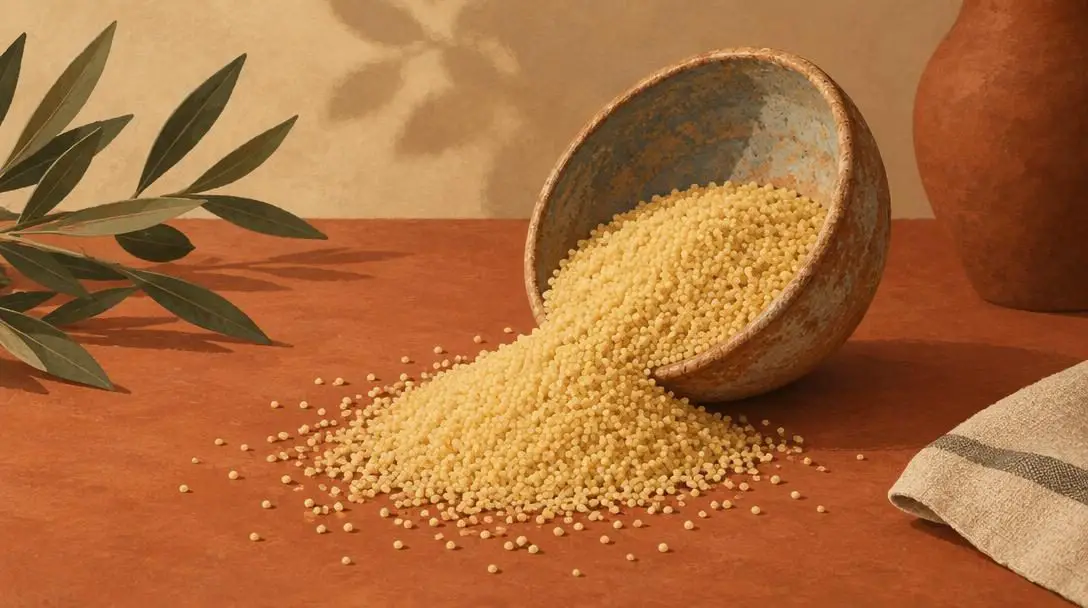
- Particle Scale: Minute, powdery granules
- Hydration Rate: Rapid absorption within minutes
- Texture Risk: Prone to paste formation if overhandled
Fine couscous represents the most common variety lining conventional supermarket shelves. Because its individual particles are minuscule, it cooks almost instantly upon coming into contact with steam or bubbling liquid. That diminutive size, however, offers the slimmest margin for error. A slight excess of water or overzealous stirring easily ruptures the softened semolina granules, instantly reducing a pot of fine couscous to a pasty, unappealing porridge.
Medium Couscous
- Particle Scale: Balanced, distinct grains
- Hydration Rate: Standard ten-to-fifteen-minute steep
- Texture Risk: Moderate resilience under sauce
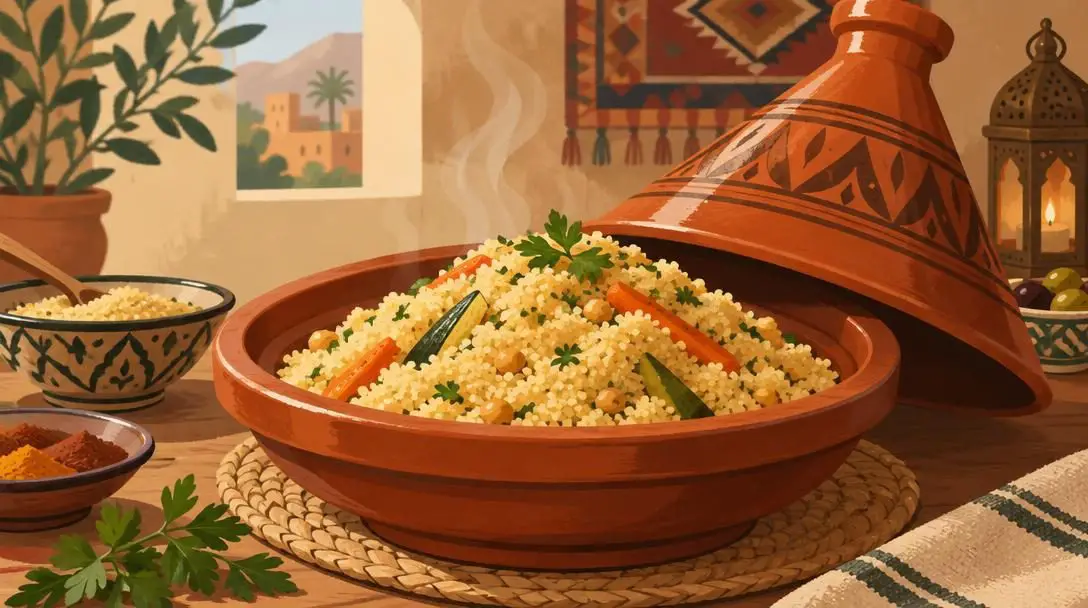
Offering grains noticeably larger than the fine alternative, medium couscous strikes an optimal balance between structural integrity and quick preparation. The increased surface area of each granule provides a sturdier body that holds up comfortably to simmering on the stovetop and pairing with rich, heavy gravies. It requires a few additional minutes of cooking time compared to fine grains, but its reliable fluffiness makes it the premier option for routine family meals.
Coarse Couscous
- Particle Scale: Substantial, bead-like spheres
- Hydration Rate: Extended rehydration and cook window
- Texture Risk: Minimal stickiness; natural resistance to clumps
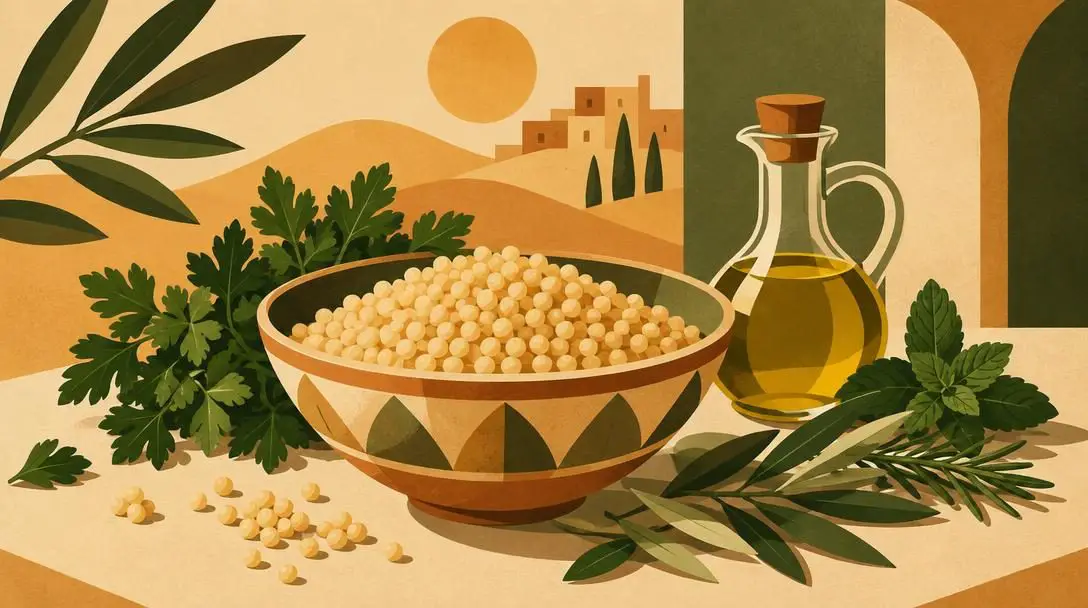
Featuring the most substantial individual granules among traditional semolina styles, coarse couscous yields a toothsome, noticeable bite. While it demands slightly more patience on the stove or inside the oven to fully hydrate to its center, coarse couscous delivers unmatched defense against clumping. It is an exceptional selection for cooks looking to achieve an undeniably light, airy, and well-separated presentation that will not degrade under hearty dressings.
The Science of Hydration and the Lipid Barrier
Cooking couscous differs substantially from preparing raw grains such as brown rice, farro, or barley. Most commercially packaged couscous has already undergone a factory process of pre-steaming followed by thorough dehydration. When you cook couscous in your kitchen, you are largely engaging in controlled rehydration paired with gentle thermal expansion.
The moment boiling water is poured over the grains, the dry starch molecules inside the semolina awaken, rapidly pulling water molecules inward through capillary action. If the grains are left undisturbed in an insulated, sealed environment, moisture moves inward toward the core evenly. This balanced absorption prevents the fragile exterior walls of the starch granules from rupturing under mechanical force.
Fat—specifically quality olive oil—plays an indispensable mechanical role in keeping the grains separated. When olive oil is introduced and gently stirred among the hydrated grains, it coats the exterior surface of every sphere. Because oil and water repel each other, this micro-thin lipid barrier physically stops the gelatinized surface starches from cross-linking and welding the grains into a gummy, solid block.
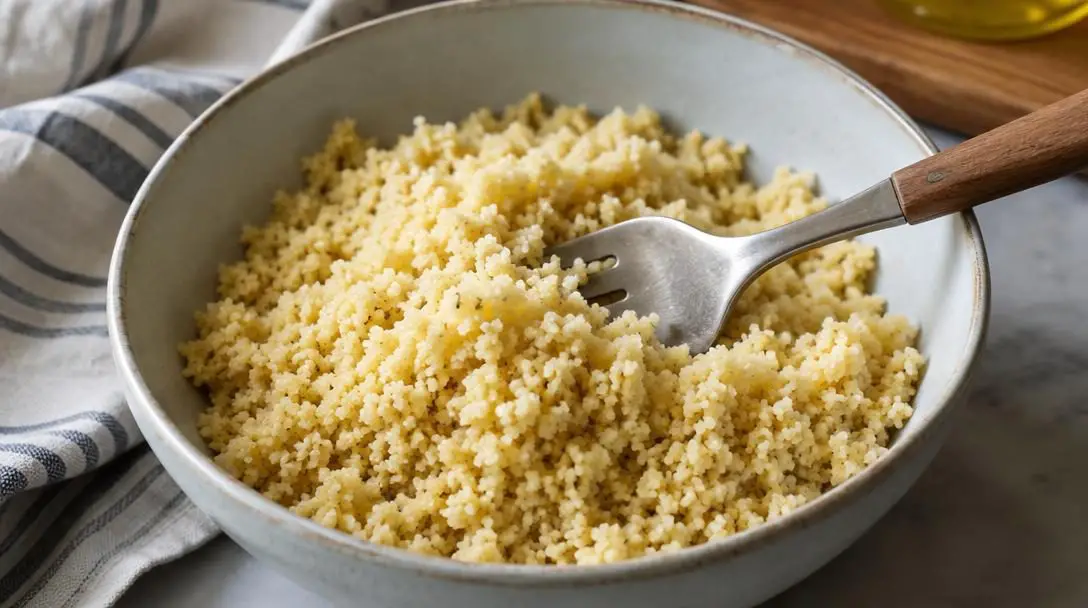
A thin coating of olive oil provides the essential lipid barrier that prevents expanding semolina starches from sticking together.
Standard Ratios and Initial Preparation
Attaining light, pillowy couscous requires strict adherence to volume measurements. Eyeballing the water level almost always produces disastrous results, creating either hard, uncooked centres or a muddy sludge.
- Measure with precision: Use a dedicated liquid measuring cup for your water and a dry measuring cup or kitchen scale for your couscous. A standard baseline proportion is a strict 1:1 ratio—one cup of boiling liquid to one cup of dry couscous. Always review the brand's packaging to verify whether coarser grains require a fractional adjustment.
- Combine with boiling liquid: Pour the measured dry couscous into a wide, heatproof mixing bowl. Bring the cooking liquid to a rolling, active boil, then pour it directly and evenly over the dry grains.
- Even distribution: Stir the liquid into the grains with a very light touch, working just enough to confirm that every dry granule has been submerged and wetted.
- Seal and rest: Immediately seal the top of the bowl tightly with a fitted lid, a flat plate, or a clean, heavy kitchen towel. Leave the bowl completely undisturbed on the countertop for 10 to 15 minutes to let the grains absorb the liquid via trapped steam.
Three Tested Finishing Methods
Once the initial sealed hydration step is finished, you can proceed with your preferred cooking method to set the structure and ensure optimal tenderness.
Stovetop Method
Transfer the hydrated couscous into a medium cooking pot set over the counter. Add a pinch of salt and one tablespoon of olive oil. Stir gently to disperse the oil and separate individual grains. Move the pot to the stove over medium heat and allow the couscous to simmer gently for 10 to 15 minutes. Once the simmering window concludes, cover the pot securely with its lid, pull it completely off the heat source, and let it rest undisturbed for an additional 5 to 10 minutes until tender, fully cooked, and fluffy.
Rice Cooker Method
Place the hydrated couscous directly into the inner nonstick pot of a standard rice cooker. Sprinkle in a pinch of salt and drizzle in a tablespoon of olive oil. Add your measured water according to the manufacturer's or package's recommended ratio. Secure the appliance lid and press the switch to begin a standard cook cycle. As soon as the machine indicates that the cooking process is complete, open the lid and immediately rake through the grains with a fork to release trapped moisture before it condenses.
Oven Method
Begin by preheating your oven to 375°F. Move your hydrated couscous into an oven-safe baking dish, spreading it out into an even layer. Sprinkle in a pinch of salt, drizzle over a tablespoon of olive oil, and pour the measured water over the grains, stirring gently to combine. Seal the dish tightly using an oven-safe lid or a sheet of aluminum foil to lock in steam. Bake inside the preheated oven for 20 to 25 minutes until the liquid is fully absorbed and the grains are tender and fluffy.
Fluffing, Seasoning, and Flavor Enhancers
Cooking the couscous is only half the battle; how you handle the warm grains immediately after heating dictates the final mouthfeel. At this stage, your choice of utensils is paramount to avoid turning soft semolina into mashed paste.
Never rely on a broad wooden spoon, spatula, or ladle to work through finished couscous. These wide, flat tools press down against the grains, crushing the soft starch granules together. Instead, take a dinner fork and gently drag its tines across the surface of the couscous. Rake lightly back and forth through any clumps, lifting the grains into the air. This raking action aerates the mixture, frees trapped moisture, and leaves every single grain resting independently.
Once the mass has been thoroughly aerated, take advantage of the warm semolina to fold in complementary flavorings. Couscous effortlessly absorbs aromatics and botanical oils. Popular flavor enhancers include:
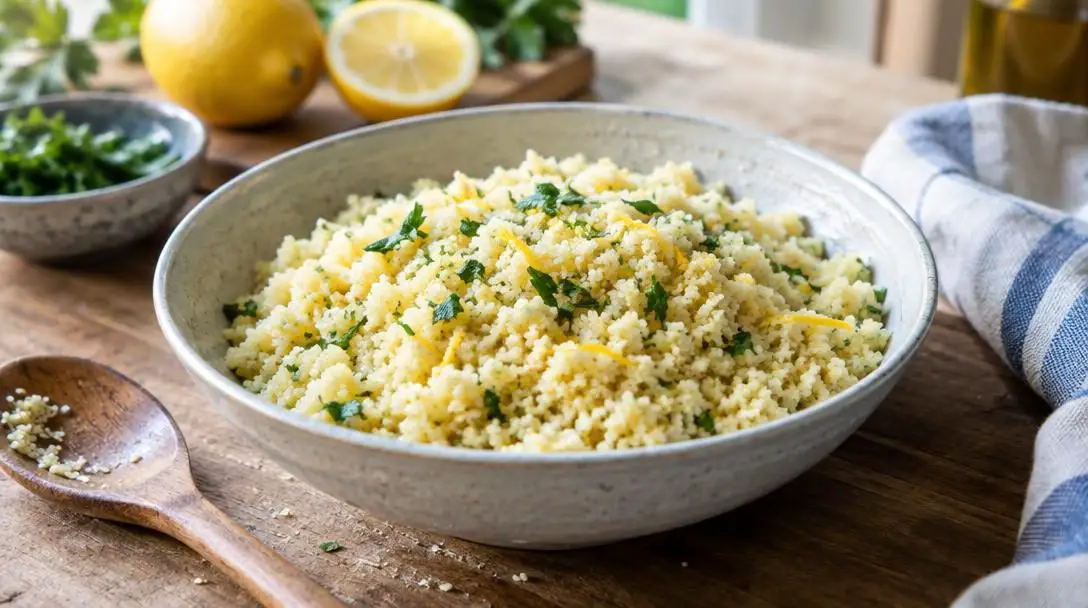
- Ground cumin and ground coriander for warm, earthy depth.
- Finely chopped fresh parsley and garden mint for herbal brightness.
- Freshly squeezed lemon juice to supply necessary culinary acid.
- An extra finishing drizzle of robust extra-virgin olive oil to lock in silkiness.
Common Mistakes to Avoid
Because couscous cooks so rapidly, even slight oversights in technique can derail the entire batch. Keep an eye out for these frequent kitchen missteps:
- Guessing the liquid volume: Semolina grains possess a finite capacity for hydration. Adding excess water leaves couscous perpetually soggy and waterlogged with no way to evaporate the excess, while under-measuring leaves hard, unchewable centers. Always use standard measuring tools.
- Cutting the rest short: Hydration requires patience. Agitating or cooking the couscous before completing the mandatory 10-to-15-minute sealed rest produces uneven results, leaving dry cores surrounded by overcooked exteriors.
- Agitating the grains too roughly: Frantic or heavy-handed stirring ruptures the outer cell walls of the semolina granules. This action spills sticky starches out across the dish, turning what should be fluffy grain into a gluey mass.
- Using flat kitchen spoons: Spoons inevitably push down and compress hot grains. Sticking to a standard metal fork preserves the physical space between granules.
- Forgetting oil and salt: Without olive oil, grains will adhere to each other as they cool. Furthermore, because semolina is naturally mild, skipping salt during cooking leaves the couscous tasting hollow and flat.
Serving Suggestions and Storage Guidelines
Once seasoned and aerated, transfer the couscous onto a wide, warmed serving platter or into an attractive shallow bowl. Run the fork through the grains one final time right before carrying the platter to the table. A decorative garnish of freshly minced herbs or toasted slivered nuts adds an appealing color contrast and a satisfying textural crunch.
Couscous pairs naturally with heavily seasoned, savory main courses. It serves as an ideal bed for grilled meats, such as spiced lamb chops, charred chicken skewers, or tender roasted beef. The light, porous grains capture the pan drippings and juices from meat effortlessly. Couscous is equally compelling alongside slow-roasted root vegetables, sweet caramelized winter squashes, or quick-sautéed greens like garlicky Swiss chard and tender baby spinach.
For warm-weather gatherings, chilled couscous forms an exceptional base for Mediterranean-style grain salads. Allow the grains to cool down completely to room temperature, then fold in diced cucumbers, sweet cherry tomatoes, sliced radishes, tender stone fruits, citrus juices, and olive oil for a vibrant, packable lunch.
To upgrade your foundation even further, substitute plain water with rich, simmering chicken broth, deep beef stock, or aromatic vegetable bouillon during the initial hydration phase. You can also steep delicate whole spices, such as a whole cinnamon stick or strips of fresh citrus peel, into the boiling liquid before pouring it over the grains.
If you have leftovers, allow the couscous to cool completely to room temperature, ensuring it does not sit out for excessive periods. Store it inside an airtight container in the refrigerator. When you are ready to reheat, warm it gently on the stovetop or in the microwave alongside a small splash of water or a light drizzle of olive oil to restore evaporated moisture. Fluff the reheated grains thoroughly with a fork, and the couscous will regain its original airy texture.
Frequently asked questions
Why did my cooked couscous turn into a sticky, gummy paste?
Gummy couscous is almost always caused by using too much water, stirring the grains aggressively with a flat spoon, or disturbing the couscous before the resting window concludes. Overworking wet semolina ruptures the starch barriers, causing them to bind together into a glue-like texture.
Can I substitute broth or stock for water when cooking couscous?
Yes. Swapping plain boiling water for boiling chicken, beef, or vegetable broth is one of the easiest ways to infuse the grains with savory flavor. The ratio remains a strict one-to-one match.
What is the standard water-to-couscous ratio for everyday cooking?
The baseline culinary ratio is 1:1, meaning one cup of boiling liquid for every one cup of dry couscous. Coarser varieties or specific brands may suggest minor adjustments, so always verify against package guidelines.
How should I reheat leftover refrigerated couscous without drying it out?
Warm the cold couscous gently in a pot over low heat on the stove or in a microwave-safe container. Add a tiny splash of water or broth along with a drizzle of olive oil, cover to trap the steam, and fluff thoroughly with a fork before serving.
Why is a dinner fork required instead of a traditional mixing spoon?
Flat spoons compress and mash the fragile semolina grains down against each other. A fork's narrow tines slice cleanly between the granules, separating them and introducing pockets of air for maximum fluffiness.
The bottom line
Cooking magnificent, restaurant-worthy couscous does not require advanced culinary mastery, but it does demand precision and restraint. By choosing the right grain size for your dish, honoring the strict 1:1 hydration ratio, letting the covered grains rest undisturbed, and lubricating them with quality olive oil, you eliminate the risk of dense, waterlogged starch. Finish the grains with a gentle raking of your fork and balanced aromatics, and you will enjoy distinct, tender, and effortlessly fluffy couscous every single time.