How to Obtain an H-1B Visa
Foreign nationals seeking entry into the United States must navigate a complex legal landscape spanning nearly 200 distinct visa types. All of these options fall into two overarching categories: immigrant visas, which are designed for individuals intending to establish permanent residence in the country, and nonimmigrant visas, which accommodate temporary stays for defined purposes such as higher education, international tourism, or authorized work.
For skilled international professionals aiming to build a career in the American economy, the H-1B visa serves as one of the primary nonimmigrant pathways. Although the program is governed by stringent regulatory standards, it offers qualified specialists the legal authority to work in the United States initially for several years, often creating an essential springboard toward long-term permanent residency and eventual citizenship.
Key takeaways
- The H-1B is a nonimmigrant visa designed for highly qualified professionals working in specialty occupations that require a bachelor’s degree or higher.
- Recipients are initially granted a stay of three years, which can be doubled to six years if an exception is needed and regulatory conditions are met.
- A multi-stage annual lottery gives advanced degree holders who possess a master’s degree two distinct opportunities to be selected compared to bachelor’s degree holders.
- Fashion models of proven industry prominence qualify for an exemption from the standard formal higher education requirements.
- Foreign workers cannot sponsor themselves and must have a valid job offer from a United States employer willing to file the necessary petition.
The H-1B visa framework and nonimmigrant pathways
When the H-1B visa program was first created, securing an allotment was remarkably difficult due to tight restrictions. In the decades since, the statutory cap on the number of visas issued has been expanded significantly to accommodate rising economic demand. Even with higher numbers permitted, the visa program remains closely monitored, requiring candidates to establish their credentials in recognized specialty roles before they can be authorized to work.
A central feature of the H-1B classification is its structured duration. When an applicant is approved, they receive an initial authorized stay of three years. However, this period does not represent an absolute ceiling. If specific statutory exceptions apply and the employee continues to satisfy all required program conditions, the duration of stay can be doubled to a maximum of six years. This multi-year period provides vital stability for foreign workers, allowing them to gain American workplace experience while evaluating future immigration opportunities.
A temporary work status provides foreign professionals with an established foothold to begin their path toward becoming a United States citizen.
Unlike purely temporary nonimmigrant categories that demand immediate return to one's home country upon conclusion of an assignment, the H-1B structure enables holders to work legitimately while concurrently taking steps toward permanent status. For many skilled migrants, navigating this multi-year visa is the foundational phase of achieving permanent residency through an immigrant visa category.
Educational prerequisites and specialty occupations
To qualify for an H-1B visa, an applicant must be highly qualified in a specific professional field. The baseline educational threshold demands that candidates hold at least a bachelor’s degree from an accredited institution or demonstrate an equivalent combination of education and direct, professional-level work experience in their chosen specialization. Because higher education frameworks vary widely around the globe, foreign credentials must be evaluated to ensure they meet United States equivalence standards.
Beyond the baseline bachelor's degree benchmark, the selection system strongly favors candidates with post-graduate academic preparation. Individuals who have attained advanced credentials, such as a master’s degree or a doctorate degree, are prioritized during the administrative selection stages. In practice, the substantial majority of individuals who successfully obtain H-1B visas have invested multiple years in post-graduate education. The occupations most heavily represented among H-1B petition approvals center on fields requiring intensive analytical and scientific training, including:
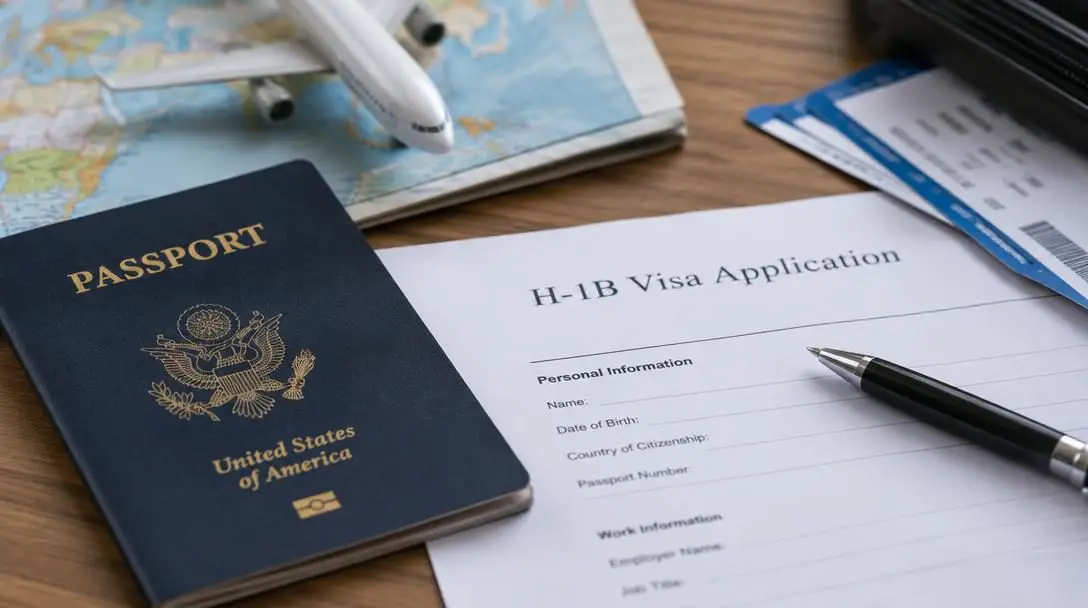
- Technology professionals: Software engineers, computing specialists, system developers, and information technology analysts.
- Healthcare practitioners: Licensed medical doctors, clinical specialists, and associated healthcare experts.
- Engineering experts: Civil, mechanical, electrical, and structural engineers, alongside licensed architects.
- Specialized degree holders: Other specialized professionals whose daily occupational duties depend directly on higher-level academic degrees.
Comparison of H-1B applicant pathways
While the H-1B program is best known for accommodating technical and scientific roles, its regulations encompass different candidate profiles based on academic attainment and industry background. The following table illustrates how criteria and lottery parameters vary across common applicant categories.
| Applicant category | Minimum educational standard | Work experience substitute permitted? | Annual lottery participation |
|---|---|---|---|
| Standard specialty occupation | Bachelor’s degree or equivalent | Yes, equivalent experience accepted | Single general drawing only |
| Advanced degree specialty occupation | Master’s degree or doctorate | Post-graduate academic coursework required | Both general and advanced drawings |
| Prominent fashion model | No degree requirement (waived) | Documented career prominence required | Subject to statutory filing protocols |
The fashion industry prominence exception
While the vast majority of H-1B beneficiaries are technologists, researchers, and engineers with advanced academic degrees, United States immigration law carves out one notable statutory exemption to the higher education standard: fashion models. International fashion models can obtain an H-1B visa to work legally within the American modeling sector without possessing a university degree.
This exception is intentionally narrow. An applicant cannot simply establish an online presence or rely on an active Instagram account to qualify for entry. United States immigration authorities require petitioning models to produce concrete, objective evidence proving that they have attained distinguished standing and a prominent career in the global fashion industry. When an applicant successfully verifies this level of professional prominence, the standard bachelor's degree prerequisite is waived entirely. A high-profile example of this pathway is former First Lady Melania Trump, who originally entered the United States under the H-1B fashion model classification prior to establishing permanent residency.
The annual lottery and selection process
Because the number of foreign professionals seeking an H-1B visa far exceeds the annual cap established under federal law, the United States government utilizes a randomized lottery system to distribute available petitions. Prospective employers submit applicant registrations during an annual open season. The submitted files are pooled together, and a lottery determines which prospective workers earn the opportunity to file a formal petition.
The lottery system is divided into two distinct drawings, creating differing mathematical probabilities depending on an individual’s academic background:
- The First Lottery: Every registered applicant, regardless of degree level, is placed into this general drawing. For individuals holding only a bachelor’s degree or its professional equivalent, this initial pool represents their sole chance of the year to be chosen.
- The Advanced Degree Lottery: Candidates who have earned a master’s degree receive preferential treatment. If an advanced degree holder is not selected during the first general drawing, their application is returned to the pool for a second drawing reserved exclusively for advanced degree candidates. This dual-round mechanic grants master's degree holders a valuable second opportunity at selection.
Step-by-step process to obtaining an H-1B visa
Securing an H-1B visa requires seamless cooperation between the foreign national and an employer based in the United States. Prospective applicants must follow a precise sequence of legal and administrative milestones to maintain eligibility.

- Secure qualifying employment in the United States: Foreign workers cannot apply independently. You must search for, interview with, and secure an official employment offer from a United States employer prior to initiating any visa paperwork.
- Have the employer initiate the petition: The American hiring entity serves as the petitioner. The employer must sign all necessary legal filings, submit the initial registration during the open season, and agree to sponsor the worker.
- Await the results of the annual lottery: The employer submits registration materials into the drawing. The candidate waits to see whether their application is drawn in either the general lottery or the advanced degree lottery.
- Compile supporting documentation: Once selected in the lottery, the candidate and the hiring firm assemble exhaustive proof demonstrating the legitimate operational need for the role, the candidate’s qualifications, and the formal terms of the job offer.
- Complete consular processing and interview: After the United States government approves the preliminary petition paperwork, the foreign worker schedules and attends a formal visa interview at the United States Embassy or Consulate located in their home country.
Essential documentation for consular processing
Once an H-1B petition is approved domestically, the final procedural hurdle requires the applicant to receive an entry visa stamp from a consular officer abroad. Missing or incomplete records can lead to substantial delays or administrative denials. Beneficiaries must organize and bring the following essential documents to their embassy interview:
- Passports: Current passports valid for international travel along with all previously issued passports showing international travel history.
- Proof of fee payments: Official receipts demonstrating that all mandated government processing and application fees have been settled in full.
- Interview appointment letter: The formal scheduling confirmation notice issued by the United States consular service.
- Form I-129 documents: A complete copy of Form I-129 (Petition for a Nonimmigrant Worker) along with the official receipt notice provided by immigration authorities.
- Form I-797 notice of action: A direct copy of Form I-797 verifying that the underlying employer petition has been officially approved.
- Formal job description letter: Comprehensive documentation from the hiring employer detailing job duties, operational responsibilities, and compensation terms.
- Educational and professional credentials: Original university diplomas, academic transcripts, professional certifications, and certified degree equivalency evaluations confirming qualifications.
Common application mistakes to avoid
Navigating the procedural requirements of the H-1B program involves strict deadlines and rigorous regulatory scrutiny. Overlooking basic administrative requirements can derail an otherwise competitive application.
Applicants and petitioning employers frequently encounter difficulties by falling into several recurring procedural traps:
- Attempting self-sponsorship: The H-1B is an employer-driven petition. Foreign candidates who attempt to file on their own behalf without a sponsoring company will see their petitions denied immediately.
- Missing the open season window: Registration and petition submissions are only accepted during a defined annual window. Failing to synchronize credentials and corporate paperwork prior to this open season forces the candidate to wait for the following year's cycle.
- Neglecting home-country exit rules: Every sovereign nation enforces distinct exit regulations, domestic clearances, and tax mandates for citizens departing for temporary foreign employment. Ignoring these local laws can prevent departure even after a United States visa is stamped.
- Submitting incomplete consular files: Arriving at the embassy interview without Form I-129 copies, Form I-797 approval notices, or verified educational credentials routinely results in administrative delays.
- Failing to prove modeling prominence: Applicants seeking the fashion model exemption who rely on unverified claims or social media presence rather than substantiated commercial acclaim will be denied for failing to satisfy the prominence standard.
Frequently asked questions
How long can a foreign worker stay in the US on an H-1B visa?
An H-1B visa is initially granted for a period of up to three years. If the worker meets all statutory conditions and an exception is needed, that stay can be doubled to a total maximum of six years of temporary authorized residency.
Can I apply for an H-1B visa without a job offer?
No. You cannot petition for an H-1B visa independently. A United States-based employer must hire you first and act as your petitioner by signing the paperwork and submitting the application materials on your behalf.
Why do master’s degree holders have an advantage in the lottery?
The selection system uses two separate lottery drawings. Master’s degree holders participate in the first general drawing with all candidates, and if not selected, their envelopes are placed into a second drawing reserved specifically for advanced degree holders, giving them an extra chance to be selected.
What is required to qualify under the fashion modeling exemption?
Fashion models do not need to satisfy the standard bachelor’s degree requirement, but they must provide extensive documentation demonstrating that they have achieved distinguished acclaim and a prominent career within the international fashion modeling industry.
Can an H-1B visa lead to United States citizenship?
Yes. The H-1B visa provides foreign professionals with legal temporary status and an established foothold in the country, which can serve as the starting point for pursuing permanent residency and eventually applying for United States citizenship.
The bottom line
Securing an H-1B nonimmigrant visa requires careful planning, timely coordination with an employer, and patience through the annual lottery process. Because the legal petitioning and consular procedures carry significant processing fees, prospective workers and sponsoring companies should budget both time and financial resources long before the open season begins.
For those selected in the lottery and approved by a United States Embassy or Consulate abroad, the H-1B offers an initial three-year gateway to live and work legally in the United States. With the opportunity to double that stay to six years under qualifying exceptions, the visa serves as both an immediate work authorization and a vital stepping stone toward long-term immigrant status and eventual United States citizenship.