The Insider’s Guide: 5 Ways to Get to Know the Real Morocco
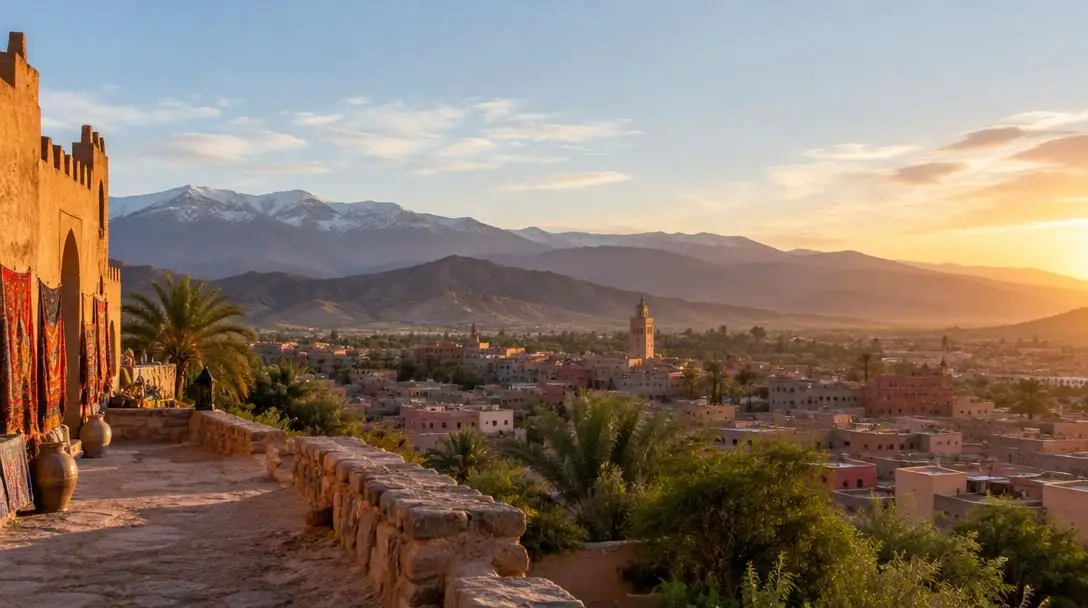
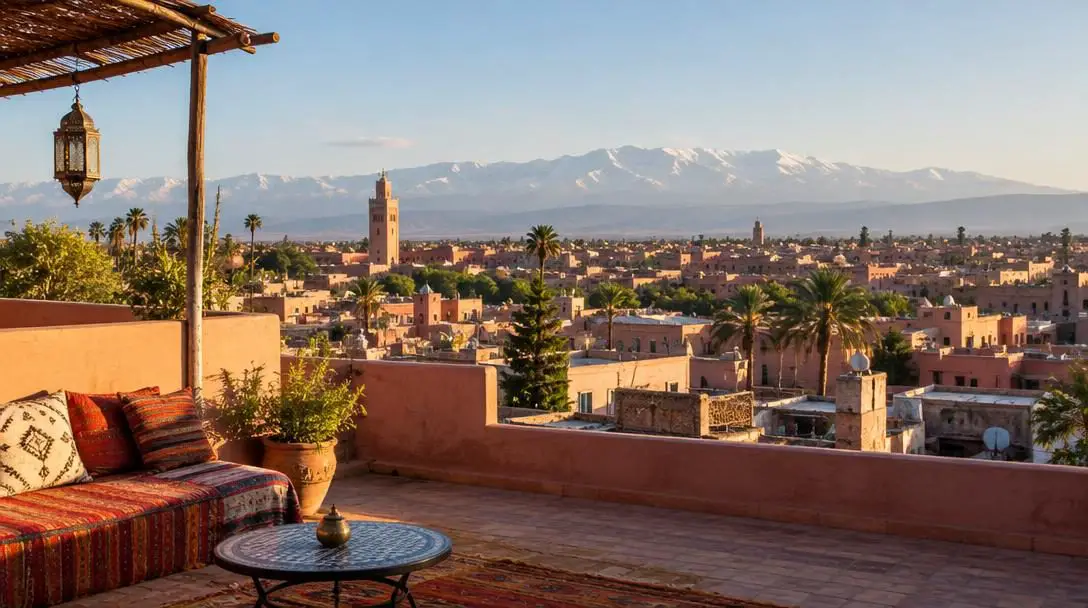
Morocco often captures the imagination of travelers as a land of sweeping sand dunes, labyrinthine medina alleyways, vibrant colors, and timeless architectural traditions. Yet because the country is geographically vast and culturally varied, first-time visitors frequently face a dilemma: how to spend limited travel days in a way that bypasses superficial tourism and reveals the genuine character of the nation. The physical landscape shifts dramatically from the rugged elevations of the Atlas Mountains down to the open expanse of the Sahara Desert, while local architecture transforms from the blue-painted mountain sanctuary of Chefchaouen in the north to the relaxed coastal fishing and surfing hub of Essaouira along the Atlantic.
To truly understand Moroccan life, a traveler must look past standard resort itineraries and engage directly with the daily customs, heritage sites, and manual trades that have shaped local communities across generations. Moroccan identity represents an intricate synthesis of indigenous Berber (Amazigh), Arab, Islamic, and coastal influences. Across thousands of years, these populations developed distinct ways of living calibrated to their environments, from terraced mountain agriculture and desert oasis cultivation to communal urban bathhouses and open-air medieval craft guilds. Experiencing these living traditions firsthand offers an intimate window into the real Morocco.
Key takeaways
- Connecting with indigenous Berber communities in the Atlas Mountains or desert oases like Tagounite reveals ancestral hospitality and regional domestic traditions.
- Fez preserves centuries-old leather tanning methods in three historic facilities using natural stone vats and organic plant dyes.
- The communal hammam serves as an enduring pillar of Moroccan hygiene, social connection, and physical wellness.
- Kelaat M’Gouna celebrates the annual Persian rose harvest every May, highlighting the agricultural bounty hidden within the Dadès Valley.
- Sacred monuments such as Casablanca’s coastal Hassan II Mosque reflect an unbroken legacy of classical Islamic architectural mastercraft.
Roots of Moroccan Heritage and Daily Life
The cultural fabric of Morocco is deeply rooted in regional resilience and resourcefulness. For centuries, trans-Saharan trade caravans crossed unforgiving expanses of sand and gravel, linking remote southern trading posts with royal imperial capitals like Fez and Marrakesh. These demanding trade networks necessitated specialized communal facilities: weary travelers required public bathhouses to wash away the fine desert dust, while imperial markets demanded durable, high-quality manufactured goods made from regional livestock and mountain minerals.
Rather than fading into history, these historical systems remain active, working realities for millions of contemporary residents. In the high ranges, mountain communities continue to maintain terraced settlements and tight-knit communal routines. In agricultural valleys fed by mountain runoff, farmers still nurture seasonal cash crops, from fragrant spring blossoms to sweet autumn dates. Recognizing how these environments intersect allows travelers to appreciate Morocco not as an assortment of postcard backdrops, but as a dynamic cultural landscape.
To truly understand what makes Morocco unique, a traveler must look past standard resort itineraries and engage with the daily customs, heritage sites, and historical trades that have shaped local communities for generations.
Five Ways to Experience the Real Morocco
Gaining an authentic appreciation of Moroccan culture requires engaging with sensory, domestic, and architectural traditions. The following five experiences immerse visitors in the living arts and customs that define the nation.
Berber Hospitality in Tagounite and Mountain Villages
- Indigenous Population: Berber (Amazigh)
- Key Desert Outpost: Tagounite Village in the Draa Oasis
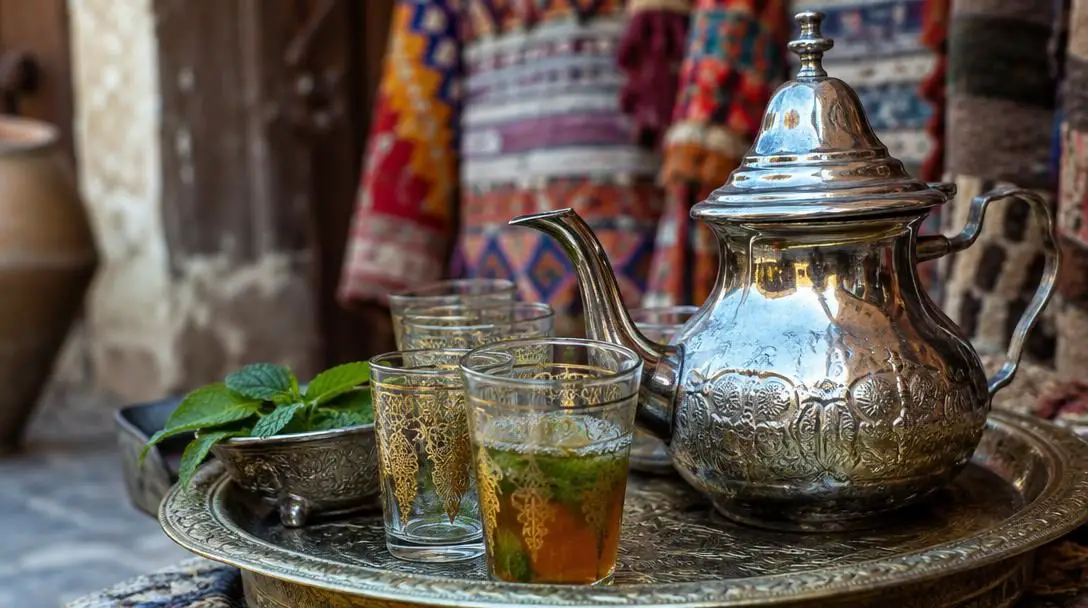
- Primary Custom: Sharing mint tea and home-cooked meals
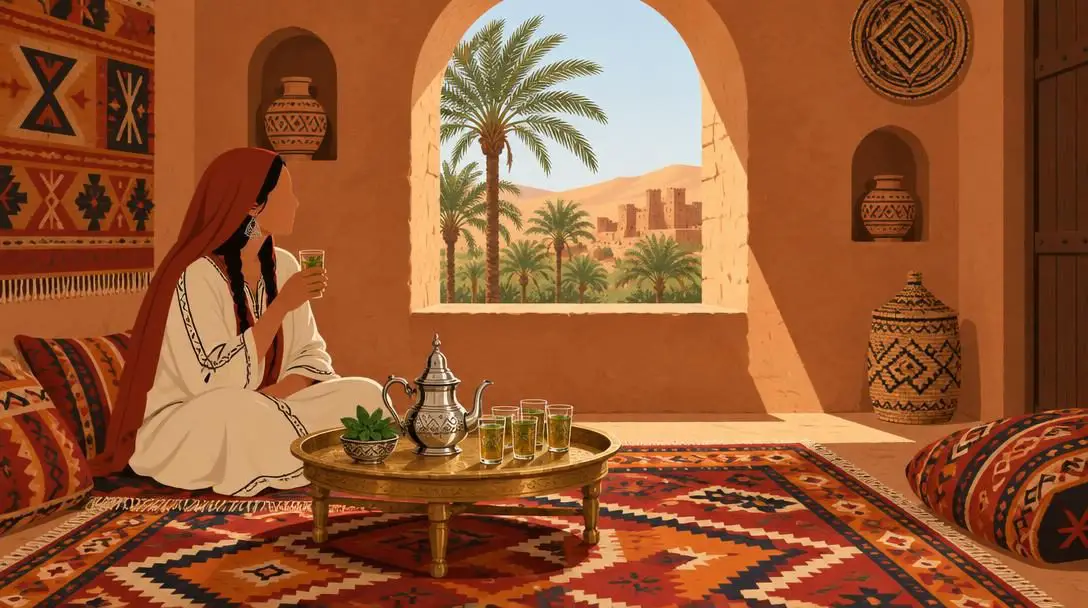
The Berbers represent the original indigenous population of Morocco, maintaining customs and community structures that date back thousands of years. Mountain and desert communities are exceptionally welcoming to respectful outsiders. Travelers can visit family homes to share freshly brewed mint tea, sit down for a simple, home-cooked meal, or arrange an authentic overnight homestay. These visits offer an unfiltered look into domestic routines, generational storytelling, and the warm mountain hospitality for which the Amazigh people are renowned.
At the outer perimeter of the Sahara Desert sits Tagounite Village, situated directly within the Draa Oasis. In this desert outpost, life centers on date palm cultivation and desert living. Visiting a local family home in the oasis reveals how ancestral communities adapted their architecture and water management techniques to thrive in hyper-arid environments, offering a meaningful cultural exchange away from tourist-heavy desert camps.
The Historic Medieval Tanneries of Fez
- Location: Imperial Medina of Fez
- Historic Facilities: Three major operational tanneries
- Natural Dyes: Poppy, indigo, saffron, and mint
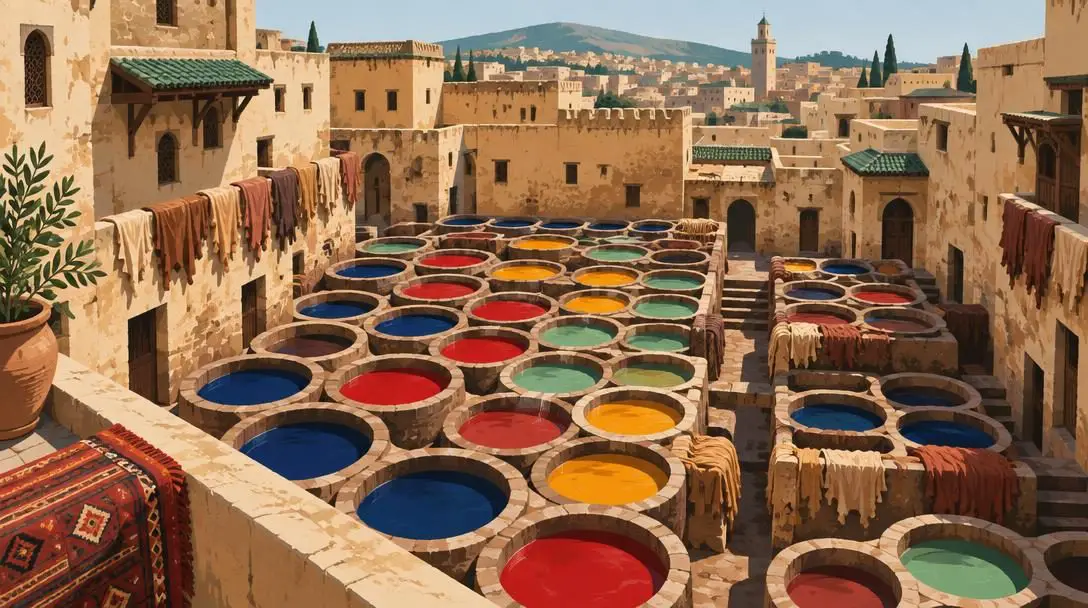
The imperial city of Fez is celebrated for its preserved medieval layout, and at its industrial heart sit three historic tanneries operating precisely as they did in the Middle Ages. In these workshops, the entire leather-making process is carried out completely by hand. Tanners stand knee-deep in monumental stone vats, stripping raw hides of animal hair using traditional mixtures before washing, curing, and treating the leather for market.
The curing process utilizes natural ammonia derived from pigeon poo, which lends the open-air pits an intense, lingering odor. To help temper this pungent atmosphere, rooftop custodians hand visitors fresh sprigs of mint to hold against their noses. The dye pits themselves display an astonishing array of natural color: bright red is created using crushed poppies, deep blue comes from indigo, vibrant yellow is derived from saffron, and mint leaves are processed to produce natural green dye. Watching this honeycomb of colorful stone vats from an overhead terrace offers an unforgettable glimpse of working medieval chemistry.
The Traditional Moroccan Hammam
- Core Purpose: Public hygiene, social bonding, and prayer preparation
- Signature Cleanser: Black olive-based soap
- Key Finish: Therapeutic argan oil massage or body clay
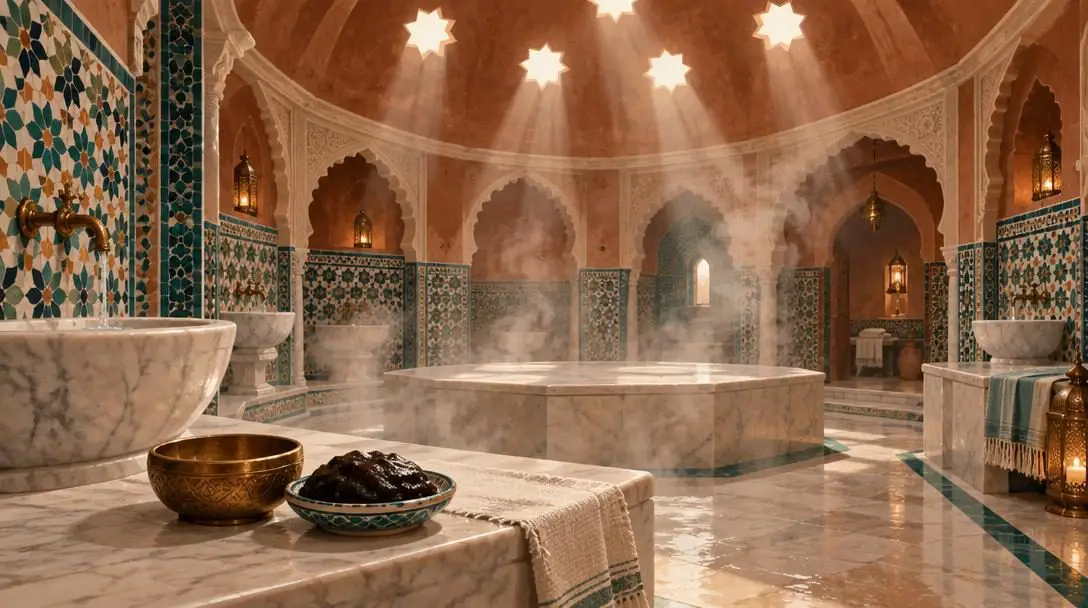
Taking part in a traditional hammam is far more than an ordinary spa treatment. The ritual originated during an era when private residential plumbing did not exist, creating a communal necessity for men and women to visit designated public bathhouses to bathe, converse with neighbors, and purify themselves prior to daily prayers. Today, the hammam remains a foundational pillar of community wellness throughout Moroccan towns and cities.
The hammam process begins by sitting inside a dense, steam-filled chamber to soften the skin and open the pores, often accompanied by alternating hot and cold water rinses to boost circulation. An attendant applies a coating of rich, black olive-based soap before performing an intensive full-body exfoliation using an abrasive mitt to remove dead skin cells. The treatment concludes with a revitalizing natural clay wrap or a soothing massage using native argan oil, leaving bathers profoundly refreshed.
The Rose Harvest of Kelaat M’Gouna
- Location: Dadès Valley
- Timing: Second weekend in May (two-day celebration)
- Featured Flora: Persian rose (Rosa damascena)
While many visitors associate Morocco exclusively with dry mountain scree and sand dunes, the Dadès Valley harbors extraordinarily lush agricultural basins. The town of Kelaat M’Gouna is the epicenter of Moroccan rose cultivation, hosting an annual Rose Festival that celebrates the Persian rose harvest. Held over two days during the second weekend of May, the festival marks the gathering of millions of fragrant pink blossoms, which are distilled into prized rosewater, perfumes, cosmetic lotions, and culinary flavorings.
Even outside of the brief spring blooming window, an excursion into this river valley is deeply rewarding. Visitors can walk through tranquil date palm groves, explore historic earthen clay architecture, and witness local mosques silhouetted against the dramatic, jagged cliffs of the Atlas Mountains. The region demonstrates how seasonal mountain runoff transforms desert riverbeds into flourishing green corridors.
Sacred Architecture and Night Skies: Hassan II Mosque
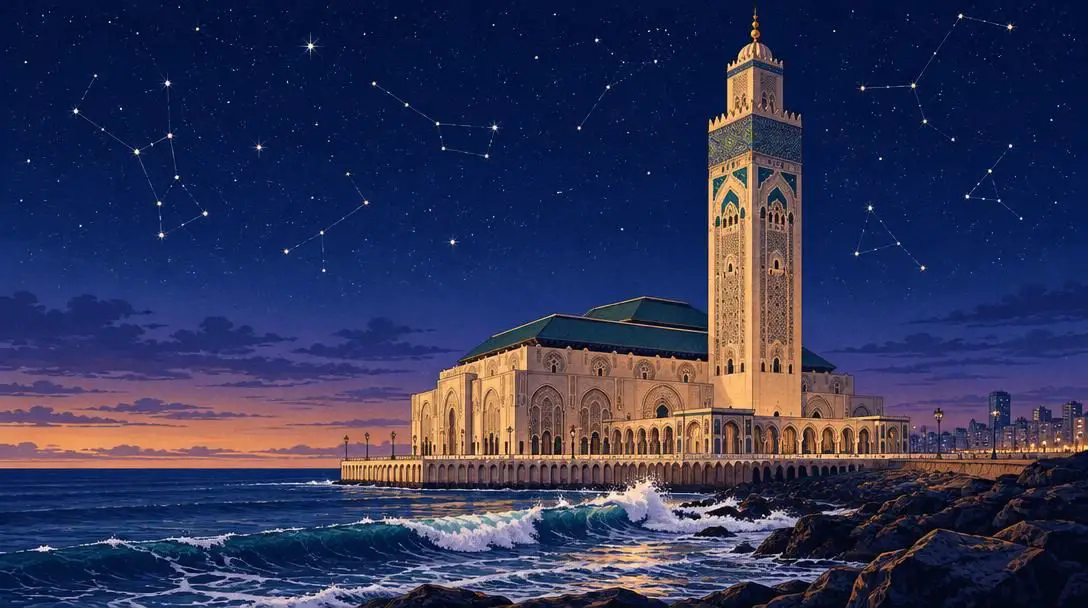
- Location: Atlantic Ocean seawall, Casablanca
- Minaret Height: 690 feet
- Distinction: Largest mosque on the African continent
To comprehend the spiritual craftsmanship of Morocco, one must explore its grand sacred architecture. The crowning modern achievement of Moroccan religious construction is the Hassan II Mosque, anchored directly on a rocky seawall overlooking the Atlantic Ocean in Casablanca. The complex features a 690-foot minaret, the tallest structure of its kind in the region, crowned with a focused laser beam that projects outward across the evening sky pointed directly toward Mecca.
The construction incorporates historic design elements and aesthetic reverence from celebrated Islamic sanctuaries, including the Dome of the Rock in Jerusalem, the Grand Mosque of Damascus, and Marrakesh’s iconic Koutoubia Mosque. Complementing this sacred architectural grandeur is Morocco’s natural night sky. From the high ridges of the Atlas range to the rolling dunes of the Sahara Desert, minimal light pollution ensures that the night skies appear exceptionally bright and clear, providing world-class stargazing opportunities.
At a Glance: Authentic Cultural Encounters
Morocco's primary cultural traditions reflect the diverse ecosystems and historical demands of the regions where they developed. The table below compares the foundational experiences that showcase this living heritage.
| Experience | Primary Region | Cultural Purpose | Defining Characteristic |
|---|---|---|---|
| Berber Homestay | Atlas Mountains & Tagounite | Domestic hospitality and heritage | Mint tea, communal meals, and oasis farming |
| Medieval Tanneries | Fez Medina | Manual leather curing and dyeing | Stone dye vats, pigeon ammonia, and natural pigments |
| Communal Hammam | Nationwide (Towns and Medinas) | Hygiene, wellness, and spiritual preparation | Steam chambers, black soap, and vigorous exfoliation |
| Rose Festival | Kelaat M’Gouna (Dadès Valley) | Harvest celebration and distillation | Persian rose fields, cosmetic production, and clay kasbahs |
| Sacred Architecture | Casablanca (Atlantic Coast) | Spiritual monument and artistic expression | 690-foot minaret, oceanfront setting, and Mecca laser |
How to Plan an Immersive Moroccan Journey
Engaging deeply with Moroccan customs requires mindful route management and cultural sensitivity. Rushing between distant cities causes fatigue and reduces opportunities for meaningful interaction.
- Align dates with regional seasons: If attending the Kelaat M’Gouna Rose Festival is a priority, book travel specifically to include the second weekend in May; for mountain trekking and desert exploration, target spring or autumn to avoid extreme summer heat.
- Partner with reputable local guides: Arrange homestays or village walks in Tagounite and the Atlas Mountains through certified operators who maintain fair, established ties with indigenous Amazigh families.
- Prepare for medina craft quarters: Carry cash for small gratuities when visiting artisan rooftops in Fez, and accept the sprigs of fresh mint offered by shopkeepers to buffer the tannery aromas.
- Familiarize yourself with hammam protocol: Decide in advance whether you prefer an authentic neighborhood public bathhouse or a private establishment, and communicate your exfoliation pressure preferences clearly to your attendant.
- Carry appropriate desert and mountain clothing: Pack comfortable warm clothing alongside lightweight daylight attire, as nighttime temperatures in the desert sands and alpine elevations plummet rapidly.
Mistakes to Avoid When Exploring Morocco
First-time visitors navigating Morocco’s lively medinas, remote valleys, and sacred sites can avoid common cultural misunderstandings and travel stresses by steering clear of several frequent missteps.
- Overpacking the itinerary: Attempting to link Chefchaouen, Casablanca, Fez, the Atlas range, and the Sahara Desert into a short trip leaves little time to absorb the character of each distinct region.
- Ignoring domestic etiquette: When welcomed into an indigenous Berber home, follow your host's lead by removing shoes at the entrance if requested and always asking permission before photographing family members or living spaces.
- Refusing the mint leaves in Fez: Disregarding the fresh mint offered at tannery entrances out of pride often cuts rooftop visits short due to the overwhelming natural ammonia fumes.
- Assuming the country is uniformly warm: High-altitude Atlas settlements and windswept Saharan dunes grow bitterly cold after sunset, catching travelers who packed only light summer garments off guard.
Frequently asked questions
When does the Kelaat M’Gouna Rose Festival take place?
The festival occurs over two days during the second weekend of May to coincide with the annual harvest of the Persian rose in the Dadès Valley.
Why do tanners in Fez use pigeon droppings?
Pigeon droppings provide a natural source of ammonia, which softens and purifies raw animal hides in large stone vats prior to the dyeing process.
What natural ingredients produce the colors in the Fez dye pits?
The historic tanneries derive their dyes from organic materials: poppies yield red, indigo creates deep blue, saffron produces vibrant yellow, and mint leaves generate green.
What is the significance of the laser on the Hassan II Mosque?
Mounted atop the 690-foot minaret, the high-powered laser illuminates the evening sky pointing directly toward Mecca, signaling the spiritual orientation of Islamic prayer.
Where can travelers experience an authentic Berber oasis homestay?
Tagounite Village, situated at the edge of the Sahara Desert within the Draa Oasis, offers opportunities to visit traditional Berber homes centered around date palm farming.
The bottom line
Morocco is far more than a set of scenic sights; it is a living mosaic of distinct traditions sustained by people who continue to practice ancestral trades with pride. Whether sipping hot mint tea in a family home in the Draa Oasis, watching dye workers master natural pigments in Fez, or listening to the Atlantic surf crash against the foundations of the Hassan II Mosque, cultural discovery comes to those who travel slowly and respectfully. By seeking out authentic experiences that support local artisans and communities, travelers unlock the enduring soul of this ancient kingdom.