The Advancements in Computer Vision for Autonomous Systems
Computer vision has fundamentally transformed how automated machines interact with the physical world. Originating alongside the earliest digital computers in the mid-twentieth century, the discipline has progressed from rudimentary optical experiments to become the core sensory engine behind modern autonomous systems. These self-contained platforms operate across transportation, aerial monitoring, and industrial manufacturing without requiring constant human intervention, delivering substantial gains in operational safety, logistical efficiency, and production cost reductions.
As autonomous technologies expand into complex real-world settings, the demand for sophisticated visual intelligence has surged. By combining advanced camera arrays and deep learning algorithms, automated platforms can now perceive, interpret, and react to dynamic environments within fractions of a second. Understanding the architectural mechanics, historical evolution, implementation workflows, and practical challenges of computer vision offers valuable insight into how automation is actively reshaping modern industry.
Key takeaways
- Computer vision enables autonomous systems to perceive, interpret, and react to dynamic physical environments in real time without human intervention.
- Modern vision architectures rely on a multi-stage pipeline encompassing visual data ingestion, deep learning pattern processing, semantic segmentation, and 3D spatial reconstruction.
- Self-driving cars, autonomous aerial drones, and intelligent industrial robots serve as the primary operational platforms driving the adoption of visual AI.
- Engineering teams must actively mitigate real-world hazards, including environmental interference, overly narrow training datasets, computational latency, and data privacy vulnerabilities.
- Emerging integrations with 5G connectivity, edge computing architectures, and generative artificial intelligence are expanding visual automation into agriculture, healthcare, and global supply chains.
The Historical Evolution of Autonomous Computer Vision
The foundation of computer vision dates back to the 1950s, emerging in parallel with the invention of the digital computer. In these nascent stages, early vision systems were strictly constrained by processing limitations and were restricted to basic object recognition and tracking tasks. These experimental setups demonstrated that an electronic processor could translate optical light patterns into binary signals, allowing machines to differentiate simple, high-contrast geometric shapes positioned against completely static backgrounds.
A transformative shift occurred during the 1980s with the introduction of machine learning algorithms. Prior to this breakthrough, vision systems relied almost entirely on brittle, hard-coded rules written manually by programmers to describe boundaries, corners, and light values. Machine learning replaced these rigid instructions with statistical and mathematical models, granting algorithms the ability to infer visual features directly from training examples. This algorithmic leap unlocked the first wave of commercially viable visual processing applications, establishing the technological foundation for automated handwriting recognition, biometric facial verification, and early diagnostic medical imaging.
Over recent decades, visual computing has transitioned from passive post-processing of static imagery to the active, low-latency engine powering true physical autonomy. Rather than merely categorizing an image after the fact, contemporary systems must continuously evaluate unpredictable real-world scenes as they unfold. Modern autonomous platforms—ranging from autonomous ground vehicles to aerial drones and collaborative industrial robots—rely on these accelerated visual models to navigate dense physical spaces, evade dynamic hazards, and carry out high-precision tasks under constantly fluctuating operating conditions.
How Computer Vision Operates Inside Autonomous Systems
To safely navigate physical space, an autonomous platform must bridge the divide between incoming optical light and algorithmic decision-making. Replicating cognitive awareness requires a sophisticated, sequential perception pipeline that translates raw sensor streams into actionable mechanical directives.
The operational pipeline begins with visual data ingestion. Dedicated optical cameras, infrared sensors, and complementary imaging devices continuously capture multi-angle visual feeds from the surrounding territory. These live image streams represent the primary sensory baseline for the host vehicle or robotic platform, feeding a steady flow of high-resolution digital frames directly into onboard computational units.
Once visual feeds enter the system, they undergo pattern processing powered by deep learning networks. These multi-layered neural architectures are trained on vast volumes of curated imagery, allowing them to extract subtle spatial features, identify complex patterns, and make real-time statistical predictions regarding what the visual feed contains.
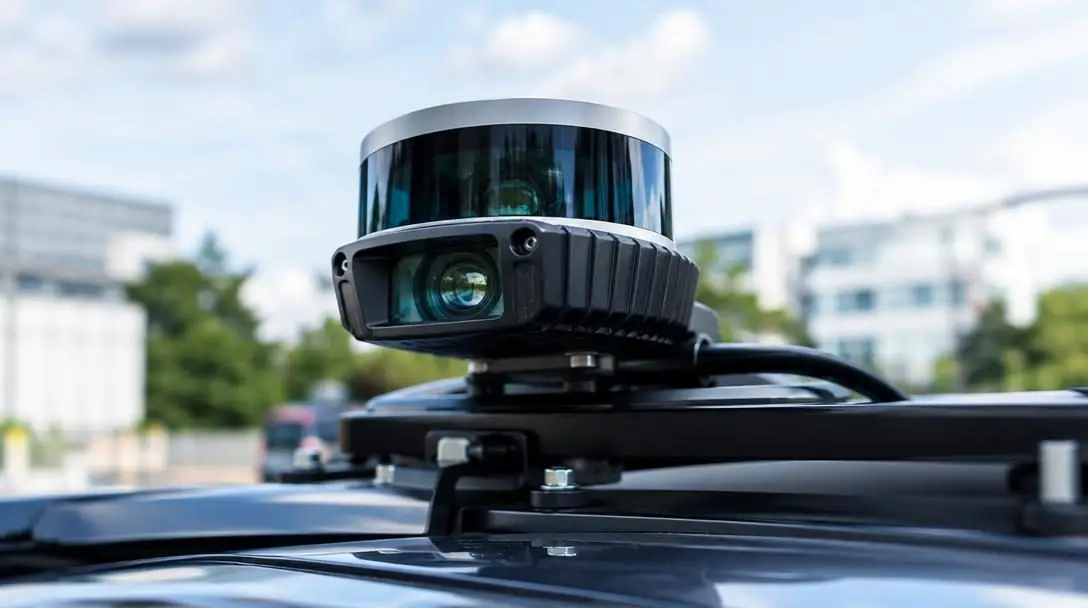
With features extracted, the system engages in real-time object detection and recognition. At this stage, the perception model classifies identified shapes into distinct functional categories, assessing whether an item is an obstacle, a navigational landmark, or a fellow dynamic actor. Simultaneously, tracking algorithms determine whether the recognized object is stationary or moving, computing its precise distance, velocity, and trajectory relative to the autonomous host.
To contextualize these detections within the broader environment, the pipeline applies semantic segmentation. Instead of drawing loose rectangular bounding boxes around distinct shapes, semantic segmentation classifies every individual pixel within a frame into distinct environmental classes. Through this process, the system clearly differentiates between drivable roadway surfaces, pedestrian walkways, curbs, road signs, dynamic obstacles, and incidental background scenery, ensuring a comprehensive contextual map of the scene.
Because physical movement occurs in a three-dimensional world, the perception layer subsequently conducts 3D reconstruction. By correlating overlapping two-dimensional visual frames taken from stereoscopic camera setups or motion-displaced viewpoints, the software builds an accurate, scaled 3D spatial representation of the surrounding space. This spatial modeling provides the depth perception and volumetric awareness required for collision avoidance, clearance calculation, and physical manipulation.
Finally, this rich perceptual model is relayed to the system's core control unit for instant real-time reaction. The control architecture translates visual data into physical motion, commanding the platform to brake, steer, alter flight altitude, or adjust a robotic manipulator without requiring human oversight.
True autonomy requires machines to possess the ability to perceive, interpret, and react to their environment dynamically in real time.
Core Autonomous Platforms Powered by Computer Vision
The deployment of computer vision across autonomous machinery has reshaped several major commercial and industrial sectors. Transportation, aerial monitoring, and industrial manufacturing represent the three primary disciplines where visual automation delivers the greatest immediate operational value.
| Autonomous Platform | Primary Operational Domain | Core Vision Tasks | Key Industrial Objectives |
|---|---|---|---|
| Self-Driving Cars | Public roadways and urban transit corridors | Lane detection, pedestrian tracking, traffic sign reading | Accident reduction, enhanced traffic flow, transport efficiency |
| Autonomous Drones | Uncontrolled low-altitude airspace | Aerial surveillance, obstacle avoidance, 3D flight path modeling | Search and rescue, expedited package delivery, aerial inspection |
| Industrial and Surgical Robots | Warehouses, assembly lines, and operating suites | Sub-millimeter manipulation, parcel sorting, contextual object grasping | Manufacturing throughput, cost minimization, surgical precision |
Self-Driving Cars
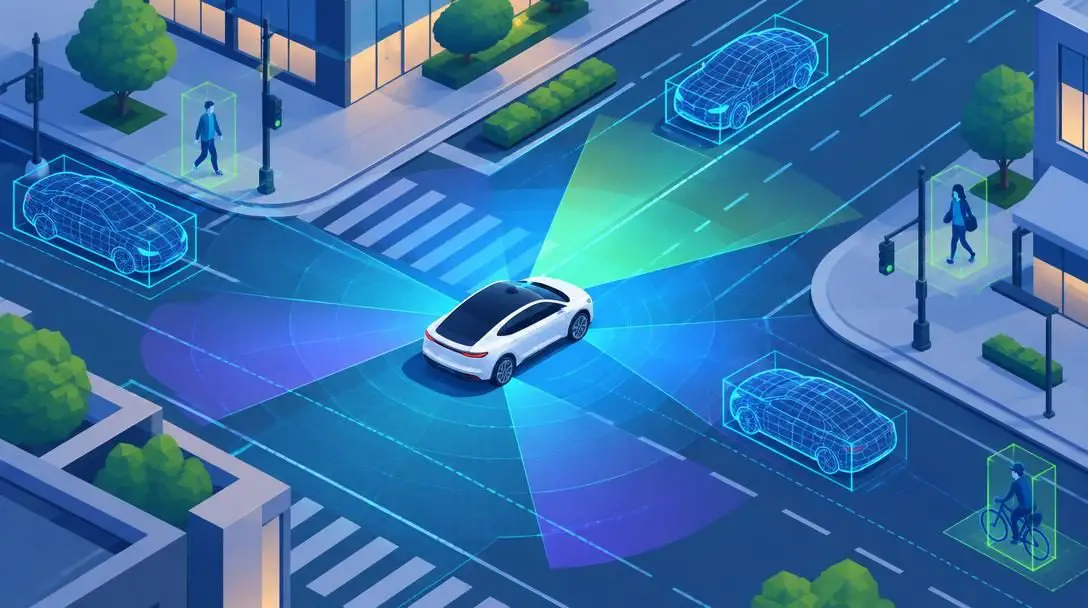
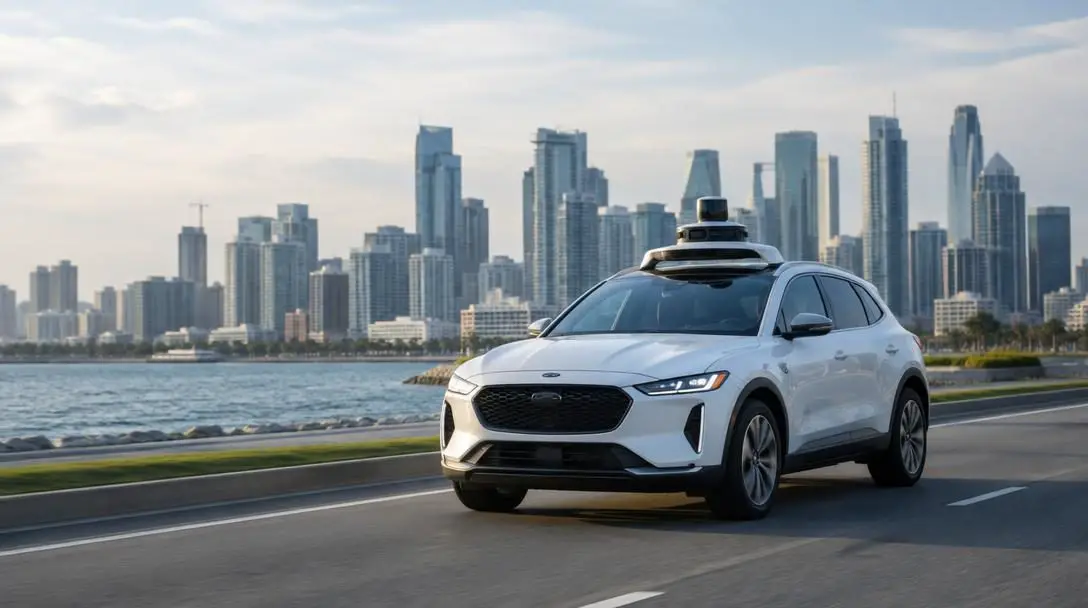
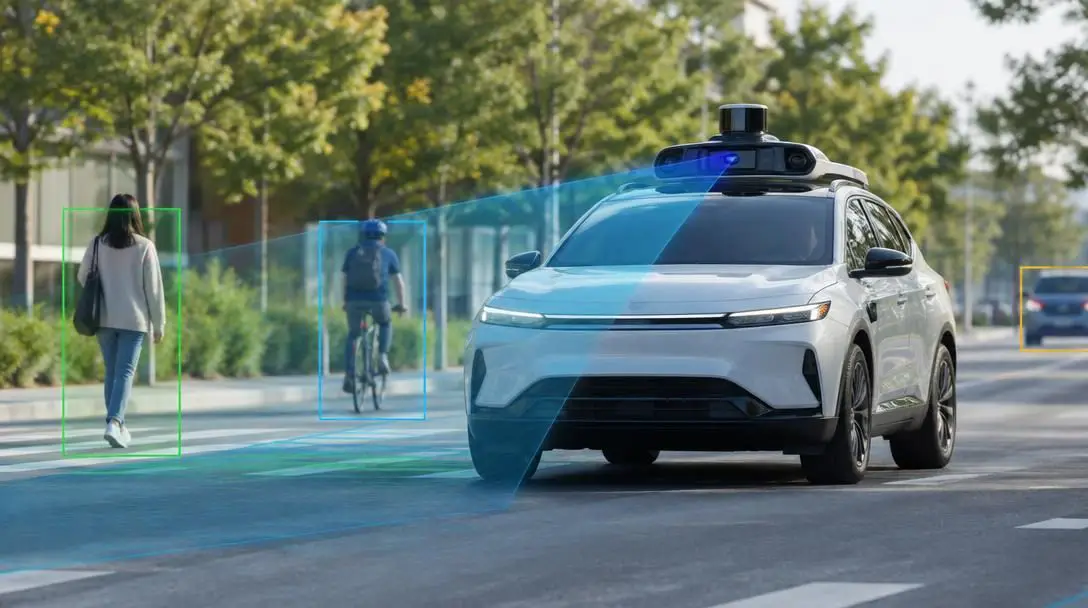
Self-driving cars represent one of the most visible implementations of visual autonomy. These passenger and commercial vehicles deploy an array of synchronized optical cameras and sensors to evaluate high-speed traffic environments. Deep learning vision models identify structural road features such as lane boundaries, speed limit signs, crosswalks, and signal lights while concurrently tracking pedestrians, cyclists, and nearby motor vehicles. By interpreting this visual data instantly, self-driving cars calculate safe braking distances and execute adaptive lane changes, presenting a transformative opportunity to eliminate collisions caused by human error while improving overall transit efficiency.
Autonomous Drones
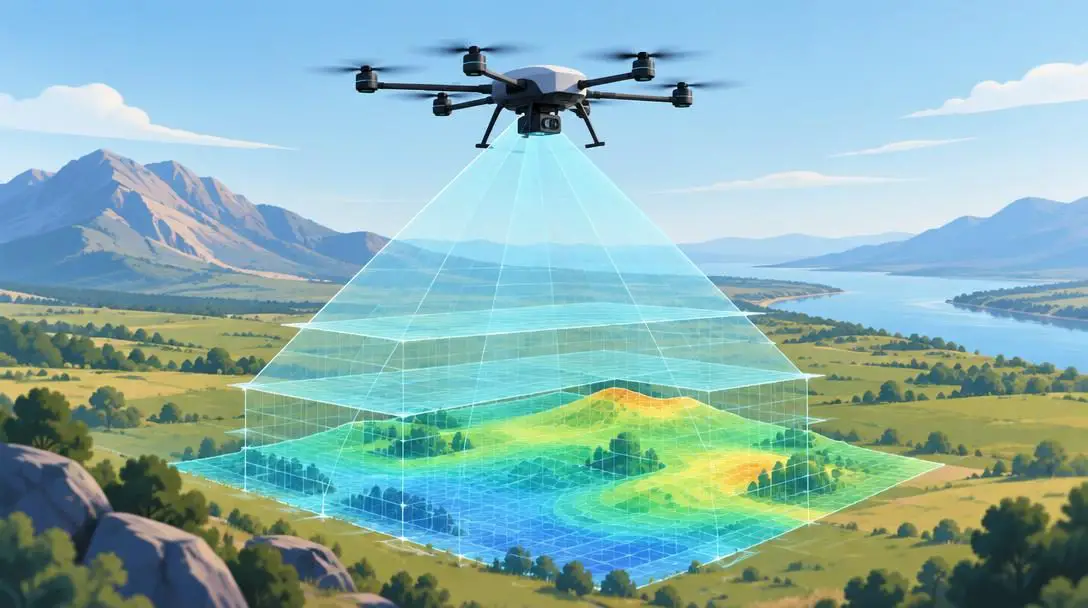
Unmanned aerial vehicles, commonly known as drones, depend heavily on computer vision to navigate complex three-dimensional air corridors where GPS signals may be degraded or obstructed. Outfitted with high-speed imaging sensors, autonomous drones continuously construct three-dimensional environmental models of their flight corridors in real time. This capability enables rapid obstacle detection and evasive maneuvers around power lines, tree branches, and building facades. These automated flight capabilities have made drones vital tools for disaster search and rescue operations, high-angle infrastructure inspections, aerial security monitoring, and rapid last-mile package delivery.
Industrial and Surgical Robots
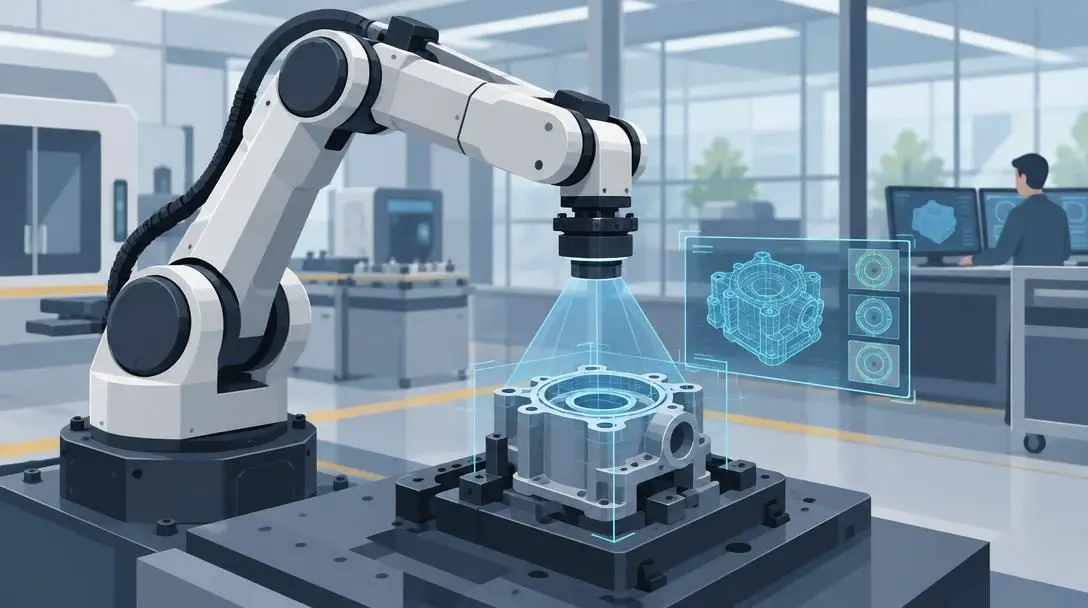
In stationary industrial and specialized clinical settings, intelligent robotics leverage computer vision to interact directly with physical objects. In automated fulfillment centers and modern automotive assembly facilities, robotic arms equipped with visual recognition locate, pick, verify, and pack items moving along conveyor systems at rapid speeds. In healthcare environments, vision-guided surgical robots assist medical professionals by generating high-resolution spatial models of delicate internal tissues. This visual feedback allows surgical platforms to execute micro-scale incisions and object manipulations with a degree of steadiness and repeatability that exceeds unaided human physical limits, driving lower operating costs and elevated operational accuracy.
Step-by-Step Implementation of Autonomous Vision Pipelines
Deploying a functional computer vision architecture into an autonomous machine demands a methodical engineering workflow. To ensure stable execution, organizations typically follow a standardized seven-step operational framework:
- Define the Operating Scope: Formulate the exact operational domain of the autonomous hardware. Establish whether the machine will function in predictable indoor environments, such as a climate-controlled warehouse, or in volatile outdoor conditions characterized by precipitation, shifting daylight, and dynamic foot traffic.
- Select and Integrate Hardware: Procure specialized high-resolution optical cameras and complementary sensors matching the operational profile. Mount these sensors rigidly to the chassis and link them directly to onboard computational processing units capable of executing high-throughput deep neural inferences in real time.
- Collect and Prepare Large Datasets: Gather diverse visual training data representing the full spectrum of environmental layouts, lighting shifts, surface textures, and physical obstacles the machine will encounter during field deployment.
- Train Object Detection and Recognition Models: Train specialized deep learning networks on annotated imagery to classify critical visual elements, verifying that the algorithms can reliably distinguish dynamic hazards, navigational waypoints, and humans with minimal false positives.
- Implement Semantic Segmentation: Deploy secondary pixel-level segmentation models to partition the visual frame into actionable zones, enabling the control processor to distinguish navigable paths from impassable barriers, curbs, and boundaries.
- Incorporate 3D Reconstruction: Integrate stereoscopic or multi-view geometric software pipelines that convert two-dimensional camera feeds into cohesive, dimensionally accurate 3D spatial models of the surrounding terrain.
- Perform Rigorous Real-Time Testing: Validate the integrated vision architecture within isolated, controlled test environments to evaluate end-to-end communication between the perception pipeline and mechanical actuators before sanctioning public or high-risk field deployments.
Common Engineering Mistakes and Implementation Pitfalls
Developing vision architectures for autonomous systems presents complex algorithmic and operational challenges. Engineering teams often run into specific design missteps that degrade performance or compromise physical safety:
- Underestimating Environmental Factors: System performance frequently collapses when real-world ambient conditions diverge from lab settings. Relying on vision models calibrated solely in bright daylight often leads to perception failures when hardware faces heavy rain, dense fog, snow, harsh direct glare, or deep nighttime shadows.
- Relying on Overly Narrow Training Data: Deep learning networks cannot generalize beyond the boundaries of their historical training distributions. Datasets that lack geographic variety, rare edge cases, or diverse object categories result in algorithms that fail to detect unfamiliar obstacles in real-world scenarios.
- Neglecting Data Privacy and Security Protections: Autonomous vision platforms continuously collect high-resolution footage containing personal identifying information, including vehicle license plates and human faces. Inadequate local encryption or unsecure network transmission links expose operators to regulatory penalties and catastrophic data breaches.
- Overlooking Onboard Latency Constraints: Engineering models with excessive computational depth introduces processing lag. In fast-moving vehicles or aerial drones, even fractional latency delays during frame analysis can prevent the physical platform from executing collision avoidance maneuvers in time.
- Ignoring Broader Ethical and Societal Impacts: Deploying automated visual machinery without evaluating downstream human impacts creates significant friction. Widespread automation risks displacing human labor across logistics and assembly lines, while deploying fully autonomous visual platforms in military or surveillance environments introduces intense ethical controversy that demands strict operational boundaries.
Future Directions in Autonomous Visual Intelligence
The capabilities of vision-guided autonomous systems are positioned to expand rapidly as adjacent hardware and software technologies converge. The ongoing deployment of high-speed 5G networks, edge computing hardware, and Internet of Things (IoT) ecosystems will grant autonomous platforms the ability to process data locally while instantaneously exchanging perception data with neighboring machines. This vehicle-to-everything (V2X) and machine-to-machine connectivity allows autonomous fleets to share real-time alerts regarding obscured road hazards, changing weather conditions, or blocked pathways long before an individual unit's onboard cameras make direct visual contact.
At the algorithmic level, emerging artificial intelligence paradigms are significantly improving machine adaptability. Frameworks utilizing reinforcement learning enable automated platforms to optimize navigational and manipulation strategies through continuous environmental interaction. Concurrently, generative adversarial networks (GANs) allow engineers to simulate complex edge cases and alternative operating environments programmatically, eliminating the need to gather millions of physical training miles to prepare models for rare weather events or unpredictable pedestrian behaviors.
These architectural refinements are driving autonomous vision into sectors far beyond traditional transit and manufacturing. In commercial agriculture, vision-guided autonomous tractors and aerial drones visually inspect crop canopies, monitor soil conditions, detect invasive weeds, and manage selective harvesting. In healthcare, vision-assisted platforms are expanding from surgical suites into patient care facilities to monitor mobility and rehabilitation. In global logistics, automated delivery pods and visual sorting systems continue to streamline warehouse operations and supply chains from dock to door. Managing environmental vulnerabilities, protecting private visual data, and navigating workforce transitions will remain critical imperatives as these visual technologies mature.
Frequently asked questions
What is the difference between computer vision and basic object recognition?
Basic object recognition is a single task within computer vision focused simply on identifying and labeling an item in an image. Computer vision is an expansive scientific discipline that encompasses the entire perceptual workflow, including optical data acquisition, image pre-processing, feature extraction, semantic segmentation, 3D spatial modeling, and contextual scene comprehension.
How does semantic segmentation help a self-driving car navigate?
Semantic segmentation categorizes every individual pixel in a camera feed into meaningful classes such as road surface, sidewalk, vehicle, pedestrian, or signage. This fine-grained classification allows the vehicle's control computer to clearly identify drivable corridors and distinguish structural road boundaries from moving obstacles.
Why is 3D reconstruction necessary if cameras already provide high-resolution images?
Standard cameras capture physical light as flattened two-dimensional pixel arrays lacking direct depth data. Because autonomous systems operate in three-dimensional space, they must reconstruct volumetric 3D models from overlapping 2D frames to calculate exact physical distances, obstacle dimensions, and spatial clearances.
What causes computer vision systems to fail in bad weather?
Adverse weather such as heavy precipitation, thick fog, blowing snow, or road spray degrades optical clarity, diffuses environmental light, and obscures physical boundaries. If the underlying deep learning models were trained predominantly on clear, well-lit imagery, they struggle to extract the geometric features necessary to identify hazards accurately.
How do edge computing architectures improve autonomous vision performance?
Edge computing processes visual data directly on local onboard hardware mounted to the autonomous machine rather than transmitting frames to remote cloud servers. This local processing minimizes communication latency, allowing the system to detect obstacles and trigger emergency physical reactions in real time.
The bottom line
Computer vision has evolved from simple pattern-matching experiments in early computer science into an indispensable perceptual pillar of modern automation. By transforming continuous optical inputs into rich, three-dimensional environmental understanding, visual AI enables autonomous vehicles, aerial drones, and industrial robots to navigate and manipulate the real world safely and efficiently. While challenges surrounding environmental resilience, data privacy, onboard latency, and ethical deployment persist, continuous advances in deep learning, edge computing, and sensor integration ensure that vision-driven autonomous systems will remain central to the ongoing evolution of industrial technology.