The Digital Divide: Addressing Inequalities in Access to Technology

Technology has fundamentally transformed modern society, altering how communities access education, manage personal healthcare, pursue employment, and stay connected with the wider world. While modern economies increasingly assume that every citizen possesses a baseline level of connectivity, this rapid shift has exposed severe disparities. The gap separating those with dependable digital access from those left offline—widely known as the digital divide—creates deep systemic inequalities that limit human potential and reinforce historical disadvantages.
Far from a simple matter of convenience, digital access has become an essential prerequisite for economic security and civic participation. When public agencies, healthcare networks, and job markets migrate to digital-only platforms, disconnected populations face compound barriers to basic social mobility. Bridging this gap requires understanding the intersecting economic, geographic, and societal forces that restrict access, as well as the multi-layered solutions necessary to establish genuine, lasting digital inclusion.
Key takeaways
- The digital divide represents an unequal distribution of physical infrastructure, personal computing hardware, and technical literacy across populations.
- Around half of the world's population remains without internet access according to the International Telecommunication Union, while roughly 10% of Americans lack home broadband according to the Pew Research Center.
- Meaningful digital equity demands a three-tier model combining physical broadband infrastructure, affordable hardware subscriptions, and comprehensive digital literacy training.
- Smartphones cannot fully substitute for personal computers when individuals need to complete complex academic coursework, prepare resumes, or navigate specialized job tools.
- Lasting community interventions must engage local residents directly and establish sustainable funding models rather than relying on one-off hardware giveaways.
The Scope of Global and Domestic Disparities
The digital divide is not isolated to developing nations; it persists across both emerging economies and highly industrialized countries. According to research from the International Telecommunication Union, approximately half of the global population still lacks internet access entirely, with the heaviest concentration of disconnected individuals residing in low- and middle-income nations. In regions without basic telecommunications infrastructure, whole communities remain shut out from global knowledge systems, commercial trade networks, and modern educational tools.
Even within developed nations boasting extensive technical innovation, connectivity remains fundamentally uneven. In the United States, data from the Pew Research Center reveals that roughly 10% of Americans do not possess high-speed internet service at home. This domestic shortfall is particularly concentrated within low-income metropolitan neighborhoods and remote rural towns, demonstrating that overall national wealth does not guarantee equitable technological access across all demographics.
Four Driving Factors Behind the Connectivity Gap
The digital divide does not stem from a single logistical failure. Instead, it is perpetuated by multiple overlapping barriers that compound one another:
- Economic barriers: The cost of consumer technology presents an insurmountable obstacle for many families. Purchasing modern desktop or laptop hardware requires substantial upfront capital, while recurring broadband subscription fees strain household budgets that are already stretched thin by housing, food, and energy expenses.
- Geographic barriers: Terrain, distance, and population density dictate where private telecommunications providers deploy physical networks. In sparsely populated rural regions, the high capital cost of laying fiber-optic cables or erecting cellular transmission towers frequently discourages commercial investment without public subsidies.
- Educational barriers: Mere physical access to equipment does not guarantee effective use. Without baseline technical literacy, individuals struggle to navigate modern operating systems, evaluate the credibility of online information, or maintain digital privacy. Those who miss out on digital education during their formal schooling face steep learning curves in adult life.
- Societal and cultural barriers: Mainstream software and hardware architectures often exclude marginalized populations. Individuals with physical or cognitive disabilities encounter platforms lacking assistive device compatibility, while non-native language speakers face interfaces designed exclusively in dominant languages without multilingual accommodations.
Bridging the digital divide requires far more than handing out devices; it demands reliable infrastructure, affordable service, and ongoing digital literacy training.
The Real-World Consequences of Digital Disconnection
When individuals are cut off from digital resources, the impacts ripple across every sphere of everyday life, transforming routine responsibilities into formidable challenges.
In the academic sector, students lacking personal computers or home internet access struggle to complete homework, conduct research, submit assignments, or participate in distance learning programs. This dynamic, commonly referred to as the homework gap, systematically suppresses academic achievement among low-income students.
In the modern economy, hiring practices have transitioned almost entirely to web portals. Job seekers without regular connectivity face extreme hurdles when searching for openings, creating digital resumes, or submitting online applications. Furthermore, the absence of daily exposure to software tools prevents workers from developing the technical competencies required by modern employers, restricting them to low-wage employment tracks.

Civic life and healthcare are similarly degraded by digital exclusion. Citizens without internet access face significant difficulty monitoring municipal policy changes, scheduling appointments at public agencies, or reviewing public records. In healthcare, rural and underserved urban populations miss out on telemedicine consultations and digital patient portals, forcing them to travel long physical distances for routine medical advice or forgo preventative care entirely.
The Three Pillars of Comprehensive Digital Inclusion
Piecemeal efforts, such as distributing promotional tablets without internet access or installing public Wi-Fi without community training, routinely fail. True digital inclusion requires coordinated action across three foundational tiers:
- Physical infrastructure: The structural backbone consisting of fiber-optic trunk lines, wireless distribution nodes, and satellite broadband transmitters capable of bringing dependable, high-bandwidth data into residential communities.
- Affordable hardware and subscriptions: Financial mechanisms that make technology attainable, including subsidized monthly broadband plans, reduced-cost modems, and durable personal laptops or desktop computers.
- Digital literacy and ongoing support: Human-centered educational initiatives that teach software navigation, device maintenance, basic cybersecurity hygiene, and practical troubleshooting to ensure users stay connected safely.
Notable Case Studies in Digital Inclusion
Governments, grassroots community organizations, corporations, and international non-profits have tested diverse models to bridge the gap. The following initiatives illustrate how targeted interventions address specific aspects of technological exclusion.
| Initiative | Sector | Primary Reach | Core Focus |
|---|---|---|---|
| FCC Lifeline Program | Federal Government | United States | Monthly broadband subsidies |
| Detroit Community Technology Project | Grassroots Community | Local underserved areas | Hardware access and neighborhood mesh connectivity |
| San Francisco Public Library TechMobile | Public Institution | Urban neighborhoods | Mobile computer labs and literacy training |
| Google Fiber | Private Corporate | Select U.S. metropolitan areas | Affordable gigabit fiber infrastructure |
| Microsoft Airband Initiative | Private Corporate | Rural United States | Broadband deployment via wireless spectrum |
| Digital Saksharta Abhiyan | National Government | India | Countrywide citizen digital literacy |
| Worldreader | Non-Profit | Developing countries | E-reading devices and digital books |
| One Laptop per Child | Non-Profit | Developing countries | Low-cost student learning laptops |
FCC Lifeline Program

- Managing entity: Federal Communications Commission
- Geographic focus: United States
- Core deliverable: Subsidies for broadband access
The FCC Lifeline program provides financial support to reduce the monthly cost of broadband internet and telecommunications services for qualifying low-income households across the United States. By subsidizing internet bills, the program assists struggling families in maintaining continuous access to essential public utilities, online education platforms, and employment networks.
Detroit Community Technology Project
- Managing entity: Grassroots community organization
- Geographic focus: Underserved urban neighborhoods
- Core deliverable: Community-managed devices and network access
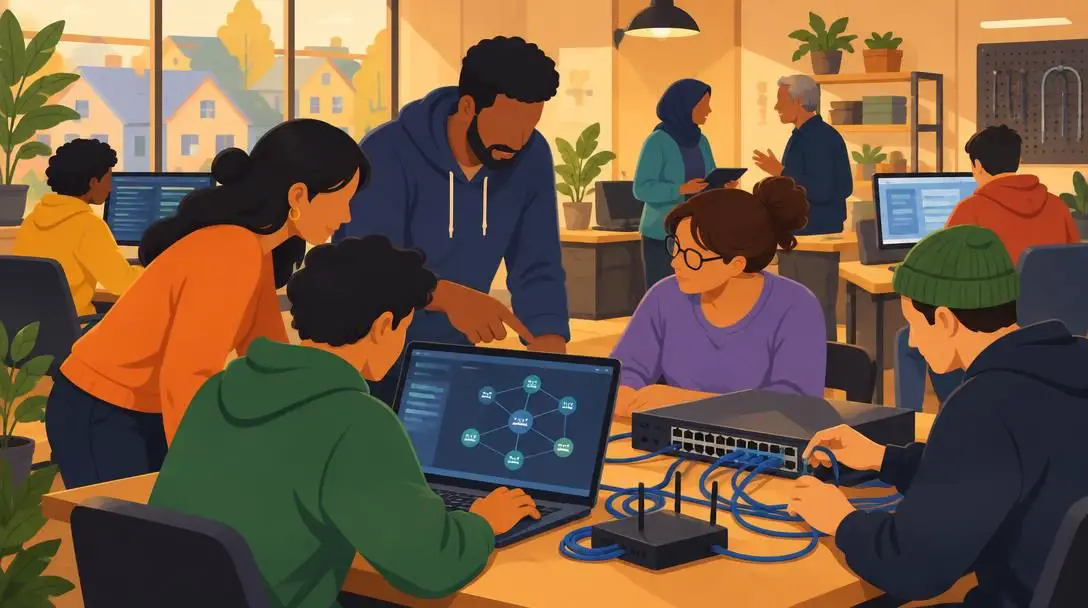
The Detroit Community Technology Project works directly with local residents to build and maintain community-managed wireless infrastructure. By organizing neighborhood workshops and deploying hardware directly into underserved communities, this initiative fosters grassroots technological sovereignty while closing critical connectivity gaps.
San Francisco Public Library TechMobile
- Managing entity: San Francisco Public Library
- Geographic focus: San Francisco, California
- Core deliverable: Mobile computer lab and training outreach
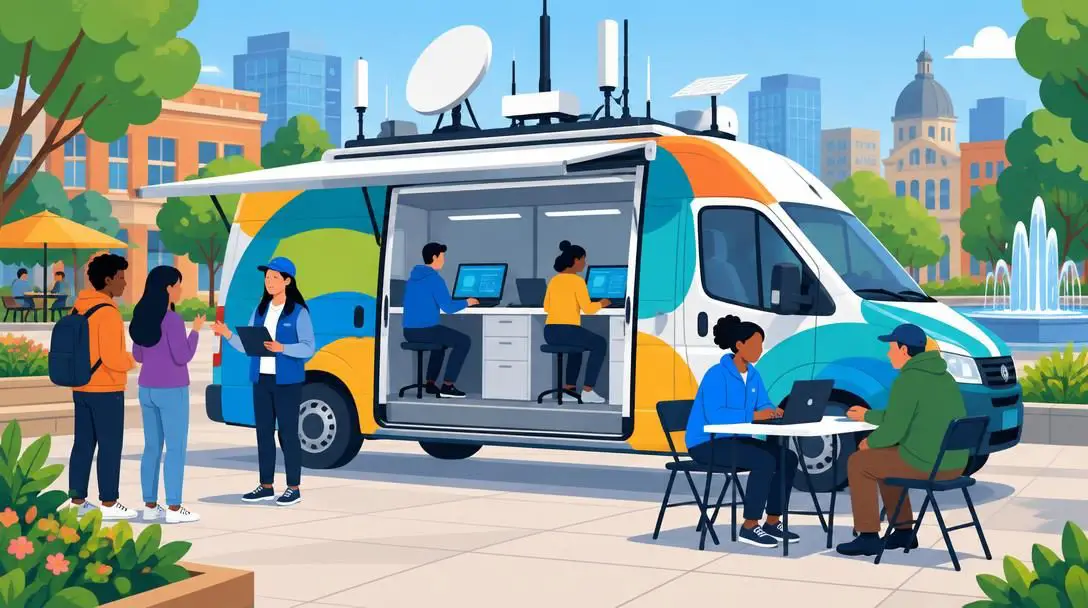
The San Francisco Public Library’s TechMobile functions as a digital classroom on wheels, traveling across the city to bring computers, internet connectivity, and instructional support directly to public parks, community centers, and marginalized neighborhoods. This initiative meets residents in their own spaces, eliminating transportation barriers.
Google Fiber

- Managing entity: Google
- Geographic focus: Select metropolitan areas in the United States
- Core deliverable: High-speed internet access for low-income residents
Under its Google Fiber program, the technology company has deployed high-capacity fiber-optic internet infrastructure across several metropolitan markets. In conjunction with local housing authorities, the initiative connects low-income apartment complexes to high-speed broadband, lowering the financial barriers to commercial internet access.

Microsoft Airband Initiative
- Managing entity: Microsoft
- Geographic focus: Rural communities in the United States
- Core deliverable: High-speed internet infrastructure deployment
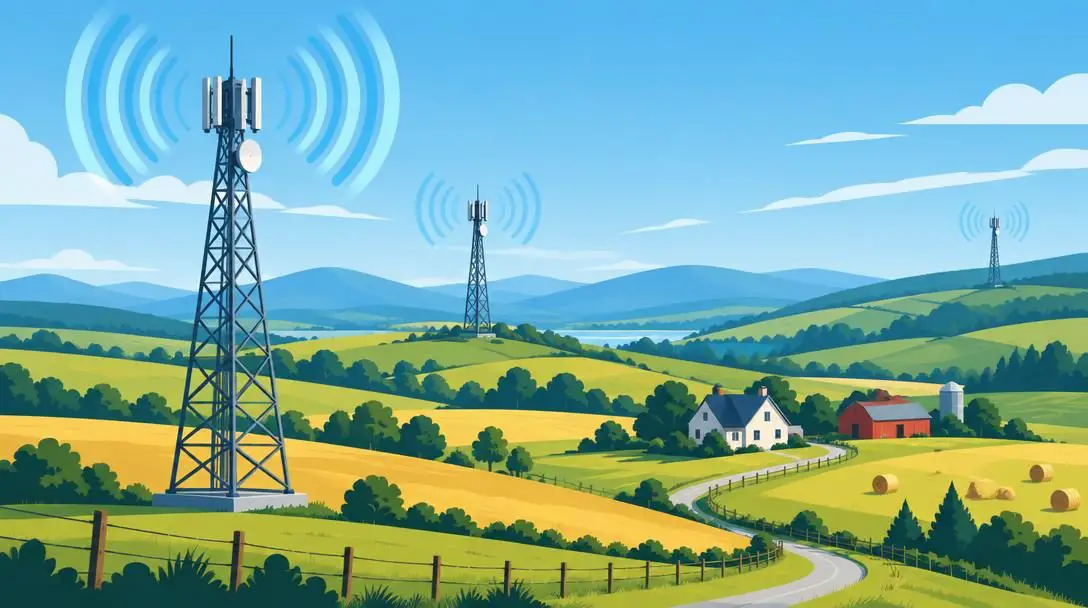
The Microsoft Airband Initiative focuses on bringing broadband connectivity to rural regions that commercial internet service providers have long neglected. By partnering with local telecommunications carriers and leveraging unused television white space spectrum, the initiative extends internet access to remote households and rural agricultural businesses.
Digital Saksharta Abhiyan

- Managing entity: Government of India
- Geographic focus: India
- Core deliverable: Nationwide digital literacy instruction
The Digital Saksharta Abhiyan initiative was created by the Indian government to provide structured digital literacy training to millions of citizens across the country. Recognizing that infrastructure alone cannot bridge the divide, the program teaches adults how to operate computing hardware, send digital correspondence, access government portals, and execute electronic payments.
Worldreader

- Managing entity: Non-profit organization
- Geographic focus: Developing nations worldwide
- Core deliverable: Digital reading devices and localized curriculum
Worldreader works to eradicate illiteracy by delivering digital books, e-reading devices, and literacy applications to children and families in developing countries. By supplying curated libraries in native and instructional languages, the organization overcomes the physical logistics and high costs associated with distributing paper textbooks.
One Laptop per Child

- Managing entity: Non-profit organization
- Geographic focus: Developing nations worldwide
- Core deliverable: Rugged, low-cost educational laptops
The One Laptop per Child initiative pioneered the design and distribution of durable, low-power personal computing devices engineered specifically for schoolchildren in developing regions. These rugged devices feature sunlight-readable screens and specialized educational software, enabling self-directed digital exploration in resource-constrained environments.
Five Common Pitfalls in Digital Inclusion Projects
Despite good intentions, digital equity initiatives frequently fail to achieve lasting impact due to predictable planning errors. Successful organizations avoid several common mistakes:
- Focusing exclusively on hardware giveaways: Distributing laptops without verifying local broadband coverage or technical support networks results in abandoned hardware when technical issues arise.
- Ignoring ongoing subscription expenses: Offering introductory internet subsidies without establishing long-term affordability plans leaves households disconnected as soon as promotional periods expire.
- Overlooking cultural and language needs: Training materials written exclusively in dominant languages or software lacking accessibility accommodations alienate non-native speakers and individuals with disabilities.
- Treating smartphones as full computer replacements: While smartphones offer convenient communication, they lack the physical keyboards, display size, and processing environments necessary for writing long reports, completing complex coursework, or using enterprise software.
- Failing to involve local community stakeholders: Programs designed exclusively by external consultants often misdiagnose local needs, missing the unique daily challenges experienced by the actual residents.
How Communities Can Build Lasting Connectivity
Developing a resilient digital inclusion initiative requires strategic, deliberate execution. Stakeholders can implement an effective strategy by following four structured steps:
- Conduct a comprehensive community audit: Survey local neighborhoods to identify specific infrastructure deserts, hardware shortages, language requirements, and demographic gaps rather than relying on generalized regional estimates.
- Establish multisector partnerships: Connect local libraries, public school districts, municipal leaders, and private internet service providers to pool grant funding, infrastructure assets, and technical facilities.
- Deploy accessible, multilingual instructional programs: Design digital literacy curricula with native language translations, physical accessibility features, and hands-on technical guidance tailored to adult learners and seniors.
- Track real-world adoption and utilization metrics: Measure project success not by the volume of cables laid or devices shipped, but by measurable increases in graduation rates, employment applications, telemedicine visits, and civic engagement.
Frequently asked questions
What is the digital divide?
The digital divide is the gap between individuals and communities that have access to modern information and communication technology—such as high-speed internet, computers, and smartphones—and those who do not.
How many people globally and in the U.S. lack reliable internet access?
According to the International Telecommunication Union, around half of the global population lacks internet access, primarily in low- and middle-income nations. In the United States, the Pew Research Center reports that roughly 10% of Americans lack home high-speed internet, with the largest shortfalls in rural and low-income areas.
Why is a smartphone not a full solution to the digital divide?
Smartphones are practical for messaging and casual browsing, but they are insufficient for intensive educational coursework, professional document creation, enterprise software operation, or detailed employment applications, all of which require personal computers with full keyboards and desktop operating systems.
What are the primary factors contributing to technological inequality?
The divide is driven by economic barriers related to device and subscription costs, geographic barriers such as difficult terrain and low population density, educational barriers regarding technical literacy, and societal barriers including lack of accessibility for non-native language speakers and people with disabilities.
What is required to achieve genuine digital inclusion?
True digital inclusion requires an integrated three-tier framework: physical broadband infrastructure, affordable consumer hardware and monthly subscriptions, and ongoing digital literacy instruction paired with technical support.
The bottom line
The digital divide is no longer just a technical issue; it is a fundamental civil rights and economic challenge. As essential services, democratic processes, and economic opportunities continue to migrate online, leaving communities disconnected entrenches existing systemic inequalities. Bridging this gap requires sustained public-private investment, comprehensive policy interventions, and community-led educational initiatives that ensure every person has the tools, access, and training necessary to thrive in an increasingly digital world.