The Fun and Practical Uses of a Random Name Picker for Your Daily Life

Everyday life is saturated with countless small choices ranging from morning routines to evening recreation. While individual dilemmas rarely carry high stakes, deciding between several equally viable options often consumes a surprising amount of time and mental energy. When groups gather, simple matters such as selecting a restaurant or picking an activity can easily stall behind polite hesitation, deferrals, or minor disagreements.
A random name picker provides an accessible digital remedy for this everyday indecision. By serving as the modern successor to traditional coin tosses and drawing names from a hat, random generators transform routine deliberations into quick, impartial, and enjoyable events. Handing minor choices over to an unbiased algorithm not only clears away conversational gridlock but also adds an element of anticipation to the day.
Key takeaways
- Random name pickers eliminate decision fatigue by automating low-stakes choices with neutral, algorithmic outcomes.
- Household friction and chore disputes decline when task distribution is handled by an impartial system rather than personal delegation.
- Group deadlocks over dining and entertainment resolve quickly when all participants vet the options before running the draw.
- Creative workers can use randomized item combinations to bypass writer's block and generate original character concepts.
- The credibility of the tool relies on agreeing beforehand to accept the first result without re-rolling.
The Mechanics Behind Digital Random Selection
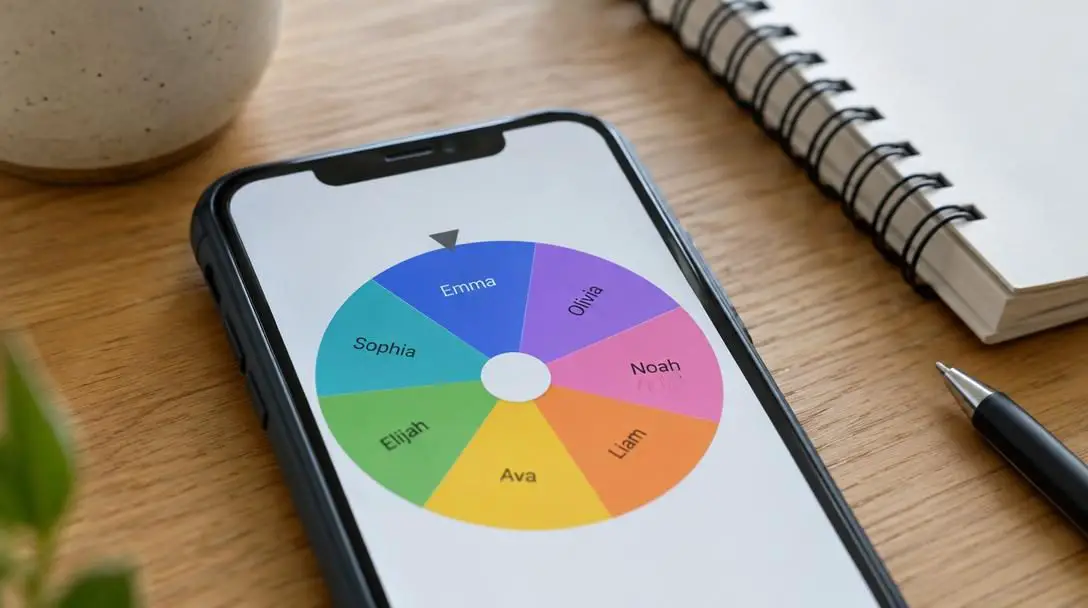
At its foundation, a random name picker is a software utility engineered to select one or more entries from a user-supplied collection. The core mechanism treats every entry equally, providing an identical mathematical probability of selection to each item in the pool. Whether presented visually as a spinning wheel, a shuffled stack of virtual cards, or a simplified text readout, the internal logic relies on computer-generated randomness to ensure unpredictable outcomes.
Operating a picker is straightforward. A user inputs a collection of items, which can include personal names, household chores, dining spots, or creative ideas. Depending on the objective, the operator can configure how the tool behaves once an item is picked. In a single-selection draw, the tool chooses one final item and stops. In an elimination draw, the chosen entry is struck from the roster so subsequent draws distribute remaining items fairly across a group without duplicates.
Five Practical Daily Uses for a Random Name Picker
Randomization tools are remarkably versatile, adapting easily to domestic organization, group coordination, and personal projects. The following five use cases highlight how random pickers streamline daily routines and eliminate needless social tension.
Choosing What to Watch or Read
Modern streaming services and digital libraries provide access to thousands of titles, yet this vast availability often leads to analysis paralysis. Viewers frequently spend half an hour scrolling past thumbnails or reading book reviews without making a commitment. A random picker cuts through this endless browsing. By compiling a personal backlog of unwatched films, television series, or unread books into the generator, you can let the software make the choice. This allows you to dive straight into your entertainment time rather than exhausting your leisure window on the selection process itself.
Assigning Chores or Tasks
Sharing a living space with family members or roommates requires steady chore management, but assigning domestic duties can easily spark accusations of unfairness or favoritism. When an individual attempts to dictate who scrubs the kitchen or takes out the trash, resentment can fester. Running a random picker to assign responsibilities creates an objective, unemotional system. Because everyone recognizes that the algorithm has no personal bias, household members are far more willing to accept their assigned duties without complaint.
Organizing Group Activities
Planning an outing with friends often devolves into polite gridlock, where each person defers to someone else to avoid appearing demanding. Alternatively, clashing personal preferences can create awkward friction. A random picker provides a balanced middle ground. Every participant contributes their preferred activity to the pool, guaranteeing that everyone receives an equal voice. Once the tool selects the winning plan, the entire group can move forward in good spirits, confident that the process was completely equitable.
Creating Character Names
Writers, game designers, and role-playing enthusiasts frequently hit creative roadblocks when attempting to invent names for fictional characters. Authors often default to familiar naming habits or spend excessive time searching through baby-name databases. By inputting separate lists of first names, surnames, uncommon nouns, or cultural descriptors into a picker, creators can generate surprising pairings. These randomized juxtapositions often spark immediate narrative ideas, helping writers build multidimensional personas with distinct identities.
Deciding Where to Eat Out
Choosing a dining establishment among friends, partners, or coworkers is a notorious source of daily friction. A group can spend an hour debating cuisine styles, travel distances, and price points while everyone grows hungrier and more irritable. By having the group assemble a concise list of acceptable local eateries and letting the picker make the final call, the debate ends immediately. Diners can hit the road without delay, turning what is often a contentious negotiation into a fun, low-stress outing.
By replacing the stress of debate with a quick and impartial process, individuals and groups can handle routine matters with ease and focus more of their energy on enjoying the activity itself.
| Use Case | Typical Inputs | Primary Advantage | Recommended Selection Mode |
|---|---|---|---|
| Watching or Reading | Media backlog, saved watchlist titles | Eliminates endless catalog browsing | Single selection |
| Chore Distribution | Household tasks, resident names | Removes accusations of favoritism | Elimination draw |
| Group Activities | Recreational outings, games | Grants every participant an equal voice | Single selection |
| Character Creation | First names, surnames, adjectives | Sparks unexpected creative combinations | Multi-draw pairing |
| Dining Out | Vetted local restaurants, takeout spots | Breaks mealtime conversational deadlocks | Single selection |
How to Set Up a Selection Process That Works
While operating a digital picker requires minimal technical effort, establishing a clear process ensures that all participants respect the final outcome. Following a structured series of steps prevents confusion and guarantees smooth decision-making.

- Define the scope of the decision: Clarify precisely what needs to be resolved before opening the tool, whether you are picking a single restaurant, ordering a chore roster, or naming a creative project.
- Collect and vet the options: Gather contributions from all participants, confirming that every proposed option is genuinely acceptable, affordable, and practical for everyone involved.
- Input entries accurately: Paste or type the vetted items into the tool, taking care to eliminate accidental duplicate entries that could unintentionally skew probabilities.
- Establish the rules beforehand: Secure an explicit verbal commitment from everyone present that the outcome chosen by the picker will be final and binding.
- Initiate the selection: Run the draw, enjoy the visual reveal or spin, and allow the generator to present the chosen entry.
- Execute the outcome immediately: Take prompt action on the result without second-guessing, hesitation, or opening the floor to renewed debate.
Common Pitfalls That Undermine Random Selection
A random picker is only as effective as the ground rules governing its use. Overlooking basic procedural etiquette can undermine the fairness of the tool and reintroduce the very friction you want to avoid.
- Including unacceptable options: Adding an entry that someone cannot afford, strongly dislikes, or cannot access creates immediate conflict if that option is chosen. Ensure all list items are pre-approved by the group.
- Conducting repeated redraws: Demanding a redraw or calling for a "best two out of three" because the initial result was unpopular destroys trust in the system. The first draw must always stand.
- Allowing accidental duplicates: Unless participants consciously agree to weight certain choices by submitting multiple tickets, inadvertent duplicate entries grant unfair statistical advantages.
- Neglecting upfront consensus: If participants have not agreed in advance to abide by the picker's verdict, the final selection will simply trigger another argument.
- Applying the tool to high-stakes decisions: Random generators are intended for low-stakes, everyday dilemmas. Critical medical, legal, financial, or safety matters require careful analysis and professional judgment, not random chance.
Strategies for Long-Term Decision Efficiency
Integrating random selection into your ongoing lifestyle can drastically lower weekly decision fatigue. When used consistently, the habit automates routine administrative burdens across both personal and shared living spaces.
One effective strategy is establishing recurring selection schedules for domestic management. For example, roommates or families can gather at a fixed time each Sunday evening to input the week's domestic tasks into a picker. Children and housemates quickly adapt to the transparent nature of the process, recognizing that chore distribution is governed by neutral probability rather than parental or peer preference.
Similarly, curating organized, living backlogs of recommendations preserves spontaneous leisure time. Whenever a colleague suggests a new cafe, or a friend recommends an obscure documentary, add it directly to a dedicated list. When the weekend arrives, your pool of options is already populated, vetted, and ready to be resolved by a quick digital draw.
Frequently asked questions
Why should I use a random name picker instead of flipping a coin?
A coin toss works well for binary choices, but it cannot effectively accommodate three or more competing options. A random name picker allows you to input dozens of entries simultaneously, giving every item an identical probability of selection regardless of roster size.
How can a picker distribute chores fairly across an entire group?
By using an elimination draw mode, the tool selects one person or chore at a time and removes it from the active pool. This ensures that every individual receives an assigned task before anyone is chosen a second time, guaranteeing an equitable workload.
What should we do if someone strongly objects to the picker's selection?
Objections usually occur when an unacceptable entry was mistakenly included in the initial list. To prevent this, vet every candidate entry before running the draw. Once the draw occurs, the group must honor the result to maintain the integrity of the process.
Can a random name picker be used for professional or serious choices?
No. Random pickers are designed for low-stakes daily choices, creative prompts, and routine task distribution. Complex business, financial, or medical decisions require careful evaluation, risk assessment, and deliberate human judgment.
Do digital random pickers truly pick items at random?
Yes. Digital random selection tools rely on computational algorithms designed to produce unpredictable results. Each input entry is granted an equal mathematical chance of being chosen during any given draw.
The bottom line
Daily life involves hundreds of minor choices that do not warrant protracted debate or emotional friction. Turning routine decisions over to a random name picker frees up valuable mental space, maintains domestic harmony, and introduces an engaging element of surprise into everyday affairs. By vetting options in advance and respecting the luck of the draw, you can spend less time debating what to do and more time enjoying the outcome.