The Future of Tech in the Tourism Industry

The global travel and tourism sector has long functioned as a critical engine for economic growth, generating millions of livelihoods and encouraging cultural exchange across borders. Over recent decades, the way travelers plan, book, navigate, and reflect on their journeys has undergone a profound evolution. At the center of this transformation lies computing technology, which has systematically converted manual, paper-bound logistics into interconnected, real-time digital journeys.
Today, the industry stands on the brink of another pivotal shift. While online booking engines, airline websites, and mobile applications brought unprecedented autonomy to consumers, legacy computing systems and fragmented data networks still create friction for travelers and operators alike. As emerging technologies such as artificial intelligence, connected sensor networks, spatial computing, and decentralized ledgers mature, the tourism sector is reimagining its foundational operational models to deliver safer, more responsive, and highly personalized experiences.
Key takeaways
- Modern travel computing is transitioning from reactive booking engines to proactive, interconnected systems powered by artificial intelligence and real-time sensory data.
- Emerging tools like virtual and augmented reality allow travelers to explore destinations remotely before making financial commitments.
- Decentralized blockchain ledgers offer direct-to-supplier transactions, reducing multi-vendor reconciliation overhead and mitigating fraudulent reservations.
- Data privacy, legacy system interoperability, and regional infrastructure gaps remain the primary bottlenecks impeding widespread digital modernization.
The Evolution of Computing in Travel and Tourism
To understand the current trajectory of travel technology, it is necessary to examine how computing first entered the industry. In its earliest iterations, travel computing was strictly centralized and accessible only to certified industry professionals. Airlines and hospitality conglomerates relied on specialized reservation mainframes, while consumers conducted their business face-to-face at local brick-and-mortar travel agencies. Coordinating an international vacation required physical paper brochures, printed flight coupons, postal confirmations, and lengthy telephone inquiries.
As consumer-facing personal computing and the commercial internet expanded, the travel paradigm shifted toward individual empowerment. Online travel agencies, direct-to-consumer airline portals, and hospitality booking aggregators allowed travelers to compare prices, verify seat availability, and confirm reservations from home. The subsequent arrival of smartphones accelerated this trend, placing comprehensive itinerary management, digital boarding passes, interactive city maps, and preliminary virtual previews directly into the palms of travelers on the go.
Despite these monumental strides in convenience, the sector's existing technical architecture continues to face significant operational strains. Modern travel platforms gather vast troves of personal credentials, passport numbers, and financial details, creating prominent targets for security threats and intensifying consumer privacy concerns. Furthermore, the travel ecosystem is inherently decentralized across thousands of independent entities, including airlines, rail networks, boutique hotels, vehicle rental fleets, and local tour operators. Many of these organizations still rely on disparate legacy architectures that lack standardized interoperability, resulting in data silos, manual reconciliation delays, and communication breakdowns during irregular travel disruptions. In addition, wide discrepancies in regional digital infrastructure mean that remote or developing destinations cannot always participate equally in modern digital tourism workflows.
Core Emerging Technologies Reshaping the Journey
The contemporary wave of digital innovation in tourism is propelled by four foundational technologies. While each relies on distinct engineering concepts, their convergence is producing an interconnected operating environment that streamlines backend logistics while elevating customer-facing experiences.
Artificial Intelligence
Artificial intelligence in travel models human cognitive processes using advanced algorithmic structures, pattern recognition, and machine learning models. In tourism environments, AI operates along two distinct operational tracks: front-facing customer engagement and backend data optimization. On the customer-facing side, natural language processing powers sophisticated virtual assistants and automated concierge tools. Rather than serving static pre-programmed answers, these engines parse natural speech, decipher context, rectify booking adjustments, and generate hyper-personalized itinerary suggestions based on historical user behavior.
Behind the scenes, artificial intelligence relies on predictive modeling to analyze historical travel flows, seasonal patterns, macroeconomic shifts, and real-time pricing indicators. Hospitality operators and air carriers leverage these capabilities to anticipate customer volume, dynamically calibrate room rates and seat allotments, and spot equipment vulnerabilities or scheduling bottlenecks before they spiral into widespread travel delays.
Internet of Things
The Internet of Things encompasses a sprawling network of physical assets, structures, and appliances equipped with sensory devices, processing chips, and networking modules that continuously exchange information. Within the tourism domain, IoT deployments span airport terminals, high-speed rail corridors, metropolitan transit stations, smart hotel rooms, and cultural heritage sites.
By capturing continuous environmental inputs, connected sensors bridge the physical journey with virtual dashboards. Wearable devices and smart terminal beacons monitor passenger throughput, adjust climate systems according to room occupancy, track baggage movement across transfer points, and transmit immediate alerts regarding gate reassignments, regional traffic jams, or sudden weather disruptions directly to passengers and ground personnel.
Virtual and Augmented Reality
Virtual reality and augmented reality alter spatial perception and visual interaction across the traveler's life cycle. Virtual reality utilizes dedicated headsets and fully rendered three-dimensional environments to immerse users in simulated settings, cutting off physical visual surroundings. In travel planning, VR transforms destination marketing by offering immersive previews of remote landmarks, cruise cabin layouts, and hotel suite configurations prior to booking.
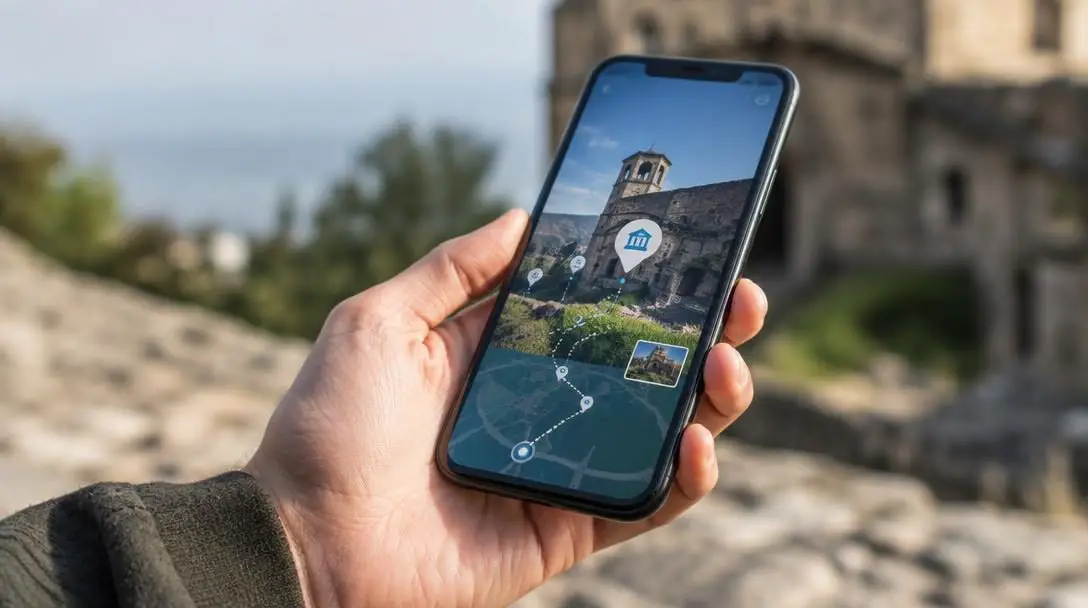
Conversely, augmented reality supplements physical reality by superimposing contextual digital assets—including navigational arrows, real-time street sign translations, architectural reconstructions, and historical narratives—directly onto the physical environment through smartphone screens or lightweight optical lenses. This allows visitors to navigate unfamiliar transport hubs and cultural monuments with heightened confidence and rich informational context.
Blockchain Technology
Blockchain provides a decentralized, tamper-resistant digital ledger framework that records transactions across a distributed network of computing nodes. Rather than routing verification through a single centralized platform or third-party bank, blockchain transactions are validated cryptographically, organized chronologically, and distributed permanently across the network.
In tourism logistics, distributed ledgers establish secure frameworks for customer identity verification, payment settlement, and loyalty points tracking. Smart contracts execute automatic refunds when flights are delayed and record non-duplicable reservations. This transparent architecture minimizes booking fraud, cuts down administrative costs, and enables local independent operators to trade directly with travelers without sacrificing transaction security.
| Technology | Core Technical Principle | Primary Customer Touchpoint | Key Operational Benefit |
|---|---|---|---|
| Artificial Intelligence | Algorithmic learning and natural language processing | Smart concierges and tailored destination discovery | Predictive capacity forecasting and automated resource allocation |
| Internet of Things | Connected sensory hardware and continuous telemetry | Live mobile notifications and smart room controls | Automated facility monitoring and proactive delay management |
| Virtual & Augmented Reality | Immersive spatial modeling and digital overlays | Interactive previews and contextual language translation | Enriched destination marketing and interactive navigation |
| Blockchain | Decentralized, immutable cryptographic ledgers | Direct-to-operator payments and secure verified credentials | Elimination of intermediary reconciliation and reduced booking fraud |
Technology functions best when it serves human needs rather than overshadowing them.
Key Impacts and New Business Models
The collective deployment of these computational tools is reshaping the economic and operational structures of global tourism, opening avenues for novel commercial models and higher consumer expectations.
- Personalized Customer Experiences: The convergence of predictive artificial intelligence and continuous data telemetry allows travel providers to abandon one-size-fits-all packages. Itineraries, dining recommendations, and activity choices can be dynamically aligned with individual traveler tastes and medical or dietary constraints, raising the bar for guest satisfaction.
- Immersive Destination Discovery: Virtual and augmented reality tools redefine the research phase of travel. Prospective visitors can explore historical sites, examine cabin dimensions, and view resort facilities before committing financial resources, significantly lowering booking hesitation and post-arrival dissatisfaction.
- Direct-to-Supplier Decentralized Platforms: Distributed ledger systems offer an architectural foundation for peer-to-peer and supplier-direct networks. By bypassing dominant third-party online booking agencies, boutique lodging providers, regional transport drivers, and independent tour guides can retain a larger share of booking revenue while providing transparent, secure transactions to consumers.
- Optimized Operational Supply Chains: Cross-vendor reconciliation—historically a paperwork-heavy, error-prone phase of multi-leg international itineraries—is simplified through synchronized ledgers and automated software triggers, reducing overhead for travel consortiums and travel agents.
- Real-Time Situational Awareness: Connected sensory networks transform stationary travel hubs into responsive ecosystems. When adverse weather strikes or transport corridors bottleneck, automated systems trigger immediate re-routing alternatives, minimizing stress and preserving passenger safety.
Practical Steps for Tourism Businesses Adopting New Tech
Modernizing a tourism enterprise requires a structured methodology to ensure capital is deployed effectively and operational disruption is minimized. Organizations planning to integrate emerging computing systems should proceed through a structured, step-by-step rollout.

- Evaluate Digital Readiness and Existing Systems: Audit existing internal technology infrastructure. Identify legacy property management systems, customer databases, or reservation software that lack outward-facing APIs or cannot integrate with real-time web services.
- Identify Clear Customer Pain Points: Avoid adopting technology simply for public relations prestige. Pinpoint whether the business needs to reduce customer support response times, streamline the physical check-in process, prevent fraudulent chargebacks, or expand booking reach.
- Prioritize Data Security and Privacy Infrastructure: Establish compliance and security safeguards before handling customer information on modern platforms. Encrypt sensitive financial records, safeguard identity assets, and build secure communication protocols to repel malicious breaches.
- Implement Small-Scale Pilots: Test prospective technologies within isolated, manageable parameters. Launch a basic conversational assistant for common inquiries or introduce IoT room temperature sensors in a single wing of a property to evaluate reliability and return on investment.
- Invest in Staff Reskilling and Workforce Training: Provide continuous educational support to customer service staff, desk operators, and maintenance teams. Ensure that employees understand how to interpret system dashboards, troubleshoot basic hardware errors, and work alongside automated tools.
- Establish Collaboration Across the Supply Chain: Interface with regional transit operators, local experience vendors, and relevant software vendors. Shared standard protocols across touchpoints ensure smooth data transfers and frictionless customer handoffs.
- Gather Continuous Feedback and Refine: Review performance metrics, system downtime logs, and qualitative traveler feedback systematically. Use these real-world data points to refine user interfaces, adjust algorithmic parameters, and resolve operational snags.
Common Mistakes to Avoid in Tourism Tech Implementation
While the advantages of modern computing infrastructure are substantial, ill-planned rollouts frequently lead to wasted capital, frustrated employees, and alienated customers. Tourism organizations should guard against the following common missteps:
- Adopting Technology Without a Customer-Centric Focus: Deploying complex interfaces, interactive displays, or novel virtual tools simply because they appear cutting-edge often leads to low engagement. Systems that fail to address an actual traveler need end up underutilized and costly.
- Overlooking Data Security and Compliance: Treating cybersecurity measures as a secondary consideration exposes sensitive customer data, passports, and payment credentials to external threats, risking massive regulatory penalties and irreversible reputational damage.
- Failing to Budget for Ongoing Maintenance: Many organizations budget exclusively for initial purchase licenses and initial installation, forgetting the recurring costs of software updates, hardware repairs, cloud bandwidth, sensor battery replacement, and ongoing security audits.
- Neglecting Workforce Enablement: Rolling out automated suites without preparing internal personnel breeds frustration and operational friction. When frontline staff do not understand how automated tools function, they struggle to assist travelers when automated tools encounter edge cases.
- Ignoring Interoperability Gaps: Procuring standalone point solutions that cannot communicate with existing central reservation software or finance modules creates internal data islands, requiring manual data reentry and increasing error rates.
- Disregarding Local Infrastructure Constraints: Expecting high-bandwidth spatial streaming, cloud applications, or continuous IoT transmissions to function seamlessly in destinations with spotty cellular coverage or unstable power grids leads to broken user experiences.
Challenges, Structural Risks, and Strategic Considerations
Implementing sophisticated computing systems across travel ecosystems is not without formidable hurdles. First and foremost is the imperative of comprehensive data protection. As travel platforms integrate IoT telemetry, biometrics, location pings, and historical preference profiles, they build expansive data repositories. These centralized collections of personally identifiable information represent enticing targets for cyberattacks. Tourism operators carry the legal and ethical responsibility of maintaining rigid security standards to protect passenger movement records and payment instruments.
A second persistent barrier is the sheer capital investment demanded by advanced computational rollouts. Constructing predictive AI pipelines, equipping physical destinations with sensor networks, and maintaining high-speed network connections require significant financial resources. This dynamic threatens to widen the digital divide across the sector: well-capitalized multinational hotel groups and major international flag carriers can easily afford these investments, while small and medium-sized independent operators—which form the cultural backbone of many tourist destinations—risk being marginalized.
Finally, the tourism sector faces an acute specialized talent shortage. Operating, auditing, and upgrading advanced machine learning platforms, IoT arrays, and distributed ledgers demands advanced proficiencies in software engineering, cybersecurity, and data analysis. These technical competencies historically fall outside traditional hospitality management education. As a consequence, tourism enterprises must compete directly against the broader technology sector to attract, reskill, and retain qualified technical talent.
Future Outlook and the Role of Public Infrastructure
The coming years will witness deeper convergence among artificial intelligence, ubiquitous connectivity, spatial visualization, and decentralized verification. As these distinct technological pillars mature and interface seamlessly, the global travel landscape will shift toward an intuitive paradigm where logistical delays are proactively managed, paperwork is eliminated, and travel itineraries self-optimize around real-time circumstances.
However, realizing this frictionless vision requires proactive collaboration between private travel enterprises and public sector authorities. Individual businesses cannot build modern travel ecosystems in a vacuum. Intelligent transit grids, automated border crossings, and citywide sensor integration require reliable telecommunications, robust power utilities, and modernized municipal infrastructure. By funding foundational broadband access, modernizing public transit nodes, and establishing consistent regulatory frameworks for data exchange, civic leaders and regional governments can build the digital foundation necessary for their communities to thrive in the modern travel economy.
Frequently asked questions
How does artificial intelligence directly benefit the individual traveler?
Artificial intelligence benefits travelers by powering intelligent conversational tools that resolve booking problems around the clock, providing personalized recommendations based on individual preferences, and using predictive models to adjust schedules and prevent transit disruptions before they occur.
What role does the Internet of Things play in an airport or hotel setting?
The Internet of Things connects physical facilities through sensors and wearable devices. In airports and hotels, it monitors passenger flow, delivers real-time updates regarding gate assignments or luggage status to mobile screens, and allows guests to manage room settings automatically.
Can virtual reality replace the need for physical travel?
Virtual reality serves primarily as an exploratory research and marketing mechanism rather than a total replacement for travel. It allows prospective travelers to preview destinations, hotel suites, and cultural heritage sites in detail before reserving, reducing uncertainty during the planning stage.
Why is blockchain considered useful for tourism payments and reservations?
Blockchain offers an immutable, decentralized ledger that cryptographically verifies transactions. This architecture helps eliminate fraudulent bookings, supports direct peer-to-peer payments between travelers and primary service providers, and simplifies cross-border supplier reconciliations without costly intermediaries.
What is the most common reason technology implementations fail in tourism businesses?
Technology rollouts most frequently fail when organizations adopt tools solely for novelty without solving a genuine customer pain point, fail to train their workforce, or neglect the ongoing expenses required for software maintenance, interoperability, and cybersecurity.
The bottom line
The future of travel and tourism computing will not be defined by novelty gadgets or disconnected experiments, but by purposeful, integrated digital infrastructure that simplifies the journey for human beings. As artificial intelligence, sensor networks, spatial computing, and distributed ledgers continue to evolve, the organizations that succeed will be those that pair technical innovation with strong cybersecurity practices, cross-system interoperability, and an unwavering commitment to meeting the practical needs of the global traveler.