The Pioneers of Computing: Celebrating the Visionaries Who Shaped the Industry
The contemporary world runs on digital systems, with modern computing standing as one of the most transformative forces in human history. From pocket-sized smartphones to industrial supercomputers running complex calculations, digital technology has fundamentally altered how society works, communicates, and navigates daily life.
Yet every technological convenience enjoyed today rests on foundational breakthroughs achieved by earlier thinkers. The development of physical hardware, versatile software, mathematical logic, and accessible consumer products is the direct result of decades of intellectual courage and perseverance by pioneers who transformed computing from mechanical novelty into universal infrastructure.
Key takeaways
- Ada Lovelace authored the first computer algorithm and recognized that analytical machines could manipulate symbols and media, not just numbers.
- Alan Turing established the theoretical foundations of modern programmable computers and helped decipher military encryption during World War II.
- Grace Hopper pioneered high-level programming languages through COBOL and popularized standard computing concepts like debugging.
- Steve Jobs, Steve Wozniak, and Bill Gates transformed computing from specialized institutional machinery into standardized, user-friendly personal desktop technology.
From mechanical gears to solid-state digital machines
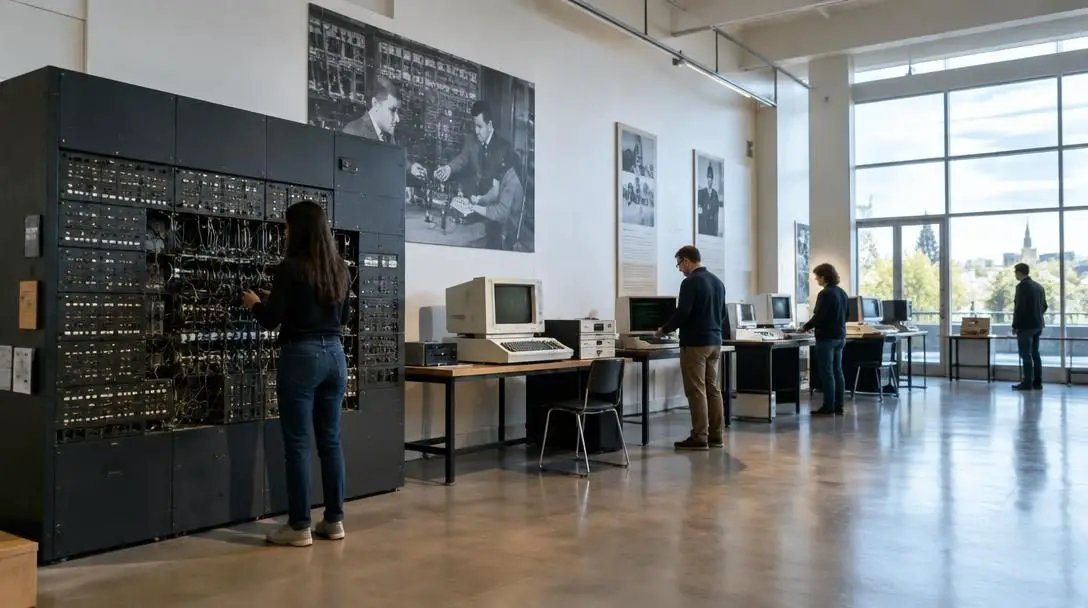
To understand the magnitude of modern computing achievements, it helps to examine the historical background of computation. Long before the invention of microprocessors, societies required dependable, repeatable ways to process numbers without human error. Early calculating devices were entirely mechanical, relying on finely manufactured gears, wheels, levers, and punch mechanisms to register arithmetic results.
These early contraptions were built primarily to support navigation, astronomy, and financial record-keeping, where an arithmetic slip could misguide a ship or distort financial books. As industrialization accelerated during the nineteenth and twentieth centuries, the scale of required calculations expanded exponentially. Governments needed accurate census statistics, armed forces demanded ballistic firing tables and cryptographic security, and corporations needed systematic data handling across global trade networks.
The transition away from physical gears progressed through several distinct technical phases:
- Mechanical calculators: Hand-cranked or gear-driven machines designed for dedicated arithmetic sequences.
- Electro-mechanical relays: Systems like the Harvard Mark series that used moving electrical switches to route electrical signals.
- Vacuum tubes: Electronic components that replaced moving physical switches, drastically increasing processing speeds.
- Solid-state transistors: Microscopic semiconductor switches etched onto silicon, making modern compact integrated circuits possible.
Crucially, physical machines alone did not create the digital revolution. The true leap occurred when visionary theorists began viewing calculating hardware as an engine for the open-ended manipulation of symbols, instructions, and human ideas.
Five visionaries who shaped the computing industry
The history of computing features notable individuals whose theoretical insights and practical engineering established the modern tech landscape. The following five pioneers laid the essential mathematical, programmatic, and commercial foundations for modern technology.
Ada Lovelace
- Born: 1815 in London
- Key collaborators: Charles Babbage
- Major milestone: First published computer algorithm
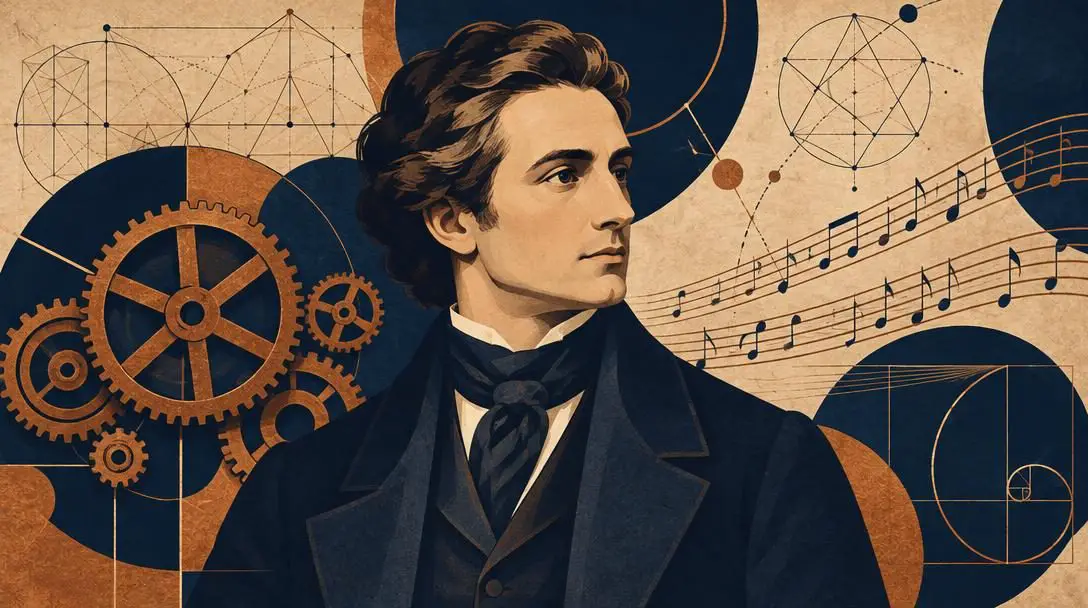
Ada Lovelace is celebrated as the world's first computer programmer. The daughter of the famed poet Lord Byron and mathematician Anne Isabella Milbanke, Lovelace was provided an uncommonly rigorous education in mathematics and science, an intentional decision by her mother to temper any poetic volatility inherited from Byron. This dual exposure to structural mathematics and metaphorical imagination gave Lovelace a unique vantage point on early mechanical engineering.
Lovelace developed an enduring collaboration with inventor Charles Babbage, who was designing the Analytical Engine, a mechanical calculating machine with unprecedented operational flexibility. While translating and annotating an article about the engine, Lovelace drafted an algorithmic sequence designed to calculate Bernoulli numbers using the machine's mechanical instructions. This plan is historically recognized as the world's first computer program.
Her greater conceptual leap, however, was realizing that computation could extend beyond simple arithmetic. Lovelace understood that if numbers could represent other entities—such as notes in music, letters of the alphabet, or visual shapes—the Analytical Engine could compose music, create art, and process language. She also contemplated whether automated mechanisms could learn or mimic human thought, anticipating artificial intelligence by more than a century.
Alan Turing
- Born: 1912 in London
- Key milestones: Breaking the German Enigma code, Universal Turing Machine
- Legacy: Founding figure of theoretical computer science and artificial intelligence
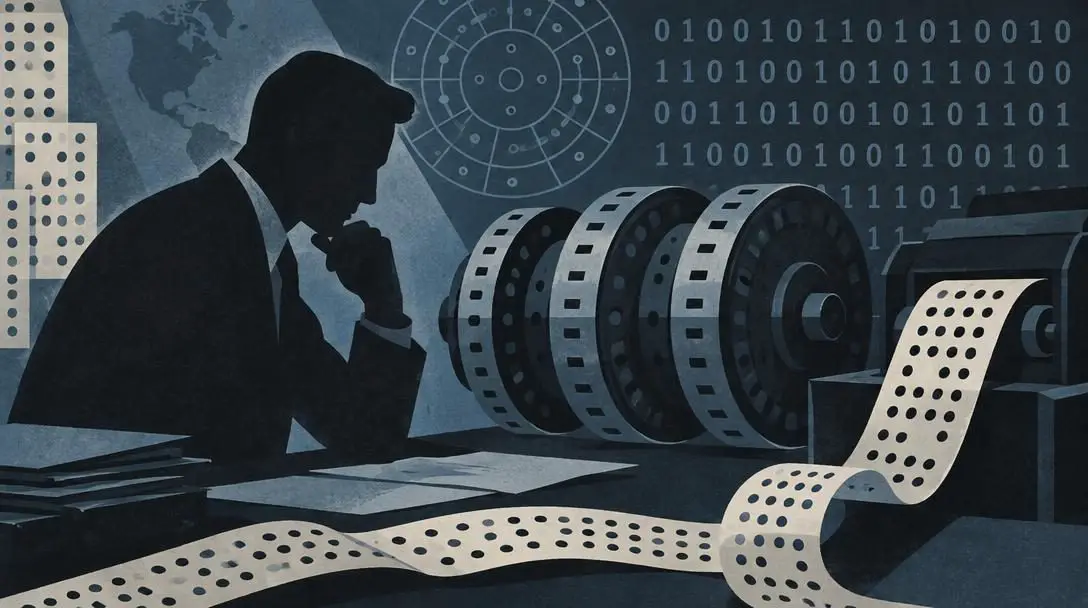
Alan Turing provided the mathematical groundwork that governs modern software and computing theory. During World War II, Turing joined the British government's cryptanalysis center, playing a pivotal role in cracking the German Enigma cipher. By designing specialized electromechanical machinery to decode intercepted communications, Turing provided Allied commanders with vital strategic intelligence that helped win the war and preserved countless human lives.
Turing's theoretical papers proved equally consequential. He formulated the Universal Turing Machine, a theoretical construct showing that a single machine could execute any conceivable computation provided it was given formal, unambiguous instructions. This model proved that engineers did not need custom physical machinery for every individual task; instead, flexible, general-purpose hardware could perform varied tasks simply by altering the stored software instructions.
Turing also investigated the intellectual capabilities of computational devices, devising the famous Turing Test to assess whether an automated system could communicate with a human evaluator indistinguishably from an actual person. Despite his vast service to science and national defense, Turing was subjected to horrific state-sponsored discrimination. Convicted of homosexuality under United Kingdom laws in 1952, he underwent chemical castration to avoid prison. Turing died by suicide in 1954 at forty-one years of age. In 2009, the British government issued a formal official apology recognizing the grave injustice he suffered.
Turing demonstrated that a single machine could run any task imaginable if guided by structured, symbolic rules.
Grace Hopper
- Born: 1906 in New York City
- Key milestones: Harvard Mark I programming, co-creation of COBOL
- Notable legacy: Pioneering accessible software languages and debugging terminology
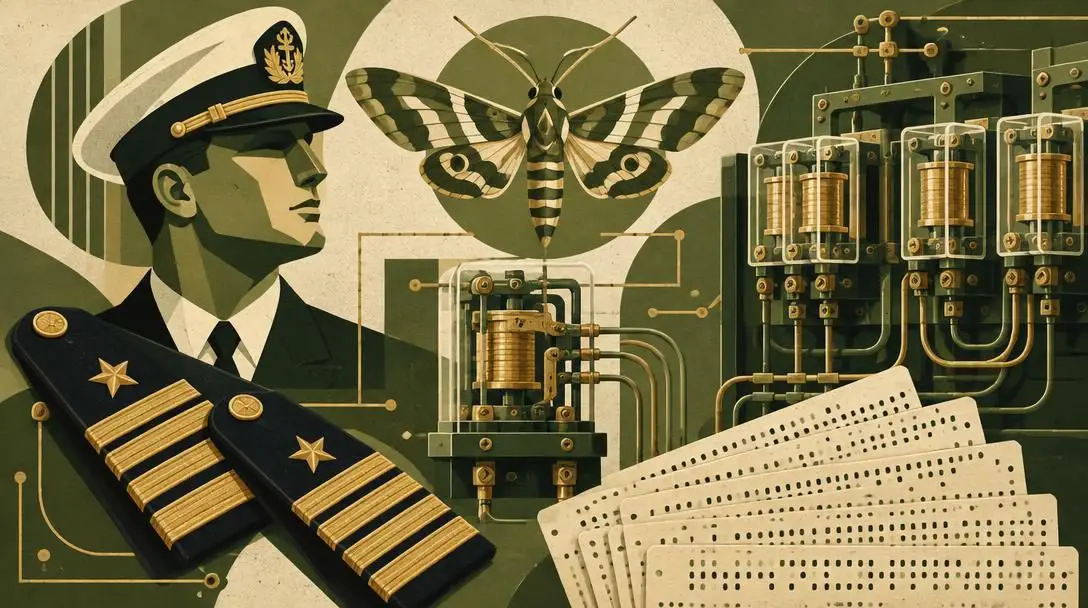
Grace Hopper was an American naval officer and foundational computer scientist who dedicated her career to making programming intuitive and widely accessible. Holding advanced degrees in mathematics, Hopper entered military service during World War II and was assigned to program the Harvard Mark I, a massive electromechanical calculator built for military ballistics.
Recognizing that early programmers were hobbled by numeric machine code that was tedious and highly prone to operator mistakes, Hopper advocated for high-level programming tools. She argued that computers should process human-readable terms rather than raw numeric sequences, a concept that drove her work in establishing COBOL (Common Business-Oriented Language). COBOL permitted commercial enterprises, banks, and government agencies to build reliable data-processing systems without requiring mathematical PhDs, and it remains active across institutional banking and administrative mainframes today.
Hopper also popularized the term debugging. While working on the Mark II computer, technical staff traced an operational glitch to an actual moth trapped inside an electrical relay. Hopper removed the insect, affixed it into the laboratory logbook, and remarked that she was debugging the machine, embedding a permanent piece of engineering folklore into tech culture.
Steve Jobs and Steve Wozniak
- Founded: Apple Inc. in 1976
- Key milestones: Apple I, Apple Macintosh (1984)
- Primary focus: Personal computing, graphical user interfaces, consumer hardware
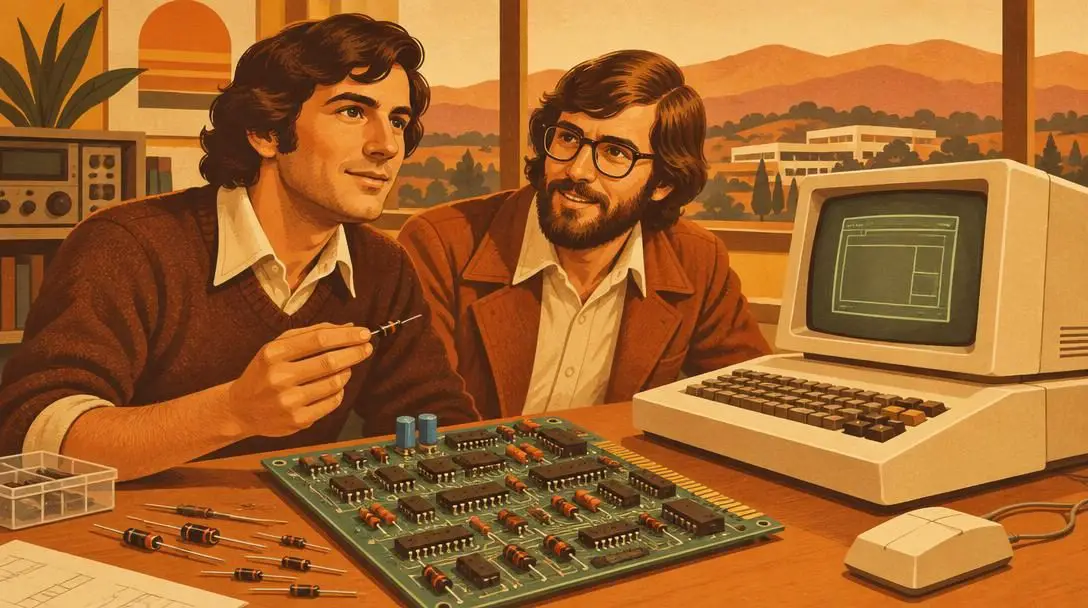
During the 1970s, computing broke free of academic laboratories and corporate server rooms thanks to the complementary talents of Steve Jobs and Steve Wozniak. The two met while studying at the University of California, Berkeley, sharing a passion for consumer electronics and individual computational access.
Their collaboration joined distinct skill sets: Wozniak was a gifted engineering purist capable of designing elegant, highly efficient electronic circuits using minimal physical parts, while Jobs possessed extraordinary aesthetic instinct, marketing acumen, and an understanding of how personal technology could enrich consumer life. In 1976, they established Apple Inc. and debuted the Apple I single-board computer.
The company achieved a landmark milestone in 1984 with the introduction of the Macintosh. It became one of the first commercially successful personal computers to replace dense text-only command prompts with a graphical user interface, screen icons, and mouse control. By prioritizing visual design, typography, and intuitive physical cases, Jobs and Wozniak demonstrated that digital devices could be friendly consumer products rather than intimidating office machinery.
Bill Gates
- Born: 1955 in Seattle
- Founded: Microsoft (1975)
- Major initiatives: Windows operating system, Bill and Melinda Gates Foundation
Bill Gates transformed the computing landscape by recognizing that standard software, rather than specialized proprietary hardware, would become the commercial core of the technology sector. After leaving Harvard University in 1975, Gates partnered with childhood friend Paul Allen to establish Microsoft.
Gates recognized that computer hardware manufacturers needed a consistent operating layer to run common productivity programs. Under his guidance, Microsoft licensed its software broadly to competing PC manufacturers, ultimately establishing the Windows operating system as the prevailing global computing standard. This vendor-neutral licensing model democratized desktop computing, making PCs an affordable fixture across schools, offices, and households throughout the world.
In later years, Gates channeled his personal wealth and executive organizational style toward global philanthropy. In 2000, he and his wife Melinda established the Bill and Melinda Gates Foundation, committing tens of billions of dollars to combatting infectious diseases, improving child health metrics, and funding global educational programs.
Pioneers of computing at a glance
The major breakthroughs across computing history reflect a clear progression from foundational mathematical theories to accessible consumer software.
| Pioneer | Era / Lifespan | Primary Focus | Lasting Contribution |
|---|---|---|---|
| Ada Lovelace | 1815–1852 | Algorithmic Logic | World's first published program; conceptualized symbolic computing beyond math |
| Alan Turing | 1912–1954 | Theoretical Computer Science | Universal Turing Machine, Enigma codebreaking, artificial intelligence benchmarks |
| Grace Hopper | 1906–1992 | Software Engineering | High-level compilers, co-creation of COBOL, popularized debugging concept |
| Jobs & Wozniak | 1976–Present | Personal Computing Hardware | Apple I, consumer graphical user interfaces, mouse navigation with the Macintosh |
| Bill Gates | 1955–Present | Operating Systems & Software | Ubiquitous Windows PC platform, software licensing models, global philanthropy |
How computational theory connects to modern hardware
The technologies built by these pioneers interact through several complementary layers that allow abstract human thought to direct physical electrons. Understanding these interconnected components clarifies how early concepts continue to power modern devices.
- Algorithmic instructions: As demonstrated by Ada Lovelace's work on Bernoulli numbers, software begins as a deterministic series of logical instructions arranged to solve a defined problem. Modern programs are simply networks of thousands of such algorithms running simultaneously.
- Universal hardware execution: In line with Alan Turing's theoretical framework, modern microprocessors do not require mechanical retooling for different jobs. The same physical silicon executes games, video rendering, or text processing purely by reading different operational instructions loaded into memory.
- Physical binary switches: The physical foundation of computation relies on switches. Where Grace Hopper's Harvard Mark I and Mark II computers relied on clicking mechanical relays, contemporary integrated circuits utilize billions of microscopic solid-state transistors etched onto silicon chips to handle binary states.
- High-level programmatic abstractions: Because humans cannot efficiently write software in raw binary (strings of ones and zeros), compilers and high-level languages like COBOL interpret human-readable keywords and convert them automatically into machine code.
- Intuitive graphical user interfaces: Championed by the Apple Macintosh, graphical interfaces bridge complex technical operations and everyday users through visual metaphors like windows, folders, and cursor tracking.
How to study the history of computing effectively
Gaining an understanding of computing history offers technical professionals, designers, and students valuable context for navigating emerging technological shifts like artificial intelligence and quantum computing.
- Trace the architectural lineage: Study how mechanical computation evolved into vacuum tubes, then discrete transistors, and finally modern microprocessors.
- Inspect early software source code: Reviewing historical code samples, such as Ada Lovelace's annotated algorithm tables or early COBOL routines, clarifies how programmatic syntax evolved over time.
- Analyze the hardware-versus-software dynamic: Examine how Apple's vertically integrated product strategy contrasted with Microsoft's broad software licensing approach during the personal computer revolution.
- Connect past milestones to modern challenges: Map historical debates—such as Turing's inquiries into machine intelligence or Lovelace's thoughts on computational creativity—directly onto modern discussions surrounding machine learning and generative artificial intelligence.
Frequently asked questions
Who is officially considered the first computer programmer?
Ada Lovelace is widely acknowledged as the world's first computer programmer. In the 1840s, she authored an algorithm designed to calculate Bernoulli numbers using Charles Babbage's planned Analytical Engine, detailing step-by-step instructions for machine execution.
What was Alan Turing's contribution to World War II?
Turing was a central figure at the British government's codebreaking center, where he developed specialized electromechanical decoding equipment to break the German Enigma cipher, providing critical military intelligence that helped the Allies win the war.
Why is Grace Hopper associated with the word 'debugging'?
While working on the Harvard Mark II computer, Hopper and her team discovered that an operational failure was caused by an actual moth trapped inside an electrical relay. She removed the insect, pasted it into the logbook, and noted that they were debugging the system, permanently popularizing the phrase.
How did the Apple Macintosh change consumer computing in 1984?
The Macintosh was among the first commercially successful personal computers to replace complex text-based command lines with an intuitive graphical user interface, screen icons, desktop windows, and a computer mouse.
What business strategy made Bill Gates and Microsoft dominant?
Unlike competitors who bundled software exclusively with proprietary hardware, Microsoft licensed its MS-DOS and Windows operating systems across competing personal computer manufacturers, establishing Windows as the universal global personal computing platform.
The bottom line
Modern computing is not an accidental phenomenon; it is the structured culmination of visionary ideas, mathematical breakthroughs, and engineering triumphs. From Ada Lovelace's poetic understanding of symbolic calculation and Alan Turing's blueprints for universal machines to Grace Hopper's accessible compilers and the desktop revolutions led by Jobs, Wozniak, and Gates, each pioneer solved a vital piece of the digital puzzle.
As technological developments move forward into automated reasoning, quantum architecture, and deep algorithmic integration, the principles established by these pioneers remain as relevant as ever. Their lives demonstrate that the greatest technological leaps occur when rigorous scientific discipline is combined with the creative imagination to see beyond the mechanical limits of the present day.