The Potential of Computing in Smart City Planning and Management
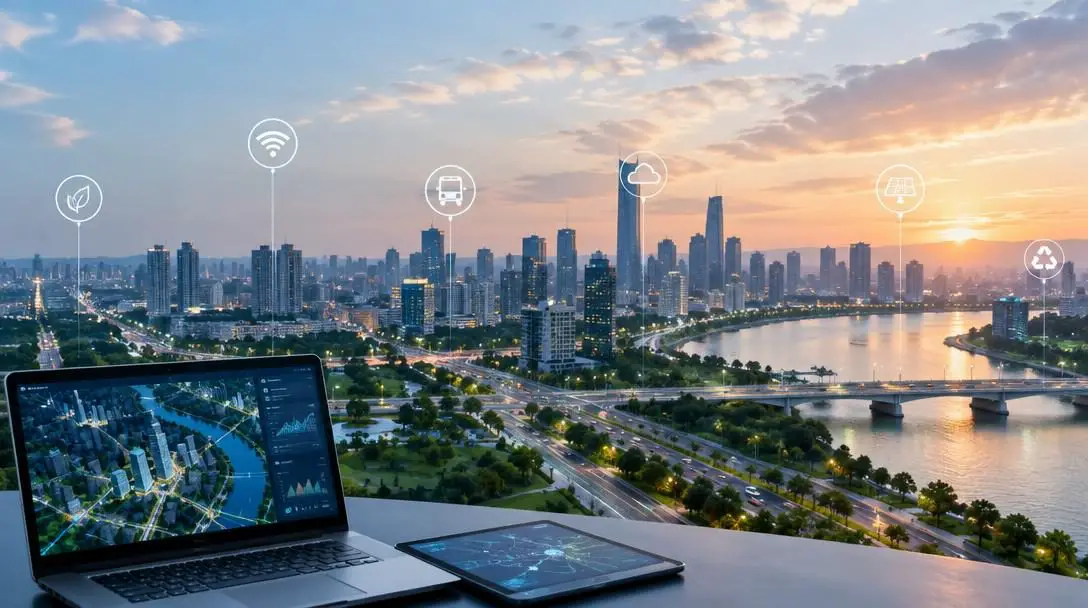
Metropolitan areas across the globe are grappling with mounting pressures brought on by rapid population growth, environmental resource depletion, and aging physical infrastructure. Traditional municipal administration models—frequently reliant on historical spreadsheets, manual inspections, and periodic resident surveys—can no longer keep pace with the volatile rhythms of contemporary urban life. In response, municipal leaders are fundamentally reimagining how cities function by turning toward integrated computing frameworks.
The transition toward a smart city treats the municipality not as a fragmented collection of isolated departments, but as a dynamic, interconnected ecosystem. By interweaving advanced computational architecture into everyday infrastructure, municipal authorities can capture real-time operational data, automate routine civic tasks, and address urban bottlenecks before they spiral into widespread civic disruptions. This computational evolution bridges physical urban assets with responsive administrative systems to elevate living standards, cut operating costs, and foster long-term environmental resilience.
Key takeaways
- Smart cities integrate IoT sensors, cloud computing, big data analytics, and artificial intelligence into a unified computational ecosystem that manages urban assets in real time.
- Automating administrative workflows and public services frees municipal personnel to solve complex civic problems while significantly lowering operating expenses and fuel consumption.
- Sensor-driven civic management directly improves quality of life for residents by alleviating traffic congestion, expediting parking searches, and optimizing municipal transit networks.
- Proactive environmental monitoring and automated sanitation scheduling lower municipal carbon footprints and ease the operational integration of renewable energy sources.
- Responsible implementation demands robust data encryption, clear cross-sector governance, continuous maintenance funding, and dependable manual fail-safes to prevent critical technological disruptions.
The Core Computing Technologies Powering Modern Smart Cities
The modern smart city functions through an integrated technical architecture where physical hardware and computational software operate in continuous synchronization. Rather than operating in silos, these digital assets capture, transport, evaluate, and act on continuous streams of urban data across every municipal sector.
| Technology | Primary Role | Data Function | Urban Applications |
|---|---|---|---|
| Internet of Things (IoT) | Physical monitoring and field detection | Captures real-time raw metrics from urban assets | Streetlights, trash receptacles, utility meters, and road sensors |
| Cloud Computing | Distributed data storage and accessibility | Provides scalable hosting and cross-agency data sharing | Centralized municipal dashboards and mobile citizen portals |
| Big Data Analytics | Pattern recognition and diagnostic analysis | Correlates historical baselines with active sensor feeds | Infrastructure strain analysis and peak usage forecasting |
| Artificial Intelligence (AI) & ML | Automated decision-making and optimization | Executes predictive interventions without human delay | Dynamic traffic signal balancing and autonomous facility control |
Internet of Things and Connected Sensors
The foundation of any smart urban environment begins with physical data generation through the Internet of Things (IoT). This sprawling framework consists of physical monitors and connected devices deployed across streetlights, roadways, public transit vehicles, utility meters, and municipal waste receptacles. These connected monitors continuously measure changing conditions, including vehicle speeds, energy consumption, localized air pollution, and bin capacities. By converting analog physical phenomena into digital data streams, the IoT provides the empirical groundwork required to make intelligent administrative interventions.
Cloud Computing Infrastructure
Because millions of edge sensors produce continuous transmissions, on-premises municipal servers often encounter severe storage and processing bottlenecks. Smart municipalities deploy cloud computing platforms using distributed, remote server networks that effortlessly scale alongside growing urban data requirements. Cloud infrastructure allows municipal agencies to store, manage, query, and distribute massive datasets in real time. It breaks down departmental information silos, granting municipal managers and emergency teams secure access to operational data from any connected workstation or mobile field device.
Big Data Analytics
Accumulating petabytes of raw urban metrics holds little administrative value without the tools to interpret them. Big data analytics engines parse complex, disparate data streams to uncover hidden trends, pinpoint operational bottlenecks, and identify systemic correlations. Municipal analysts use these analytical tools to cross-reference real-time sensor updates against multi-year historical logs. This diagnostic capability reveals exactly how extreme weather, seasonal events, or shift changes stress public infrastructure, giving leaders the empirical clarity needed to craft sound civic policies.
Artificial Intelligence and Machine Learning
While data analytics identifies what has happened or is happening, artificial intelligence (AI) and machine learning (ML) models predict what will happen next and determine the ideal operational response. These self-improving algorithms analyze incoming data streams to automate everyday municipal tasks and adjust public services dynamically. Rather than requiring human operators to manually monitor thousands of video feeds or road counters, machine learning models autonomously anticipate traffic snarls, optimize transit dispatches, balance utility loads, and streamline public services.
Transformative Operational and Ecological Benefits
Adopting an integrated computational foundation provides tangible improvements across civic management, public resource conservation, resident satisfaction, and environmental health.
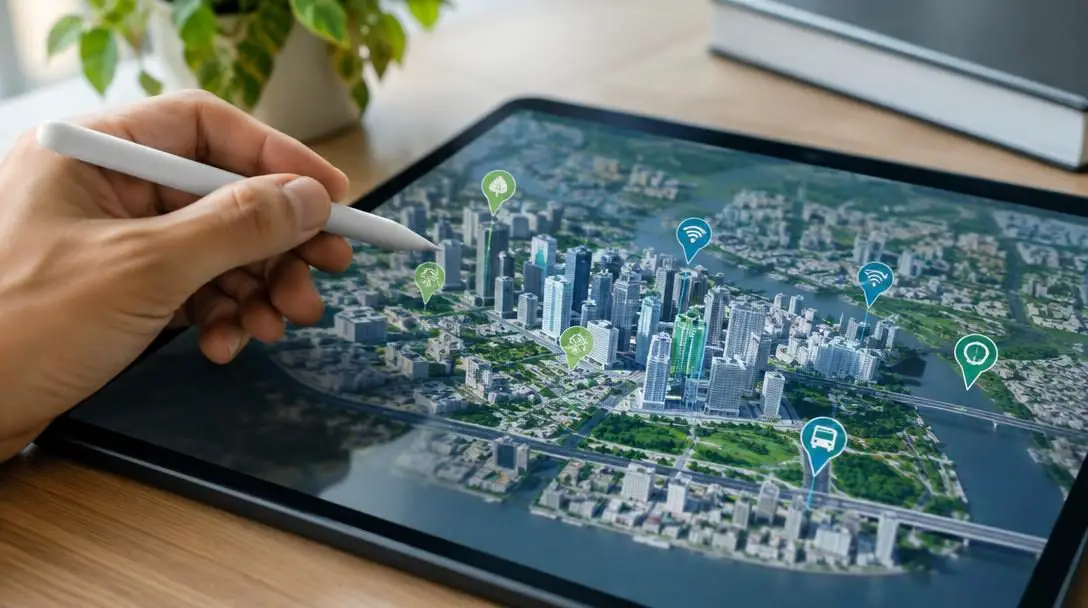
Smart urban planning approaches the city as an interconnected ecosystem rather than a collection of isolated metropolitan challenges.
The primary administrative benefit is a dramatic increase in operational efficiency. Municipal departments are frequently constrained by repetitive, paper-heavy tasks and uncoordinated operations. Smart management platforms automate these standard civic processes, minimizing administrative delays and allowing civil servants to focus their efforts on strategic planning. Furthermore, real-time diagnostic systems enable administrators to allocate maintenance personnel and municipal equipment precisely where localized problems occur, eliminating wasteful dispatching practices.
These computational efficiencies translate directly into reduced operating expenditures. Operating a modern city is an expensive enterprise, and municipal inefficiencies consume vast amounts of taxpayer funding. IoT-enabled energy monitoring systems in civic buildings identify heating, cooling, and electrical waste, enabling automated conservation measures that reduce municipal utility costs. Similarly, using predictive analytics to optimize bus and maintenance routes based on verified citizen demand lowers fuel consumption, limits fleet wear and tear, and minimizes municipal repair budgets.
For city residents, smart infrastructure produces a measurable rise in the everyday quality of life. Commuting remains one of the most frustrating aspects of urban life, yet intelligent traffic systems ease congestion by dynamically adjusting traffic light sequences according to fluctuating vehicle volumes. On a neighborhood scale, mobile parking applications communicate directly with street-embedded sensors, directing motorists to available parking stalls immediately and eliminating the exhaust fumes and lost time spent searching for open spaces.
Finally, computational frameworks are instrumental in achieving environmental sustainability. By using smart fill-level sensors inside municipal trash receptacles, sanitation teams receive automatic notifications only when bins reach capacity. This targeted routing eliminates unnecessary collection rounds and curbs vehicular exhaust emissions. In energy management, smart algorithms balance the intermittent input of renewable resources like municipal solar installations and wind generation systems, drastically cutting metropolitan carbon emissions.
Step-by-Step Implementation Framework
Migrating from traditional municipal oversight to a data-informed, automated smart city demands a structured, multi-phase roadmap. Urban leaders and technical teams can minimize disruption by following a methodical implementation process.
- Establish Clear Objectives and Cross-Sector Governance: Convene municipal officials, community representatives, private contractors, and technical specialists to identify target civic problems. Establish enforceable data governance rules, clear performance benchmarks, and explicit data ownership guidelines prior to purchasing proprietary software or field hardware.
- Conduct an Infrastructure and Network Assessment: Perform a thorough audit of active municipal infrastructure, evaluating broadband coverage, localized wireless networks, physical access points, and existing server capacity. Determine whether legacy municipal systems can securely integrate with cloud computing platforms and distributed field devices.
- Design a Unified Cloud and Data Architecture: Build a scalable cloud infrastructure capable of ingesting high-frequency urban data feeds without latency. Implement standardized communication protocols to guarantee that edge sensors, machine learning models, and administrative dashboards exchange records securely across all city agencies.
- Deploy IoT Sensors and Edge Hardware: Strategically install network-connected sensors across key municipal assets, including signalized traffic intersections, water and electrical distribution networks, public bus fleets, and public waste bins. Calibrate and test each node to verify continuous data transmission.
- Implement Big Data Analytics, AI, and Machine Learning Systems: Integrate analytical processing engines and predictive algorithms into the central data pipeline. Program machine learning models to detect operational anomalies, predict maintenance demands, balance HVAC systems in public buildings, and automate traffic signal adjustments.
- Launch User Interfaces for Officials and Citizens: Deliver intuitive, consolidated operations dashboards for municipal personnel to monitor city metrics and receive emergency alerts. In parallel, release accessible, user-friendly mobile applications that provide residents with actionable updates on public transit arrival times, local air quality, and open parking spots.
- Monitor, Maintain, and Iterate: Regularly evaluate algorithm accuracy, sensor battery life, and network bandwidth stability. Update predictive models to reflect changing population trends, replace malfunctioning field sensors promptly, and integrate ongoing public feedback into future software iterations.
Pitfalls and Implementation Traps to Avoid
Despite the immense promise of smart municipal computing, ambitious civic projects frequently stumble due to predictable planning and managerial mistakes. Being aware of these pitfalls allows municipal authorities to safeguard public funds and sustain community trust.
- Deploying Technology Without Strategic Purpose: Purchasing and installing expensive sensor arrays simply to showcase technological novelty, without addressing a specific municipal need, leads to abandoned devices and wasted civic capital.
- Operating in Isolated Departmental Silos: When departments such as sanitation, transit, emergency services, and water management deploy independent computing solutions, information stays isolated. This segregation prevents analytics software from diagnosing citywide patterns.
- Neglecting Data Privacy and Cybersecurity Protections: Amassing detailed tracking data concerning resident movements without end-to-end encryption and stringent access permissions creates major civil liberties concerns and leaves critical infrastructure open to hostile intrusions.
- Failing to Plan for Long-Term Maintenance: Allocating capital strictly for initial hardware procurement while ignoring recurring software licensing, cellular data transmission fees, routine sensor maintenance, and hardware replacements causes smart networks to degrade quickly.
- Overlooking User Accessibility and Resident Inclusion: Building citizen portals without considering digital equity or intuitive interface design excludes older residents and underserved communities, widening the socioeconomic divide.
- Over-relying on Unsupervised Automation: Removing human oversight from core administrative decisions introduces severe operational vulnerabilities whenever sensor anomalies or unprecedented municipal emergencies feed corrupted information into predictive algorithms.
Managing Critical Challenges and Systemic Risks
Unlocking the full potential of urban computing requires confronting several deep-rooted operational, technical, and structural obstacles. Overcoming these hurdles requires proactive administrative strategies.
The most pressing challenge involves data privacy and cybersecurity risks. Smart city networks continuously gather, process, and retain intimate records regarding citizen routines, vehicle trajectories, energy demands, and facility utilization. Without ironclad defenses, these repositories represent prime targets for malicious actors. A security breach could expose the private activities of thousands of residents or, worse, disrupt water distribution networks, power grids, or emergency dispatch systems. Municipalities must enforce strict end-to-end encryption protocols, conduct routine penetration testing, and enact transparent privacy policies that limit data retention periods and prevent unauthorized commercial access.
Another major vulnerability stems from an over-reliance on digital technology. Entrusting all core operations to automated software makes a city exceptionally vulnerable to unforeseen infrastructure failures. Severe electrical blackouts, undersea fiber-optic cuts, cloud service outages, or edge-sensor firmware bugs can abruptly freeze municipal oversight. To maintain uninterrupted community safety, municipal governments must mandate that civil servants retain the technical skills needed to operate systems manually. Comprehensive continuity plans and regular disaster simulations ensure that essential public utilities, transit routing, and emergency dispatches function effectively even if the central digital network goes dark.
Finally, financial constraints present a steep barrier for municipalities of all sizes. Designing, purchasing, installing, and maintaining interconnected computational architecture entails substantial initial capital expenditures. Ongoing operating costs—including secure cloud hosting fees, software updates, and periodic hardware replacements—can place long-term stress on municipal budgets. Local governments must perform rigorous cost-benefit analyses before deployment, ensuring that documented energy savings, reduced fleet fuel usage, and administrative efficiencies produce a measurable return on investment over the lifecycle of the technology.
Frequently asked questions
What is the fundamental difference between a traditional city and a smart city?
A traditional city manages utilities, traffic, sanitation, and governance through independent, manual workflows, periodic resident surveys, and historical logs. A smart city uses an interconnected network of IoT sensors, cloud storage, big data analytics, and artificial intelligence to monitor physical infrastructure dynamically and manage urban operations through automated, real-time interventions.
How do IoT sensors directly improve urban traffic flow?
IoT sensors installed along roadways, on streetlights, and within transit fleets continuously track vehicle volume, travel speeds, and road blockages. This continuous data feed allows machine learning systems to adjust traffic signal timings dynamically, alleviating bottlenecks as they form, while directing drivers straight to open parking spaces through mobile apps.
How do smart city systems protect citizen privacy?
Responsible smart municipal systems implement defense-in-depth cybersecurity strategies, including end-to-end data encryption, strict access permissions, regular defensive audits, and anonymization of personal data feeds. Furthermore, clear governance frameworks dictate how urban data is collected, processed, and stored, preventing unauthorized tracking or commercial exploitation.
Can a smart city continue operating during a complete network or cloud outage?
A resilient smart city maintains manual backup plans, air-gapped hardware overrides, and localized edge-computing capabilities. While automated real-time optimizations may pause during an outage, trained municipal staff can override automated systems manually, ensuring that critical utilities, transit, and emergency services operate without disruption.
How does computing technology help reduce municipal energy consumption?
Computing systems lower energy use by gathering real-time occupancy and consumption data through IoT meters in municipal facilities, allowing automated management systems to turn down heating, cooling, and lighting when spaces are unoccupied. Additionally, these platforms intelligently balance renewable energy generation from municipal solar and wind installations against active utility demands.
The bottom line
Computing has evolved from a back-office administrative aid into the central nervous system of modern urban development. By unifying the Internet of Things, cloud computing, big data analytics, and artificial intelligence, smart cities bridge the divide between physical municipal assets and proactive public administration. This computational synergy drives demonstrable reductions in energy consumption, mitigates grueling traffic congestion, minimizes municipal waste, and accelerates administrative workflows.
Achieving these outcomes, however, requires far more than purchasing sophisticated technical equipment. Lasting success depends on deliberate, cross-sector governance, disciplined data stewardship, digital accessibility for all residents, and resilient manual backups. When urban planners deploy computing as an integrated, human-centric ecosystem, they create modern metropolitan centers that are economically sustainable, operationally agile, and profoundly livable for generations to come.