The Top 5 Garden Pests and How to Control Them Naturally

Cultivating a flourishing residential garden is one of the most fulfilling pursuits in domestic life, offering vibrant ornamental blooms, crisp home-grown vegetables, and a soothing connection to the natural world. Yet maintaining healthy beds, borders, and patio containers demands constant vigilance. Beyond balancing seasonal hydration, adapting to unpredictable weather fluctuations, and fine-tuning soil nutrition, gardeners must routinely defend their plants against an array of opportunistic pests eager to strip leaves, bore into stems, and drain life-giving sap.
While the broader ecosystem is home to thousands of creeping and flying insects, a small group of persistent invaders is responsible for the vast majority of landscape devastation in home gardens. Reaching for synthetic chemical pesticides can harm non-target wildlife, disrupt beneficial soil microbiomes, and leave toxic residues on edible harvests. By learning to identify the primary culprits early and countering them with targeted, mechanical, botanical, and biological remedies, home growers can safeguard their foliage while fostering a resilient, balanced outdoor environment.
Key takeaways
- Five notorious invaders—aphids, caterpillars, spider mites, scale insects, and Japanese beetles—account for the bulk of recurring residential garden devastation.
- Physical and mechanical solutions, including focused water blasts, hand-collection, and sanitary pruning, give immediate relief without chemical residues.
- Simple topical sprays created from gentle dish soap, ground cayenne pepper, diluted rubbing alcohol, and cold-pressed neem oil safely disrupt pest physiology.
- Hardened shells render scale insects resistant to standard contact insecticides, making horticultural oils, targeted pruning, and beneficial ladybugs far superior controls.
- Preventative timing is vital for invasive flyers like Japanese beetles, which are best suppressed by installing floating row covers in late spring alongside manual removal into soapy water.
The 5 Most Destructive Residential Garden Pests
Every growing season introduces microscopic creepers and voracious chewers to your landscape. Recognizing how these organisms feed, where they establish colonies, and which host varieties they target is the foundation of any non-toxic defense program.
Aphids
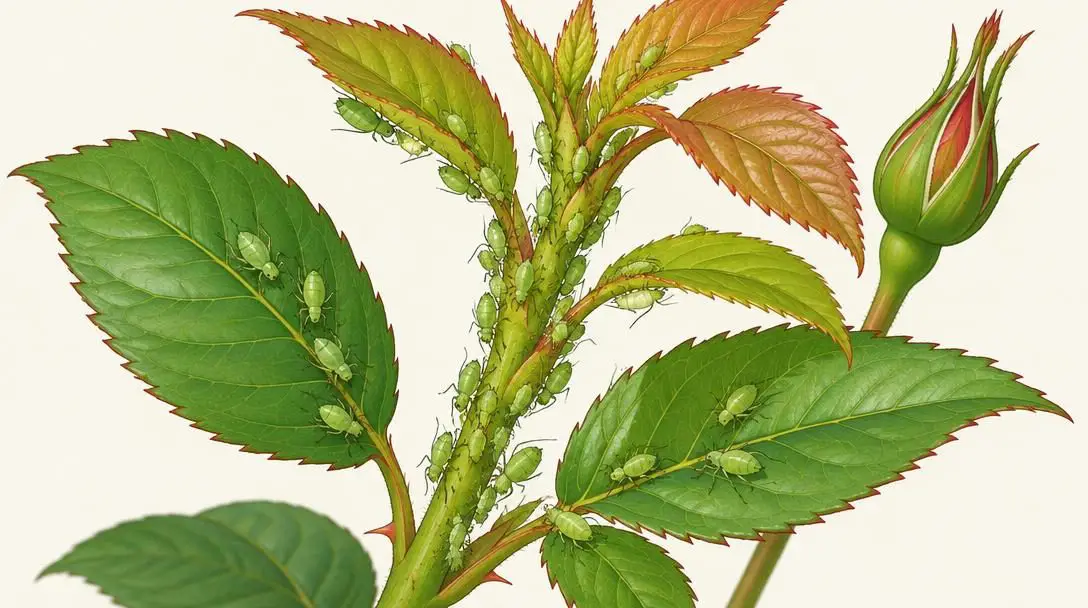
- Distribution: Worldwide, dominant in temperate zones
- Appearance: Tiny, soft-bodied green insects
- Primary targets: Citrus plants, fruit trees, roses, and camellias
Often looking completely unassuming upon initial inspection due to their diminutive stature, aphids gather in dense colonies along tender new shoots, delicate flower buds, and young unfurling foliage. These tiny green insects are distributed across the globe and thrive with exceptional vigor in temperate regions. Equipped with piercing-sucking mouthparts, they puncture plant epidermal tissues to extract carbohydrate-rich phloem sap. This feeding behavior rapidly deprives developing stems of critical moisture and nutrients, causing fresh foliage to curl, buds to abort, and overall vegetative growth to become severely stunted.
Because aphids reproduce at an astonishing rate under favorable conditions, early intervention is critical before their feeding clusters completely envelop emerging growth tips on prized roses, fruiting citrus varieties, and camellias.
Caterpillars
- Life stage: Larval form of butterflies
- Appearance: Elongated, soft-bodied chewing larvae
- Primary targets: Vegetable patches and ornamental borders
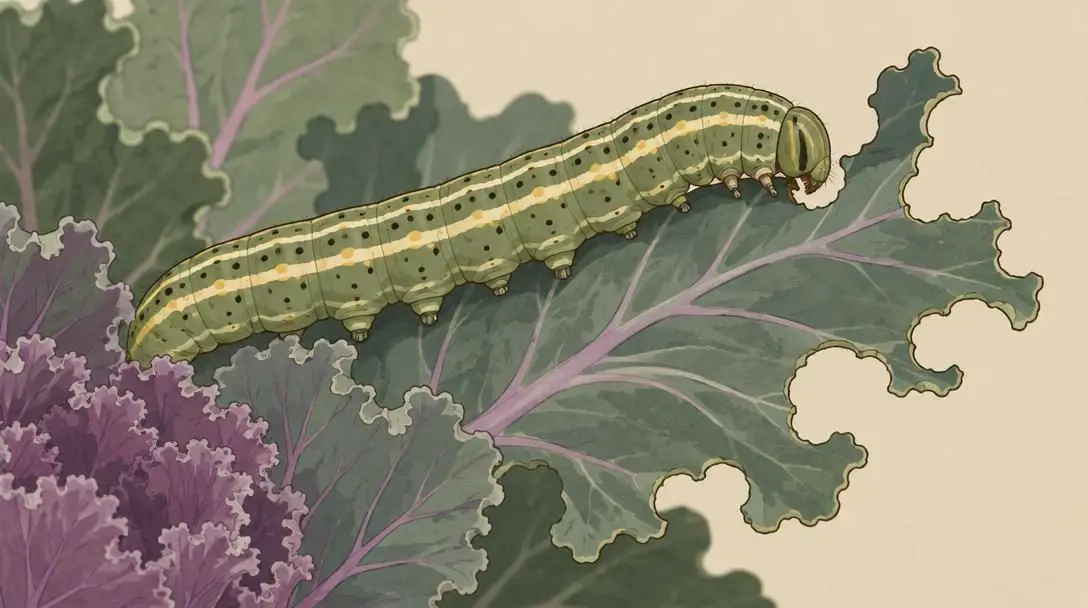
Familiar to every gardener as the juvenile larval phase of butterflies, caterpillars possess an insatiable appetite driven by the urgent biological need to fuel rapid metamorphosis. While some insect species cause subtle, slow-building harm, caterpillars chew broad, irregular holes through tender leaves, stems, and developing flower petals. They routinely bypass ordinary turfgrass to feast directly on lush backyard vegetable plots and decorative ornamental flowerbeds.
A modest population of these hungry chewers can quickly defoliate an entire host plant, leaving behind nothing more than a skeleton of bare stems and leaf veins. Because their soft bodies make them vulnerable to physical collection, discovering their presence early makes non-chemical remediation straightforward.
Spider Mites
- Classification: Arachnid relatives of garden spiders
- Identifying sign: Extremely fine, dense webbing across foliage
- Impact: Severe leaf damage and systemic plant decline
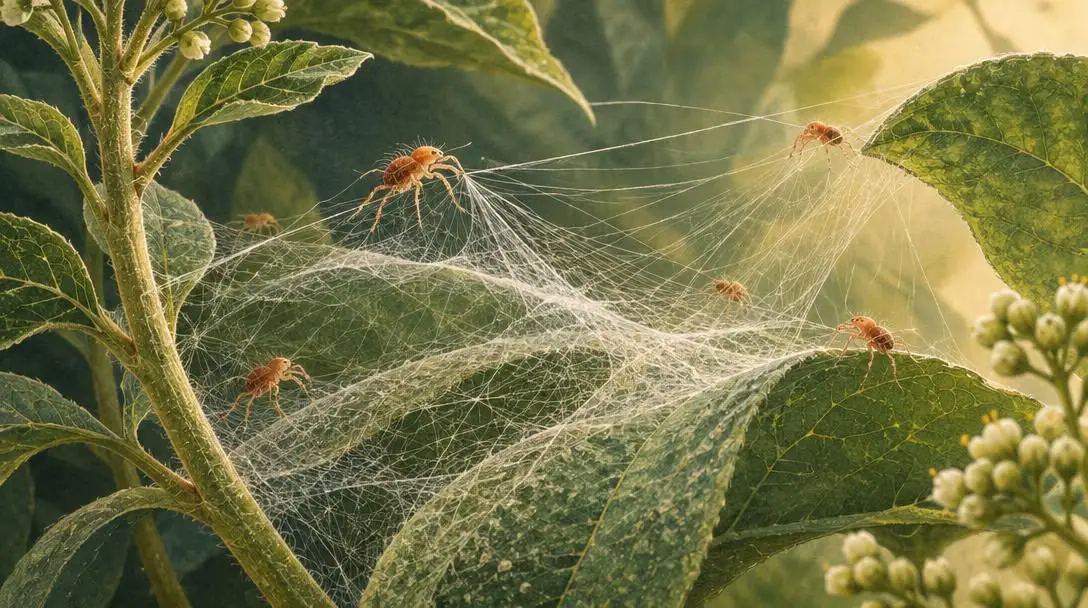
Unlike beneficial predatory garden spiders that weave wide geometric webs to capture unwanted flying insects, spider mites are destructive plant parasites that belong to the arachnid family. Microscopic in scale, they do not produce broad or open-patterned nets. Instead, they spin dense, silky sheets across the undersides and surfaces of leaves, stems, and flower bracts. Under this protective canopy of silk, colonies feed on plant cells, leading to stippled, discolored, and dehydrated foliage.
By the time this fine webbing becomes clearly discernible to the naked eye, the host plant is typically suffering from a heavy infestation that requires aggressive intervention to avert widespread systemic decline.
Scale Insects
- Diversity: Roughly 8,000 distinct species
- Appearance: Immobile, amorphous blobs resembling marine organisms
- Primary targets: Woody stems, bark, and plant leaf veins
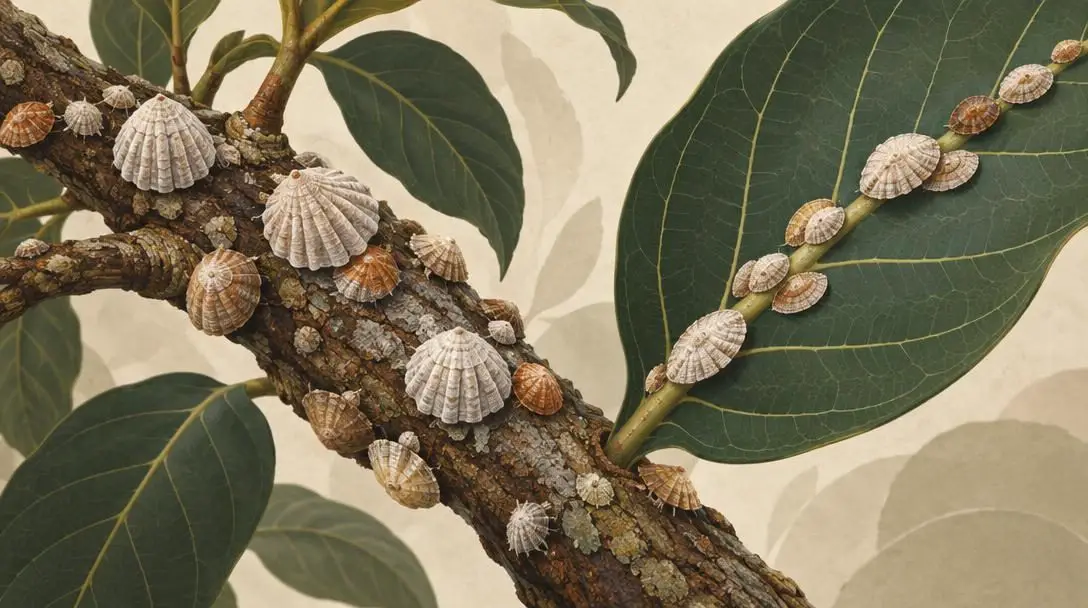
Deviating sharply from the typical appearance of active garden bugs, scale insects mimic strange marine organisms clinging tightly to submerged rocks or boat hulls. Represented by approximately 8,000 known species globally, these unusual pests present as immobile, waxy, shell-like blobs that anchor themselves permanently along woody stems, exterior bark, and major leaf veins. Because they remain motionless and blend effortlessly into the bark texture of woody ornamentals and shrubs, growers often overlook them until an infestation is well advanced.
Beneath their waxy, protective shields, scale insects continually drain vascular fluids, gradually sapping the plant's vigor, triggering branch dieback, and leaving host specimens vulnerable to secondary environmental stresses.
Japanese Beetles
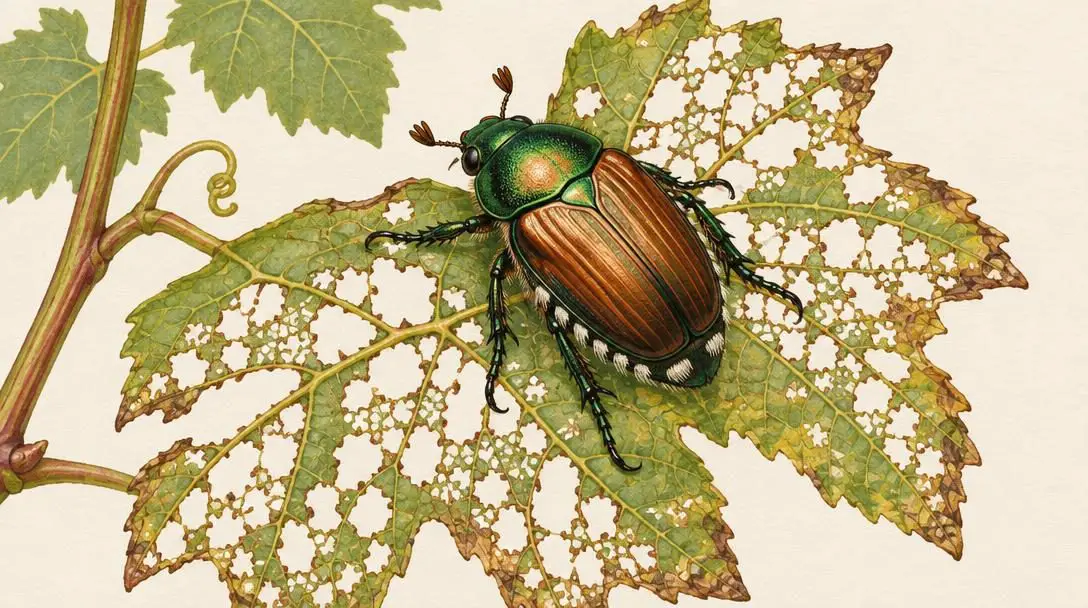
- Origin: Native to Japan (non-destructive in native range)
- Most impacted area: Eastern United States; also present in Europe
- Primary targets: Grapevines, birch, and linden trees
Within their native Japanese habitat, Japanese beetles do not consume cultivated foliage in an aggressive or destructive manner, held in check by natural ecological balances. However, their accidental introduction into European landscapes and across North America provoked an alarming behavioral transformation. Today, they rank among the most devastating invasive garden menaces across the eastern United States.
Emerging in early summer, these hard-shelled flyers feed ravenously in swarms, skeletonizing the leaves of domestic grapevines, birch trees, and linden trees. By consuming all soft leaf tissue between the structural veins, they transform lush green canopies into fragile, lace-like remnants within a matter of days.
At a Glance: Comparing the Top 5 Garden Pests
Every pest species exploits a particular niche within your landscape, requiring distinct diagnostic signs and matching physical or organic remedies. The following comparative overview outlines the primary characteristics and natural controls for each culprit.
| Pest | Key Identifying Features | Primary Plant Targets | Recommended Natural Controls |
|---|---|---|---|
| Aphids | Tiny green bugs clustering on fresh shoots | Roses, camellias, fruit trees, citrus | Water jets, soap and cayenne spray, neem oil |
| Caterpillars | Soft-bodied butterfly larvae chewing holes | Vegetables, ornamental garden borders | Hand relocation, cayenne spray, neem oil |
| Spider Mites | Dense, fine silk webbing over foliage | Foliage plants, various ornamentals | Pruning, rubbing alcohol and water spray |
| Scale Insects | Immobile, amorphous marine-like blobs | Woody stems, bark, leaf veins | Pruning, water jets, neem oil, ladybugs |
| Japanese Beetles | Hard-shelled invasive feeding beetles | Grapevines, birch trees, linden trees | Row covers, soapy water bucket, neem oil |
Mechanisms of Non-Synthetic Pest Management
Controlling destructive garden invaders without commercial synthetic chemicals relies on a coordinated defense strategy incorporating physical force, botanical topical barriers, suffocating oils, and biological allies. Each non-synthetic modality exploits an inherent physiological or behavioral vulnerability in the target pest.
Natural pest management succeeds by targeting biological vulnerabilities rather than blanketing the garden in persistent synthetic chemicals.
Physical and mechanical intervention provides immediate, decisive results without altering soil chemistry or endangering surrounding pollinators. Directing a firm, focused stream of water at tender new stems easily knocks soft-bodied pests like aphids loose from their feeding sites; disoriented and displaced onto the garden floor, they are rarely able to scale the plant again. Similarly, collecting caterpillars by hand allows growers to relocate them away from decorative borders, while sweeping adult Japanese beetles into a simple bucket filled with water and liquid dish soap breaks the water's surface tension, instantly drowning the invaders.
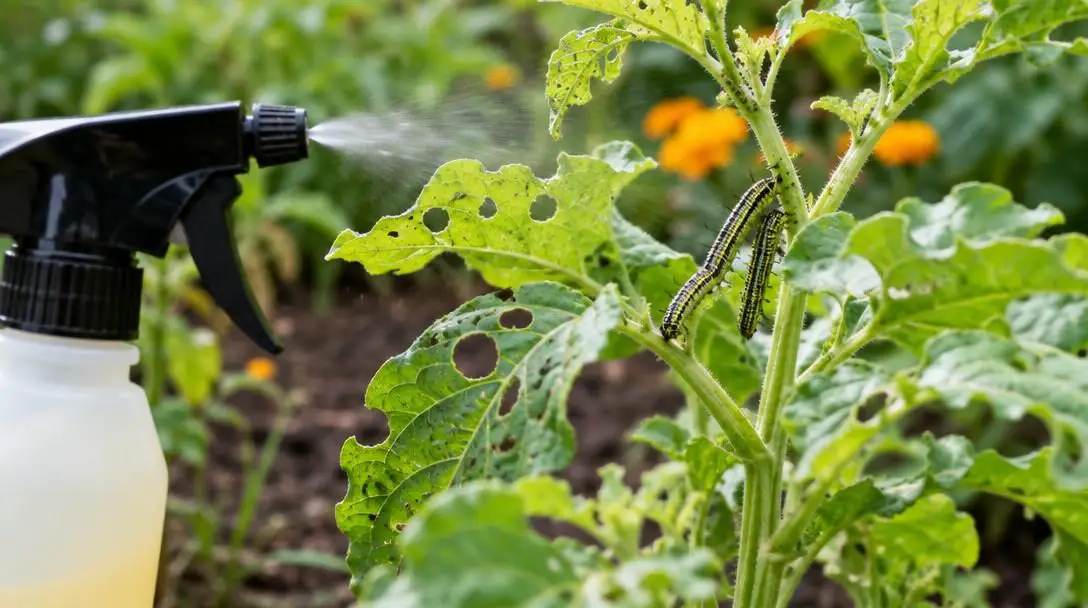
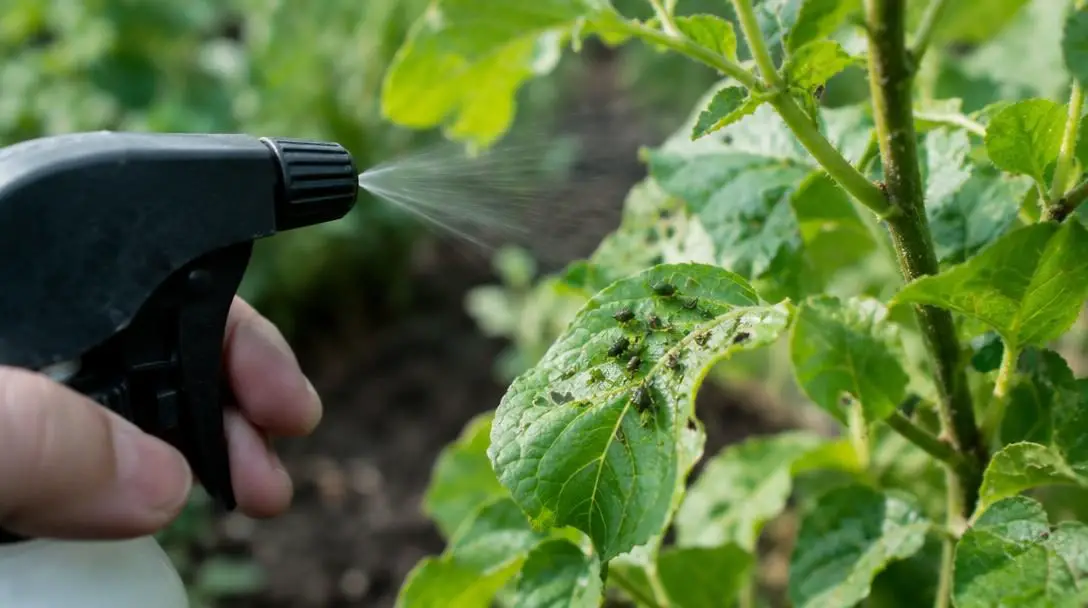
Topical botanical mixtures utilize inexpensive pantry ingredients to establish inhospitable conditions on foliage. Combining water with a modest squirt of liquid dish soap and ground cayenne pepper creates an irritating surface coating that repels chewing caterpillars and deters piercing aphids. For arachnid invaders like spider mites, a measured solution of water and rubbing alcohol penetrates the protective exterior barriers of the mites without leaving behind toxic soil residues.
Botanical horticultural oils, particularly cold-pressed neem oil, offer broad-spectrum pest suppression against stubborn, armored species. While conventional contact poisons simply run off the waxy, impenetrable shields of scale insects, horticultural neem oil coats the shell and physically suffocates the organism underneath. It also acts as an effective feeding deterrent for caterpillars, aphids, and beetles whenever manual removal is impractical.
Biological controls and physical exclusion complete the sustainable defense perimeter. Introducing beneficial insects, such as predatory ladybugs, provides an active hunter population that consumes scale insects naturally. Meanwhile, installing lightweight floating row covers creates an impenetrable physical boundary that prevents flying adult beetles from settling on delicate foliage.
Step-by-Step Practical Application Guide
To implement these natural controls effectively, follow these systematic procedures tailored to the specific vulnerabilities of each target pest.
- Dislodge and repel aphids: Examine roses, camellias, fruit trees, and citrus varieties for clustering colonies. Fasten an adjustable spray nozzle to your garden hose and direct a firm, sharp jet of water directly at infested shoots to rattle and disorient the bugs. To prevent their return, fill a spray bottle with clean water, a few drops of liquid dish soap, and a pinch of ground cayenne pepper. Shake well and mist all stems and leaf surfaces thoroughly.
- Relocate or treat chewing caterpillars: Put on sturdy gardening gloves and inspect both the upper and lower surfaces of chewed leaves. Carefully pick each caterpillar off by hand and transport it to an uncultivated area away from your beds to let it mature safely. If your garden is too vast for hand-picking, spray the foliage with neem oil or apply the cayenne pepper, soap, and water blend.
- Strip and spray spider mite colonies: Identify sections draped in fine, dense webbing. Take clean pruning shears and cut away all heavily webbed leaves and stems, discarding them immediately in the trash to cut down the core breeding population. Next, mix 1 cup of rubbing alcohol with 30 ounces of fresh water in a clean spray bottle. Spray the solution generously over both sides of all remaining leaves, stems, and neighboring branches.
- Prune, blast, and bio-target scale insects: Inspect woody stems and leaf veins for immobile, blob-like growths. Prune heavily crusted twigs to thin the population and improve airflow. Direct a high-pressure stream of water from your hose to strip remaining scales from the bark. Follow up by coating the stems directly with neem oil, and introduce predatory ladybugs into your garden as a living control mechanism.
- Shield and capture Japanese beetles: In vulnerable regions, drape floating row covers over susceptible plantings like grapevines, birch, and linden throughout May and June. Inspect uncovered foliage regularly during warm days. Carry a container of water mixed with a squirt of liquid dish soap, hand-pick the beetles off leaves, and drop them into the soapy solution to submerge them. For large trees where hand-picking is unfeasible, spray foliage thoroughly with neem oil.
Critical Mistakes to Avoid in Natural Pest Control
While organic and physical control methods avoid the persistent ecological hazards of synthetic poisons, improper execution can undermine their efficacy or inadvertently cause physical damage to fragile landscape plants. Avoid these common management pitfalls:
- Relying on standard synthetic insecticides for scale: Chemical poisons typically fail against scale insects because their hardened shells shield them from contact toxins. Rely instead on mechanical water jets, pruning, neem oil, or biological predators.
- Spraying directly over dense spider mite webbing: Attempting to spray solutions through thick webbing never reaches the pests underneath. You must prune away and discard web-covered leaves before applying alcohol sprays.
- Spraying only the tops of leaves: Pests like spider mites and aphids seek sanctuary on the protected undersides of leaves. Coating only the visible upper surface leaves the colony intact.
- Using unmeasured or excessive dish soap: Pouring indiscriminate amounts of soap into your spray bottles strips the protective cuticle from plant leaves and leads to severe leaf burn. Use only a gentle dash.
- Failing to act promptly against Japanese beetles: Overlooking initial beetle arrivals on birch, linden, or grapes allows them to release aggregation pheromones, leading to massive defoliation within days.
- Choosing less practical biological controls: While predatory wasps consume scale insects, intentionally attracting or releasing wasps near family walkways, patios, or play areas introduces unnecessary sting hazards. Choosing ladybugs is far safer for residential living spaces.
Frequently asked questions
Why do ordinary chemical insecticides fail to kill scale insects?
Scale insects feature unusual, immobile bodies resembling shells or marine growths that protect them against topical contact poisons. Pruning, forceful water blasts, neem oil (which coats and suffocates them), and predatory insects like ladybugs are far more effective.
How can I tell the difference between friendly spiders and spider mites?
Ordinary garden spiders are beneficial predators that spin broad, geometric webs to catch bugs. In contrast, spider mites are tiny plant-feeding arachnids that blanket plant surfaces in extremely fine, dense silk sheets that choke stems and leaves.
When should I install row covers to protect against Japanese beetles?
If you live in affected areas such as the eastern United States, install lightweight floating row covers across vulnerable plants beginning in May and keep them anchored through June to physically block adult beetles from reaching the foliage.
Does neem oil work on all five major garden pests?
Yes. Neem oil serves as an effective natural treatment for scale insects, aphids, caterpillars, and Japanese beetles, and provides broad control when manual collection or simple water blasting is not practical for large plantings.
The Bottom Line
Successful non-toxic pest control does not demand complex industrial chemicals or costly gear. By identifying whether your garden is hosting aphids, caterpillars, spider mites, scale, or Japanese beetles, you can select the precise mechanical action, homemade spray, or biological ally required to resolve the issue naturally.
Maintain consistent garden hygiene, scout vulnerable plants like roses, fruit trees, and linden during seasonal transitions, and keep simple remedies like neem oil, mild soap, and rubbing alcohol close at hand. Taking decisive, natural action at the first sign of pest activity ensures your beds, borders, and edible crops remain productive, balanced, and vibrant throughout the growing season.