The Top Garden Tools Every Gardener Needs
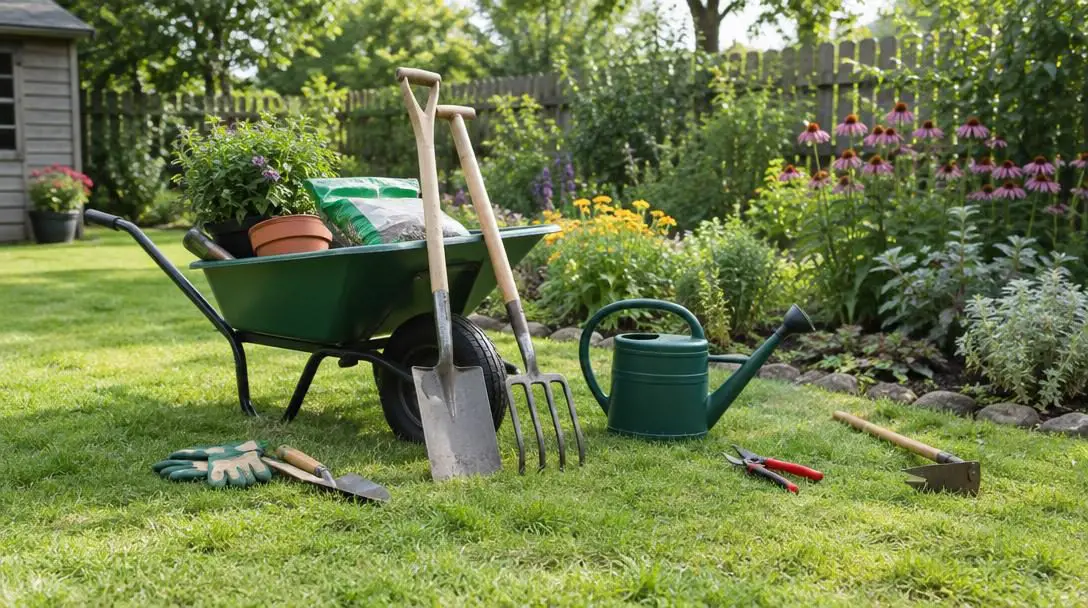
Starting a garden is one of the most rewarding outdoor pursuits, whether you are tending patio containers, cultivating a modest backyard plot, or developing a dedicated space for flowers, vegetables, and ornamental shrubs. Many newcomers assume that a successful plot requires little more than soil, seeds, and water. However, having reliable equipment makes the difference between an exhausting chore and an enjoyable, sustainable hobby. Quality tools reduce the physical strain of daily yard work, protect your physical health, and provide fragile plants with the precise care they need to survive.
A surprising number of essential garden implements are compact, accessible, and relatively inexpensive, yet beginners frequently overlook them when purchasing initial supplies. Lacking the proper instrument for cutting, digging, weed management, or pest detection leads to damaged vegetation and wasted effort. By understanding which foundational gear matters most and learning how each tool functions throughout the growing cycle, any enthusiast can set up an efficient workstation and cultivate a thriving outdoor space.
Key takeaways
- Investing in foundational, compact tools protects plants from tissue damage and shields gardeners from repetitive strain and puncture injuries.
- A balanced gardening toolkit incorporates precision cutting tools, vertical plant supports, digging implements, and specialized pest management gear.
- Organizing implements in a wearable tool belt prevents lost blades, reduces trips to the storage shed, and eliminates serious puncture hazards in garden walkways.
- Preventive pest detection using ultraviolet blacklights reveals camouflaged insects like hornworms before visible daytime destruction occurs.
- Regular equipment maintenance, including rinsing wet soil from metal heads and sharpening cutting edges, extends tool lifespan across multiple growing seasons.
Essential gardening equipment at a glance
The right gear allows you to care for plant tissues accurately, maintain planting rows, and manage soil beds without unnecessary disruption. A well-rounded collection balances personal hand protection, delicate seedling support, heavy digging ability, and targeted pest control. Equipping yourself with these foundational items gives your plants the best opportunity to flourish from germination through harvest.
| Tool | Primary Purpose | Key Benefit | Best Practice |
|---|---|---|---|
| Pruning Shears | Trimming foliage and stems | Clean, infection-resistant cuts | Keep blades razor-sharp |
| Plant Ties | Supporting stems and vines | Prevents snapping and sagging | Leave slack for stem expansion |
| Plant Labels | Row and cultivar identification | Prevents accidental weeding | Label immediately upon sowing |
| Gardening Knife | Weeding, furrowing, and root slicing | All-in-one multipurpose utility | Wipe blade clean after soil contact |
| Tool Belt | Wearable gear organization | Prevents misplaced, dangerous tools | Empty and wipe clean post-session |
| Leather Gardening Gloves | Hand protection | Durable puncture and scrape defense | Wear when handling thorns or stones |
| Blacklight Flashlight | Nocturnal pest detection | Illuminates glowing pests like hornworms | Conduct surveys after dark |
| Natural Pesticides | Safe insect management | Non-toxic to pets and household members | Patch test on a single leaf first |
| Rake | Debris removal and soil aeration | Breaks surface crust, deters pests | Choose size based on bed width |
| Shovel | Excavation and soil transport | Provides essential digging leverage | Wash soil off metal to prevent rust |
Core tools for plant health and garden maintenance
Assembling a reliable set of tools requires looking at each implement's distinct role within the landscape. The following items represent the core equipment needed to keep plants structurally sound, beds aerated, and hands safe from injury.
Pruning Shears
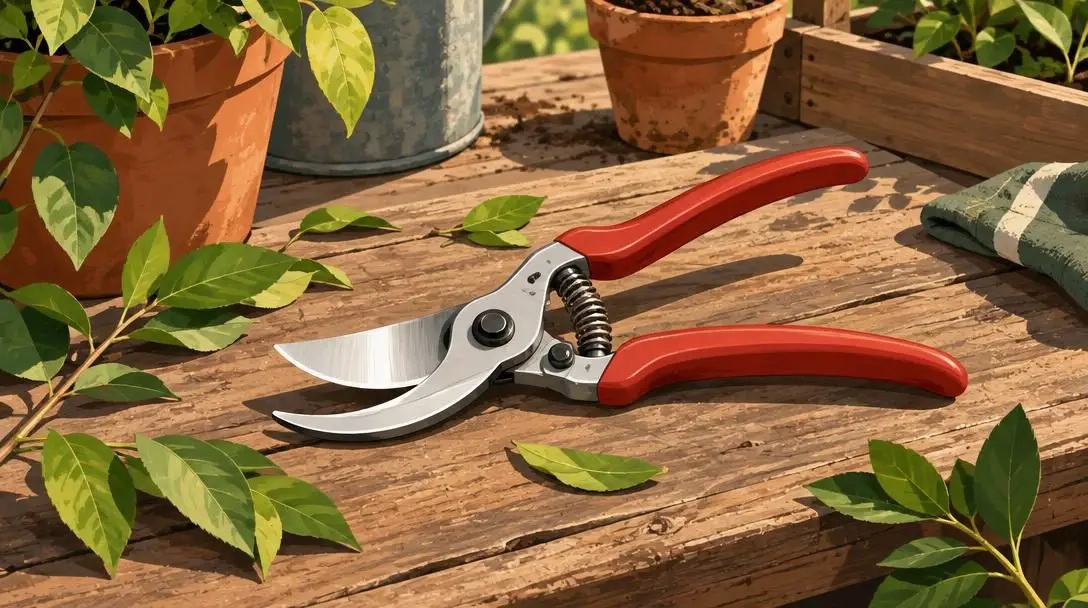
- Function: Selective cutting of foliage, vines, and branches
- Maintenance need: Regular sharpening to prevent crushing plant stems
- Primary advantage: Stops the spread of biological infections between plants
Pruning shears serve as an indispensable ally for detail-oriented plant caretakers. Designed to make clean, effortless cuts, shears allow you to selectively trim back unwanted or overcrowded foliage, out-of-control vines, stray branches, and structurally compromised plant limbs. Because biological infections and plant blemishes can quickly spread across dense beds, clipping infected leaves or decaying growth keeps your surrounding specimens safe and promotes healthy air circulation. Keeping shears razor-sharp ensures that plant stems are cleanly severed rather than crushed, speeding up natural healing and preventing opportunistic diseases from penetrating jagged tears.
Plant Ties
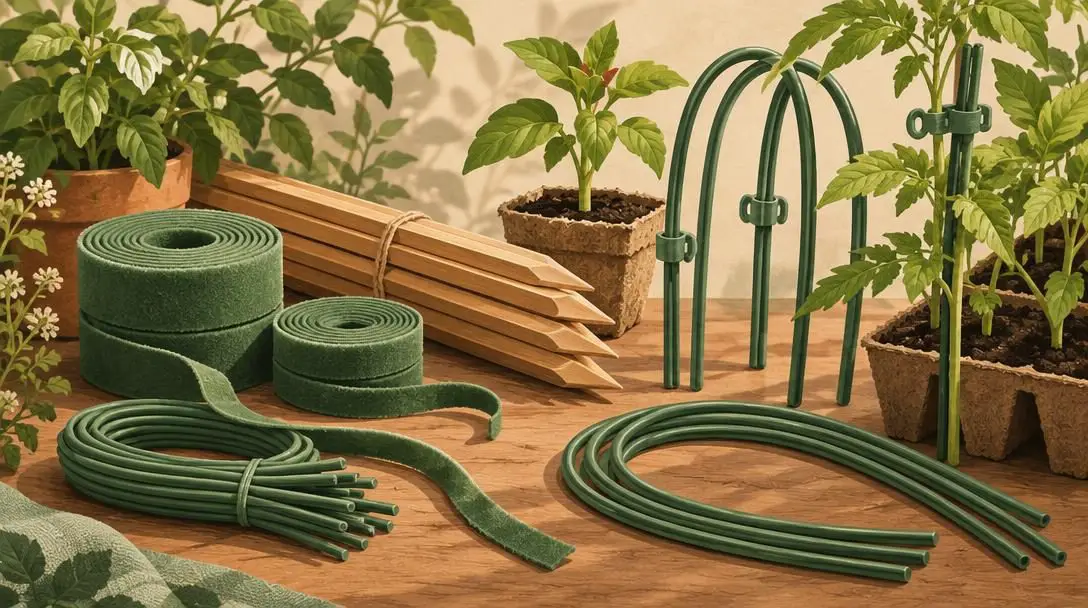
- Function: Securing weak stems to trellises and stakes
- Ideal for: Young seedlings, top-heavy blooms, and vining crops
- Key feature: Weather-resistant support without biting into plant bark
Young plants and newly emerged seedlings are sensitive to physical disruption, environmental shifts, and top-heavy growth. Plant ties provide direct physical assistance by mending delicate, drooping sections and securing weak stems to stakes or trellises. When young flora struggle under their own weight or droop during sudden growth spurts, plant ties hold them upright, ensuring they grow straight, capture sufficient light, and receive the gentle guidance they need during critical early phases. They offer stability through high winds and heavy rains without cutting into expanding plant stalks.
Plant Labels
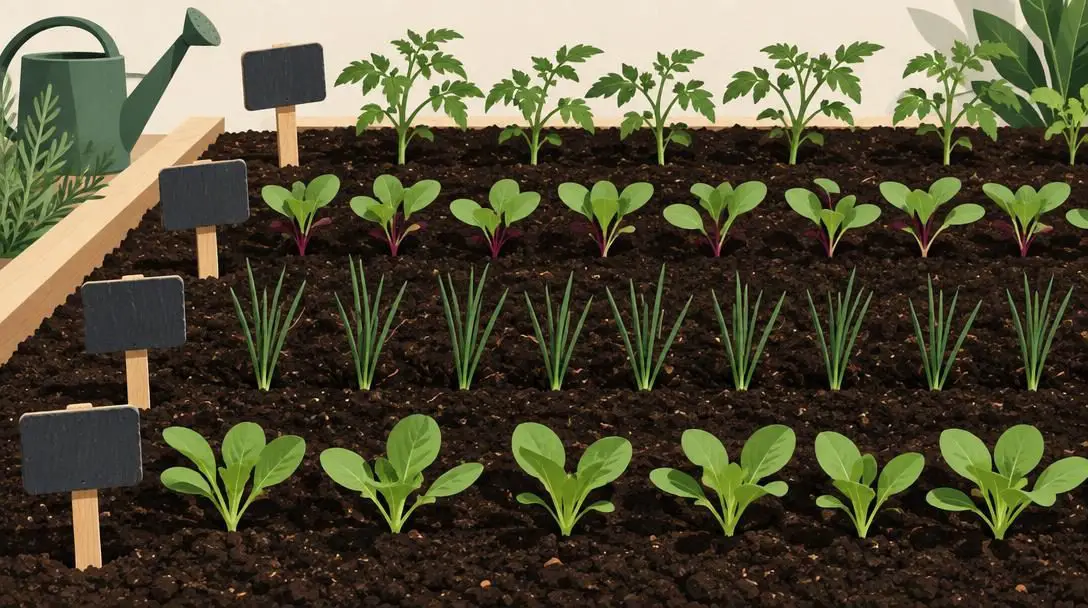
- Function: Cultivar tracking and bed mapping
- Application: Direct seeding, seedling flats, and perennial beds
- Benefit: Eliminates guesswork during watering, feeding, and weeding
When seeds are freshly buried in damp earth, distinguishing one seedling row from another quickly becomes difficult. Even slightly older immature plants can appear virtually identical before their true leaves and unique growth characteristics emerge. Plant labels provide instant visual identification for sown seeds, sprouting seedlings, and difficult-to-distinguish mature specimens. By marking beds systematically, you eliminate the guesswork and make sure every plant receives tailored watering amounts, feeding schedules, and localized attention, preventing accidental weeding of prized cultivars.
Gardening Knife
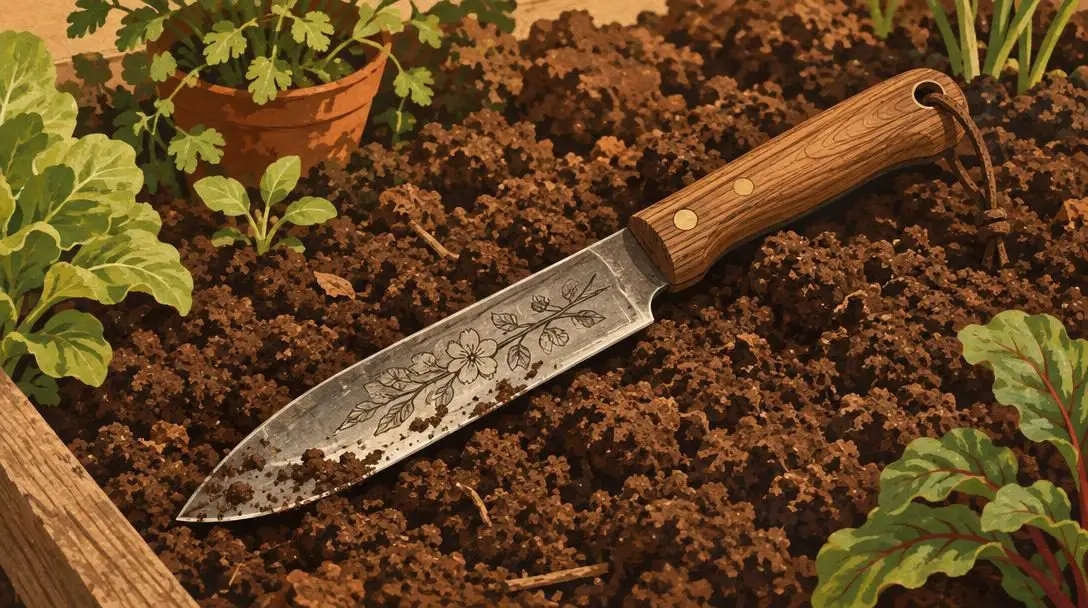
- Function: Multi-use cutting, soil loosening, and trenching
- Blade style: Sharp, narrow, and durable for deep soil penetration
- Versatility: Replaces separate trowels and weeders in compact areas
A dedicated gardening knife offers versatile utility, solving multiple common bed maintenance challenges in a single hand tool. Its blade provides enough leverage to loosen tightly packed earth, break through dense root balls, and soften stubborn, compacted soil. Gardeners also rely on it to slice away stubborn root systems during weed removal, lift and reposition young specimens safely from one bed to another, and carve shallow furrows or planting lines into the ground using the pointed tip for quick, uniform seeding. It functions as both a digging implement and a clean cutter in tight corners.
Reliable equipment makes the difference between a frustrating chore and a sustainable hobby, protecting both the gardener and the garden.
Tool Belt
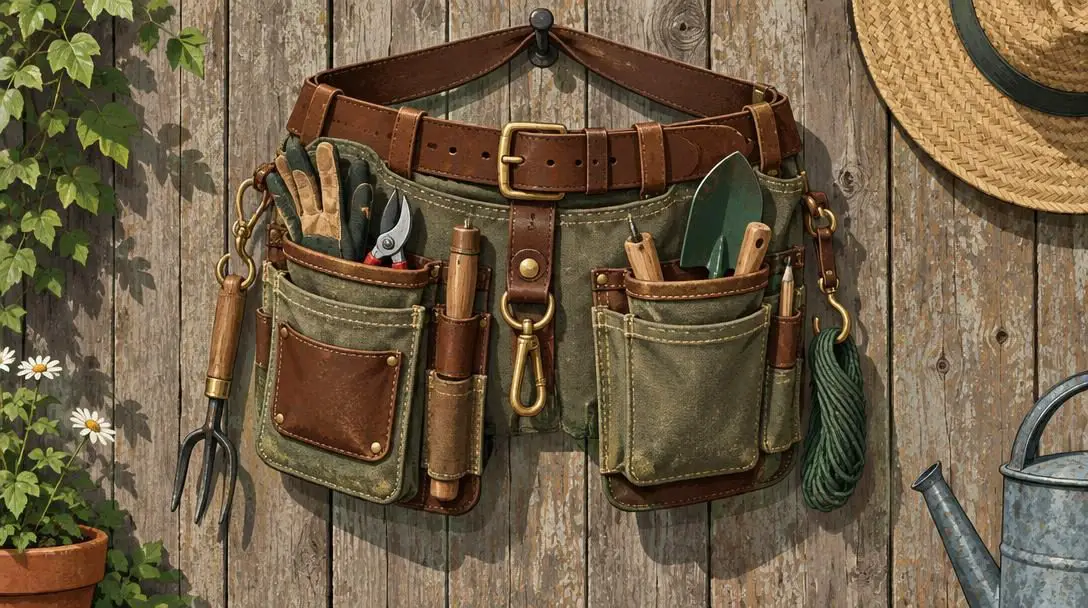
- Function: Mobile storage for hand tools, ties, and hardware
- Safety impact: Prevents ground-level puncture hazards and lost blades
- Efficiency gain: Eliminates repetitive trips back to the storage shed
Gardening requires moving continuously around beds, borders, and rows. Leaving implements, particularly sharp edges like blades and shears, scattered haphazardly across the ground creates direct safety hazards, increases the risk of foot injuries, and frequently leads to missing tools buried under foliage. A sturdy tool belt keeps small implements, ties, and markers fastened safely to your waist, organized, accounted for, and immediately available for fast adjustments anywhere in the yard. This eliminates wasted trips back to the garden shed while protecting sharp blades from contact with moisture on the ground.
Leather Gardening Gloves
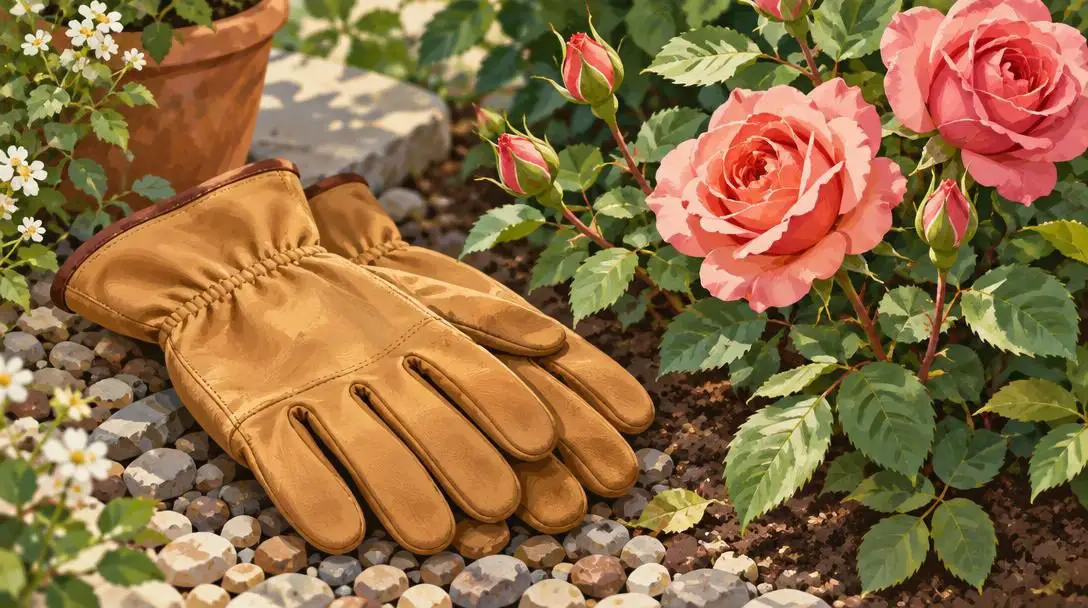
- Material: Tough, puncture-resistant natural leather
- Primary role: Shielding hands from thorns, sharp rocks, and skin irritants
- Ergonomics: Maintains secure grip while preventing friction blisters
Digging, clearing, and pruning can quickly wear down human hands, which remain the most critical tool on any gardening project. Working directly with dirt, thorned branches, and rough stones can result in scrapes, blisters, and exposure to hidden pests. A reliable pair of leather gardening gloves forms a protective barrier against jagged objects, coarse textures, and skin irritants, allowing you to maintain grip, handle difficult materials safely, and preserve comfort over extended sessions. Leather offers durable puncture resistance compared to thin fabric gloves when handling brambles or rose canes.
Blacklight Flashlight

- Technology: Ultraviolet (UV) light emission
- Target pests: Tomato hornworms and night-feeding insects
- Inspection timing: Post-dusk and night-time garden checks
Certain destructive insects and garden pests blend so thoroughly into green foliage that daytime visual checks fail to reveal their hiding spots. Under standard sunlight, plant ravagers frequently escape detection, feeding unhindered on tender leaves and roots. An ultraviolet blacklight flashlight illuminates hidden pests at night by causing their bodies to glow against the dark foliage, letting you verify pest eradication or uncover brand-new infestations before widespread damage occurs. Hornworms and other camouflaged predators become immediately obvious under ultraviolet radiation.
Natural Pesticides
- Ingredients: Water, neem oil, mild liquid soap, garlic, and vinegar
- Safety profile: Low toxicity for household pets and human family members
- Application: Diluted foliar spray for active insect suppression
Unwanted pests are an inevitable challenge for any garden bed. However, keeping pest populations in check does not require relying solely on aggressive store-bought treatments that compromise domestic environments. Inexpensive, safe homemade solutions can be mixed using common household ingredients. By combining water with measured amounts of neem oil, gentle dish soap, garlic extracts, or basic household vinegar, you can suppress destructive garden insects while maintaining a safe, healthy outdoor setting for household pets and human family members without introducing toxic synthetic residues.
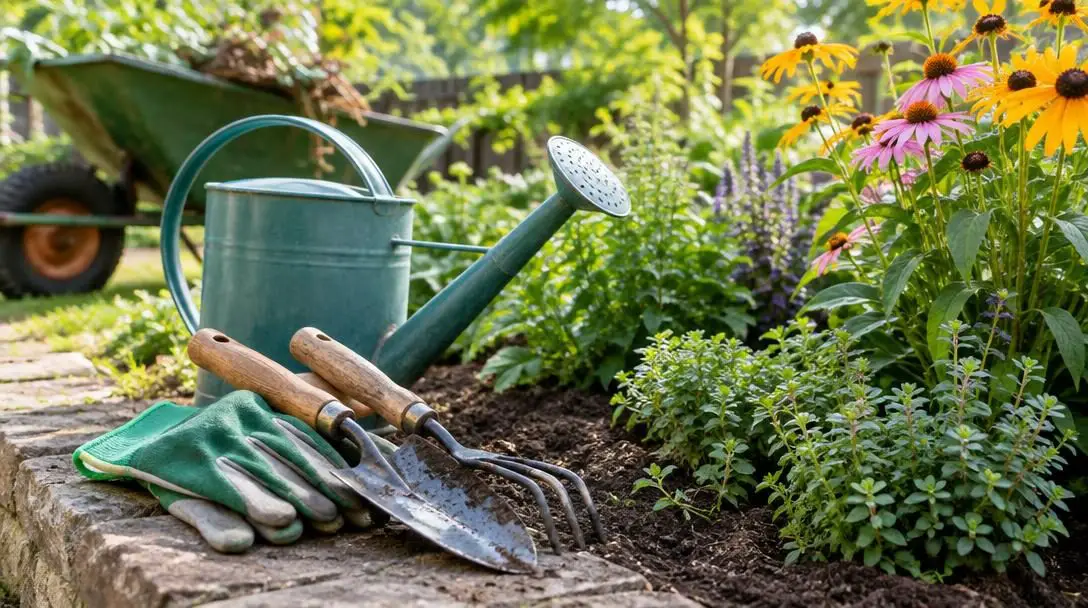
Rake
- Variations: Full-sized ground rakes and compact handheld models
- Soil benefits: Aerates surface crust and blends organic compost
- Pest defense: Disrupts ground-level insect nesting sites
Rakes come in both broad, full-sized designs for large ground plots and compact handheld versions tailored for tight, elevated raised beds. Beyond clearing dead vegetation and fallen leaves, regular raking breaks up the crust on top of dirt, incorporates fresh compost, and produces an ideal, aerated texture for emerging root networks. Raking also continuously disturbs surface habitats, preventing garden pests from settling comfortably in your beds while leaving your planting plots tidy, neat, and uniform for planting operations.
Shovel
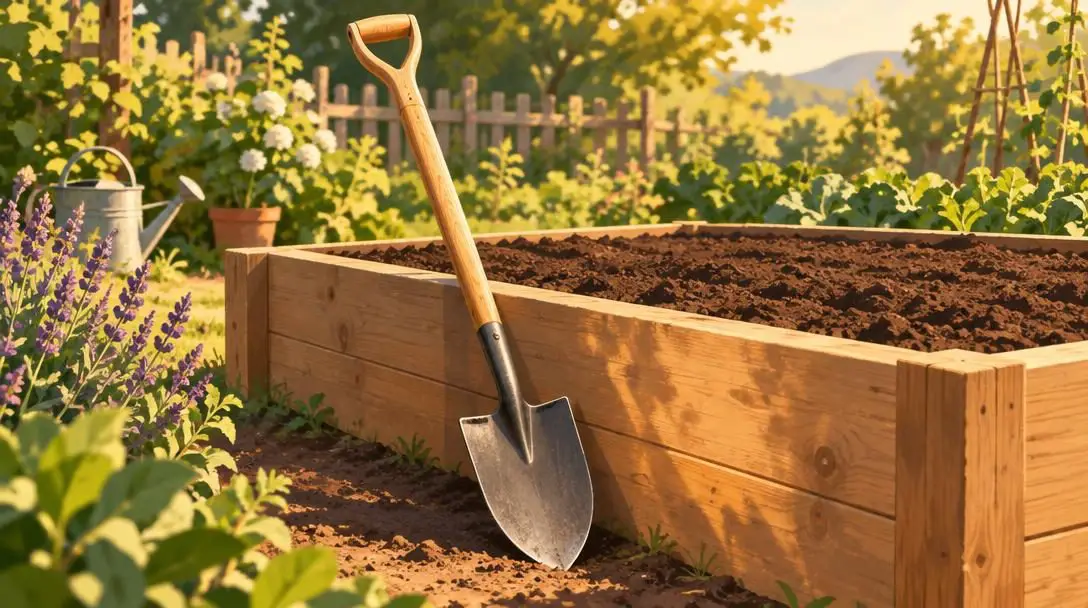
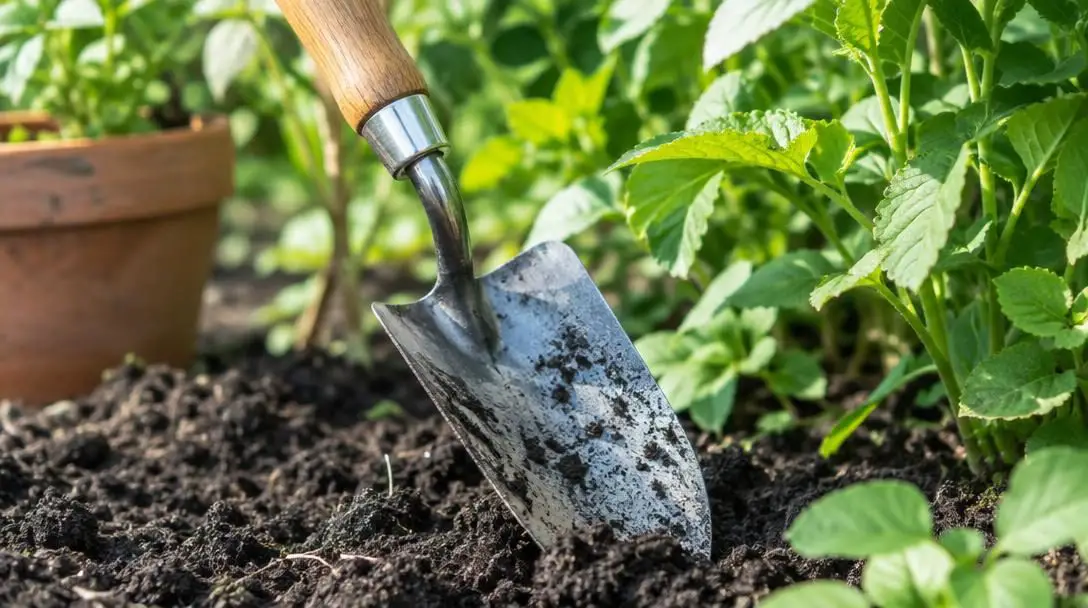
- Configurations: Handheld trowels up to long-handled spade shovels
- Mechanical advantage: Multiplies leverage for deep trenching and soil turnover
- Application: Shifting bulk topsoil, planting bare-root stock, and bed shaping
No functional gardening setup is complete without a shovel. Manual earthmoving by hand quickly exhausts even the most dedicated enthusiast, limits practical depth, and wastes valuable energy. Shovels are manufactured in a full spectrum of sizes and shapes, ranging from miniature hand shovels designed for targeted container planting and small bedding projects to long-handled full-sized shovels capable of shifting tons of topsoil, digging deep holes, and carving out expansive planting plots. The mechanical leverage provided by a solid shovel makes heavy landscape transformation feasible.
How to select and assemble your kit
Purchasing every tool on the market all at once is unnecessary; instead, assemble your toolkit intentionally based on the size of your space and the nature of your planting goals. Following a structured purchasing plan ensures your initial budget goes toward tools that deliver daily value.
- Evaluate your working environment: Take stock of your available planting zones. If you manage container gardens or compact balcony boxes, prioritize hand-sized shovels, plant ties, and compact rakes over heavy full-sized long-handled tools.
- Select fundamental physical protection: Acquire a fitted pair of leather gloves and an adjustable tool belt before starting heavy dirt work. Having personal protection and tool storage in place prevents immediate blisters, mislaid items, and workspace hazards.
- Secure precision maintenance gear: Pick up bypass-style pruning shears and a sturdy gardening knife. These two cutting tools address the majority of plant health adjustments, from trimming broken stems to slicing root-bound container plants.
- Establish seedling and identification basics: Gather a pack of plant ties and durable plant labels. Having these ready before dropping your first seeds into the earth avoids late-season confusion about plant varieties and ensures immediate vertical support for fragile sprouts.
- Prepare plant health safeguards: Keep a handheld UV blacklight on a workshop hook for evening pest patrols, and assemble natural pesticide components like neem oil, mild liquid dish soap, garlic, and vinegar to handle pest pressure early.
Equipment maintenance and daily care practices
Acquiring quality implements represents only the first step in building a successful setup. Routine maintenance protects your tools against premature wear, structural failure, and corrosion, ensuring every piece functions as intended year after year.
- Clean soil immediately: Wet soil traps moisture against metal blades and tines, rapidly encouraging surface rust. Wash dirt away after every session using clean water, and dry the metal thoroughly with a shop towel before hanging implements up.
- Hone cutting edges regularly: Dull pruning shears and gardening knives crush delicate plant stems, creating jagged wounds that invite fungal and bacterial blights. Use a whetstone or sharpening file to maintain crisp, razor-sharp edges.
- Disinfect tool blades: Wiping shears and knives with isopropyl alcohol between pruning tasks prevents cross-contamination of plant pathogens across different sections of your garden beds.
- Condition leather gear: Leather gardening gloves become brittle and prone to cracking when repeatedly saturated with moisture and dried in the sun. Treat them periodically with leather conditioner to keep them supple and puncture-resistant.
- Store tools off the ground: Storing rakes, shovels, and wearable belts on wall-mounted pegboards or utility hooks keeps them dry, visible, and out of harm's way, dramatically prolonging their working lifespan.
Frequently asked questions
Why are bypass pruning shears better than anvil pruners for live stems?
Bypass pruning shears work like scissors, where two sharp blades pass smoothly by each other to create a clean, precise cut. Anvil pruners press a single blade against a flat metal base, which tends to crush live green plant tissue, causing jagged wounds that make plants vulnerable to biological infections.
How does a gardening knife differ from a standard garden trowel?
While a conventional trowel is designed primarily as a scoop for moving loose soil, a gardening knife features a narrow, sharp blade with pointed tips and cutting edges. This allows it to slice through dense roots, divide root-bound perennials, weed tight crevices, and carve seed furrows in addition to basic digging.
How tight should plant ties be fastened around growing stems?
Plant ties should always be fastened loosely, leaving adequate slack between the stem and the support stake or trellis. Leaving space allows the stem to expand in diameter as it matures without the material cutting into the tender outer bark, which can strangle the plant or invite disease.
What causes tomato hornworms to glow under a blacklight?
Tomato hornworms contain natural organic compounds in their outer exoskeletons that react to ultraviolet light wavelengths. When illuminated with a UV blacklight flashlight after dark, these compounds fluoresce bright neon green, making the otherwise perfectly camouflaged pests stand out clearly against foliage.
How can I make an effective natural pesticide at home?
An effective, non-toxic household spray can be created by blending water with measured quantities of neem oil and a few drops of mild liquid dish soap to emulsify the mixture. Adding steeped garlic extracts or a small splash of household vinegar helps deter feeding insects without exposing family members or pets to harsh synthetic chemicals.
The bottom line
Gardening success does not require an overwhelming inventory of specialized machinery, but it does demand a carefully chosen collection of high-utility essentials. By outfitting your shed or gear bag with reliable cutting shears, multi-purpose knives, sturdy digging tools, and supportive plant ties, you lay the groundwork for efficient, satisfying yard work. Complementing those mechanical tools with personal hand protection, wearable organization, and safe pest detection methods ensures that both you and your plants stay healthy throughout the growing year. Treat your equipment with care through regular cleaning, sharpening, and proper storage, and your toolkit will return that investment with years of lush, productive harvests.