The World of 3D Printing: Revolutionizing Manufacturing and Beyond
For centuries, the fundamental principles of physical production remained largely unchanged. Whether carving stone, milling heavy metal ingots, or pouring molten alloy into rigid sand casts, human fabrication relied almost entirely on either subtractive or formative methodologies. These legacy approaches shaped the modern world, yet they also imposed severe restrictions on geometric design, generated staggering amounts of waste material, and required massive capital expenditures for specialized machinery and factory tooling.
The dawn of additive manufacturing in the 1980s disrupted these historical boundaries. Rather than carving away material or relying on fixed physical molds, 3D printing fabricates three-dimensional components directly from digital blueprints, constructing objects layer by layer from the ground up. Today, this technological evolution is transitioning from an experimental prototyping method into a primary engine of modern industrial production, redefining how products are conceptualized, built, and distributed globally.
Key takeaways
- Additive manufacturing constructs objects layer by layer directly from computer data, eliminating the wasteful scrap of subtractive milling and the fixed tooling costs of formative casting.
- The digital nature of 3D printing enables cost-effective mass customization, allowing design modifications without retooling penalties or assembly line downtime.
- Key industries including automotive, aerospace, healthcare, and fashion leverage 3D printing to achieve significant weight reduction, produce complex geometries, and create patient-tailored medical devices.
- Emerging frontiers such as metal powder sintering, shape-transforming 4D materials, and sustainable biodegradable filaments are pushing the technology into mission-critical and off-world environments.
The Evolution of Manufacturing Paradigms
To grasp the significance of 3D printing, one must examine the operational frameworks that preceded it. Historically, human making has fallen into three distinct mechanical philosophies: subtractive, formative, and additive.
Subtractive manufacturing begins with a solid volume of raw stock—such as a dense block of wood, billet aluminum, or granite—and removes excess volume through turning, drilling, sawing, or milling until the target profile emerges. While this method yields strong and precise components, it inevitably creates vast amounts of unusable scrap chips, shavings, and turnings. More critically, subtractive cutter heads and drill bits cannot navigate interior hollows or cut convoluted internal pathways without bisecting the workpiece.
Formative manufacturing relies on mechanical pressure, heat, and structural molds. In injection molding, die casting, and stamping, molten liquid or plasticized material is forced into precise cavities under intense pressure. While formative techniques provide exceptional repeatability and low per-unit costs at high production volumes, their upfront barrier is substantial. Developing hardened steel dies and specialized molds takes weeks or months of preparation and costs tens of thousands of dollars before a single viable part rolls off the line.
Additive manufacturing inverts both paradigms. Instead of carving away excess bulk or investing in inflexible steel molds, 3D printing deposits, cures, or fuses raw material exclusively along the designated coordinates dictated by a digital computer model. First introduced in the 1980s, this approach allows material to be positioned precisely where required. As a result, internal channels, organic lattice skeletons, and complex topologies are just as straightforward to print as a solid cube.
| Manufacturing Paradigm | Material Utilization | Tooling & Setup Lead Time | Geometric Freedom | Optimal Volume |
|---|---|---|---|---|
| Subtractive (Milling, Turning) | Generates substantial waste; excess carved away | Moderate; requires cutting fixtures and toolpaths | Restricted by cutting tool access angles | Low to medium runs |
| Formative (Molding, Casting) | Highly efficient once molds are filled | Long lead times; complex, costly dies and tooling | Requires draft angles; zero internal voids | High-volume mass production |
| Additive (3D Printing) | Minimal waste; deposits material only where needed | Instantaneous; prints directly from computer files | Unmatched; builds internal lattices and hollows | Low volumes, prototypes, and custom parts |
How 3D Printing Works: From Code to Physical Reality
Every 3D printed object, regardless of the underlying printing technology or raw material used, follows an interconnected pipeline that translates digital data into a finished physical form. This workflow connects digital geometric coordinates directly to mechanical fabrication hardware across four distinct phases.
The journey begins with digital modeling. Designers create a three-dimensional virtual representation using computer-aided design (CAD) software, or they capture the exact surface contours of an existing real-world object using 3D scanning equipment. This digital file stores precise dimensional parameters, surface curves, and functional tolerances.
Next comes slicing, an essential intermediate software stage. Slicing software takes the continuous digital surface mesh and slices it horizontally into hundreds or thousands of microscopically thin planar layers. The slicer then translates these geometric profiles into numerical machine code. This code provides exact operational instructions to the printer, including toolhead coordinates, extrusion speeds, motor accelerations, and precise heating zone temperatures.
The third phase is layer-by-layer fabrication. The 3D printer executes the sliced instructions upon a flat build surface. The machine uses a heating nozzle to extrude molten polymer, a focused laser to cure liquid photopolymer resin, or an energy beam to fuse fine metal powder along the designated path of the initial layer. Once the first layer solidifies, the build platform lowers or the print head lifts by a fraction of a millimeter, and the subsequent layer is deposited directly on top of the last. This thermal or chemical bonding sequence repeats uninterrupted until the entire physical object is complete.
The final phase involves post-processing. After the build cycle ends, technicians detach the part from the build plate. Depending on the printing technology, the part may require ultrasonic solvent washing, ultraviolet light curing, mechanical removal of sacrificial support pillars, bead blasting, heat treatment, or surface sanding to achieve its final strength and aesthetic surface finish.
By building components upward layer by layer rather than carving inward from the outside, additive manufacturing unlocks intricate internal structures that traditional cutting tools could never reach.
Key Advantages: Efficiency, Customization, and Cost-Effectiveness
The expanding integration of additive manufacturing across modern enterprise stems from distinct mechanical and economic advantages over legacy methods.
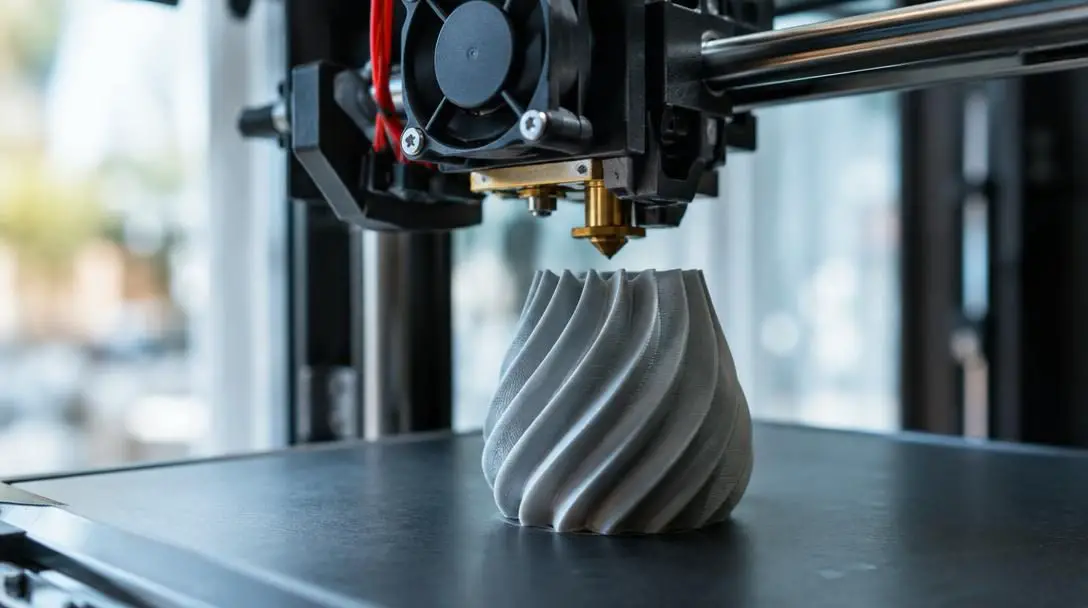
The first major advantage is rapid prototyping efficiency. In conventional manufacturing environments, validating a new design iteration often means waiting weeks for third-party machine shops to cut preliminary tooling or machine sample parts from raw billets. If an engineering defect is discovered during assembly testing, the tooling must be physically modified or remade from scratch. With 3D printing, an engineer can adjust a digital model in CAD, slice the file, and produce a working prototype within hours. This compressed feedback loop allows development teams to rigorously validate ergonomics, fitment, and mechanical tolerances long before spending capital on mass-production tooling.
A second transformative pillar is mass customization. Traditional assembly lines achieve efficiency through extreme standardization; changing a single dimension on an automotive assembly line can disrupt production schedules and require extensive mechanical recalibration. 3D printing completely severs the historical connection between design variation and production cost. Because the hardware simply traces digital vector coordinates, changing the shape, size, or internal density of a product requires only a mouse click. Products can be tailored to individual specifications without incurring downtime or custom tooling penalties.
Finally, 3D printing provides cost-effectiveness for small-batch production. Because additive systems do not require expensive custom molds or dedicated cutting jigs, the upfront capital expenditure required to bring a novel physical product to market drops dramatically. Inventors, independent workshops, and specialized businesses can operate on-demand production cells, printing parts only when orders arrive and eliminating costly physical inventory warehousing.
Transformative Applications Across Key Industries
Additive manufacturing has matured far beyond basic visual prototyping, serving as a mission-critical production tool across high-stakes industrial environments.
Automotive
Automotive manufacturers rely on 3D printing across the entire lifecycle of vehicle design and assembly. Beyond producing rapid visual prototypes for aesthetic styling reviews, automotive plants print custom ergonomic assembly jigs, inspection gauges, and manufacturing fixtures tailored to human line workers. Furthermore, manufacturers are increasingly using additive systems to fabricate functional, end-use components, such as lightweight bracketry, airflow ducts, and customized interior trim pieces that shave critical pounds off overall vehicle weight.
Aerospace
In aerospace engineering, every gram of excess mass incurs severe fuel penalties over an aircraft or spacecraft's operational lifespan. Additive manufacturing enables engineers to execute complex topology optimization, producing organic, hollowed-out titanium and superalloy flight hardware that eliminates all non-structural mass while maintaining exceptional structural integrity. These advanced components endure the violent vibrations of rocket launches and the extreme thermal cycles of upper-atmosphere flight without failure.
Healthcare
Healthcare represents perhaps the most human-centric application of additive technology. Because no two human bodies share identical anatomical geometries, the mass customization of 3D printing offers unique clinical advantages. Surgeons use patient CT and MRI scans to 3D-print high-precision anatomical models to rehearse complex surgical interventions beforehand. Furthermore, biomedical technicians print custom orthopedic prosthetics and patient-matched surgical implants designed to conform perfectly to an individual's unique skeletal geometry, encouraging superior osseointegration and patient comfort.
Fashion and Design
In high fashion, architecture, and consumer luxury goods, designers utilize additive technology to transcend the physical limitations of traditional sewing, weaving, and metal casting. 3D printers can produce interlocking chainmail fabrics, complex geometric jewelry featuring nested internal elements, and bespoke footwear featuring variable-density lattice midsoles tailored to the wearer's gait.
Next-Generation Innovations in Additive Technology
Ongoing material science breakthroughs and mechanical engineering advancements continue to push the capabilities of additive manufacturing beyond traditional plastic models.
4D Printing
Pushing past static three-dimensional objects, 4D printing introduces time and environmental adaptation as functional dimensions. By utilizing programmable composite materials that respond to environmental stimuli, 4D-printed structures can autonomously alter their shape, physical properties, or functionality when exposed to moisture, light, or specific thermal shifts. This responsive capability offers profound potential for biomedical stents that expand within blood vessels or deployable aerospace mechanisms that unfold without heavy electric motors.
Metal 3D Printing
While early additive systems were confined to low-melting-point polymers, modern industrial facilities routinely rely on direct metal laser melting and selective electron beam systems. These machines spread microscopically fine layers of metal powders—including aerospace-grade titanium, stainless steel, and nickel superalloys—and fuse them using high-powered lasers. The resulting metal parts achieve densities and mechanical tensile strengths comparable, and in some metrics superior, to traditional wrought or cast forgings.
Biodegradable Materials
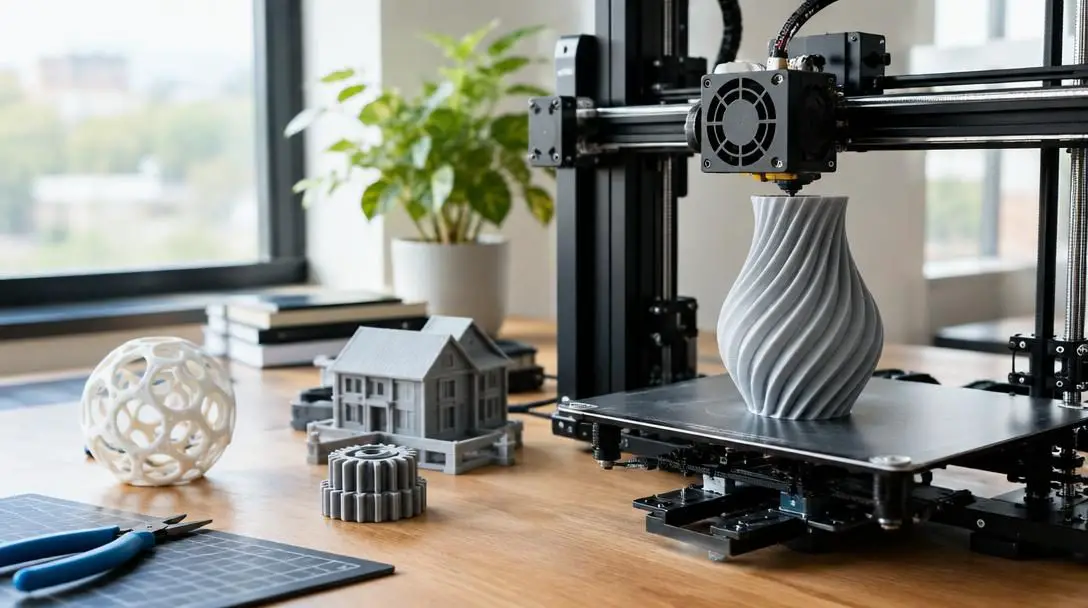
As industrial manufacturing confronts global ecological concerns, additive development is prioritizing sustainable material lifecycles. Emerging plant-based and non-petroleum biodegradable polymers break down naturally under commercial composting conditions, providing environmentally responsible alternatives for single-use packaging, temporary architectural mockups, and medical casts without contributing to persistent microplastic pollution.
Step-by-Step Guide: Bringing a 3D Printed Idea to Life
Transforming a digital concept into a durable, functional physical part requires a methodical workflow. Executing each phase with technical precision prevents machine downtime and material waste.
- Define the functional requirements: Establish the mechanical parameters your printed component must satisfy. Assess whether the part requires high tensile strength, resistance to ultraviolet sunlight, thermal stability, or flexibility. These environmental demands dictate your choice of printing methodology and raw material.
- Generate the digital model: Construct the three-dimensional geometry inside CAD modeling software, paying close attention to wall thicknesses and joint clearances. Alternatively, capture an existing physical part using a high-resolution 3D optical scanner. Verify that your digital surface mesh is fully watertight, manifold, and free of inverted polygons.
- Configure slicing parameters: Import the digital design into your slicing software. Carefully orient the object on the virtual build platform to balance layer-line strength against the need for removable support towers. Establish layer heights, wall perimeters, nozzle temperatures, and infill geometry based on your target strength.
- Prepare the machine and build surface: Clean the printer bed thoroughly with isopropyl alcohol to remove skin oils and dust. Level the build plate with precision to guarantee uniform first-layer squish. Load the material, ensuring the filament or resin is free of moisture, and run a pre-heating cycle to verify nozzle and bed thermal stability.
- Execute and monitor the initial print cycle: Initiate the automated fabrication job and remain beside the machine during the first layer's deposition. Because first-layer adhesion failure is the primary cause of print detachment and catastrophic warping, verify that the initial extrusion bonds smoothly to the build plate before leaving the machine unattended.
- Conduct post-processing and quality inspection: Allow the build chamber to cool before removing the component from the bed. Carefully detach temporary support structures with flush cutters. Perform chemical washing, UV curing, or abrasive surface finishing as required, and verify all critical dimensions using digital calipers.
Common Mistakes to Avoid
While modern desktop and industrial 3D printers feature automated calibrations, additive manufacturing is a thermo-mechanical discipline that requires strict adherence to physical constraints. Avoiding these common mistakes will improve print reliability:
- Ignoring anisotropic structural weakness: 3D-printed parts exhibit mechanical anisotropy, meaning they are inherently weaker along the z-axis (between deposited layers) than along the planar x- and y-axes. Orienting a load-bearing part on the build plate without aligning the layer lines perpendicular to operational stress vectors can result in sudden shearing along layer seams.
- Inadequate build bed preparation: Dust, oil, or an uneven bed causes poor initial layer adhesion. This defect leads directly to warping, where thermal contraction pulls the corners of the part upward off the plate, ruining dimensional accuracy or causing the part to break free entirely.
- Omitting or misconfiguring support structures: Additive systems cannot deposit hot, molten material into empty air. Attempting to print overhang angles steeper than 45 degrees or bridges across wide gaps without generating sacrificial support columns causes hot material to sag, curl, or produce unrecoverable filament nests.
- Mismatched temperature and extrusion speeds: Extruding material too quickly prevents adequate thermal transfer, causing poor inter-layer bonding and delamination under light stress. Conversely, printing at excessive temperatures leads to filament stringing, heat creep, and nozzle blockages.
- Over-infilling or thin external walls: Setting infill density to 100 percent is rarely necessary and dramatically inflates print times, material costs, and thermal stress. Conversely, designing external perimeters that are too thin leaves internal lattices visible and compromises structural integrity.
Broader Societal and Environmental Implications
The transition toward localized, on-demand additive manufacturing has consequences that reach well beyond workshop walls, disrupting global economic dynamics and legacy supply chains.
On one side, 3D printing operates as an equalizing industrial force. By lowering the financial barrier to physical manufacturing, additive systems allow independent hardware startups, regional repair facilities, and university laboratories to fabricate high-precision components that once required million-dollar industrial tooling. This decentralization fosters competitive innovation, supports domestic prototyping, and creates demand for specialized digital design and mechatronic engineering talent.
Conversely, the widespread adoption of additive technology threatens legacy industrial ecosystems. Centralized production hubs, overseas container shipping networks, and conventional warehouse facilities that store massive inventories of replacement parts may face declining demand as end-users choose to print spare parts locally on demand. This shift could accelerate labor displacement within traditional casting, stamping, and assembly facilities.
The environmental footprint of 3D printing presents a nuanced trade-off. By placing raw materials strictly where needed, additive printing eliminates the massive scrap bins associated with subtractive milling. Furthermore, distributed digital manufacturing eliminates the heavy carbon emissions produced when shipping heavy steel components across international maritime routes. Nevertheless, high-energy laser sintering systems consume significant electrical power, and the broader environmental lifecycle of petroleum-derived photopolymers, micro-powders, and failed build waste remains an area of ongoing study.
The Future Frontier: Additive Manufacturing in Deep Space
As human industry looks outward toward extended lunar bases and long-duration interplanetary travel, additive manufacturing is emerging as a critical survival technology. Operating thousands of miles from Earth makes traditional supply chains physically impossible; astronauts cannot wait months for emergency structural brackets, replacement valves, or specialized medical tools to be launched from ground facilities.
Space agencies and private aerospace firms are already testing additive systems designed to operate in microgravity environments. Future extraterrestrial manufacturing will go even further: rather than carrying thousands of pounds of raw filament into orbit, off-world 3D printers will utilize lunar and Martian regolith—the native rocky soil—as feedstock to build radiation-shielded habitats, landing pads, and toolkits directly on other celestial surfaces.
Frequently asked questions
How does 3D printing differ fundamentally from traditional manufacturing?
Traditional manufacturing relies either on subtractive methods (cutting, milling, or carving material away from a solid block) or formative methods (pouring molten material into pre-shaped molds). 3D printing uses an additive process, fabricating objects layer by layer directly from a digital file, placing material only where specified by the design.
Why is 3D printing especially advantageous for custom medical devices?
Because every human body possesses unique anatomy, mass-produced medical equipment often requires clinical compromise. 3D printing transforms patient CT and MRI scans into bespoke prosthetics, surgical guides, and implants that match the patient's exact bone geometry without the cost penalties of custom tooling.
What is 4D printing and how does it work?
4D printing builds upon 3D printing by utilizing smart, responsive materials that change their physical shape, internal structure, or mechanical behavior over time when subjected to specific external stimuli, such as temperature variations, water, or light.
What causes 3D printed parts to fail along their layer lines?
3D-printed parts display mechanical anisotropy, meaning their physical strength is uneven depending on direction. Because parts are built by stacking successive molten or cured layers, the mechanical bond between layers along the z-axis is naturally weaker than the continuous material deposited along the x- and y-axes.
Can 3D printing fully replace mass injection molding in the near future?
No. While 3D printing excels at rapid prototyping, complex geometries, low-volume runs, and customized one-off components, traditional injection molding remains vastly faster and significantly more cost-effective when producing millions of identical, simple plastic parts.
The bottom line
3D printing has permanently redefined the boundaries between digital conception and tangible fabrication. What began in the 1980s as an experimental technique for producing rough plastic prototypes has evolved into a versatile manufacturing engine spanning aerospace, personalized healthcare, automotive engineering, and off-world exploration. By trading rigid physical dies for malleable digital instructions, additive manufacturing democratizes hardware development, eliminates geometric constraints, and provides a sustainable, localized alternative to legacy industrial supply chains. As material palettes expand and automated build speeds accelerate, additive fabrication will continue to reshape how human civilization designs, constructs, and sustains the physical objects of everyday life.