The World of Virtual Tours: Exploring the World from the Comfort of Your Home

In the digital age, curious travelers no longer need to pack a suitcase or book an international flight to see the world's most revered cultural treasures. The rapid advancement of internet connectivity, high-definition photography, and interactive media has established virtual tours as an essential bridge between homebound audiences and remote geography. By blending digital mapping, panoramic imaging, and specialized viewing software, virtual tours simulate the visual sensation of walking through distant corridors, archeological digs, and natural wonders without the burden of physical travel.
Whether you want to inspect Renaissance brushstrokes up close, navigate the steep stone terraces of ancient ruins, or wander through geothermal geyser fields, virtual touring offers unprecedented convenience, accessibility, and educational value. Exploring how these platforms function, examining the varieties available, and understanding both their strengths and limitations reveals how modern technology is reshaping leisure, self-directed education, and global discovery.
Key takeaways
- Virtual tours blend panoramic photography, spatial mapping, and streaming software to simulate physical presence across global landmarks.
- Tour formats range from self-paced 360-degree photo journeys and interactive hotspots to real-time guided sessions and fully immersive virtual reality simulations.
- Major institutions such as the Louvre, Yellowstone National Park, and Broadway productions use digital platforms to offer accessible, low-cost public viewing.
- While virtual tours democratize access for people with financial or physical constraints, they cannot recreate sensory elements like local weather, touch, and regional cuisine.
- Maximizing the experience requires closing extraneous browser tabs, using headphones, and engaging directly with interactive information nodes rather than rushing through scenes.
The Evolution of Remote Travel
The human appetite for armchair exploration is not a recent development. Decades ago, discovering distant continents from home depended primarily on passive media formats, including illustrated encyclopedias, printed postcards, travel documentaries, and color slide projections. While these resources were educational, they left the viewer detached. The audience had no say in where the camera pointed, how long to linger in an exhibit hall, or which hallway to walk down next.
As consumer computing power improved and broadband connections became ubiquitous, museums and historical sites recognized the potential to digitize their real-world spaces. Early digital exhibitions were modest, presenting basic linked photographs where a user clicked a button to jump from one static room view to another. Over time, those disjointed images gave way to continuous 360-degree panoramic environments, and later to sophisticated digital replicas driven by depth-mapping sensors and virtual reality headsets.
Virtual reality has ushered in an era where traveling without ever leaving the house is becoming mainstream.
Today, virtual tourism is no longer just a fallback plan during global travel disruptions. It has transformed into a primary discovery tool. Many travelers use virtual platforms to preview historic districts before scheduling a trip, while countless educators and lifelong learners rely on them as complete alternatives when physical travel is impossible due to cost, geography, or health.
Core Formats of Modern Virtual Tours
Because audiences use varied devices and have different goals, developers design virtual tours across several technical tiers. Each tier balances technical accessibility with visual immersion.
360-Degree Tours
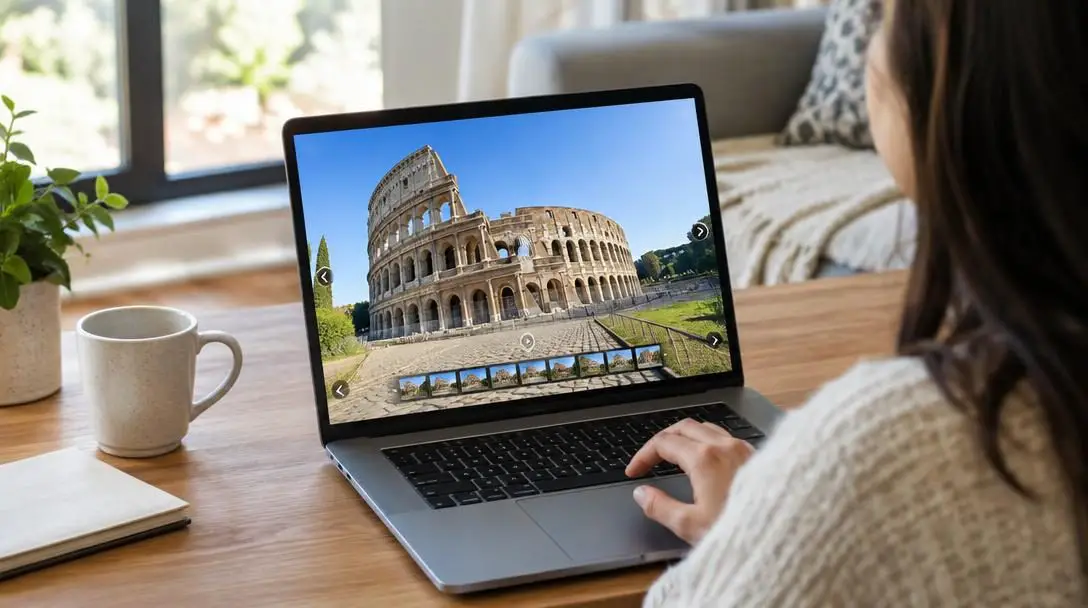
A 360-degree tour gives users complete rotational freedom within a captured space. Relying on spherical panoramic photography stitched together from multiple vantage points, these tours allow viewers to look up at vaulted ceilings, pan across broad landscapes, and look down at floor mosaics. Navigational arrows let the viewer step from one panoramic node to another, while digital zoom features make it possible to inspect distant architectural details.
Interactive Tours
Building upon standard 360-degree panoramas, an interactive tour incorporates digital navigation points known as hotspots. When a user clicks or taps on an icon placed over an artifact, painting, or architectural feature, the software presents supplementary multimedia. These elements include text pop-ups, recorded audio descriptions, high-resolution macro photography, or historical archival records, turning a simple viewing session into an active research experience.
Guided Virtual Tours
A guided tour introduces a human element by having an expert lead visitors through the digitized location. These tours often feature real-time video streaming or pre-recorded walkthroughs with an educator, curator, or professional local guide. Participants receive historical commentary, thematic narratives, and contextual explanations. In live sessions, viewers can often ask questions via chat or microphone, recreating the social dialogue and personalized insight of a traditional group excursion.
VR-Based Tours
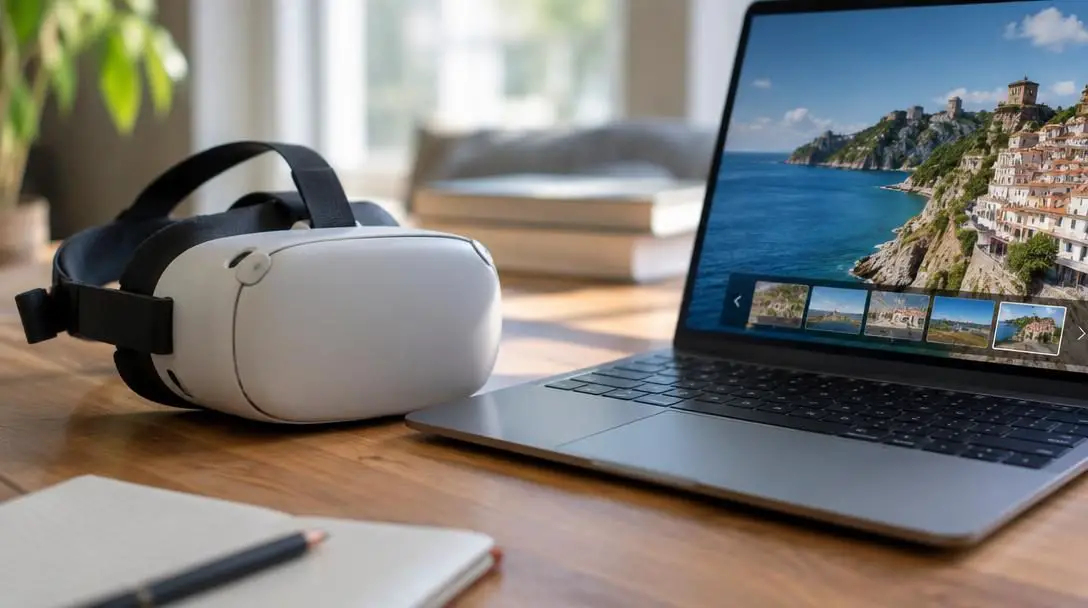
Representing the peak of digital immersion, VR-based tours require users to wear a specialized virtual reality headset. Instead of viewing a scene on a flat monitor or phone display, the user is surrounded by a stereoscopic 3D environment. Built-in motion-tracking sensors align the digital perspective with the user's physical head turns and body movements, providing an authentic sense of physical depth, presence, and spatial scale.
| Tour Type | Primary Display Method | Level of Interactivity | Key Advantage |
|---|---|---|---|
| 360-Degree Tours | Web browser or mobile screen | Moderate (panning and zooming) | Low bandwidth and broad device compatibility |
| Interactive Tours | Web browser or dedicated app | High (clickable hotspots and media) | Rich educational and contextual data |
| Guided Tours | Livestream or interactive video | High (conversational and social) | Real-time expert narration and live Q&A |
| VR-Based Tours | Dedicated VR headset | Highest (motion tracking and depth) | Unmatched sense of physical immersion |
Behind the Scenes: How Virtual Tours Are Built
Delivering an intuitive, high-resolution virtual tour requires sophisticated engineering before the first user clicks into an exhibit. The production pipeline depends on four core technological stages:
- Image capture and stitching: Technicians use specialized panoramic cameras or professional DSLRs fitted on motorized, rotating tripods to shoot multiple overlapping photographs from a single pivot point. Specialized stitching software scans the shared visual markers along the edges of each image and blends them into an unwarped, spherical panorama that covers an unbroken 360-degree field of view.
- Spatial mapping: Advanced tours incorporate depth sensors, LiDAR systems, or photogrammetry techniques to measure the physical distance between the capture rig and surrounding walls, columns, or terrain. This data forms a 3D polygonal mesh of the room, allowing the software to calculate realistic lighting, authentic perspective changes, and smooth transitional animations when shifting between nodes.
- Interface and hotspot integration: Once the visual geometry is established, developers add user interface overlays. Interactive hotspots are tied to precise spatial coordinates so that clicking an ancient vase or fresco summons curated catalog text, translated transcriptions, or audio guides narrated by historians.
- Content delivery platforms: Finished digital environments contain substantial graphical data. Tour platforms host these assets on high-capacity content delivery servers that dynamically stream higher-resolution textures only to the specific quadrant the user is currently viewing, keeping initial load times rapid even on residential internet lines.
Iconic Destinations with Virtual Access
Cultural institutions, government preservation agencies, and entertainment companies worldwide have made substantial portions of their properties accessible via digital tours. These digital experiences preserve delicate artifacts while welcoming millions of international guests.
The Louvre
- Location: Paris, France
- Highlight: The Mona Lisa and classical gallery spaces
- Format: Interactive panoramic museum tour
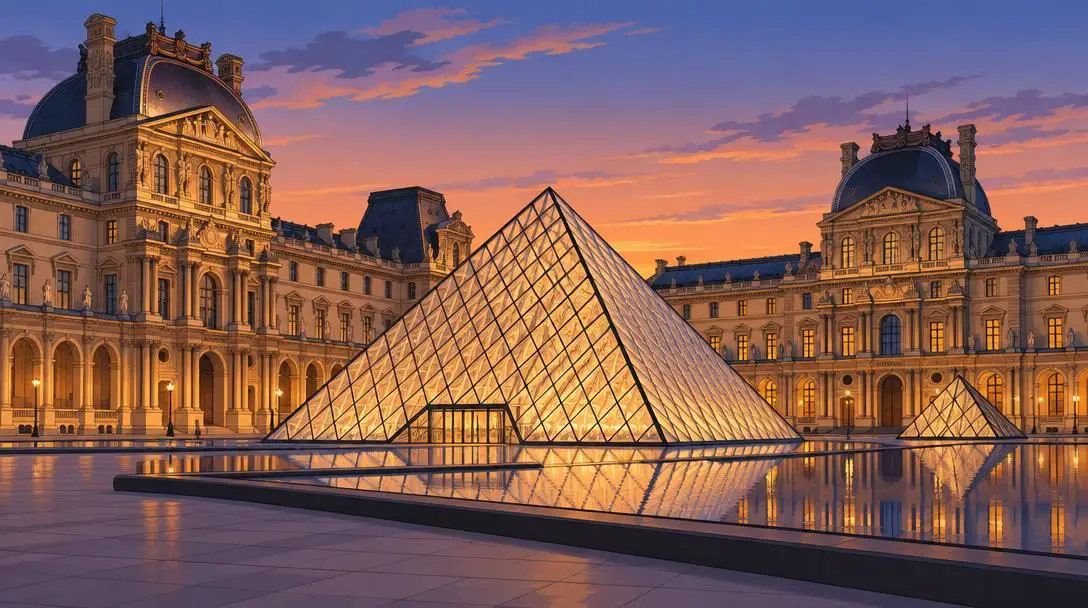
The celebrated Parisian institution provides dedicated virtual tours across several curated wings. Visitors can examine world-famous masterpieces, including the Mona Lisa, scrutinize delicate Egyptian antiquities, and admire the gilded ceilings of the Galerie d'Apollon. High-resolution zoom allows digital guests to inspect gallery arrangements and read educational wall labels just as an in-person visitor would.
Stonehenge

- Location: Wiltshire, England
- Highlight: Prehistoric stone circle alignments
- Format: 360-degree interactive archaeological tour
England's famous prehistoric monument can be explored from angles that are often cordoned off to standard tourists on-site. The interactive experience lets viewers step directly inside the inner megalithic ring, pan across the Salisbury Plain, and click informative hotspots that explain the monument's celestial alignments and archaeological excavation history.
The Great Wall of China

- Location: Northern China
- Highlight: Watchtowers and mountain ridgeline vistas
- Format: Panoramic walking tour
Stretching across thousands of miles of rugged ridgelines, this historic defense system presents physical travel challenges for many visitors. The digital walkthrough covers popular sections like Mutianyu, allowing users to move between defensive watchtowers, observe brick masonry, and enjoy sweeping views of surrounding valleys at their own pace.
Machu Picchu

- Location: Andes Mountains, Peru
- Highlight: 15th-century Incan stone terraces and temples
- Format: 360-degree high-elevation landscape tour
Perched high in the Andes, the Incan citadel of Machu Picchu requires rigorous high-altitude travel to reach in person. The virtual platform offers panoramic views of the agricultural terraces, urban sectors, and dramatic peaks of Huayna Picchu, complete with explanatory audio commentary detailing the engineering techniques of the Inca civilization.
Yellowstone National Park

- Location: Wyoming, Montana, and Idaho, United States
- Highlight: Geothermal geysers and thermal springs
- Format: Interactive ecological tour
Yellowstone's virtual offerings showcase the park's dramatic geothermal landscapes. Digital travelers can inspect famous hydrothermal zones, watching video captures and reviewing geological explanations of steaming mud pots, vibrant hot springs, and powerful geysers without worrying about park traffic or seasonal winter closures.
Walt Disney World
- Location: Florida, United States
- Highlight: Theme park environments and interactive attraction walkthroughs
- Format: Street-level panoramas and virtual ride experiences
Through official digital channels, Disney provides panoramic park walkthroughs and virtual attraction experiences. Fans can navigate down Main Street, U.S.A., inspect landmark architecture like Cinderella Castle, and enjoy stylized on-ride digital perspectives that bring the park atmosphere directly into home living rooms.
Broadway Theatres

- Location: New York City, United States
- Highlight: World-class theatrical performances and stage views
- Format: Multi-camera streaming and interactive performance captures
Renowned theatrical producers have adapted stage productions for online audiences, providing high-definition recordings and virtual performances. These digital broadcasts simulate the theater environment by offering close-ups of stagecraft, lighting, and choreography, granting theater enthusiasts around the globe access to elite Broadway productions.
Weighing the Virtual Touring Experience
Deciding when to use a virtual tour involves understanding both its distinct advantages and its inevitable sensory constraints.
The primary benefit of virtual exploration is convenience and accessibility. Remote tours remove geographical barriers, airport logistics, and the need for vacation time. Crucially, they open world heritage sites to people with chronic illnesses, physical disabilities, or mobility limitations who might find uneven ancient cobblestones, high elevations, or crowded corridors physically impossible to navigate.
Equally valuable is cost-effectiveness. Traditional vacations involve mounting expenses for airline flights, lodging, local transportation, attraction admission, and dining. Virtual touring provides cultural appreciation and educational insight without any of these financial burdens, making lifelong learning universally accessible.
However, virtual visits carry clear limitations:
- Absence of multi-sensory immersion: A screen cannot replicate the ambient temperature, the breeze off a mountainside, the acoustics of a stone cathedral, or the distinct scent of an old pine forest. Regional cuisine and impromptu interactions with local residents are also lost.
- Constrained exploration paths: Viewers can only look where the camera crew placed their equipment. You cannot wander down an unmapped alleyway or peek behind an uncaptured barrier, limiting spontaneous discovery.
- Technical and hardware bottlenecks: Poor network connections cause buffering, dropped frames, and low-resolution textures, while older laptops or mobile devices may overheat or stutter when processing complex 3D environments.
Practical Steps for an Immersive Virtual Visit
Treating a virtual visit with the same intentionality as an in-person outing greatly enhances retention and personal enjoyment. Follow these practical steps to prepare your setup:
- Select your destination through verified portals: Start by picking an attraction that fits your current interests, such as a natural preserve, fine art gallery, or historic ruin. Visit the destination's official website or recognized cultural archives to ensure you access authentic, fully featured digital exhibits.
- Verify browser and device readiness: Update your internet browser to its most recent version to ensure WebGL and interactive video scripts execute without errors. If using a VR headset, ensure the device firmware is current and the battery is fully charged.
- Stabilize your internet connection: Virtual tours stream substantial visual and audio data. If possible, plug directly into an ethernet cable or move your device closer to your wireless router to eliminate lag spikes and visual stuttering.
- Set up an undisturbed viewing environment: Choose a quiet room with minimal distractions. Put on a comfortable pair of noise-canceling or over-ear headphones to capture subtle spatial audio cues and voiceover commentary clearly.
- Engage with interactive features: Avoid clicking through rooms rapidly. Click informational hotspots, read curatorial notes, listen to accompanying audio clips, and use zoom controls to inspect fine textures before advancing down the next digital corridor.
Pitfalls to Avoid While Touring Digitally
Navigating virtual spaces requires a different set of habits than browsing standard web articles. Avoid these frequent missteps:
- Clicking rapidly through viewpoints: Treating a virtual tour like an image carousel robs the experience of spatial context. Pause at each station to pan 360 degrees, looking up at ceiling vaults and down at floor architecture.
- Overlooking clickable nodes: Bypassing hotspots means missing the essential historical context, translation work, and curatorial insight that makes the visual material meaningful.
- Leaving dozens of background applications open: Complex 3D rendering consumes significant system memory. Keep background downloads, streaming music, and excess browser tabs closed to maintain smooth frame rates.
- Viewing in high-glare environments: Overhead lights or direct sunlight reflecting off your monitor can wash out subtle shadow details on historical artifacts and oil paintings. Dim ambient lights to improve contrast.
- Ignoring posture and taking zero breaks: Staring intently at a screen or wearing a headset for extended sessions strains the neck and eyes. Step away every 25 to 30 minutes to stretch and rest your vision.
Frequently asked questions
Do I need an expensive virtual reality headset to take virtual tours?
No. The vast majority of virtual tours are hosted directly inside standard web browsers and work seamlessly on desktop computers, laptops, tablets, and smartphones using touch, mouse, or keyboard controls. Headsets are only necessary for dedicated VR-specific formats.
Are most virtual museum tours free to the public?
Yes. Many major global institutions, including the Louvre, the British Museum, and various national park services, offer free virtual access to their collections and grounds on their official websites, though some specialized live-guided tours may charge an admission fee.
Can virtual tours replace actual physical travel?
Virtual tours serve as an exceptional educational tool, budget-friendly alternative, and pre-travel planning resource, but they cannot fully replace the multi-sensory aspects of travel, such as sampling local cuisine, feeling climate shifts, and experiencing social interactions in person.
How fast of an internet connection is needed for smooth virtual touring?
A standard broadband internet connection capable of streaming high-definition video (generally 10 to 25 Mbps or higher) is sufficient to stream high-resolution 360-degree panoramas and accompanying audio without disruptive buffering.
Can virtual tours be used for classroom teaching?
Yes. Educators frequently project interactive tours during lessons in history, art, and geography. Many platforms feature built-in lesson guides, hotspot reading materials, and self-guided modules tailored for students.
The Bottom Line
Virtual touring has broken down long-standing geographical and financial hurdles, transforming world heritage from a luxury reserved for seasoned travelers into a shared digital resource available to anyone with an internet connection. While a digital screen cannot replicate the warmth of an afternoon sun on an ancient stone wall or the ambient chatter of a foreign marketplace, it provides an invaluable window into global culture, history, and science. By taking advantage of interactive features, preparing your viewing space, and exploring the diverse formats available today, you can embark on meaningful global journeys right from the comfort of your living room.