What Are The Economic Policies Of ‘The Squad’?
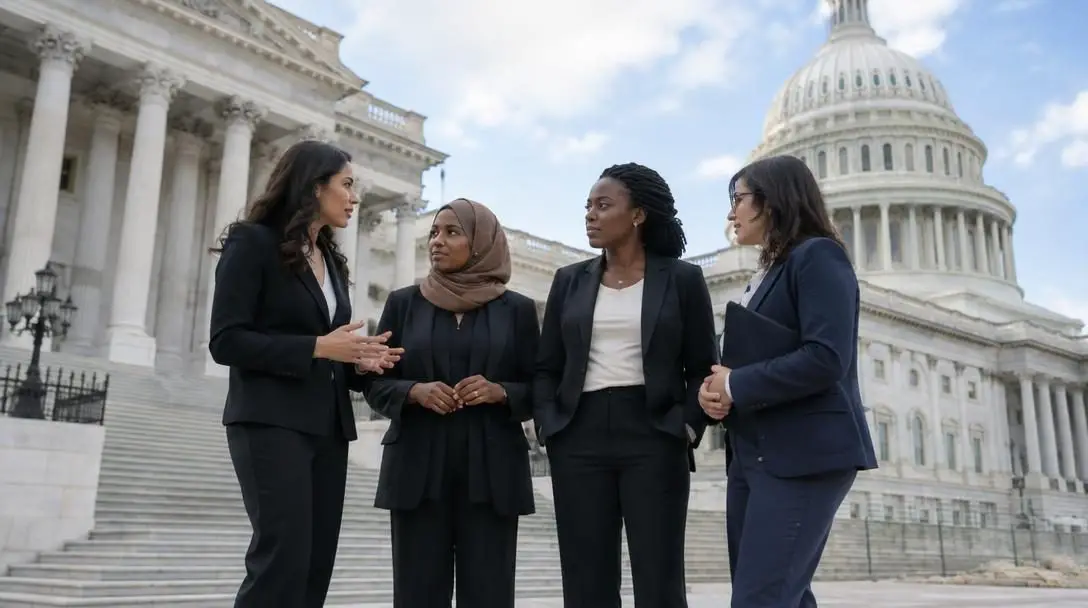
The United States House of Representatives has experienced a noticeable generational shift over recent legislative cycles. As Millennial lawmakers steadily win seats once held for decades by Baby Boomers and Generation X, they have reshaped debates over federal spending, wealth distribution, and public welfare. Within this broader transition, an informal alliance of nine progressive Democrats, widely referred to as The Squad, has emerged as a distinct legislative coalition advocating for aggressive federal intervention in the American economy.
Led initially by New York Representative Alexandria Ocasio-Cortez, the group has drawn national headlines for confronting both conservative Republicans and moderate leaders within their own party. By combining grassroots organizing with ambitious legislative blueprints, these lawmakers promote sweeping reforms designed to address income inequality, healthcare access, student debt, and the future of work in an increasingly automated economy.
Key takeaways
- The Squad is an informal congressional coalition of nine progressive House Democrats advocating for aggressive federal action and social support systems.
- The group champions four central economic pillars: federal student loan debt cancellation, massive infrastructure investments through the Build Back Better framework, universal basic income, and Medicare for All.
- Squad members have leveraged their own lived experiences, including personal student loan balances totaling hundreds of thousands of dollars, to advocate for systemic debt relief.
- The coalition has demonstrated legislative independence by voting against standalone bipartisan measures that decoupled social and climate spending from physical infrastructure projects.
Lawmakers Leading the Progressive Coalition
The Squad formed following the 2018 midterm elections when a wave of younger, left-leaning representatives entered Congress. Over subsequent election cycles, the alliance expanded from its initial four members to nine lawmakers who consistently align on major economic votes and legislative initiatives.
Alexandria Ocasio-Cortez

- State: New York
- Role: Coalition spearhead and founding member
- Reported Student Debt: Over $17,000 at age 32
Widely known as AOC, Alexandria Ocasio-Cortez spearheaded the formation of the progressive coalition upon entering the House of Representatives. Representing New York, she has served as one of the most visible champions of federal student debt forgiveness, sharing that she bypassed graduate school to avoid accumulating insurmountable educational debt. Ocasio-Cortez has frequently clashed with party leaders over progressive priorities, including threatening to withhold leadership votes to force legislative floor action on healthcare reform.
Ilhan Omar

- State: Minnesota
- Role: Original core member
Representing Minnesota, Ilhan Omar stands as one of the original four lawmakers who established The Squad. She has consistently united with her progressive colleagues to demand federal action on income stability, wealth redistribution, and universal social safety net expansions.
Rashida Tlaib

- State: Michigan
- Role: Original core member
As an original founding member representing Michigan, Rashida Tlaib has focused heavily on direct economic relief for working-class families. Her legislative efforts prioritize safeguarding vulnerable communities from corporate exploitation, housing insecurity, and environmental hazards.
Ayanna Pressley

- State: Massachusetts
- Role: Original core member
Representing Massachusetts, Ayanna Pressley completed the original four-member core of The Squad. Pressley has been an outspoken champion of broad-based debt cancellation and structural reforms designed to eliminate systemic economic barriers for marginalized populations.
Cori Bush

- State: Missouri
- Role: Expanded coalition member
Representing Missouri, Cori Bush joined The Squad in a subsequent election cycle, expanding the coalition's geographic reach into the Midwest. Bush has aligned with the group on sweeping social support programs, guaranteed housing initiatives, and robust federal public spending.
Greg Casar

- State: Texas
- Role: Expanded coalition member
Representing Texas, Greg Casar represents the further expansion of progressive legislative power into the South. Casar supports federal workforce protections, aggressive investments in green infrastructure, and direct economic support for labor communities.

Core Pillars of The Squad's Economic Agenda
The Squad's legislative agenda departs significantly from traditional market-driven economic strategies. Rather than relying primarily on private-sector incentives or incremental tax adjustments, the coalition advocates for direct federal funding, universal entitlement guarantees, and expansive social programs.
The Squad views aggressive public spending and direct financial intervention as vital tools to protect average citizens from systemic inequality and modern economic disruption.
Student Loan Debt Forgiveness
Educational debt emerged as a major national issue in 2022 after pandemic-era repayment freezes highlighted the financial strain carried by millions of borrowers. When President Joe Biden introduced an initiative to cancel up to $10,000 in federal student loan obligations for borrowers earning under $125,000 annually, The Squad became some of the plan's most vocal supporters.
Squad members drew upon their own financial realities to justify executive and legislative debt cancellation. Ocasio-Cortez detailed her personal balance of more than $17,000, while the group revealed that their collective student loan obligations ranged between $180,000 and $400,000. While Republican lawmakers criticized the representatives for not paying off their personal debts sooner, the coalition argued that broad forgiveness is necessary to stimulate consumer spending, allow homeownership, and remove an unsustainable financial burden from younger generations.
The Build Back Better Act and Public Infrastructure
When the Biden administration unveiled the Build Back Better Act with an initial proposed budget of $3.5 trillion, The Squad championed the package as a generational investment in both physical structures and human infrastructure. The measure included extensive funding for clean energy, climate resilience, universal childcare, and direct household assistance across every state.
Congressional negotiations sparked sharp ideological divisions. Republican members pushed to sever traditional physical infrastructure—such as roads and bridges—from the larger social and environmental framework. The Squad resisted this separation, insisting that no infrastructure legislation should pass without binding commitments to climate action and direct economic support. When leadership advanced a standalone bipartisan infrastructure bill, Squad members broke ranks with their party to vote against it. Ocasio-Cortez warned that passing the standalone bill would result in the abandonment of Build Back Better, a prediction realized when Senator Joe Manchin subsequently blocked the broader package.
Universal Basic Income
Citing the rapid proliferation of artificial intelligence, automation, and robotics, The Squad argues that traditional labor markets will increasingly fail to guarantee stable employment and living wages. In response, members have backed universal basic income (UBI), a concept previously popularized on the national stage by presidential candidate Andrew Yang.
Interest in unconditional federal cash transfers surged during the COVID-19 pandemic when widespread layoffs struck service and industrial sectors. Ocasio-Cortez argued that severe economic disruption required dramatic federal action rather than half measures. The coalition pushed for UBI alongside emergency paid leave, student debt relief, the waiver of federal work requirements, guaranteed healthcare, and detention relief to establish an unconditional financial floor beneath all households.
Medicare for All
Healthcare reform is central to The Squad's vision of economic security. With more than eight percent of the American population lacking health insurance, medical expenses remain a leading cause of household financial instability. The coalition strongly supports the Medicare for All Act, a legislative blueprint that would transition the nation into a federally funded, single-payer healthcare system.
Under Medicare for All, every American resident would receive comprehensive medical coverage regardless of income, age, employment status, or medical history. Although the proposal earned cosponsorship from more than 120 House Democrats, congressional leadership declined to bring the bill to the floor for a vote. The issue caused substantial friction within the party; Ocasio-Cortez stated she would withhold her vote for Nancy Pelosi as Speaker of the House until leadership agreed to hold a formal vote on the legislation. Although the bill remains stalled in Congress, The Squad continues to present single-payer healthcare as an indispensable economic stabilizer.
Comparing The Squad's Key Economic Initiatives
The primary economic policies backed by The Squad vary in their legislative vehicles, operational mechanisms, and primary points of political contention. The table below outlines how these four proposals compare:
| Policy Proposal | Primary Focus | Key Mechanism | Major Legislative Hurdle |
|---|---|---|---|
| Student Debt Relief | Educational debt burden | Federal balance cancellation up to set income caps | Opposition over personal financial responsibility |
| Build Back Better | Infrastructure and climate | Multi-trillion-dollar federal spending programs | Decoupling and resistance from moderate lawmakers |
| Universal Basic Income | Technological unemployment | Direct, unconditional federal cash payments | High overall program costs and lack of broad support |
| Medicare for All | Healthcare access and costs | Consolidation into a single-payer federal system | Leadership refusal to grant a full House floor vote |
How These Policies Function in Practice
The proposals championed by The Squad reflect a unified philosophy that replaces market-dependent access with direct federal guarantees. Understanding how these policies operate reveals the structural changes the coalition seeks to implement across the American economy:
- Direct Balance Relief: Under the student debt cancellation framework, the federal government uses executive or legislative authority to eliminate balances held by the Department of Education. Eligible borrowers beneath income caps see their loan principals directly written off without personal cash outlays.
- Large-Scale Public Investment: The Build Back Better framework directs trillions of federal dollars into physical and social systems simultaneously. This model treats environmental sustainability, childcare support, and family welfare as core public infrastructure on equal footing with highways and transit systems.
- Unconditional Cash Payments: Universal basic income establishes a recurring federal cash disbursement sent directly to individuals regardless of their employment status. It bypasses conventional welfare applications to provide an automated safety net against technological displacement.
- Single-Payer Insurance Consolidation: Medicare for All eliminates private health insurance premiums, deductibles, and network restrictions by establishing the federal government as the sole payer for medical care nationwide.
How Citizens Can Evaluate Progressive Economic Legislation
Evaluating complex economic proposals requires looking past partisan commentary to examine statutory details, budget mechanics, and legislative dynamics. Citizens analyzing progressive economic legislation can follow this structured approach:
- Examine Official Legislative Language: Read the introduced text of bills like the Medicare for All Act or the Build Back Better Act rather than third-party summaries to identify exact statutory mandates.
- Verify Income Thresholds and Eligibility Criteria: Review proposed qualification boundaries, such as the $125,000 income cap on student loan relief, to determine which households qualify and which are excluded.
- Analyze Proposed Funding Sources: Evaluate how major spending measures propose to finance multi-trillion-dollar budgets, checking whether expenditures rely on tax adjustments, deficit spending, or reallocations.
- Track Congressional Voting Records: Examine roll-call votes to see where lawmakers stand on key bills, paying particular attention to instances where members split from their own party leadership.
- Monitor Committee Referrals: Track whether a bill advances through House committees or remains stalled without a hearing, which signals its realistic prospects of reaching the House floor.
Common Misconceptions Regarding The Squad's Platform
Public discourse surrounding progressive economic policies frequently conflates coalition goals with standard political positions. Avoiding these common mistakes helps provide an accurate view of congressional negotiations:
- Assuming Full Party Consensus: Observers often mistake The Squad's agenda for the official Democratic Party platform. While over 120 House Democrats cosponsored Medicare for All, party leadership has consistently resisted bringing the measure up for a formal floor vote.
- Believing Progressivism Always Supports Infrastructure Spending: It is a mistake to assume progressive lawmakers vote in favor of every public works bill. Squad members voted against the standalone bipartisan infrastructure bill specifically because it lacked climate and social welfare provisions.
- Conflating UBI with Unemployment Compensation: Unlike standard unemployment benefits, which mandate documented job loss and ongoing job search compliance, universal basic income provides recurring funds to all individuals regardless of their work status.
- Overlooking Lawmakers' Personal Financial Backgrounds: Critics often assume members of Congress are insulated from everyday financial pressures. However, Squad members hold collective student debts ranging from $180,000 to $400,000, directly influencing their focus on debt cancellation.
Frequently asked questions
Who are the original members of The Squad?
The original four lawmakers who established The Squad following the 2018 midterm elections are Alexandria Ocasio-Cortez of New York, Ilhan Omar of Minnesota, Rashida Tlaib of Michigan, and Ayanna Pressley of Massachusetts.
Why did The Squad vote against the bipartisan infrastructure bill?
Squad members voted against the standalone bipartisan infrastructure bill because it decoupled physical infrastructure projects from the broader Build Back Better package, omitting critical investments in climate resilience and direct family financial support.
What is The Squad's position on federal student loan debt?
The Squad strongly supports broad federal student loan forgiveness, backing executive actions and legislation to eliminate educational debt balances for borrowers below specific income thresholds, such as the $125,000 annual cap.
How many representatives currently belong to The Squad?
The Squad functions as an informal coalition of nine progressive House representatives, having expanded from its original four members to include lawmakers like Cori Bush of Missouri and Greg Casar of Texas.
Has the Medicare for All Act received a vote in the House of Representatives?
No. Despite securing cosponsorship from more than 120 House Democrats, House leadership has never brought the Medicare for All Act to the floor for an official vote.
The bottom line
The economic policies championed by The Squad reflect a generational and ideological effort to restructure the American economic contract. By demanding full student loan cancellation, multi-trillion-dollar investments in social and environmental systems, guaranteed direct basic income, and single-payer healthcare, the coalition presents an unapologetic alternative to conventional legislative compromises.
While their proposals face formidable resistance from conservative opponents and moderate party leaders alike, The Squad has permanently shifted the boundaries of congressional debate. As automation alters the labor landscape, educational debt strains household budgets, and healthcare expenses challenge family balance sheets, the economic solutions advanced by this progressive bloc will remain central to the nation's political dialogue.