What Will SpaceX Achieve By 2030?
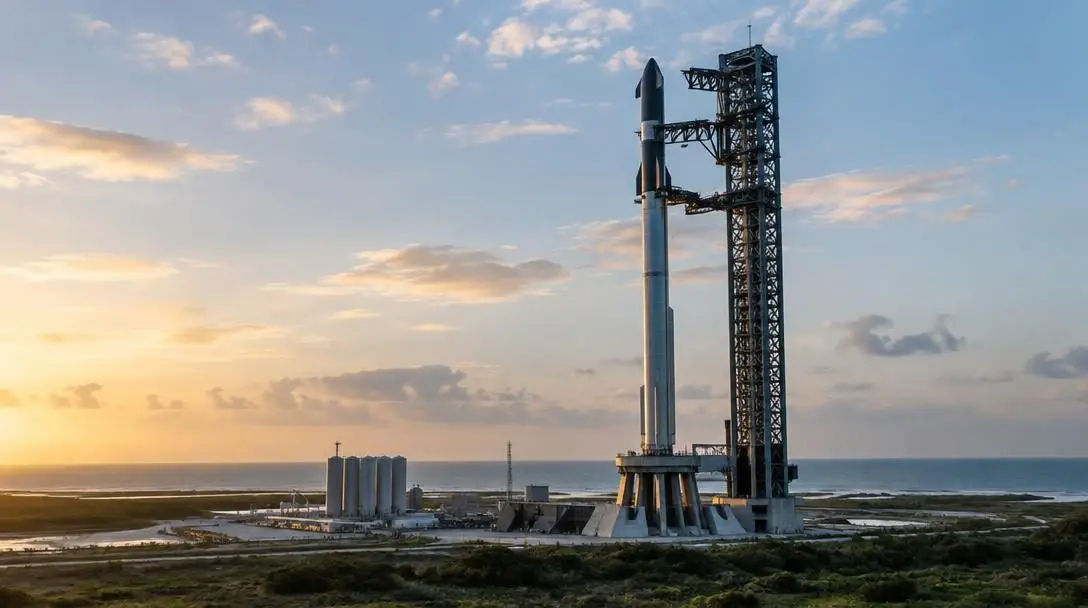
Since its founding in 2002 by Elon Musk, SpaceX has fundamentally altered the trajectory of aerospace engineering. What began as a high-risk venture dedicated to commercializing orbital spaceflight has grown into one of the most prolific aerospace operations in history, driving down the cost of access to orbit through controlled recovery and rapid hardware reuse.
As the decade advances toward 2030, the organization is pivoting from routine orbital logistics to unprecedented exploration initiatives. Its forward-looking roadmap includes expanding global telecommunications via satellite megaconstellations, establishing the first permanent crewed lunar base, and landing human pioneers on the surface of Mars.
Key takeaways
- SpaceX aims to end a half-century hiatus in human lunar exploration by landing Starship directly on the moon before 2030.
- Long-term survival on Mars requires local propellant manufacturing, because lifting return fuel from Earth is physically impractical.
- Rapid vehicle reusability remains the fundamental operational model allowing SpaceX to sustain record-setting annual launch rates.
- Deep-space destinations demand robust indoor life-support infrastructure to counter unbreathable air, solar radiation, and extreme sub-zero temperatures.
Core Hardware and Architectures Powering the 2030 Vision
To achieve its ambitious slate of goals over the coming years, SpaceX relies on an interdependent ecosystem of space launch systems and satellite networks. Each asset serves a targeted role within the overarching strategy, bridging low Earth orbit operations with deep-space capabilities.
Falcon 9
- First Orbital Success: September 2008 (architecture predecessor)
- Primary Operational Role: Commercial, governmental, and Starlink orbital deployment
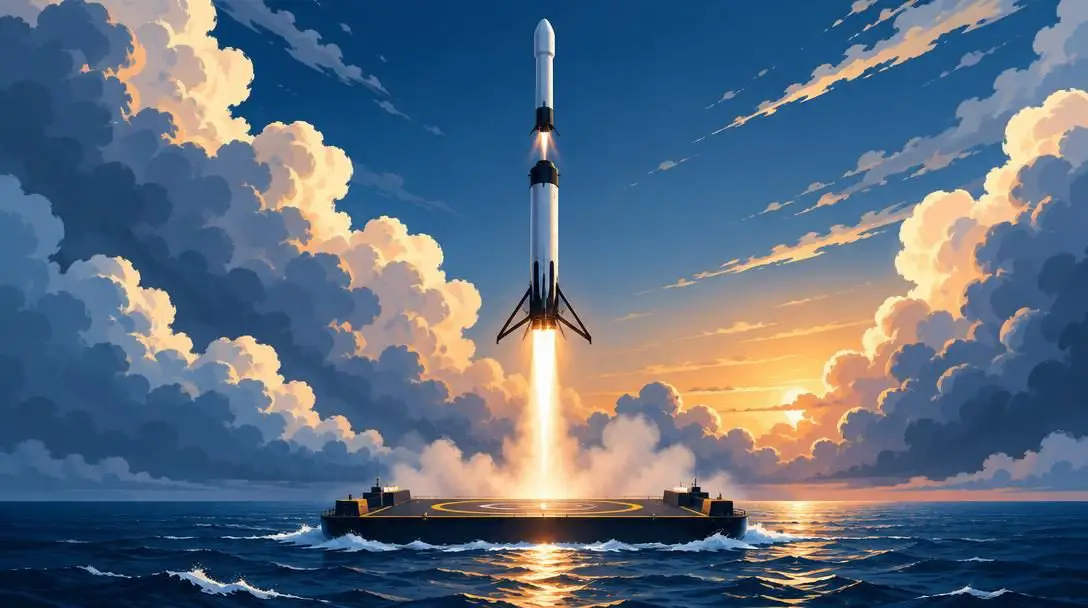
- Recovery Profile: Vertical booster landing on ground pad or ocean platform
The Falcon 9 launch vehicle serves as the operational backbone of the company. It achieved an all-time record for the highest number of successful launches executed by a single rocket design within one calendar year. By demonstrating the first reuse and re-flight of a crewed orbital capsule and flying the first orbital spaceflight crewed entirely by civilians, Falcon 9 established the viability of rapid recovery workflows.
Starship
- Primary Destination: The Moon, Mars, and deep space
- Design Priority: Immense payload volume and heavy-lift capacity
- Key Operational Requirement: In-situ surface refueling
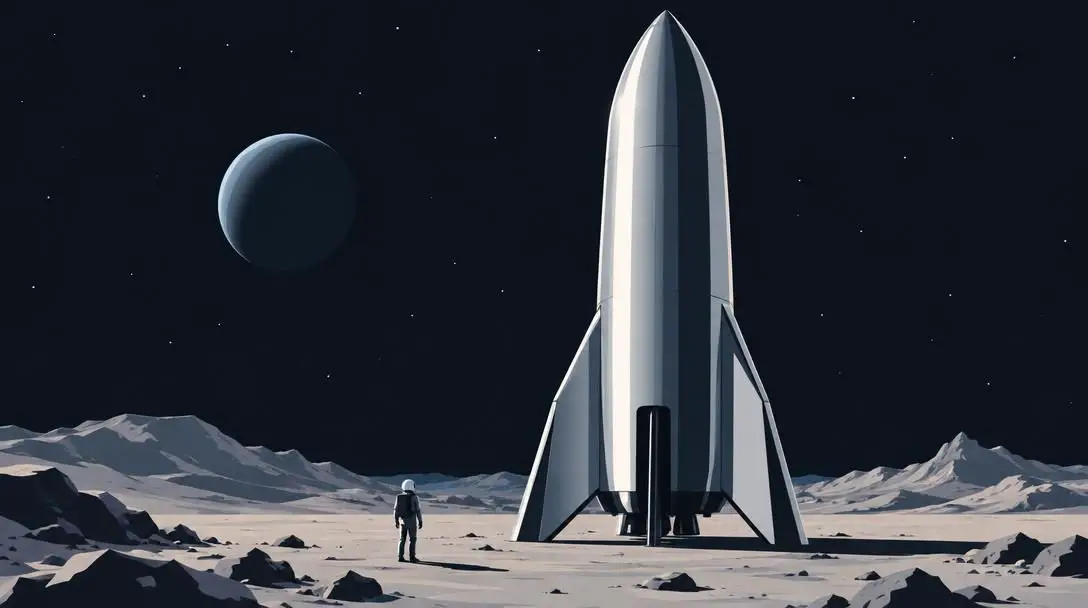
Representing the next technological leap, Starship is engineered to carry immense weight and significantly larger load capacities than any previous spacecraft. Built for interplanetary voyages, Starship functions as a fully reusable transit architecture designed to carry crews, heavy construction machinery, and base supplies beyond low Earth orbit.
Starlink
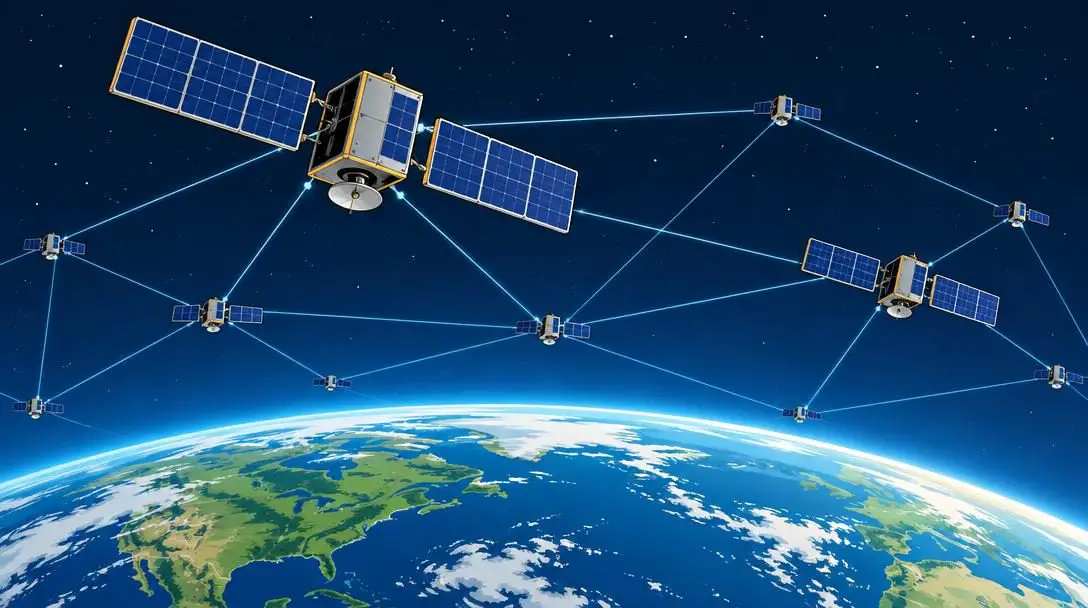
- System Type: Low Earth orbit communications constellation
- Primary Mission: High-speed global internet access
- Target Demographics: Remote, rural, and underserved regions
The Starlink constellation consists of thousands of mass-produced communications satellites operating in low Earth orbit. By providing commercial telecommunications worldwide, Starlink validates high-cadence deployment operations while generating revenue streams that help support longer-range interplanetary programs.
| System | Primary Destination | Payload Focus | Reusability Design |
|---|---|---|---|
| Falcon 9 | Low Earth Orbit | Satellites and crew capsules | Reusable first stage, expendable upper stage |
| Starship | Moon, Mars, and deep space | Heavy cargo, surface infrastructure, and crew | Fully reusable two-stage architecture |
| Starlink | Low Earth Orbit | Global broadband communications | Constellation replenishment via regular launches |
How SpaceX Launch Systems and Architectures Work
The operational philosophy of SpaceX departs fundamentally from traditional aerospace design. For decades, orbital rocketry relied on expendable launch stages that were discarded into the ocean or incinerated within the upper atmosphere after a single burn. SpaceX restructured this sequence around rapid reusability to reduce launch overhead and increase flight volume.
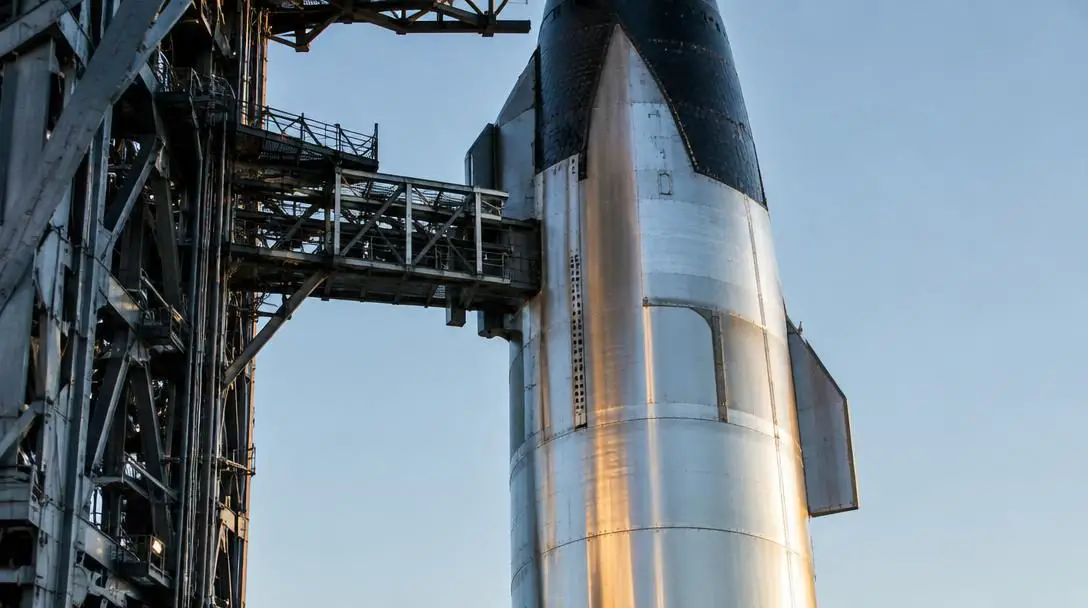
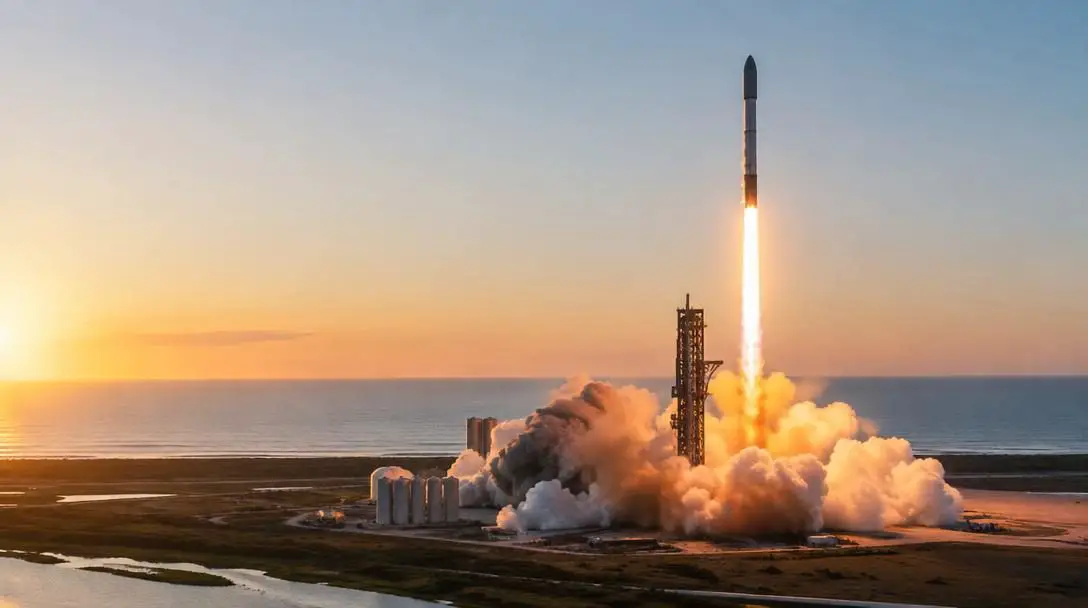
During a standard reusable launch profile, primary stage engines propel the vehicle through the dense lower atmosphere. Once the initial burn completes, the booster separates from the second stage. The upper stage ignites to deliver its payload into orbit, while the booster orients itself using cold-gas thrusters and aerodynamic grid fins. It executes precise engine burns to decelerate through atmospheric reentry, ultimately touching down vertically on a designated autonomous ocean platform or concrete ground landing zone. Refurbishment teams inspect, evaluate, and replenish the hardware for subsequent flights.
Iterative engineering relies on testing operational hardware to its practical limits to uncover structural flaws before committing human crews.
For interplanetary routes, traditional staging is insufficient. Deep-space voyages introduce massive propellant penalties: lifting all the fuel needed for an entire round trip directly from Earth creates an exponential weight barrier. Starship addresses this logistical constraint by incorporating surface refueling protocols, utilizing resources found at target destinations rather than lifting return propellants out of Earth's deep gravity well.
The Lunar Objective: Returning Humans and Building a Base
Between 1969 and 1972, twelve astronauts traversed the lunar surface across the Apollo program. Since Commander Eugene Cernan stepped off the regolith in December 1972, no human has set foot on the moon. SpaceX intends to end this prolonged multi-decade hiatus before 2030 by landing Starship directly on the lunar terrain.
The Moon
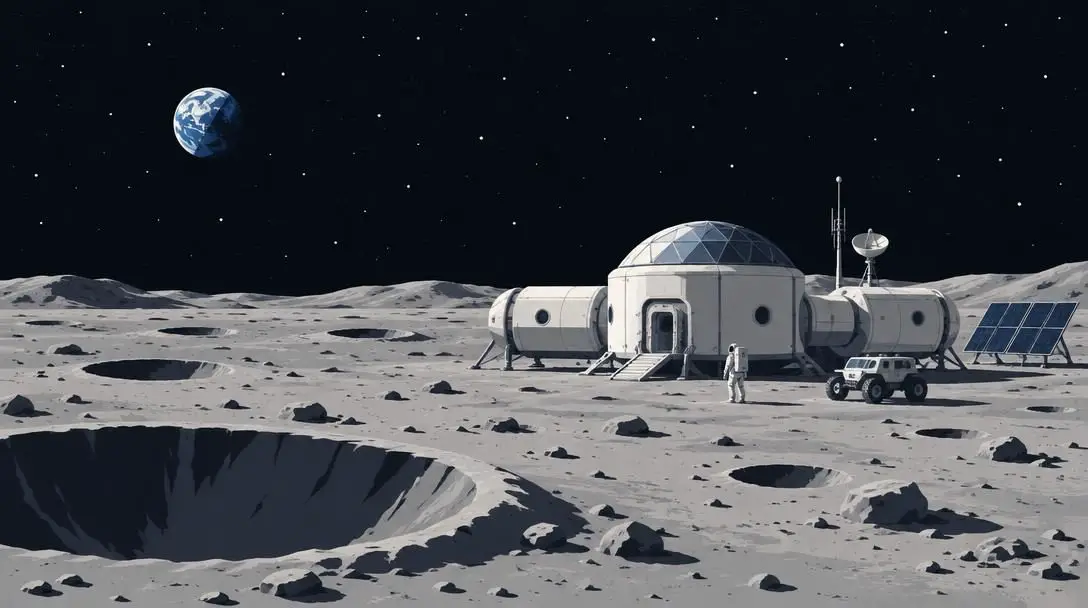
- Total Human Visitors: 12 astronauts (1969–1972)
- Last Crewed Surface Mission: Commander Eugene Cernan (1972)
- Immediate SpaceX Objective: Permanent lunar base deployment
Elon Musk highlighted the urgency of moving past conceptual studies, remarking, "It may literally be easier to just land Starship on the moon than try to convince NASA that we can." Rather than conducting short scientific sorties, SpaceX views the lunar surface as an operational testing ground for permanent human expansion.
Developing a permanent outpost requires transporting tons of specialized cargo, including life-support equipment, pressurized habitats, continuous energy generation units, and heavy industrial excavation tools. Starship's high payload capacity is designed specifically to transfer this industrial equipment from Earth to the lunar surface on a sustained operational schedule.
The Mars Program and Outward Expansion
Beyond the moon, Mars serves as the long-term destination guiding SpaceX's operational trajectory. Musk has stated that humans could arrive on Mars before 2030, framing colonization as a critical civilizational milestone: "We don’t want to be one of those single-planet species, we want to be a multi-planet species." Transitioning from brief exploratory visits to a self-sustaining city requires solving monumental logistical and environmental hazards.
Mars

- Surface Temperature Extremes: Drops as low as minus 200 degrees Fahrenheit
- Atmospheric Status: Thin, unbreathable, unshielded from UV radiation
- Primary Survival Requirement: Hermetic, radiation-shielded indoor habitats
The Martian surface presents an extraordinarily hostile environment for biological life. Because the planet lacks an Earth-like magnetosphere, cosmic rays and intense ultraviolet (UV) radiation bombard the surface. In addition, atmospheric pressure is extremely low, ambient temperatures plummet to minus 200 degrees Fahrenheit, and readily accessible liquid water and food sources are nonexistent.
A return flight from Mars is physically impossible without in-situ resource utilization (ISRU). SpaceX engineers are developing processes to mine Martian soil and process atmospheric carbon dioxide to manufacture methane and oxygen propellants on site. Once established, this production infrastructure will turn Mars into a self-sustaining outpost and an operational transit hub to launch further voyages into the outer solar system.
Practical Steps Required to Meet 2030 Milestones
Transforming complex orbital plans into operational reality requires navigating a precise developmental schedule. To meet its 2030 goals, SpaceX must complete a series of sequential engineering objectives:
- Sustain and increase launch frequency: Break consecutive annual launch cadence records with Falcon 9 while gradually transferring heavy payloads to larger flight systems.
- Perfect the Starship launch system: Conclude flight-testing phases to certify Starship for heavy-lift capacity and orbital maneuvers beyond Earth orbit.
- Execute uncrewed lunar test landings: Demonstrate autonomous navigation, precision descent, and intact vertical touchdowns on the lunar surface without a human crew.
- Conduct crewed lunar landings: Deliver astronauts safely to the surface of the moon, closing the gap in lunar exploration that has persisted since 1972.
- Develop surface infrastructure for the moon: Land cargo modules containing base shelters, industrial machinery, and closed-loop life-support networks to maintain permanent habitation.
- Demonstrate in-situ propellant production: Deploy and validate automated chemical extraction equipment to harvest and manufacture rocket fuel from extraterrestrial resources.
- Deploy initial cargo to Mars: Dispatch uncrewed logistical flights loaded with foundational survival equipment, solar arrays, and environmental shielding to prepare for crew arrivals.
- Launch the first crewed Mars flight: Transport astronauts on an interplanetary trajectory to land on the Martian surface before the decade ends.
Common Misconceptions in Modern Rocketry and Colonization
Public perceptions of space exploration often overlook the severe physics, thermodynamic realities, and engineering constraints that govern rocket design and planetary settlement:
- Equating test flight anomalies with total project failure: In SpaceX's rapid iterative design methodology, early test failures are expected milestones. The company suffered three consecutive orbital launch failures before succeeding on its fourth attempt in September 2008, using each destroyed vehicle to refine structural designs.
- Underestimating the tyranny of rocket propellant: Many assume that increasing spacecraft range simply requires adding larger fuel tanks. However, propellant adds immense weight that requires even more fuel to lift, making local planetary refueling mandatory for round-trip deep-space travel.
- Assuming astronauts can walk freely on planetary surfaces: Fiction often portrays alien environments as readily walkable. On Mars, the combination of extreme cold down to minus 200 degrees Fahrenheit, unbreathable air, and solar UV radiation requires humans to live and work exclusively within heavily shielded indoor installations.
- Confusing scientific visitation with self-sustaining colonization: Brief visits—such as those by the twelve Apollo astronauts—rely completely on expendable supplies carried from Earth. True colonization requires robust domestic supply chains, closed-loop life support, and active resource harvesting.
Frequently asked questions
Why is in-situ resource utilization necessary for Mars missions?
Carrying enough propellant from Earth for both outbound and return flights makes a rocket far too heavy to escape Earth's gravity well. Manufacturing fuel on Mars using local resources is essential to make return flights physically feasible.
When was the last time a human walked on the moon?
Commander Eugene Cernan was the last person to walk on the moon, concluding the Apollo 17 mission in December 1972. Only 12 people have ever stepped on the lunar surface.
How does SpaceX handle launch failures during development?
SpaceX relies on iterative testing, pushing experimental hardware to failure to gather flight data, locate stress points, and redesign components rapidly, rather than spending years modeling systems purely on paper.
What conditions make the Martian surface hostile to human life?
Mars features a thin and unbreathable atmosphere, no food or accessible liquid water, extreme cold plunging to minus 200 degrees Fahrenheit, and heavy ultraviolet radiation exposure due to the absence of a protective magnetosphere.
What role does the Falcon 9 play in SpaceX's deep-space ambitions?
Falcon 9 maintains record-setting launch frequencies that support commercial customers, fund advanced development, and deploy the Starlink network, while validating operational reuse procedures.
The Bottom Line
SpaceX's roadmap to 2030 represents one of the most ambitious engineering efforts in aerospace history. By leveraging the proven reusability of Falcon 9 and scaling up the heavy-lift capacity of Starship, the enterprise is steadily moving beyond routine orbital satellite deployment. Landing on the moon to build a permanent base and deploying the foundational logistics for an indoor colony on Mars will test the absolute limits of propulsion, life-support design, and off-world resource production.