Yes, You Can Get Sucked Into A Black Hole–Five Facts About This Fascinating Space Phenomenon
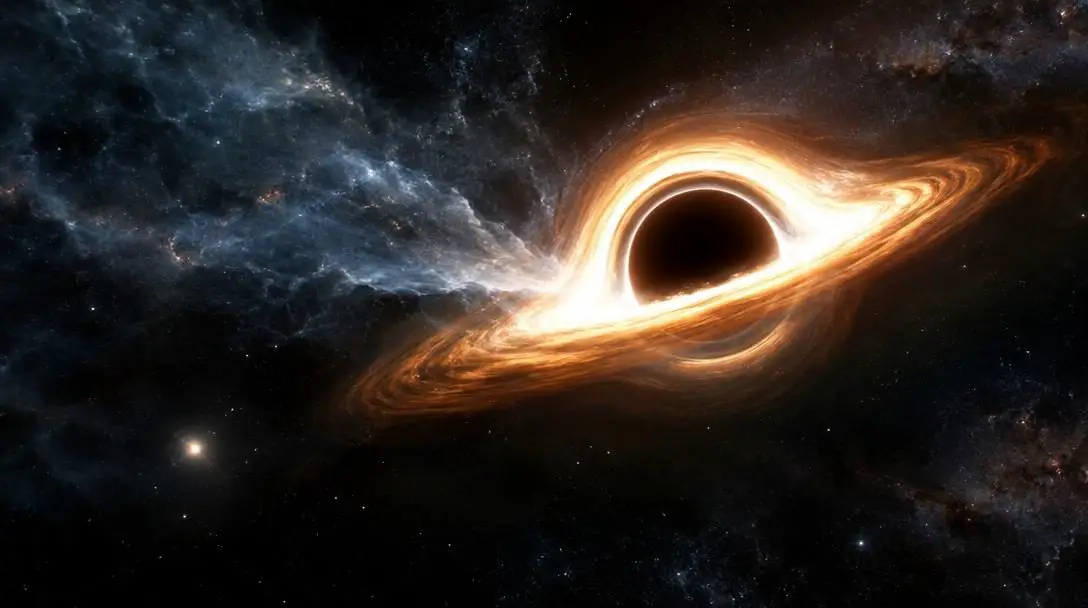
Black holes are among the most extraordinary, powerful, and mysterious objects in the universe. Formed as extremely dense gravitational masses, these celestial entities hold such concentrated gravitational pull that they possess the ability to consume anything drifting in their wake. While science fiction frequently depicts them as cinematic cosmic portals or galactic vacuum cleaners, real-world astrophysics reveals a reality that is far more compelling and mathematically fascinating.
For more than a century, astronomers and theoretical physicists have worked to unravel the mechanics of these immense cosmic structures. When vast amounts of matter are squeezed into an infinitesimally compact space, the familiar rules governing matter break down entirely, fundamentally warping space and time. Moving from abstract mathematical calculations to direct visual confirmation, modern science has transformed black holes from hypothetical curiosities into observable cosmic anchors that shape entire galaxies.
Key takeaways
- Albert Einstein predicted black holes using his general theory of relativity in 1916, decades before the first observational signs emerged in 1964 and x-rays were discovered in 1971.
- Astronomers estimate that our home galaxy, the Milky Way, contains approximately 100 million black holes distributed across interstellar space.
- The nearest known black hole to Earth is a low-mass specimen nicknamed "The Unicorn," situated roughly 1,500 light-years away in the Monoceros constellation.
- In 2019, the Event Horizon Telescope project achieved a historic breakthrough by capturing the first direct image of a black hole, focusing on Sagittarius A at the galactic center.
- A black hole is defined by three structural zones—the outer event horizon, the inner event horizon, and the central singularity—past which escape is physically impossible.
Five essential facts about black holes
The transition of black hole science from speculative chalkboards to global telescope arrays represents one of the greatest technical achievements in human history. These five core facts demonstrate how mass, gravity, and spacetime collaborate under the universe's most extreme conditions.
Albert Einstein's theoretical prediction
Long before any physical instrument could detect an invisible object in deep space, Albert Einstein predicted the existence of black holes in 1916 through his revolutionary general theory of relativity. Einstein proposed that mass and energy warp the fabric of spacetime rather than operating simply as a static pulling force. His foundational equations showed that if an astronomical object collapsed into a sufficiently compact volume, its gravitational warp would become insurmountable.
Despite Einstein's mathematical breakthrough, decades elapsed before technology caught up with theoretical astrophysics. Astronomers detected the first indirect physical signs of a black hole in 1964. Observational verification took another major step forward in 1971, when researchers discovered the first distinct x-ray emissions radiating from matter superheated around a black hole candidate, confirming that Einstein's century-old equations described real physical phenomena.
The Milky Way's 100 million black holes
Statistical models and indirect observational signatures indicate that our own galaxy hosts around 100 million black holes. Because black holes do not emit visible light on their own, mapping their exact locations poses an immense challenge for modern observatories. Unlike luminous stars, nebulae, or glowing planetary discs, black holes blend seamlessly into the cold void of space unless they actively interact with nearby companion matter.
To calculate how many of these dark remnants populate the Milky Way, astronomers rely on gravitational tracking, companion star motion analysis, and broader models of stellar life cycles. Given the immense volume of our galaxy, this estimate of roughly 100 million objects suggests that dormant stellar-mass black holes are scattered throughout the interstellar neighborhoods surrounding our solar system.
The Unicorn
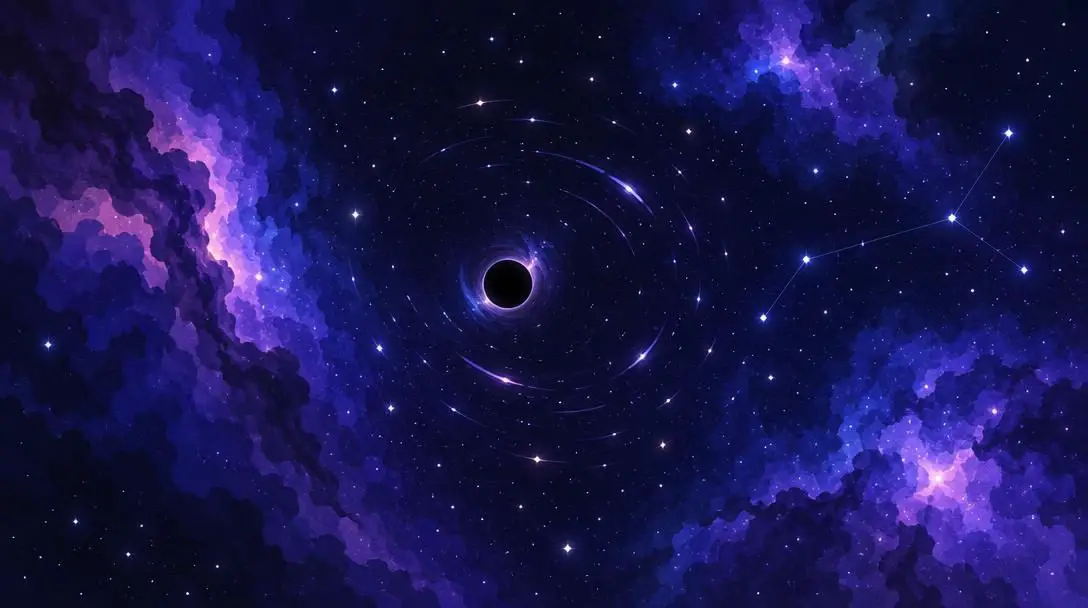
- Distance from Earth: Approximately 1,500 light-years (over 5 trillion miles)
- Estimated mass: Roughly 3 times that of our sun
- Host constellation: Monoceros (the unicorn constellation)
- Distinction: Closest known black hole to Earth
The celestial body officially known as the closest black hole to Earth bears the whimsical nickname "The Unicorn." Situated roughly 1,500 light-years away—a distance translating to more than 5 trillion miles, given that a single light-year measures the distance light covers in one Earth year—this entity sits comfortably outside our immediate stellar neighborhood, posing no danger to our planet.
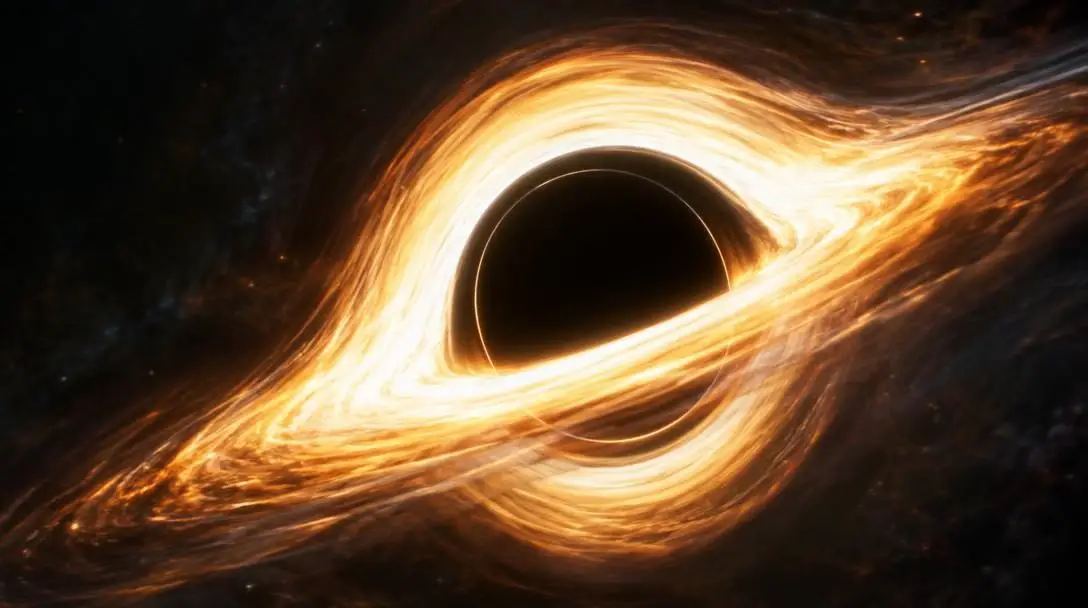
The Unicorn is notable not only for its proximity but also for its exceptionally modest scale. Measuring approximately three times the mass of our sun, it sits near the lowest mass threshold possible for a stellar-remnant black hole. It owes its name both to its remarkably rare low-mass profile and to its celestial coordinates within the Monoceros constellation, traditionally known as the unicorn constellation.
Sagittarius A
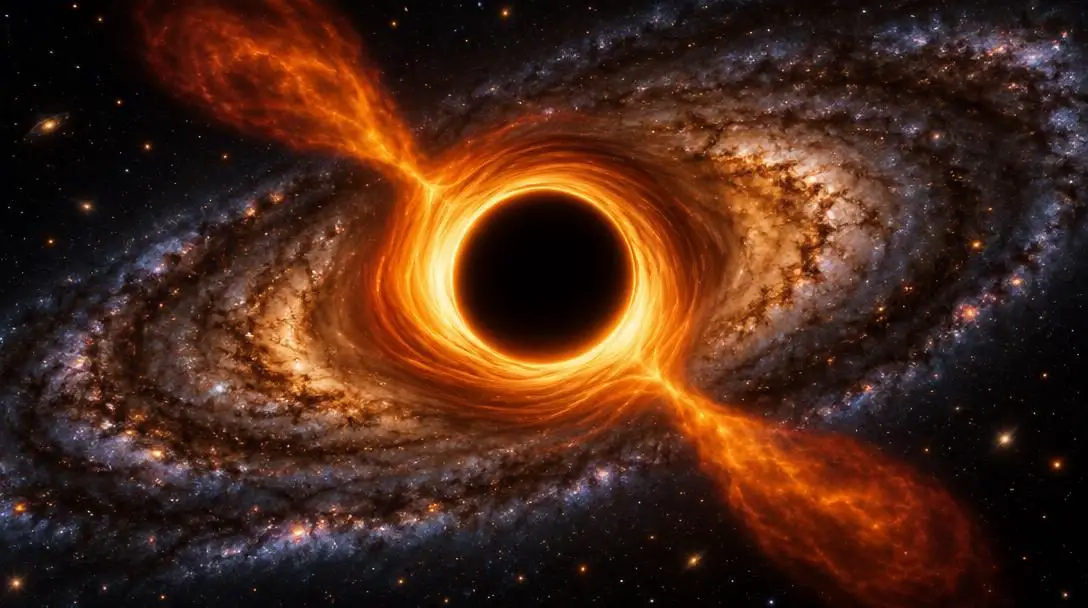
- Location: Center of the Milky Way galaxy
- Milestone year: 2019 (imaged by Event Horizon Telescope)
- Detection method: Global radio telescope network synchronization
- Primary significance: First recorded direct image of a galactic black hole
Dominating the dense gravitational anchor of our galaxy sits Sagittarius A, the central supermassive black hole of the Milky Way. For decades, astronomers inferred the existence of this titan by tracking stars orbiting an unseen gravitational anchor at blinding speeds. In 2019, the scientific community achieved a landmark breakthrough when the Event Horizon Telescope collaboration unveiled the first direct visual image of a black hole's silhouette.
Capturing Sagittarius A required linking high-frequency radio observatories across multiple continents to construct an Earth-sized virtual aperture. The resulting image provided visual evidence confirming general relativity at the edge of an extreme gravitational well, offering both professional researchers and the public an unprecedented window into the heart of our home galaxy.
Crossing the boundary of a black hole represents a one-way trip where matter is permanently assimilated into the object's growing gravitational mass.
The inescapable event horizon
The defining operational principle of any black hole is that once a particle crosses into its boundary, escape becomes physically impossible. Rather than being solid surfaces, black holes represent concentric structural thresholds that culminate in a point of infinite compression. When any stray particle, gas cloud, or ray of light traverses this boundary, it is permanently captured and added to the total mass of the object.
As captured matter falls inward, it contributes its own mass to the black hole's overall balance sheet. This accumulation causes the black hole to expand its gravitational reach. Over vast stretches of cosmic time, black holes that continuously ingest surrounding interstellar gas, dust, and cosmic debris gradually expand their volume, increasing the perimeter of their invisible boundaries.
Black hole milestones and characteristics at a glance
| Subject or Milestone | Key Year | Primary Characteristic | Cosmic Significance |
|---|---|---|---|
| Einstein's Prediction | 1916 | General theory of relativity framework | Calculated that dense matter collapses space and time |
| Initial Detection Signs | 1964 | Indirect observational signatures | Provided first hints that black holes exist beyond paper |
| X-Ray Confirmation | 1971 | High-energy electromagnetic emissions | Verified presence of active black hole candidates |
| The Unicorn | Identified near Earth | Low mass (3 solar masses), 1,500 light-years away | Demonstrated proximity and existence of small-scale black holes |
| Sagittarius A Imaging | 2019 | First direct photographic confirmation | Resolved the visual silhouette at the Milky Way's center |
The anatomy of a black hole: How mass and gravity interact
To comprehend how a black hole functions, it is essential to dismantle the misconception that it is an empty void or a hollow tunnel. In truth, a black hole is an extraordinary concentration of physical mass compressed into an exceptionally tight space. This dense accumulation creates three distinct physical layers that govern its interaction with the surrounding universe.
The outermost layer is the outer event horizon. In this broad boundary region, the gravitational field of the black hole begins to overpower the background motions of interstellar space. Stray hydrogen atoms, drifting dust clouds, and passing stellar material begin an irreversible spiral inward as the black hole's pull steadily overtakes all competing forces.
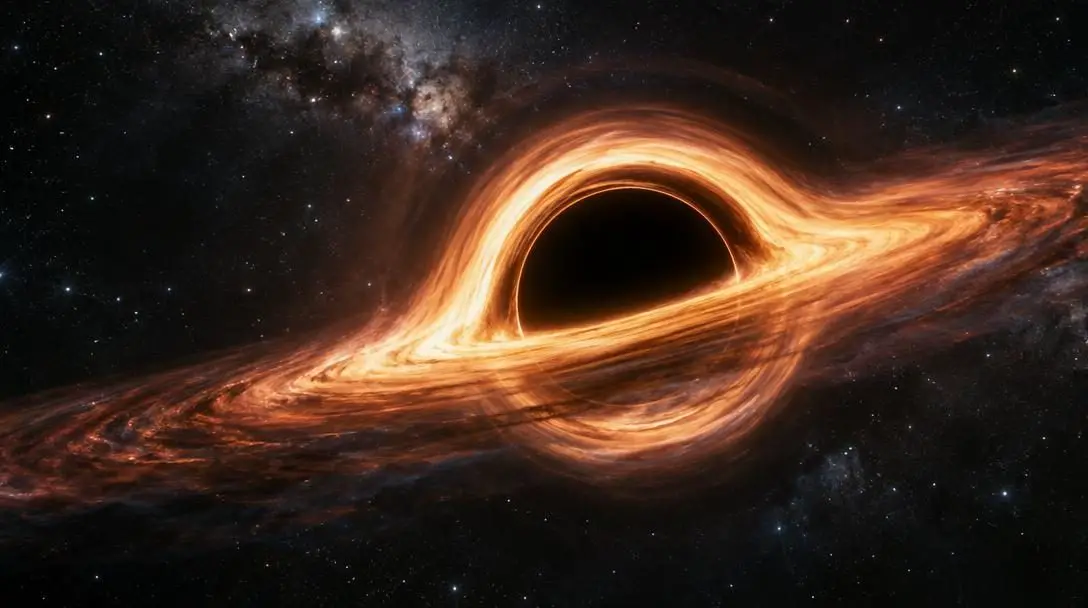
Deeper inward lies the inner event horizon, commonly recognized as the definitive point of no return. The physics at this boundary are unyielding: the escape velocity required to overcome the gravitational pull exceeds the speed of light. Because the universal cosmic speed limit prevents anything—including electromagnetic radiation—from traveling faster than light, any matter crossing this threshold is cut off from the external universe forever.
At the absolute core sits the singularity. According to classical gravitational mathematics, this is the central zero-volume point where the entire mass of the black hole is concentrated. Under traditional general relativity calculations, the compression produces infinite density, leading to an environment where conventional laws of physics cease to operate predictably.
How to explore black hole astronomy from home
While exploring extreme gravitational fields directly requires multimillion-dollar international observatories, amateur stargazers, students, and space enthusiasts can engage with real black hole astrophysics through several accessible pathways.
- Study Einstein's foundational relativity: Review the core tenets of Einstein's 1916 general theory of relativity. Learning how mass warps spacetime clarifies why gravity can trap matter and light without requiring a physical solid surface.
- Locate associated host constellations: Use stargazing mobile apps, printed night sky charts, or backyard binoculars to identify constellations known for hosting key black holes, such as the Monoceros constellation where the Unicorn black hole resides.
- Examine open-access telescope releases: Visit public scientific portals to inspect imaging releases from international collaborations like the Event Horizon Telescope, which made headlines in 2019 with its direct visualization of Sagittarius A.
- Follow x-ray and multi-messenger astronomy: Learn how contemporary scientists detect dormant and active black holes through x-ray emissions—a detection method first proven in 1971—by monitoring the erratic orbits of visible companion stars.
- Participate in citizen science projects: Join web-based astronomy initiatives that invite the public to analyze real satellite survey data, categorize stellar light curves, and flag potential gravitational anomalies.
Common misconceptions about black holes
Due to decades of dramatic cinematic liberties and simplified pop-culture references, public perceptions of black holes frequently involve major scientific inaccuracies. Addressing these myths helps paint an accurate portrait of how gravity behaves across the cosmos.
- Myth: Black holes roam space like giant vacuum cleaners. Black holes do not indiscriminately vacuum up galaxies. They obey the exact same laws of gravity as normal stars of equivalent mass. Matter must venture close enough to cross the event horizon before it is permanently pulled in.
- Myth: Black holes are completely invisible and undetectable. While it is true that the black hole itself emits no light from within its event horizon, its external perimeter can be observed through x-ray emissions, gravitational effects on companion stars, and radio imaging of surrounding gas as proven in 2019.
- Myth: All black holes share identical dimensions. Black holes vary dramatically in scale. They range from low-mass stellar remnants like the Unicorn, which possesses roughly three times the mass of our sun, to supermassive giants like Sagittarius A anchored at galactic hubs.
- Myth: Black holes were discovered as soon as they were theorized. Decades passed between theoretical conception and physical discovery. Einstein formulated general relativity in 1916, but initial observational evidence appeared only in 1964, followed by confirmed x-ray detections in 1971.
- Myth: A black hole is a uniform, flat black disk. Black holes are three-dimensional, multi-layered phenomena comprising an outer event horizon, an inner event horizon, and a dense central singularity.
What astronomers are watching next
The landmark 2019 imaging of Sagittarius A marked the dawn of an aggressive new observational era. Rather than merely confirming that black holes exist, modern astrophysicists are working to expand the resolving power of global radio telescope networks, improve orbital x-ray detection platforms, and discover more low-mass objects resembling the Unicorn in our cosmic vicinity.
A primary goal for the coming decades involves reconciling Einstein's 1916 smooth curvature of spacetime with the discrete mechanics of quantum physics. Because the inner event horizon and the singularity subject matter to the most intense pressures in nature, black holes serve as the universe's ultimate natural laboratory. Continued study of the 100 million black holes estimated to populate our galaxy will provide the crucial data points needed to test and potentially unify modern gravitational theory.
Frequently asked questions
Can you get sucked into a black hole if you are far away?
No. A black hole's gravitational pull follows the standard laws of physics. Unless an object, star, or particle drifts close enough to penetrate the event horizon, it will simply orbit the black hole just as planets orbit a central star.
How far away is the closest black hole to Earth?
The closest identified black hole is "The Unicorn," located roughly 1,500 light-years away from Earth in the Monoceros constellation. This distance equates to more than 5 trillion miles, placing it safely away from our solar system.
Why did it take so long to photograph a black hole?
Because black holes do not radiate light past their event horizon, direct optical photography is impossible. Capturing the 2019 image of Sagittarius A required synchronizing an array of global radio observatories under the Event Horizon Telescope project to resolve the radio silhouette cast against surrounding hot gas.
What happens to matter after it enters a black hole?
Once matter passes through the inner event horizon, escape becomes impossible because the required escape velocity exceeds the speed of light. The captured particles are drawn toward the central singularity and absorbed, permanently adding their mass to the black hole.
Who first proved that black holes could exist?
Albert Einstein provided the foundational scientific framework in 1916 through his general theory of relativity. Although Einstein mathematically predicted that extreme mass collapse could warp space, the first observational signs were not recorded until 1964, followed by confirmed x-ray detections in 1971.
The bottom line
Far from being destructive cosmic anomalies that defy logic, black holes represent the natural, orderly culmination of gravity and matter operating under extreme density. From Albert Einstein's revolutionary 1916 equations to the groundbreaking 2019 image of Sagittarius A, our understanding of these phenomena has grown from pure mathematical conjecture into rich visual science. With approximately 100 million black holes quietly populating the Milky Way—including low-mass neighbors like the Unicorn just 1,500 light-years away—these fascinating objects will continue to push the boundaries of physics, reshaping how humanity understands space, time, and the universe at large.