5 Amazing Retro Games Everyone Forgot About
While juggernaut franchises such as Super Mario Bros., Grand Theft Auto, and Halo permanently dominate gaming discourse, the broader history of interactive entertainment is populated by bold experiments that slipped out of the spotlight. In the fast-moving hardware transitions of the 1980s and 1990s, groundbreaking titles frequently vanished from public awareness as arcade cabinets were retired, operating systems upgraded, and new console generations took center stage.
Revisiting these overlooked titles offers more than simple nostalgia; it provides a lens into a transformative era when creators took extraordinary artistic and structural chances. From hand-sculpted clay wonderlands and button-mashing athletic tournaments to foundational 3D graphics showcases, these five forgotten retro games showcase the sheer diversity and ingenuity of early video game design.
Key takeaways
- Pioneering art styles, physical arcade controllers, and groundbreaking 3D game engines fueled a rich period of video game experimentation.
- Iconic gaming software like the Unreal Engine originated in standalone releases that were celebrated first-person experiences in their own right.
- Distinct control philosophies, including text parsers and isometric diagonal controls, shaped early puzzle and adventure gameplay.
- Experiencing these vintage titles today requires an appreciation for deliberate pacing, manual problem-solving, and proper display configurations.
Forgotten retro gems at a glance
Each of the five titles highlighted below introduced distinct mechanics, artistic visions, or technical milestones during their initial releases across arcade and computer platforms.
| Game Title | Developer | Initial Release | Original Format | Core Genre |
|---|---|---|---|---|
| The Neverhood | The Neverhood, Inc. | 1996 | Microsoft Windows | Point-and-click adventure |
| Track & Field | Konami | 1983 | Arcade (table cabinet) / Atari | Multiplayer sports arcade |
| Q*Bert | Gottlieb | 1982 | Arcade cabinet | Isometric action puzzle |
| Unreal | James Schmalz and Cliff Bleszinski | 1998 | Microsoft Windows | Sci-fi first-person shooter |
| Hugo's House of Horrors | David Gray | 1990 | Personal computer (PC) | Text-parser adventure |
Five remarkable classic games history overlooked
Whether originating on tabletop arcade boards or classic PC operating systems, each of these releases offered something truly distinctive to players willing to engage with their inventive structures.
The Neverhood
- Developer: The Neverhood, Inc.
- Publisher: DreamWorks Interactive
- Release Year: 1996
- Platform: Microsoft Windows
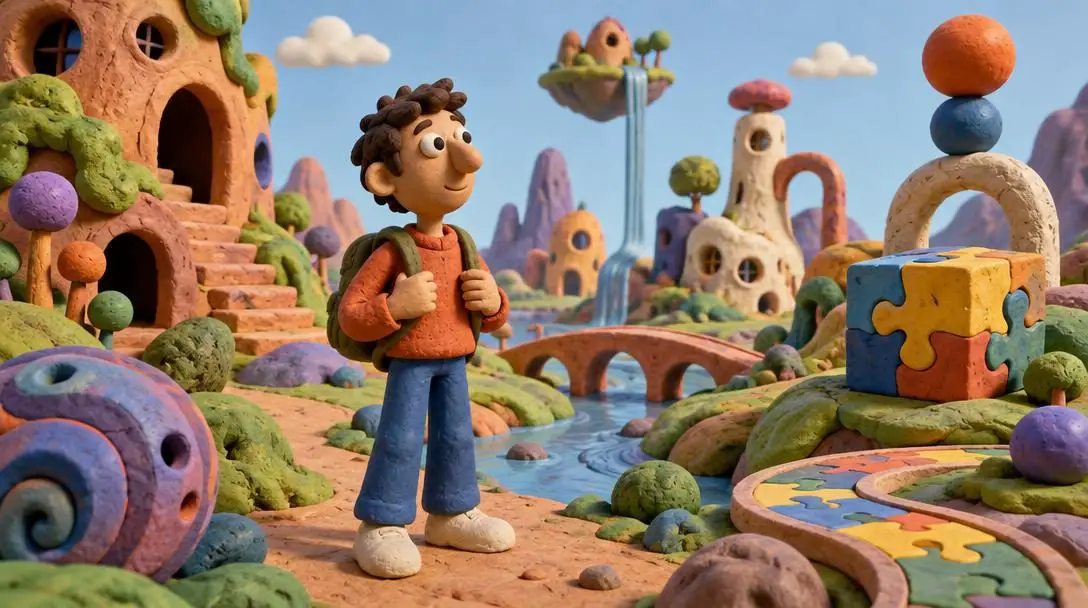
Released in 1996, The Neverhood stands as one of the most visually daring point-and-click adventures ever produced for Microsoft Windows. Instead of relying on traditional 2D pixel art or the fledgling, low-polygon 3D computer graphics common in the mid-1990s, the developer hand-crafted an entire world using stop-motion claymation. Published by DreamWorks Interactive, the game invited players into a bizarre, tactile wonderland that looked radically different from anything else on the market.
Players step into the shoes of Klaymen, an offbeat protagonist who wakes up with no knowledge of his surroundings and must piece together his origin and the fate of the realm. Navigating the world requires solving elaborate environmental puzzles, interpreting cryptic visual hints, and interacting with strange organic machines. Alongside its tactile stop-motion aesthetic, the game is renowned for its quirky quips, slapstick physical comedy, and surprisingly mature undercurrent of narrative mystery.
Track & Field
- Developer: Konami
- Initial Release: 1983 (as Hyper Olympic)
- Re-release Year: 1984
- Key Platforms: Arcade cabinets, Atari systems
Originally introduced to arcades in 1983 under the name Hyper Olympic before its 1984 international re-release, Track & Field established the gold standard for athletic button-mashing games. Developed by Konami, the title became an arcade fixture, appearing frequently in tabletop cabinets before migrating to home platforms like the Atari systems. It abandoned complex simulations in favor of raw physical endurance, timing, and reflex-driven mechanics that drew crowds around arcade machines.
The game tasks players with mastering classic Olympic disciplines, including the 100-meter dash, the long jump, the hammer throw, and the javelin throw. It supports competitive play for up to four participants, arranged in two-player teams taking alternating turns. Success hinges on a mixture of blisteringly fast inputs to build athlete speed and precise angle holds to launch jumps and throws. Whoever accumulates the highest point total claims victory across the tournament circuit.
Q*Bert

- Developer: Gottlieb
- Release Year: 1982
- Cabinet Style: Arcade
- Protagonist: Q*Bert
Arriving in 1982 during the undisputed golden age of arcades, Q*Bert delivered an ingenious spin on spatial navigation and puzzle design. Developed by Gottlieb, the game introduced an eccentric, instantly recognizable character: a spherical creature sporting a prominent snout and two nimble legs. The simplicity of the premise masked an exceptionally challenging reflex test that captivated early arcade enthusiasts.
The core objective requires players to hop across the tops of an isometric pyramid constructed from multi-colored cubes. Each bounce changes a block's color, with the overarching goal of turning every tier into a uniform target shade. However, dangerous adversaries and bouncing hazards continually navigate the same geometric plane. Because controls operate on a diagonal axis, one misjudged input can send the round protagonist tumbling off the floating pyramid into empty space.
These overlooked titles prove that technical limitations never prevented early developers from crafting ingenious, boundary-pushing interactive worlds.
Unreal

- Designers: James Schmalz and Cliff Bleszinski
- Release Year: 1998
- Engine Debut: Unreal Engine
- Related Spin-Off: Unreal Tournament (PlayStation 2, Sega Dreamcast)
Modern gamers know the term "Unreal" primarily as the industry-standard software suite powering hundreds of contemporary blockbusters. However, before it was a universal engine, Unreal was a groundbreaking 1998 sci-fi first-person shooter designed by James Schmalz and Cliff Bleszinski. Built to showcase the raw power of the first-generation Unreal Engine, the game redefined real-time 3D rendering with lush outdoor vistas, dynamic colored lighting, and complex environmental geometry.
Dropping players onto an alien planet infested with hostile hostile extraterrestrial forces, the game delivered tense combat and expansive exploration that stood toe-to-toe with contemporary PC titans. Its critical and commercial success established the technical foundation for the engine's long-term dominance and paved the way for multiplayer phenomena like Unreal Tournament, which would later introduce console players on the PlayStation 2 and Sega Dreamcast to fast-paced arena shooting.
Hugo's House of Horrors

- Creator: David Gray
- Initial Release: 1990
- Compilation Year: 1995 (The Hugo Trilogy)
- Average Length: Under 90 minutes
By 1990, games like Leisure Suit Larry had demonstrated that graphic parser adventures held tremendous appeal for home computer owners. While the market saw its fair share of cheap imitations, independent developer David Gray created an indie gem that matched—and in many ways surpassed—its commercial peers: Hugo's House of Horrors. Working outside major studio backing, Gray combined charming 2D visuals with a user-friendly text interface.
The game follows Hugo as he enters a sinister haunted manor in search of his missing girlfriend. Players steer Hugo directly across rooms using keyboard direction controls while typing text instructions to interact with doors, collect tools, and solve strange riddles. Though it originally launched quietly via shareware channels, word-of-mouth acclaim eventually prompted the complete release of the Hugo trilogy in 1995. The original haunted house chapter remains the standout fan favorite, offering a tightly paced, puzzle-filled mystery that can be completed in roughly 90 minutes.
Deconstructing the core mechanics of vintage designs
The enduring appeal of these vintage titles stems from how effectively they integrated their user inputs with distinct audiovisual restrictions. By focusing on focused, transparent gameplay loops, these games engaged players without relying on modern cinematic aids.
- Tactile Point-and-Click Solving: In The Neverhood, players advance by manipulating the environment through direct cursor contact. Puzzles rely heavily on lateral thinking, auditory cues, and physical visual changes in the clay landscape.
- Rapid Physical Button Rhythms: Track & Field pioneered physical exertion mechanics. Achieving top speeds demands rhythmic, rapid alternating taps, which must immediately transition to steady, well-timed button holds to calculate trajectory angles for jumps and throws.
- Isometric Movement Grids: Q*Bert uses a four-way diagonal control scheme laid out on an optical illusion. The player must calculate movement across three-dimensional steps while balancing hazard tracking and escape path availability.
- Projectiles and Environmental Mobility: In Unreal, the shooter format incorporates projectile travel times, wide-area strafing, and high-mobility dodges across open terrain, forcing players to manage positioning rather than hiding behind cover.
- Hybrid Parser-Directional Control: Hugo's House of Horrors splits player input between real-time spatial navigation and manual vocabulary entry. Interacting with the game world demands identifying items visually, then determining the precise verb-noun combination to trigger the desired reaction.
How to set up and play classic retro games today
Getting decades-old games to run properly on contemporary hardware requires patience and the right configuration steps. Use the following sequential approach to prepare your system for classic gaming experiences.
- Identify the original platform format: Check whether the chosen title was built for early Microsoft Windows, an arcade board, an Atari console, or later platforms like the Sega Dreamcast or PlayStation 2 to select the proper legal emulation software or operating environment.
- Adjust aspect ratios and display resolution: Vintage games were engineered for 4:3 standard-definition CRT monitors. Lock your display or emulation software to a 4:3 square aspect ratio to prevent distorted sprites and stretched textures on widescreen monitors.
- Map appropriate controllers: Match your input devices to the game's original physical layout. Keep a standard typing keyboard ready for text-driven games like Hugo's House of Horrors, a responsive mouse for The Neverhood, and sturdy gamepads or arcade sticks with durable buttons for Track & Field.
- Enable legacy compatibility modes: If launching older PC releases on modern Windows installations, adjust executable properties to match legacy environments, reduce color palette settings if required, and grant administrative execution rights.
- Establish manual save routines: Older games rarely feature automated checkpoints. Rely on in-game save files or software save states before attempting tricky puzzles or hazardous sequences to avoid repeating large sections of the game.
Frequent missteps when revisiting older video games
Returning to older titles with modern gameplay assumptions often creates unnecessary friction. Avoiding these typical mistakes will lead to a far smoother retro gaming session.
- Expecting visual navigational markers: Vintage adventures such as The Neverhood and Hugo's House of Horrors do not feature glowing mission markers, automated quest logs, or compass arrows; solutions must be deduced entirely through environmental exploration.
- Overcomplicating parser commands: When interacting with text-based engines, typing lengthy complex sentences will confuse the parser. Stick to concise two-word phrases, generally consisting of a single verb and a single noun (such as "open door" or "take key").
- Confusing cardinal and diagonal inputs: In isometric titles like Q*Bert, attempting to press up or right in standard cardinal directions will send the character walking off the edge. Always adjust your physical input orientation to the diagonal angle of the pyramid.
- Rushing athletic inputs without reading release windows: In Track & Field, simply mashing buttons quickly will not yield high scores. Fouling out on javelin throws and long jumps happens when players fail to release the trajectory angle button within the required zone.
- Treating vintage shooters like modern cover shooters: Attempting to play 1990s first-person titles like Unreal by crouching behind static cover is counterproductive; survival relies on constant circle-strafing, jumping, and maintaining physical distance from alien projectiles.
Frequently asked questions
Why did games like The Neverhood fade from mainstream popularity?
Despite critical acclaim for its distinctive claymation aesthetic and soundtrack, The Neverhood was released in 1996 when personal computer gaming was rapidly transitioning toward real-time 3D graphical hardware, causing many traditional point-and-click puzzle games to be overlooked commercially.
What was the original arcade name for Konami's Track & Field?
The game was initially developed by Konami and released in 1983 under the title Hyper Olympic before it was re-released internationally as Track & Field in 1984 across arcade cabinets and home systems like the Atari.
How is the original Unreal connected to modern game development?
The 1998 first-person shooter Unreal, designed by James Schmalz and Cliff Bleszinski, was the very first title powered by the Unreal Engine. The technology proved so impressive that it grew into the industry-leading engine framework widely used across video games and media production today.
How long does it take to complete Hugo's House of Horrors?
Unlike massive modern adventures, David Gray's 1990 text-parser mystery is tightly paced and can typically be completed in around 90 minutes once players figure out the required puzzles and item interactions.
What kind of movement system does Q*Bert use?
Q*Bert uses an isometric diagonal movement scheme. Players navigate a pyramid of cubes by hopping diagonally, changing the color of each surface while avoiding obstacles and roving adversaries.
The bottom line
The history of video games extends far beyond the handful of mega-franchises that dominate store shelves and digital storefronts. Exploring underappreciated titles like The Neverhood, Track & Field, Q*Bert, Unreal, and Hugo's House of Horrors reveals an era defined by raw technical innovation and boundless artistic exploration. By understanding how these unique mechanics were built and taking the time to set them up properly on modern displays, retro enthusiasts can experience the distinct charm and enduring challenges that made these forgotten games truly remarkable.