5 Best Movie BMWs
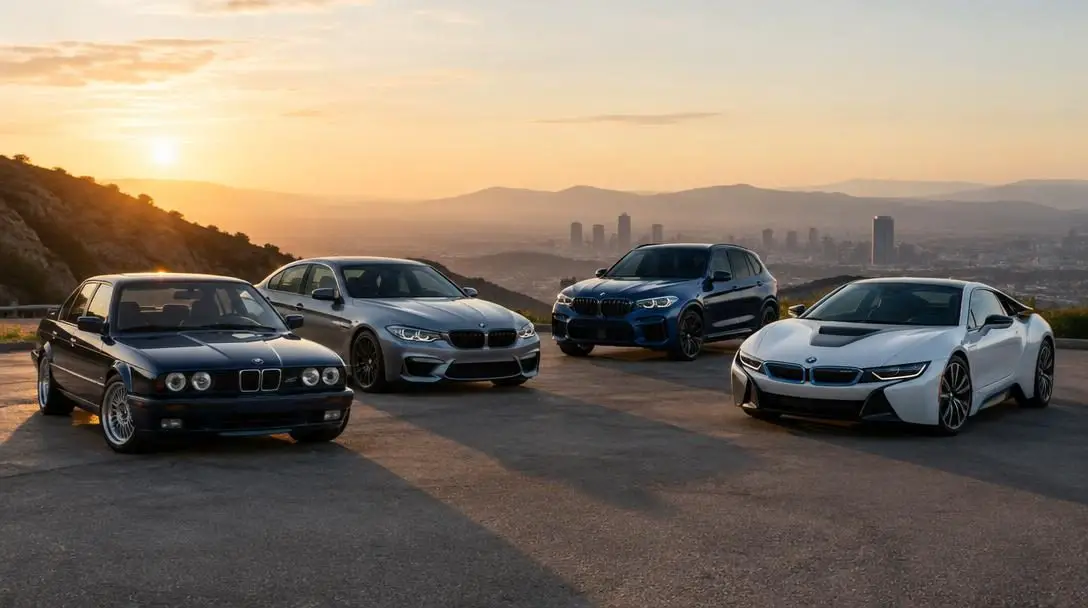
For decades, BMW has occupied a unique intersection of European luxury engineering and cinematic storytelling. While thousands of vehicles sporting the blue-and-white roundel have quietly occupied background traffic or curb spaces across cinema history, select models have broken out of the scenery to become iconic co-stars alongside Hollywood legends.
The German marque's presence reached a cultural zenith during the late 1990s through an unprecedented multi-picture promotional partnership with the James Bond franchise, alongside gritty European action thrillers. From agile roadsters armed with fictional gadgetry to dark executive sedans capable of precision drifting through narrow city streets, these machines redefined what audiences expected from automotive cinema.
Key takeaways
- BMW forged a landmark three-picture partnership with the James Bond franchise during the 1990s, debuting cars like the Z3, 750iL, and Z8.
- Iconic movie BMWs range from ultra-exclusive roadsters like the 2000 Z8 to understated, high-performance executive sedans like the E34 5-Series and E38 7-Series.
- Action blockbusters such as Ronin and The Transporter established European luxury sedans as formidable stunt platforms capable of aggressive real-world driving.
- Maintaining classic cinema BMW platforms requires proactive cooling system care, dedicated electronics diagnostics, and an understanding of chassis-specific engineering.
Cinematic BMWs at a glance
The vehicles chosen for high-profile cinema runs span multiple decades of Bavarian automotive design, ranging from lightweight convertibles to flagship executive sedans.
| Model | Feature film | Chassis code | Key powertrain / Detail |
|---|---|---|---|
| 2000 BMW Z8 | The World is Not Enough (1999) | E52 | Retro-modern roadster inspired by vintage BMW 507 |
| 1991 BMW 5-Series | Ronin (1998) | E34 | Facelift interior and updated steering column |
| 1996 BMW Z3 | Goldeneye (1995) | E36/7 | First BMW produced entirely outside Germany |
| 1995 BMW 735i | The Transporter (2002) | E38 | 3.0-liter M60 V8 producing 215 horsepower |
| 1998 BMW 750iL | Tomorrow Never Dies (1997) | E38 | Updated flagship V12 executive cruiser |
The 5 best movie BMWs in cinema history
Each of the following five machines earned its spot through a combination of engineering prestige, memorable stunt work, and indelible screen presence.
2000 BMW Z8 in The World is Not Enough
- Feature film: The World is Not Enough (1999)
- Chassis design: Inspired by the 1950s BMW 507
- U.S. production: 317 units sold for model year 2000
- Secondary screen role: The Tuxedo
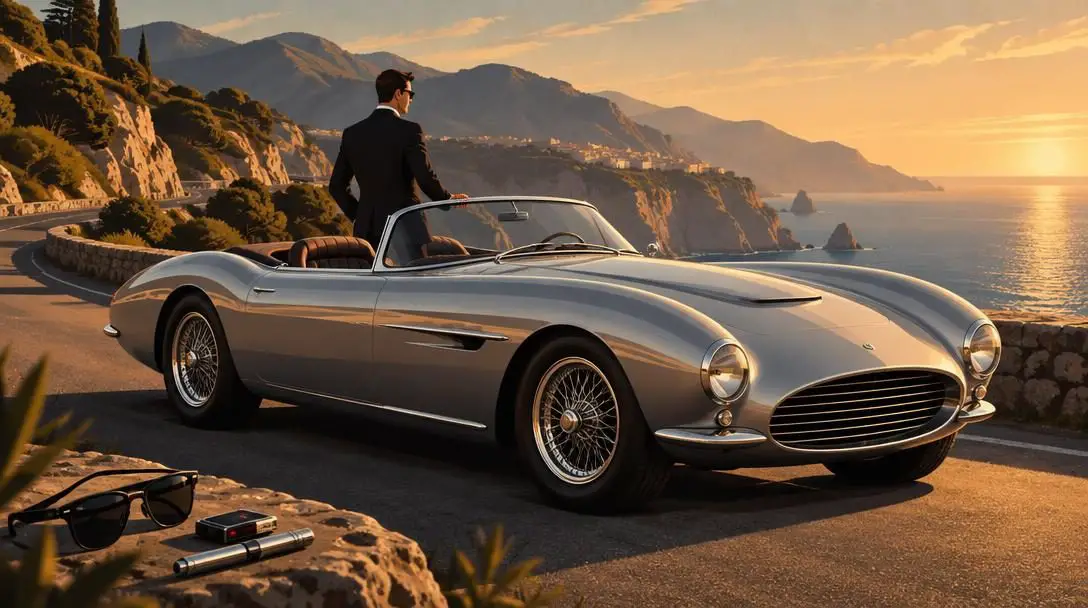
Modeled directly after the classic lines of the late-1950s BMW 507, the 2000 BMW Z8 underwent years of intensive development before its market debut in 1999. To establish global visibility for this retro-styled roadster, BMW placed a pre-production model into Pierce Brosnan’s hands for The World is Not Enough.
During the dramatic sequences set against the oil pipelines of Azerbaijan, the sleek roadster took center stage. Global audiences responded with immense praise for the vehicle's flowing bodywork, with numerous automotive critics declaring it the most visually captivating design BMW had ever produced. The movie served as the swan song for BMW's promotional contract with the James Bond franchise. Outside the 007 universe, the model appeared prominently in the Jackie Chan action-comedy The Tuxedo. For private collectors, the car remains an absolute rarity, as BMW delivered only 317 units to the United States market for the 2000 model year.
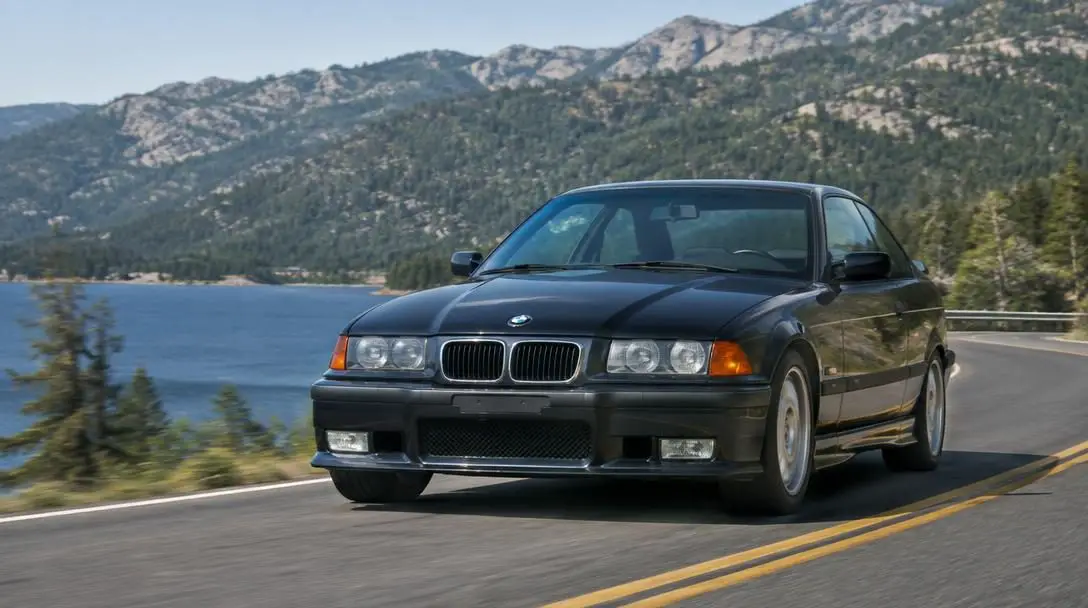
1991 BMW E34 5-Series in Ronin
- Feature film: Ronin (1998)
- Platform lifecycle: 1987 to 1996
- Stunt location: Streets of France
- Notable feature: Revised interior and steering assembly
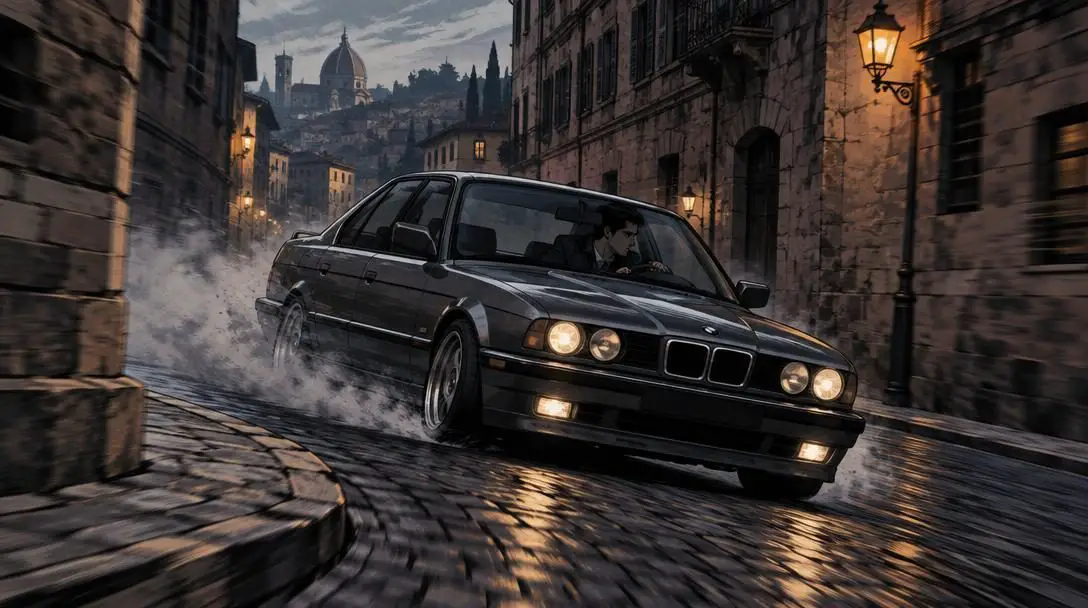
While director John Frankenheimer’s 1998 crime thriller Ronin remains an underappreciated title compared to mainstream action blockbusters, automotive enthusiasts recognize it as home to one of the most technical and authentic car chase sequences ever captured on film. At the epicenter of the French pursuit is a 1991 BMW E34 5-Series sedan.
Rather than using a showroom-fresh model, the production selected an older 1991 model year for its complex pursuit work. The E34 platform enjoyed an active assembly run from 1987 until 1996, meaning production lines had already ceased when Ronin premiered in theaters. The 1991 model retained the robust underlying architecture of early production runs while incorporating a refreshed cabin layout and an updated steering column. These incremental mechanical refinements provided the front-end predictability and high-speed stability necessary for stunt crews to weave through active Parisian traffic without digital effects.
1996 BMW Z3 in Goldeneye
- Feature film: Goldeneye (1995)
- Manufacturing milestone: First BMW built entirely outside Germany
- Development start: 1991
- Bond Edition price: $35,000 in the United States
The 1995 box-office smash Goldeneye stands as a monumental entry in film history, marking the beginning of BMW’s multi-picture arrangement with the James Bond series. The film served as the worldwide stage debut for the 1996 BMW Z3 roadster, making Pierce Brosnan the first cinematic 007 to pilot a German production vehicle as his designated service transport.
Development on the compact Z3 initiated in 1991, and the finished roadster achieved a major historical benchmark for the automaker by becoming the first BMW model assembled entirely outside Germany, rolling out of the Spartanburg, South Carolina facility. Draped in bright red, the car enjoyed brief screen time, with Bond navigating rural Caribbean roads before exchanging the two-seater for a light aircraft. While theatrical features like deployable parachute brakes and front-mounted stinger missile pods remained strictly fictional, enthusiasm was overwhelming. BMW capitalized on the film's success by releasing 100 units of the official James Bond Edition Z3 at a retail price of $35,000, each equipped with bespoke interior trim and custom 007 floor mats.
1995 BMW 735i in The Transporter
- Feature film: The Transporter (2002)
- Engine type: 3.0-liter M60 V8
- Power output: 215 horsepower
- Exterior finish: Deep black
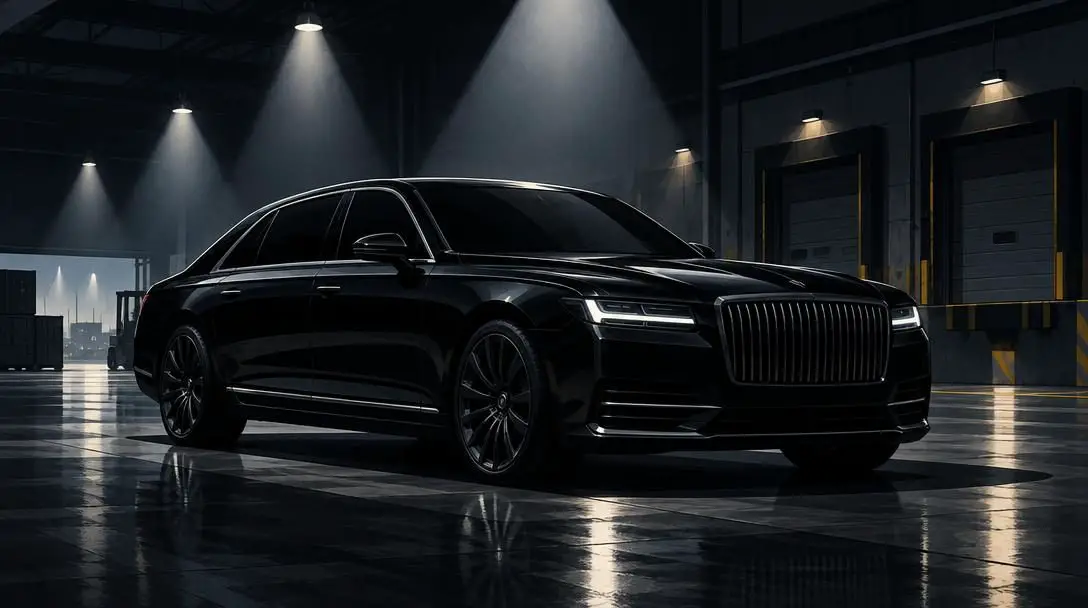
Prior to 2002, the BMW 7-Series was viewed by general audiences primarily as an understated luxury cruiser engineered for senior business executives. That perception shifted dramatically with the premiere of The Transporter, in which Jason Statham portrayed Frank Martin, a disciplined precision driver operating under strict operational rules.
Martin’s vehicle of choice was a jet-black 1995 BMW 735i. Beneath the chiseled hood sat a 3.0-liter M60 V8 producing 215 horsepower, an engine delivering the linear power band, robust torque, and high-speed balance necessary to outrun pursuit squads across southern France. Through tire-screeching escapes, precision reverse maneuvers, and high-speed highway chases, the film proved that an executive full-size sedan could move with the raw agility of a purpose-built sports car, permanently reshaping youth culture's appreciation for classic European flagships.
Understated luxury sedans transformed into fearsome pursuit weapons the moment cinema paired precision German engineering with world-class stunt driving.
1998 BMW 750iL in Tomorrow Never Dies
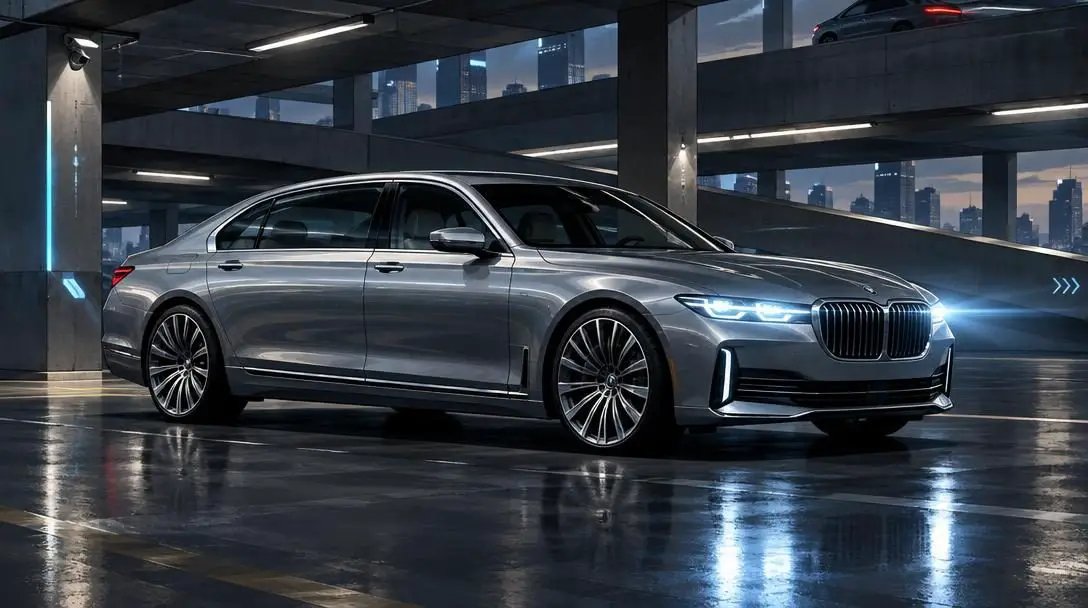
- Feature film: Tomorrow Never Dies (1997)
- Chassis platform: E38 long-wheelbase
- Generational run: 1993 through 2001
- Fictional armament: Roof rockets and tear gas emitters
The middle entry in BMW's Bond trilogy gave car enthusiasts one of the most innovative automotive set pieces in action cinema history. In 1997's Tomorrow Never Dies, Pierce Brosnan took the helm of an executive 1998 BMW 750iL to pull off a chaotic escape inside an enclosed Hamburg parking garage.
The 7-Series legacy traces back to the late 1970s, with this specific E38 long-wheelbase chassis remaining in production from 1993 until 2001. In the movie, Bond remotely controls the full-size flagship from the rear seat via a modified cellular telephone touchpad, discharging tear gas canisters and launching rooftop rockets to dispatch pursuers. For real-world drivers, the actual 1998 production model arrived with a comprehensive visual facelift, modern electronic modules, and an updated, immensely powerful engine that established the sedan as an elite transcontinental cruiser.
How movie car integrations work behind the scenes
Placing luxury vehicles on the silver screen demands intricate planning between studio production heads, automotive designers, and stunt engineers. Rather than simply handing over keys, car manufacturers and film crews follow a structured pipeline to execute cinematic pursuits.
- Commercial partnerships: Long-term commercial agreements, like the multi-picture contract established between BMW and EON Productions in the 1990s, coordinate marketing campaigns with cinema releases. In exchange for prototype access and corporate funding, production studios feature the vehicles prominently in script narratives.
- Mechanical duplication: Stunt units never depend on a single hero car. Productions typically purchase four to eight mechanically identical chassis, dedicating individual cars to specific duties such as pristine close-up photography, camera-rig dialogue runs, high-impact jumps, or destruction shots.
- Chassis reinforcement: Factory luxury vehicles must undergo serious modification to survive extreme stunts. Crews strip out heavy leather cabins, weld in multi-point safety roll cages, install aftermarket hydraulic handbrakes for precision drift sequences, and upgrade fluid radiators to withstand extreme engine temperatures.
- Practical effects integration: The mechanical gadgetry showcased on screen—such as the 750iL's roof missile launchers or the Z3's parachute dispensers—relies on specialized mechanical rigs built by practical effects crews, often augmented in post-production with pyrotechnics or digital enhancements.
A step-by-step guide to sourcing and maintaining classic screen BMWs
Enthusiasts looking to acquire, restore, or drive the classic BMW platforms made famous by Hollywood must follow a methodical inspection and acquisition process to avoid costly mechanical failures.
- Target specific factory chassis codes: Filter your online searches and classified inquiries using internal generation codes rather than basic model badges. Look for E34 to source the 1991 5-Series from Ronin, E38 for the 1990s 7-Series sedans from The Transporter and Tomorrow Never Dies, E36/7 for the Bond Z3 roadster, and E52 for the rare Z8.
- Commission a pre-purchase inspection: Vintage luxury cars feature elaborate multi-link suspensions, hydraulic brakes, and early electronic control units. Hire an independent marque specialist to put the car on a lift, scan factory computer codes, and check for hidden subframe stress or body corrosion.
- Rebuild the composite cooling system: BMW engines from the 1990s make extensive use of composite plastic components in their cooling circuits. Proactively replace the radiator assembly, expansion tank, thermostat housing, and water pump to safeguard against catastrophic engine overheating.
- Evaluate multi-link suspension bushings: The agile, flat cornering seen in classic cinema pursuits relies on tight suspension tolerances. Inspect front thrust arm bushings, control arms, and rear trailing links for cracking, dry rot, or excess play, replacing tired rubber with fresh OEM bushings.
- Preserve rare interior appointments: Dedicated releases like the James Bond Edition Z3 feature scarce trim parts, custom floor mats, and special badges. Verify that these model-specific parts are present and undamaged, as finding replacement cosmetic hardware for discontinued limited editions can take years.
Costly ownership mistakes to avoid
Caring for an older German performance car requires realistic planning and proper operational discipline. Buyers frequently run into trouble by making several common mistakes:
- Underfunding future maintenance: Flagship sedans like the E38 7-Series may carry accessible purchase prices today, but replacement parts retain the cost structure of a six-figure luxury cruiser. Buyers who spend their entire budget on acquisition often end up parking the vehicle when expensive maintenance arrives.
- Using non-specification fluids: Complex automatic transmissions, power steering racks, and variable valve timing systems require fluids that meet exact factory chemical specifications. Utilizing generic, multi-vehicle oils or power steering fluids can damage internal seals and cause premature mechanical failure.
- Attempting stunt driving on factory components: Cinema stunts depend on structural gusseting, reinforced subframes, and upgraded differentials. Attempting aggressive handbrake turns or curb transitions on an unmodified street car will quickly shear control arms and damage transmission mounts.
- Devaluing rare platforms with aftermarket parts: Extremely limited production vehicles, such as the 100 units of the 007 Edition Z3 or the rare Z8 roadster, derive the bulk of their market value from factory originality. Cutting interior wiring for modern stereo systems or installing aftermarket body kits destroys their historical provenance and collector appeal.
Frequently asked questions
Which movie marked James Bond's first time driving a BMW?
Pierce Brosnan drove a 1996 BMW Z3 roadster in the 1995 film Goldeneye, marking the very first time secret agent 007 was assigned a German production automobile on the silver screen.
What engine powered the BMW 735i in The Transporter?
The 1995 BMW 735i featured in The Transporter was equipped with a 3.0-liter M60 V8 engine that produced 215 horsepower, offering an ideal mix of torque, smoothness, and high-speed balance.
Why did the film Ronin use an older 1991 BMW 5-Series instead of a new one?
Although Ronin debuted in 1998, stunt crews selected a 1991 E34 generation sedan because of its mechanical simplicity, exceptional steering feedback, and predictable chassis dynamics during violent urban car chases.
How many 2000 model year BMW Z8 roadsters were sold in the United States?
The 2000 BMW Z8 was an exceptionally rare production vehicle, with only 317 units delivered to customers across the United States during its initial 2000 model year release.
Can civilian drivers purchase the gadgets shown on Bond's 1998 750iL?
No, the rooftop rocket batteries, tear gas emitters, and cellular remote-control steering seen in Tomorrow Never Dies were fictional special effects built specifically for the movie, though the underlying vehicle was an updated production E38 sedan.
The bottom line
From the high-tech espionage escapades of Pierce Brosnan’s James Bond to the gritty, asphalt-tearing pursuits of Ronin and The Transporter, BMW’s cinematic appearances have helped shape contemporary action cinema. These five vehicles succeeded because they were not merely visual props; their balance of chassis dynamics, powertrain performance, and distinct styling made them integral characters in automotive history. For modern enthusiasts and collectors, maintaining or owning these classic machines offers a direct, tangible connection to the golden age of practical stunt filmmaking.