5 Common Mistakes To Avoid While Mountain Biking
Every athletic pursuit comes with a natural learning curve, but few sports expose mechanical and technical missteps as quickly as mountain biking. In the United States alone, approximately 40 million people take to off-road trails each year. Many of these riders transition directly from casual road cycling or suburban commuting, expecting their pavement-honed habits to translate seamlessly onto dirt singletrack. They quickly discover that off-road cycling operates under fundamentally different rules of physics, balance, and mechanical upkeep.
Paved roads present uniform, predictable surfaces where physical strain is steady and mechanical consequences are relatively mild. Dynamic off-road trails, by contrast, are packed with loose gravel, deep mud, exposed roots, natural debris, and abrupt elevation shifts. Successfully navigating this unpredictable environment requires treating the bicycle and the rider as an integrated, shock-absorbing system. By recognizing the most common mistakes beginners make—from neglected drivetrains to flawed body positioning—riders can prevent costly mechanical failures, avoid severe crashes, and build lasting confidence on the trail.
Key takeaways
- Thorough post-ride cleaning protects expensive drivetrains and pedal bearings from premature wear caused by grit and mud.
- Resting the balls of your feet slightly forward of the pedal axles and coasting with level pedals prevents slips and dangerous rock strikes.
- Off-road handling requires standing out of the saddle with bent limbs to absorb terrain shocks and shift weight appropriately on climbs and descents.
- Focusing your eyes roughly 15 feet down the trail provides the essential reaction time needed to spot obstacles and manage cornering speeds.
- Riding unprepared without dedicated protective gear, adequate hydration, and nutrition turns minor trail setbacks into serious safety hazards.
Trail Dynamics: Mechanics, Movement, and Focus
To understand why seemingly minor errors cause severe handling issues and rapid component failure, it helps to examine how the rider, the bicycle, and the terrain interact. A mountain bike relies on an exposed mechanical system—primarily the chain, cassette cogs, derailleur pulleys, and pedal bearings—to convert human pedaling energy into forward momentum. On paved roads, these components remain relatively clean. On off-road trails, high torque drives trail grit, wet soil, and fine silt directly into component pivots and gear interfaces.
When abrasive particles infiltrate these tight tolerances, friction spikes immediately. Trapped grit binds gear cables, causes sluggish shifting across the cassette, and accelerates chain stretch. Over time, riding with a contaminated drivetrain grinds away gear teeth under pedaling load, resulting in expensive replacement bills. Keeping this mechanical system pristine is just as critical to performance as fine-tuning your cardiovascular endurance.
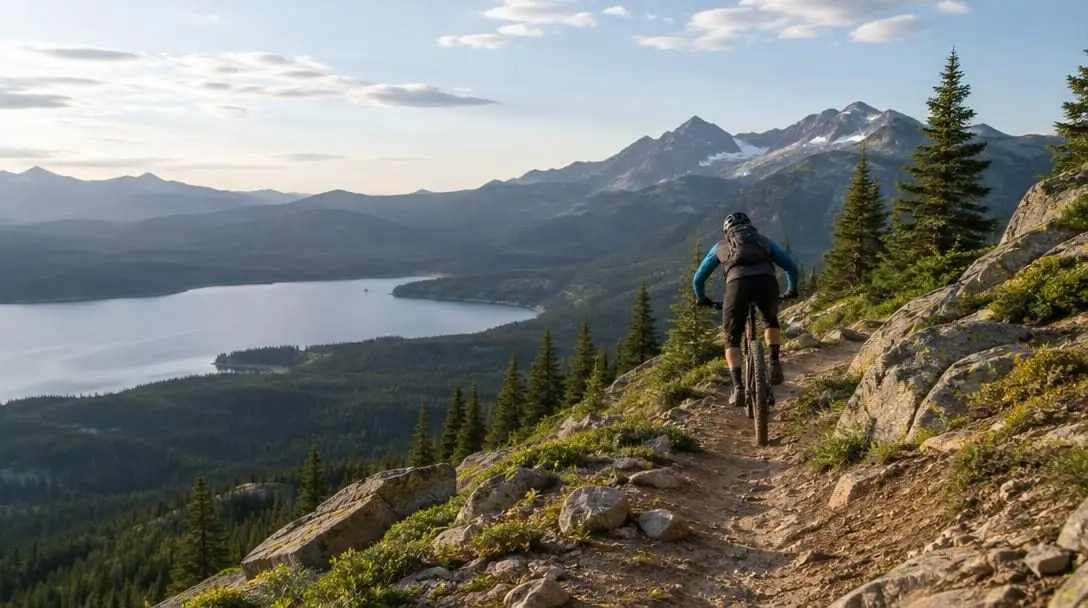
Simultaneously, the rider serves as the primary balancing and dampening mechanism for the entire machine. While road cycling permits a seated, static posture, mountain biking demands continuous physical engagement across three primary contact points: hands on the grips, feet on the pedals, and hips floating above the saddle. Through these contact points, the rider constantly moderates center of mass to counteract trail irregularities.
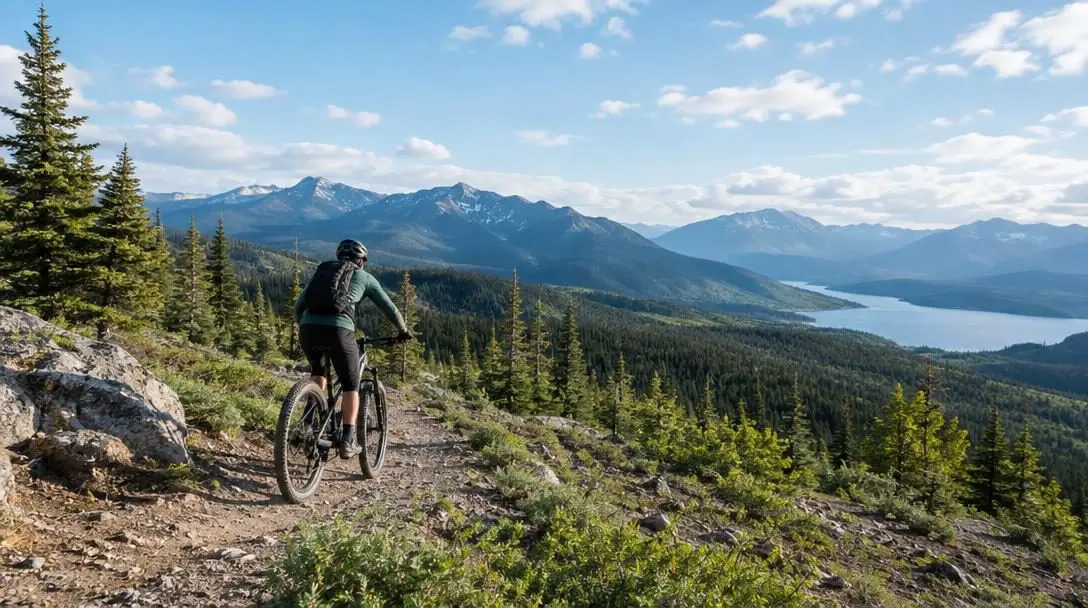
Off-road riding demands active engagement, turning the rider's arms and legs into dynamic shock absorbers that keep the bike balanced over rough ground.
Finally, visual perception and cognitive processing govern trail speed. A mountain bike travels far faster over rugged terrain than a hiker can walk, giving the brain less time to interpret changing surfaces. If a rider tracks only the patch of soil directly beneath their front tire, they surrender their reaction window. Proactive visual scanning allows the rider to calculate gradient changes, anticipate loose dirt, moderate braking pressure, and guide the wheels cleanly through complex rock gardens.
Five Common Trail Mistakes and How to Correct Them
Beginners and transitioning commuters frequently fall into five predictable traps that undermine bike longevity and rider safety. Correcting these habits early builds a foundation for lifelong trail enjoyment.
Inadequate Post-Ride Cleaning
Ripping through sloppy, mud-splattered trails delivers some of the best thrills in mountain biking, but the physical fatigue that follows often leads riders to neglect bike hygiene. A widespread mistake is giving the frame a quick, superficial rinse with a garden hose to make the paint look presentable, while ignoring the intricate drivetrain components beneath.
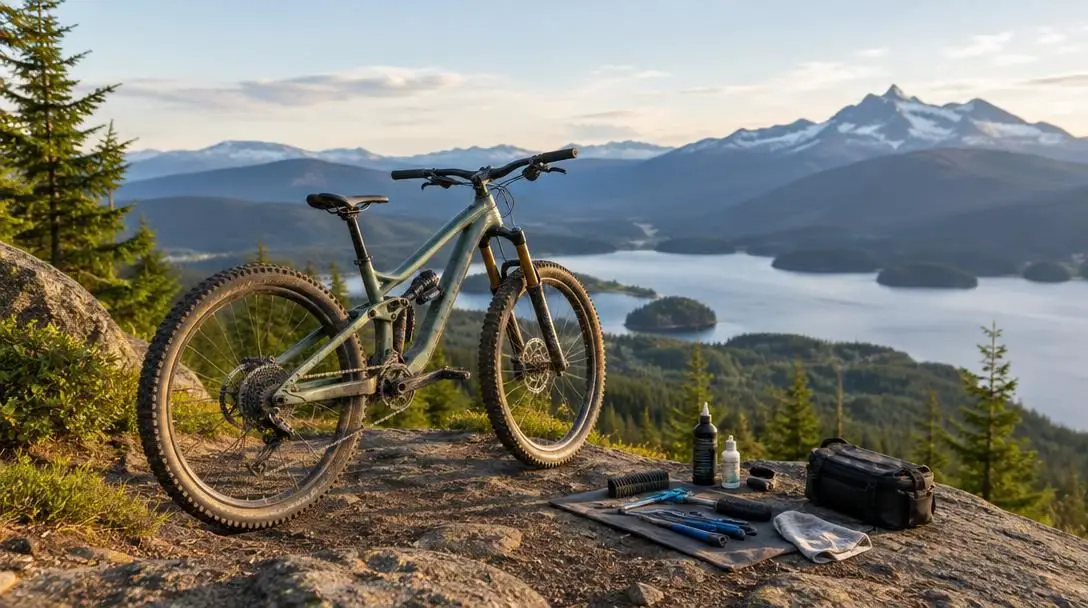
Thick mud and abrasive grit stay trapped in chain links, derailleur pulleys, gear teeth, and pedal bearings. When allowed to dry, this mineral residue hardens into a destructive paste that grinds down metal surfaces every time the crank rotates. Superficial cleaning also fails to remove moisture trapped beneath grit layers, promoting corrosion on internal bearing surfaces. Preventing premature wear requires a targeted post-ride deep clean: apply concentrated cleaning spray directly to the grimiest areas, scrub out heavy accumulations with dedicated bike-cleaning brushes, and ensure the entire drivetrain is completely cleared of grit before drying.
Incorrect Foot Placement and Overpedaling
Pedaling through rocks, roots, and off-camber dirt requires completely different footwork than spinning along flat asphalt. Newcomers routinely struggle with two major pedal errors: positioning the foot incorrectly on the platform and pedaling continuously through rough terrain.
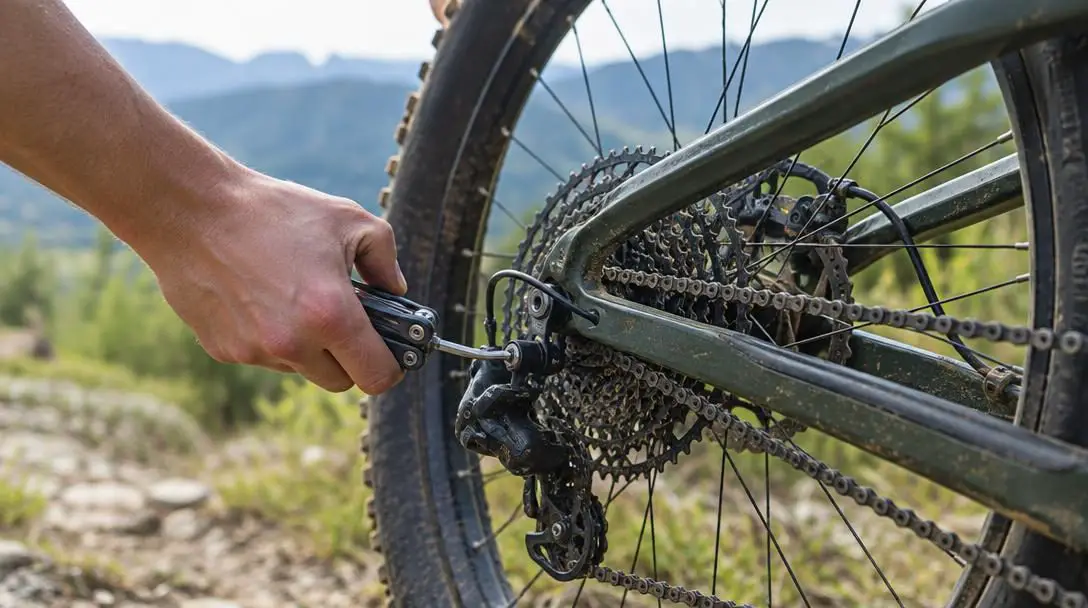
Many beginners rest only their toes on the pedal, assuming this offers greater reach or ankle flexibility. In reality, toe-heavy placement leaves the foot vulnerable to bouncing off the platform when hitting roots or drop-offs. Secure foot placement requires the ball of the foot to rest slightly in front of the pedal axle, creating maximum surface contact, optimal calf leverage, and stable traction with the pedal pins.
The second error—overpedaling—happens when riders treat the trail like an exercise bike, pedaling nonstop regardless of ground clearance. When you pedal through uneven surfaces, the downward pedal drops toward the dirt. Striking an elevated rock or root with a downward-pointing pedal can instantly halt forward momentum, often pitching the rider over the handlebars in a violent crash. Riders must learn to coast through rocky, irregular sections with their pedals flat and level, parallel to the ground.
Improper Body Positioning and Stiff Limbs
Riders accustomed to smooth road cycling often treat the mountain bike saddle like an armchair, staying seated through technical trail sections. Mountain biking is not a seated cruise. When your full body weight rests on the saddle across rough terrain, every impact from the rear wheel transmits directly into your spine, throwing your center of gravity off-balance and destabilizing the bicycle.
Locking arms and legs straight is equally problematic. Stiff limbs transfer impacts directly into the chassis rather than damping them. Trail riding demands an athletic, dynamic stance: stand slightly out of the saddle with bent elbows and knees, allowing your body to float independently of the bike frame.
Dynamic positioning also requires continuous weight shifts based on the slope. When ascending steep grades, lean your torso forward toward the handlebars to keep the front tire firmly planted for steering traction while maintaining enough rear-wheel pressure to prevent tire spin. When descending steep drops, shift your hips rearward behind the saddle to counter braking pitch and prevent the bike from flipping forward under heavy front-brake application.
Watching the Front Wheel Instead of the Trail
Visual tracking must always scale with your velocity. A pedestrian walking at three miles per hour can safely glance three feet ahead to avoid a crack in the pavement. A cyclist moving at 15 miles per hour across dynamic dirt cannot afford that narrow visual focus. Dropping your eyes directly down to the front tire creates an immediate blind spot.
Beginners often stare straight down at their front wheel out of fear, tracking the exact rock the tire is rolling over in that split second. Unfortunately, whatever is beneath your tire has already been encountered; there is nothing you can do to change how the tire hits it. Staring at the front wheel leaves you blind to approaching obstacles, tight switchbacks, and sudden drop-offs.
Riders must deliberately lift their chin and focus roughly 15 feet down the trail. Looking forward provides the reaction window necessary to process upcoming obstacles, gauge appropriate cornering speeds, select smooth lines through rock gardens, and smoothly adjust body weight well before reaching technical features.
Overlooking Essential Gear and Supplies
A surprising number of beginner mountain bikers venture onto trail networks equipped with nothing more than the bicycle itself. Mountain biking requires sustained aerobic exertion, core stabilization, and frequent bursts of high anaerobic power. Riding without adequate hydration and nutrient-dense food quickly leads to dehydration, muscle cramping, brain fog, and severe physical exhaustion miles away from the trailhead.
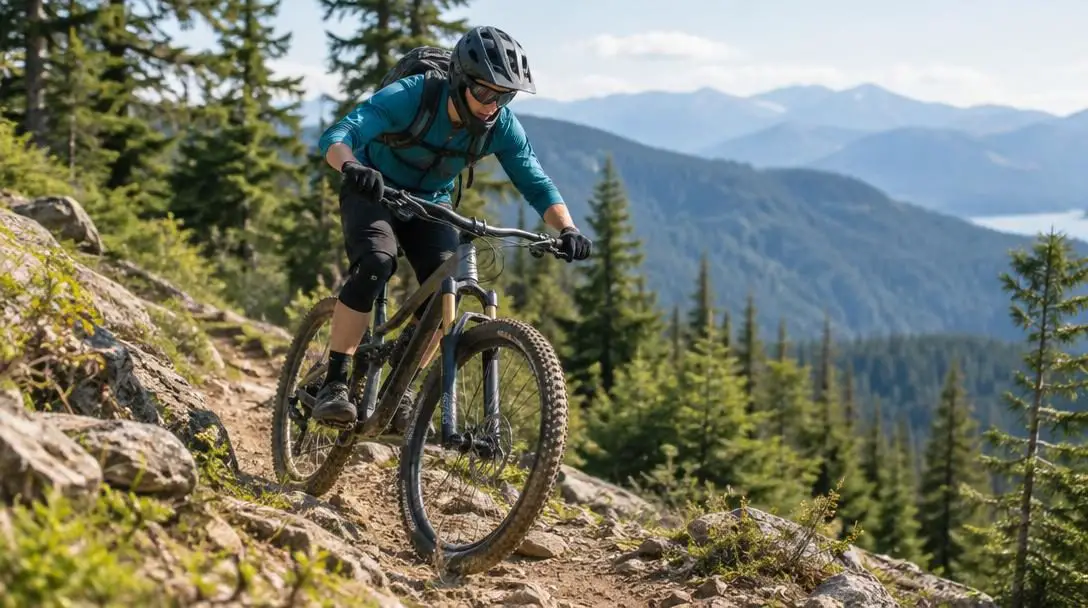
Protective equipment is equally critical. Off-road riding introduces hazards not found on pavement, including loose rock spray, low-hanging tree branches, and abrupt falls onto hard terrain. Riding without essential protection dramatically increases the likelihood of serious injury.
At minimum, riders must wear a properly fitted, certified helmet on every ride. Essential trail kit also includes flat-pedal riding shoes with stiff, grippy soles that mate securely with pedal pins, durable trail socks to guard against brush, padded cycling gloves to improve grip and protect hands in a fall, and impact-resistant protective eyewear to shield against flying debris, mud splatter, and encroaching tree limbs.
Trail Mistakes and Corrective Actions at a Glance
Correcting fundamental riding habits requires understanding both the risk of each mistake and the mechanical adjustment needed to fix it. The table below outlines the five primary trail mistakes, their consequences, and their direct solutions.
| Mistake | Mechanical or Safety Risk | Corrective Technique |
|---|---|---|
| Superficial Cleaning | Abrasive wear on chains, cogs, pulleys, and bearings | Targeted deep clean using concentrated spray on drivetrain nooks |
| Pedal Errors | Slipped feet and catastrophic pedal strikes on rocks | Ball of foot over axle; coast with pedals level over rough ground |
| Seated, Stiff Posture | Loss of balance, jarring impacts, and lack of traction | Stand with bent limbs; shift weight forward on climbs and rearward on descents |
| Staring at Front Tire | Blown corners, late braking, and unseen obstacles | Maintain forward vision focused roughly 15 feet down the trail |
| Inadequate Gear | Dehydration, fatigue, eye injuries, and crash trauma | Carry water and food; wear helmet, gloves, eye protection, and trail shoes |
Structured Steps for a Smooth Trail Ride
Building a consistent routine before, during, and after your ride eliminates guesswork and preserves your equipment. Follow this step-by-step checklist to ensure you stay safe, maintain momentum, and protect your bike from premature wear.
- Pack essential supplies: Fill your water bottles or hydration pack with clean drinking water, pack energy-dense trail snacks, and suit up in a certified helmet, protective eyewear, padded gloves, trail socks, and stiff riding shoes.
- Perform a pre-ride mechanical inspection: Check your drivetrain and pedals to ensure the chain runs smoothly, the crank spins freely without play, and critical components are free of leftover grit from previous rides.
- Establish correct foot placement: Mount the bike and set the balls of your feet slightly forward of the pedal axles, allowing the pedal pins to lock firmly into the rubber treads of your shoes.
- Adopt an athletic ready stance: Lift yourself slightly off the saddle with relaxed, bent elbows and flexible knees, preparing your limbs to act as natural suspension across trail chatter.
- Elevate your trail vision: Keep your head up and focus your vision approximately 15 feet ahead, continuously scanning for approaching obstacles, turns, and elevation changes.
- Level your pedals through rough terrain: Stop pedaling and coast with your crank arms horizontal to the ground whenever crossing rocks, roots, or trail humps to avoid pedal strikes.
- Shift body weight dynamically: Lower your chest toward the handlebars to keep front-wheel grip when climbing steep ascents, and shift your hips back behind the saddle when braking on steep descents.
- Deep clean the drivetrain post-ride: Wash away accumulated mud immediately after your ride using a concentrated cleaning spray on the chain, cassette cogs, derailleur pulleys, and pedal bearings before allowing the machine to dry.
Refining Skills for Intermediate Progression
Once you master basic body positioning, pedaling habits, and post-ride cleaning routines, you can begin optimizing mechanical settings on the bike. As riders graduate to steeper and rockier intermediate trails, proper equipment tuning becomes increasingly influential in bike control.
Tire pressure is one of the easiest and most impactful adjustments you can make. Running the proper air pressure in off-road tires maximizes mechanical traction and minimizes rolling resistance. When tires are inflated correctly for rider weight and trail conditions, the rubber casing deforms slightly over trail chatter, conforming to roots and rocks to boost cornering grip while dampening harsh vibrations.
Suspension tuning is equally important on modern mountain bikes. Setting the correct air pressure in your front suspension fork and rear shock ensures the bike sags appropriately under your body weight. Properly tuned suspension soaks up hard, square-edged impacts without bottoming out violently, while staying firm enough in mid-stroke travel to prevent wallowing and wasted pedaling energy. Combining proper suspension sag with solid riding technique ensures a smooth, confident progression onto more demanding singletrack.
Frequently asked questions
Where should my foot sit on a flat mountain bike pedal?
Your foot should rest with the ball of the foot placed slightly in front of the pedal axle. Pedaling with only your toes leads to slipped pedals and loss of balance, while positioning the axle under the ball of the foot maximizes grip, leverage, and pedaling stability over rough ground.
Why shouldn't I pedal constantly while riding off-road?
Continuous pedaling over uneven trails frequently causes pedal strikes, where a downward-pointing pedal collides with a rock or dirt mound. This impact can abruptly throw the rider over the handlebars. Coasting with pedals level and parallel to the ground keeps components clear of trail obstacles while preserving momentum.
How far ahead on the trail should I look?
You should focus your eyes roughly 15 feet down the trail. Staring directly down at your front tire deprives your brain of the reaction time needed to brake smoothly, pick clean lines, and navigate obstacles or tight corners at trail speeds.
Is a quick spray with a garden hose enough to clean a mountain bike?
No. A light surface spray leaves thick mud and grit trapped inside the chain links, derailleur pulleys, gear teeth, and pedal bearings. A proper clean requires concentrated spray and dedicated bike cleaners focused on the nooks and crannies of the drivetrain to prevent accelerated wear.
Why do beginners need to stay off the saddle on rough sections?
Staying seated transmits every bump and vibration directly into your spine, disrupting balance and destabilizing the bicycle. Standing with bent elbows and knees turns your limbs into natural shock absorbers, allowing you to shift weight dynamically for balance and traction.
The bottom line
Mountain biking is an exhilarating, highly rewarding outdoor activity, but off-road singletrack demands deliberate preparation, dynamic body movement, and disciplined equipment care. Carrying commuter cycling habits onto the trail—such as sitting continuously in the saddle, pedaling through every turn of the wheels, and staring at the ground directly beneath the front tire—leads to mechanical breakdowns and frustrating crashes. By mastering foundational foot placement, maintaining an athletic standing stance, looking 15 feet ahead, packing essential hydration and protective gear, and thoroughly cleaning your drivetrain after muddy rides, you protect your investment and conquer challenging trails with lasting confidence.