5 Essential Maintenance Tips For Your Mountain Bike
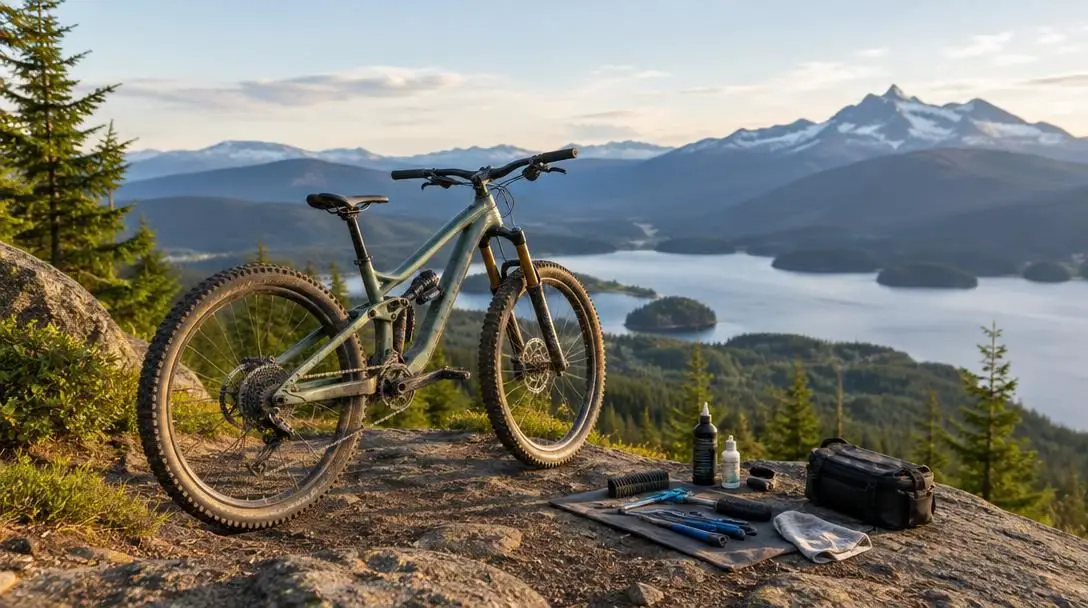
Mountain biking stands out as one of the most exhilarating and rewarding outdoor pursuits you can experience. However, navigating rough trails, navigating deep mud, powering over jagged rock gardens, and tackling steep descents places massive structural demands on your equipment. Unlike casual pavement cruising, off-road riding subjects every single bicycle component to relentless vibration, grit, moisture, and high-impact forces.
To keep your rides smooth, enjoyable, and safe, you must approach your bicycle with the same preventative mindset you would show toward a car. Neglect quickly degrades performance, causes expensive components to wear out before their time, and invites sudden mechanical failures in the middle of a backcountry ride. By mastering a few core maintenance disciplines, you ensure your bike handles predictably on technical terrain and keeps you rolling without unexpected breakdowns.
Key takeaways
- Thorough cleaning prevents abrasive grit from grinding through moving parts and causing catastrophic chain snaps.
- Tire pressure checks, rim inspections, and tread monitoring are essential before rolling out on any trail.
- Spongy hydraulic brakes demand immediate attention, pad inspections, and regular fluid bleeds.
- Bicycle chains stretch over time and generally need replacement between 1,500 and 2,500 miles.
- Suspension systems operate under extreme loads and typically require professional servicing every 30 riding hours.
Understanding the mechanical demands of the trail
A modern mountain bike is a collection of interconnected mechanical and hydraulic assemblies engineered to absorb heavy impacts while maintaining traction. Unlike a road bike that hums along predictable asphalt, a trail bike continuously flexes and absorbs forces across varied terrain. When one system degrades or falls out of alignment, it inevitably places compounding stress on neighboring components.
To keep the machine operating reliably, riders should understand how its core systems interact during a ride:
- The drivetrain: Composed of the chain, chainrings, cassette, and derailleurs, this system transfers pedaling power into forward motion. Because it operates completely exposed to dirt, grit mixes with wet lubricant to create an abrasive grinding paste that rapidly eats away metal teeth.
- The wheel and tire assembly: Tires represent the sole contact patch between the bicycle and the ground, absorbing micro-bumps and generating cornering grip. The rims provide structural support and create an airtight seal for modern tubeless and tubed tire setups.
- The braking system: Modern trail bikes rely on hydraulic disc brakes. Pulling the brake lever forces hydraulic fluid through a sealed hose, driving pistons into brake pads that clamp down hard on a steel rotor.
- The suspension system: Front suspension forks and rear shocks absorb large trail impacts to keep the tires planted. Internally, these systems depend on carefully metered oil damping, precision seals, and pressurized air chambers or coil springs.
Think of your mountain bike the same way you think about your car: regular preventative maintenance is necessary to ensure safety and peak performance.
| Component Focus | Check Frequency | Key Service Trigger | Primary Risk of Neglect |
|---|---|---|---|
| Cleaning & Frame | After every dirty ride | Grime buildup or packed mud | Accelerated component wear and chain snapping |
| Tires & Rims | Before every ride | Tearing cornering knobs or rim dents | Traction loss, punctures, and bead failure |
| Hydraulic Brakes | Pre-ride check / Bleed every few months | Worn pad backing or spongy lever feel | Brake fade, rotor scoring, and loss of control |
| Drivetrain Chain | Periodic wear checks | 1,500 to 2,500 miles or poor shifting | Chain breakage, ruined cassettes, and skipping gears |
| Suspension Fork & Shock | Pre-ride check / Post-ride wipe | 30 riding hours or jerky travel | Blown seals, damaged stanchions, and harsh handling |
Five essential mountain bike maintenance routines
Maintaining a trail-ready bicycle does not require professional race-mechanic credentials, but it does demand consistency. Focusing your attention on five critical zones keeps the entire machine operating safely and efficiently.
1. Keep it clean: protecting moving parts from grit
One of the most widespread mistakes made by riders is skipping bicycle washes. Many assume that because the bike is destined to get muddy on the very next ride, cleaning it is an exercise in futility. Some compare it to making a bed each morning. However, an unmade bed still functions perfectly, whereas an unwashed mountain bike rapidly degrades. Packed dirt acts like sandpaper against moving parts, chewing through pivot bearings and grinding down delicate gear profiles.
The drivetrain suffers the most from built-up trail grime. When grit and mud pack tightly into chain link rollers, the chain loses its lateral flexibility, binds up, and can snap violently under heavy pedaling pressure. Washing your bicycle thoroughly after every wet or muddy outing prevents this damage and gives you a chance to inspect the frame for structural issues.
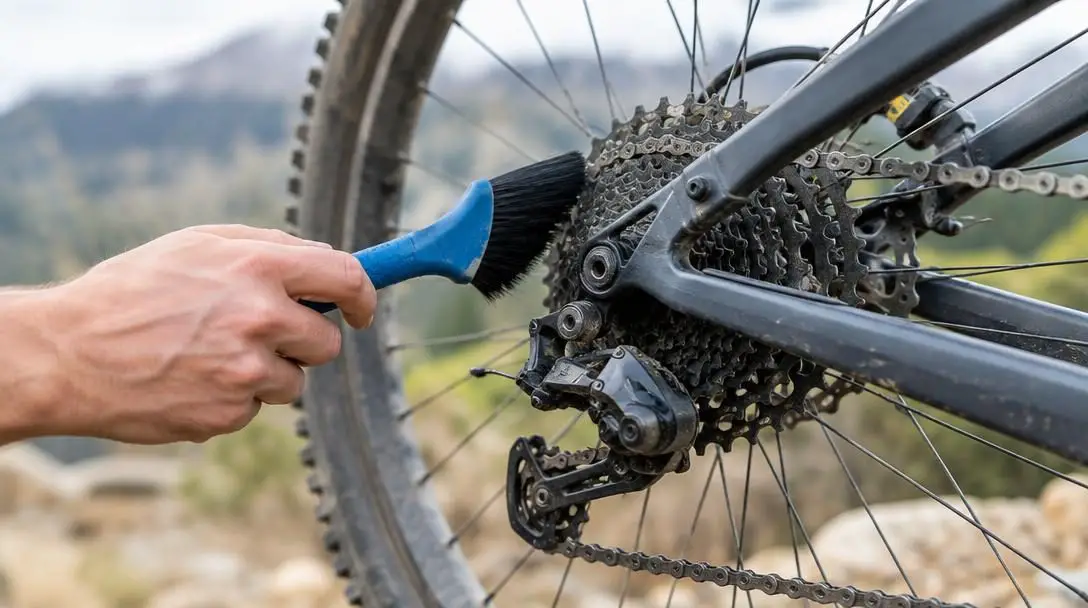
- Rinse the frame and wheels using a gentle spray or bucket of water, avoiding high-pressure streams aimed directly at bearings.
- Apply a bike-safe cleaner and use soft-bristled brushes to dislodge packed dirt from the frame, suspension linkages, and fork arches.
- Scrub the chain, cassette cogs, and derailleur pulleys with a dedicated drivetrain brush and degreaser.
- Rinse away all residual soap and dry the frame, stanchions, and drivetrain components thoroughly with clean microfiber towels.
- Apply dedicated chain lubricant evenly to the chain rollers, let it penetrate, and wipe the exterior links completely dry.
2. Don't get tired: monitoring air pressure, tread, and rims
Your tires are the foundation of your bike's handling and traction. Riding with improper air pressure compromises cornering stability, increases the risk of punctures, and can damage your wheels. While lower pressures offer superior grip on loose surfaces, running tires too soft allows the rim to slam into rocks and roots, causing severe dents and pinch flats.
Because aggressive trail riding exerts heavy lateral loads, tire rubber wears down much faster than standard automotive tires. Over several months of riding, the cornering knobs on the tire shoulders begin to crack, tear at the base, or round off entirely. When these side knobs degrade, the bike can wash out without warning during aggressive leaning maneuvers. In addition, small dings and dents along the rim edges can break the bead seal, leading to slow air leaks.
- Attach a reliable pressure gauge before every outing and adjust the pressure to match trail conditions and terrain.
- Scan the tire tread and sidewalls for deep cuts, punctures, or embedded trail debris like thorns and glass.
- Inspect the shoulder knobs for tearing or severe rounding that signals it is time for a fresh tire.
- Spin each wheel slowly to examine the rim bead for flat spots, dings, or structural cracks.
3. Take a brake: inspecting pads and bleeding hydraulic lines
High speeds and steep trail descents require absolute confidence in your stopping power. Mountain bike disc brakes operate in harsh environments filled with heat, dust, and slurry. Consequently, brake pads can wear down in just a few weeks of heavy, aggressive riding in steep or wet terrain.
Before every ride, pull both brake levers firmly while standing beside the bicycle. The levers should feel crisp and cinch hard well before touching the handlebar grip. If the lever feels spongy, soft, or pulls straight to the bar, air has likely entered the hydraulic fluid, requiring a thorough bleed. Riding with depleted brake pads is equally dangerous; once the friction material wears away, the metal backing plate grinds into the brake rotor, ruining the rotor and eliminating your stopping ability.
- Squeeze the brake levers to confirm quick bite engagement and solid mechanical resistance.
- Look inside the caliper opening to verify that sufficient friction material remains on the brake pad backing plates.
- Inspect the brake rotors for deep scoring, discoloration, or wobble as the wheel rotates.
- Flush out old fluid and trapped air bubbles by performing a complete hydraulic bleed every few months.
4. Don't break the chain: managing chain stretch and drivetrain wear
Your chain endures tremendous tension every time you mash the pedals up a steep climb. Over time, the internal pins and bushings wear away, causing the chain to elongate—a phenomenon commonly referred to as chain stretch. As a chain stretches beyond its design parameters, it no longer meshes cleanly with the teeth on your cassette and chainrings.
A worn-out chain manifests as hesitant gear shifting, gear skipping under heavy loads, and noticeable chain slap or drivetrain bounce on rough descents. If ignored, an elongated chain quickly grinds down the cassette teeth to match its distorted spacing, forcing you to replace the entire drivetrain rather than just the chain. Depending on terrain, riding style, and cleaning frequency, a mountain bike chain generally lasts between 1,500 and 2,500 miles.
- Check chain elongation periodically using a specialized chain wear indicator tool.
- Evaluate shifting precision across the entire cassette, noting any gear skipping or hesitations.
- Listen for abnormal chain clatter and excessive slapping when descending over rough trail sections.
- Replace the chain as soon as it reaches its wear limit, ideally within the 1,500 to 2,500-mile window.
5. Suspension care: servicing dampers and preserving stanchions
Modern air and coil suspension forks and rear shocks are precision components that smooth out high-velocity impacts. Every time you stand, sit, drop off ledges, or brake, the suspension cycles through its travel under heavy loads. Because these components rely on internal oil damping, high-pressure air seals, and smooth sliding surfaces, neglect leads directly to harsh handling and costly damage.
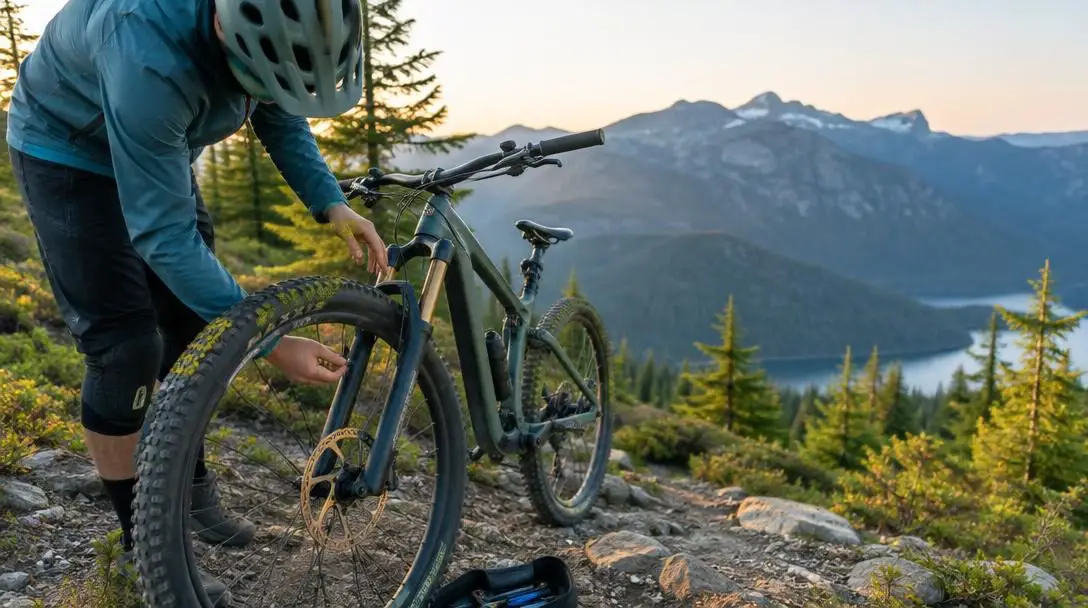
Suspension systems typically require internal servicing every 30 riding hours. This maintenance involves replacing internal lubrication oils, cleaning out contaminated grease, and installing fresh dust wiper seals. Because disassembling damper cartridges and managing pressurized internals requires specialized tools and fluids, this milestone is best handled by a professional bike shop. At home, riders should inspect stanchion tubes for scratches and ensure the suspension moves through its stroke without sticking or jerky resistance.
- Push down firmly on the handlebars and saddle before riding to ensure the fork and shock compress and rebound smoothly.
- Wipe off all trail dust, mud, and dried oil from the upper stanchions and rubber dust seals after every ride.
- Check the stanchion surfaces closely for nicks, scratches, or scoring that could tear internal seals.
- Log your saddle hours and bring the suspension to a professional bike shop every 30 riding hours for a complete fluid and seal service.
Critical mistakes that shorten your bike's lifespan
Even well-intentioned maintenance can cause significant damage if carried out with improper techniques. Mountain bikes feature precision-machined alloy parts, delicate seals, and sensitive hydraulic systems that require gentle, methodical care. Avoid these common maintenance errors:
- Blasting parts with high-pressure washers: Directing a high-pressure hose at wheel hubs, bottom brackets, suspension seals, or headset bearings drives water and grit past protective rubber seals, washing away essential grease and rusting bearings.
- Riding with spongy brake levers: Pushing through a ride with spongy brakes invites catastrophic brake fade on steep descents. Soft levers signal air trapped in the lines, which expands as the brakes heat up.
- Over-inflating tires: Pumping tires up to maximum pressure to prevent flats severely degrades traction. Over-inflated tires bounce off obstacles rather than conforming to them, causing harsh vibration and skidding.
- Letting chains stretch past tolerance: Delaying a chain replacement until the links snap or constantly jump cogs causes premature wear on expensive cassettes and chainrings.
- Attempting damper rebuilds without proper tools: Suspension dampers contain pressurized oil, shims, and high-pressure nitrogen or air chambers. Opening them without appropriate tools and technical knowledge risks permanent equipment damage and personal injury.
Establishing a proactive home workshop routine
Keeping up with these five areas is far easier when you establish a dedicated maintenance space and log your time in the saddle. A modest home workspace equipped with a few bike-specific tools will pay for itself many times over in saved repair costs and extended component life.
Consider outfitting your garage or workspace with these essentials:
- A sturdy two-arm bicycle repair stand that elevates the bike to eye level for easy wheel spinning and gear tuning.
- A high-quality floor pump featuring an accurate, easy-to-read pressure gauge suited for low-pressure off-road tires.
- A set of metric hex wrenches (2mm through 8mm) and Torx keys (especially T25 for brake rotors).
- A precision torque wrench to ensure delicate stem, handlebar, and seatpost bolts are never over-tightened.
- A chain wear indicator tool to eliminate guesswork around chain stretch and drivetrain longevity.
Additionally, modern cycling computers and mobile tracking applications make it simple to monitor cumulative saddle time and mileage. By logging each ride, you can anticipate your 30-hour suspension service intervals and 1,500 to 2,500-mile chain replacements well before poor performance or unexpected trail failures take place.
Frequently asked questions
How often should I wash my mountain bike?
You should wash your bike after every wet, muddy, or gritty ride. Leaving mud and grit on the frame and drivetrain allows debris to dry into moving parts, creating an abrasive paste that rapidly wears down bearings, chains, and suspension seals. If you ride in dry, dusty conditions, a quick wipe-down of the stanchions and drivetrain is sufficient, followed by a deeper clean every few weeks.
Why shouldn't I use a pressure washer on my bicycle?
High-pressure water easily forces its way past the delicate rubber seals protecting wheel bearings, headset assemblies, bottom brackets, and suspension internals. Once water enters these sealed chambers, it emulsifies the lubricating grease, causes rapid corrosion, and traps abrasive dirt inside the bearings.
How can I tell if my brake pads need replacement?
Inspect the caliper opening from above or remove the wheel to look at the brake pads directly. If the friction material has worn down close to the metal backing plate, the pads must be replaced immediately. If you hear harsh metal-on-metal grinding when braking, the friction material is completely gone and the backing plate is damaging the rotor.
Why does suspension require service after just 30 riding hours?
Mountain bike suspension components operate under intense friction, pressure, and heat while moving rapidly over rough terrain. The small volume of lubricating oil inside the lower legs degrades quickly and collects fine trail dust pulled past the wiper seals. Servicing the fork and shock every 30 hours ensures fresh oil keeps the internal bushings lubricated and prevents expensive stanchion wear.
How do I know when my chain has stretched too far?
The most precise method is using a dedicated chain wear gauge, which measures the distance between chain pins. Physical symptoms of a worn chain include hesitant gear changes, chain skipping over cassette cogs under hard pedaling, and excessive chain slapping during descents. Most chains reach the end of their service life between 1,500 and 2,500 miles.
The bottom line
Mountain bike maintenance is not an optional chore to address only after something snaps on the trail; it is an essential part of being a prepared and capable rider. By committing to routine cleaning, verifying tire and rim condition, monitoring hydraulic brake performance, replacing stretched chains on schedule, and adhering to suspension service intervals, you protect your financial investment and ensure every descent is handled with maximum control and confidence.