5 Controversial Policies Of Mitch McConnell
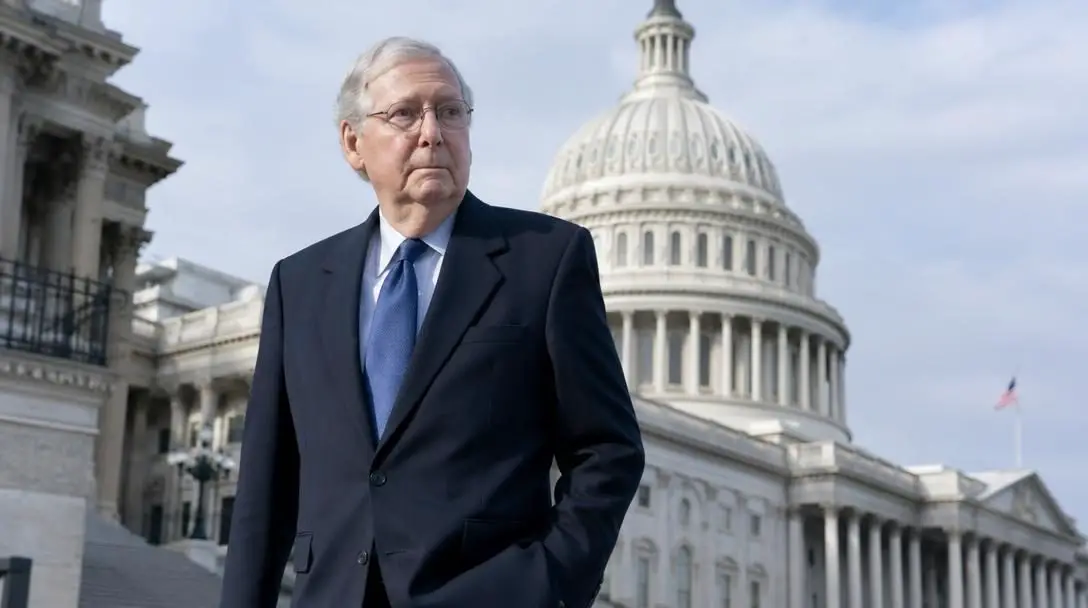
Mitch McConnell stands among the most influential and enduring figures in modern American legislative history. Born in Alabama, McConnell made Kentucky his long-term home, launching his career in local public service as a county judge before setting his sights on Capitol Hill. His election to the United States Senate in 1984 marked the beginning of an unbroken, multi-decade tenure in Washington, D.C., during which he rose through party ranks to steer the upper chamber through some of the nation's most contentious political eras.
Over the course of his career, McConnell served twice as Senate Minority Leader and held the gavel as Senate Majority Leader from 2015 to 2021. In these top leadership positions, he wielded exceptional influence over the national agenda, managing floor debate, controlling legislative calendars, and directing Republican Party strategy. While his procedural mastery earned praise from allies, his policy choices frequently generated intense national debate. Five specific policy areas—criminal justice reform, healthcare for 9/11 first responders, climate change, foreign policy regarding Russia, and national taxation—stand at the center of his controversial public record.
Key takeaways
- Mitch McConnell transitioned from a Kentucky county judge to a six-term United States Senator, serving as Senate Majority Leader from 2015 to 2021.
- His legislative stances on criminal justice reform and 9/11 first responder healthcare drew national scrutiny due to procedural delays and strategic leverage against other priorities.
- McConnell broke sharply with scientific consensus on climate change to defend Kentucky's fossil fuel economy, while defying factions of his own party by maintaining a hawkish stance on Russia and backing aid for Ukraine.
- A staunch opponent of tax increases on high earners, McConnell successfully reduced the top individual tax bracket from 39.6 percent to 35 percent and actively quashed intra-party proposals that threatened entitlement programs.
At a Glance: McConnell's Five Defining Legislative Debates
| Policy Domain | Key Measure or Focus | McConnell's Initial Stance | Ultimate Legislative Action |
|---|---|---|---|
| Criminal Justice Reform | First Step Act | Opposed early release provisions for federal prisoners | Agreed to bring the bill to the floor and signed off after negotiations |
| 9/11 First Responders | James Zadroga Act | Voted against the bill to prioritize George W. Bush tax cuts | Permitted permanent reauthorization in 2019 following public advocacy |
| Climate Change | Federal Emissions Regulations | Denied scientific consensus and labeled climate change a hoax | Consistently defended fossil fuel extraction and opposed green energy mandates |
| Foreign Policy on Russia | Ukraine Military Aid and Russian Sanctions | Favored robust sanctions and early military support for Ukraine | Campaigned within the GOP for advanced anti-aircraft and anti-armor weaponry |
| National Tax Policy | Top Marginal Rates and Entitlement Sunset Plans | Opposed tax hikes on top earners; opposed Rick Scott's tax proposal | Lowered the top tax bracket from 39.6 to 35 percent and protected entitlement programs |
The Five Controversial Policy Positions
The legislative battles involving Mitch McConnell reflect broader ideological fault lines in American governance. Examining these five specific areas highlights how his policy choices took shape, how party leadership influenced floor action, and why his decisions ignited persistent public debate.
Criminal Justice Reform

- Key Legislation: The First Step Act
- Bipartisan Coalition: Supported by Democrats and President Donald Trump
- Primary Objection: Early release provisions for incarcerated offenders
Individuals completing federal prison sentences in the United States routinely face systemic obstacles upon reentry. Formerly incarcerated citizens are frequently stripped of voting rights, barred from owning firearms, and systematically disqualified from a wide array of employment opportunities. To address these hurdles, lawmakers spent years drafting bipartisan criminal justice measures intended to help former inmates regain stability and reduce recidivism.
This push culminated in the First Step Act, an effort that brought together civil rights organizations, congressional Democrats, and then-President Donald Trump. Despite this broad coalition, McConnell stood for months as the single most prominent obstacle to the bill's passage. He maintained that convicted criminals should not be released back into the public early. McConnell resisted scheduling floor time for the legislation until sustained internal lobbying from White House officials and Republican colleagues persuaded him to sign off on the measure.
9/11 First Responders

- Key Legislation: James Zadroga 9/11 Health and Compensation Act
- Procedural Obstacle: Extension of George W. Bush tax cuts
- Public Pressure: 2019 congressional testimony by Jon Stewart
The terrorist attacks of September 11, 2001, left an enduring physical toll on the emergency personnel who responded to the World Trade Center site. Thousands of firefighters, police officers, and medical workers inhaled toxic dust and debris, later contracting chronic respiratory illnesses and terminal cancers. In 2010, lawmakers introduced the Zadroga Act to provide federal funding for medical treatment and financial compensation to injured responders.
McConnell voted against the measure, explicitly conditioning his cooperation on the extension of earlier tax cuts passed during the George W. Bush administration. In subsequent legislative sessions, McConnell repeatedly blocked funding extensions for the responder compensation fund. The impasse persisted until 2019, when former Daily Show host Jon Stewart delivered impassioned testimony before Congress, rallying public sentiment and mainstream media scrutiny that forced McConnell to clear the legislation for final passage.
A legislative leader's delays often serve as strategic bargaining leverage rather than absolute ideological opposition.
Climate Change

- Stance Emergence: Early 1990s federal environmental debates
- Core Argument: Questioned scientific consensus on global warming
- Economic Framing: Characterized clean energy initiatives as expensive hoaxes
As the international scientific community warned about greenhouse gas emissions throughout the early 1990s, global warming emerged as an urgent legislative issue. While many lawmakers initially hesitated before gradually accepting environmental research, McConnell positioned himself as an early and unyielding skeptic, asserting that the scientific evidence surrounding climate change was inconclusive.
Over the decades, McConnell escalated his rhetoric, at times declaring climate change to be an engineered hoax intended to subsidize expensive renewable energy technologies at the expense of traditional industries. Representing Kentucky, McConnell repeatedly defended the domestic fossil fuel industry, assuring constituents that traditional energy production was not harming the environment while resisting regulatory caps on coal and industrial emissions.
Foreign Policy Regarding Russia

- Strategic Focus: Long-standing defense of Ukrainian sovereignty
- Party Dynamic: Described pro-Russia Republicans as lonely voices
- Military Stance: Advocated advanced weapons capable of engaging high-flying aircraft
In the years preceding the 2022 invasion of Ukraine, parts of the Republican Party softened their historical Cold War posture toward Moscow. McConnell, however, broke from this isolationist shift, championing a hawkish stance that aligned closely with traditional national security conservatives. He backed aggressive sanctions packages against Russia and endorsed substantial security assistance for Ukraine long before the full-scale conflict erupted.
Following the 2022 invasion, McConnell confronted non-interventionist factions inside his own party. He argued publicly that pro-Russian lawmakers occupied lonely corners of the Republican conference and urged immediate delivery of heavy weapons to Kyiv, specifically demanding weapon systems capable of downing Russian helicopters and higher-flying planes.
National Tax Policy
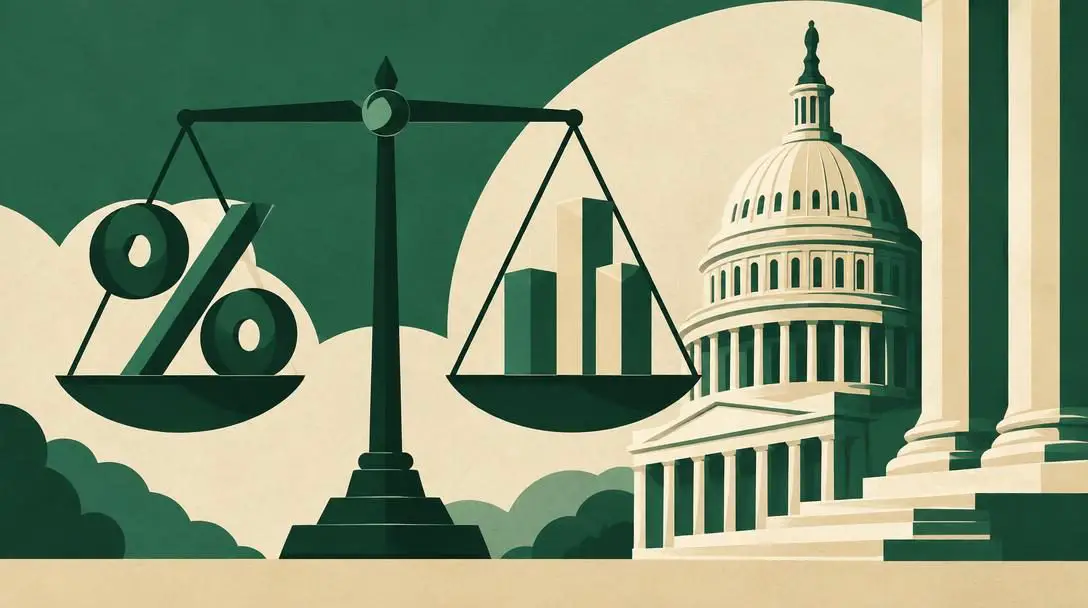
- Top Rate Adjustment: Lowered top marginal rate from 39.6 percent to 35 percent
- Intra-Party Conflict: Rejected Senator Rick Scott's 12-point policy proposal
- Program Defense: Opposed sunsetting Social Security and Medicare within five years
Throughout his tenure at the helm of Senate Republicans, McConnell functioned as the primary architect and defender of federal tax cuts. He consistently opposed Democratic proposals to raise marginal rates on high earners, successfully championing federal reforms that lowered the top individual tax bracket from 39.6 percent to 35 percent to encourage private capital investment.
McConnell demonstrated equal firmness when policing tax policy within his own party. When Florida Senator Rick Scott proposed a 12-point plan that would have raised federal taxes on an estimated 40 percent of lower-income Americans, McConnell immediately denounced the framework. McConnell publicly declared that Republicans would not adopt an agenda that raised taxes on half the country while subjecting Social Security and Medicare to automatic expiration within five years.
How Senate Leadership Shapes Legislative Outcomes
Evaluating Mitch McConnell's controversial positions requires understanding the mechanics of congressional power. Party leaders do not merely register individual votes; they control procedural machinery that determines whether policies live or die.
Scheduling Legislative Debates: The Senate Majority Leader holds the exclusive privilege of priority recognition on the floor, allowing them to determine which bills are debated. Bipartisan measures frequently stall indefinitely simply because the leader declines to schedule them.
Managing Competing Party Factions: Leaders must mediate between ideological wings of their party. McConnell consistently balanced establishment fiscal priorities against populist elements, as demonstrated when he shut down Rick Scott's tax proposals to preserve party cohesion heading into midterm elections.
Leveraging Policy Compromises: Major legislation rarely moves on single-issue merits. Leaders routinely withhold votes on must-pass humanitarian or social legislation—such as the Zadroga Act—to force concessions on disparate policy goals, including the preservation of the Bush-era tax cuts.
Directing Foreign Policy and Sanctions: Although the President directs diplomacy, Congress controls the purse. Senate leaders dictate the scope of international military funding and statutory sanctions, enabling McConnell to advance a hawkish posture against Russia despite skepticism from populist colleagues.
Balancing State and National Interests: Senators must satisfy local constituencies while directing nationwide policy. McConnell's persistent skepticism of environmental regulations safeguarded Kentucky's coal and manufacturing sectors, even as it drew sharp condemnation from climate scientists across the globe.
Practical Steps for Citizens Tracking Legislative Actions
Citizens seeking to evaluate federal policy maneuvers can monitor congressional activity directly using official public resources rather than relying solely on secondary commentary.
- Read Official Bill Summaries: Access legislative records on Congress.gov to read the nonpartisan Congressional Research Service summaries of measures like the First Step Act or the Zadroga Act.
- Examine Roll Call Votes: Check Senate roll call records to verify how lawmakers voted on procedural motions, which frequently reveal behind-the-scenes attempts to delay or alter legislation before a final vote occurs.
- Analyze Leadership Floor Remarks: Read the Congressional Record to examine direct statements from party leaders, observing how justifications are framed on issues ranging from tax reform to overseas aid.
- Track Committee Amendments: Review how draft bills change as they move through committee markups, noting which provisions are stripped or added to win leadership support.
- Submit Direct Constituent Inquiries: Contact Senate constituent service offices to request official position papers on pending federal legislation, noting how representatives justify their votes.
Common Pitfalls When Analyzing Congressional Records
Assessing the legislative career of a long-serving Senate leader is fraught with analytical traps. Observers often misinterpret procedural maneuvers or overlook the systemic context in which decisions occur.
- Assuming Complete Party Uniformity: Observers frequently treat political parties as monolithic blocs, ignoring sharp internal divisions such as McConnell's defense of Ukrainian aid against isolationist members of his party.
- Confusing Strategic Delays with Total Opposition: Legislative leaders routinely delay bills they intend to pass, utilizing holdouts on measures like the First Step Act or Zadroga Act to extract maximum concessions.
- Discounting the Power of External Advocacy: High-profile media pressure campaigns and committee appearances, such as Jon Stewart's advocacy for first responders, can radically alter legislative priorities.
- Ignoring Early Policy Evolution: Focusing solely on a leader's opening posture ignores the reality of legislative bargaining, wherein initial procedural opposition frequently shifts to final support.
- Overlooking Fiscal Trade-Offs: Tax policy disputes reflect competing economic doctrines regarding government revenues and growth rather than simple partisan obstruction.
Frequently asked questions
Why did Mitch McConnell initially oppose the First Step Act?
McConnell expressed reservations regarding provisions that allowed certain federal inmates to secure early release from prison, arguing that convicted offenders should not reenter communities prematurely. He held the bill back until intense bipartisan negotiations and direct pressure from the Trump administration persuaded him to allow a vote.
What caused the multi-year delay in funding the Zadroga Act for 9/11 responders?
McConnell initially voted against the 2010 measure to leverage Senate support for extending the Bush-era tax cuts. Subsequent renewals faced procedural roadblocks in the Senate until extensive public pressure and congressional testimony by Jon Stewart forced floor action in 2019.
What was Mitch McConnell's stated position on climate change?
Beginning in the early 1990s, McConnell claimed that scientific evidence regarding global warming was inconclusive. He characterized federal climate initiatives as an economic hoax intended to promote expensive renewable energy sources while defending Kentucky's coal and fossil fuel industries.
How did McConnell's foreign policy on Russia conflict with his party?
While an isolationist wing of the Republican Party grew more skeptical of foreign interventions, McConnell advocated for aggressive sanctions on Moscow and supported heavy military shipments to Ukraine, calling pro-Russian voices inside the GOP lonely outliers.
Why did Mitch McConnell publicly reject Rick Scott's tax framework?
McConnell opposed Senator Scott's plan because it proposed raising federal taxes on roughly 40 percent of Americans who currently pay no income tax, while also mandating that major entitlement programs like Social Security and Medicare sunset every five years unless reauthorized.
The Bottom Line on Mitch McConnell's Legislative Record
Mitch McConnell's tenure as Senate Majority Leader and Minority Leader illustrates the immense power wielded by congressional leadership. By exercising near-total command over the Senate floor, McConnell repeatedly influenced national policy on criminal justice, healthcare, international alliances, and taxes. His willingness to utilize floor scheduling as a tactical weapon earned him fierce criticism from opponents and deep respect from party allies.
Whether resisting climate mandates to protect home-state energy interests, leveraging first-responder healthcare against tax cut extensions, or defying members of his own conference over military aid to Ukraine, McConnell's actions have left an indelible mark on the American political landscape. As future Congresses address the lingering effects of the First Step Act, entitlement stability, and shifting foreign commitments, the procedural precedents and policy outcomes engineered by Mitch McConnell will continue to shape congressional strategy for years to come.