5 Controversial Policies Of Tulsi Gabbard
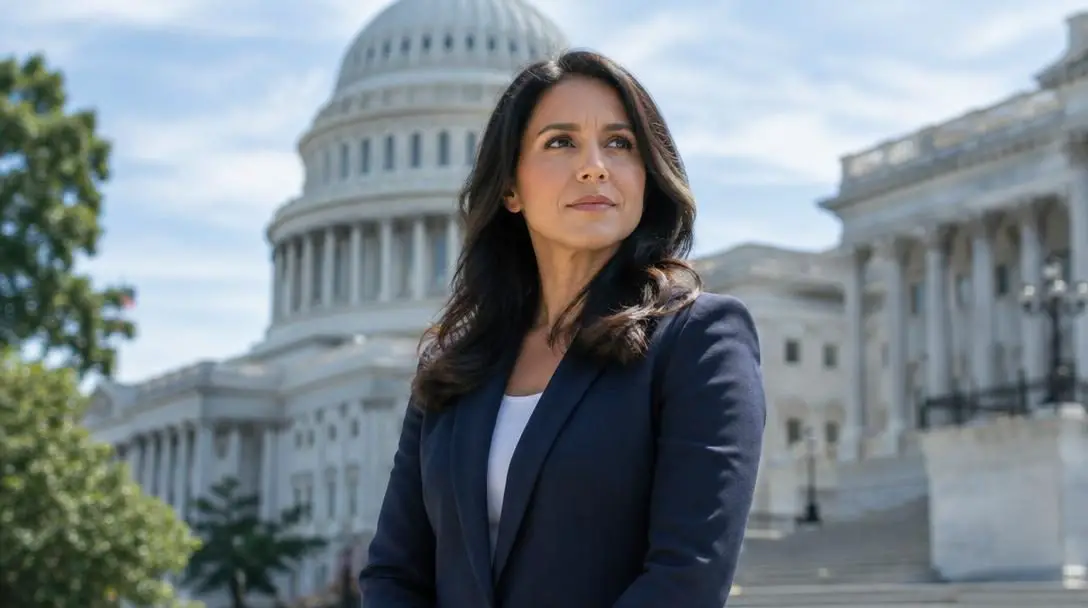
Few contemporary figures in American politics have generated as much debate or defied standard political categorization as Tulsi Gabbard. Emerging from state politics in Hawaii to serve four terms in the United States House of Representatives, she built a profile that continually challenged both Democratic orthodoxy and conventional bipartisan consensus.
Her transition from a rising star in the Democratic Party to an independent commentator and political outlier highlights the growing friction within modern partisan politics. By examining five of her most contentious policy positions, observers can better understand how her unorthodox worldview reshaped her public career and altered her standing among voters across the ideological spectrum.
Key takeaways
- Tulsi Gabbard transitioned from representing Hawaii's 2nd Congressional District as a Democrat to operating as an independent political figure in 2022.
- Her foreign policy views broke sharply from party consensus, notably regarding NATO expansion and the 2022 Russian invasion of Ukraine.
- Her record on social issues reflects notable shifts, from opposing same-sex marriage early in her career to joining the LGBT Equality Caucus and later backing Florida's Parental Rights Bill.
- She paired conservative stances on border barriers and refugee vetting with progressive proposals for ending private prisons and decriminalizing all drugs.
- During the COVID-19 pandemic, she challenged federal vaccine prioritization guidelines and took a public stand against government vaccine mandates.
The political trajectory of Tulsi Gabbard
Tulsi Gabbard began her career in public service at the state level, winning election as a state representative in Hawaii. Her early immersion in legislative affairs provided an initial proving ground, but her trajectory took a defining turn when she joined the United States Army in 2003. This military commitment established a foundational background that would significantly inform her public persona, her skepticism of foreign military interventions, and her broader approach to national governance over the following two decades.
In 2013, Gabbard stepped onto the national stage after winning election to represent Hawaii’s 2nd Congressional District in the United States House of Representatives. She held this federal post continuously until 2021, cultivating a prominent presence in Washington D.C. Her national profile expanded substantially during the 2020 election cycle, when she launched a sustained campaign seeking the Democratic nomination for president. The bid brought her distinctive, often rebellious perspectives before a national television audience, exposing deep ideological rifts between her platform and the central priorities of party leadership.
The friction between Gabbard and institutional Democrats intensified following the presidential primary. In 2022, she made the decisive choice to formally drop her Democratic affiliation, announcing that she would operate as an independent. By relinquishing party ties, she accelerated her evolution into a maverick political commentator, realigning several of her public positions and cementing her status as an unconventional voice outside traditional party apparatuses.
Five controversial policy stances that defined her career
Throughout her tenure in federal office and her subsequent years as an independent public commentator, Gabbard advanced policy stances that triggered intense scrutiny from both political parties. Her platform rarely adhered to conventional ideological dividing lines, frequently combining elements of non-interventionist foreign policy, strict border security, civil libertarianism, and sweeping criminal justice reform.
| Policy Area | Key Position | Primary Source of Controversy | Alignment Shift |
|---|---|---|---|
| Foreign Policy and Russia | Opposition to NATO expansion regarding Ukraine | Criticism of White House diplomacy; accused of sympathizing with Vladimir Putin | Broke with bipartisan foreign policy consensus |
| LGBT Rights | Support for parental rights legislation after earlier caucus membership | Reversal from early anti-gay marriage activism to pro-equality caucus, followed by support for Florida measure | Oscillated between conservative and liberal positions |
| Immigration and Border Enforcement | Support for physical border barriers and enhanced refugee vetting | Voting in favor of Republican-led security measures while serving as a Democratic lawmaker | Aligned with conservative national security priorities |
| COVID-19 Response | Elderly prioritization over essential workers and opposition to mandates | Public refusal to take the vaccine until seniors received access; criticism of federal distribution lists | Challenged federal health agency recommendations |
| Domestic Drug Reform | Full decriminalization and regulation of all illicit substances | Advocacy for the Portuguese model alongside the elimination of private prisons and cash bail | Maintained progressive, left-leaning criminal justice stances |
Foreign policy and Russia
- Core Stance: Opposed NATO expansion; attributed conflict triggers to Western diplomacy
- Key Action: Visited Russia during the conflict and resisted taking Ukraine's side
- Primary Criticism: Labeled across party lines as a sympathizer of Vladimir Putin
Following the 2022 Russian invasion of Ukraine, an international crisis developed that produced rare bipartisan agreement in Washington D.C. Nearly all Democratic lawmakers supported imposing sweeping financial sanctions against Russia and providing robust material aid to Ukraine. A vast majority of Republicans concurred with that overarching posture. Gabbard, however, openly rejected the prevailing consensus. She declined to take Ukraine's side in the conflict and traveled to Russia during the dispute, an action that opponents characterized as providing political cover for Russian President Vladimir Putin.
Gabbard voiced her perspective directly on social media, asserting that the conflict was preventable through diplomatic concessions. She tweeted: "This war and suffering could have easily been avoided if Biden Admin/NATO had simply acknowledged Russia’s legitimate security concerns regarding Ukraine’s becoming a member of NATO. Which would mean US/NATO forces right on Russia’s border." The statement sparked severe backlash from lawmakers on both sides of the aisle, who argued her statements gave undue credibility to the Kremlin's pretexts for military aggression.
LGBT rights and marriage equality
- Early Career: Protested and opposed legal recognition of same-sex marriage
- Congressional Era: Joined the House LGBT Equality Caucus in the 2010s
- 2022 Pivot: Endorsed Florida's Parental Rights Bill
Few aspects of Gabbard’s political career have witnessed as much public fluctuation as her record on LGBT rights. During the initial phases of her political work in Hawaii, she was an outspoken opponent of legal marriage recognition for same-sex couples, actively participating in public protests opposing marriage equality. This early record reflected conservative social values that she would later work to contextualize as she sought higher office.

By the early 2010s, her public posture changed markedly. Following her election to the House of Representatives, she expressed clear support for the community and formally joined the congressional LGBT Equality Caucus. However, this ideological evolution did not remain static. In 2022, Gabbard voiced public support for Florida's contentious Parental Rights Bill, leading many civil rights advocates and political analysts to question the permanence of her earlier pro-equality stances and reigniting debate over her core social beliefs.
Immigration and border enforcement
- Congressional Voting: Backed enhanced screening for refugees from Middle Eastern nations
- Border Infrastructure: Expressed support for a physical border wall along the southern border
- Stated Motivation: Prioritizing domestic safety and national security obligations
While serving as an elected Democrat in the House of Representatives, Gabbard frequently departed from her party caucus on matters concerning border enforcement and national security. She voted in favor of measures requiring heightened security vetting for refugees originating from Middle Eastern nations, arguing that federal authorities needed rigorous screening protocols to prevent potential security vulnerabilities.
Furthermore, when national debates erupted over the construction of a large border wall along the US-Mexico border, Gabbard broke with party leadership by expressing support for physical barrier infrastructure. Framing her rationale around core governmental obligations, Gabbard stated: "What’s at the heart of this is we have Democrats and Republicans, frankly, in Congress who are failing at their most basic and foremost responsibility. Which is to ensure the safety, security, and freedom of the American people, and that starts with securing our border."
COVID-19 vaccine distribution and mandates
- Vaccine Development: Supported the initial development of COVID-19 immunizations
- Distribution Protest: Refused early personal vaccination until elderly citizens gained access
- Government Policy: Strongly opposed all federal and municipal vaccine mandates
When the COVID-19 health emergency struck the United States, Gabbard supported the rapid development of immunization treatments to slow the transmission of the virus. Controversy arose, however, around the distribution protocols established by federal public health agencies. When initial guidelines recommended prioritizing first responders and roughly 100 million essential workers, Gabbard argued that seniors were being dangerously marginalized in the rollout process.
Gabbard voiced severe criticism of this priority structure, stating: "They’re recommending 100 million ‘essential workers’ (i.e. healthy people working at liquor stores or phone companies) can get the vaccine before our grandparents." In a personal protest against the federal guidelines, she pledged to refuse the vaccine until senior citizens were able to obtain theirs. As public health policy transitioned from voluntary distribution to mandatory workplace requirements, she became a staunch opponent of government vaccine mandates. It remains unconfirmed whether she ultimately took the immunization herself.
Domestic drug reform and decriminalization
- Cannabis Stance: Advocated the full federal legalization of recreational marijuana
- Systemic Reforms: Supported ending cash bail and eliminating private correctional facilities
- International Benchmark: Highlighted Portugal's 18-year record of comprehensive drug decriminalization
Even as Gabbard embraced conservative positions on national defense, immigration barriers, and public health mandates, her stance on domestic criminal justice and drug policy remained distinctly progressive. She repeatedly championed the complete federal legalization of recreational marijuana, while calling for systemic structural reforms such as ending the use of private prisons and abolishing cash bail systems that disproportionately burden low-income defendants.
Her most radical domestic proposal was the call to fully legalize and regulate all drugs, adopting a harm-reduction model inspired by international examples. To support this policy, Gabbard highlighted the experience of Portugal, which decriminalized personal drug possession. She noted that across the first 18 years of Portugal's decriminalization framework, the country achieved a near-eradication of overdose deaths and injection-related HIV cases, while total arrests for drug offenses declined to less than one-third of their previous levels.
A politician's independence is defined not by the absence of conviction, but by the willingness to assemble an unconventional platform that defies standard partisan packaging.
How ideological independence operates in modern governance
Navigating modern American governance outside the traditional two-party structure requires unconventional strategies. When an elected official or public commentator abandons institutional alignment, the operational rules governing their political survival shift significantly. Understanding these operational mechanisms helps clarify how non-traditional figures manage their careers.

The operational framework of political independence relies on several core mechanisms:
- Legislative Flexibility: Unshackled from party whips, caucus discipline, and leadership scorecards, an independent lawmaker can cast votes or propose bills that reflect personal ideological principles rather than a mandatory party platform.
- Ad-Hoc Coalition Building: Without a guaranteed voting bloc, independent politicians must form issue-specific partnerships. An official may align with conservative colleagues on national defense, border funding, or constitutional protections, while joining progressive lawmakers on criminal justice reform, drug deregulation, and civil liberties.
- Direct Public Communication: Operating without institutional party financial machinery forces public figures to bypass traditional media intermediaries. They rely on direct social media engagement, podcasting, and independent broadcasting to explain complex policy shifts directly to voters.
- Autonomous Priority Setting: Free from the strategic imperatives of national party committees, independent actors can adjust their focus toward emerging cultural, legal, or constitutional debates without seeking institutional clearance.
A structured approach to evaluating controversial political figures
When assessing a public figure who holds conflicting, evolving, or non-traditional policy stances, casual observers often struggle to categorize their platform. Analysts and voters can employ a structured, five-step analytical method to evaluate controversial political figures accurately.
- Track Official Legislative Voting Records: Examine formal congressional roll call votes rather than relying solely on campaign rallies or media statements. Legislative votes show how an official acts when a policy carries legal consequences.
- Analyze Direct Stated Justifications: Read the full text of an official's explanations for unusual decisions. Look closely at the exact language used when they oppose a consensus measure or vote alongside the opposing political party.
- Map Policy Evolution Over Time: Create a chronological timeline of an official's positions on key issues. Tracing shifts helps distinguish between gradual personal evolution, abrupt political reversals, and strategic changes tied to new constituencies.
- Verify Comparative International Data: When an official cites foreign governance precedents—such as drug decriminalization models—evaluate whether their summary accurately reflects the data and operational realities of that sovereign nation.
- Review Cross-Issue Coherence: Evaluate a public figure across domestic policy, social issues, public health, and foreign relations simultaneously. Looking at multiple policy domains prevents oversimplified labeling based on a single controversial vote.
Common analytical mistakes when examining unconventional politicians
Evaluating political figures who step outside the traditional party apparatus presents unique challenges. Commentators and voters frequently fall into common analytical traps when assessing politicians with complex, cross-ideological voting records.
- Assuming Absolute Caucus Loyalty: Many observers assume that party registration guarantees uniform voting behavior across all bills. Gabbard's congressional tenure proved that a lawmaker's formal affiliation does not guarantee compliance on border enforcement or foreign policy interventions.
- Treating Past Positions as Static: Failing to recognize that political philosophies evolve can lead to outdated critiques. Evaluating an official solely on positions held early in their legislative career ignores substantial shifts that may have occurred over subsequent decades.
- Imposing Binary Political Labels: Observers often attempt to force every policy stance into a rigid liberal or conservative category. This binary framework fails when assessing politicians who combine aggressive border security with sweeping drug deregulation.
- Conflating Personal Protest with Universal Mandates: Analysts sometimes mistake a personal ethical stance for a broader regulatory agenda. For instance, declining a personal vaccine dose until high-risk individuals receive it represents an individual protest rather than a universal statutory policy.
Future dynamics and what to watch next
As Tulsi Gabbard continues her work beyond the Democratic establishment, several key variables will shape her ongoing political trajectory and her influence on national political discourse. First, her non-interventionist approach to foreign policy will remain a defining focal point. Her opposition to NATO expansion regarding Ukraine and her willingness to question establishment diplomatic strategies indicate that she will continue challenging interventionist foreign policies regardless of which political party occupies the executive branch.
Second, observers must watch how her independent status influences her political coalitions. Her alignment with conservative priorities on parental rights and border barriers, contrasted with her progressive views on drug reform, positions her as a distinctive cross-over voice. Whether she formalizes closer alliances with the Republican Party or pursues alternative third-party political avenues will determine the long-term viability of her coalition-building strategy.
Finally, researchers and political analysts should observe how her views on civil liberties, personal autonomy, and public health continue to develop. As traditional party coalitions in the United States undergo realignment, unconventional public figures who integrate libertarian, conservative, and progressive viewpoints will remain critical subjects of study in the evolving landscape of American democracy.
Frequently asked questions
Why did Tulsi Gabbard leave the Democratic Party?
Gabbard formally left the Democratic Party in 2022 to become an independent after years of growing tension with party leadership over foreign policy consensus, social legislation, and institutional governance.
What was Tulsi Gabbard's position on the war in Ukraine?
Gabbard broke with the bipartisan Washington consensus by resisting taking Ukraine's side, visiting Russia during the conflict, and arguing that the war could have been avoided if the Biden administration and NATO had addressed Russia's security concerns regarding Ukraine joining NATO.
How did Gabbard's views on LGBT rights change during her career?
Early in her political career, Gabbard actively opposed and protested against same-sex marriage. After entering Congress, she shifted her stance, joined the LGBT Equality Caucus, but later reignited debate in 2022 by supporting Florida's Parental Rights Bill.
Why did Gabbard refuse the COVID-19 vaccine initially?
Gabbard favored vaccine development but objected to federal distribution guidelines that prioritized 100 million essential workers over senior citizens. She pledged to refuse her own immunization until elderly Americans were granted access, and she later opposed government vaccine mandates.
What international model did Gabbard cite for drug reform?
Gabbard cited Portugal's drug decriminalization model, pointing out that over its first 18 years, the policy led to a dramatic drop in overdose deaths and injection-related HIV cases, while drug arrests fell to less than one-third of previous levels.
The bottom line
Tulsi Gabbard’s political career serves as a case study in ideological independence within an intensely polarized political environment. By taking controversial positions on foreign policy, immigration, public health, social issues, and drug reform, she continually defied the boundaries of the traditional two-party system. Whether viewed as an unprincipled contrarian or a courageous independent, Gabbard's evolving platform demonstrates that modern American politics contains significant room for public figures willing to break with party orthodoxy.