5 Democratic Politicians Who Surprisingly Failed To Achieve The Presidency
Throughout American history, presidential elections have repeatedly proven that conventional qualifications, extensive political momentum, and early leads provide no absolute guarantee of victory. For the Democratic Party, the road to the White House has witnessed several formidable candidates who entered their contests with powerful party backing or surged forward as undeniable frontrunners, only to stumble before claiming the presidency. These unexpected defeats have played out across both chaotic primary battlegrounds and nail-biting general elections.
Reaching the Oval Office requires surviving an unforgiving gauntlet of state-by-state primaries, high-stakes media scrutiny, and the unforgiving arithmetic of the Electoral College. Candidates must navigate fluctuating public moods, unpredictable visual narratives, and shifting economic sentiments while maintaining strict message discipline. By examining how five prominent Democratic figures fell short of their ultimate political goal, voters and analysts gain vital insight into how modern presidential campaigns actually operate beneath the veneer of optimistic polling and conventional expectations.
Key takeaways
- Winning the national popular vote does not guarantee victory because the presidency is decided strictly through the state-by-state mechanics of the Electoral College.
- A single unscripted rally moment or damaging visual broadcast can unravel months of organizational momentum and reshape voter perceptions overnight.
- Favorable macroeconomic conditions and incumbent administrative experience do not automatically transfer into an election win for a successor nominee.
- Third-party alternatives, write-in votes, and minor-state margins frequently determine the final national outcome in deeply divided elections.
At a glance: Prominent Democratic bids that fell short
While each presidential cycle possesses its own distinct national context, comparing the circumstances of these major candidacies illustrates the diverse obstacles that can derail even the most promising campaigns.
| Candidate | Key Office Held | Election Cycle | Deciding Factor or Obstacle |
|---|---|---|---|
| Howard Dean | Governor of Vermont | 2004 Primaries | Media reaction to an unscripted rally outburst ("Dean Scream") |
| Michael Dukakis | Governor of Massachusetts | 1988 General | Damaging visual imagery in military tank campaign ads |
| Al Gore | Vice President of the United States | 2000 General | Recounts and hanging chads in Florida despite winning popular vote |
| John Kerry | U.S. Senator from Massachusetts | 2004 General | Inability to overcome wartime incumbent's Electoral College total |
| Hillary Clinton | U.S. Senator / Secretary of State | 2016 General | Losses in key swing states despite winning national popular vote |
Five high-profile Democrats who missed the presidency
Each of the following Democratic figures entered their respective races with plausible, and often heavily favored, paths toward the presidency. Their campaigns illuminate the diverse ways national bids can unravel under intense public and strategic pressures.
Howard Dean
- Key Office Held: Governor of Vermont
- Target Election: 2004 Democratic Primary
- Subsequent Role: Chair of the Democratic National Committee
Howard Dean entered the 2004 Democratic presidential primary cycle without the expectations or institutional support typically enjoyed by national frontrunners. Serving as the Governor of Vermont, he was initially viewed as a political long shot against better-known national figures. However, Dean mobilized enthusiastic grassroots support, capitalized on early internet-era fundraising, and tapped into widespread grassroots energy to transform almost overnight into the race's undisputed pacesetter.
Despite his meteoric rise, Dean's campaign experienced an abrupt and devastating setback following an energetic post-caucus rally. Seeking to fire up his loyal supporters after a third-place finish in Iowa, Dean delivered a boisterous speech that culminated in an emphatic, unscripted vocal shout. Cable news networks seized upon the audio and video footage, broadcasting the soundbite on continuous loop. In an era when presidential decorum was scrutinized under different standards and digital media was just beginning to shape political narratives, the moment solidified a damaging narrative about his temperament. His momentum stalled dramatically, and he was unable to recover his standing in subsequent primary contests, though he later reshaped national politics by serving as Chair of the Democratic National Committee.
Michael Dukakis
- Key Office Held: Governor of Massachusetts
- Target Election: 1988 General Election
- Primary Rivals Defeated: Jesse Jackson, Al Gore
Michael Dukakis entered the 1988 presidential contest with favorable political winds at his back. Serving as the Governor of Massachusetts during an era celebrated for regional economic revival, Dukakis secured the Democratic nomination after fending off tough primary challenges from prominent rivals including Jesse Jackson and Al Gore. The political environment appeared structurally advantageous for Democrats: Ronald Reagan was completing his second term, and in modern political history, no political party had managed to secure three consecutive presidential terms in the White House.
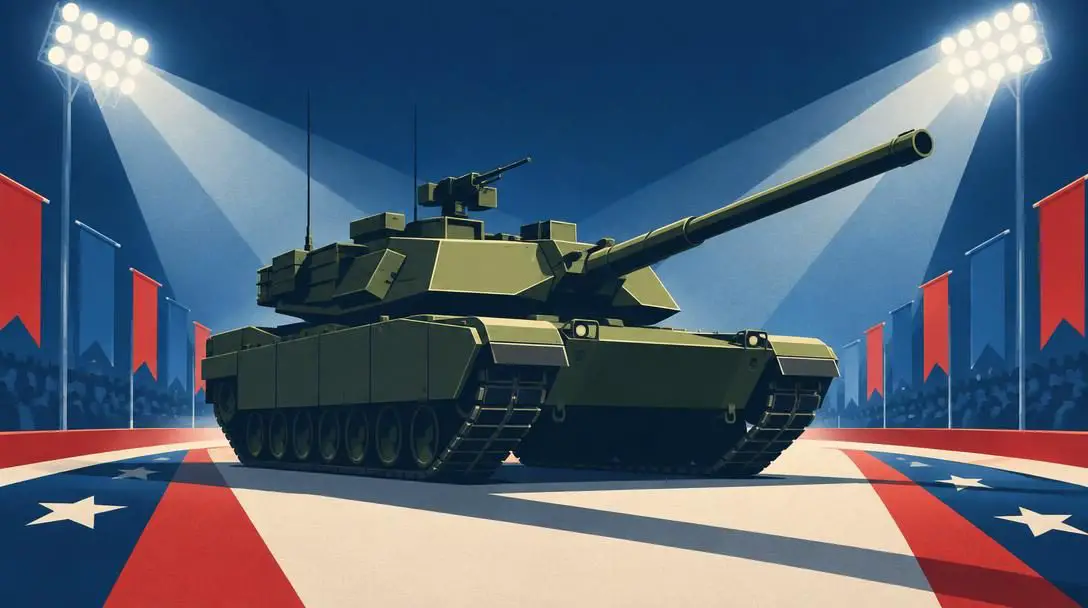
Despite holding an early double-digit lead during the summer, Dukakis saw his general election standing steadily eroded by an aggressive campaign orchestrated by Republican nominee George H.W. Bush. The most enduring blow to Dukakis came from a public relations visual event gone wrong. In an effort to burnish his national security credentials, Dukakis participated in a photo opportunity riding inside a military tank wearing an oversized protective helmet. Rather than projecting strength, the visual appeared awkward and discordant. The Bush campaign quickly turned the footage into potent television advertisements, fundamentally undermining Dukakis's public image and weakening his standing before voters went to the polls in November.
Al Gore
- Key Office Held: Vice President of the United States
- Target Election: 2000 General Election
- National Vote Result: Won the national popular vote
Al Gore entered the 2000 presidential contest with an exceptional political resume, having served eight years as Vice President alongside President Bill Clinton. The 1990s had been characterized by substantial economic growth, low unemployment, and rare federal budget surpluses, providing Gore with a compelling case for continuity. Running against Texas Governor George W. Bush, Gore was widely regarded by political analysts as an exceptionally formidable contender poised to maintain Democratic control of the executive branch.
The general election developed into one of the closest and most contentious battles in American political history. On election night, the national popular vote broke in Gore's favor by hundreds of thousands of ballots. However, the ultimate outcome rested entirely upon the state of Florida, where the margin between the two candidates was razor-thin. A protracted dispute over punch-card ballots, notorious for defective hanging chads, prompted weeks of recount efforts and intense legal challenges. When the recount was brought to an end, Bush held a microscopic lead in Florida, delivering him the necessary electoral votes and handing Gore an agonizing Electoral College defeat.
A national campaign can capture millions more individual votes than its opponent and still lose the White House through the unforgiving arithmetic of key battleground states.
John Kerry
- Key Office Held: U.S. Senator from Massachusetts
- Target Election: 2004 General Election
- Popular Vote Total: Received 59 million votes
John Kerry, a decorated veteran and long-serving U.S. Senator from Massachusetts, emerged from the 2004 primaries to challenge incumbent President George W. Bush. In the immediate aftermath of September 11, Bush had registered historic approval ratings, but those numbers had declined substantially by 2004 due to growing public fatigue and strategic complications surrounding the ongoing War on Terror. This dynamic offered Democrats a prime opportunity to unseat an incumbent president during wartime.
Kerry built an expansive national coalition, ultimately earning 59 million votes. At the time, that represented the second-highest popular vote total ever accumulated by a presidential candidate in United States history. Despite this massive turnout, Kerry was unable to dislodge the incumbent. Bush expanded his own turnout, winning the popular vote by more than three million ballots and holding key swing territories to reach an Electoral College majority, leaving Kerry with 251 electoral votes and demonstrating the immense difficulty of defeating a sitting wartime president.
Hillary Clinton
- Key Office Held: U.S. Senator / Secretary of State
- Target Election: 2016 General Election
- Popular Vote Margin: Won popular vote by nearly 3 million
Hillary Clinton secured the 2016 Democratic nomination following a prolonged, competitive primary against Senator Bernie Sanders, having previously mounted a high-profile bid against Barack Obama in 2008. Possessing an extensive career as First Lady, U.S. Senator, and Secretary of State, Clinton had near-universal name recognition and deep institutional backing across the Democratic Party establishment. Facing Republican nominee Donald Trump, a real estate developer and media personality who had never held elected public office or served in the military, broad consensus among forecasters pointed toward a decisive Democratic victory.
On election night, early returns revealed surprising strength for Trump across traditional industrial strongholds. Although the Clinton campaign held out hope for late-night metropolitan surges, key swing states flipped by narrow margins, and Clinton ultimately conceded the election in the late hours of the night. In an echo of the 2000 election, Clinton won the nationwide popular vote by nearly three million ballots. However, an elevated share of the national electorate opted for third-party and write-in candidates, splintering traditional coalitions and allowing Trump to capture the necessary electoral votes to secure the presidency.
How modern presidential campaign strategy works
Understanding how highly qualified candidates fall short requires examining the intricate operational framework that dictates presidential races. An effective campaign does not simply run one single nationwide race; rather, it manages dozens of concurrent, distinct state competitions, each guided by unique electoral rules and demographic realities.
The journey begins with the primary phase, where contenders must tailor their appeal to committed base voters, activists, and party delegates. Candidates must strike a delicate strategic balance: they must demonstrate enough ideological fidelity to win state caucuses and primaries without anchoring themselves to positions that alienate moderate general election voters. Once the nomination is clinched, the strategic map changes fundamentally.
Because the United States selects its chief executive through the Electoral College, running up astronomical victory margins in safe states produces zero additional electoral benefit. A vote won by fifty-one percent in a battleground yields the exact same electoral haul as winning by thirty percent in a partisan fortress. Consequently, general election strategy requires relentless resource allocation, directing advertising, campaign appearances, and field offices into a narrow cluster of competitive swing states that decide the national outcome.
Standard steps for building a national campaign
To reach the general election finish line, a presidential operation must execute a structured, multi-phase operational strategy spanning years of preparation.
- Form an exploratory committee to assess national viability, gauge donor appetite, and recruit senior campaign leadership.
- Construct a modern fundraising network capable of collecting major gifts alongside recurring grassroots contributions.
- Establish a comprehensive policy platform addressing foreign relations, domestic priorities, and economic challenges.
- Deploy professional organizers and volunteer networks across early primary and caucus states to build durable local infrastructure.
- Win delegate majorities through state primaries and caucuses to officially clinch the party nomination at the national convention.
- Pivot messaging toward moderate and undecided general election voters while reinforcing loyalty among core base constituencies.
- Target campaign travel, media buys, and field staff squarely on battleground states critical to assembling 270 electoral votes.
- Mobilize a massive get-out-the-vote operation across early voting, mail-in balloting, and Election Day precincts.
Common strategic mistakes made by major campaigns
Even veteran political leaders surrounded by seasoned advisers can fall victim to miscalculations that derail their presidential ambitions. Historical reviews of unsuccessful runs highlight several recurring pitfalls:
- Over-relying on national polling: Tracking national aggregate numbers often creates a misleading sense of security, obscuring dangerous vulnerabilities within specific Electoral College battlegrounds.
- Allowing unforced visual missteps: Staging awkward, unnatural photo opportunities can provide opposing strategists with devastating material for television advertisements.
- Failing to safeguard message discipline: Losing emotional control or making unscripted remarks at rallies can give cable networks an excuse to shift focus from policy platforms to personal temperament.
- Underestimating alternative candidates: Ignoring third-party and write-in campaigns can lead to unexpected losses when minor candidates siphon off narrow slices of the major party's coalition.
- Assuming past economic success transfers automatically: Presuming that strong macroeconomic figures or surplus budgets will naturally propel an incumbent party's nominee into the Oval Office.
Key factors when evaluating future presidential contenders
When assessing future candidates who enter presidential cycles with sterling credentials or frontrunner status, political observers must weigh several fundamental factors rather than relying on initial popularity.
First, evaluate how a candidate withstands immediate political crises and sudden negative media cycles. A capable national campaign must possess the organizational discipline to rebut hostile coverage and pivot away from unscripted blunders before they calcify into defining public narratives. When minor errors are left unaddressed, they rapidly evolve into shorthand symbols for a candidate's perceived weaknesses.
Second, examine whether the campaign is constructing a true battleground-focused field operation. Racking up lopsided victories in non-competitive home regions does not translate to an Electoral College majority. Analysts should observe where campaign resources are deployed, monitoring whether leadership is establishing authentic community ties in critical swing districts.
Finally, measure the broader national sentiment regarding the incumbent administration and the general direction of the country. When the electorate expresses a deep desire for systemic change, even the most polished platforms and well-funded campaigns face immense resistance if they represent the prevailing status quo.
Frequently asked questions
How can a candidate win the popular vote but lose the presidency?
The U.S. president is chosen by the Electoral College, not by direct national popular vote. Each state awards electoral votes based on state-level outcomes, usually on a winner-take-all basis. Candidates who run up huge margins in non-competitive states can win the nationwide tally while narrowly losing key battleground states, as occurred with Al Gore in 2000 and Hillary Clinton in 2016.
What caused Howard Dean's primary campaign to stall in 2004?
Following a third-place finish in the 2004 Iowa caucuses, Howard Dean delivered an impassioned rally speech that concluded with an emphatic vocal scream. Cable news channels broadcast the audio and video repeatedly, framing it as an issue of presidential temperament. The intense media scrutiny blunted his early momentum, preventing him from reclaiming frontrunner status.
Why did Michael Dukakis's tank photo opportunity backfire?
During the 1988 campaign, Governor Michael Dukakis attempted to project strong national security leadership by riding in a military tank. However, the visual of Dukakis wearing an oversized helmet appeared awkward rather than commanding. Opponents used the footage in campaign ads to question his defense readiness, seriously damaging his public standing.
Did John Kerry receive more votes than previous Democratic nominees?
Yes. In the 2004 general election, John Kerry amassed 59 million votes, which was the second-highest popular vote total in American history up to that point. However, incumbent President George W. Bush won the popular vote by over three million ballots and secured a majority in the Electoral College.
How did third-party votes affect the 2016 presidential election?
In the 2016 election, third-party and write-in candidates captured an unusually large share of the national popular vote. In several pivotal battleground states, the margin between the two major nominees was smaller than the total votes received by alternative candidates, creating an opening for Donald Trump to secure an Electoral College victory.
The bottom line
The presidential runs of Howard Dean, Michael Dukakis, Al Gore, John Kerry, and Hillary Clinton demonstrate that no political candidate is immune to the unforgiving realities of modern presidential campaigning. In American politics, stellar administrative resumes, robust party support, and even multi-million-vote national pluralities cannot ensure the presidency. Reaching the Oval Office requires masterfully navigating the structural nuances of the Electoral College, sustaining absolute message discipline, and surviving the ceaseless scrutiny of the American electorate.