5 Favorite Comic Book Heroes For Young Girls
For generations, mainstream comic book publishing centered almost entirely on male protagonists, leaving figures like Superman, Spider-Man, and Batman to dominate the superhero landscape. Female characters were frequently relegated to the background, serving primarily as romantic interests, damsels in distress, or supporting cast members rather than the driving forces behind epic storylines. This imbalance created a medium where young female readers seldom saw their own potential reflected in the heroic narratives lining newsstands and bookstore shelves.
Today, the landscape of serialized visual storytelling has undergone a profound transformation. A remarkable wave of multifaceted female protagonists now commands center stage across major publishing universes. By introducing young girls to both time-tested pioneers and inventive modern icons, families can foster a deep love for reading while offering relatable models of courage, intellect, and empathy.
Key takeaways
- Female superheroes provide young readers with empowering narratives that emphasize courage, justice, and self-reliance.
- Iconic heroines span both classic historical debuts from the Golden and Silver Ages as well as fresh multiverse reimaginings.
- Characters without superhuman physiology demonstrate that intellect, technical innovation, and strategic thinking are just as heroic as raw physical power.
- Sequential art and visual paneling support cognitive development by blending dialogue, narrative pacing, and emotional expression.
- Curating reading through graphic novel collections and trade paperbacks provides accessible, self-contained entry points free from overwhelming continuity.
The evolution of female representation in superhero lore
The history of superhero comics mirrors broader cultural shifts regarding gender and leadership. In the early decades of the medium, editorial decisions routinely prioritized male audiences, operating under the mistaken assumption that adventure, science fiction, and physical heroism held little interest for young girls. When women did appear, they were rarely granted agency, often waiting for rescue rather than formulating tactical solutions or confronting central antagonists directly.
Over the decades, persistent creators and passionate readers challenged these conventions, steadily elevating female heroines into autonomous champions. Having female protagonists take center stage is crucial for young girls during their formative reading years. Seeing women defend communities, navigate ethical dilemmas, and overcome adversity broadens a child's worldview regarding what women can accomplish. Contemporary comics now showcase heroines who embody diverse strengths, ranging from mythological majesty and alien resilience to grounded human ingenuity.
When young girls see heroic women driving the narrative rather than waiting to be rescued, it fundamentally transforms their understanding of their own agency and potential.
Five standout superhero heroines for young readers
Whether navigating complex multiverse timelines or protecting the streets of Gotham City, these five characters stand out as exceptional entry points for young girls beginning their graphic reading journeys.
Wonder Woman
- Debut year: 1941
- Creators: William Marston, with inspiration from his wife and shared partner
- Notable screen adaptations: Television series starring Lynda Carter, feature films starring Gal Gadot
- Core themes: Truth, justice, and mythological grandeur
Wonder Woman remains one of the most recognizable and enduring symbols of heroic fiction in global culture. Introduced in 1941 by psychologist and writer William Marston, she arrived during a pivotal chapter in comic history to present an alternative to purely aggressive heroism. Her origins blend classical mythological heritage with an unwavering moral compass committed to peace and fairness.
Beyond her iconic tiara, armor, and physical strength, Wonder Woman resonates with young readers because her primary mission centers on truth and restorative justice. Her presence has extended far beyond paper through Lynda Carter's classic television portrayal and modern blockbuster cinema featuring Gal Gadot. She teaches young girls that true power requires moral discipline, emotional wisdom, and a willingness to stand up for the vulnerable.
Supergirl
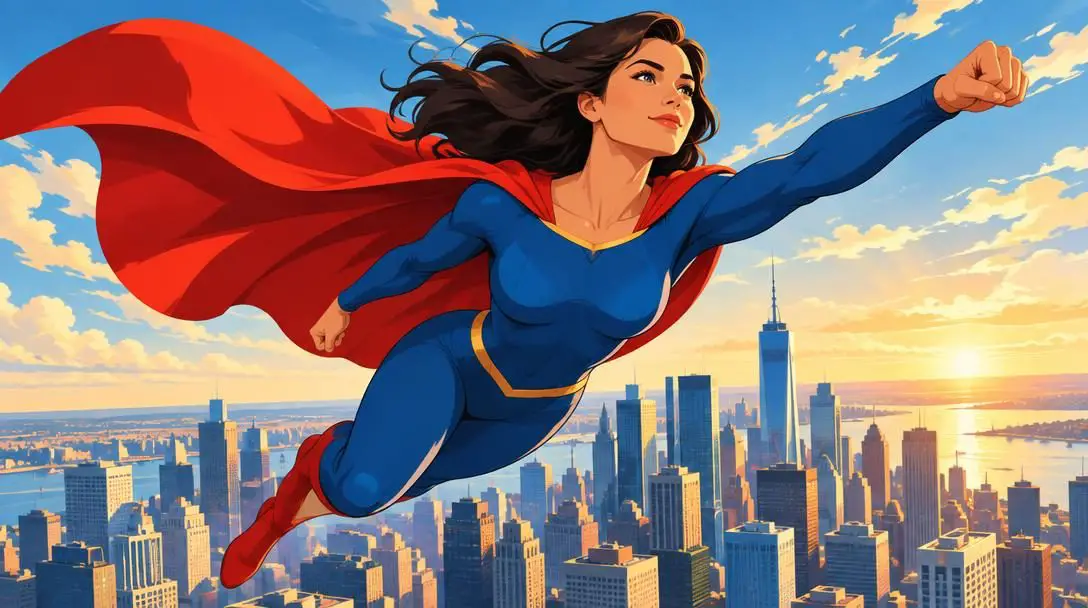
- Secret identity: Kara Zor-El
- Debut year: 1959 in Action Comics
- Creators: Otto Binder and Al Plastino
- Key powers: Super speed, freeze-breath, X-ray vision, and invulnerability
First introduced in 1959 by Otto Binder and Al Plastino in Action Comics, Supergirl—known outside her uniform as Kara Zor-El—shares a direct Kryptonian lineage with her famous cousin, Superman. Possessing nearly limitless abilities under Earth's yellow sun, she wields superhuman speed, freeze-breath, X-ray vision, and immunity to conventional terrestrial diseases.
Despite her immense physical capabilities, Kara Zor-El is not without limits. She shares the standard Kryptonian vulnerability to kryptonite, a narrative device that prevents her from becoming invulnerable to conflict. For young girls, Supergirl demonstrates how to manage extraordinary responsibility alongside personal vulnerability. Her stories highlight emotional resilience, the burden of being a planetary survivor, and the determination to forge an individual identity while carrying an immense family legacy.
Batgirl
- Civilian identity: Barbara Gordon
- Reinvention year: 1967 by Gardner Fox
- Family connection: Daughter of Police Commissioner James Gordon
- Key abilities: Intellect, martial training, and tool invention
While the moniker was initially associated with Betty Kane, writer Gardner Fox completely reinvented Batgirl in 1967 as Barbara Gordon, the brilliant daughter of Gotham City Police Commissioner James Gordon. Operating alongside the Dark Knight, she offers young readers an entirely grounded perspective on urban crime-fighting.
Unlike many of her costumed peers, Batgirl possesses no genetic mutations, alien physiology, or magical blessings. She protects Gotham through sheer intellect, strategic problem-solving, and custom-engineered crime-fighting gadgets. This reliance on scholarship and preparation makes Barbara Gordon an exceptionally accessible role model. She demonstrates that young girls do not need superpowers to effect meaningful change; disciplined study, resourcefulness, and personal courage are more than enough to challenge formidable obstacles.
Spider-Gwen
- Real name: Gwen Stacy
- Home dimension: Earth-65
- Alternate aliases: Ghost Spider and Spider-Woman
- Universe: Marvel Multiverse (Spiderverse)
Emerging from Marvel's sprawling Spiderverse, Spider-Gwen inhabits an alternate reality known as Earth-65. In this distinct dimension, Gwen Stacy is bitten by the radioactive arachnid instead of Peter Parker, granting her Wall-Crawling agility, heightened reflexes, and superhuman strength while maintaining a deep personal connection to Peter.
Also known as Ghost Spider or Spider-Woman, she subverts decades of legacy storylines where female counterparts served primarily as tragic plot devices. Spider-Gwen flips traditional expectations by placing young women firmly in the role of the protector. Her adventures feature vibrant, dynamic visual framing, youthful independence, and a modern aesthetic that speaks directly to contemporary young readers navigating self-discovery.
Captain Marvel
- Civilian identity: Carol Danvers
- Original moniker: Ms. Marvel
- Cinematic presence: Standalone films and appearances in the Avengers franchise
- Character focus: High-stakes cosmic defense and planetary leadership
Known across the cosmos as Captain Marvel, Carol Danvers represents the peak of high-tier superheroics. Initially conceived as a female counterpart to an earlier male hero under the name Ms. Marvel, Danvers underwent decades of character evolution before rightfully assuming the full title of Captain Marvel, cementing her place as a premier figure in modern superhero fiction.
Her widespread cultural footprint has expanded through major appearances in feature films, including central roles in the Avengers cinematic storyline. Carol Danvers takes on world-threatening crises across interstellar boundaries, facing situations where the fate of entire galaxies hangs in the balance. Her stories show young girls that women can thrive in command positions, pilot advanced aircraft, lead interplanetary defenses, and tackle profound challenges with poise.
At a glance: comparing the top five heroines
Every superhero brings distinct backgrounds, ability sets, and narrative traditions to the reading table. This comparison highlights how their abilities and origins vary across major publishers.
| Heroine | Publisher | Primary Power Source | Defining Trait | First Appearance |
|---|---|---|---|---|
| Wonder Woman | DC Comics | Mythological heritage | Pursuit of truth and peace | 1941 |
| Supergirl | DC Comics | Kryptonian alien biology | Vast strength and resilience | 1959 |
| Batgirl | DC Comics | Human intellect and technology | Deductive reasoning and preparation | 1967 |
| Spider-Gwen | Marvel Comics | Arachnid radioactive mutation | Agility, humor, and self-reliance | Modern multiverse era |
| Captain Marvel | Marvel Comics | Cosmic energy manipulation | Command leadership and cosmic defense | Evolved from Ms. Marvel |
Why sequential art benefits developing minds
Introducing young readers to comics involves much more than colorful costumes and dynamic action. Comic books represent a sophisticated medium combining sequential illustrations, expressive typography, and concise dialogue. This format provides measurable developmental benefits that standard prose text may not offer right away.
Comic panels require readers to perform visual decoding alongside textual comprehension. Children must interpret facial expressions, spatial orientation, panel transitions, and subtle emotional cues to piece together the overarching narrative rhythm. This dual-track cognitive processing builds visual literacy, strengthens vocabulary, and encourages sustained attention spans. Furthermore, following complex storylines across alternate dimensions—such as Earth-65 or the broader DC universe—cultivates an early appreciation for sophisticated narrative design and world-building.
Step-by-step: how to introduce young girls to comic books
Navigating the comic book medium can feel intimidating due to decades of backstory and sprawling publishing catalogs. These structured steps make the onboarding process seamless and engaging for young readers.
- Start with complete trade paperbacks: Avoid buying loose, serialized monthly single issues, which often leave stories unfinished. Choose trade paperbacks or graphic novels that compile entire narrative arcs into one bound volume.
- Explore your local public library: Public libraries maintain curated graphic novel sections categorized by reading level. This allows young girls to browse various artistic styles and character rosters without upfront cost.
- Leverage favorite screen media: If a child enjoys Gal Gadot's portrayal of Wonder Woman or Carol Danvers' heroic feats in the Avengers films, use those cinematic adaptations as natural gateways to the comic stories that inspired them.
- Engage in active reading discussions: Talk through the ethical choices depicted in the story panels. Ask how Barbara Gordon used her mind to outsmart villains or how Supergirl navigated her vulnerabilities around kryptonite.
- Support their narrative instincts: Allow the reader's genuine curiosity to direct future reading selections. If alternate-reality multiverses catch her eye, let her explore the Spiderverse before insisting on standard timelines.
Mistakes to avoid when selecting superhero titles
Guiding a young reader requires intentional curation. Keeping these common pitfalls in mind will ensure a positive, age-appropriate experience:
- Assuming every comic is intended for children: The superhero genre encompasses stories written for all maturity brackets, ranging from early-reader adventures to complex, mature-rated graphic novels. Always examine age ratings and thematic tags before purchasing.
- Obsessing over complete historical continuity: Wonder Woman debuted in 1941 and Supergirl in 1959, meaning they possess decades of lore. Forcing a child to start at the chronological beginning causes burnout; modern standalone runs are written specifically to welcome fresh audiences.
- Confining choices to a single publisher: Sticking exclusively to either DC or Marvel limits a child's exposure. Experiencing diverse creative styles from across multiple universes enriches an emerging reader's visual palate.
- Disregarding heroes without powers: It is easy to emphasize characters with flight and super strength, but grounded heroes like Batgirl show that intellect, physical training, and creativity are equally formidable assets.
Broadening reading horizons beyond the core five
Once a young reader connects with icons like Wonder Woman, Supergirl, Batgirl, Spider-Gwen, or Captain Marvel, families can expand into related comic formats. One rewarding avenue involves exploring team-based superhero books. Ensemble titles showcase how individual heroes collaborate, resolve interpersonal friction, respect distinct abilities, and unite to protect their worlds.
Another helpful method is following specific writers, pencillers, and inkers. When a child falls in love with the pacing or aesthetic tone of a particular story arc, finding other works by those same creators introduces them to different characters and genres. From superhero team-ups, young readers can easily branch into fantasy graphic novels, historical fiction, autobiographical memoirs, and science fiction adventures.
Frequently asked questions
At what age can young girls start reading superhero comics?
Children can begin exploring comics as early as age four or five through early-reader graphic readers that emphasize visual cues and short dialogue bubbles. By ages seven to ten, most readers can comfortably enjoy trade paperbacks focused on characters like Supergirl, Batgirl, and Spider-Gwen.
Do readers need to know decades of backstory to understand modern issues?
No. Modern comic creators regularly write accessible story arcs and standalone graphic novels designed specifically for newcomers. A young reader does not need to study lore dating back to 1941 or 1959 to enjoy current adventures.
What makes Batgirl a particularly good role model for children?
Batgirl, through the character of Barbara Gordon, possesses no alien biology or genetic superpowers. She overcomes adversity using deductive intelligence, technological invention, and athletic preparation, demonstrating that natural human capabilities can stand shoulder-to-shoulder with godlike champions.
How does Spider-Gwen differ from the traditional Spider-Man?
Spider-Gwen originates from Earth-65, an alternate reality in Marvel's multiverse where Gwen Stacy received spider abilities instead of Peter Parker. Her narrative establishes her as an autonomous protector driving her own destiny rather than acting as a supporting character needing rescue.
What is the difference between a monthly comic issue and a trade paperback?
Monthly comic issues are short, stapled magazines containing a single serialized chapter. Trade paperbacks and graphic novels collect multiple consecutive chapters into a durable, bound book, providing a complete, self-contained story arc that is much easier for young readers to follow.
The bottom line
The rise of prominent female superheroes has enriched the visual storytelling landscape, offering young girls diverse, capable figures to admire. From the mythological dignity of Wonder Woman and the alien resilience of Supergirl to the technological brilliance of Batgirl, the multiverse agility of Spider-Gwen, and the cosmic command of Captain Marvel, these heroines redefine leadership. By prioritizing thoughtful curation, embracing graphic novels, and focusing on character-driven themes, parents and educators can help young readers discover that bravery, intellect, and justice belong to everyone.