5 Free Courses Every STEM Major Should Take

The boundaries defining science, technology, engineering, and mathematics are shifting rapidly. Where academic disciplines once operated in distinct silos, modern scientific work demands continuous cross-pollination. A mechanical engineer designing robotic actuators frequently needs to parse raw sensor telemetry through software; a molecular biologist charting genetic variation relies on computational algorithms; and an environmental scientist evaluating ecosystem shifts depends directly on differential equations and mathematical modeling. In this integrated landscape, possessing deep expertise in only one narrow concentration is no longer enough to lead complex projects.
Fortunately, expanding your technical breadth does not require enrolling in multiple full-time degree programs. Prestigious global universities have democratized foundational education by releasing robust, open-access course materials online. By mastering core technical competencies outside your primary discipline—such as computer programming, differential calculus, applied probability, environmental ecology, and data visualization—you can develop the versatile analytical toolkit required to solve multifaceted, real-world problems.
Key takeaways
- Modern scientific and technical research requires cross-disciplinary competence rather than isolated, single-subject specialization.
- Premier institutions like Harvard, MIT, Stanford, Yale, and the University of Washington offer open foundational courses covering computer science, calculus, statistics, environmental science, and data analysis.
- Self-paced technical education succeeds through active engagement, including writing code from scratch and manually computing mathematical derivations.
- Balancing open-access coursework with a degree demands a sustainable study schedule and direct integration of new concepts into primary laboratory or design projects.
Why Cross-Disciplinary Competence Matters in STEM
The rapid acceleration of computational capability and data collection has fundamentally transformed scientific inquiry. Research challenges rarely conform neatly to the borders of a single university department. When modern mechanical engineers build autonomous systems, their physical intuition must be matched with an understanding of software architecture and data handling. Similarly, laboratory life sciences have transitioned into data-dense environments where sequencing genomes or evaluating chemical compounds requires automated statistical modeling rather than manual observation.
Developing a working fluency across adjacent technical domains allows you to communicate effectively within collaborative research environments. When you comprehend the foundational mechanics of algorithmic design, mathematical rates of change, and statistical confidence, you eliminate communication barriers between yourself and specialized team members. This interdisciplinary fluency makes you an adaptable, resilient candidate for graduate programs, academic research groups, and advanced industrial roles.
The Five Essential Free Courses for STEM Students
To construct a balanced technical foundation, every student can benefit from engaging with open-access materials produced by world-leading academic faculties. These five offerings provide rigorous introductions to computational thinking, calculus, statistical inference, natural systems, and empirical data handling.
| Course Name | Institution | Core Focus | Key Topics Covered |
|---|---|---|---|
| CS50: Introduction to Computer Science | Harvard University | Computational Thinking & Programming | Algorithms, data structures, software fundamentals |
| Calculus 1A: Differentiation | Massachusetts Institute of Technology | Mathematical Analysis | Derivatives, limits, physical applications of change |
| Statistics for Engineers | Stanford University | Empirical Modeling & Probability | Hypothesis testing, regression analysis, probability |
| Introduction to Environmental Science | Yale University | Natural Systems & Ecology | Atmospheric science, geology, ecological systems |
| Introduction to Data Science | University of Washington | Data Processing & Visualization | Exploratory data analysis, statistical inference, visualization |
CS50: Introduction to Computer Science
- Institution: Harvard University
- Discipline: Computer Science & Programming
- Core Competency: Algorithmic problem-solving and memory architecture
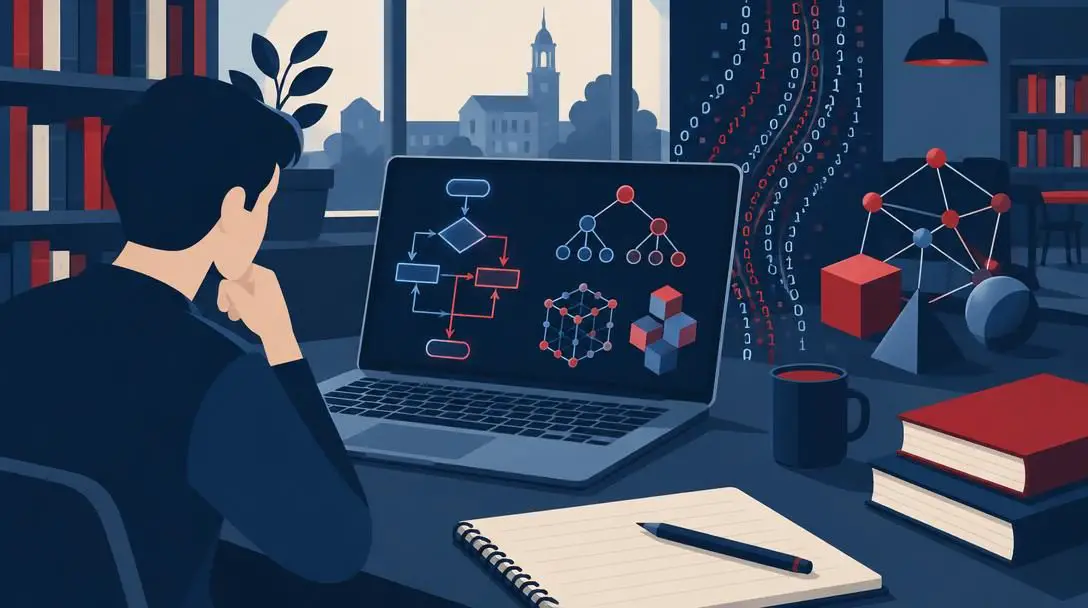
Harvard University's flagship introductory computing course has established itself as an essential starting point for technical learners worldwide. The curriculum approaches computer science not merely as the mechanics of writing code, but as the systematic practice of algorithmic thinking and structured problem-solving. Learners are guided through the underlying mechanics of how computers store information, manage memory, and execute instructions.
The course introduces fundamental concepts using multiple languages and environments, illustrating how high-level programmatic logic connects with low-level machine execution. Students confront foundational data structures—such as arrays, linked lists, and hash tables—which are vital for anyone processing large experimental datasets or building automated numerical models. Whether you are an absolute beginner looking for an accessible on-ramp or a self-taught programmer seeking formal structure, this course builds rigorous computational literacy.
Calculus 1A: Differentiation
- Institution: Massachusetts Institute of Technology
- Discipline: Mathematics
- Core Competency: Differential calculus and rates of change
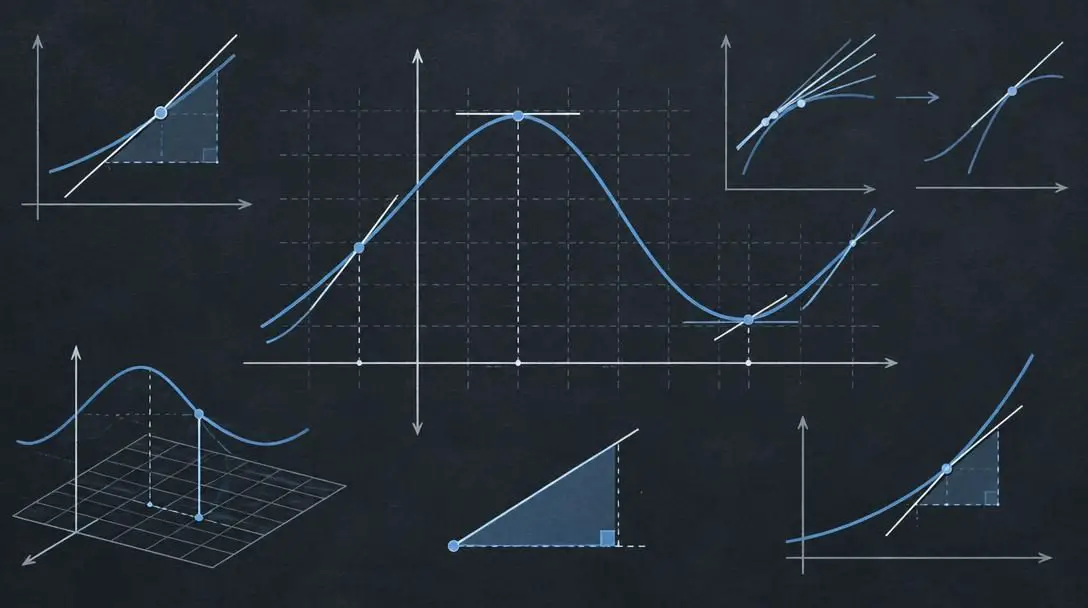
Calculus is the foundational analytical language of the physical universe. Offered through MIT's open learning initiatives, Calculus 1A provides a thorough, uncompromising examination of differentiation and instantaneous rates of change. The course systematically deconstructs limits, continuity, derivative definitions, and optimization problems.
Understanding the mechanical and theoretical nuances of differentiation is essential across physics, mechanical and electrical engineering, computational chemistry, and quantitative economics. By working through rigorous derivations and applying differential techniques to geometric and physical phenomena, students develop the mathematical fluency necessary to analyze dynamic, evolving systems rather than static snapshots.

Statistics for Engineers
- Institution: Stanford University
- Discipline: Applied Mathematics & Engineering
- Core Competency: Probability distributions and experimental inference
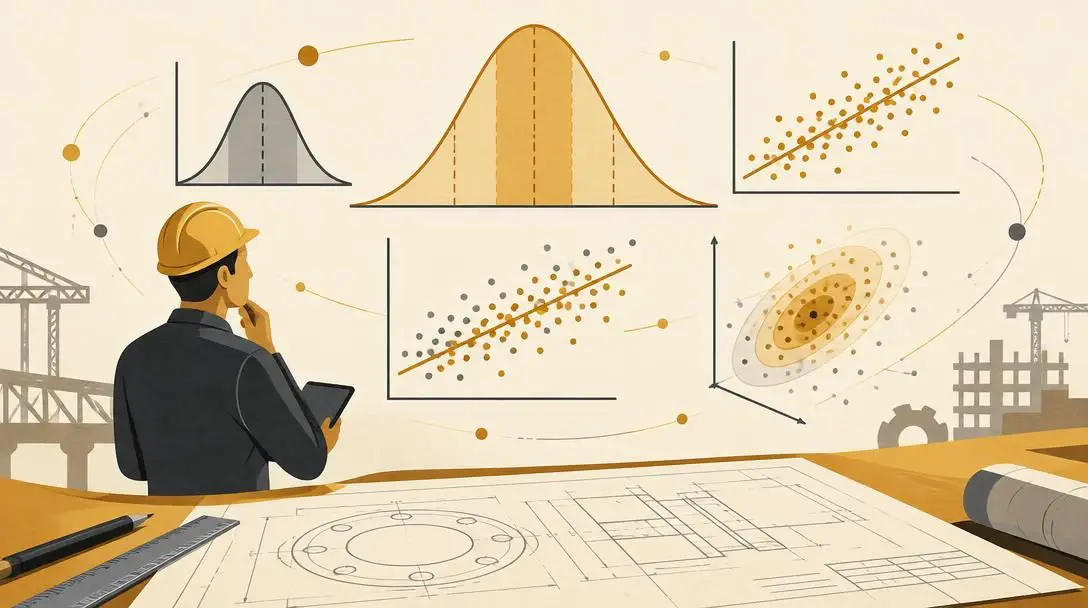
Every laboratory experiment, field study, and industrial quality test produces variability. Stanford University’s course in engineering statistics equips learners with the formal mathematical framework necessary to differentiate genuine physical phenomena from random observational noise. The curriculum introduces probability theory, statistical distributions, hypothesis testing, and regression analysis.
STEM professionals rely on these methods to validate experimental outcomes, evaluate measurement tolerances, and optimize operational parameters. By developing a strong grasp of confidence intervals, null hypothesis significance testing, and linear modeling, students ensure that their research conclusions are mathematically defendable and methodologically sound.
Introduction to Environmental Science
- Institution: Yale University
- Discipline: Natural & Earth Sciences
- Core Competency: Atmospheric physics, geology, and ecological balance
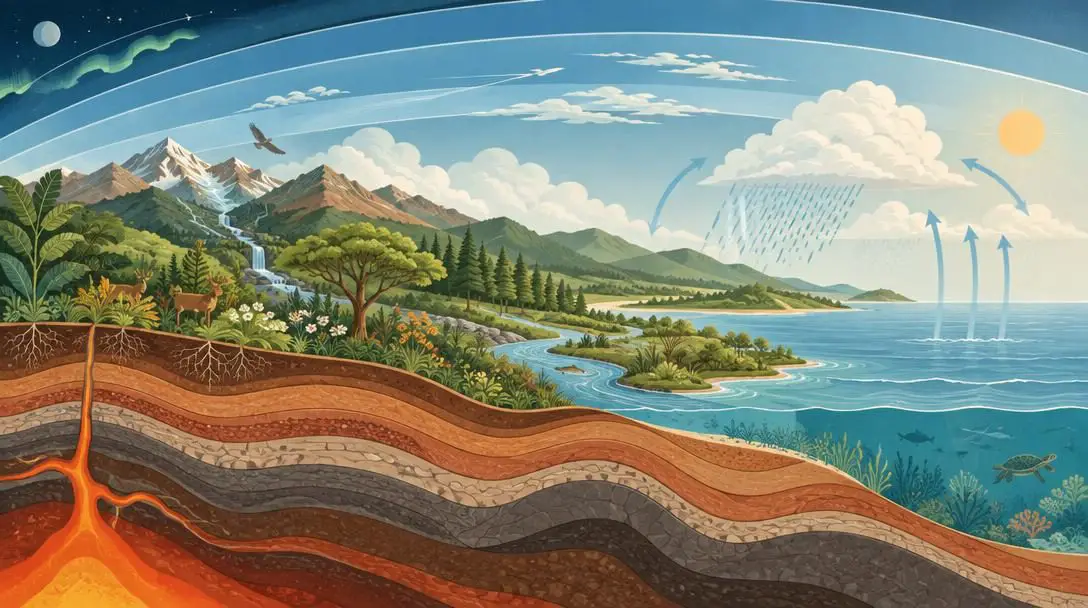
With global climate change, habitat disruption, and resource scarcity presenting unprecedented global challenges, scientific literacy must extend to ecological dynamics. Yale University’s introductory survey course offers a comprehensive perspective on atmospheric science, physical geology, hydrology, and biological ecology.
This course contextualizes technical inquiry within real-world planetary limits. For materials scientists, civil engineers, chemical researchers, and policymakers, understanding how industrial activities interact with earth systems is crucial. The material allows learners to evaluate the broader ecological impacts of emerging technologies, agricultural systems, and energy production architectures.
Introduction to Data Science

- Institution: University of Washington
- Discipline: Data Science & Informatics
- Core Competency: Exploratory data analysis, inference, and visualization
Modern experimental apparatuses generate unprecedented volumes of raw measurements. The University of Washington’s course trains students to transform disorganized numerical inputs into clear, actionable scientific conclusions. The syllabus emphasizes practical data visualization, probability modeling, and statistical inference tailored to empirical data pipelines.
Learners discover how to manipulate structured datasets, detect outliers, create intuitive graphical representations of multi-variable interactions, and draw defensible inferences from real-world samples. Mastering these techniques allows students across physics, biomedical research, and environmental monitoring to handle large-scale experimental outputs independently without relying on third-party data teams.
Breadth of knowledge across foundational topics is what enables true innovation and problem-solving.
How Open-Access University Courses Function
Elite academic institutions make these foundational learning pathways accessible through structured web portals and open educational repositories. While self-guided formats offer complete scheduling flexibility, they maintain the analytical rigor of on-campus university classes. Understanding the architecture of these offerings allows learners to extract maximum value from every module.
Enrolling in an open course typically provides unhindered access to recorded video lectures delivered by senior faculty members, full lecture transcripts, assigned syllabus readings, and dedicated problem sets. For computational courses such as Harvard’s CS50 or the University of Washington’s data science offering, interactive browser-based development environments or automated grading test suites allow students to submit code and receive rapid diagnostic feedback on errors, memory leaks, and logic flaws.

Beyond lecture recordings, university academic archives frequently host extensive supplemental assets. Learners can download digital textbook chapters, historic examinations complete with answer keys, recitation notes, and derivation summaries. Concurrently, vibrant global discussion boards connect students across continents. These peer forums serve as collaborative environments where learners dissect challenging theoretical proofs, debug stubborn software exceptions, and explore conceptual nuances together.
Strategies to Balance Online Learning With a Demanding Degree
Integrating demanding, self-directed coursework alongside a full-time university curriculum requires deliberate time management and organized study habits. Approaching open-access courses as an unorganized hobby frequently results in abandoned progress. Implementing a structured process ensures steady advancement without compromising your regular academic performance.
- Audit and prioritize according to your immediate academic needs: Examine your degree roadmap for the upcoming two semesters to identify your most pressing technical gaps. If your impending coursework demands advanced laboratory data analysis, prioritize Stanford's statistics course or the University of Washington's data science series. If upcoming courses involve computational simulation or hardware-software interfaces, begin with Harvard's CS50.
- Establish a dedicated, protected weekly study schedule: Treat your self-paced study with the same seriousness as a scheduled university seminar. Reserve distinct two-hour blocks on specific days—such as early morning sessions or uninterrupted weekend slots—exclusively reserved for viewing lectures, deriving proofs, or writing software.
- Actively engage with every practical assignment: Avoid passive streaming of lecture content. Take structured, handwritten or digital notes, work through complex algebraic derivations on paper, write programs line-by-line without relying on external copy-pasting, and complete all assigned practice problem sets independently.
- Consult secondary university courseware archives: If an intricate concept—such as continuous probability densities or ecological energy flows—remains opaque after an initial lecture, access alternative university archives. Reviewing how another faculty member illustrates the same underlying theorem frequently resolves conceptual confusion.
- Participate consistently in technical study forums: Engage actively with online learner communities and campus peer groups. Explaining a difficult data structure or troubleshooting an environmental science case study for another learner reinforces your own conceptual retention and establishes valuable study accountability.
Common Pitfalls That Derail Self-Directed Learners
While open-access materials eliminate financial barriers to elite technical education, independent learners frequently stumble into cognitive traps that hinder true mastery. Recognizing these missteps early preserves your study momentum and guarantees measurable skill development.
- Simultaneous over-enrollment: Registering for all five courses at the beginning of an academic term inevitably splits your focus, produces mental exhaustion, and leads to abandoned modules. Master one or two subjects thoroughly before initiating the next.
- Passive lecture consumption: Watching high-production lecture videos without immediate, hands-on application creates an illusion of competence. Without writing code, computing derivatives, or plotting statistical regressions independently, technical retention remains minimal.
- Bypassing fundamental mathematical prerequisites: Attempting to leap straight into advanced statistical inference or multi-variable data science without solid foundations in differentiation and introductory probability results in frustration and shallow understanding.
- Isolating yourself from peer learning networks: Working in complete isolation makes encountering a difficult coding bug or theoretical proof far more discouraging. Joining course forums and discussion boards helps resolve intellectual roadblocks quickly.
- Treating courses as isolated academic exercises: Viewing open coursework as a detached checklist rather than a toolkit for your primary degree limits its utility. Look for immediate opportunities to deploy these techniques in your core laboratory experiments, senior capstone designs, or undergraduate research.
Advancing Beyond the Basics: Practical Applications and Next Steps
Completing introductory coursework across these foundational disciplines marks the beginning of a broader intellectual trajectory. Once you have built competence in programming, differential calculus, applied statistics, environmental systems, and data manipulation, focus on transferring these insights into concrete, real-world outputs.
Begin by actively integrating your new proficiencies into ongoing academic projects. If you are an electrical or mechanical engineering major who has completed Stanford's statistics course, replace rule-of-thumb estimates with rigorous hypothesis testing and regression modeling in your project documentation. If you study chemistry or biological sciences, leverage the scripting techniques learned in CS50 or the University of Washington's data science course to automate repetitive laboratory calculations and generate publication-quality figures.
Next, use your cross-disciplinary background to seek positions in advanced research laboratories. Faculty members managing projects in fields like computational biology, environmental modeling, robotics, and smart infrastructure seek students who possess domain knowledge alongside solid computational and analytical skills. Showcasing completed projects that combine these fields demonstrates maturity, adaptability, and proactive scholarship—traits that will distinguish you throughout your academic and professional career.
Frequently asked questions
Can I take these courses if I have never written code or studied advanced mathematics?
Yes. Introductory courses such as Harvard's CS50 and MIT's Calculus 1A are specifically designed to accommodate motivated beginners while providing sufficient academic depth to challenge students who wish to formalize their technical knowledge.
Do I have to pay to view the lecture videos and assignments?
No. These university courses are made accessible through open-learning platforms and institutional repositories, allowing students to access recorded lectures, problem sets, and syllabus readings free of charge.
How much time should I dedicate to each course per week?
Most independent learners find that dedicating four to six hours per week to a single course—divided between lecture viewing, reading supplemental course notes, and working through problem sets—allows for consistent progress without interfering with primary university obligations.
Which course should I take first if my current major feels overwhelming?
Identify your most immediate academic obstacle. If your degree requires data processing or research analysis, start with Stanford's statistics or the University of Washington's data science course. If your upcoming curriculum demands automation or simulation, begin with Harvard's CS50.
Are these open-access courses recognized by graduate programs and employers?
While self-directed course completion does not replace accredited degree credit, the tangible skills you acquire enable you to complete advanced research projects, contribute to collaborative labs, and build a distinctive technical portfolio that graduate admissions committees and technical employers respect.
The bottom line
Modern scientific innovation occurs at the intersections where traditional disciplines converge. By stepping outside your specialized major and embracing free foundational coursework in computer science, calculus, probability, environmental systems, and data science, you future-proof your technical abilities. Embracing this cross-disciplinary approach transforms you from a narrow practitioner into an agile, innovative problem-solver equipped to confront the complex scientific challenges of tomorrow.