5 Mathematical Mysteries That Might Never Be Solved
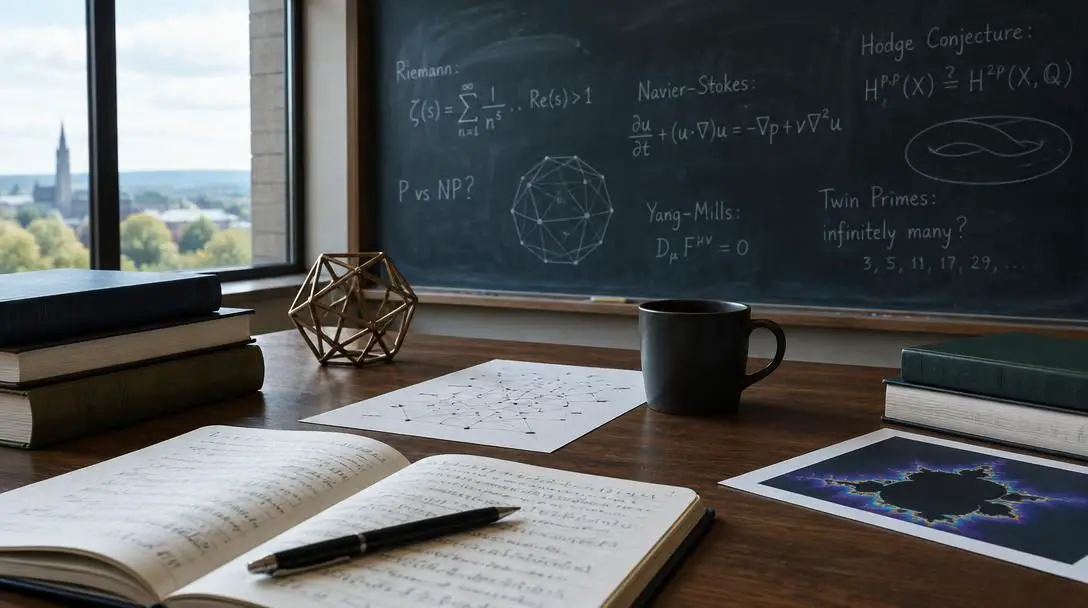
Mathematics is widely regarded as a complex and challenging subject for students around the world. Throughout primary and secondary education, mathematical problems almost always arrive paired with neat answers, established formulas, and verified step-by-step methods. Yet beyond the tidy confines of classroom textbooks lies a vastly different landscape: the frontier of pure mathematics is populated by profound, enduring riddles that have resisted the collective efforts of history's greatest minds for decades, centuries, and even millennia.
At its core, higher mathematics is driven by an unyielding search for truth through rigorous proof. When a mathematician detects an intriguing pattern across numbers, that observed behavior remains merely a hypothesis or conjecture until a formal, logically airtight deduction is established. A statement cannot be accepted as universal fact simply because it holds true for thousands, millions, or billions of consecutive test cases. It must be demonstrated to work universally, across an infinity of numbers, without a single exception. The following five famous mathematical mysteries embody this relentless quest, each offering a window into the enigmatic architecture of numbers, iterative sequences, and geometric curves.
Key takeaways
- Mathematical conjectures require universal logical proof and cannot be validated solely by testing millions of empirical examples.
- Several of the greatest open problems, including the Riemann Hypothesis and the Twin Prime Conjecture, hinge directly on the elusive distribution of prime numbers.
- Deceptively simple arithmetic rules, such as those found in the Collatz Conjecture, can create behavioral complexity that defies modern analytical tools.
- Open mathematical mysteries span diverse branches of thought, ranging from ancient number theory dating back to 300 BC to modern geometric formulations proposed in the mid-twentieth century.
Five legendary mathematical mysteries that remain unsolved
Over the centuries, visionary thinkers have uncovered patterns that appear completely consistent whenever they are tested, yet nobody has been able to establish why they occur or prove that they will always hold true. These five celebrated problems represent the ultimate analytical barriers of the discipline.
| Conjecture | Proposer | Year Proposed | Primary Mathematical Focus |
|---|---|---|---|
| The Riemann Hypothesis | Bernhard Riemann | 1859 | Prime number distribution and whole number sums |
| The Collatz Conjecture | Lothar Collatz | 1937 | Iterative sequences of even and odd integers |
| The Goldbach Conjecture | Christian Goldbach | 1742 | Even numbers and prime number relationships |
| The Twin Prime Conjecture | Euclid | 300 BC | Infinite prime pairs separated by a difference of 2 |
| The Birch and Swinnerton-Dyer Conjecture | David Birch and Peter Swinnerton-Dyer | 1965 | Rational points on elliptic curves |
The Riemann Hypothesis
- Proposed by: Bernhard Riemann
- Year: 1859
- Origin: Germany
German mathematician Bernhard Riemann first proposed his famous hypothesis in 1859, formulating a riddle that has since become widely regarded as the ultimate test of mathematical insight. The Riemann hypothesis is a mathematical conjecture suggesting that every non-zero whole number is the sum of a specific sequence of prime numbers. While generations of scholars have attempted to prove or disprove this hypothesis using every tool at their disposal, it remains completely unproven today.
The mystery surrounding this problem runs remarkably deep. Most experts believe that confirming whether the Riemann belief is true would carry significant implications for our understanding of the distribution of prime numbers. Prime numbers—numbers greater than one that have no positive integer divisors other than one and themselves—serve as fundamental building blocks across mathematics, yet their placement across the infinite number line has puzzled scholars for centuries. Despite centuries of intensive research and the application of massive modern computational power, Riemann's statement remains out of reach, marking an analytical frontier where existing mathematical machinery consistently falls short.
The Collatz Conjecture
- Proposed by: Lothar Collatz
- Year: 1937
- Origin: Germany
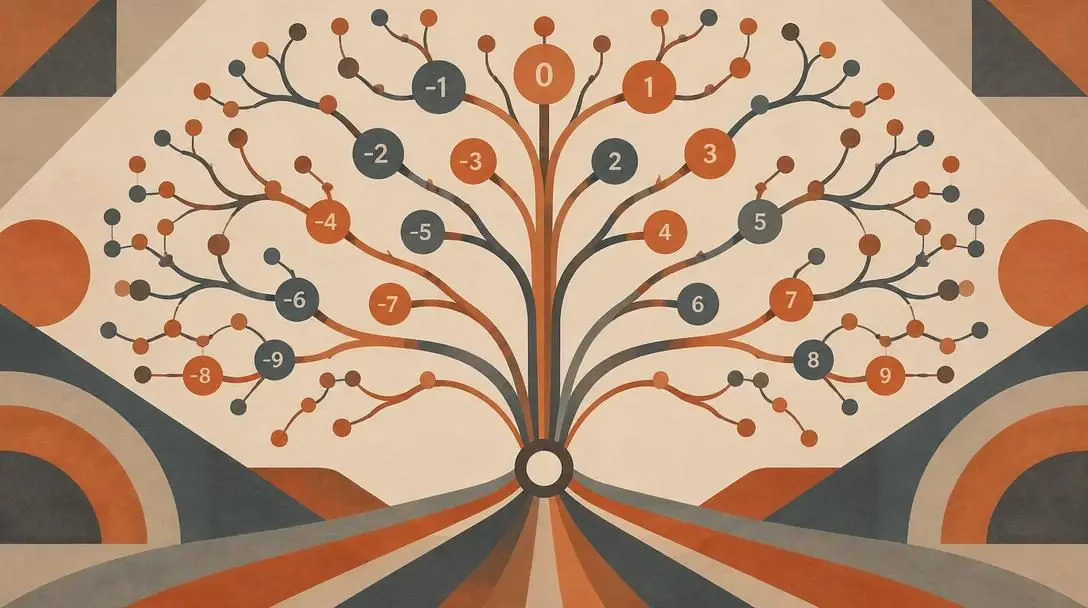
First proposed by German mathematician Lothar Collatz in 1937, the Collatz conjecture explores how numbers behave under an extraordinarily simple arithmetic rule. The problem asks what happens when you select any positive integer and repeatedly apply two basic operations: divide the number in half if it is even, or triple the number and add one if it is odd.
To see how this iterative process operates in practice, consider the starting number 5:
- Because 5 is odd, triple it and add one: (5 multiplied by 3) plus 1 equals 16.
- Because 16 is even, divide it in half to get 8.
- Because 8 is even, divide it in half to get 4.
- Because 4 is even, divide it in half to get 2.
- Because 2 is even, divide it in half to get 1.
This process generates the sequence: 5, 16, 8, 4, 2, 1. It has been proven that this specific sequence will always reach the number 1, but mathematicians have been unable to verify why this behavior occurs universally across all possible starting numbers. Several mathematicians have worked on the problem over decades without discovering a universal proof. Intriguingly, some theorists believe that the Collatz conjecture may be connected to the Riemann hypothesis. If proven true, it could offer profound insight into how numbers behave across iterative sequences. Its elementary rules make it deceptive, as even young students can calculate sequences, yet professional researchers cannot produce an exhaustive proof.
The Goldbach Conjecture

- Proposed by: Christian Goldbach
- Year: 1742
- Origin: Switzerland
Dating back to 1742, when it was first put forward by Swiss mathematician Christian Goldbach, this statement stands as one of the oldest unsolved problems in the history of mathematics. The Goldbach conjecture is a mathematical statement that suggests that every even number greater than two prime numbers, multiplied together, can be regarded as the product of two prime numbers. Some experts have dedicated years of study to this riddle but have been unable to construct a valid proof, leaving the claim unproven across centuries.
Much like other foundational problems in number theory, many experts believe that validating this conjecture could lead to a far better understanding of the distribution of prime numbers. Because primes appear to crop up in erratic and unpredictable intervals, establishing an undeniable law that governs how even values break down into prime relationships would represent a major milestone in modern mathematics.
The Twin Prime Conjecture

- Proposed by: Euclid
- Year: 300 BC
- Origin: Ancient Greece
The Twin Prime Conjecture addresses twin prime pairs, which are defined as pairs of prime numbers that differ by exactly 2. Familiar examples of such pairings include 3 and 5, 5 and 7, as well as 11 and 13. The conjecture asserts that there is an infinite number of twin prime pairs within the infinite set of all prime numbers.
Greek mathematician Euclid first mentioned this possibility in 300 BC, making it an ancient puzzle that has endured across thousands of years of human civilization. While generations of mathematicians have worked on the problem across distinct historical eras, it has never been formally proved. If the twin prime conjecture is true, it would carry major implications for our understanding of prime distribution, settling once and for all whether prime numbers continue to cluster in close pairs indefinitely as values stretch toward infinity.
The Birch and Swinnerton-Dyer Conjecture

- Proposed by: David Birch and Peter Swinnerton-Dyer
- Year: 1965
- Origin: United Kingdom
Turning away from basic integer sequences, the Birch and Swinnerton-Dyer conjecture explores the sophisticated intersection of geometry and algebra through elliptic curves. This conjecture suggests that every elliptic curve over the field of rational numbers has a finite number of points. Proposed in 1965 by British mathematicians David Birch and Peter Swinnerton-Dyer, it represents one of the central challenges of twentieth-century mathematics.
Unlike some famous conjectures that enjoy virtually universal confidence within the academic community, some mathematics experts believe that the Birch and Swinnerton-Dyer conjecture is actually false. However, there is still no definitive proof either way. Should the statement prove true, it would exert profound implications for the ongoing study of elliptic curves, an area of geometry that underpins critical modern applications and abstract algebraic inquiry.

A mathematical statement cannot be accepted as fact simply because it works for the first billion numbers; it must hold true universally without a single exception.
How mathematical conjectures work
To grasp why these five problems remain unresolved despite immense historical effort, one must appreciate the clear line between empirical testing and formal deduction. The journey of any mathematical truth follows a strict methodological path:
- Observation: A mathematician notices an intriguing numerical regularity, recurring symmetry, or algebraic relationship while calculating equations or examining sets of data.
- Formulation: The observed phenomenon is defined as a precise, unambiguous mathematical statement that outlines the exact universe of numbers, sets, or geometric objects to which it applies.
- Empirical Verification: The newly minted conjecture is calculated and tested across extensive numbers, algorithms, or curves to verify that it functions as expected and to uncover any anomalies.
- Search for Counterexamples: Researchers actively attempt to break the premise, searching for a single aberrant case or outlier that would invalidate the entire claim.
- Formal Deduction: The final and most difficult hurdle requires assembling an unbroken chain of logical deductions demonstrating that the statement holds across all eligible cases without exception.
A conjecture only earns the status of a theorem once formal deduction is complete. Without an airtight proof, an idea that holds true for every single case tested over centuries remains merely an unproven mystery.
Practical steps for investigating mathematical mysteries
For students, educators, and curious problem-solvers eager to build intuition about these famous questions, engaging directly with their mechanics offers valuable mathematical insight. You can explore these concepts firsthand through structured investigation:
- Trace the Collatz rules manually: Choose various starting numbers such as 7, 9, or 27 and trace their sequences step by step. Note how values rise and fall unpredictably before collapsing down through the characteristic 4, 2, 1 sequence.
- Catalog twin prime pairs: Write out prime numbers sequentially and highlight those separated by a difference of 2. Compare how frequently these pairs appear among smaller numbers versus larger numbers along the number line.
- Study foundational texts: Read historical accounts detailing how Bernhard Riemann, Christian Goldbach, Euclid, David Birch, and Peter Swinnerton-Dyer originally framed their concepts.
- Analyze the logic of mathematical proof: Study fundamental proof techniques such as direct proof, proof by contradiction, and mathematical induction to understand what is required to turn an unverified conjecture into a settled theorem.
- Work through elliptic curve fundamentals: For advanced learners, investigate how equations of elliptic curves are defined and explore what it means to locate points on these curves over rational numbers.
Common mistakes to avoid when studying open problems
Approaching mathematical mysteries requires a clear understanding of the rigorous standards of the field. Amateurs and general enthusiasts frequently run into several core misconceptions:
- Confusing high-volume testing with formal proof: Demonstrating that an arithmetic rule functions across millions or trillions of consecutive values does not prove it will work for the next integer. A single counterexample in an infinite set is sufficient to destroy a conjecture.
- Assuming simple rules guarantee simple proofs: Problems like the Collatz conjecture have rules that can be understood in seconds, but the mathematical dynamics governing their behavior are profoundly intricate.
- Overlooking the precise definition of terms: Precision is paramount in number theory. Forgetting restrictions—such as specifying positive integers, rational fields, or prime numbers—inevitably leads to invalid conclusions.
- Believing a conjecture is true simply because no counterexample exists: As demonstrated by the Birch and Swinnerton-Dyer conjecture, expert opinion can be divided. The absence of a disproving counterexample does not establish logical truth.
- Ignoring historical context: These riddles have resisted the concerted efforts of the world's most brilliant minds across centuries. Treating them as easily solved recreational puzzles ignores their profound underlying structural difficulty.
What to consider next in your mathematical journey
If exploring these unresolved questions has sparked your curiosity, consider diving deeper into the foundational ideas that surround them:
- The Nature of Mathematical Truth: Reflect on whether every true mathematical statement can ultimately be proved, or whether some mathematical truths remain permanently beyond the reach of formal deduction.
- The Central Role of Prime Numbers: Prime numbers stand at the center of the Riemann hypothesis, the Goldbach conjecture, and the Twin Prime conjecture. Exploring prime number behavior offers an ideal entry point into modern number theory.
- The Relationship Between Geometry and Algebra: Modern mathematical research frequently bridges disparate topics, as seen in the study of elliptic curves under the Birch and Swinnerton-Dyer conjecture.
- The Value of Failed Attempts: Even unsuccessful attempts to prove these conjectures have led to the creation of brand new mathematical tools, theories, and techniques that enrich the entire field.
Frequently asked questions
Why can't supercomputers prove these mathematical conjectures?
Supercomputers can only calculate specific numbers one by one. Because number sets are infinite, checking billions or trillions of individual cases cannot guarantee that an exception will not appear later. A mathematical proof requires a universal logical argument, not empirical verification.
Which of these five mathematical mysteries is the oldest?
The Twin Prime Conjecture is the oldest of the group, having first been mentioned by the Greek mathematician Euclid around 300 BC, making it a puzzle that has endured for more than two thousand years.
Do all mathematicians agree that these conjectures are true?
No, not all conjectures enjoy universal agreement. While many are widely suspected to be true, some mathematics experts believe that the Birch and Swinnerton-Dyer conjecture may actually be false, though definitive proof has yet to be produced either way.
Why are prime numbers involved in so many unsolved mathematical problems?
Prime numbers are the fundamental building blocks of all integers, but their distribution across the number line appears irregular and unpredictable. Problems like the Riemann Hypothesis, the Goldbach Conjecture, and the Twin Prime Conjecture all center on trying to understand this hidden order.
Are the Collatz Conjecture and the Riemann Hypothesis connected?
Some theorists believe that the Collatz conjecture may be connected to the Riemann hypothesis, suggesting that finding solutions to iterative number sequences could provide deeper insights into the underlying distribution of numbers.
The bottom line
Mathematics is far from a finished subject filled only with established facts and memorized procedures. Instead, it remains an active, evolving search for understanding defined by profound mysteries that have humbled scholars for centuries. While the Riemann Hypothesis, the Collatz Conjecture, the Goldbach Conjecture, the Twin Prime Conjecture, and the Birch and Swinnerton-Dyer Conjecture remain completely unsolved today, mathematicians around the world continue to develop new tools and techniques in the hope of unlocking them. With persistence and fresh insight, the solution to one of these enduring riddles might one day be discovered by the next generation of thinkers.