5 Thought Leaders With Eccentric Habits

Thought leaders perceive the surrounding world through a distinct lens, unbound by conventional perspectives. As passionate, visionary rule-breakers, they frequently operate as trailblazing pioneer disruptors who drive cultural change and propel society forward. Because their minds operate outside the predictable boundaries of standard daily routines, it is hardly surprising that their private lifestyles often feature striking eccentricities.
Throughout modern and ancient history, groundbreaking achievements have frequently coincided with highly individualized personal rituals that appear baffling to casual observers. Far from being mere personal oddities, these unusual behaviors frequently serve an essential functional purpose. For innovators carrying the weight of historic enterprises or pioneering global movements, tailored routines offer reliable mechanisms to manage severe psychological pressure, channel cognitive resources, and safeguard mental clarity.
Key takeaways
- Eccentric habits among prominent innovators frequently serve as deliberate self-regulation mechanisms to combat mental fatigue and high-stakes stress.
- Physical interventions such as cold-water submersion and rhythmic rocking stimulate neurological alertness and provide sensory balance.
- Emotional release through open crying functions as a natural physiological valve that resets clarity during intense creative pursuits.
- Eliminating trivial choices like daily outfit selection protects finite mental reserves for critical leadership decisions.
- Constraining collaboration using structural limits like the two-pizza rule preserves operational momentum and prevents administrative drag.
At a glance: Visionaries and their unconventional routines
| Thought Leader | Primary Enterprise | Signature Eccentric Habit | Functional Benefit |
|---|---|---|---|
| Benjamin Franklin | American Founding / Publishing | Daily cold-water swims in the Thames | Thermal stimulation and cardiovascular circulation |
| Steve Jobs | Apple | Incessant weeping during emotional peaks | Physiological stress release and emotional reset |
| Bill Gates | Microsoft | Rhythmic rocking back and forth in chairs | Vestibular self-soothing and deep concentration |
| Mark Zuckerberg | Wearing an identical outfit daily | Preservation of decision-making energy | |
| Jeff Bezos | Amazon | Enforcing the two-pizza meeting guideline | Elimination of bureaucratic drag and social dilution |
Five thought leaders and their signature eccentricities
Examining the private behaviors of celebrated pioneers reveals that unusual routines are rarely incidental. Whether adjusting biological states or restructuring social environments, each practice highlights an unconventional response to the immense cognitive challenges of leadership.
Benjamin Franklin
- Role: American Founder, diplomat, and polymath
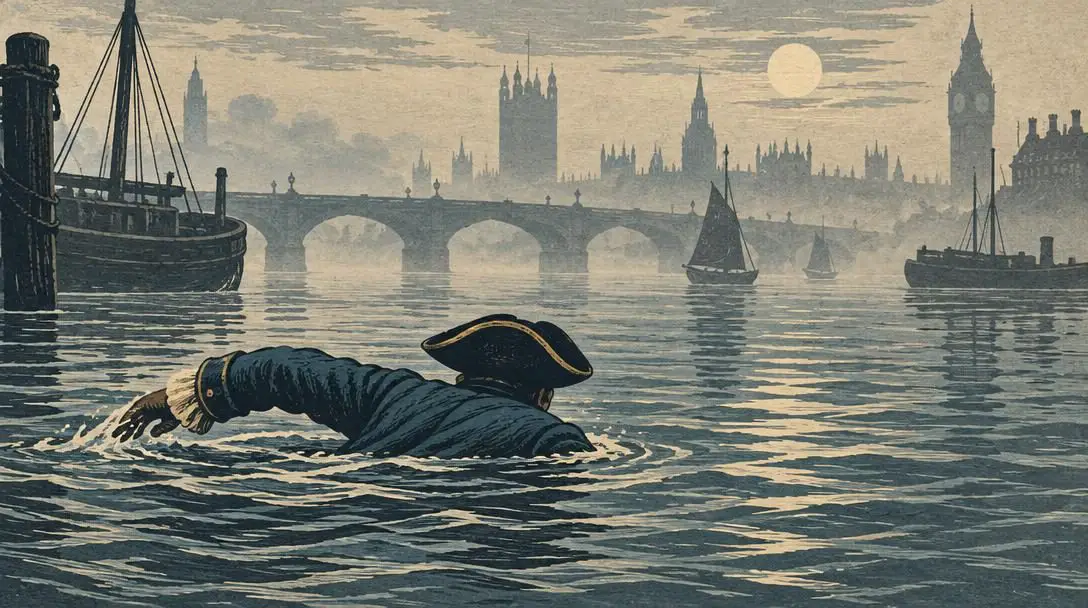
- Signature habit: Daily cold-water swims in the chilly London Thames river
- Guiding precedent: The hydrotherapeutic observations of Hippocrates
No historical exploration of innovative thought leadership would be complete without highlighting the multifaceted American Founder Benjamin Franklin. Among his wide array of curious habits, Franklin was devoted to taking daily swims in the chilly waters of the London Thames river. Franklin held an unshakable conviction that submerging the human body into chilled water yielded vital health advantages.
Franklin was by no means the first thinker to embrace this chilling regimen. Centuries before him, the revered ancient Greek physician Hippocrates recorded that cold-water bodily submersion actively combated both physical and mental weakness. Modern scientific analysis validates these historical instincts, proving that exposure to cold water—whether through an ice bath, an outdoor swim, or a cold shower—invigorates the brain by redirecting a rush of fresh oxygenated blood directly to the body's vital organs.
Steve Jobs

- Role: Co-founder of Apple
- Key achievements: Pioneered the Mac computer and the iPod
- Signature habit: Uninhibited weeping during intense emotional experiences
As the visionary co-founder of Apple, Steve Jobs fundamentally reshaped modern consumer technology, first through the user-friendly Mac computer and later via the revolutionary iPod. Behind his exacting professional exterior, however, Jobs exhibited a deeply unconventional response to pressure: during moments of heightened tension, he openly turned to tears. Whether overwhelmed by profound professional frustration or moved by profound artistic happiness, Jobs cried incessantly.
Rather than viewing these episodes as signs of fragility, Jobs characterized his tears as reflections of an authentic purity of spirit. From a biological perspective, Jobs was relying on an effective natural coping mechanism. Contemporary research confirms that crying actively alleviates stress and promotes enhanced mental clarity, releasing chemical byproducts built up during rigorous creative and operational endeavors.
Rather than acting as mere peculiarities, these routines often help innovators manage intense pressure, focus their cognitive resources, and maintain clarity while building historic enterprises.
Bill Gates

- Role: Co-founder of Microsoft
- Signature habit: Continuous rhythmic rocking back and forth when thinking
- Earliest documentation: Noted frequently during his time as a Harvard student
The principal architect behind Microsoft, Bill Gates, has long displayed a kinetic physical habit that draws immediate attention: he rocks. Whenever Gates immerses himself in deep thought or analytical problem-solving, he begins rocking back and forth in his chair. Longtime colleagues and staff members noted that the speed and physical enthusiasm of his rocking directly mirrored his internal passion for the concept being discussed.

This kinetic motion was not an executive affectation; Gates was known to rock continuously even during his early days as a student at Harvard. Although Gates has never publicly confirmed a formal diagnosis, many observers believe this repetitive movement strongly indicates neurodivergence. His kinetic rocking, combined with a signature monotone speech pattern and minimal eye contact, has led many to speculate that Gates falls on the autism spectrum. He is not alone in that retrospective company, as many revered historical geniuses—including Albert Einstein, Michelangelo, Sir Isaac Newton, and Nikola Tesla—are widely considered today to have exhibited autistic traits.
Mark Zuckerberg

- Role: Founder of Facebook
- Signature habit: Wearing the identical style of gray t-shirt every day
- Cold-weather variation: Adding a standard hooded sweatshirt
To an outside observer monitoring public appearances, Facebook founder Mark Zuckerberg might appear to never change his clothes. In reality, Zuckerberg launders and updates his clothing constantly, but he intentionally wears the exact same style of ensemble every single solitary day. His unchanging daily uniform consists of a basic gray t-shirt, augmented by a simple hoodie whenever the ambient weather turns cold.
Zuckerberg explained that he instituted this strict sartorial rule because he never wants to squander valuable time or cognitive bandwidth selecting garments each morning. By eliminating non-essential early morning choices, he optimizes his daily mental capacity, reserving his peak decision-making focus for steering a massive global platform handling complex communications and continuous operational challenges.
Jeff Bezos

- Role: Founder and executive leader of Amazon
- Signature habit: Restricting meeting sizes according to the two-pizza rule
- Office design quirk: Constructing corporate desks out of repurposed wooden doors
Amazon founder Jeff Bezos has instituted several idiosyncratic habits throughout his career, ranging from working at an office desk assembled out of a standard wooden door to mandating that team proposals be drafted in an uncompromising, short-form narrative template. Among his most influential workplace rules, however, is his famous two-pizza rule regarding corporate collaboration.
Under this strict operational framework, Bezos refuses to organize or attend any business meeting where two pizzas would be insufficient to feed every participant present in the room. Bezos maintains that small, intimate teams working toward defined targets represent the only reliable way to drive organizational progress while preventing the suffocating inertia of bureaucratic friction.
The physiological and cognitive mechanics behind eccentric habits
When examined through the lenses of neurology, physiology, and organizational psychology, the peculiar habits of these five leaders reveal precise functional adaptations to the demands of extreme performance.
Thermal Shock and Cardiovascular Circulation: The icy waters of the Thames river forced a rapid cardiovascular response in Benjamin Franklin. Immersion in cold water causes peripheral blood vessels to contract instantly, redirecting circulation inward toward the central nervous system and core vital organs. This dramatic circulatory shift delivers an immediate surge of oxygen to the brain, stripping away mental fatigue and elevating autonomic alertness.
Emotional Release and Hormonal Reset: Steve Jobs' unrestrained weeping served as an organic neurochemical safety valve. In periods of extreme emotional stress or elevated creative pressure, tears facilitate the expulsion of stress-induced chemical compounds while activating the parasympathetic nervous system. This bodily reset prevents internal emotional burnout and restores mental equilibrium.

Vestibular Stimulation and Self-Soothing: Bill Gates' constant rocking back and forth engages the vestibular system—the sensory apparatus that processes movement and balance. Rhythmic physical motion acts as an instinctual calming mechanism, muting distracting internal chatter and channeling surplus nervous energy so the brain can untangle dense conceptual logic.
Decision Conservation and Cognitive Preservation: Mark Zuckerberg's unchanging wardrobe reflects the well-documented principle of decision conservation. Because the human brain draws from a finite reservoir of willpower and critical reasoning capacity each day, squandering cognitive energy on trivial lifestyle variables degrades executive function later in the afternoon. Automating the wardrobe keeps that mental bank account intact.
Social Dynamics and Operational Focus: Jeff Bezos' two-pizza guideline targets the mathematical realities of group dynamics. As meeting sizes expand, the number of potential interpersonal communication pathways increases exponentially. By artificially capping team gatherings to small clusters, Bezos reduces communication noise, clarifies individual accountability, and eliminates bureaucratic drag.
Practical steps for adapting visionary routines
Professionals do not need to oversee multinational corporations to benefit from the foundational mechanisms powering these eccentric habits. The following sequence outlines how to adapt these principles to your own daily workflow:
- Audit your daily decision load: Catalog the repetitive, low-impact choices you make each morning before beginning core work. Standardize mundane elements such as breakfast choices or clothing combinations to conserve executive focus for your primary creative and strategic tasks.
- Introduce physical temperature stimuli: Awaken your nervous system without dangerous open-water plunges. Transition the final minute of your daily morning shower to cold water, concentrating on steady diaphragmatic breathing to build resilience and heighten mental alertness.
- Designate low-friction emotional outlets: Stop suppressing stress, frustration, or intense excitement during grueling projects. Establish private, constructive routines that permit authentic emotional processing so tension does not accumulate and cloud your analytical judgment.
- Embrace your natural focus quirks: Identify the physical movements that assist your personal thought process, whether pacing your office, rocking, or manipulating a physical object. Integrate these motor behaviors during solitary problem-solving sessions rather than forcing unnatural stillness.
- Enforce strict limits on collaborative meetings: Review your weekly calendar and trim oversized sessions. Limit working groups to small cohorts that could comfortably share a modest meal, ensuring that every invited colleague has a direct stake in the meeting's specific objective.
Common mistakes when adopting unconventional habits
While borrowing performance strategies from extraordinary leaders can yield valuable improvements, uncritical imitation often introduces new complications. Keep these common missteps in mind:
- Confusing the habit with the outcome: Donning a gray t-shirt every day will not construct a massive social network, nor will swimming in icy currents make someone an influential statesman. Eccentric habits are purely supportive tools designed to clear friction; they are never substitutes for foundational skill, market timing, and relentless effort.
- Overlooking personal health constraints: Abruptly diving into freezing bodies of water can introduce significant medical risks, particularly for individuals with unmonitored cardiovascular vulnerabilities. Any intense physical regimen must be approached with sensible precautions.
- Disregarding workplace etiquette and context: Unrestrained weeping or aggressive chair rocking may be tolerated in the founder of an iconic enterprise, but exhibiting extreme behaviors without social awareness in a standard collaborative workplace can alienate colleagues and damage team morale.
- Downsizing teams without clear agendas: Restricting meeting sizes to two pizzas will fail completely if the session lacks a structured, written objective. Small groups without directional clarity can waste time just as easily as large committees.
- Rigidly forcing unnatural quirks: Imposing an arbitrary habit that actively clashes with your natural rhythm—such as forcing yourself to rock when you prefer still meditation—only wastes cognitive reserves instead of preserving them.
Frequently asked questions
Why did Benjamin Franklin swim in the freezing Thames river?
Benjamin Franklin swam in the cold London Thames river because he believed chilled water immersion combated physical and mental weakness, echoing beliefs originally recorded by Hippocrates. Modern science supports this view, showing that cold-water immersion invigorates the brain by redirecting fresh blood flow to internal vital organs.
Did Steve Jobs view his frequent crying as a personal weakness?
No, Steve Jobs did not view his tears as a flaw. He described his open emotional crying during times of deep frustration or intense happiness as reflecting an authentic purity of spirit. Physiologically, crying serves to relieve built-up stress and restore mental clarity during demanding pursuits.
Has Bill Gates ever confirmed that he is on the autism spectrum?
Bill Gates has never publicly confirmed an autism diagnosis. However, observers frequently point to his persistent chair-rocking habit, monotone speech pattern, and limited eye contact as common indicators of neurodivergence, drawing parallels to historical visionaries like Albert Einstein, Michelangelo, Sir Isaac Newton, and Nikola Tesla.
What is the main operational purpose of Mark Zuckerberg's uniform?
Mark Zuckerberg wears an identical gray t-shirt and hoodie daily to eliminate the mental effort of choosing clothes each morning. This practice protects his decision-making energy from trivial lifestyle choices, preserving his focus for the high-stakes demands of running Facebook.
What is Jeff Bezos' two-pizza rule for meetings?
Jeff Bezos' two-pizza rule is an organizational guideline where he refuses to schedule or attend any meeting where two pizzas could not feed all the attendees. By keeping groups small and intimate, Bezos minimizes communication overhead, avoids bureaucratic friction, and ensures teams remain focused on clear objectives.
The bottom line
The unusual behaviors of Benjamin Franklin, Steve Jobs, Bill Gates, Mark Zuckerberg, and Jeff Bezos demonstrate that groundbreaking productivity is rarely born from standard conventions. Whether chilling the circulatory system, embracing honest emotional outlets, pacing vestibular energy, automating trivial decisions, or limiting collaborative group sizes, each habit addresses a real cognitive or physical challenge.
The true takeaway from these visionaries is not that everyone should adopt their exact idiosyncratic quirks, but rather that high performers must intentionally mold their environments to suit their personal mental architecture. By identifying your own natural responses to stress, cognitive overload, and collaboration, you can implement deliberate, personalized habits that cut through daily noise and unlock lasting intellectual clarity.