5 Unbelievable Bird Facts

Birds can aptly be described as the fish of the land. Although every species belongs to the broad avian family, evolutionary pathways have produced astonishing variations in form, physiology, and lifestyle. From flightless marine divers like penguins to apex predators soaring in high thermals like bald eagles, and hyper-kinetic hoverers like hummingbirds, avian species have developed traits so distinct that they might seem to originate from entirely separate worlds.
Examining these evolutionary specializations reveals both the ingenuity and the strange humor of natural selection. By taking a closer look at the bizarre and remarkable adaptations that govern avian life, we gain a deeper appreciation for how wild animals meet the challenges of survival, movement, and community.
Key takeaways
- Birds eliminate urine and feces simultaneously as uric acid to eliminate the weight of a bladder for flight.
- Corvids like crows and ravens possess advanced facial recognition, remembering specific individual humans over time.
- Hummingbirds sustain heart rates exceeding 1,200 beats per minute, demanding continuous caloric fuel throughout the day.
- Madagascar's extinct elephant birds reached heights of nearly 10 feet and weighed as much as 2,000 pounds.
- Flamingos form dedicated social networks, maintaining tight companion groups of three to six friends within larger colonies.
At a Glance: Extraordinary Avian Adaptations
Avian species have adapted to their environments through drastic structural, intellectual, and metabolic changes. The table below outlines how these notable species and traits compare across core survival mechanics.
| Bird / Adaptation | Primary Characteristic | Primary Function or Scale | Key Advantage |
|---|---|---|---|
| Flamingos | Lifelong selective social groups | Circles of 3 to 6 companions | Mutual support, defense, and chick rearing |
| Elephant Birds | Colossal flightless island gigantism | Nearly 10 feet tall, up to 2,000 pounds | Dominance in an isolated island habitat |
| Hummingbirds | Hyper-accelerated metabolism | Heart rates surpassing 1,200 bpm | Sustained hovering and high-agility flight |
| Ravens and Crows | Long-term facial memory | Identification of individual human faces | Threat avoidance and environmental learning |
| Avian Waste System | Consolidated excretion of uric acid | Combined white pasty elimination | Rapid weight reduction for powered flight |
Five Unbelievable Avian Discoveries
Each of the following five phenomena highlights a distinct dimension of avian biology, ranging from complex social dynamics to metabolic extremes and fossil records of ancient scale.
Flamingos
- Distinguishing Trait: Iconic pink plumage
- Social Circle Size: Three to six close friends
- Reproduction Pattern: Mated pairs raise chicks annually
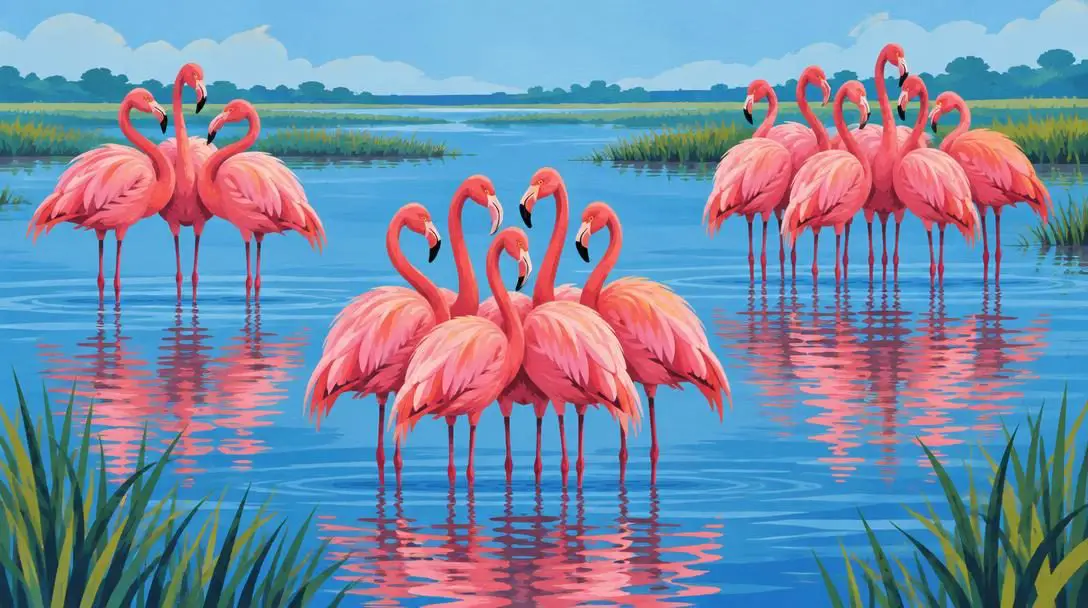
While flamingos are globally famous for their bright pink plumage, their intricate social dynamics are just as remarkable. Flamingos do not view their sprawling colonies as uniform crowds. Instead, they exhibit human-like social structures, selecting specific peers early in life and maintaining those partnerships over decades. Mated pairs collaborate diligently each year to rear their chicks, but their reliance on social bonds extends well beyond romance. Individual flamingos build a dependable inner circle of roughly three to six friends. These companions stay close together, offering reliable alliances that help each member navigate disputes, guard nests, and handle the daily pressures of flock life.
Elephant Birds
- Historical Habitat: Island of Madagascar
- Extinction Window: Roughly 1,000 years ago
- Maximum Dimensions: Nearly 10 feet tall and up to 2,000 pounds
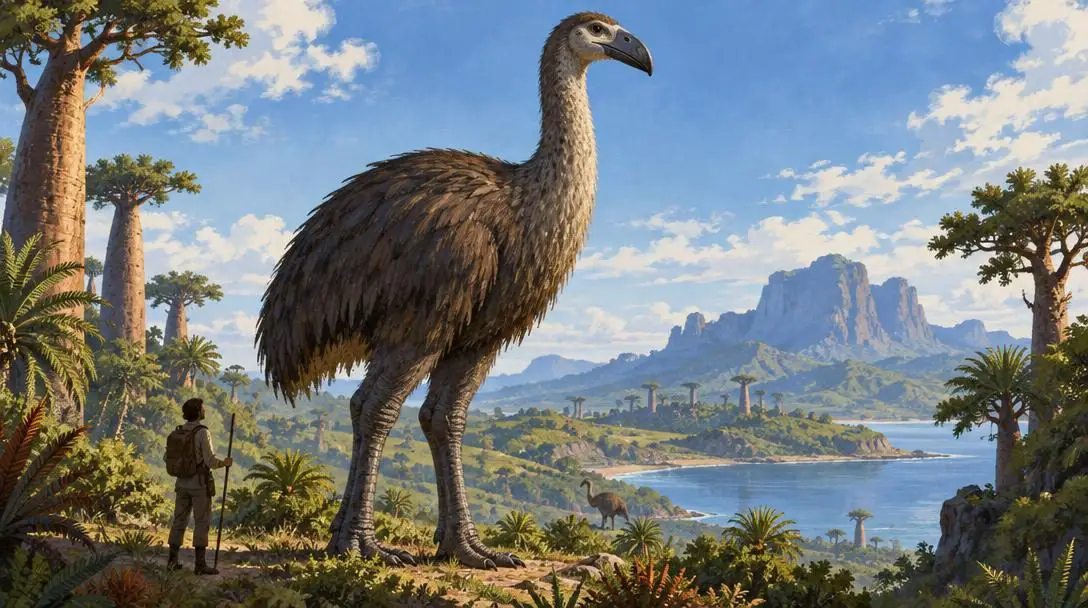
Modern landscapes host large birds such as ostriches and emus, but nothing living today rivals the sheer mass of the extinct elephant bird. Confirmed extensively by fossil evidence on Madagascar, these colossal creatures walked the island until their extinction approximately 1,000 years ago. Standing nearly 10 feet tall and reaching staggering weights of up to 2,000 pounds, an elephant bird presented an imposing silhouette comparable in physical volume to a small private airplane. Their presence in the fossil record proves how vastly avian lineages can diversify in body mass when isolated on island ecosystems without pressure from large mammalian predators.
Hummingbirds
- Cardiovascular Rate: Over 1,200 heartbeats per minute
- Locomotion: Precision hovering in midair
- Human Equivalent Intake: Approximately 300 pounds of meat daily
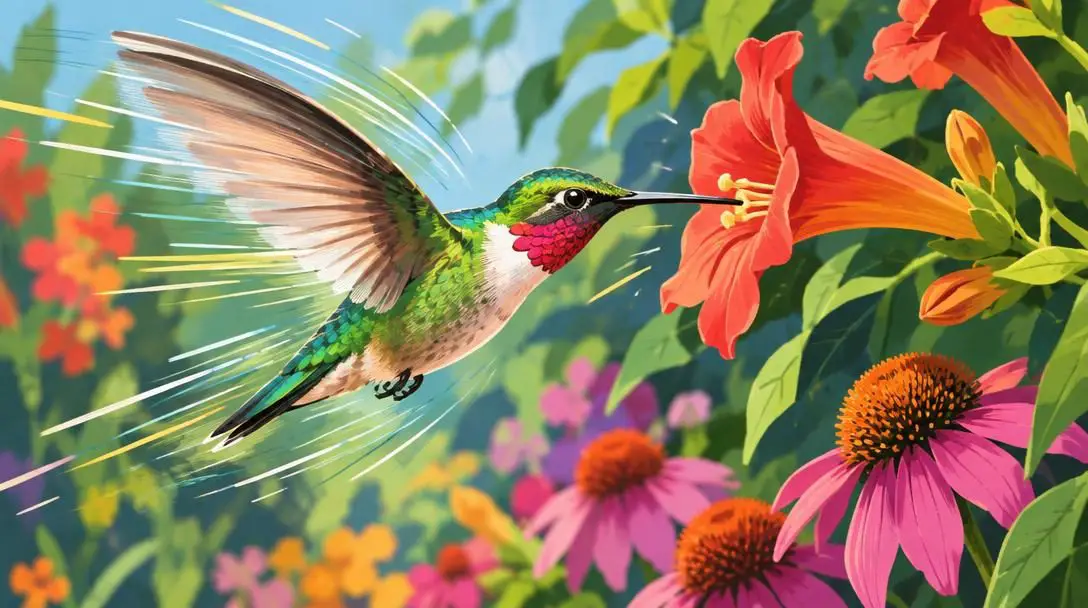
Hummingbirds are celebrated as delicate garden visitors that zip across flowers and feeders with absolute precision. Behind their graceful hovering lies one of the most intense energetic engines on Earth. A hummingbird's heart beats at speeds surpassing 1,200 beats per minute, driving an exceptional metabolic burn. To survive, these miniature birds require a practically non-stop supply of fuel during daylight hours. If an average-sized adult human were forced to match the metabolic consumption rate of an active hummingbird, that person would have to ingest around 300 pounds of meat every single day just to prevent rapid starvation. Without constant sips of carbohydrate-rich flower nectar, a hummingbird's energy reserves would collapse rapidly.
Holding onto liquid waste would add extra weight during flight, so birds shed that load almost immediately.
Ravens and Crows
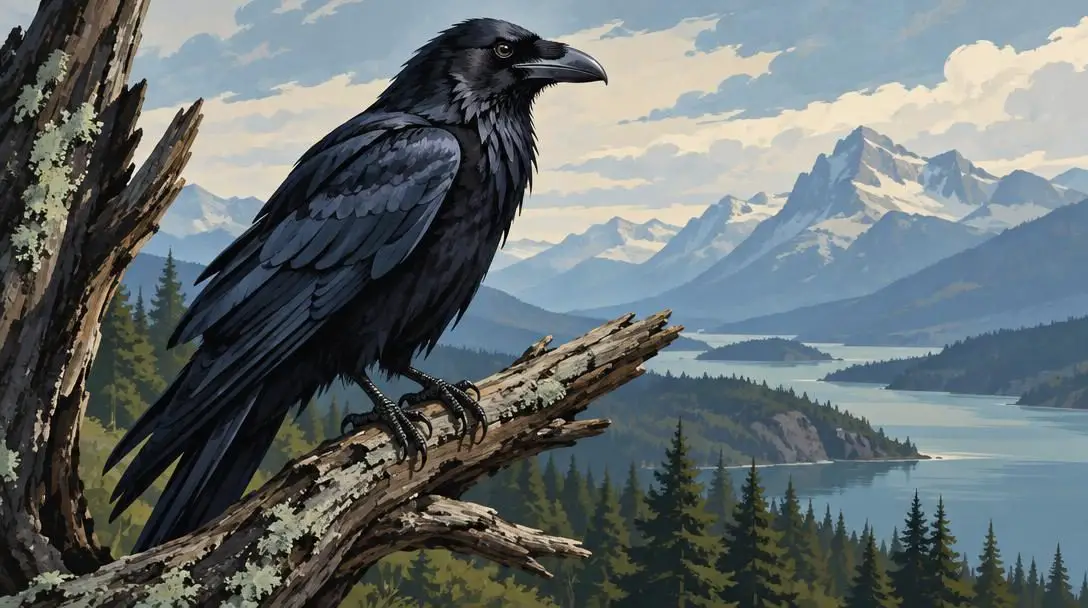
- Avian Group: Corvids
- Cognitive Strength: Remembering individual human faces
- Observed Behavior: Repeatedly visiting or pestering specific people
Ravens and crows occupy a prominent place in literature, myth, and gothic poetry, but their real-world intelligence eclipses folklore. As members of the corvid family, they rank among the smartest animals alive today. What sets them apart is their powerful capacity for facial recognition and memory. Scientific observations show that ravens and crows can study an individual human, memorize distinct facial markers, and associate that person with positive or hostile encounters. If someone provokes or assists a crow, that bird can identify the specific person days, weeks, or months later, sometimes following them or returning repeatedly to monitor or pester them.
Avian Waste Consolidation
- Excretory Product: Semi-solid uric acid
- Missing Organ: Urinary bladder
- Physical Appearance: White, pasty blend of urine and feces
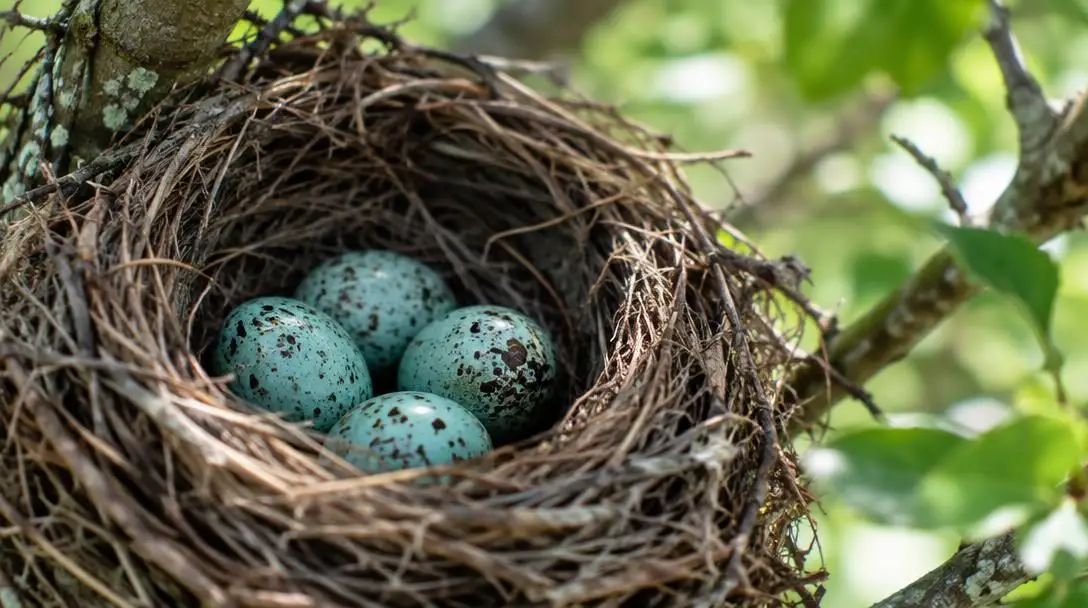
Just as race car designers strip out every unnecessary part to gain speed on the track, bird anatomy has discarded heavy internal systems to facilitate sustained flight. The vast majority of birds lack a urinary bladder. Holding fluid internally adds dead weight, an evolutionary liability when launching into the air. Rather than manufacturing dilute liquid urine like mammals, avian systems consolidate both digestive and metabolic waste into a single expulsion. Nitrogenous waste is converted into insoluble uric acid, emerging as the familiar white paste often spotted on windshields and outdoor surfaces. That white residue is not simply bird feces; it is urine and digestive waste eliminated together in an instant, weight-saving release.
The Evolution of Diverse Avian Systems
Understanding why birds behave and function in such astonishing ways requires examining the specific evolutionary forces that shaped their biology across varied ecological settings.
Powered flight serves as the primary architect of bird anatomy. Maintaining continuous lift demands immense power output alongside minimal bodily mass. The absence of a heavy urinary bladder, combined with the excretion of concentrated uric acid, solves two biological hurdles at once: it sheds weight immediately and dramatically conserves water. This streamlined internal design allows modern flying birds to remain light enough to maintain altitude without burning through their energy reserves prematurely.
Conversely, when flight is abandoned, body mass can expand dramatically. In Madagascar's isolated ecosystem, ancient elephant birds faced no competition or predation from large land mammals. This absence enabled them to grow to heights of nearly 10 feet and weights of 2,000 pounds, demonstrating the biological flexibility of the avian body plan when flight restrictions are removed.
Mental and social specializations evolved to handle complex environmental demands. High-density flocking in flamingos could easily descend into chaos without structured companionship; by establishing small, loyal friendship circles of three to six individuals, birds ensure dependable cooperation during seasonal nesting. In corvids, an advanced visual memory system evolved to track dynamic landscapes, locate hidden caches of food, and recognize individual threats, including specific humans.
Practical Steps for Observing and Supporting Wild Birds
Whether tending to a backyard garden or exploring natural reserves, adopting structured observation and support practices enriches your experience and protects local bird species.
- Establish a dependable nectar station: Because hummingbirds burn energy at extreme rates, hang clean feeders filled with fresh sugar water and replace the mixture regularly before it sours or ferments.
- Practice calm engagement around corvids: Treat local crows and ravens with predictable, peaceful behavior. Given their ability to remember individual facial features, calm habits prevent you from becoming a target of distress or harassment.
- Rinse bird droppings promptly from exposed surfaces: Because avian waste contains concentrated, acidic uric acid, wash it off vehicle finishes and outdoor furniture using warm water before it dries and corrodes protective coatings.
- Scan for companion subgroups in large flocks: When viewing captive or wild flamingo colonies, look beyond the expansive pink crowd to spot the subtle, bonded clusters of three to six birds that stay together.
- Examine prehistoric avian fossil records: Visit paleontology displays or educational natural history exhibits to compare modern urban species with giant extinct forms like Madagascar's elephant bird.
Mistakes to Avoid When Interacting with Birds
Interacting with wild birds requires an understanding of their unique biological limits and cognitive faculties. Minor oversights can harm the animals or create persistent problems for property owners.
- Underestimating corvid memory: Harassing, throwing objects at, or chasing crows can trigger long-lasting resentment, prompting the birds to return repeatedly to scold or disrupt you.
- Neglecting feeder hygiene and consistency: Allowing hummingbird nectar stations to sit empty or grow cloudy disrupts a critical fuel source that hyper-metabolic birds rely upon throughout the day.
- Scrubbing droppings without pre-soaking: Trying to pry away dried droppings damages outdoor materials; always soak the area with warm water to soften the uric acid paste first.
- Assuming flock members are interchangeable: Treating large social colonies like flamingos as anonymous herds ignores the fragile bonds between mated pairs and their dedicated friendship circles.
- Treating all bird species as physiologically identical: Applying identical assumptions across species overlooks profound biological contrasts, such as the vast metabolic gap separating an eagle from a hummingbird.
Frequently asked questions
Why do birds eliminate white droppings instead of liquid urine?
Most birds lack a urinary bladder to keep their overall weight low for flight. Instead of producing liquid urine, they convert nitrogenous waste into semi-solid uric acid, which is discharged alongside digestive waste as a combined, pasty white substance.
Can crows and ravens really recognize individual human faces?
Yes. Corvids possess advanced cognitive abilities that allow them to analyze and memorize specific human facial features. They remember individual people based on past positive or negative experiences and can alter their behavior accordingly when those humans reappear.
How fast does a hummingbird's heart beat while active?
A hummingbird's heart rate can exceed 1,200 beats per minute. This extraordinary cardiovascular rate powers the rapid wing flapping needed to hover in midair and drives their massive daily caloric requirement.
How large was Madagascar's extinct elephant bird?
Fossil evidence reveals that elephant birds stood nearly 10 feet tall and could weigh up to 2,000 pounds. These giant flightless birds roamed Madagascar until their extinction approximately 1,000 years ago.
Do flamingos interact only with their mating partners?
No. In addition to forming pairs that collaborate each year to raise chicks, flamingos build close-knit social groups of three to six friends. These stable companion circles remain together for years, helping members navigate colony life.
The Bottom Line
From the immense scale of Madagascar's vanished elephant birds to the microscopic precision of a hummingbird's hovering flight, avian biology presents some of the most startling adaptations on our planet. Birds have refined their bodies to match their environments down to the smallest detail—discarding bladders to master the sky, boosting heart rates to survive on liquid sugar, and constructing loyal friendship networks across noisy wetlands. Recognizing these remarkable traits transforms everyday birdwatching into an encounter with extraordinary evolutionary design.