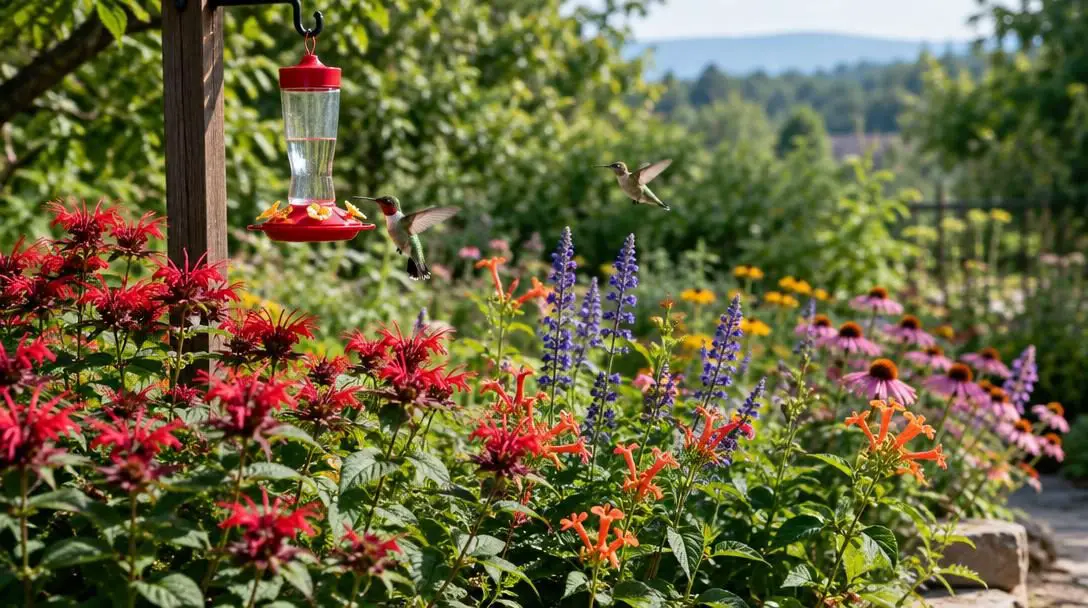
Building a Garden Pond: Tips for Creating a Relaxing Water Feature
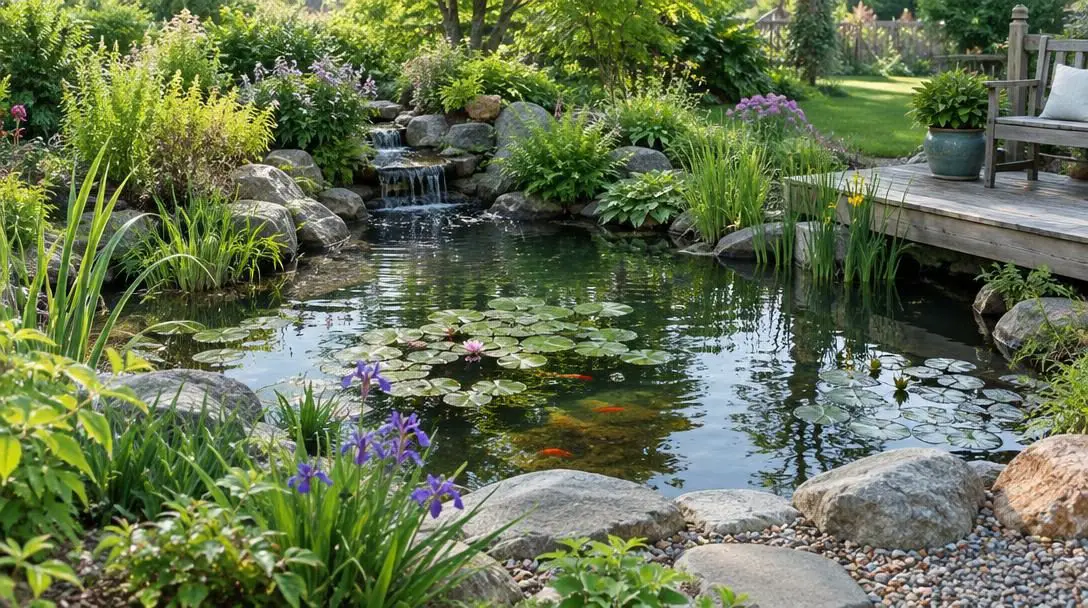
Building a backyard pond transforms an ordinary outdoor area into a tranquil personal retreat. In modern landscape design, water features serve as grounding focal points that balance rigid structures like patios and paved pathways with fluid movement, soothing acoustics, and sky-reflecting surfaces. Beyond visual appeal, the gentle murmur of moving water creates a calming acoustic buffer that masks intrusive street traffic and neighborhood noise while inviting birds, dragonflies, and other beneficial garden wildlife into your yard.
A thriving garden pond is far more than a simple hole lined with water; it functions as a dynamic, living ecosystem. Achieving clear water and vibrant biological health requires balancing physical circulation, multi-stage filtration, and diverse aquatic flora. When planned thoughtfully and constructed step by step, a garden pond becomes an enduring centerpiece that remains both rewarding to cultivate and straightforward to maintain across every season.
Key takeaways
- A balanced pond ecosystem relies on continuous circulation, mechanical filtration, biological bacterial colonization, and nutrient-absorbing aquatic plants.
- Site selection requires level ground, access to safe electrical power, and adequate clearance from tree roots and overhanging branches.
- Lining choices typically center on rigid preformed shells for simpler layout or flexible sheet liners for customizable, budget-friendly designs.
- Layering diverse plant varieties—including oxygenators, floating foliage, marginals, and water lilies—naturally curbs nuisance algae growth.
- Routine monitoring of water parameters and proactive equipment maintenance prevent severe pump clogs, liner leaks, and biological imbalances.
Understanding the backyard aquatic ecosystem
To keep an outdoor water feature pristine, the physical components of the pond must interact seamlessly with its biological inhabitants. In an enclosed garden pond, natural rainfall and soil microbes alone cannot sustain water clarity without deliberate circulation. Left stagnant, standing water rapidly depletes dissolved oxygen levels, leading to foul odors, surface scum, and uninhibited algae blooms that choke out higher plant life.
The biological cycle relies on continuous movement driven by a reliable submersible pump. Water is drawn into filtration chambers where mechanical media traps suspended grit and particulate debris. Simultaneously, biological filtration surfaces foster colonies of beneficial bacteria that convert harmful organic waste—such as decomposing plant matter and fish excretions—into bioavailable nitrates. Aquatic plants absorb these dissolved compounds as essential fertilizer, effectively outcompeting opportunistic single-celled algae for vital nutrients. Introducing fish adds another energetic layer to this closed cycle, requiring thoughtful balance so organic waste loads never overwhelm the filtration system's processing capacity.
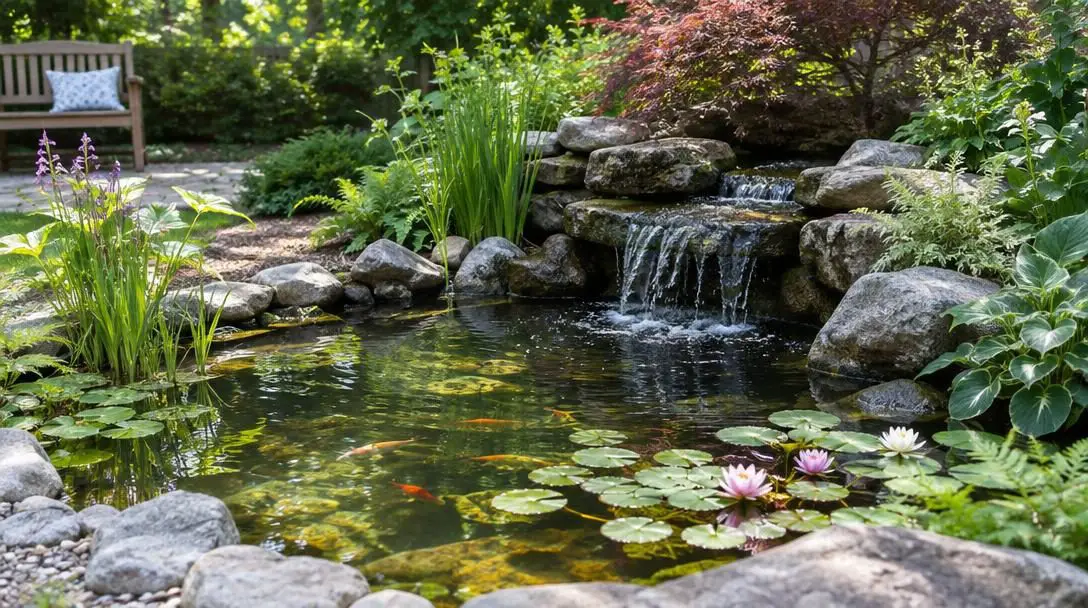
A successful garden pond operates as a self-contained ecosystem where water circulation, biological filtration, and aquatic foliage harmonize to maintain natural clarity.
Essential planning and site considerations
Careful foresight before breaking ground saves significant labor, expense, and structural frustration down the road. Selecting the optimal spot on your property dictates not only how easily you can excavate the basin, but also how stable the aquatic environment remains year-round.
- Choosing the location: Ground must be level to avoid uneven waterlines and prevent torrential rainwater runoff from carrying soil, lawn fertilizers, and yard chemicals into the pond. Position the feature well away from mature trees, as invasive root systems can pierce flexible membranes or heave rigid tubs over time, while dense leaf drop adds excessive organic sludge to the water.
- Deciding on size and shape: Determine the footprint based on available yard space, intended biological stock, and overall budget. While formal gardens often favor geometric preformed shells, naturalized landscape settings benefit from sweeping, organic contours that blend smoothly into the surrounding topography.
- Determining your budget: Pond construction expenses extend beyond the excavation and basic liner. A realistic budget must account for energy-efficient pumps, filtration canisters, protective underlayment, plumbing hoses, edge coping stones, aquatic compost, water test kits, and diverse plant stock.
- Researching local regulations and permits: Always verify municipal building codes before digging. Many local jurisdictions enforce strict regulations regarding maximum unpermitted water depth, safety barrier fencing, minimum setback distances from property lines, and certified ground-fault circuit interrupter electrical outlets.
- Developing a maintenance routine: Anticipating ongoing care tasks prevents the feature from declining into disrepair. Factoring weekly skimmer checks, monthly filter rinses, and seasonal plant cutbacks into your initial plans ensures the installation remains manageable.
Step-by-step pond construction guide
Constructing a garden pond follows an orderly sequence of physical stages. Taking time to stabilize the earthen basin, protect the waterproof membrane, and connect mechanical support systems ensures a leak-free structure that lasts for decades.
- Marking and layout: Outline your proposed pond contour directly onto the turf using a flexible garden hose, length of rope, or marking spray chalk. Step back to assess viewing sightlines from patios and windows. Use a straight 2x4 timber and a carpenter's level spanning the perimeter to confirm the outer edges are level.
- Excavation process: Dig the pond basin using hand shovels or a compact mini-excavator. Carve stepped terraces along the interior perimeter, creating shallow planting shelves roughly 9 to 12 inches deep alongside a deeper central chamber. Ensure the outer walls slope gradually downward rather than dropping vertically, which preserves earthen wall integrity and supports shelf stabilization.
- Preparing the earthen pit: Thoroughly rake the excavated earth, removing all sharp stones, roots, glass, and debris that could puncture waterproof barriers. Compact the soil base firmly to prevent future settling.
- Installing protective underlayment and lining: Line the excavated hollow with thick, non-woven geotextile underlayment fabric to cushion against sharp subterranean shifts. Center your pond liner across the excavation, gently smoothing folds from the center outward while leaving ample excess material extending past the perimeter edges.
- Plumbing filtration and pump equipment: Position the submersible pump in the deepest zone of the pond, housing it inside a protective skimmer or pump cage. Run flexible, non-kinking ribbed tubing from the pump discharge port to your external mechanical and biological filters or elevated spillway. Conceal plumbing runs inside shallow trenches alongside the perimeter.
- Filling and settling: Fill the pond gradually with a garden hose. As the rising water volume exerts immense downward weight, ease out tension on the liner edges, letting the sheet form naturally against internal contours and stepped planting shelves without overstretching the material.
- Securing decorative edging: Once the water level reaches just below the rim, anchor the liner perimeter using heavy, flat coping stones, fieldstone, or river rock. Trim away excess liner material, leaving an anchoring flap tucked neatly behind and beneath the perimeter rockwork to hide synthetic edges from view.
- Wiring and system testing: Connect submersible pumps, aerators, and low-voltage underwater lighting fixtures to an approved outdoor electrical outlet equipped with safety breakers. Turn on the pump to verify circulation velocity, plumbing seals, and waterfall spillway alignment.
Selecting the right pond liner
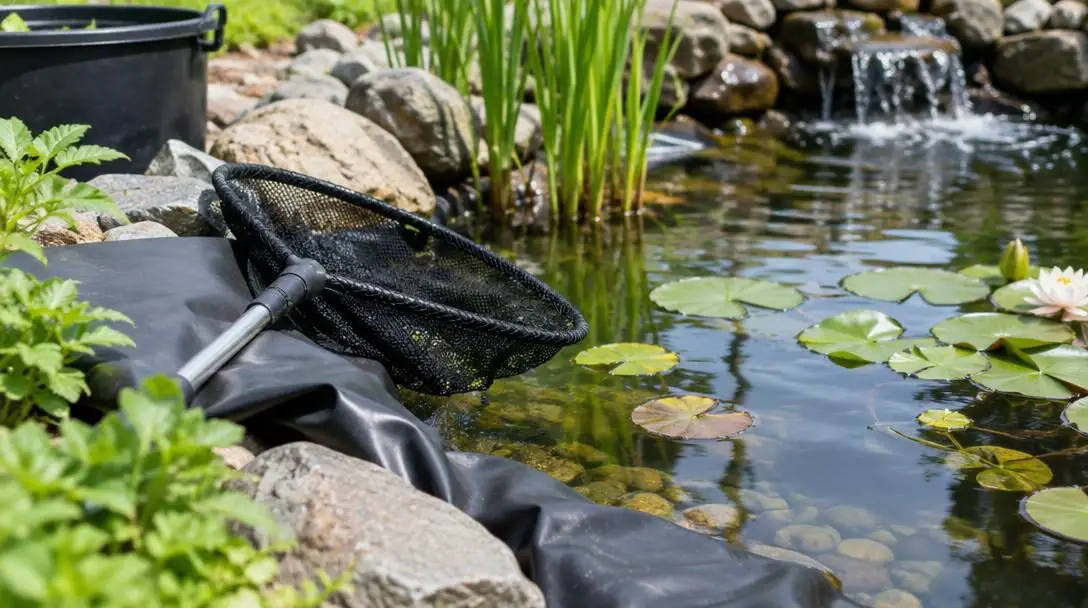
The foundation of any watertight backyard feature is the containment barrier. Liners differ significantly in cost, physical flexibility, ease of handling, and structural adaptability.
| Liner Material | Form Factor | Installation Effort | Design Flexibility | Relative Cost |
|---|---|---|---|---|
| Preformed Polyethylene / Fiberglass | Rigid molded tub | Moderate; requires precise earth matching | Fixed dimensions and built-in ledges | Moderate to High |
| Flexible EPDM Rubber / PVC | Pliable continuous sheet | Straightforward; conforms to custom digging | Completely customizable shapes and depths | Lower initial investment |
| Reinforced Polypropylene (RPP) | Semi-flexible sheet | Moderate; lightweight but stiffer seams | High; custom sizes can be welded | Moderate |
Preformed Pond Liners
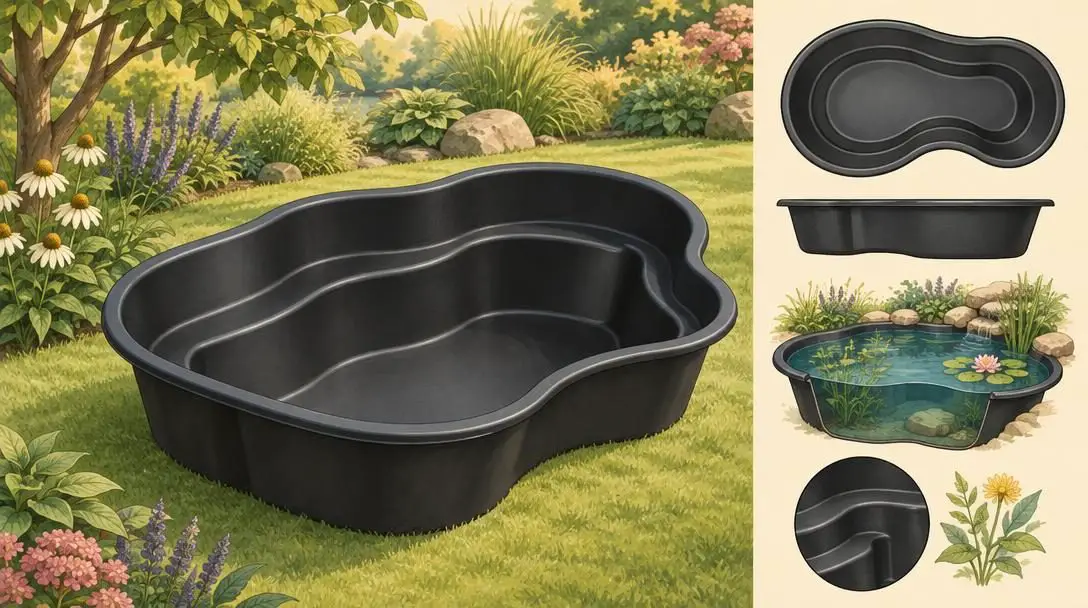
Preformed shells are manufactured from rigid plastics or molded fiberglass, featuring engineered planting shelves and defined stepped zones built directly into the unit. They offer reliable puncture resistance and eliminate the challenge of folding and tucking loose sheet material. However, installation requires excavating a hole that mirrors the exact dimensional profile of the tub. The base must be completely flat, level, and bedded in fine sand to prevent hollow voids underneath that could crack under the water's weight.
Flexible Pond Liners
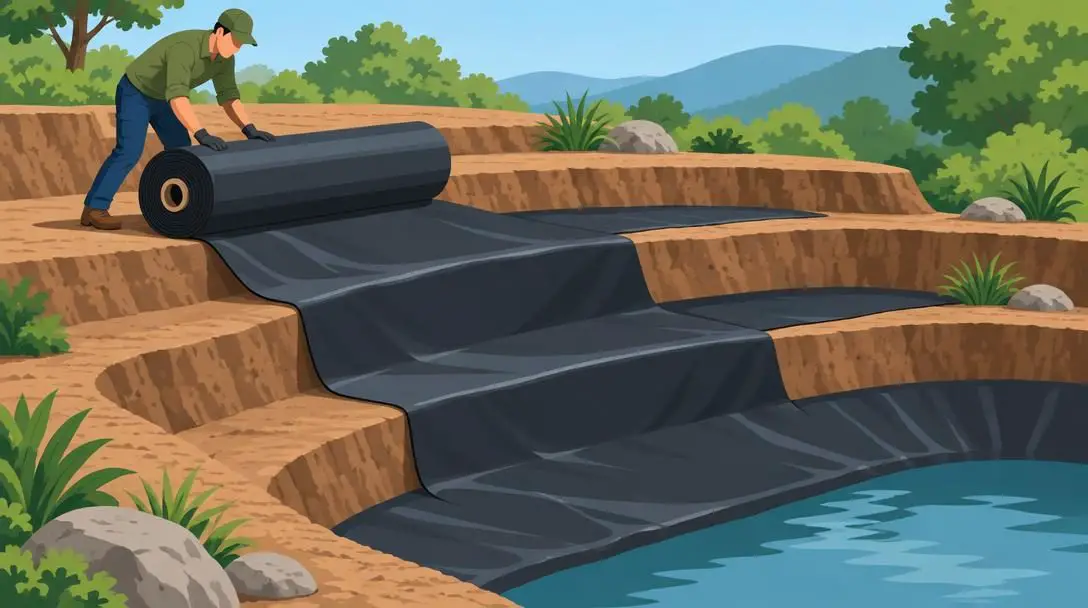
Flexible liners, made from pliable compounds such as EPDM rubber or specialized PVC, are the lower cost option and provide limitless layout freedom. They allow homeowners to sculpt custom curves, irregular natural contours, variable depths, and tailored marginal terraces. Flexible sheets drape effortlessly into complex designs, though they require a robust protective underlayment underneath and methodical pleating around curves to maintain neat aesthetics along shallow ledges.
Aquatic plant categories for natural balance
Aquatic vegetation forms the primary defensive line against poor water quality, acting as a biological sponge that strips excess nitrates and phosphates from the water column while generating life-giving oxygen.
Oxygenating Plants
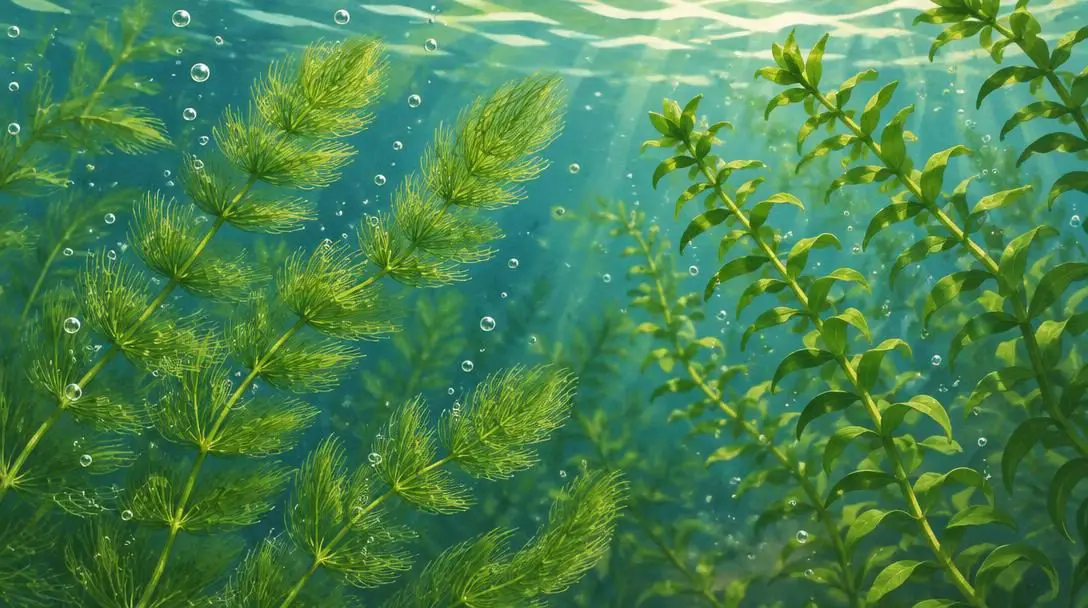
Submerged beneath the surface, oxygenating plants grow entirely underwater, absorbing carbon dioxide and dissolved nutrients directly through their leaves and stems. As their foliage catches sunlight penetrating the surface, they release dissolved oxygen throughout the water column. Species such as hornwort and anacharis provide vital sanctuary for aquatic microorganisms while anchoring the biological nutrient cycle.
Floating Plants
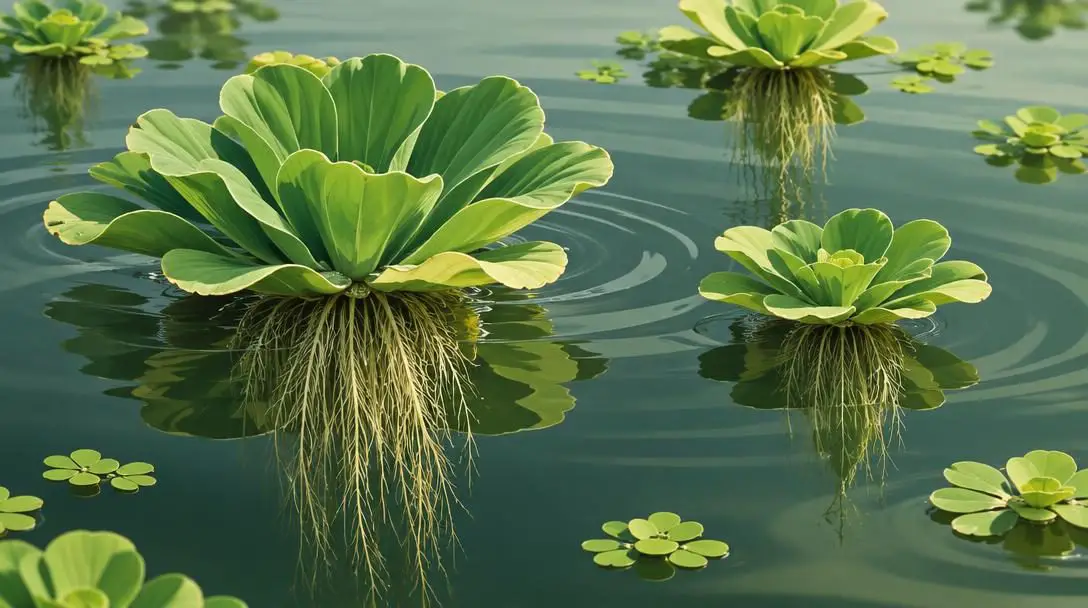
Floating plants rest freely on the water surface without rooting into subterranean pots, letting their feather-like root systems hang suspended in the water column to absorb dissolved waste. Varietals like water lettuce and duckweed multiply swiftly across open patches, casting dense surface shade that cools water temperatures during hot summer months and deprives suspended algae of sunlight.
Marginal Plants
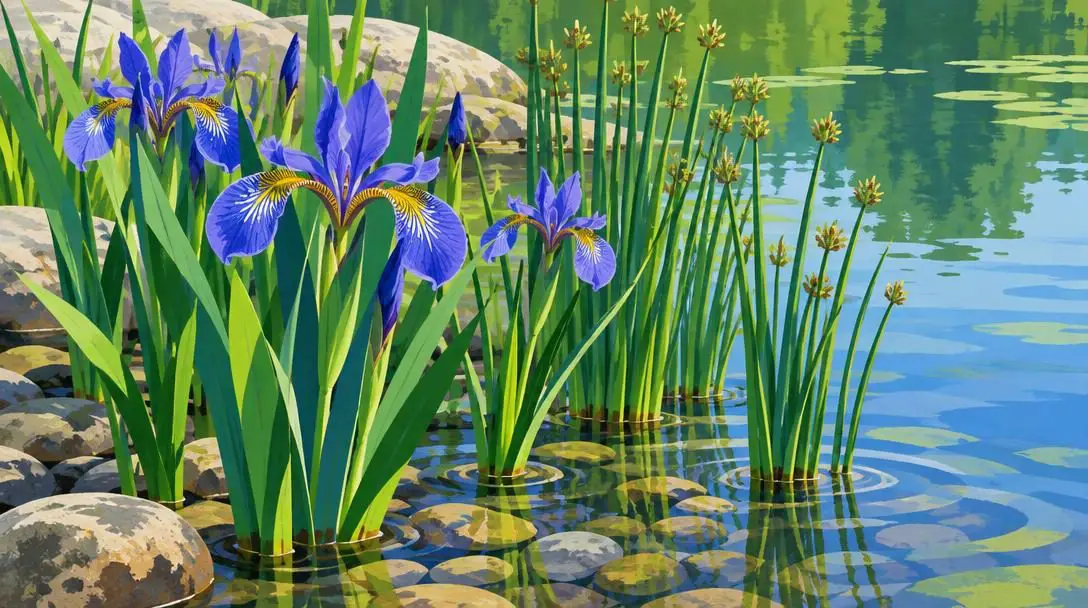
Marginal plants thrive in the shallow moisture zones along perimeter ledges, stream transitions, and bog shelves where their root systems remain submerged under a few inches of water while foliage emerges into open air. Common marginals, including iris, rushes, and sweet flag, blur the sharp physical boundary between artificial stone borders and the open pond while locking up ambient nutrients.
Water Lilies
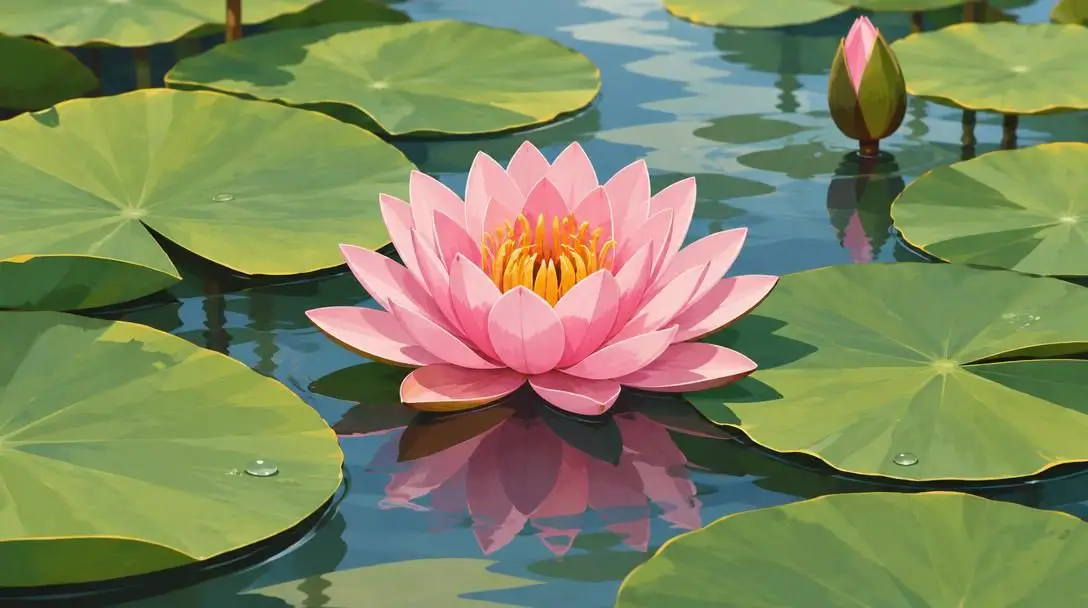
Water lilies anchor their tuberous rhizomes in heavy aquatic compost pots resting on the pond floor, sending expansive round leaves upward on long stems to sprawl elegantly across the surface. Their wide, floating pads provide expansive shade cover that limits light penetration, cooling deeper water layers and delivering dramatic seasonal flower blooms that enrich the overall garden landscape.
Pond equipment and filtration essentials
Mechanical and electrical hardware keeps water circulating, aerated, and clear. Sizing each component appropriately for the total volume of your pond guarantees clean water without running equipment beyond its operational tolerance.
- Submersible pumps: The mechanical heart of the feature. Submersible pumps must be sized based on total water volume and head height (the vertical distance the pump must push water to reach a waterfall spillway). A healthy biological feature should circulate its entire water volume through the filter at least once every one to two hours.
- Mechanical filtration: Physical filter pads, coarse sponges, and skimmer baskets capture suspended solids, windblown dust, and floating plant scraps before organic matter settles and decays on the pond floor.
- Biological filtration: Filter chambers containing porous ceramic rings, bio-balls, or dense matrix pads provide massive internal surface area for colonies of nitrifying bacteria to thrive, neutralizing dissolved toxic compounds.
- Ultraviolet (UV) clarifiers: Enclosed UV clarifier units expose passing water to targeted ultraviolet light wavelengths, clumping free-floating microscopic algae cells together so mechanical filter media can easily trap and remove them.
- Submersible lighting systems: Low-voltage LED spotlights and rim fixtures extend your enjoyment of the pond into evening hours, highlighting moving waterfall currents, reflective pools, and the underside of lily pads.
Ongoing maintenance and seasonal upkeep
Preventative care requires far less effort than reviving a severely neglected pond. Structuring upkeep tasks into consistent weekly inspections and seasonal deep cleans maintains biological balance effortlessly.
Regular water testing represents the cornerstone of pond care. Using a reliable liquid dropper test kit, inspect the water regularly to monitor pH levels, ammonia, and nitrites. Sudden spikes in waste parameters often reveal excessive organic matter accumulating on the basin floor or an overburdened biological filter. During warm, sunny stretches, observe water clarity closely; addressing algae blooms early through increased floating plant cover or supplementary aeration avoids the need for chemical water treatments.
Equipment upkeep must occur periodically to protect pump motors and maintain flow velocity. Regularly rinse clogged filter pads, and inspect pump intake screens to clear away tangled debris. When rinsing biological filter media, always wash sponges inside a bucket drawn from the pond itself rather than chlorinated tap water, which would instantly destroy delicate, beneficial bacterial colonies. Furthermore, monitor your baseline water line daily; an unexpected dip in water levels often signals a shifted edge rock letting water spill into the surrounding turf, a severed hose connection, or a mechanical tear in the lining.
Common pitfalls to avoid
Avoiding frequent installation mistakes ensures your water feature remains durable, visually appealing, and trouble-free for years to come:
- Excavating too close to mature trees: Aggressive subterranean tree roots can slowly exert enormous hydraulic force, shifting preformed tubs or puncturing flexible rubber liners. Seasonal autumn leaf drop also deposits heavy organic matter into the pond, depleting dissolved oxygen as it decays.
- Underpowering the circulation pump: Installing an undersized pump produces sluggish water movement, leading to dead zones, stagnant scum layers, and inadequate oxygenation across lower depths.
- Digging vertical interior walls: Failing to carve gradual slopes increases the risk of wall cave-ins during heavy rainstorms before the liner is secured, and prevents the stable placement of marginal plant baskets and decorative rocks.
- Using unsuitable perimeter edging: Failing to securely anchor the liner beneath flat coping stones allows synthetic liners to pull downward into the excavation when subjected to shifting water weight.
- Neglecting regulatory safety rules: Building deep water features without checking local municipal setback and fence barrier requirements can result in costly code violations or liability issues.
Frequently asked questions
How deep should a garden pond be?
A standard ornamental plant pond generally requires a depth of at least 18 to 24 inches to maintain stable water temperatures throughout the summer. If you intend to overwinter fish in regions that experience freezing winters, deep zones of 36 inches or more are recommended to prevent the water column from freezing solid.
Do I need to run my pond pump all the time?
Yes, pond circulation pumps should run continuously, 24 hours a day. The beneficial nitrifying bacteria that colonize biological filter media require a constant supply of oxygenated water to survive; shutting off the pump for several hours can cause these bacterial colonies to die off, leading to water quality problems.
Can I build a garden pond without adding fish?
Ponds without fish are exceptionally easy to manage and require significantly less mechanical filtration. Plant-only ponds cultivate balanced ecosystems rapidly, creating peaceful wildlife sanctuaries that naturally attract native frogs, beneficial dragonflies, and birds without the waste load produced by fish.
How do I keep pond water clear without harsh chemicals?
Water clarity is achieved through natural biological balance. Combine adequate mechanical and biological filtration with sufficient aquatic plant coverage—ideally covering 50 to 70 percent of the pond surface with lilies and floating foliage—to starve nuisance algae of sunlight and dissolved nutrients.
What should I do with my garden pond during the winter?
In cold climates, trim back dead marginal and floating vegetation before it decays on the pond floor. Remove delicate pumps or keep them running if configured to prevent deep freezing. Floating pond de-icers or aerators can be used to keep a small breathing hole open through surface ice, allowing trapped organic gases to escape safely.
The bottom line
Constructing a garden pond brings dynamic movement, tranquil natural sounds, and ecological diversity right to your doorstep. By pairing careful planning and stable excavation with durable lining choices and a balanced mix of biological plant varieties, you can construct an enduring aquatic sanctuary. With a methodical approach to construction and consistent seasonal care, your backyard pond will thrive as a relaxing, visually stunning focal point for years to come.