Donald Trump’s 5 Most Controversial Statements
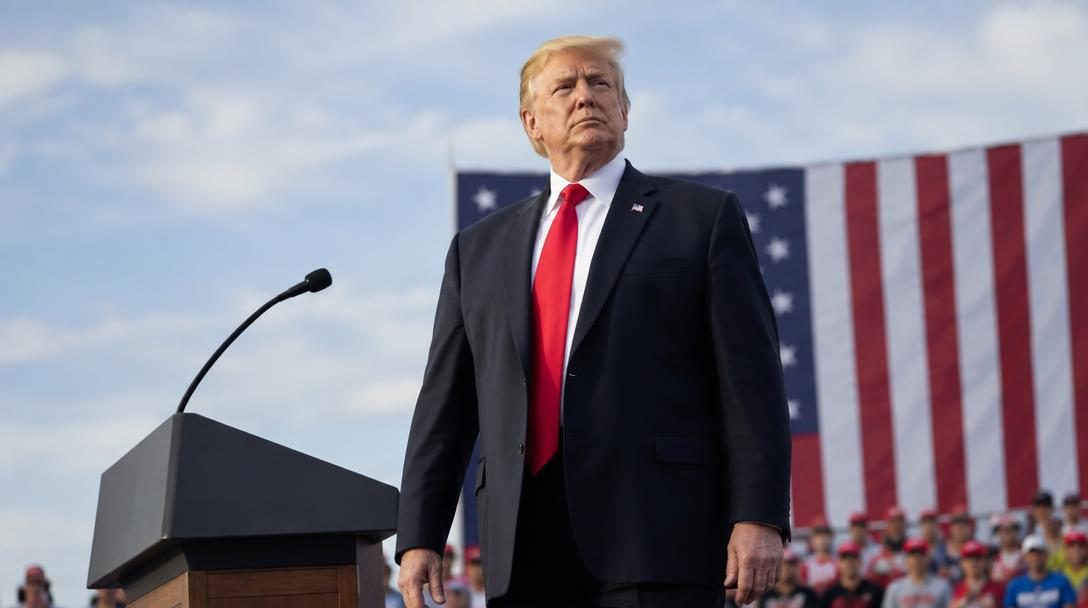
Over the past century of American political history, few figures have polarized the electorate as intensely as Donald Trump. While his supporters often view him with unwavering loyalty as an unapologetic outsider dismantling establishment norms, his opponents criticize him with equal fervor, viewing his public remarks as offensive, divisive, and harmful to democratic institutions. At the very core of this enduring division lies his radical departure from traditional political communication.
For decades, national political leaders adhered to carefully scripted talking points, cautious diplomatic language, and sanitized public addresses designed to minimize broad public offense. Trump altered that paradigm entirely, embracing an unvarnished, direct, and off-the-cuff style at campaign rallies, televised press conferences, and impromptu interviews. Examining the specific remarks that generated the fiercest national backlash offers crucial insight into the mechanics of modern political rhetoric and media culture.
Key takeaways
- Donald Trump replaced carefully rehearsed political communication with a direct, conversational style that fueled intense loyalty from supporters and fierce condemnation from critics.
- His most controversial public statements spanned vital national topics, including international immigration, global public health emergencies, counterterrorism, marriage equality, and media conduct.
- Supporters frequently interpreted his provocative remarks as authentic, courageous challenges to political correctness, while critics viewed them as discriminatory, self-absorbed, or misleading.
- Evaluating controversial rhetoric effectively requires examining full transcripts in context, isolating policy substance from rhetorical style, and understanding real-world civic outcomes.
At a Glance: The Five Defining Controversies
Throughout his political career, several off-script statements became flashpoints in national debates over public decency, policy, and presidential leadership. The table below outlines these five critical statements, their context, and the central debates they triggered across the political landscape.
| Controversy | Context of Delivery | Core Rhetorical Stance | Central Public Criticism |
|---|---|---|---|
| Statements on Mexicans | 2015 Presidential campaign announcement | Framed illegal immigration as bringing crime, drugs, and violence into the country | Condemned as broad xenophobic stereotyping and racially charged rhetoric |
| Seriousness of COVID-19 | Recorded interview regarding pandemic response | Expressed an intentional preference to downplay the crisis to prevent public panic | Viewed as dangerously misleading the public during a historic international health emergency |
| Preventing 9/11 | Discussion on national security and vetting | Claimed personal immigration policies would have stopped the 2001 terror attacks | Criticized as insensitive, self-centered, and dismissive of collective national tragedy |
| Gay Marriage | Pre-candidacy interview on social institutions | Compared marriage equality to golfers switching to longer putters while claiming traditionalism | Protested by civil rights organizations for trivializing constitutional and human rights |
| Statements on Women | Post-debate interview discussing moderator questioning | Alleged hostility by making crude biological references about Megyn Kelly | Denounced across the political spectrum as sexist and demeaning toward professional women |
Donald Trump radically altered modern political communication by abandoning sanitized talking points in favor of an unvarnished, direct style that continues to polarize the nation.
Donald Trump’s 5 Most Controversial Statements Examined
To understand the depth of the cultural and political divisions surrounding Donald Trump, one must look at the specific quotes that defined his public career. These statements not only dominated news cycles for weeks at a time but also shaped how voters, advocacy groups, and international observers perceived his temperament and governing philosophy.
Statements on Mexicans
- Setting: 2015 presidential campaign launch
- Primary Policy Focus: Halting illegal immigration and border enforcement
- Key Public Reaction: Accusations of racism and xenophobic stereotyping
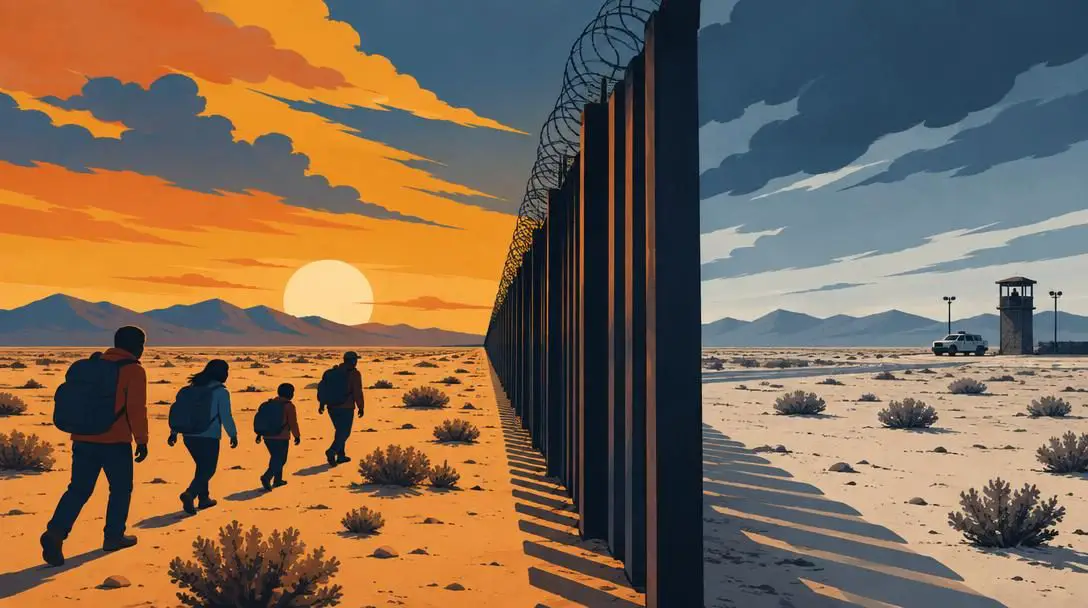
In the summer of 2015, during the official launch of his presidential campaign, Donald Trump delivered a statement that would set the tone for his entire political movement:
"When Mexico sends its people, they're not sending their best. They're not sending you…They're sending people that have lots of problems, and they're bringing those problems with us. They're bringing drugs. They're bringing crime. They're bringing rapists. And some, I assume, are good people."
This statement instantly became a central weapon used by opponents throughout his campaign and presidency. For critics, broad brushing Mexican immigrants as criminals, drug traffickers, and rapists crossed a dangerous moral line into open xenophobia and racism. Hispanic advocacy groups and civil rights leaders argued that such rhetoric dehumanized immigrant communities and fueled hostility toward people of Latin American descent.
Conversely, Trump's political base embraced the remark as a refreshing refusal to yield to political correctness. For his supporters, the quote signaled an overdue willingness to confront the realities of border security and illegal immigration without the softened language typical of establishment politicians. Halting unauthorized entry and securing the southern border became the central pillar of his subsequent administration.
Seriousness of COVID-19

- Setting: Public health communication during the global pandemic
- Primary Policy Focus: Balancing public panic with containment measures
- Key Public Reaction: Accusations of intentionally misleading the American public
The COVID-19 pandemic represented one of the most severe global disruptions in over half a century, shuttering businesses, closing schools, and overwhelming healthcare systems worldwide. In the United States, public response to the virus became intensely politicized, a dynamic intensified by Trump’s conflicting public messaging. While he occasionally wore a mask, he frequently removed it, publicly mocked those who chose to wear face coverings, and expressed skepticism regarding testing volume.
The controversy reached a boiling point when an unscripted admission emerged regarding his deliberate communication strategy:
"I wanted to always play it down. I still like playing it down because I don't want to create a panic."
Public health professionals and political opponents reacted with severe condemnation. During an international biological emergency, consistent, transparent, and science-driven communication is essential to ensure public trust and compliance with safety protocols. Critics argued that by intentionally minimizing the danger of the disease and delaying testing to keep reported case numbers lower, the administration misled millions of citizens about the actual risk to their health.
Defenders of the administration maintained that presidential leadership during a crisis requires projecting calm and preventing economic catastrophe or widespread societal panic. Nonetheless, the discrepancy between private awareness and public statements widened existing political chasms, leaving local municipalities and citizens deeply divided over basic mitigation measures.
Preventing 9/11

- Setting: Campaign discussion on national security and vetting protocols
- Primary Policy Focus: Counterterrorism and restrictive immigration policy
- Key Public Reaction: Condemnation for perceived self-centeredness regarding national grief
The terrorist attacks of September 11, 2001, represent one of the most sacred and painful moments in modern American history. Discussing the tragedy requires immense sensitivity, yet Trump frequently approached the subject through a distinctly personal lens. In the immediate aftermath of the attacks in 2001, he had caused public offense by publicly boasting on television that his skyscraper was now the tallest building in downtown Manhattan following the collapse of the Twin Towers.
Years later, while presenting his security platform, he revived national anger with another startling assertion:
"I think I could have stopped it because I have very tough illegal immigration policies, and people aren't coming into this country unless they're vetted and vetted properly."
The claim that he personally possessed the foresight and immigration policies capable of preventing the worst attack on American soil struck many citizens as shockingly arrogant and disrespectful. Rather than honoring the collective sacrifice of the victims and emergency responders, the remark refocused a solemn national tragedy entirely around his own competence.
Critics saw the comment as part of a recurring pattern where national crises were repurposed as personal marketing vehicles. While his campaign attempted to frame the statement as a defense of rigorous immigration vetting, the backlash underscored the public's reluctance to see profound collective trauma used for political posturing.
Gay Marriage

- Setting: Pre-presidential media interview on social issues
- Primary Policy Focus: Traditional marriage definitions versus marriage equality
- Key Public Reaction: Protests from LGBTQ+ advocacy groups, including GLAAD
Long before launching his formal campaign for the White House, Trump weighed in on the contentious legal and cultural debate surrounding marriage equality. While discussing the topic, he sought to explain his conservative stance through an unusual sports comparison:
"It's like in golf…a lot of people are switching to these really long putters, very unattractive…it's weird. You see these great players with these really long putters because they can't sink three-footers anymore. And, I hate it. I am a traditionalist. I have so many fabulous friends who are happy to be gay, but I am a traditionalist."
Reducing a landmark civil rights struggle—involving legal protections, hospital visitation rights, and fundamental human equality—to an analogy about golf equipment sparked immediate outrage. LGBTQ+ civil rights organizations, including GLAAD, protested his political aspirations, arguing that the comparison trivialized an issue of profound legal and emotional consequence for millions of families.
While Trump attempted to soften the remark by referring to his "fabulous friends" within the gay community, advocates emphasized that claiming personal friendships did not excuse framing basic human rights as an unsightly trend comparable to a golfer's unconventional putting grip.
Statements on Women
- Setting: Aftermath of the first 2015 Republican primary debate
- Primary Policy Focus: Media bias and journalistic confrontation
- Key Public Reaction: Bipartisan condemnation for derogatory and sexist language
During the first Republican primary debate of the 2016 election cycle, Fox News anchor Megyn Kelly pressed Trump on his historical treatment and public descriptions of women. The exchange was tense, but the subsequent media fallout proved even more explosive. In an interview following the debate, Trump voiced his frustration with Kelly's moderating style:
"(Megyn Kelly) gets out and she starts asking me all sorts of ridiculous questions. You could see there was blood coming out of her eyes, blood coming out of her wherever. In my opinion, she was off base."
The phrase "blood coming out of her wherever" was instantly interpreted across the political spectrum as a crude, derogatory reference to menstruation. Rather than responding to the substance of the journalistic questions regarding his past comments, critics argued that Trump resorted to visceral, misogynistic insults designed to demean a female professional.
Although some defenders suggested the phrase was merely an awkward slip of the tongue—perhaps an intended reference to "smoke coming out of her ears"—few commentators across mainstream media were willing to grant that concession. The episode cemented ongoing concerns regarding his rhetoric toward women in public and professional life.
How Polarizing Political Rhetoric Operates and Spreads
The enduring impact of these five statements cannot be understood without examining the mechanics of modern political communication. In an era dominated by 24-hour cable news, digital video clips, and algorithmic social networks, political rhetoric functions through specific psychological and technological pathways.
- Direct Emotional Impact: Words that provoke immediate feelings of anger, fear, or moral indignation generate the highest levels of audience engagement. Statements touching on national security, public health, gender, or national heritage bypass analytical filters and trigger immediate emotional reactions.
- Algorithmic Amplification: Modern media platforms thrive on contentious content. Outrageous soundbites are clipped, repackaged into high-yield headlines, and rebroadcast across networks, transforming isolated comments into multi-week national news spectacles.
- Bifurcated Audience Interpretation: Deeply polarized electorates interpret identical phrasing in diametrically opposed ways. A statement perceived by political opponents as dangerous bigotry is routinely interpreted by supporters as humorous, courageous defiance of cultural elites.
- Deflection from Policy Details: Highly controversial remarks frequently hijack public attention away from complex legislative, fiscal, and foreign policy debates. The national discourse shifts from analyzing policy outcomes to debating decorum, personality, and tone.
A Structured Framework for Evaluating Controversial Political Speech
Citizens regularly encounter provocative political statements packaged to elicit strong partisan reactions. Navigating this media landscape requires an objective, systematic method for evaluating political rhetoric rather than accepting partisan interpretations at face value.
- Locate the Unedited Context: Always seek out the original recording or complete transcript. Examine what question was asked, the tone of the exchange, and what was said immediately preceding and following the controversial remark.
- Isolate Core Policy from Rhetorical Style: Strip away colorful metaphors, colloquialisms, and hyperbolic flourishes to determine what actual policy proposal or factual claim is being asserted.
- Assess Direct Civic and Real-World Consequences: Analyze how the statement impacts real communities. Does it undermine public compliance during an emergency, influence international diplomacy, or erode trust in civic institutions?
- Review Cross-Ideological Perspectives: Read commentary from sources outside your primary political comfort zone to understand why a specific remark resonates positively with one demographic while alarming another.
- Evaluate Historical Consistency: Check whether the politician has maintained a consistent stance on the underlying issue over time or frequently shifts positions based on the immediate audience.
Common Pitfalls in Political Media Consumption
Consuming high-stakes political news requires vigilant critical thinking. When provocative statements dominate headlines, media consumers frequently fall into cognitive traps that distort objective reality.
- Relying on Truncated Soundbites: Consuming only five-second clips or decontextualized social media quotes frequently strips away crucial nuance, intent, and conversational context.
- Allowing Partisan Affinity to Cloud Judgment: Audiences often rush to defend an ally or condemn an adversary without critically analyzing the literal meaning and long-term implications of the statement.
- Treating Political Discourse as Mere Entertainment: Viewing controversial statements simply as political theater or humor overlooks the substantive real-world impact rhetoric has on public policy and social cohesion.
- Defaulting to Absolute Assumptions: Assuming that every controversial utterance is either calculated malice or an innocent misunderstanding prevents a balanced, fair evaluation of political behavior.
Frequently asked questions
Why did Donald Trump's rhetoric differ so sharply from previous presidents?
Unlike traditional political leaders who relied heavily on pre-written speeches, speechwriters, and focus-group-tested talking points, Trump brought a conversational, unvarnished style honed in business and reality television. He favored speaking directly off-the-cuff, which his base viewed as authentic and anti-establishment, while critics viewed it as undisciplined and reckless.
Did Donald Trump ever clarify his statements regarding Mexican immigrants?
Throughout his political career, Trump maintained that his comments were aimed specifically at the dangers of unvetted illegal immigration and cross-border cartel activity rather than the Mexican population as a whole. However, critics argued the phrasing clearly cast broad, xenophobic aspersions on an entire demographic.
Why did the COVID-19 pandemic remarks generate so much legal and political scrutiny?
Public health crises depend heavily on transparent and accurate communication from executive leadership to maintain public compliance with safety measures. Admitting to downplaying the severity of the virus to prevent panic led to accusations that the administration misled the public, delayed necessary precautions, and exacerbated the national death toll.
What was the primary objection from civil rights groups regarding the golf putter analogy?
Civil rights and LGBTQ+ organizations, including GLAAD, argued that comparing the constitutional fight for marriage equality to an athlete switching golf putters trivialized fundamental human rights. They maintained that reducing serious legal protections to an aesthetic trend demonstrated a profound lack of empathy for the community's struggles.
How should citizens determine whether a controversial statement was intentional or an accidental slip?
To evaluate intent, citizens should examine the speaker's subsequent explanations, their track record on related topics, and whether they double down on the remark or issue a clarification. Reviewing the complete unedited video and assessing the overall conversational context provides the clearest indication of true intent.
The Bottom Line
The enduring controversies surrounding Donald Trump’s public statements reflect a permanent shift in modern political communication. Rather than prioritizing diplomatic precision, political rhetoric has increasingly shifted toward confrontational, emotionally resonant language that mobilizes dedicated voter bases while deepening institutional divides. Understanding how these controversial statements were constructed, delivered, and interpreted provides essential context for analyzing the future of political leadership, media coverage, and democratic debate.