Easy Ways To Improve Energy-Efficiency In The House
Energy efficiency in residential properties has become an essential priority for modern households. When a residence functions efficiently, it requires noticeably less electrical power and fuel to accomplish routine domestic activities, such as regulating indoor air temperatures, keeping living spaces illuminated, running kitchen appliances, and operating entertainment electronics. Conserving household energy fulfills two vital objectives: it lowers environmental impact through decreased energy demand, and it immediately reduces recurring monthly utility costs.
Many homeowners assume that transforming a house into an eco-friendly dwelling demands disruptive construction projects, major financial commitments, or significant lifestyle sacrifices. In reality, a large percentage of residential power waste stems from subtle, routine inefficiencies that occur unnoticed every day. By targeting drafty openings, obsolete lighting fixtures, unmanaged electronic loads, and inefficient temperature settings, property owners can systematically upgrade their living spaces without undertaking overwhelming home improvement renovations.
Key takeaways
- Household energy loss primarily stems from thermal transfer through the building envelope, inefficient electrical conversion in older appliances, and phantom power draw.
- Installing programmable thermostats and replacing incandescent bulbs with LEDs provide immediate, low-effort reductions in everyday energy consumption.
- Unplugging idle electronics or utilizing accessible power strips stops continuous vampire draw from devices with internal clocks and standby sensors.
- Weatherproofing exterior doors, window frames, and utility penetrations locks conditioned air inside and prevents seasonal heating and cooling strain.
- Incremental solar installations, such as pathway lights or window units, deliver renewable energy benefits even if full rooftop panel systems are not feasible.
Understanding the Core Mechanisms of Household Energy Waste
To eliminate unnecessary power usage throughout a residence, homeowners must first understand how energy actively escapes or degrades within a standard residential structure. In typical homes, waste primarily develops across three distinct pathways: thermal transfer, inefficient conversion, and phantom loads. Addressing these root causes ensures that home upgrades deliver measurable, lasting reductions on utility statements.
Thermal transfer describes the continuous movement of heat energy across the building envelope. During colder months, indoor heat produced by central furnaces or heat pumps radiates outward, escaping through unsealed perimeters, gaps in window trim, and uninsulated doorway thresholds, while frigid outdoor drafts penetrate inside. In the warmer summer months, this thermodynamic exchange reverses: solar radiation and outdoor atmospheric heat force their way indoors. When a residential building envelope leaks air, climate control systems are forced to run continuously simply to replace conditioned air that has dissipated into the surrounding atmosphere.
Inefficient conversion occurs when legacy fixtures or older appliances waste power as an unavoidable byproduct of their standard operation. The conventional incandescent lightbulb remains the classic example of this problem. When electrical current passes through an incandescent metal filament, only a minor fraction of that energy actually converts into visible illumination; the vast majority radiates outward as wasted thermal energy. Modern solid-state alternatives, by contrast, translate current directly into lumens, consuming significantly less power while producing virtually no unwanted heat.
Phantom load, frequently referred to as standby power or vampire draw, takes place when household electronics remain connected to live wall receptacles while switched off. Devices equipped with remote receivers, internal digital clocks, instant-activation sensors, or external power transformers continue sipping electrical current twenty-four hours a day. While the power drawn by a single idle device may appear negligible, the cumulative draw of multiple unmanaged gadgets running continuously across an entire household represents a tangible portion of monthly electric overhead.
A significant portion of domestic power loss happens due to subtle, routine issues rather than major structural deficits.
Five High-Impact Strategies for Household Efficiency
Establishing an energy-efficient residence does not require renovating an entire home at once. Implementing methodical, room-by-room interventions allows occupants to realize measurable improvements quickly and affordably.
Programmable Thermostats for Climate Control
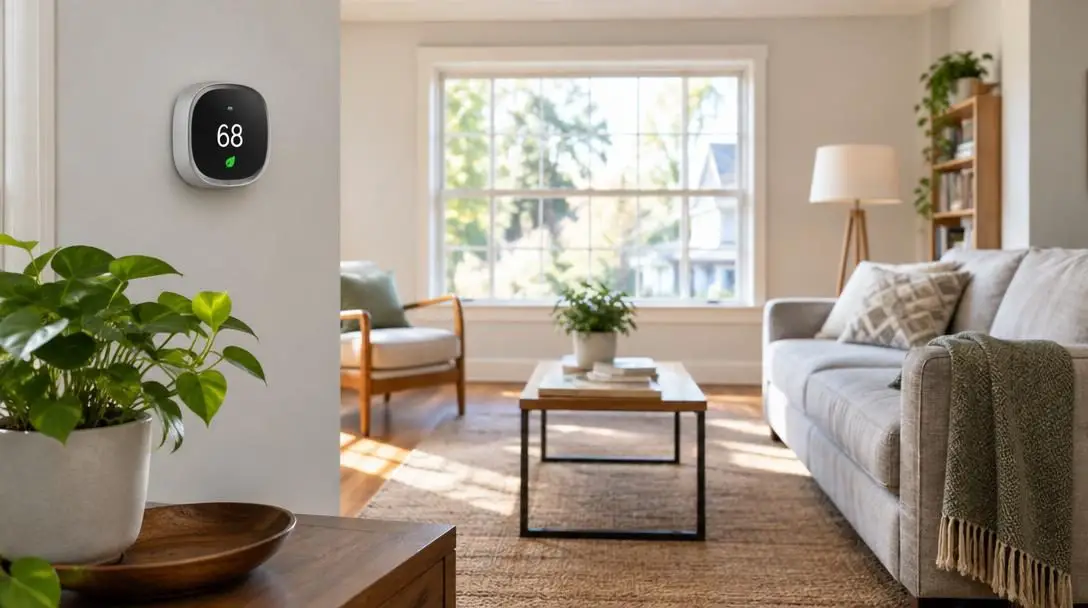
Because space heating and air conditioning represent the single largest share of residential utility demand, automating your temperature settings offers immediate returns. A programmable thermostat eliminates the waste of conditioning an empty house by aligning temperature targets directly with your household's active lifestyle.
Homeowners should begin by mapping out regular weekly routines. Identify extended windows of time when the residence remains unoccupied due to standard work and school schedules, as well as designated sleep windows when residents rest comfortably under bedding. The climate system can be programmed to relax heating levels during unoccupied winter hours and nighttime intervals, recovering to comfortable settings right before occupants wake or return home. Applying the same operational logic to summer cooling cycles prevents air conditioners from chilling empty rooms. Reviewing these programmed schedules each season guarantees that settings reflect changing weather conditions, work arrangements, and school holidays.
Upgraded LED Lighting Solutions
Exchanging legacy lighting fixtures for modern light-emitting diode (LED) bulbs is one of the simplest, most cost-effective upgrades available. Because artificial lighting is required in every room of the home every day, transitioning away from inefficient incandescent filaments yields swift reductions in household kilowatt-hour consumption.
A systematic lighting overhaul begins with a thorough inspection of every fixture, including storage areas, basements, utility closets, and hallways. Target high-traffic locations first, such as main living rooms, home offices, and overhead kitchen downlights where fixtures remain powered for multiple consecutive hours each evening. Beyond using dramatically less electricity to produce equivalent illumination, LEDs boast exceptional operational lifespans. Installing them in high-ceiling fixtures and stairwell luminaires significantly reduces the physical chore and safety risk of regular bulb changes.
Power Management and Phantom Load Elimination
Modern homes contain dozens of small appliances and entertainment devices that consume electrical current uninterruptedly unless physically severed from wall sockets. Mitigating these silent phantom draws requires deliberate electronic management.
Start by identifying home electronics that do not need to run continuously, including secondary televisions, gaming systems, desktop workstations, and countertop microwave ovens. When entertainment centers or guest room devices sit idle for consecutive days, unplugging them directly halts vampire drain. For complicated clusters of equipment, such as home computer setups with multiple displays, printers, and desktop sound systems, plug the gear into an accessible power strip. Switching the strip off at the conclusion of the workday completely isolates the equipment from live utility current. Additionally, unplug standalone charging transformers for smartphones, cordless power tools, and portable accessories once their batteries reach full capacity, as the internal components continue pulling current even without a device attached.
Weatherproofing and Envelope Air Sealing
Sealing gaps within the structural perimeter stabilizes indoor air temperatures by preventing conditioned air from escaping outdoors. When drafts are eliminated, mechanical heating and ventilation equipment operates with far greater efficiency across seasonal weather extremes.
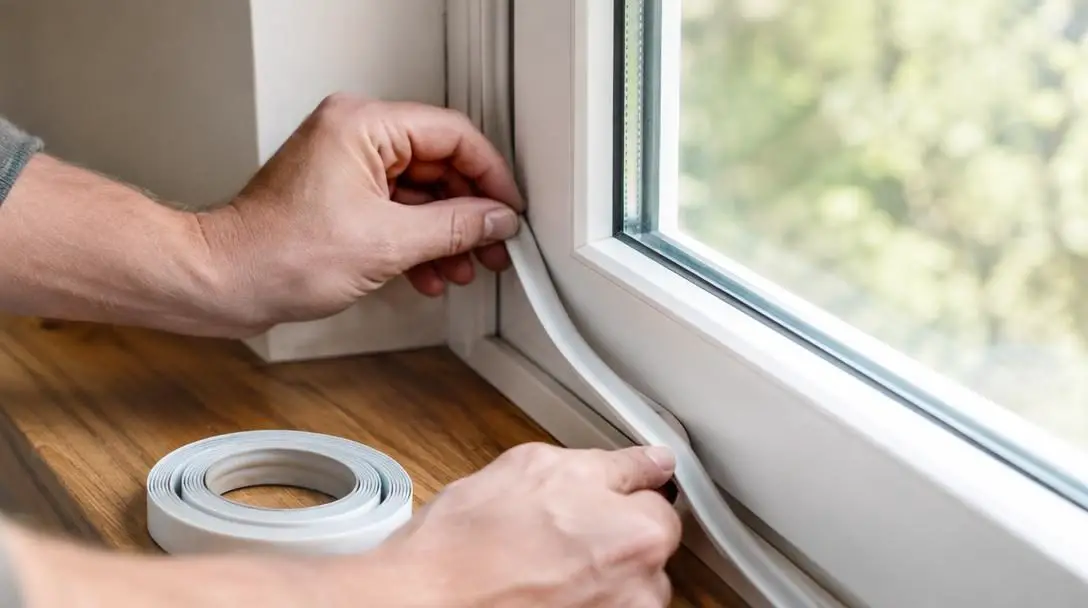
Begin by checking all exterior access doors and operable windows for daylight, deteriorating caulk, or noticeable air currents moving past closed sashes. Applying self-adhesive weatherstripping tape along window frame jambs and door sashes prevents exterior air from penetrating gaps. Installing heavy-duty door sweeps across the lower thresholds of external entryways establishes a tight physical barrier against drafts. To complete the envelope, inspect and seal non-moving construction joints, including the molding around window casings, exhaust vents, and exterior holes where electrical wiring and plumbing pipes enter the home.
Solar Power and Renewable Energy Adoption
Solar energy provides homeowners with a clean, limitless alternative to conventional utility power derived from fossil fuels such as natural gas or heating oil. Transitioning part or all of a home's power demand to renewable sources insulates the property against utility price fluctuations while shrinking its overall carbon footprint.
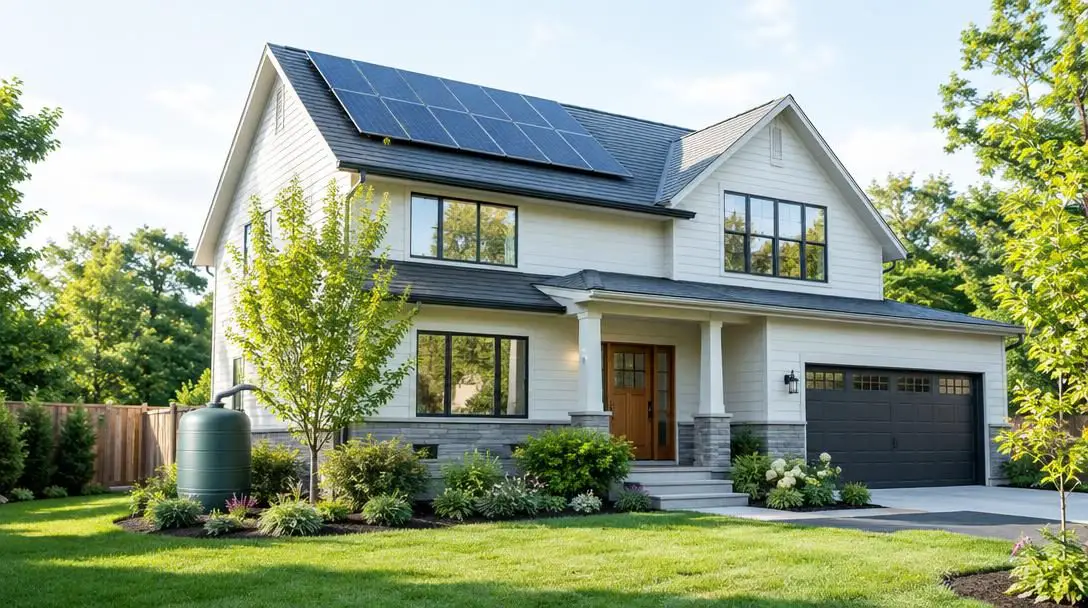
Homeowners can assess the viability of installing full rooftop or ground-mounted photovoltaic panel arrays to generate significant clean electricity on-site. However, renewable integration does not have to be an all-or-nothing venture. Smaller installations, such as standalone solar-powered exterior path lights or dedicated solar window heating units, capture clean power for specific tasks without significant upfront installation complexities. Property owners should investigate municipal and regional tax incentives designed to encourage renewable energy investments. Furthermore, solar installations routinely enhance real estate equity, as prospective buyers increasingly seek out homes equipped with sustainable amenities.
Comparing Household Energy Improvements
Every efficiency upgrade addresses a unique source of household waste and requires varying levels of effort to execute. The table below details how these five primary improvements compare across mechanical focus, operational mechanism, and functional benefits.
| Efficiency Strategy | Target Waste Mechanism | Primary Action Required | Key Energy Benefit |
|---|---|---|---|
| Programmable Thermostats | Thermal loss and heating/cooling runtime | Schedule temperature changes around routines | Prevents conditioning unoccupied rooms |
| LED Lighting Upgrades | Inefficient electrical conversion | Replace incandescent bulbs across all fixtures | Reduces lighting wattage and excess heat |
| Phantom Load Management | Standby power / vampire draw | Unplug idle devices and switch off power strips | Stops passive current draw from dormant electronics |
| Weatherproofing Entryways | Thermal transfer through structural leaks | Apply weatherstripping, door sweeps, and caulking | Stabilizes indoor climate and prevents drafts |
| Solar Power Integration | Fossil-fuel grid electricity reliance | Install photovoltaic arrays or small solar fixtures | Generates clean, renewable power on-site |
Step-by-Step Guide to Weatherproofing Drafty Entryways
Eliminating drafts around doors and windows is one of the most effective weekend projects a homeowner can undertake. Follow these methodical steps to establish a durable, airtight seal around your home's perimeter openings:
- Inspect exterior openings during windy or cold conditions, running your hand along frames or looking for visible gaps of daylight around closed doors and windows.
- Clean the application surfaces thoroughly, removing peeling weatherstripping, degraded adhesive, dirt, and chipped paint from window sashes and door jambs.
- Measure the dimensions of the door and window perimeters accurately before cutting weatherstripping tape to prevent short seams and corner leaks.
- Affix compression or adhesive weatherstripping firmly along the interior jambs so the sash or door presses snugly against the seal when latched.
- Attach a heavy-duty door sweep to the bottom interior or exterior edge of each primary entryway, ensuring the flexible sweep makes firm contact with the threshold.
- Seal stationary cracks around the outer window moldings, vent exhausts, and exterior utility pipe penetrations using exterior-grade caulking.
Common Energy-Saving Pitfalls to Avoid
When attempting to increase residential efficiency, well-intentioned homeowners frequently commit basic errors that undercut their results. Avoiding these standard missteps ensures maximum savings for your time and effort:
- Overriding automated thermostat settings: Constantly adjusting the dial manually interrupts automated schedules, causing heating and cooling machinery to cycle erratically and wasting fuel.
- Relying exclusively on device power buttons: Pushing the off switch on modern electronics leaves standby sensors, internal transformers, and clocks energized; pulling the plug or cutting power via a strip is mandatory to halt vampire draw.
- Ignoring minor envelope drafts: Treating tiny leaks around window casings or door frames as harmless is a mistake; dozens of minor gaps distributed across a structure add up to the thermal equivalent of an open window.
- Overlooking low-traffic household zones: Leaving incandescent bulbs in seldom-used guest rooms, utility basements, or closets wastes electricity whenever those lights are accidentally left illuminated.
- Assuming renewable energy requires an all-or-nothing approach: Foregoing small-scale renewable applications, like freestanding solar exterior lamps or passive solar window heaters, forfeits accessible energy gains simply because a massive rooftop array is not currently feasible.
Long-Term Monitoring and Maintenance Habits
Implementing basic efficiency measures establishes an excellent operational baseline, but maintaining an efficient home requires persistent observation. Once lighting upgrades, power strips, weatherstripping, and automated thermostats are in place, homeowners should turn their attention to long-term monitoring.
A practical first step involves tracking monthly utility bills across varying seasons. Comparing electricity and fuel bills before and after completing your weatherization and lighting overhauls offers concrete visibility into saved kilowatt-hours and heating units. Tracking these trends helps you determine whether space heating or air conditioning remains your residence's most demanding operational expense, clarifying where you should invest future maintenance efforts.
In addition, establishing an annual inspection schedule keeps your efficiency upgrades operating at peak performance. Even a perfectly programmed thermostat cannot compensate for mechanical strain caused by clogged air filters or unserviced blower motors. Inspect exterior caulking and adhesive weatherstripping annually to catch signs of wear, drying, or peeling before winter weather arrives. Similarly, keep outdoor solar units, path lights, and photovoltaic collectors clear of dirt, fallen leaves, and snow to ensure uninterrupted power absorption throughout the year.
Frequently asked questions
How do LED lightbulbs use less energy than traditional incandescent bulbs?
Incandescent bulbs generate light by passing electricity through a metal filament, a process that wastes the vast majority of incoming power as unintended heat. LEDs convert electric current directly into light using solid-state technology, consuming significantly less electricity while generating virtually no excess thermal waste.
What exactly is phantom load, and why does it matter?
Phantom load, also called vampire draw or standby power, is the electricity consumed by electronics while they are turned off but still plugged in. Appliances with internal clocks, standby sensors, or instant-on settings draw current uninterruptedly, quietly accumulating noticeable charges on monthly electric bills.
Can a programmable thermostat genuinely reduce heating and cooling bills?
Yes. By scheduling your heating and cooling equipment to relax its output during hours when the home is unoccupied or when occupants are sleeping under warm bedding, the system runs less frequently, eliminating the wasted energy of conditioning empty rooms.
Do I have to purchase an entire rooftop solar system to benefit from renewable power?
No. While rooftop or ground-mounted solar panel arrays generate substantial power, smaller standalone solutions—such as solar pathway lighting or dedicated solar window heating setups—deliver accessible, incremental renewable benefits without massive upfront commitments.
Why do tiny drafts around doors and windows make such a large impact on energy loss?
Although an individual air leak around a window frame or door sill may appear inconsequential, the cumulative effect of small drafts throughout an entire residence creates a continuous exchange of indoor and outdoor air, forcing heating and cooling systems to run constantly to maintain stable temperatures.
The bottom line
Optimizing household energy efficiency does not require complex structural overhauls or costly appliance replacements. By understanding the core drivers of residential energy waste—thermal transfer, inefficient electrical conversion, and phantom loads—homeowners can execute targeted, practical fixes that yield immediate results. From installing programmable thermostats and modern LED bulbs to sealing drafty door frames and unplugging idle electronic devices, these straightforward actions stabilize indoor comfort, protect the surrounding environment, and keep monthly utility expenses reliably under control year after year.