Exposing The Myths Behind Electric Cars
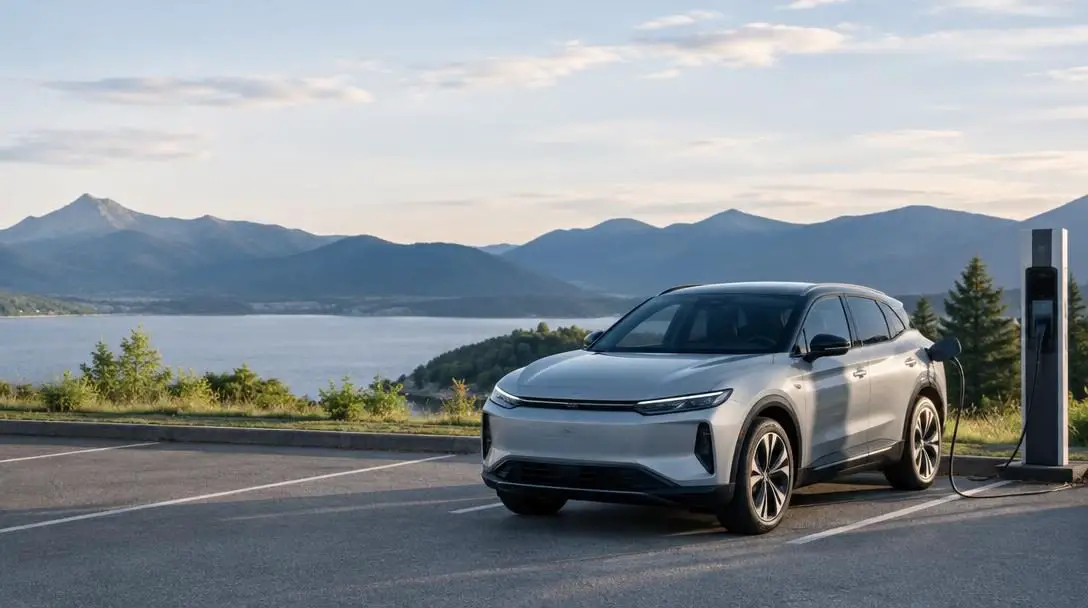
Electric cars have rapidly surged in popularity over the past decade as global awareness of climate change reshapes consumer habits. For generations, personal transportation relied almost entirely on internal combustion engines burning petroleum derivatives. While that fossil-fuel model drove modern industrial growth, it also entrenched a cycle of tailpipe emissions, urban air pollution, and accumulating atmospheric greenhouse gases.
The modern transition toward electrified transit marks a fundamental rethinking of vehicle engineering and energy use. By replacing gasoline combustion with high-efficiency battery packs and electric motors, modern electric vehicles offer a cleaner, quieter alternative to traditional automobiles. Despite these demonstrable advancements, widespread myths continue to deter curious drivers, rooted primarily in early vehicle limitations, obsolete manufacturing data, and misunderstandings about the modern electrical grid.
Key takeaways
- Electric vehicles produce zero tailpipe emissions, and their overall environmental footprint shrinks steadily as renewable energy replaces fossil fuels on the grid.
- Modern battery engineering delivers long-distance capability, with mainstream options like the Tesla Model S offering over 300 miles of driving range per charge.
- Lower ongoing operating costs, reduced mechanical maintenance, and federal incentives of up to $7,500 offset higher initial purchase prices over the lifespan of an EV.
- Electric motors generate instant torque without multi-gear lag, delivering acceleration and handling dynamics that match or surpass comparable sports cars.
Deconstructing the Most Common Electric Car Myths
Misconceptions about electric mobility often treat the technological limitations of early twenty-first-century prototypes as permanent roadblocks. Examining the engineering reality behind these common claims shows how rapidly the automotive industry has solved historical bottlenecks.
Myth 1: Electric Cars Are Not Environmentally Friendly
A persistent argument against electric transportation claims that the ecological cost of battery production and grid power generation cancels out any operational advantages. Critics highlight the mining required for battery packs and point out that regional electricity generation often relies on non-renewable sources such as coal and natural gas.
In reality, electric cars demonstrate a clear environmental advantage over their gas-powered counterparts across their full operational lifecycle. The defining distinction lies in zero tailpipe emissions: electric cars release no toxic exhaust or carbon compounds during operation, instantly eliminating local air pollution along city streets. Furthermore, the modern electrical grid is not static. As utilities continuously transition toward solar, wind, and hydroelectric generation, charging an electric car becomes cleaner every year. When an electric vehicle leaves the factory, its lifetime carbon profile steadily improves, whereas a gasoline-powered car burns petroleum at an identical emission rate until it is scrapped. Modern manufacturers are also actively designing battery packs for second-life stationary storage and developing closed-loop recycling processes to recover raw metals at decommissioning.
Myth 2: Electric Cars Have Limited Driving Range
Skeptics frequently assert that electric cars suffer from severe range anxiety, rendering them practical only for neighborhood grocery runs or short daily commutes. This criticism ignores the rapid energy-density gains achieved in automotive battery engineering over recent development cycles.
Today, long-range electric vehicles are fully capable of competing with conventional vehicles on highway road trips. For instance, the Tesla Model S provides an estimated driving range exceeding 300 miles on a full charge, allowing drivers to tackle hours of interstate travel without interruption. Supporting this extended range is a nationwide expansion of fast-charging infrastructure. Specialized networks such as Electrify America have invested heavily in deploying high-speed DC charging stations along heavily traveled highway corridors. As a result, cross-country travel no longer requires nerve-wracking route calculations or multi-hour waits, transforming long-distance electric transit into a straightforward reality.
Myth 3: Electric Cars Are Excessively Expensive
The assumption that electric vehicles are an exclusive luxury stems from the higher upfront sticker prices frequently seen on showroom floors. While the retail price tag can be higher than that of an entry-level compact combustion car, focusing strictly on purchase price ignores the total cost of ownership.
Electric propulsion fundamentally reduces lifetime operating expenditures. Because an electric vehicle does not use motor oil, spark plugs, timing belts, or exhaust systems, owners avoid hundreds to thousands of dollars in scheduled mechanical tune-ups and servicing. In addition, battery manufacturing costs continue to decline year over year, enabling automakers to introduce increasingly affordable models to the broader public. Government incentives also play an instrumental role in closing the initial price divide: qualified buyers can take advantage of a federal tax credit worth up to $7,500, significantly lowering the net cost of acquiring a qualifying electric model.
Myth 4: Electric Cars Are Slow and Boring to Drive
Another lingering trope paints electric cars as sluggish, utilitarian golf carts stripped of driving excitement and marketed purely to virtue-signaling environmentalists. This characterization completely misrepresents the physics of an electric powertrain.
Unlike internal combustion engines, which must rev through ascending gears to reach their peak horsepower and torque thresholds, electric motors deliver instantaneous maximum torque from a complete standstill. The moment the driver touches the pedal, magnetic fields produce immediate propulsion with zero mechanical delay. Many production electric vehicles achieve zero-to-sixty acceleration benchmarks that equal or surpass dedicated gas-powered sports cars. Far from being lifeless appliances, electric vehicles provide a responsive, quiet, and futuristic performance dynamic that changes how motorists view everyday driving.
Unlike combustion engines that must climb through gears to produce power, an electric motor delivers instant torque the exact moment the driver touches the accelerator.
Comparing Vehicle Realities: Electric Versus Internal Combustion
Understanding how electric vehicles compare directly to gas-powered vehicles across core performance metrics reveals the operational differences that drivers encounter on the road.
| Evaluation Metric | Electric Vehicles (EVs) | Gas-Powered Vehicles |
|---|---|---|
| Tailpipe Emissions | Zero direct emissions during operation | Continuous release of greenhouse gases and particulate exhaust |
| Routine Mechanical Maintenance | Minimal; no engine oils, spark plugs, or exhaust systems to service | Frequent; mandatory regular oil changes, filter swaps, and spark plug replacements |
| Power Delivery | Instant torque delivery at zero RPM via direct magnetic rotation | Delayed torque ramp-up constrained by engine revs and transmission shifting |
| Long-Distance Capability | 300+ miles on models like Tesla Model S; supported by Electrify America | 300 to 450 miles per tank; fueled at widespread legacy gas stations |
| Financial Incentives | Federal tax credits up to $7,500 for qualified models and buyers | Generally ineligible for clean energy vehicle incentives |
How Electric Vehicles Work Under the Hood
To fully grasp why electric cars require so little maintenance and accelerate with such fluidity, it helps to examine their internal components. The mechanical simplicity of an electrified architecture eliminates hundreds of fragile, high-friction parts found in internal combustion platforms.
The Traction Battery Pack
The primary power source of an electric vehicle is its traction battery pack, usually packaged flat beneath the vehicle floorboard. This placement lowers the center of gravity, enhancing balance and rollover resistance during sharp maneuvers. The battery stores direct current (DC) electricity to operate the motor, lighting, and onboard climate control. Contemporary packs are engineered with durable chemistries capable of enduring hundreds of thousands of miles before degradation, and their underlying materials can be recovered and recycled when the pack is eventually retired.
The Power Inverter
Because the traction battery stores power as direct current while modern automotive electric motors generally run on alternating current (AC), the inverter serves as the critical translator. This high-capacity solid-state device converts stored DC electricity into multi-phase AC power to spin the motor. When the driver lifts off the accelerator or presses the brake, the inverter reverses this pathway, converting kinetic energy gathered via regenerative braking back into stored DC voltage to recharge the battery.
The Electric Motor
The electric motor functions through electromagnetic force rather than mechanical explosions. Electric current sent from the inverter generates powerful rotating magnetic fields within the stator, which force the rotor to spin. This straightforward electromagnetic interaction turns the drive axle directly. By eliminating pistons, connecting rods, valves, and camshafts, the electric motor operates with near-silent precision, virtually no mechanical vibration, and immense reliability.
Single-Speed Drivetrain Architecture
Because an electric motor functions efficiently from zero all the way up to twenty thousand rotations per minute, electric vehicles do not require complex, multi-gear gearboxes. Instead, a simple single-speed reduction gear transmits rotational force straight to the differential and drive wheels. This structural simplicity eliminates traditional failure points like clutch plates, hydraulic torque converters, and synchronizers, drastically lowering overall vehicle wear.
Step-by-Step Guide to Transitioning to an Electric Car
Switching from a traditional combustion vehicle to an electric car requires a thoughtful approach to charging habits, regional incentives, and lifestyle compatibility. Following an organized transition plan ensures an effortless shift away from fossil fuels.
- Evaluate daily driving requirements: Calculate your average weekday commuting distances alongside routine weekend errands. Vehicles with high-capacity packs, like the Tesla Model S boasting an estimated range above 300 miles, can easily handle several days of average driving before requiring a plug-in session.
- Investigate purchase incentives: Before visiting a dealership or placing an order online, consult official guidelines on financial programs. Check your eligibility for the federal tax credit of up to $7,500, which can lower your taxable liability and balance initial vehicle pricing.
- Establish a routine home charging setup: Assess your residential parking situation to confirm how you will recharge the vehicle overnight. Standard household outlets can provide basic replenishment, but installing a dedicated Level 2 wall charger provides rapid, reliable charging directly from your home electrical panel.
- Survey public charging networks: Locate high-power charging plazas along your primary transit corridors. Get familiar with major independent charging providers like Electrify America so you know exactly where fast chargers are placed along your preferred travel paths.
- Calculate total cost of ownership: Contrast the sticker price against realistic operating budgets over a five-year window. Eliminate recurring costs like periodic oil changes, fuel filters, and spark plugs, while factoring in off-peak residential utility rates compared to the cost of gasoline.
- Schedule a comprehensive test drive: Spend time behind the wheel on both local stop-and-go streets and highway on-ramps. Evaluating the instant torque, smooth regenerative braking, and silent acceleration firsthand helps you assess vehicle dynamics under real-world conditions.
Five Common Mistakes New Electric Vehicle Drivers Make
Adapting to electric vehicle ownership is straightforward, yet drivers carrying old combustion-engine habits into the EV space often run into preventable frustrations. Staying aware of these common pitfalls ensures a seamless ownership experience.
- Focusing exclusively on the initial purchase price: Judging an electric car purely by its showroom sticker price causes prospective buyers to overlook long-term savings. Omitting the thousands of dollars saved on mechanical repairs and fuel can make an EV seem unaffordable when it is actually more economical over years of ownership.
- Neglecting available tax credits: Failing to verify whether a particular make, model, or assembly origin qualifies for federal incentives can leave money on the table. Drivers should always verify their eligibility for the federal tax credit of up to $7,500 prior to making financial commitments.
- Underestimating public charging access: Some new owners assume they will be stranded if they venture far from home without an electrical outlet. Overlooking nationwide high-speed charging networks, such as Electrify America, creates artificial anxiety and discourages owners from taking enjoyable long-distance road trips.
- Expecting frequent mechanical service visits: Drivers accustomed to rigid three-month dealership service schedules often hunt for non-existent maintenance intervals. Modern electric cars contain no engine oil to drain or spark plugs to replace, making old maintenance checklists obsolete.
- Assuming grid energy never changes: Critics and new buyers sometimes believe that charging an electric car will forever produce a fixed amount of indirect pollution. In truth, clean renewable sources like wind and solar are steadily phasing out coal and natural gas, reducing an EV's carbon emissions with each passing year.
What Lies Ahead for the Electric Vehicle Landscape
The electric vehicle industry continues to evolve beyond its initial rollout stage, transitioning into an optimized mass-market ecosystem. Keeping tabs on key industry shifts helps current and prospective owners anticipate future improvements.
First, electrical grids around the world are decarbonizing at an accelerated rate. As legacy coal plants retire and public utilities invest in utility-scale solar arrays, wind installations, and modern battery storage, the electricity feeding electric vehicles becomes cleaner by the day. This shift steadily increases the lifecycle carbon advantage of electric cars over internal combustion engines.
Second, the circular economy surrounding battery recycling is expanding. Dedicated manufacturing facilities are pioneering techniques to break down retired automotive packs, reclaiming raw nickel, cobalt, and lithium to construct the next generation of vehicles. This closed-loop approach drastically minimizes future mineral extraction, further reducing the environmental footprint of electric transit.
Finally, continuous infrastructure investments from companies like Electrify America are filling remaining gaps along rural and interstate highways. Paired with incremental battery chemistry refinements that extend range beyond the current 300-mile benchmark, electric mobility is rapidly rendering outdated arguments obsolete.
Frequently asked questions
Do electric vehicles produce emissions while charging from fossil-fuel power plants?
While an electric car uses power from local utility grids that may still burn coal or natural gas, it produces zero direct tailpipe emissions. Furthermore, as renewable energy sources expand on the grid, the emissions associated with charging an electric vehicle decrease over time, making it significantly cleaner than burning gasoline over the vehicle's lifespan.
Can an electric car handle long-distance road trips comfortably?
Yes. Many modern electric vehicles, including models such as the Tesla Model S, offer driving ranges exceeding 300 miles on a single charge. Combined with widespread fast-charging infrastructure managed by networks like Electrify America along major highway corridors, drivers can easily plan long-distance journeys with short recharging stops.
How much money can a buyer save through federal electric car incentives?
Eligible buyers purchasing a qualifying electric vehicle can receive a federal tax credit of up to $7,500. This incentive helps reduce the initial purchase price gap between electric vehicles and traditional internal combustion cars.
What routine maintenance items do electric cars eliminate?
Electric cars completely eliminate routine oil changes, spark plug replacements, fuel filter swaps, and exhaust system repairs. Because an electric motor uses magnetic fields and a single-speed transmission without traditional clutches, regular maintenance is largely limited to tire rotations, cabin air filter replacements, and brake inspections.
Why do electric cars accelerate faster than conventional gas cars?
Electric motors deliver maximum torque instantly the moment power is applied, without the mechanical delay needed by an internal combustion engine to build up revs and shift through multiple transmission gears. This provides instantaneous, linear acceleration that often matches the performance of sports cars.
The bottom line
The arguments that electric cars are dirtier than gas vehicles, restricted to brief city commutes, excessively costly, or devoid of driving pleasure collapse under modern engineering facts. Equipped with zero tailpipe emissions, real-world driving ranges exceeding 300 miles in vehicles like the Tesla Model S, and instant motor torque, electric propulsion represents a significant technological leap forward. Backed by federal tax credits up to $7,500, nationwide charging investments from networks like Electrify America, and an increasingly green power grid, electric vehicles have firmly established themselves as the future of personal transit.