Forgotten Democratic Presidential Candidates
Every four years, the American political spectacle reaches its fever pitch when major political parties officially introduce their presidential nominees to the public. These chosen standard-bearers command prime-time television, dominate news cycles, participate in high-stakes debates, and articulate the ideological direction of the country heading toward the general election in November. Yet long before a nominee takes the stage at a national convention, an exhausting, intricate gauntlet eliminates dozens of hopefuls across several months of primary voting and caucus gatherings.
The history of Democratic presidential primaries is filled with remarkable contenders whose national campaigns ended short of the White House. From celebrated military aviators and pioneering astronauts to sitting governors, veteran lawmakers, and persistent ideological crusaders, these candidates helped define party debates, test institutional limits, and chart shifting political alignments. Examining their journeys offers invaluable insight into how modern presidential nominations are actually won, lost, and transformed.
Key takeaways
- Presidential primaries require complex state-by-state delegate accumulation rather than relying solely on raw national celebrity or broad public approval.
- Challenging incumbent presidents or established vice presidents within a party carries formidable institutional hurdles that rarely yield an upset.
- Sudden personal controversies and heightened media scrutiny can instantly unravel the campaign of an overwhelming frontrunner.
- Failing to win a presidential nomination rarely marks the end of public service, as many contenders continue on to influential executive, legislative, and diplomatic roles.
At a glance: Prominent non-nominees in Democratic primary history
While only one nominee emerges from each election cycle, examining the varied career backgrounds and electoral challenges of past contenders illustrates the diverse paths that cross the primary stage.
| Candidate | Key Prior Experience | Primary Year(s) | Notable Obstacle or Result |
|---|---|---|---|
| John Wolfe Jr. | Tennessee congressional candidate | 2012 | Earned 23 delegates running against incumbent Barack Obama |
| Dennis Kucinich | Mayor of Cleveland, U.S. Representative | 2004, 2008 | Faced crowded fields led by John Kerry and Barack Obama |
| Bill Bradley | U.S. Senator from New Jersey, pro basketball player | 2000 | Confronted the institutional party backing of Al Gore |
| Lyndon LaRouche | Labor Party leader, Socialist Workers representative | 1976–2000 | Marginalized by establishment and limited by imprisonment |
| Jerry Brown | Governor of California | 1992 | Early momentum slowed by the rising popularity of Bill Clinton |
| Gary Hart | U.S. Senator from Colorado | 1984, 1988 | Fell short to Walter Mondale in 1984; derailed by affair scandal in 1988 |
| John Glenn | Astronaut, U.S. Senator from Ohio | 1984 | Finished fourth despite historic global fame and personal appeal |
Profiles of notable Democratic primary candidates
Each primary cycle brings together an eclectic field of contenders, each testing whether their personal narrative, regional coalition, or policy focus can capture the imagination of primary voters.
John Wolfe Jr.
- Home state: Tennessee
- Key race: 2012 Democratic primary
- Notable metric: 23 convention delegates won
Mounting an intraparty challenge against a sitting president represents one of the steepest uphill climbs in modern American governance. In 2012, attorney John Wolfe Jr. decided to undertake that exact contest against President Barack Obama. Prior to his presidential bid, Wolfe was no stranger to uphill electoral fights, having campaigned unsuccessfully in four separate congressional elections in his home state of Tennessee.
Rather than letting past congressional defeats deter him, Wolfe took advantage of lingering primary dissatisfaction in select states to mount a protest campaign. His grassroots bid captured unexpected national headlines when he secured 23 delegates, finishing with the second-highest delegate total in the entire 2012 Democratic primary cycle behind the incumbent president.
Dennis Kucinich
- Executive office: Mayor of Cleveland, Ohio
- Federal office: U.S. House of Representatives
- Primary campaigns: 2004 and 2008
Few politicians have cultivated a more recognizable grassroots following than Dennis Kucinich. Kucinich originally forged his public profile as the youthful mayor of Cleveland, Ohio, before eventually transitioning to Capitol Hill as an outspoken member of the United States House of Representatives. Armed with dedicated grassroots energy and sharp convictions, he launched high-profile campaigns for the Democratic nomination in both 2004 and 2008.
In his 2004 campaign, Kucinich competed against an expansive roster of contenders that was ultimately dominated by Massachusetts Senator John Kerry. Four years later, his 2008 effort collided with another heavyweight field led by the historic candidacy of Barack Obama. Following these national bids, Kucinich returned to his congressional seat to continue his legislative work. Decades after his initial tenure in municipal government, he sought another term as mayor of Cleveland in 2021, though that mayoral bid was unsuccessful.
Bill Bradley
- Education: Princeton University
- Athletic career: Professional basketball player
- Senate service: U.S. Senator from New Jersey (1979–1997)
Possessing one of the most multifaceted biographies in modern political history, Bill Bradley achieved excellence across multiple competitive arenas. After attending Princeton University, Bradley enjoyed an accomplished career as a professional basketball player before channeling his focus into public service. He represented New Jersey in the United States Senate for nearly two decades, serving from 1979 until 1997.
Upon stepping away from the Senate, Bradley entered the 2000 Democratic primary to pursue the presidency. However, Bradley ran straight into the formidable apparatus of Vice President Al Gore. Having spent eight years in the White House alongside Bill Clinton, Gore commanded deep institutional backing across party leadership, organized labor, and state organizations, presenting an immovable barrier that Bradley's cerebral campaign could not overcome.

Lyndon LaRouche
- Movement leadership: Socialist Workers (1949–1964), Labor Party (1973–1979)
- Initial White House run: 1976 (Labor Party)
- Campaign span: Every presidential election cycle from 1976 to 2000
Political persistence took an unusual form in Lyndon LaRouche, an activist who operated at the center of his own ideological movement. LaRouche spent decades shifting across unconventional political formations. He represented the Socialist Workers from 1949 until 1964 before going on to establish and lead the Labor Party from 1973 until 1979, running for the presidency on its ticket in 1976.
Transitioning into the Democratic Party primaries, LaRouche competed continuously across several decades. While his campaigns managed to collect primary votes in various regions, mainstream political leaders and party organizations never viewed him as a viable nominee, particularly given his controversial legal troubles and eventual imprisonment. Despite these severe handicaps, LaRouche mounted presidential campaigns in every single election cycle from 1976 through 2000.
Jerry Brown
- California governorship: 1975–1983; returned in later years
- Municipal office: Mayor of Oakland
- Key primary bid: 1992 Democratic primary
Having served two consecutive terms as Governor of California between 1975 and 1983, Jerry Brown was already an established titan of West Coast politics. After enduring an unsuccessful campaign for the United States Senate, Brown reinvented his national political profile by launching a spirited campaign during the 1992 Democratic primaries.
Brown captured significant momentum in early state contests by running an insurgent campaign that challenged traditional fundraising and establishment norms. However, his presidential ambitions encountered the surging popularity of Arkansas Governor Bill Clinton, who steadily consolidated support and pulled away to secure the nomination. Brown returned to public life through municipal governance as the mayor of Oakland before later staging an unprecedented comeback to serve as California's governor once again.
Gary Hart
- Senate service: U.S. Senator from Colorado
- Presidential bids: 1984 and 1988
- Executive roles: Special Envoy for Northern Ireland; Vice Chair, Homeland Security Advisory Council
Colorado Senator Gary Hart emerged during the 1980s as the intellectual face of a new generation of Democratic leaders. In 1984, Hart mounted a serious challenge against former Vice President Walter Mondale, securing crucial primary victories and taking the nomination fight all the way to the national convention before falling short.
Entering the 1988 primary cycle as the undisputed frontrunner, Hart appeared poised to cruise to the Democratic nomination. His campaign, however, suffered a sudden and fatal collapse following an intense scandal surrounding an extramarital affair, paving the way for Massachusetts Governor Michael Dukakis to capture the nomination. Hart eventually rebuilt his stature in public service, serving in the Senate and later taking on critical national security roles under President Barack Obama as Vice Chair of the Homeland Security Advisory Council and United States Special Envoy for Northern Ireland.
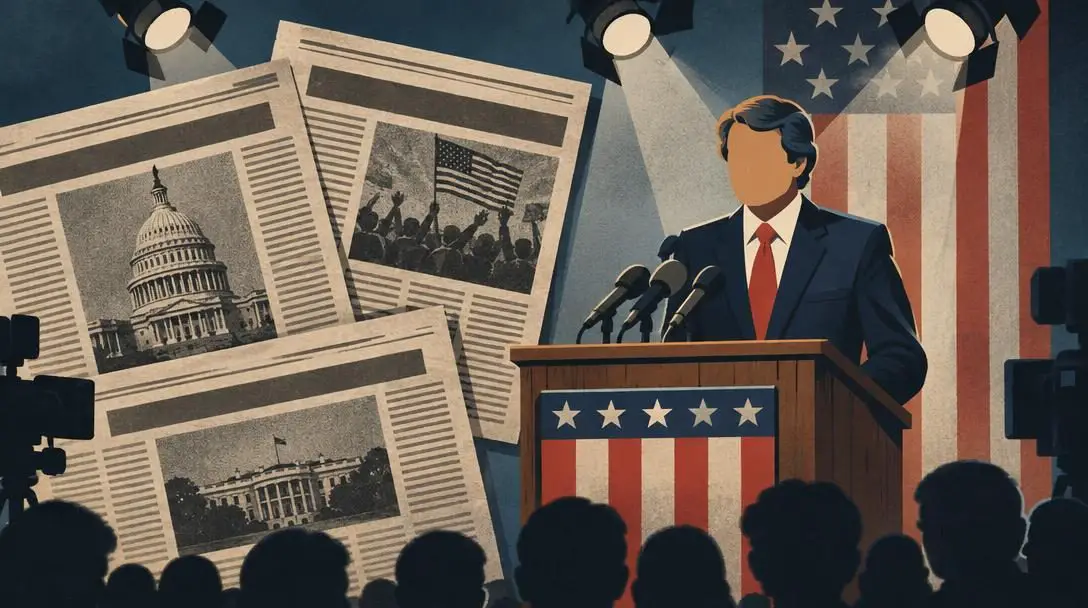
A presidential primary campaign can elevate an underdog to national prominence in weeks, just as swiftly as unexpected controversy can dismantle a presumed frontrunner.
John Glenn
- Military service: World War II veteran
- Space exploration: First American to orbit the Earth
- Senate tenure: Represented Ohio for over 24 years (retired 1999)
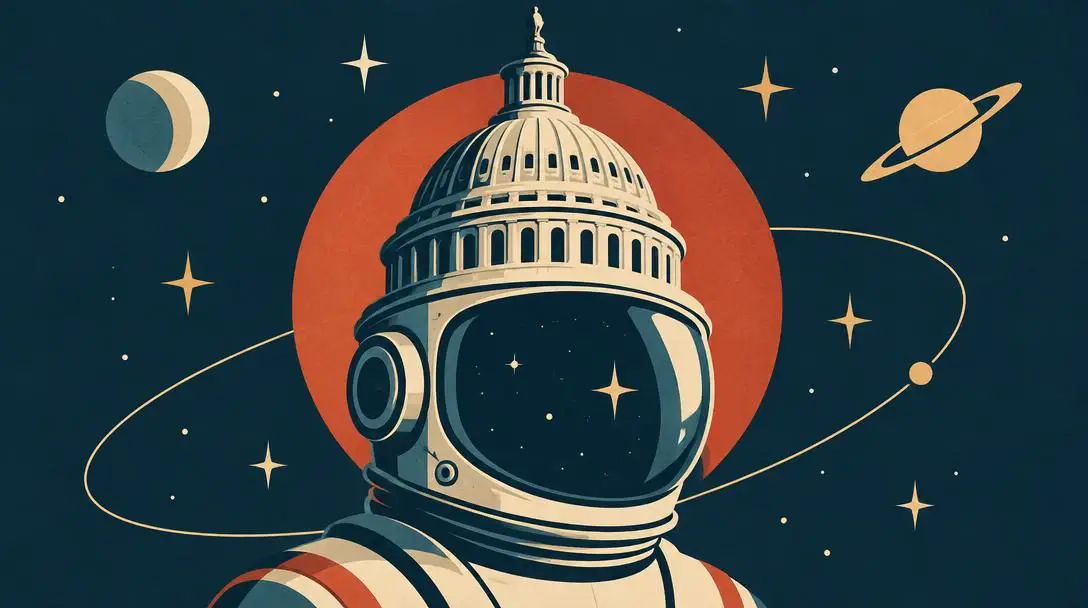
Before ever entering national politics, John Glenn had already secured an unassailable place in world history. A decorated veteran of World War II, Glenn became an international hero when he became the first American astronaut to orbit the Earth. He subsequently translated his immense public goodwill into a political career, winning election to represent Ohio in the United States Senate.
Glenn entered the 1984 Democratic presidential primary with immense fanfare and broad national recognition, competing alongside Gary Hart and Walter Mondale. However, his campaign struggled to build an effective political ground game, and his presidential bid concluded with a fourth-place finish. Undeterred, Glenn returned to Capitol Hill, completing more than 24 years of Senate service before retiring in 1999. In that same era, he made history once more by returning to space aboard the space shuttle before passing away in 2016.
How the primary process actually works
The varied fortunes of candidates like Glenn, Brown, and Bradley underscore the intricate mechanics that govern presidential selection. Gaining a major party nomination requires far more than broad national popularity; it demands mastery of a complex operational system long before November ballots are printed.
The accumulation of convention delegates serves as the fundamental currency of any primary campaign. Unlike general elections, which revolve around the Electoral College, primaries are a state-by-state race to gather pledged delegates for the party's national convention. Because states enforce strict percentage thresholds that candidates must meet to earn delegates, contenders must build broad regional appeal rather than relying on narrow pockets of support.
Institutional alignment and insider backing provide the critical foundation for sustainable campaigns. Party leaders, affiliated interest groups, and seasoned campaign operatives tend to consolidate around established figures or incumbent officeholders. As seen in campaigns against sitting executives like Barack Obama in 2012 or Al Gore in 2000, defeating an institutional frontrunner requires overcoming nearly insurmountable resource advantages.
Intense media scrutiny and narrative momentum can dramatically alter the trajectory of a primary race within days. Positive coverage can rapidly propel an insurgent into serious contention, as Bill Clinton experienced in 1992. Conversely, the intense focus of the national press corps can instantly expose vulnerabilities and destroy frontrunners, as demonstrated by the sudden collapse of Gary Hart's campaign in 1988.
Step-by-step guide to evaluating primary contenders
Political observers, students, and voters who want to analyze primary fields objectively can follow a structured method to separate media hype from authentic electoral viability.
- Review career records and legislative histories. Examine each contender's previous public service, assessing prior offices held, executive appointments, legislative voting patterns, or military leadership before entering the national race.
- Monitor state-by-state delegate rules and ballot access. Track how individual states allocate delegates, note minimum vote thresholds required to secure representation, and observe how early caucus states shape campaign momentum.
- Benchmark insurgent challengers against past historical fields. Compare current candidates against historical outsider campaigns to gauge whether unconventional contenders possess the operational infrastructure needed to challenge establishment frontrunners.
- Evaluate debate performances under direct pressure. Scrutinize primary debates to observe how hopefuls defend their policy platforms, respond to unscripted questions, and handle sharp attacks from party rivals.
- Track the long-term career trajectories of non-nominees. Follow candidates after they exit the race to see how their campaigns influence future party leadership, cabinet appointments, or local executive elections.
Critical missteps when analyzing primary campaigns
Observers often fall victim to recurring assumptions when predicting primary outcomes. Avoiding these analytical errors provides a clearer understanding of how nominations unfold.
- Conflating universal celebrity with primary viability: Broad public admiration does not automatically yield convention delegates, as demonstrated by John Glenn's fourth-place finish in 1984 despite his celebrated status as an astronaut.
- Underestimating the power of the incumbency advantage: Taking on an incumbent president or sitting vice president, as attempted by John Wolfe Jr. in 2012 or Bill Bradley in 2000, faces overwhelming institutional and organizational barriers.
- Assuming an early frontrunner is invincible: Early polling leads are notoriously fragile, and unexpected revelations or campaign blunders can instantly overturn presumed frontrunners, just as Gary Hart experienced in 1988.
- Dismissing defeated primary candidates as irrelevant: Failing to capture the presidential nomination does not end a public career. Contenders like Jerry Brown, Dennis Kucinich, and Gary Hart subsequently held vital governorships, congressional seats, and federal advisory posts.
- Focusing on national polling while ignoring delegate math: National polls often mask critical weaknesses in state-by-state organizing, since primaries are won by meeting specific delegate thresholds across individual congressional districts.
Long-term impacts on party politics and public service
While primary runners-up rarely receive the historical recognition granted to party nominees, their campaigns leave lasting footprints on American governance. Many ideas first popularized by non-nominees during primary debates gradually filter into official party platforms in subsequent cycles, shaping the legislative agenda for years to come.
Furthermore, presidential primaries serve as a proving ground for party leadership. Contenders who demonstrate poise, draw loyal followings, or articulate distinct viewpoints frequently secure significant appointments or stage successful runs for other offices. Whether returning to the Senate like Gary Hart, stepping into municipal governance like Dennis Kucinich, or returning to a state governorship like Jerry Brown, these candidates prove that a White House bid is often merely one memorable chapter in an extensive career of public service.
Frequently asked questions
Who was the most successful primary challenger against Barack Obama in 2012?
Attorney John Wolfe Jr. mounted an intraparty challenge against President Barack Obama during the 2012 Democratic primaries, earning 23 convention delegates, which was the second-highest total achieved during that primary cycle.
Why did Gary Hart drop out of the 1988 presidential race?
Gary Hart entered the 1988 race as the clear frontrunner for the Democratic nomination, but his campaign was derailed by an intense scandal surrounding an extramarital affair, paving the way for Michael Dukakis to win the nomination.
How did John Glenn perform in his 1984 presidential campaign?
Despite being a world-famous astronaut and an established United States Senator from Ohio, John Glenn struggled to build sufficient campaign momentum in 1984, ultimately finishing the primary race in fourth place behind Walter Mondale and Gary Hart.
What offices did Jerry Brown hold after losing the 1992 nomination?
After falling short to Bill Clinton in the 1992 primaries, Jerry Brown continued his public service career by serving as the Mayor of Oakland, California, before eventually returning to serve additional terms as the Governor of California.
How many consecutive times did Lyndon LaRouche run for president?
Lyndon LaRouche mounted presidential campaigns in every consecutive election cycle from 1976 through 2000, running first under the Labor Party banner in 1976 and later competing in Democratic primaries.
The bottom line
The road to a major party's presidential nomination is a grueling contest that tests organization, message discipline, and institutional support. The stories of contenders like John Wolfe Jr., Dennis Kucinich, Bill Bradley, Lyndon LaRouche, Jerry Brown, Gary Hart, and John Glenn demonstrate that primary history is far richer than just the roster of eventual nominees. Understanding their campaigns illuminates the enduring mechanics of American democracy and reveals how non-nominees continue to shape the nation's political landscape long after the primary season concludes.