From Paper To Silver Screen: Five Transmedia Franchises That Started As Comic Books
For decades, comic books were frequently dismissed as disposable entertainment or pulp fiction aimed exclusively at younger audiences. Over time, however, graphic literature revealed itself to be an unmatched powerhouse of dynamic visual storytelling, intricate narrative architecture, and deep world-building. Today, illustrated panels serve as foundational blueprints for some of the most lucrative and culturally pervasive entertainment properties on the planet.
The progression from printed paper to the silver screen represents merely the starting point of contemporary franchise building. Rather than consuming an isolated movie or a single monthly issue, modern audiences inhabit expansive narrative ecosystems that cross several entertainment formats simultaneously. Known as transmedia storytelling, this creative philosophy builds sprawling fictional universes where graphic novels, theatrical films, serialized television series, prose fiction, interactive video games, and immersive attractions continuously expand upon one another.
Key takeaways
- Transmedia storytelling expands a single continuous narrative across multiple creative formats rather than simply repackaging or retelling the exact same plot.
- Comic books offer pre-built narrative depth and visual lore, giving filmmakers and developers a rich foundation before adaptation begins.
- Franchises succeed when individual releases remain accessible to casual viewers while providing connected world-building for dedicated fans.
- Direct panel-for-panel literalism and narrative fragmentation across too many spin-offs can undermine the quality and continuity of a franchise.
- Digital publishing platforms and advanced visual effects technologies continue to blur the boundaries between static sequential art and live-action media.
The mechanics of cross-platform narrative design
To grasp why graphic novels adapt so seamlessly into massive multi-platform properties, one must look closely at the structural machinery of modern transmedia design. Transitioning drawn sequences into interactive video games, serialized cable dramas, and big-budget feature films demands deliberate, systemic coordination across independent creative teams.
The core engine of this transition is comprehensive world-building. In graphic literature, writers and illustrators must communicate pacing, motion, emotional tension, and sonic impact entirely through static printed frames and speech bubbles. Because sequential art requires such high information density, creators invariably map out intricate character backgrounds, historical timelines, geographic layouts, and detailed internal rules simply to make their worlds feel authentic. When outside directors, screenwriters, or game producers step in, they do not have to invent an entire universe from scratch; they inherit a fully realized setting with answers to deep continuity questions already etched into the source material.
A second foundational pillar is media specificity, which recognizes that each creative medium possesses distinct storytelling strengths:
- Feature films: Deliver massive visual spectacles, concentrated narrative stakes, and global theatrical distribution designed to unite mainstream audiences.
- Serialized television: Replicates the gradual, issue-by-issue pacing of monthly comic runs, allowing for nuanced character development and secondary subplots.
- Interactive video games: Grant audiences direct personal agency, enabling players to make moral choices, explore physical environments, and participate in stylized combat.
- Prose novels and companion comics: Provide the room to explore internal monologues, historical backstories, and narrative gaps that cannot fit into fixed theatrical runtimes.
The goal of adaptation is to honor the underlying spirit, themes, and emotional stakes of the source material rather than to provide a duplicate record of every panel.
Five landmark franchises born on the printed page
The journey from ink and paper to global, multi-platform dominance is best demonstrated through five benchmark properties. Each originated with an unmistakable graphic identity and narrative voice before expanding into an intricate media ecosystem.
The Marvel Cinematic Universe
- Origin format: Classic monthly Marvel comic publications
- Cinematic launch year: 2008
- Foundational release: Iron Man
- Expanded platforms: Over twenty films, television series, tie-in comics, prose novels, and theme park attractions
The Marvel Cinematic Universe stands as the most commercially dominant transmedia franchise in modern entertainment history. While rooted in several decades of classic print issues, its coordinated multi-platform screen strategy began in 2008 with the debut of Iron Man. Following that foundational release, the property scaled at an unprecedented velocity, eventually encompassing more than twenty feature films, multiple high-budget serialized television shows, companion print issues, prose novels, and real-world theme park attractions. By weaving disparate storylines into a single, cohesive cinematic universe, the property transformed modern studio development and captured the collective focus of generations of moviegoers worldwide.
The Walking Dead

- Creator: Robert Kirkman
- Debut year: 2003
- Initial format: Black-and-white monthly comic series
- Expanded platforms: Cable television series, video games, and prose novels
Proving that creator-owned, independent black-and-white comics could fuel a global entertainment empire, The Walking Dead began publication in 2003 under the direction of creator Robert Kirkman. The gritty, character-driven survival story established a dedicated readership that directly enabled a major television adaptation on AMC in 2010. The property subsequently crossed into acclaimed narrative-driven video games and spin-off novels. Although the franchise drew criticism regarding a perceived decline in narrative quality during its later television seasons, it remains one of the most prominent, commercially celebrated zombie apocalypse universes across global pop culture.
Sin City
- Creator: Frank Miller
- Debut era: Early 1990s
- Adaptation director: Robert Rodriguez
- Expanded platforms: Feature film, 2014 theatrical sequel, and video game adaptations
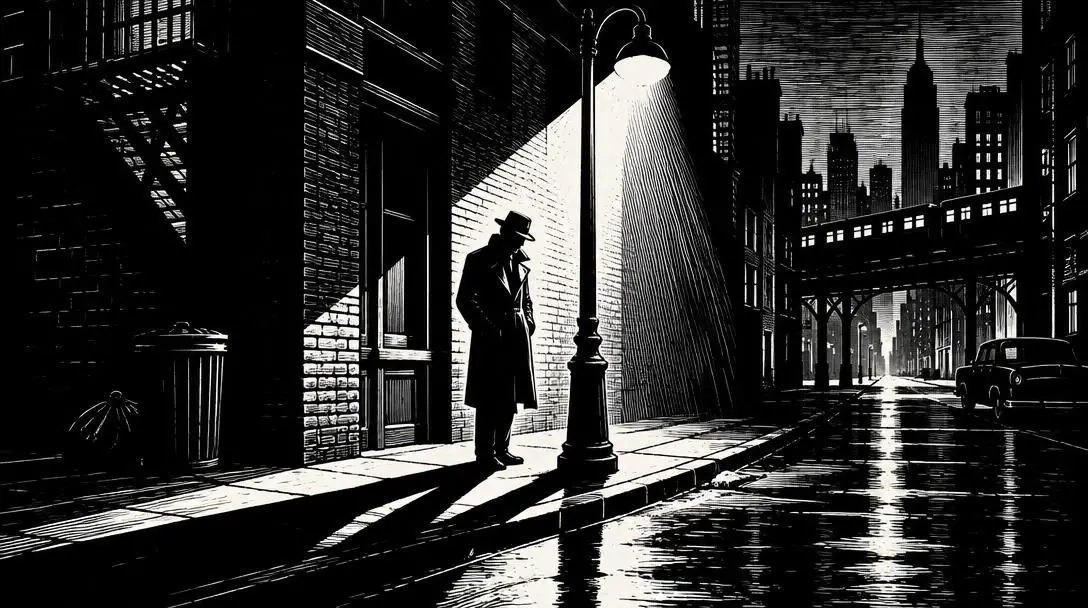
Distinguished by its unapologetic hardboiled prose and stark, high-contrast monochrome aesthetic, Sin City arrived in the early 1990s as a masterclass in modern noir. In 2005, director Robert Rodriguez partnered directly with Frank Miller to translate three of the comic storylines into a groundbreaking cinematic experience. Rather than treating the page as loose inspiration, Rodriguez utilized innovative green-screen sets to construct a fully digital, monochromatic visual style that directly matched Miller's stark inked illustrations. This striking technical accomplishment yielded a 2014 theatrical sequel alongside video game adaptations, establishing a definitive precedent for stylized visual fidelity in graphic adaptations.
Scott Pilgrim vs The World
- Creator: Bryan Lee O'Malley
- Film adaptation year: 2010
- Adaptation director: Edgar Wright
- Expanded platforms: Feature film, dedicated video games, and a stage musical production
Created by Bryan Lee O'Malley, the Scott Pilgrim graphic novel series synthesized coming-of-age romance, garage rock energy, and dynamic video game mechanics into an irresistible indie hybrid. The books developed a passionate cult following before director Edgar Wright adapted the narrative into a 2010 live-action feature film. Wright's film earned critical acclaim for its visual inventiveness, seamlessly embedding game user interfaces, drawn animation flourishes, and dynamic comic-style action directly into physical cinematography. The story's transmedia footprint extended far beyond the cinema, flourishing through dedicated video game releases and even a live stage musical production.
Watchmen
- Writer: Alan Moore
- Illustrator: Dave Gibbons
- Screen adaptations: 2009 feature film and HBO television series
- Adaptation directors: Zack Snyder (film)
Widely considered one of the pinnacle achievements in modern graphic literature, Watchmen deconstructed the very concept of the costumed vigilante through intricate philosophical themes and layered characterizations. In 2009, director Zack Snyder brought Moore and Gibbons's dense twelve-issue series to theaters, producing a live-action interpretation that provoked split reactions from long-time fans and film critics alike. The property's narrative influence found fresh critical acclaim years later through an HBO television series. Rather than simply recycling the printed narrative, the television production served as an expansive thematic continuation, interrogating modern sociopolitical realities while honoring the core structural themes of the original graphic masterpiece.
Franchise comparison at a glance
Each of these five landmark comic book properties took a distinct route from initial graphic publication to multi-platform success, utilizing different mediums to expand their narrative reach.
| Franchise | Original Creators | Debut Year or Era | Primary Formats | Signature Adaptation Milestone |
|---|---|---|---|---|
| The Marvel Cinematic Universe | Classic Marvel Publications | 2008 (Cinematic) | Films, television, prose novels, theme parks | Interconnected continuity launched with Iron Man |
| The Walking Dead | Robert Kirkman | 2003 | Comics, television, video games, novels | AMC television series premiere in 2010 |
| Sin City | Frank Miller | Early 1990s | Comics, feature films, video games | 2005 digital green-screen theatrical release |
| Scott Pilgrim vs The World | Bryan Lee O'Malley | 2004–2010 run | Graphic novels, film, games, stage musical | 2010 live-action film directed by Edgar Wright |
| Watchmen | Alan Moore & Dave Gibbons | 1986–1987 run | Graphic novel, film, serialized television | Thematic sequel series produced by HBO |
Practical steps for exploring expansive transmedia universes
Entering a massive fictional universe that spans dozens of books, multi-season television arcs, theatrical movies, and video games can easily overwhelm a newcomer. Approaching these multifaceted narrative networks in a methodical way ensures a cohesive, deeply satisfying journey.
- Begin with the foundational source material: Read the original printed graphic runs to understand the creator's unvarnished visual aesthetic, character dynamics, and core narrative tone before commercial cinematic adaptations modify the story.
- Identify core timeline entries versus side projects: Determine whether secondary releases, spin-off shows, or tie-in issues belong to the primary narrative continuity or occupy separate, self-contained alternate timelines.
- Consume major narrative milestones first: In sprawling franchises like the Marvel Cinematic Universe, focus initially on central milestone movies before trying to catalog every single television spin-off or promotional tie-in comic.
- Select secondary media based on personal preference: Tailor your exploration to the storytelling formats you enjoy most, such as choosing narrative-driven episodic video games or companion novels over secondary merchandise.
- Trace artistic and directorial adaptations: Compare how different creative teams translate static printed panels into time-based live action, focusing specifically on framing, camera movement, lighting, and sound design.
Common missteps in cross-platform adaptations
Both the creative teams responsible for adapting graphic works and the audiences engaging with them face distinct challenges when transitioning between narrative formats. Being aware of these pitfalls preserves the integrity of the storytelling experience.
- Excessive panel literalism: Directors sometimes attempt a shot-for-shot recreation of graphic layouts without adjusting for cinematic pacing, temporal flow, or natural spoken dialogue. Outside of intentionally stylized experiments like Sin City, direct visual duplication can produce stiff, artificial screen acting.
- Narrative fragmentation: Scattering essential character arcs, motivations, or plot resolutions across separate video games and web shorts leaves the primary film or television installments feeling hollow and disjointed.
- Demanding absolute uniformity: Viewers who expect a two-hour theatrical adaptation to replicate an entire graphic novel beat for beat often experience disappointment, overlooking necessary trims made to suit cinematic pacing.
- Creative fatigue from overexpansion: Studios that rush multiple sequels, spin-offs, and companion projects into production without unified artistic direction risk muddling continuity and diluting production quality, as seen in the later seasons of long-running television shows.
The future of cross-platform storytelling
Rapid technological advances continue to blur the dividing lines between graphic literature, digital cinema, and real-time interactive entertainment. Several structural developments are changing how modern properties gain traction across global markets.
Digital serialization, crowd-funded graphic novels, and dedicated web-comic platforms have fundamentally transformed creative discovery. Modern writers and artists no longer depend exclusively on legacy publishing houses to connect with audiences. Independent creators can build massive, highly engaged communities directly online, refining their characters and lore over years before pursuing external studio agreements. Consequently, a growing percentage of upcoming cinematic and interactive projects are originating from diverse, independent digital platforms.
At the same time, high-end filmmaking tools are lowering the physical barriers between hand-drawn artwork and photorealistic cinematography. The pioneering hybrid aesthetics introduced by films like Sin City and Scott Pilgrim vs The World—which combined real actors with graphical overlays, stylized color timing, and virtual sets—are now common across major commercial productions. Modern virtual production environments allow film crews to emulate the exaggerated silhouettes, dramatic lighting contrasts, and dynamic architectural scales of comic books in real time, bridging the divide between paper and screen more seamlessly than ever before.
Frequently asked questions
What is the difference between traditional licensing and transmedia storytelling?
Traditional licensing typically retells the exact same story across another format, such as adapting a book into a movie that follows identical plot beats. In contrast, transmedia storytelling expands a single continuous narrative universe, using different platforms to explore unique subplots, character backstories, and regional lore that enhance the broader fictional world.
Why do comic books serve as such strong foundations for transmedia franchises?
Comic books require high information density to convey movement, pacing, and emotion through static art. As a result, creators naturally build extensive lore, detailed visual aesthetics, and complex backstories that provide screenwriters, directors, and game developers with an exhaustive narrative reservoir before physical production begins.
How did Robert Rodriguez achieve the signature visual style of Sin City?
Robert Rodriguez utilized extensive green-screen stages and digital visual effects to construct an entirely virtual environment that directly replicated Frank Miller's high-contrast, black-and-white comic book aesthetic on the silver screen.
Did the Watchmen television series simply re-create the original graphic novel?
No, the HBO television adaptation chose to expand upon Alan Moore and Dave Gibbons's original graphic novel rather than simply filming the comic panels again. The series served as a thematic continuation that addressed contemporary sociopolitical issues while honoring the core themes of the original printed work.
What is audience homework in transmedia storytelling?
Audience homework refers to the mistake of scattering vital narrative developments, plot solutions, or character motivations across secondary media like tie-in video games, spin-off novels, or web series, leaving viewers who only watch the main films feeling confused and disconnected.
The bottom line
The monumental success of properties like the Marvel Cinematic Universe, The Walking Dead, Sin City, Scott Pilgrim vs The World, and Watchmen cements an undeniable entertainment reality: comic books are not merely stepping stones toward cinematic production, but powerful incubators of world-class storytelling ideas. By uniting memorable visual identities with deep, multifaceted lore, sequential graphic art provides the ultimate framework for expansive narrative universes capable of captivating global audiences for generations.