Gardening in Small Spaces: Maximizing Your Space and Yield
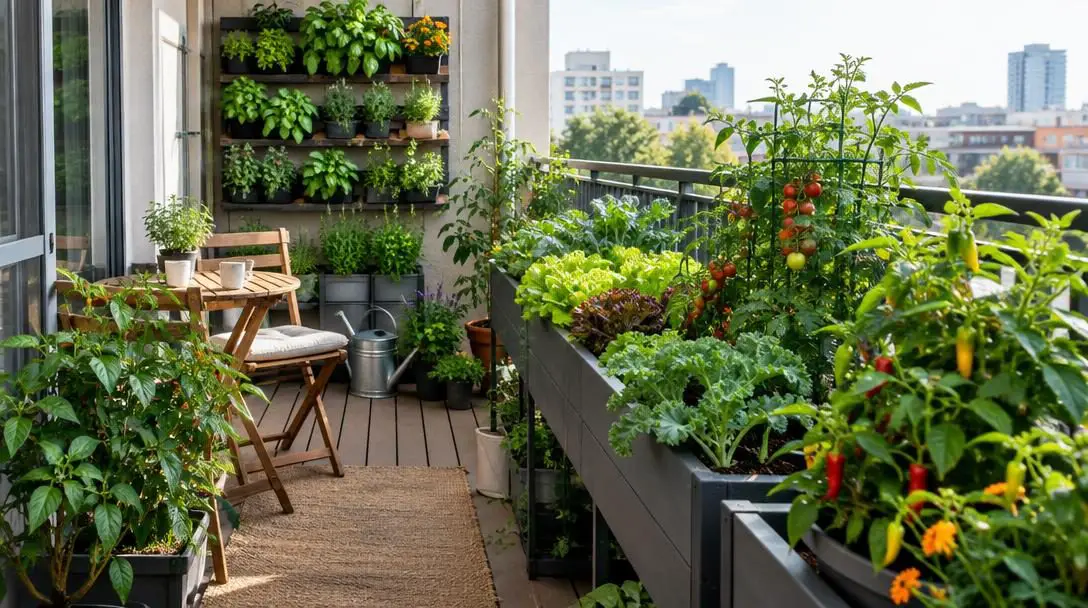
Gardening is widely celebrated as an enriching and enjoyable pursuit, providing the distinct satisfaction of harvesting homegrown food and surrounding yourself with vibrant greenery. For many aspiring growers, however, establishing a productive garden poses genuine spatial obstacles. When living with an apartment balcony, a compact urban patio, a small paved courtyard, or a narrow backyard border, sprawling in-ground garden beds simply are not an option.
Physical boundaries do not mean you have to surrender your horticultural ambitions. With thoughtful planning, deliberate crop selection, and efficient spatial management, even the most restricted footprint can be transformed into a generous growing area. By reimagining planting real estate and harnessing vertical structures, growers can dramatically increase both usable room and harvest yield.
Key takeaways
- Shifting your planting perspective from horizontal ground area to vertical elevation multiplies harvest capacity within compact spaces.
- Productive vegetable crops need at least six hours of direct sunlight each day, requiring careful monitoring of moving urban shade patterns.
- Selecting fast-cycling greens, continuous-yield herbs, and climbing vines prevents soil containers from being monopolized by low-yield vegetation.
- Dedicated drainage holes and lightweight potting mixes are essential to protect bounded root systems from waterlogging and rot.
Understanding the small-space growing environment
Cultivating plants in confined urban or suburban spaces differs fundamentally from traditional broad-scale agriculture. In an open plot or expansive backyard, root networks push deeply and broadly into native soil in continuous pursuit of moisture and subterranean nutrients. By contrast, a small-space garden relies primarily on containers, vertical planters, or raised beds. This means the root zone is strictly bounded, holding a finite volume of soil that dries out quickly and exhausts available minerals much faster than natural earth.
Furthermore, small outdoor locations such as townhome courtyards, rooftops, and balconies feature pronounced microclimates. Structural materials like brick exterior walls, concrete pavers, metal railings, and neighboring buildings naturally absorb solar radiation during midday and radiate that heat well into the evening. At the same time, architectural overhangs and adjacent structures can cast shifting shadows or divert natural wind corridors.
Core principles for maximizing yield
Extracting high agricultural yields from limited square footage depends on structural efficiency, plant biology, and careful environmental matching. Successful small-scale growers prioritize three essential strategies:
- Vertical redirection: Sprawling crops that naturally meander across the ground are trained to climb upward using structural supports. Directing vegetative growth skyward saves valuable floor area, increases airflow around foliage, and optimizes sun exposure.
- Rapid crop turnover: Allocating container real estate to slow-maturing, single-harvest crops limits total output. Planting quick-maturing varieties allows growers to harvest, amend the soil, and replant the same vessel several times during a single growing season.
- Environmental matching: Grouping plants according to their specific sunlight, hydration, and nutritional needs prevents resource waste and ensures that individual container ecosystems flourish without competing against misaligned neighbors.
Maximizing yield in tight spaces is fundamentally about creating harmony between plant habits and the finite physical resources available to them.
Choosing the right plants for limited space
Careful crop selection forms the cornerstone of productive container gardening. Certain traditional varieties, such as expansive sprawling tomatoes or uncontained beans, demand excessive horizontal territory and deliver a poor harvest-to-footprint ratio. By evaluating the natural growth habits, maturity timelines, and yields of specific plant groups, you can assemble an exceptionally high-producing container array.
Vertical climbers
Vining crops naturally expend their energy climbing skyward rather than claiming ground territory. Varieties such as pole beans and cucumbers thrive when provided with trellises or tall netting, producing copious harvests in an elevated position while leaving their base containers open for low-growing companion plants.
Compact and leafy greens
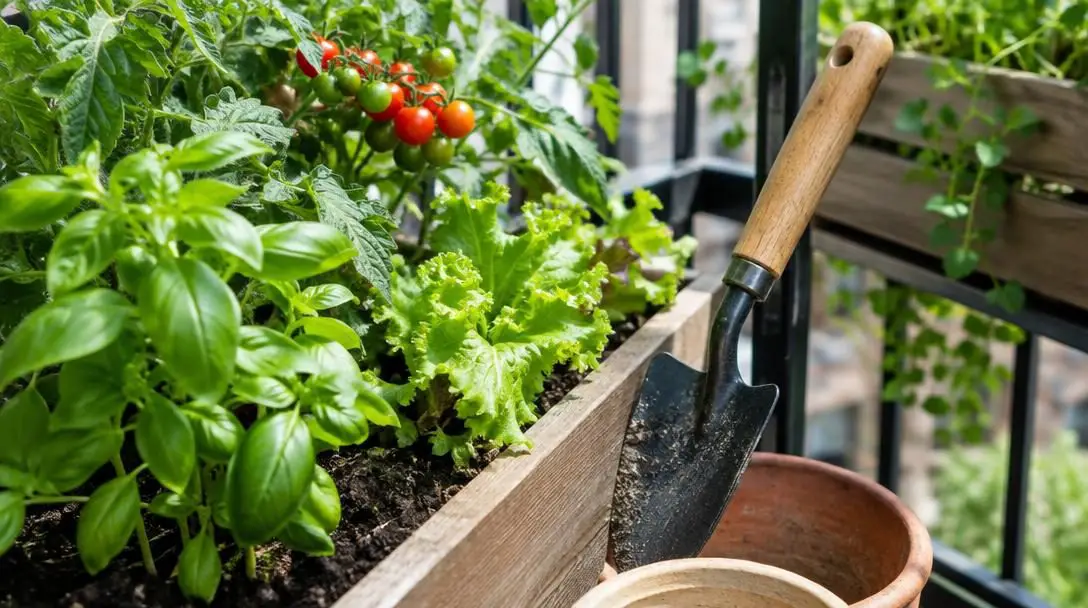
Leafy vegetables like spinach, butterhead lettuce, and loose-leaf salad mixes feature shallow root architectures that do not require deep soil profiles. These crops flourish in shallow planter boxes, wide bowls, and windowsill troughs, producing dense canopies of tender leaves that can be harvested repeatedly using cut-and-come-again techniques.
Fast-maturing varieties
When container space is restricted, time becomes an indispensable resource. Fast-developing crops such as crisp radishes and nutrient-dense microgreens reach full maturity in mere days or weeks. Their rapid biological cycles allow you to clear the soil quickly, opening the container for continuous successional plantings from spring through autumn.
Long-harvest herbs
Culinary staples including rosemary and sweet basil occupy minimal physical soil volume while yielding steady harvests over several months. Because fresh herbs are harvested leaf by leaf for regular home cooking, they provide disproportionately high culinary value per square inch compared to crops harvested only once.
| Plant Category | Representative Crops | Primary Space Benefit | Harvesting Strategy |
|---|---|---|---|
| Vertical Climbers | Pole beans, cucumbers | Uses overhead vertical space rather than floor area | Continuous seasonal picking |
| Compact Greens | Lettuce, spinach | Shallow root system thrives in shallow boxes | Cut-and-come-again leaves |
| Fast-Maturing Varieties | Radishes, microgreens | Swift turnover frees containers for immediate replanting | Single rapid harvest per batch |
| Long-Harvest Herbs | Basil, rosemary | Minimal footprint with prolonged culinary yields | Frequent incremental trimming |
Site assessment and layout planning
Careful structural planning is non-negotiable when arranging a confined growing area. A misplaced planter can easily block foot traffic, obstruct watering access, or cast long shadows over neighboring containers. The layout process starts by tracking light. Most edible garden crops demand a minimum of six hours of direct sunlight daily. Spend several clear days observing your courtyard, balcony, or deck, noting how walls, overhangs, and trees cast shade from morning to late afternoon.
After pinpointing the brightest zones, map out your footprint on paper. Outline designated walkways, perimeter railings, and wall expanses. Cluster moisture-loving vegetables together in the easiest-to-water zones, and position drought-tolerant culinary herbs in warm, exposed spots. Plan vertical structures early: trellises, vertical stakes, wall-mounted pocket planters, and sturdy hanging baskets elevate foliage completely off the floor, dramatically expanding available growing volume without crowding the deck.
Containers and growing structures
Containers are the fundamental building blocks of compact gardens. Unlike fixed garden plots, portable containers offer unmatched mobility, enabling growers to reposition vegetation to chase sunlight across the seasons or shelter delicate foliage from sudden storms. Selecting the right growing vessels requires balancing structural durability, root zone depth, and drainage capabilities.
Lightweight plastic containers
Molded plastic planters are lightweight, economical, and retain soil moisture longer than porous alternatives. Their minimal weight makes them ideal for balcony gardening, where floor loading limits must be respected, though they can become brittle when exposed to prolonged ultraviolet rays.
Traditional clay pots
Unglazed terracotta and heavy clay vessels feature porous sidewalls that facilitate gas exchange and allow excess moisture to evaporate cleanly. While their substantial weight offers stability against high winds, they dry out far more rapidly during hot summer stretches, requiring frequent moisture checks.
Sturdy metal vessels
Galvanized steel troughs and metal planters provide superior durability and a clean, contemporary appearance. However, because metal conducts ambient heat quickly, these containers can elevate soil temperatures substantially during peak summer heat, potentially scorching delicate feeder roots.
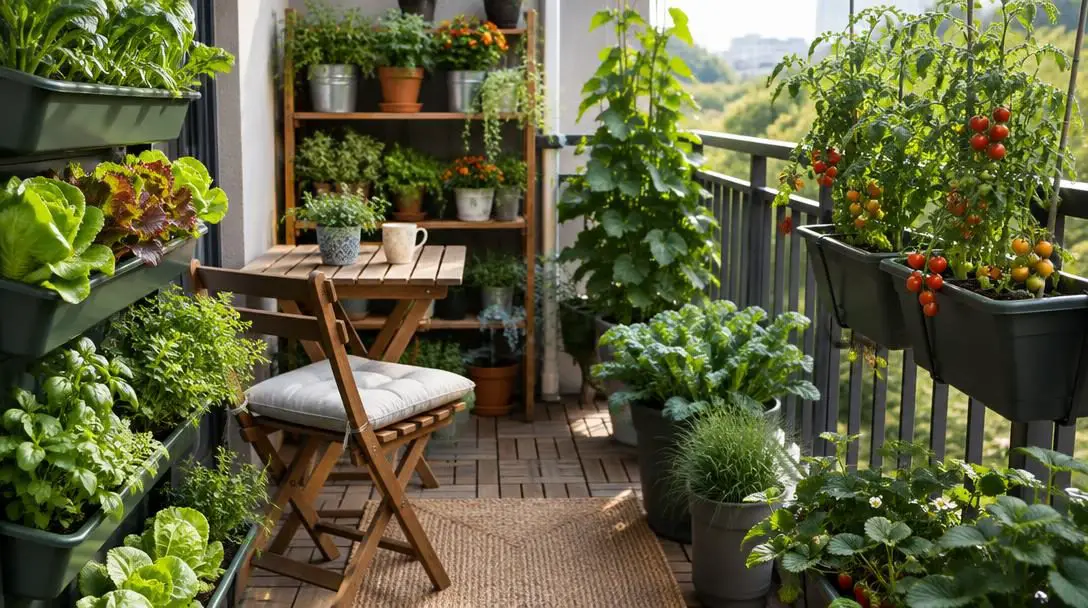
Vertical raised beds
Elevated and tiered raised bed systems provide maximum soil volume across a narrow footprint. By stacking multiple growing troughs vertically or assembling narrow, waist-high wooden boxes, gardeners achieve excellent drainage, improved root aeration, and comfortable maintenance heights without squandering ground space.
Step-by-step implementation guide
Transforming a vacant patio, rooftop, or modest balcony into an abundant, high-yielding green space requires an organized installation process. Follow these structured steps to build a healthy growing system:
- Measure and inspect the site: Record exact floor boundaries, wall heights, and weight-bearing thresholds on elevated decks. Track sunlight shifts across multiple days to map zones receiving six or more hours of direct exposure.
- Draft the layout: Sketch container locations, pathways, and wall mounts on paper to ensure comfortable maintenance access. Group crops by water and illumination requirements.
- Procure containers and structures: Acquire sturdy planters, hanging baskets, or raised beds made from durable materials like plastic, clay, or metal, confirming each piece has open drainage holes.
- Install vertical supports: Securely anchor trellises, netting, poles, and wall brackets before adding soil and plants to prevent disrupting delicate root structures later.
- Prepare the growing medium: Fill containers with a high-grade, lightweight potting mix formulated to promote aeration and balanced moisture retention, avoiding dense native garden topsoil.
- Plant seeds and starts: Arrange vertical climbers against back trellises, plant compact greens in shallow troughs, and place culinary herbs near entryways for convenient access.
- Hydrate and mulch: Water each planter thoroughly until water runs freely through the drainage ports, then apply an even layer of protective mulch over the bare soil surface.
Daily maintenance and long-term care
Because containerized soil volumes are inherently limited, small gardens react swiftly to fluctuating atmospheric conditions. Diligent maintenance ensures crops remain vigorous and resilient throughout their growing cycles.
Hydration is the most vital daily task. Under high ambient temperatures and drying winds, small containers lose water through evaporation within hours. Water directly at the root zone using a gentle watering can, a hose wand, or an automated drip irrigation line. Applying a clean layer of organic mulch over the exposed soil surface stabilizes soil temperatures, curbs evaporation, and blocks opportunistic weed seeds from establishing.
Soil nourishment requires equal attention. With regular watering, soluble plant nutrients leach out through container drainage holes over time. Replenishing these stores with balanced organic fertilizers restores vital minerals, supports robust cellular development, and keeps soil microbes active. To keep pests and leaf diseases at bay naturally, practice companion planting and ensure vertical climbing frames remain well spaced to facilitate sweeping air currents around damp foliage.
Frequent small-space gardening mistakes to avoid
Cultivating in tight environments leaves little room for biological error. Sidestepping these common oversights preserves your plants and guarantees a continuous harvest:
- Overcrowding plant containers: Packing too many seedlings into one pot sparks fierce competition for moisture, light, and nutrients, causing spindly stems and diminished harvests.
- Ignoring drainage requirements: Growing in decorative vessels lacking bottom drainage holes creates stagnant water pools, depriving roots of oxygen and triggering lethal root rot.
- Selecting sprawling, inefficient crops: Committing finite space to rambling field varieties that provide low yields per square foot exhausts precious container capacity.
- Underestimating container drying rates: Neglecting regular moisture assessments during hot summer days leads to sudden dehydration, blossom drop, and crop failure.
- Forgetting to replenish nutrients: Relying solely on the initial nutrients present in potting soil leads to stunted growth within several weeks as heavy-feeding plants deplete the medium.
Frequently asked questions
How much daily sunlight do small-space edible gardens actually need?
Most productive edible crops, especially fruiting vegetables and vertical climbers, require a minimum of six hours of direct sunlight each day to produce reliable yields. If your space receives partial shade, focus on compact leafy greens like spinach and loose-leaf lettuce, which tolerate lower light levels better than sun-loving crops.
Can standard topsoil from an in-ground yard be used in containers?
No. Native garden soil is too heavy and dense for container environments. When placed inside pots, topsoil compacts rapidly, drains poorly, and cuts off vital oxygen to plant roots. Always use a dedicated, lightweight potting mix engineered specifically for container drainage and aeration.
What is the best way to keep container soil from drying out so quickly?
To retain moisture in small containers, apply a uniform layer of organic mulch across the soil surface, choose non-porous plastic or glazed pots rather than unglazed terracotta, and water consistently early in the morning. Setting up a basic drip irrigation system on a timer also provides reliable hydration throughout intense summer heat.
Why are climbing plants preferred over sprawling varieties in small spaces?
Climbers such as pole beans and cucumbers utilize vertical space on trellises, poles, and walls rather than taking over valuable patio floor area. Lifting foliage upward not only frees ground space for additional containers, but it also improves sunlight capture and enhances airflow to deter fungal leaf pathogens.
How do raised beds compare to individual pots on a patio?
Vertical raised beds consolidate growing space, provide a larger continuous soil mass that retains moisture and nutrients more evenly than small pots, and promote healthy drainage. However, individual containers provide maximum mobility, allowing you to rearrange plants easily as sunlight patterns change across the season.
The bottom line
A limited physical footprint does not mean you must forfeit the pleasure of harvesting fresh vegetables, vibrant greens, and aromatic herbs. By working vertically, selecting crops engineered for high yields, and maintaining an attentive watering and feeding routine, you can turn any balcony, patio, or courtyard into a thriving, highly productive sanctuary.