Going Green with Kids: 5 Ways to Encourage Environmental Consciousness
Raising environmentally conscious children has become an essential priority as communities worldwide navigate complex ecological challenges. When stewardship is introduced during early childhood, sustainable living transforms from a set of abstract, distant rules into a natural, intuitive foundation for everyday life.
Children who grow up understanding their relationship to ecological systems develop a deep appreciation for the living world and recognize the impact of their personal choices. By embedding simple environmental perspectives into home routines, outdoor play, and community activities, families can equip the next generation with the knowledge, values, and confidence needed to build a healthier planet.
Key takeaways
- Early ecological awareness relies on three developmental pillars: cognitive understanding, direct sensory connection, and adult behavioral modeling.
- Interactive literature, nature exploration, and age-appropriate home responsibilities make sustainability tangible rather than theoretical.
- Community participation—such as joining park clean-ups, tending garden plots, and visiting farmers markets—broadens a child's concept of shared stewardship.
- Avoiding fear-based communication and rigid, punitive chore routines ensures that children view conservation with optimism and agency.
The developmental mechanisms behind eco-literacy
Children do not develop an ecological mindset simply by memorizing facts; they learn through an active interplay of observation, direct sensory experience, and guided storytelling. Cultivating genuine environmental awareness depends on three primary developmental pathways that reinforce one another over time.
The first pathway is cognitive understanding, which links everyday causes with their broader consequences. When a child grasps that leaving water running from a faucet drains local municipal reservoirs, or that discarded plastic packaging does not decompose in a landfill, they begin to see the direct connection between their own choices and planetary health. Age-appropriate media, illustrated storybooks, and classroom science experiments help distill complex ecological relationships into relatable concepts that young minds can easily absorb.
The second pathway is sensory connection. Theoretical lectures on deforestation or global water stress rarely resonate with young children unless they have established an emotional attachment to the outdoors. Hands-on interactions—such as feeling moist garden soil, running hands along tree bark, listening to bird calls, or jumping into autumn leaves—produce enduring sensory memories. These vivid outdoor experiences ground abstract environmental values in deep, personal affection for the living world.
The third pathway is behavioral modeling, which translates awareness into habitual daily action. Young children are instinctive mimics who observe how their caregivers behave long before they comprehend formal environmental lectures. When parents, teachers, and guardians consistently sort waste, turn off unused lights, and avoid disposable goods, children adopt these practices as unremarkable, everyday standards rather than inconvenient burdens.
When children learn about environmental responsibility during their formative years, sustainability shifts from being an abstract concept to an intuitive way of living.
Five core approaches to raising eco-conscious kids
Transforming sustainability into an approachable family priority does not require drastic lifestyle disruptions. Focusing on five balanced strategies helps children build lasting ecological habits across all areas of daily life.
| Approach | Primary Focus | Representative Activities | Core Developmental Benefit |
|---|---|---|---|
| Early Education | Cognitive foundation | Reading thematic books, exploring wildlife websites | Helps children understand cause-and-effect relationships in nature |
| Outdoor Activities | Sensory engagement | Hiking, bike riding, bird watching, planting gardens | Fosters emotional bonding and reduces childhood stress |
| Home Practices | Habit formation | Composting, sorting recycling, turning off taps and lights | Normalizes resource conservation as a daily responsibility |
| Community Initiatives | Civic engagement | Litter clean-ups, tree planting, farmers market visits | Demonstrates collective action and shared social stewardship |
| Adult Modeling | Behavioral imitation | Walking or transit use, meal planning, using reusables | Reinforces verbal lessons through credible, observed action |
1. Start with early education and storytelling
Structured education provides children with the context they need to understand why conservation matters. Introducing environmental themes through approachable storytelling sparks intrinsic curiosity, inspiring children to investigate how natural ecosystems function.
Families and educators can turn to well-regarded educational media to introduce vital ecological concepts:
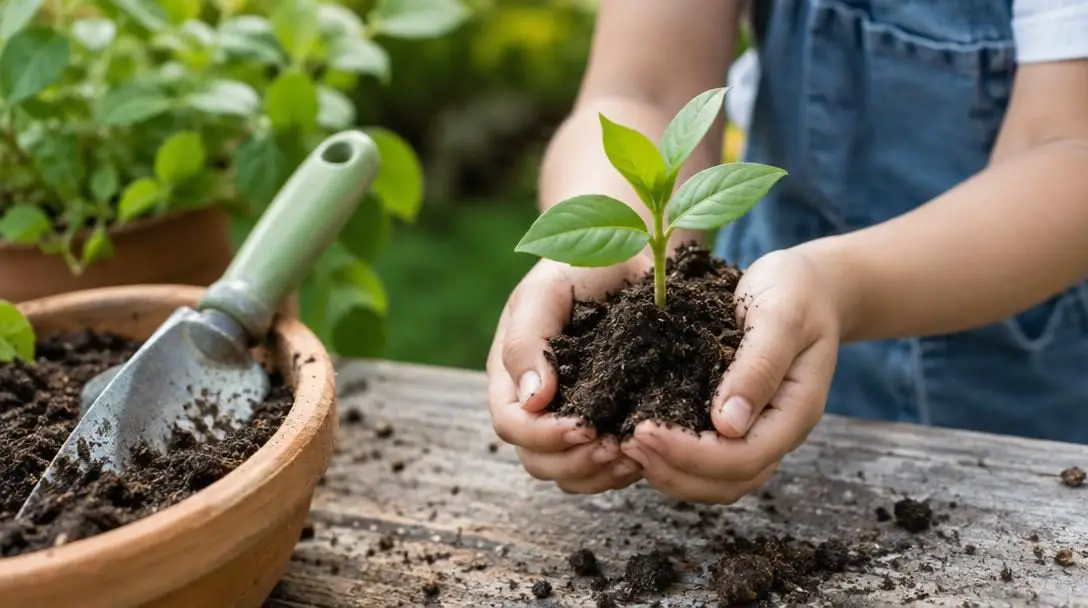
- The Lorax by Dr. Seuss: A classic story that clearly demonstrates the risks of unchecked industrial consumption, the consequences of environmental neglect, and the power of speaking up on behalf of nature.
- The Magic School Bus Gets Cleaned Up by Joanna Cole: An engaging science adventure that explains environmental science concepts and emissions reduction through relatable characters.
- Nat Geo Kids website: A multimedia resource packed with child-friendly articles, interactive games, and engaging wildlife photography centered on animal habitats, biodiversity, and conservation stewardship.
Beyond home reading, schools and community centers provide practical reinforcement through structured programs. Activities like schoolwide composting, classroom recycling bins, and tree-planting drives show children that education extends into physical action, allowing them to see tangible improvements in their immediate surroundings.
2. Encourage outdoor activities and nature exploration
Immersing children in natural settings delivers extensive physical, emotional, and cognitive benefits. Unstructured time outdoors reduces stress, enhances mood, encourages physical fitness, and stimulates creative problem-solving by breaking away from sedentary screen routines.
Families can introduce a diverse mix of outdoor adventures tailored to various settings and energy levels:
- Navigating hiking trails through nearby nature reserves, state parks, or local greenbelts.
- Taking family bicycle rides along multi-use paths and neighborhood routes.
- Conducting seasonal nature walks to record changes in foliage, budding flowers, or falling temperatures.
- Organizing bird-watching outings equipped with a beginner field guide to identify resident and migratory species.
- Designing outdoor scavenger hunts that challenge kids to spot specific leaf shapes, geological formations, or animal tracks.
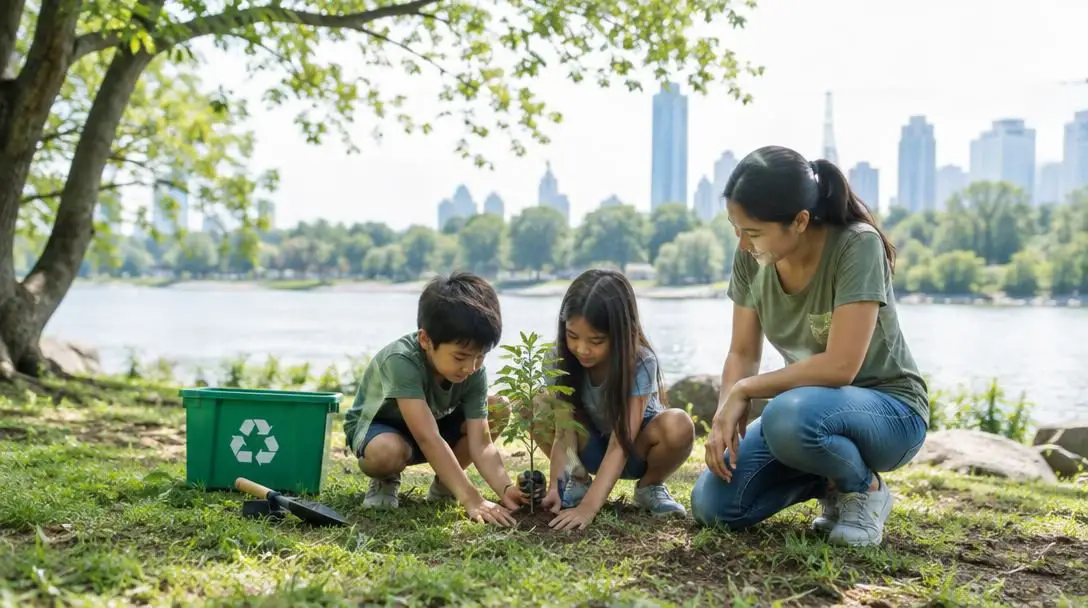
Gardening serves as an exceptional bridge between outdoor recreation and biological science. Whether managing a backyard raised bed, a collection of windowsill herb pots, or a shared plot in a community garden, children observe the complete lifecycle of plants. Tending soil, sowing seeds, weeding, watering, and harvesting homegrown vegetables instills a profound respect for food production and the patience required to cultivate living things.
3. Involve kids in eco-friendly practices at home
Domestic routines offer an immediate training ground for ecological responsibility. Involving children in daily household conservation demonstrates that sustainability is a continuous family endeavor rather than an occasional school assignment.
Children can take an active, age-appropriate hand in several distinct household conservation areas:
- Household waste reduction: Set up a clear sorting station where children can categorize paper, cardboard, plastics, and metal cans. Involve them in transferring raw vegetable scraps and coffee grounds to the compost bin, and encourage them to pack snacks in reusable containers and cloth lunch bags.
- Energy conservation: Teach children to turn off ceiling lights and bedside lamps whenever they exit an empty room, and have them power down gaming consoles, computers, and televisions after use.
- Water stewardship: Encourage children to take mindful, shorter showers and turn off the tap completely while scrubbing their teeth or washing their hands with soap.
- Mindful product choices: Introduce children to plant-based, biodegradable cleaning supplies and gentle, natural personal care items. Discussing why your household avoids harsh chemicals shows children how domestic purchases influence household air quality and municipal waterways.
4. Get involved in community initiatives
Expanding conservation beyond household walls teaches children that environmental protection is a collaborative civic responsibility. Participating in neighborhood projects fosters a sense of belonging, builds empathy, and shows kids that individual efforts combine to yield measurable community improvements.
Family-friendly volunteer and civic activities include:
- Joining organized park clean-ups to remove discarded litter, bottles, and packaging from public green spaces.
- Participating in municipal or nonprofit tree-planting events to expand urban tree canopies and restore native woodlands.
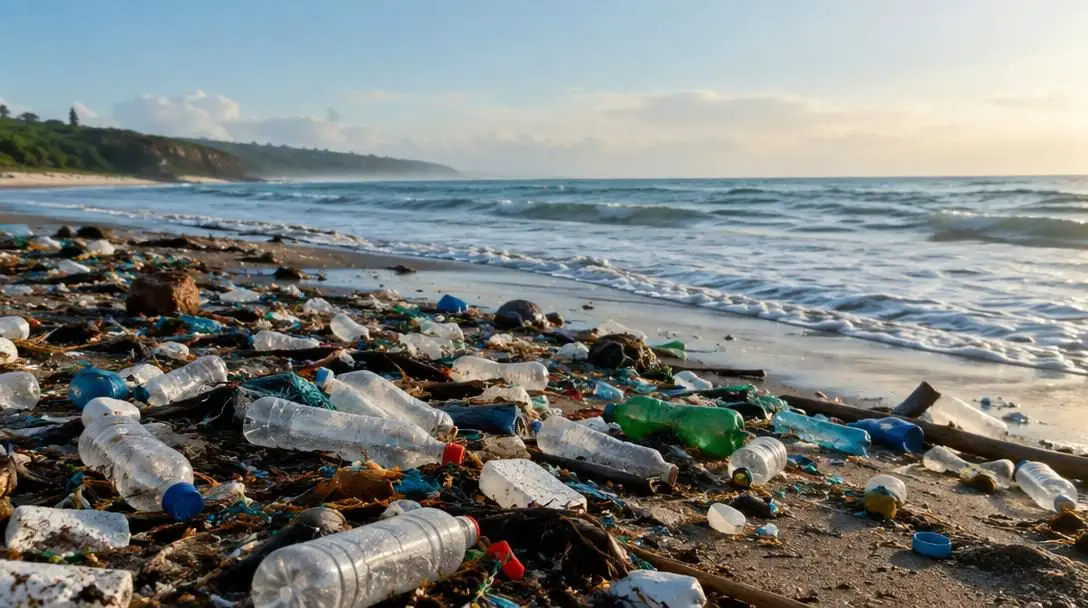
- Attending shoreline or beach clean-ups designed to protect marine wildlife from accidental plastic ingestion.
- Working in community gardens alongside neighbors of all ages to cultivate fresh food and pollinator-friendly flowers.
- Visiting local farmers markets to meet regional growers, learn about local agricultural cycles, and understand how buying locally grown produce minimizes long-distance freight emissions.
5. Lead by example through daily decisions
Children evaluate adult integrity by observing consistency between spoken advice and daily habits. When parents demonstrate genuine care for the environment in their everyday decision-making, children internalize those values as fundamental family standards.
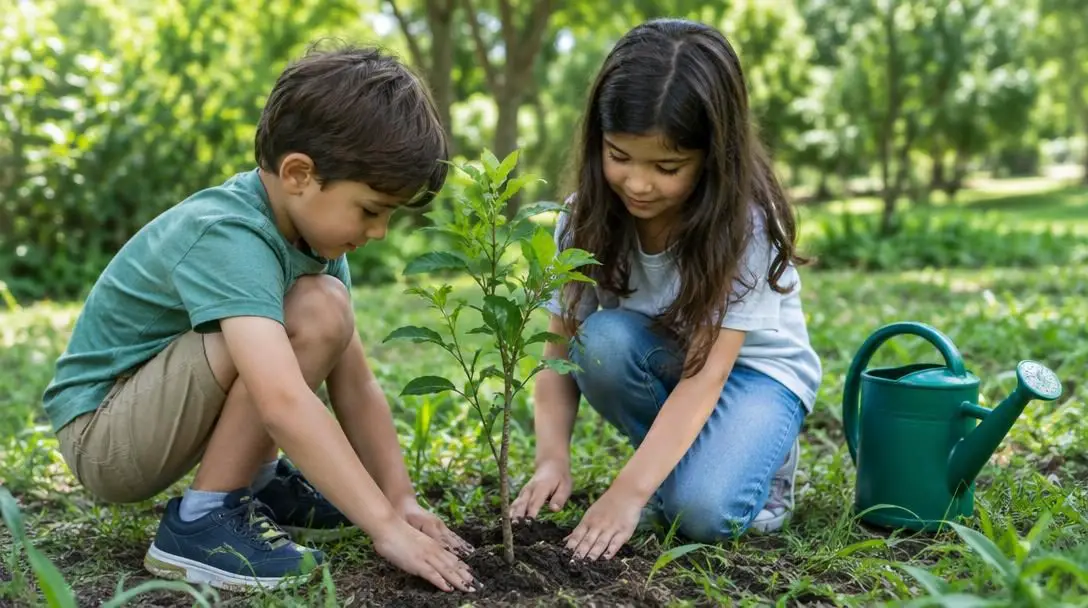
Parents and caregivers can demonstrate reliable environmental values through visible, daily routines:
- Choosing active transit—such as walking, bicycling, or boarding commuter buses and trains—over single-occupancy car trips whenever practical.
- Minimizing household food waste through thoughtful meal planning, using leftovers creatively, and freezing surplus ingredients before they spoil.
- Bringing durable cloth shopping totes, insulated stainless-steel water bottles, and reusable coffee thermoses whenever heading out on errands.
- Regulating home heating and cooling efficiently by adjusting thermostats, dressing warmly in winter, and utilizing cross-ventilation during mild weather.
Equally important is maintaining an open, age-appropriate dialogue about why these choices matter. Explaining the reasoning behind adjusting the thermostat or bringing reusable bags helps children connect personal routines with planetary preservation, fostering self-guided motivation.
Practical steps for families to get started
Transitioning into an eco-conscious household does not necessitate an overwhelming, overnight transformation. Following a methodical, collaborative implementation plan helps families adopt lasting habits without feeling overburdened.
- Hold an initial family discussion: Sit down together to talk openly about the importance of planetary health. Invite children to share their observations about nature and propose their own ideas for making the household more eco-friendly.
- Designate specific household roles: Assign concrete conservation duties tailored to each child's age and ability. A younger child can serve as the official daylight "light monitor," while an older sibling oversees the kitchen compost caddy or sorting the weekly recycling bin.
- Perform a simple household waste audit: Spend three to four days examining what lands in your trash cans. Work together to identify single-use paper towels, drink pouches, or plastic bags that can be seamlessly replaced with cloth wipes, reusable bottles, and silicone pouches.
- Establish a regular outdoor routine: Block out recurring family time each week dedicated exclusively to outdoor recreation. Whether it entails an hour at a local park, a weekend hike, or tending a balcony planter, ensure direct contact with nature remains a steadfast priority.
- Schedule an upcoming community project: Check neighborhood calendars for upcoming seasonal clean-up mornings, volunteer garden workdays, or tree-planting drives, and register the family for an upcoming event.
Common mistakes that discourage young learners
Well-meaning adults can inadvertently undermine a child's enthusiasm for sustainability by approaching conservation with the wrong tone. Avoiding common educational missteps keeps children engaged, empowered, and optimistic.
- Relying on fear-based communication: Presenting alarming projections about climate catastrophes, species loss, and resource depletion can easily induce eco-anxiety and feelings of utter helplessness in young minds. Environmental discussions must remain constructive, age-appropriate, and anchored in practical solutions.
- Attempting an immediate, total overhaul: Trying to eliminate all household plastic, transition to a zero-waste kitchen, and adopt radical lifestyle changes overnight creates parental burnout and child rebellion. Sustainable change occurs through steady, manageable increments.
- Framing eco-habits as punitive chores: Treating recycling, turning off lights, or composting as strict rules enforced by reprimands generates negative emotional associations. Frame sustainability as a cooperative contribution to the household and the wider world.
- Contradicting words with observable habits: Urging children to conserve water or minimize waste while adults routinely take excessively long showers or rely on single-use convenience items creates cynicism. Parental modeling carries vastly more weight than verbal reminders alone.
Expanding environmental action as children mature
As children enter adolescence, their expanding intellectual capacity allows for deeper conversations regarding resource management, energy production, and public policy. Teenagers can critically evaluate complex topics such as municipal water rights, renewable energy grids, packaging regulations, and circular economic systems.
Parents can guide older youth by encouraging them to take independent leadership roles in their schools and local municipalities. Teenagers can join or establish high school environmental clubs, petition school administrators for cafeteria composting programs, conduct neighborhood energy audits, or volunteer with regional conservation groups. By supporting their growing autonomy, parents help young adults transform childhood habits into lifelong civic leadership.
Frequently asked questions
How can I teach my child about environmentalism without causing eco-anxiety?
Focus on agency, hands-on solutions, and positive local impact rather than global catastrophes. Ground lessons in direct experiences like gardening, outdoor exploration, and family recycling habits. Frame conservation as an act of caring for a home rather than preventing an inevitable disaster.
What are the best books and media to introduce green living to young kids?
Foundational titles include "The Lorax" by Dr. Seuss, which introduces the consequences of resource depletion in an accessible story, and "The Magic School Bus Gets Cleaned Up" by Joanna Cole, which explains environmental science. The "Nat Geo Kids" website offers excellent interactive games, videos, and articles tailored to young readers.
Can families without a backyard still teach kids about gardening?
Yes. Families can cultivate windowsill herb gardens, maintain small container planters on an apartment balcony, or reserve a raised plot in a local community garden. Even small-scale indoor microgreens allow children to experience seed germination, daily watering care, and harvesting fresh food.
What household chores best reinforce conservation habits for young children?
Simple, manageable responsibilities work best. Young children can be tasked with turning off lights in empty rooms, ensuring sink taps do not drip, sorting clean paper and cardboard into recycling bins, and carrying vegetable peelings to the compost caddy.
How do community clean-ups benefit a child's development?
Participating in park, beach, or neighborhood clean-ups teaches children civic responsibility and demonstrates that environmental care is a shared social endeavor. It provides immediate visual satisfaction as children see public spaces become cleaner through their personal efforts.
The bottom line
Cultivating environmental consciousness in children is a gradual, rewarding journey that pays lifelong dividends for both family well-being and the planet. By pairing accessible education and joyful outdoor exploration with daily domestic modeling and civic engagement, parents nurture proactive caretakers of the natural world.
Rather than demanding immediate perfection, sustainable family life thrives on steady, consistent steps. When children discover that their daily actions possess real-world meaning, they build the empathy, critical thinking, and enduring confidence needed to champion a resilient, vibrant future.