Growing Succulents: A Beginner’s Guide to a Low-Maintenance Garden
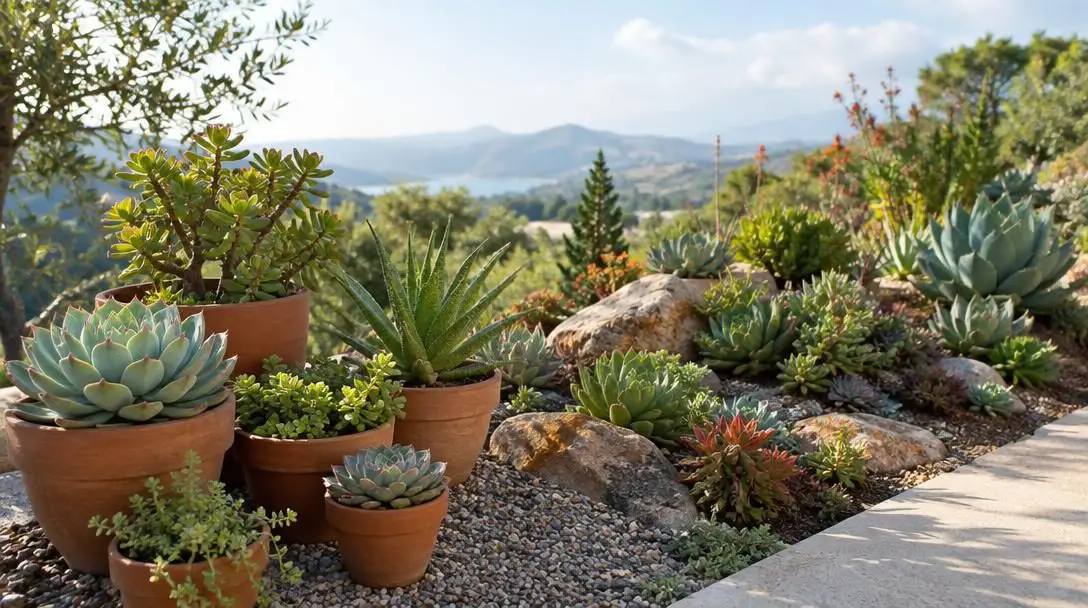
Succulents offer an appealing combination of sculptural beauty, varied textures, and easy maintenance that suits both novice growers and seasoned indoor gardeners. Unlike fragile houseplants that demand constant attention and rigid watering routines, succulents are uniquely adapted to withstand dry conditions by storing moisture in their fleshy foliage, stems, and roots. Whether arranged on a bright windowsill, situated on an office desk, or planted in an outdoor bed, these resilient plants bring vibrant greenery into spaces where other species struggle.
Because succulents have evolved distinct botanical adaptations to endure drought, caring for them requires an intuitive shift away from traditional gardening habits. Frequent moisture, dense soils, and dark corners will quickly undermine their health, whereas bright light, porous containers, and thorough drying cycles allow them to flourish. By mastering the fundamentals of soil mechanics, lighting exposure, and moisture control, any beginner can cultivate a flourishing succulent display that thrives with minimal hands-on intervention.
Key takeaways
- Succulents survive prolonged drought by storing water inside their leaves, stems, and root systems, making overwatering their greatest risk.
- Unglazed terracotta and clay pots with drainage holes provide essential aeration and prevent moisture from suffocating roots.
- Light exposure dictates water consumption, with most varieties thriving in bright, indirect light near an east-facing window.
- Propagation through leaf cuttings, stem trimmings, or plant division offers an effortless and free method to expand your collection.
- Common issues like leaf stretching, shriveling, or yellowing can be corrected quickly once you learn to read the plant's visible cues.
Popular succulent varieties for beginning growers
Selecting the right succulent species depends on the light levels, container sizes, and aesthetic qualities you want to bring into your space. While varieties such as the stone-mimicking Textured Lithops capture attention with their unusual shapes, several foundational species are especially well suited for those just starting out.
| Succulent Type | Form and Silhouette | Preferred Light | Watering Frequency |
|---|---|---|---|
| Cacti | Columns or balls, often with defensive spines | Bright light | Infrequent watering |
| Echeveria | Rosettes with plump leaves in pastels and jewel tones | Bright, filtered light | Every few weeks |
| Aloe | Spiky or fleshy upright leaves | Bright, indirect light | When dry |
| Haworthia | Compact rosettes, bumps, or white bands | Bright, indirect light | Every two to three weeks |
| Sedum | Sprawling ground cover or short, blooming stems | Full sun | Once a week |
| Crassula | Ground-huggers to upright, tree-like plants | Full to partial sunlight | Drought-tolerant intervals |
Cacti
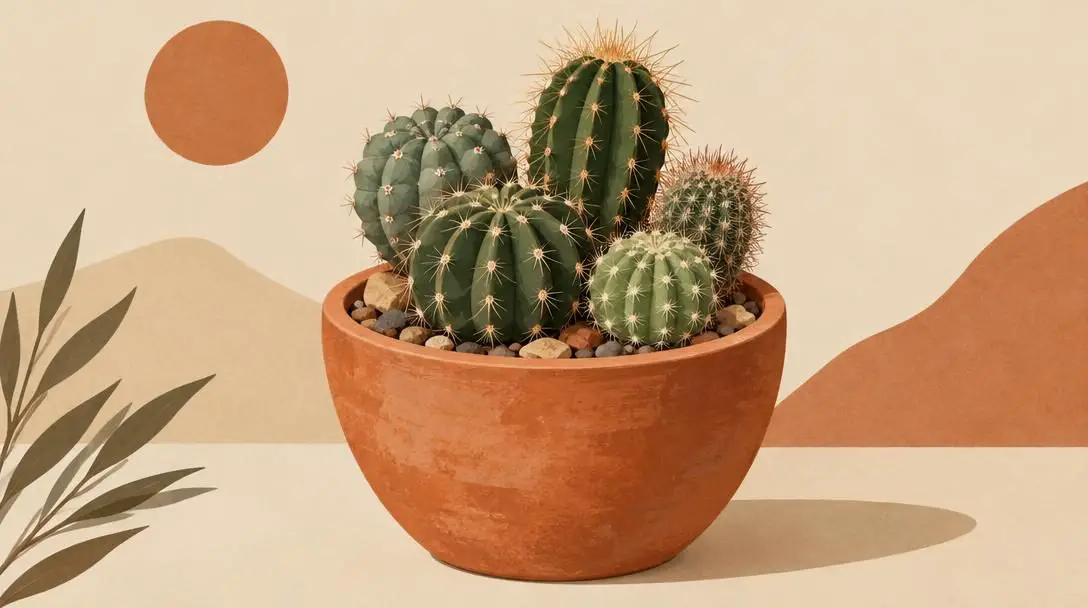
- Growth Form: Architectural columns or spherical balls, armed with spines
- Light Need: Bright light
- Moisture Requirement: Infrequent watering
Known for their distinct architectural shapes, cacti are rugged succulents that evolved in intense environments. They commonly grow in dramatic upright columns or rounded ball shapes, frequently protected by sharp spines. Cacti demand strong light and sparse moisture to maintain their dense, compact structures and stay free from rot.
Echeveria
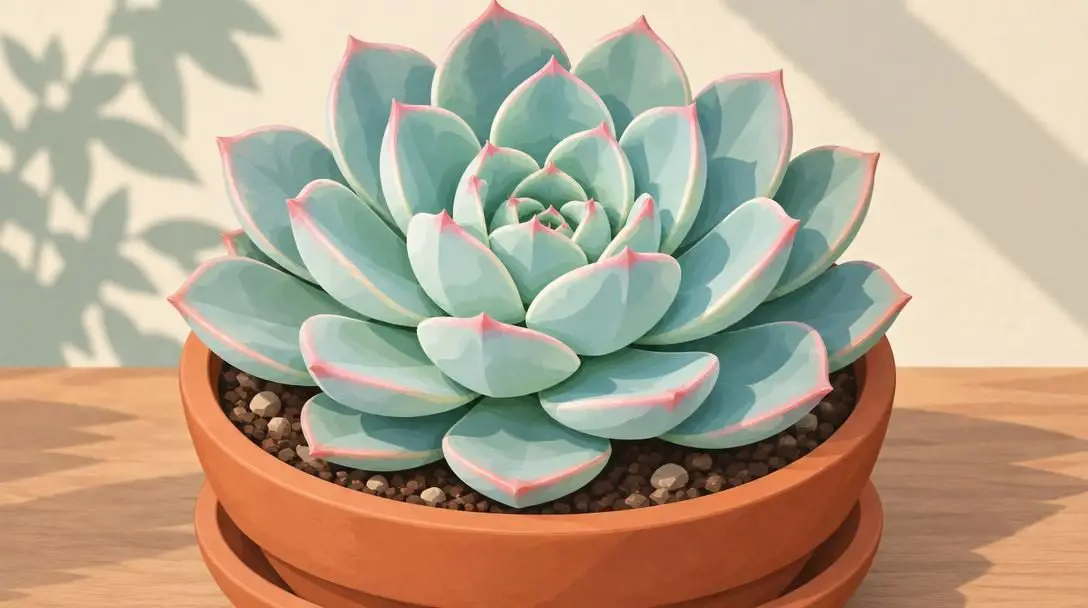
- Growth Form: Classic rosettes with plump, fleshy leaves
- Color Profile: Pale pastels to rich jewel tones
- Watering Schedule: Every few weeks
Among the most widely recognized succulents, Echeveria produces symmetrical rosettes of thick, smooth foliage. They are prized for their broad spectrum of tones, which range from muted pastel blues and pinks to deep, saturated jewel hues. Echeveria thrives best in bright, filtered light and needs a drink only every few weeks, making it an ideal centerpiece for container arrangements.
Aloe
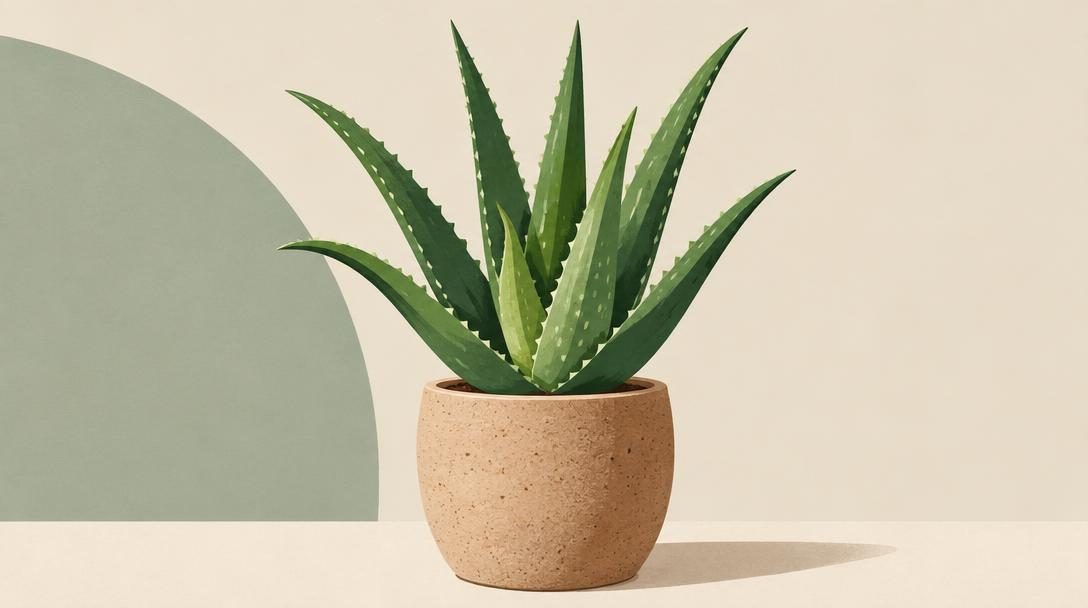
- Foliage Profile: Spiky or fleshy upright leaves
- Common Use: Practical medicinal applications
- Light Need: Bright, indirect light
Renowned for its practical value and resilience, Aloe features fleshy, upright leaves with softly spined margins. Many species are valued for medicinal uses in soothing skin, but they are equally rewarding as hardy houseplants. Aloe demands very little upkeep, adjusting comfortably to bright, indirect light across interior living spaces.
Haworthia
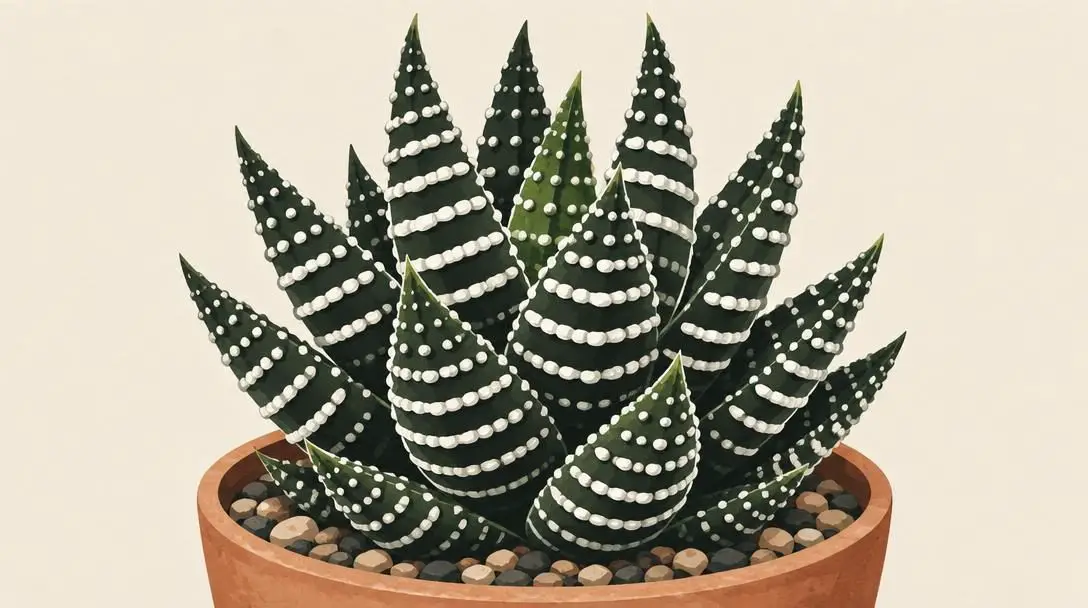
- Plant Scale: Miniature, slow-growing rosettes
- Distinct Features: White bands, textured bumps, or translucent leaf windows
- Watering Schedule: Every two to three weeks
If you have limited space on a small desk or narrow ledge, Haworthia is an exceptional choice. These miniature succulents produce compact clumps of fleshy foliage detailed with prominent white ribs, raised bumps, or semi-translucent leaf tips. Haworthia thrives in bright, indirect light and maintains steady health when watered every two to three weeks.
Sedum
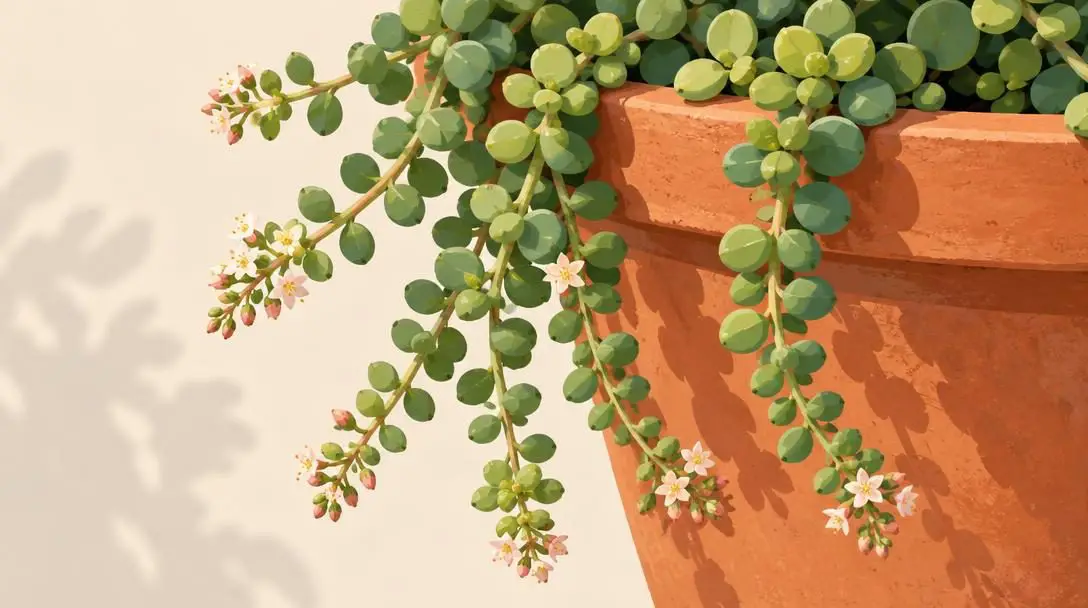
- Growth Habit: Ground cover or compact, bright green flowering stems
- Light Need: Full sun
- Watering Schedule: Once a week
Offering exceptional texture and dynamic foliage, Sedum works equally well spilling over container rims or spreading as an outdoor ground cover. These short, bright green plants frequently bear clusters of small blossoms during their growing season. Sedum demands well-draining soil and full sun, and it benefits from being watered once a week to support its active foliage and blooms.
Crassula
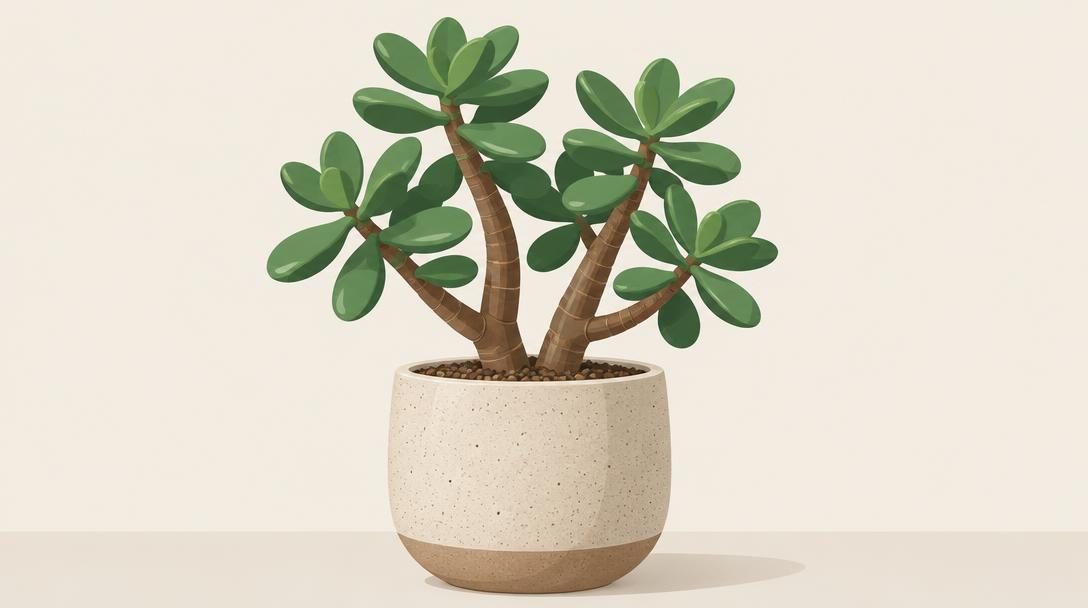
- Plant Variety: Tiny ground-huggers to upright, tree-like specimens
- Foliage Texture: Plump, fleshy leaves
- Sunlight Range: Full sun to partial sunlight
The Crassula genus contains a remarkably broad assortment of growth habits, including low-growing mats and thick, tree-like specimen plants. Every variety features plump, water-retentive leaves capable of surviving significant dry spells. Thanks to their adaptability to both full and partial sunlight, Crassula plants easily tolerate the natural shifts of indoor environments.
Container selection and soil dynamics
The secret to keeping succulents alive over the long term lies entirely beneath the soil line. In natural habitats, these plants grow in arid landscapes where infrequent downpours run off quickly, leaving the surrounding earth airy and dry within hours. Standard indoor potting mixes rely on dense organic peat and fine loam designed to hold water for thirsty foliage plants. When succulents are placed in dense dirt, moisture lingers around the root zone, choking off oxygen and encouraging lethal pathogens.
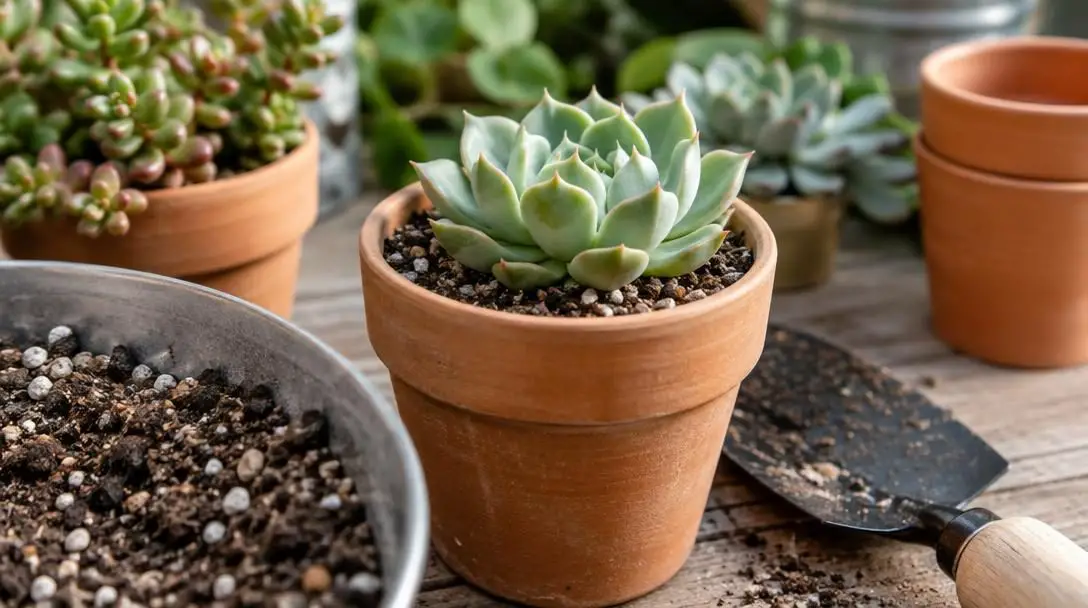
Container materials play an equally influential role in water management. Clay pots and terracotta pots are the best containers for succulents because they provide insulation and aeration. Unglazed terracotta is naturally porous, drawing residual moisture outward through its walls so the soil dries out at an accelerated rate. In contrast, non-porous containers trap moisture, drastically raising the danger of fungal infection. Never use any container that lacks open drainage holes at its base.
Over-watering is the leading cause of death for these plants because it suffocates the roots and can lead to fatal root rot.
How to pot and repot a succulent step by step
Repotting fresh nursery arrivals or moving established plants into roomier quarters gives root systems the aeration and space they require. Follow this straightforward preparation method to build a well-draining foundation:
- Select an appropriate container: Choose a clean clay or terracotta container with drainage holes, sizing it so there is just enough room for the root ball without excessive empty volume.
- Add a foundational layer of gravel: Place a bed of loose gravel across the base of the pot to maintain clear drainage passages and prevent the drainage hole from becoming plugged.
- Incorporate activated carbon: Spread a layer of activated carbon directly alongside or over the gravel bed to condition the internal pot environment and ward off root rot.
- Prepare the growing medium: Blend or loosen your commercial cactus mix, ensuring the perlite, sand, and peat are evenly distributed for maximum porosity.
- Position the succulent: Ease the plant from its original plastic container, gently loosen any tightly wound roots, and center the base within the new pot.
- Fill and secure with soil: Fill the open space with your cactus mix, firming it gently around the root ball while leaving a clean margin below the rim so water does not spill over.
Managing light levels and watering routines
Succulent care operates on an interconnected balance: the volume of light a plant absorbs directly dictates how fast its leaves process moisture and how quickly the soil dries out. In general, succulents prefer bright, indirect light. Placing your pots near an east-facing window is an outstanding strategy, as east-facing exposures supply cool, gentle morning sunshine without the intense, scorching heat generated by afternoon rays.
Learning to read physical signs on the foliage will tell you whether your lighting balance is correct:
- Sunburned foliage: Bleached, scarred, or scorched patches indicate that direct sunlight is far too intense, meaning the plant needs to be moved to filtered light.
- Stretching stems: Gaps between leaves and stems elongating upward signal that ambient light is too weak, causing the plant to stretch toward illumination.
When watering, use a focused watering bottle to apply moisture directly onto the soil surface. Never spray water over the plant crown; moisture trapped between fleshy leaves can rapidly initiate localized rot. While most succulents thrive on a bi-weekly watering schedule, adjust this frequency according to your room temperature and seasonal changes.
Three reliable ways to propagate succulents
Propagating succulents is an inexpensive, enjoyable technique to multiply your indoor garden. Because these plants hold substantial water and regenerative tissue in their stems and leaves, cuttings root readily under simple conditions.
Leaf propagation
Leaf propagation allows a single succulent to yield dozens of new offspring. Use a clean, sharpened knife to cut a healthy leaf cleanly from the base of the stem. Set the severed leaf in a shaded spot and allow the wound to callus over for several days; this protective barrier shields the tissue from fungal rot. Once dry, rest the leaf flat on top of moist cactus mix. Within a few weeks, fragile roots will strike downward, followed by a tiny replica of the mother plant.
Stem propagation
If a succulent has developed a long central stalk, stem propagation can rejuvenate the original plant while creating a brand-new specimen. Use clean shears to sever the stem cleanly. Allow the cut end to dry thoroughly until a firm callus seals the wound. Once callused, insert the stem base directly into a pot of well-draining cactus soil. Over time, the clipping will strike new roots and establish itself as an independent, fully functioning plant.
Division propagation
Division is the fastest way to handle mature succulents that have produced clusters of offshoots or outgrown their original containers. Remove the clump from its pot and gently break the root balls into separate, self-contained sections. Allow any torn roots or broken stem tissues to dry and heal in the open air for a short period before repotting each individual division into fresh, well-aerated soil.
Troubleshooting common succulent problems
Even though succulents are celebrated for their durability, improper cultural conditions trigger rapid visible decline. Identifying stress symptoms early allows you to correct lighting or moisture before irreversible damage occurs.
- Overwatering damage: Characterized by limp, translucent, or yellowing leaves, soft and mushy stems, and a foul odor rising from decaying roots. Cease watering immediately and allow the potting mix to dry out completely before evaluating the plant.
- Underwatering stress: Manifests as shriveled, puckered, crunchy foliage and a complete standstill in active growth. Shorten the intervals between waterings and verify that light levels are bright enough to maintain steady plant metabolism.
- Etiolation from dim lighting: Occurs when a succulent sits in heavy shade, causing it to shoot upward on weak, pale, elongated stems. Move the container to a brighter spot, such as near an east-facing window, so that subsequent growth remains dense and compact.
- Pest presence: Small white cottony masses or microscopic webbing point to mealybugs or spider mites feeding on plant juices. Clear them off with rubbing alcohol applied on a cotton swab.
Frequently asked questions
How often should I water my succulents?
Most succulents do well on a bi-weekly schedule, but watering should always depend on soil dryness rather than a rigid calendar. Verify that the top layer of soil is bone dry before adding water with a watering bottle, and adjust based on individual varieties: Sedum can take water once a week, while Haworthia prefers a drink every two to three weeks.
What is the best type of pot for succulents?
Clay and terracotta pots are the best options because their unglazed, porous walls breathe and allow moisture to evaporate outward, preventing waterlogged roots. Ensure that any pot you use is equipped with working drainage holes at the base.
Why is my succulent stretching out and growing tall?
This condition is called etiolation, and it occurs when a succulent does not receive enough light. The plant stretches its stems toward the nearest light source, losing its tight shape. Move your plant to an area with brighter indirect light, such as an east-facing window, to keep new growth compact.
How do I prevent root rot in my container succulents?
To prevent root rot, plant your succulents in a commercial cactus mix containing sand, perlite, and peat. Pair this with a terracotta pot featuring drainage holes, add gravel and activated carbon at the bottom of the pot, and only water when the soil has completely dried out.
Can I plant different succulent varieties together in the same pot?
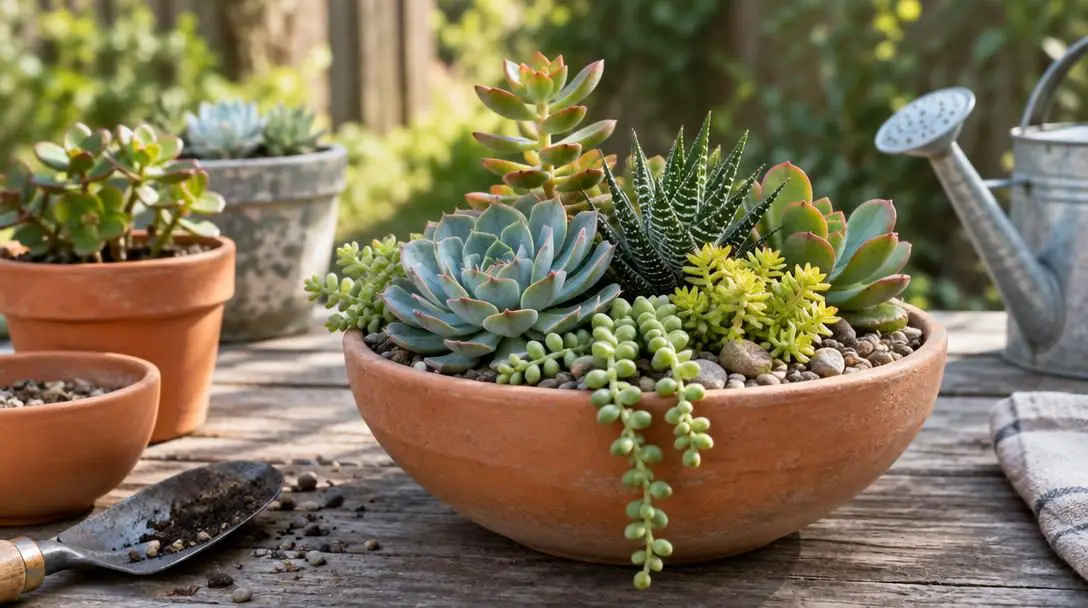
Yes, community planters work well as long as you pair varieties with matching care needs. Avoid placing full-sun, moisture-tolerant plants like Sedum in the same dish as slow-growing, bright-indirect-light varieties like Haworthia, as their differing light and water needs will cause one to suffer.
The bottom line
Cultivating a flourishing succulent collection comes down to mastering restraint. By providing these specialized desert natives with coarse, fast-draining cactus mix, porous terracotta containers, and bright exposures near east-facing windows, you create an environment where they naturally thrive. Pay close attention to subtle shifts in foliage color and texture, let the top layer of soil dry bone dry between drinks, and use simple propagation techniques to continually refresh and expand your display. With minimal intervention and attentive observation, your succulent garden will provide striking year-round beauty for seasons to come.