Growing Tomatoes: Tips for a Bountiful Harvest
Growing tomatoes is one of the most rewarding pursuits a gardener can undertake, offering the unmatched satisfaction of harvesting sun-warmed, vine-ripened fruit directly outside your door. While grocery store tomatoes are frequently cultivated for shelf life and transit durability rather than taste, homegrown plants yield fruit with an exceptional balance of sweetness and acidity that commercial varieties simply cannot match.
Yet, achieving a continuous, heavy harvest requires overcoming several biological and environmental hurdles. Tomatoes are demanding plants that respond quickly to shifts in soil balance, moisture levels, and physical support. By mastering the core requirements of plant physiology, soil preparation, planting technique, and ongoing vine management, you can avoid common setbacks and enjoy an abundant harvest all season long.
Key takeaways
- Planting tomato stems deeply activates dormant nodes that produce adventitious roots, creating an expansive subterranean root system.
- Soil pH must be maintained between 6.0 and 6.8 to ensure essential minerals remain chemically available to the root zone.
- Pruning suckers from leaf axils channels energy away from excessive foliage and directs it toward fruit development and ripening.
- Stakes, cages, or trellises must be installed early in the plant's life to prevent root disruption and vine breakage later in the season.
- Refrigerating fresh tomatoes damages their internal cellular structure, leading to mealy flesh and significant flavor loss.
How Tomato Plants Grow and Allocate Energy
To cultivate healthy tomatoes, it helps to view the plant as an integrated energy transport system. Through photosynthesis, the foliage captures light and converts it into sugars, while the root zone continuously absorbs water and soil nutrients. The grower's primary goal is to manage the plant's balance between vegetative growth, which produces leaves and stems, and reproductive growth, which yields blossoms and fruit.
A distinctive physiological characteristic of the tomato plant is its capacity to produce adventitious roots. The fuzzy, hair-like structures visible along the main stem are dormant root initials. When these structures come into sustained contact with moist earth, they morph into active, functional roots. This biological trait allows the plant to build an unusually deep and wide root architecture if planted appropriately, providing physical stability against strong winds and a high-capacity conduit for water and nutrient uptake.
As the plant matures, it naturally produces secondary shoots, commonly known as suckers, in the axils between the main central stem and the lateral branches. Left unmanaged, every sucker attempts to grow into a complete secondary vine with its own leaves, flowers, and fruit clusters. While this creates a dense, bush-like canopy, it divides the plant's finite supply of water and nutrients, resulting in smaller tomatoes and reduced air circulation through the center of the vine.
Left to its own devices, a tomato plant will continuously divert its finite resources into maintaining excessive green foliage rather than ripening fruit.
Selecting the Right Variety for Your Garden
Choosing the appropriate tomato variety depends on your available garden space, your intended culinary uses, and your local growing conditions. Cultivars are categorized both by their physical growth habits and by their genetic breeding history.
Determinate Varieties
Determinate tomatoes grow in a compact, bush-like shape and naturally cease vertical expansion once fruit sets on the terminal top bud. The entire crop develops within a concentrated window of a few weeks. Because of their predictable size and synchronized harvest, determinate cultivars are the premier choice for patio containers, compact raised beds, and gardeners looking to process large batches of sauce or canned fruit at one time.
Indeterminate Varieties
Indeterminate tomatoes exhibit a vigorous, vining growth habit that continues to extend, flower, and set fruit throughout the entire growing season until terminated by frost. These sprawling vines easily exceed six feet in height and require sturdy, reliable structural support. While they demand more ongoing pruning and physical management, indeterminate varieties reward the grower with a prolonged, steady supply of fresh table fruit across several months.
Hybrid Tomatoes
Hybrid cultivars are the product of deliberate, controlled cross-pollination between two distinct, stable parent lines. Plant breeders cross these varieties to combine desirable commercial traits such as enhanced disease resistance, uniform fruit shape, crack resistance, and dependable seedling vigor. For novice gardeners who want a resilient crop with built-in protections against common fungal and viral soil-borne pathogens, hybrids represent a highly dependable choice.
Heirloom Tomatoes
Heirloom varieties are open-pollinated cultivars whose seeds have been preserved and passed down through generations of growers. Unlike hybrids, heirlooms breed true to type from saved seed. Gardeners prize heirlooms primarily for their complex, rich flavor profiles, unusual skin pigments, thin skins, and historical heritage. While they can be more susceptible to foliage blights and physical cracking, their eating quality is widely regarded as exceptional.
| Growth or Breeding Type | Plant Architecture | Harvest Window | Primary Advantage |
|---|---|---|---|
| Determinate | Compact, bushy habit | Concentrated (2 to 4 weeks) | Ideal for small spaces and preserving |
| Indeterminate | Continuous sprawling vine | Extended (until frost) | Steady supply of fresh fruit |
| Hybrid | Variable (bush or vine) | Depends on growth type | Superior disease resistance and vigor |
| Heirloom | Primarily vining habit | Depends on growth type | Exceptional flavor and unique colors |
Soil Chemistry and Site Preparation
The subterranean environment directly governs the health and yield of your tomato plants. Tomatoes require loose, well-draining soil that allows their delicate feeder roots to access moisture and oxygen simultaneously. A waterlogged, compacted root zone quickly suffocates root tissue, leading to root rot and poor nutrient absorption.
The ideal soil pH range for tomato cultivation sits between 6.0 and 6.8, representing slightly acidic to near-neutral conditions. Maintaining soil chemistry within this precise window is critical because soil pH dictates the chemical solubility of macro- and micronutrients. If the soil registers outside this range, vital elements become chemically bound to soil particles, rendering them unavailable to the plant even if fertilizer has been liberally applied.
- Conduct a preliminary test: Use a standard diagnostic soil test kit from a garden center to determine your baseline pH before applying any amendments.
- Remediate overly acidic soil: If your soil test reads below 6.0, apply agricultural lime to neutralize the acidity and elevate the pH into the target range.
- Remediate alkaline soil: If your test indicates a pH above 6.8, incorporate soil sulfur to lower the pH and free up chemically locked micronutrients.
- Integrate organic compost: Work rich, well-rotted organic compost into the upper layer of soil to dramatically improve drainage in dense clay and enhance moisture retention in sandy soils.
A Step-by-Step Guide to Deep Planting
While tomatoes can be started from seed indoors to access unusual varieties, purchasing healthy seedlings gives beginners a resilient head start. When planting young transplants out into the garden, standard surface planting should be avoided in favor of deep planting to take advantage of adventitious root formation.
- Loosen and amend the bed: Dig down into the native garden soil to loosen compacted earth, thoroughly working in a generous shovelful of well-rotted compost.
- Strip the lower leaves: Carefully pinch or snip off the lowest sets of lateral leaves along the transplant's main stem, leaving only the top cluster of foliage intact.
- Excavate a deep hole or trench: Dig a hole deep enough—or a shallow horizontal trench long enough—to accommodate the entire lower portion of the bare stem.
- Bury the bare stem: Set the transplant into the ground up to the remaining top leaves, ensuring the stripped portion of the stem is completely submerged beneath the soil line.
- Gently backfill and settle: Push the soil back into the hole, firming it lightly around the base of the foliage to eliminate large subterranean air pockets without compacting the dirt.
- Water in thoroughly: Provide an immediate, deep soaking around the root zone to settle the soil firmly against the buried stem and reduce initial transplant shock.
Season-Long Pruning, Staking, and Maintenance
Tomatoes are rapid growers that require regular maintenance throughout the heat of summer. Without structured intervention, a healthy plant will rapidly degenerate into an unmanageable tangle of foliage that invites fungal blights and produces diminished fruit.
Moisture consistency is vital. Apply water directly to the base of the plant at soil level rather than utilizing overhead sprinklers. Wetting tomato foliage promotes the spread of foliar fungal diseases, while inconsistent soil moisture causes physiological disorders such as blossom end rot and skin splitting. Because tomatoes are heavy feeders, supply balanced fertilizers at regular intervals through the growing season to support continuous flowering and fruit set.
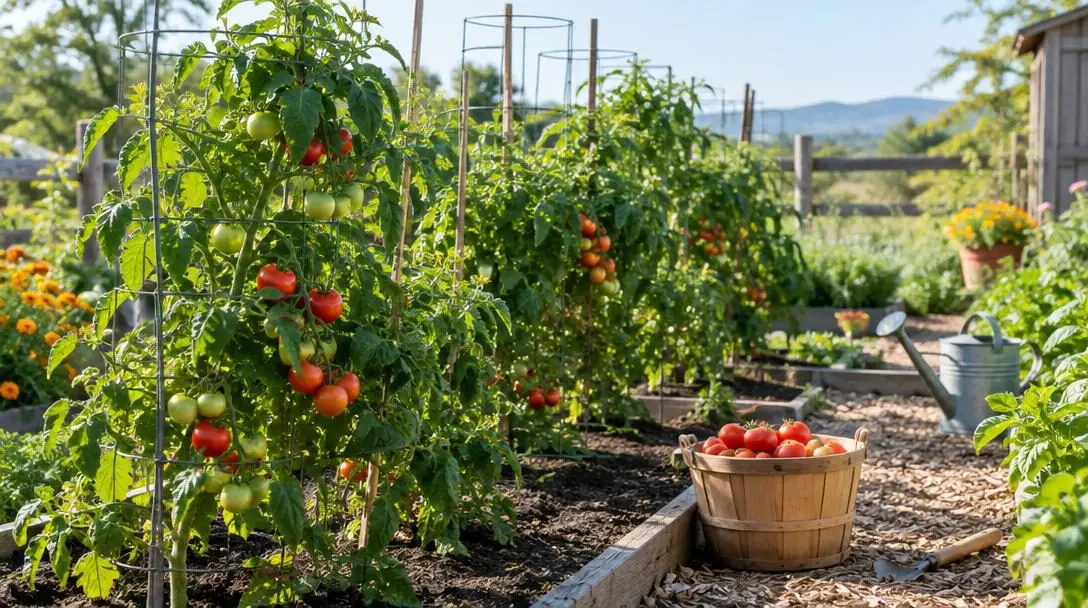
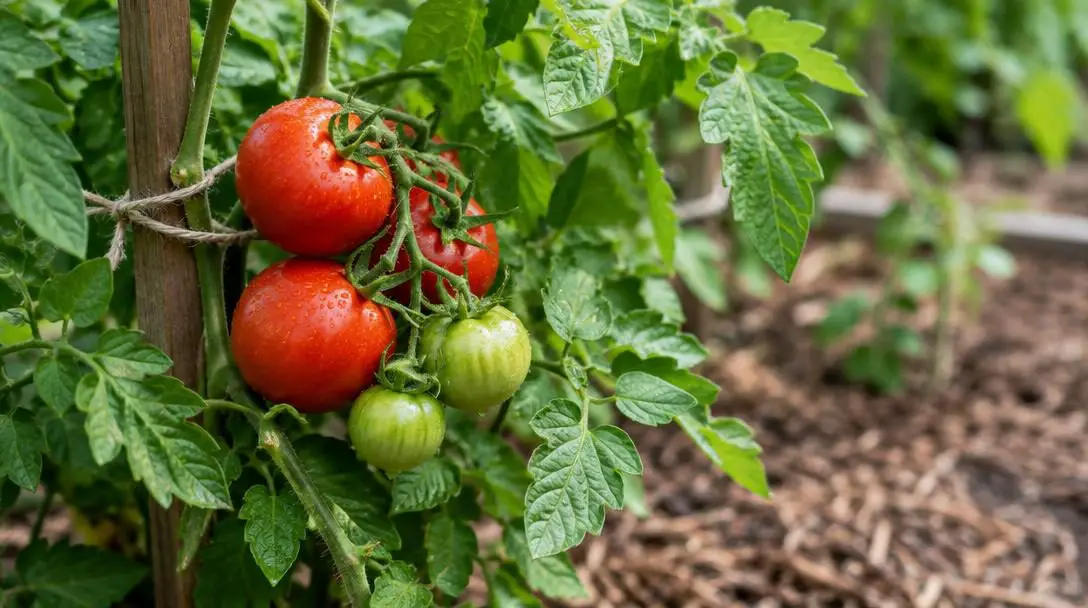
Maintaining structural supports—such as heavy wooden stakes, wire cages, or sturdy string trellises—keeps the vine upright. Elevating the plant keeps maturing fruit off wet earth, prevents soil-dwelling insects from feeding on the skin, and improves airflow around the leaf canopy. Alongside trellising, routinely pinch out small axillary suckers using your fingers or clean shears. This targeted pruning concentrates the vine's vascular energy into primary fruit clusters while maintaining an open, sunlit plant canopy.
Harvesting and Preserving Peak Flavor
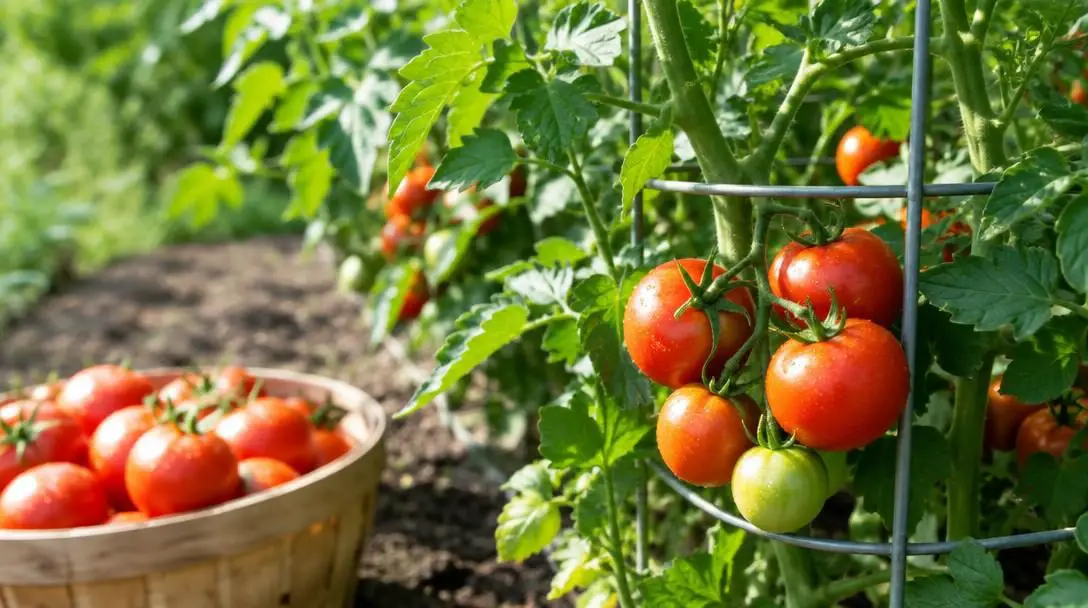
A tomato reaches peak table quality when it develops full, vibrant coloration across its entire skin, softens slightly under gentle thumb pressure, and emits a distinct, earthy sweetness from the stem end. However, leaving fruit on the vine until it is fully soft increases the likelihood of skin splitting after rainstorms, sunscald, or damage from birds and insects.
Tomatoes can be safely harvested when they are slightly under-ripe—at what growers call the "breaker stage," when the bottom of the fruit begins shifting from green to its mature color. Once the fruit reaches this stage, it will continue ripening off the vine without sacrificing its sugar content or complex flavor profile. To harvest, gently lift and twist the fruit until the stem snaps cleanly at the natural abscission joint, or sever the pedicel with clean shears to avoid tearing the vine.
Proper post-harvest storage preserves the texture and aroma you worked hard to produce. Keep harvested tomatoes on a counter or shelf in a single layer at room temperature in a dry, shaded location. Avoid window sills or spots receiving direct sunlight, as excessive heat softens the fruit prematurely and accelerates decay.
Common Pitfalls to Avoid
Even experienced gardeners can encounter poor yields if small horticultural details are neglected. Avoiding these widespread missteps will protect your investment and secure a bountiful crop:
- Planting in untested soil: Adding fertilizer without verifying soil pH can exacerbate nutrient lockout if the ground is more acidic than 6.0 or more alkaline than 6.8.
- Shallow transplanting: Setting a transplant at the standard container depth fails to activate adventitious roots along the stem, leaving the plant with a smaller, weaker root zone.
- Late structural installation: Installing stakes or cages after the vine has expanded drives metal or wood through mature roots and risks snapping delicate, fruit-laden branches.
- Skipping sucker pruning: Permitting suckers to proliferate creates a dense, humid leaf canopy that restricts airflow, invites fungal spores, and produces smaller tomatoes.
- Refrigerating the harvest: Placing picked tomatoes in cold refrigeration ruins the meat of the fruit, creating a mealy mouthfeel and eliminating delicate flavor compounds.
Long-Term Garden Planning and Crop Rotation
Achieving success in your current tomato crop is only the first step toward building a sustainable, high-producing garden. Nightshade family crops—including tomatoes, peppers, eggplants, and potatoes—are vulnerable to persistent, soil-borne fungal pathogens and targeted nematodes that survive in the earth through the winter.
To preserve long-term soil health, implement a strict three- to four-year crop rotation schedule. Never plant tomatoes or their botanical relatives in the exact same garden bed in consecutive seasons. Rotating nightshades with nitrogen-fixing legumes, heavy-feeding brassicas, or deep-rooting alliums allows the soil biology to recover, breaks the life cycles of insect pests, and prevents the systematic depletion of localized soil minerals.
Frequently asked questions
Why should I bury the stem so deeply when planting a tomato?
Tomatoes have the biological ability to form adventitious roots all along their stems when covered in moist earth. Deep planting creates a much larger, stronger subterranean root system that improves moisture and nutrient uptake while anchoring the plant securely.
What is the difference between determinate and indeterminate tomatoes?
Determinate varieties grow as compact bushes that stop growing once terminal flowers set, producing their entire crop over a brief window. Indeterminate varieties continue growing as long vines that flower and produce fruit continuously until frost.
How do I correct my soil if the pH is outside the ideal range?
If your soil test indicates a pH below 6.0 (too acidic), add agricultural lime to raise it. If the soil test reveals a pH above 6.8 (too alkaline), incorporate soil sulfur to lower it into the optimal 6.0 to 6.8 range.
Is it true that I should pick tomatoes before they are completely ripe?
Yes. Harvesting tomatoes when they are slightly under-ripe prevents the skins from cracking or splitting on the vine and protects them from insect and bird damage. They will finish ripening on an indoor counter without losing flavor.
Why shouldn't fresh tomatoes be stored in the refrigerator?
Cold temperatures permanently damage the internal cellular structure of the tomato, causing the flesh to become soft and mealy while chemically deactivating the volatile compounds responsible for aroma and rich flavor.
The Bottom Line
A bountiful tomato harvest is not a matter of luck, but the direct result of understanding the plant's natural growth habits and catering to its biological needs. By testing and adjusting your soil to the proper pH, burying transplants deeply to develop expansive adventitious roots, and diligently managing moisture, structural staking, and sucker growth, you can transform fragile seedlings into vigorous, productive vines. Avoid cold storage after picking, practice annual crop rotation, and you will enjoy exceptional homegrown flavor season after season.