How Comic Books Represent Social Conflict And Change
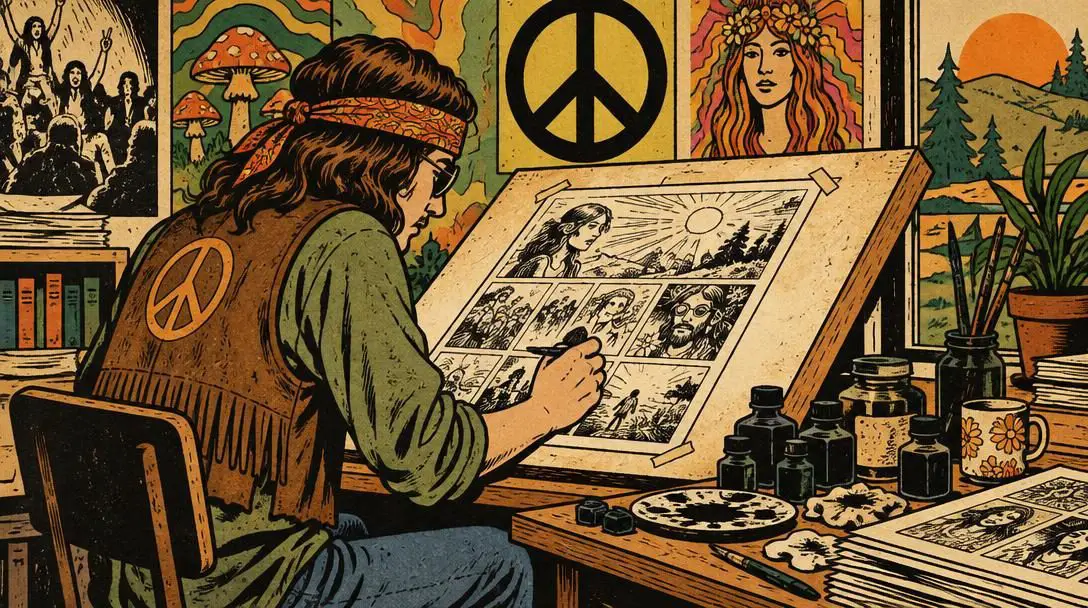
Comic books have long operated as far more than disposable, escapist entertainment. Throughout the major creative shifts of the twentieth and twenty-first centuries, sequential art has mirrored the cultural anxieties, political debates, and structural conflicts of its time. From the early Golden Age adventures of Superman fighting municipal corruption to modern storylines examining civil rights, immigration, and institutional violence, graphic literature translates abstract societal debates into visceral visual narratives.
By blending ongoing written serialized drama with symbolic visual imagery, comic creators construct enduring metaphors that explore power dynamics, civic duty, and the struggle for human equality. As society confronts systemic turmoil, comic books consistently provide a dynamic public space where readers encounter evolving social values and institutional critiques on the printed page.
Key takeaways
- Comic books historically reflect contemporary societal conflicts, evolving across the Golden Age, Silver Age, and the modern era to address changing cultural norms.
- Publishers challenged traditional white, male, heteronormative conventions by introducing pioneering characters of color and expanding LGBTQ+ representation.
- Mainstream storylines regularly address contentious national topics, ranging from the Vietnam War and civil rights in the 1960s to modern issues like police brutality and immigration.
- Independent publishers and educational initiatives use graphic narratives outside corporate constraints to promote public health awareness, mental health dialogue, and climate change action.
Historical progression: Comics as cultural mirrors across the ages
The medium of graphic literature has evolved through distinct chronological periods, each characterized by its own relationship to current affairs. During the Golden Age of comics in the 1930s and 1940s, comic books established their commercial viability while directly absorbing the turmoil of economic depression and geopolitical confrontation. Early superhero narratives, including initial depictions of Superman, focused on combating social inequality, municipal corruption, and the exploitation of ordinary citizens, establishing the superhero as an agent of social conscience.
As the industry transitioned into the Silver Age throughout the 1950s and 1960s, comic storylines deepened their engagement with complex moral questions. Amid domestic movements demanding civil rights and widespread opposition to overseas military campaigns, mainstream titles began moving away from simplistic morality tales. Creators leveraged the ongoing momentum of the era to challenge entrenched editorial assumptions, crafting flawed, human heroes who grappled with personal guilt, social marginalization, and institutional skepticism.
In the twenty-first-century modern era, graphic literature engages directly with contemporary activism, digital mobilization, and systemic societal inequities. Today's story arcs reflect an interconnected world, examining how structural prejudice shapes governance, community welfare, and legal justice. Rather than offering detached escapism, the historical progression of comic publishing proves that sequential art consistently functions as an immediate cultural record.
Groundbreaking characters: Reshaping representation on the page
For decades, early mainstream comic books favored a uniform demographic profile, relying almost exclusively on white, straight, male protagonists. Broad segments of the reading public were excluded from central heroic roles, while marginalized groups were largely relegated to secondary positions or stereotypical representations. However, as the American civil rights movement expanded during the 1960s, publishers began to dismantle this status quo by crafting complex heroes of color and, in subsequent decades, embracing diverse sexual orientations.
Black Panther
- Publisher: Marvel Comics
- Era of introduction: 1960s
- Significance: Foundational Black hero depicted with agency, sovereignty, and moral authority
Introduced during the height of the 1960s civil rights movement, Black Panther represented a seismic shift in how mainstream publishing portrayed people of color. Instead of serving as a subordinate sidekick, the character was established as an exceptionally capable leader endowed with vast intellectual, political, and physical agency. His position as a sovereign protagonist broke longstanding commercial barriers and established a new precedent for authentic representation.
Luke Cage

- Publisher: Marvel Comics
- Era of introduction: 1970s
- Significance: Early Black protagonist operating with moral conviction and ground-level agency
Debuting in the 1970s, Luke Cage challenged conventional comic settings by operating in urban environments deeply impacted by economic neglect. Portrayed as an individual endowed with power and complex personal motivations, his stories engaged with street-level systemic challenges. The character provided working-class readers with a morally grounded protagonist who fought back against injustice within his immediate community.
Storm
- Publisher: Marvel Comics
- Era of introduction: Foundational Marvel diversity era
- Significance: Groundbreaking female character of color possessing immense authority and leadership
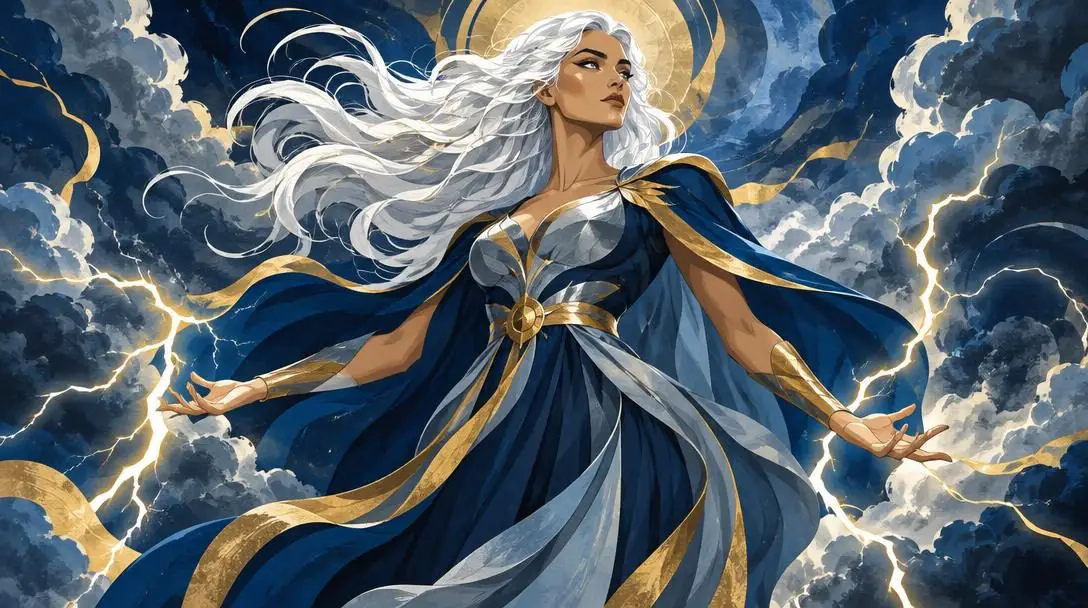
Storm emerged as a central pillar of superhero team storytelling, offering readers a multi-dimensional woman of color whose authority and compassion commanded respect across the publisher's universe. Presented from her inception with unquestioned capability, she challenged the historically white and male-dominated hierarchy of graphic storytelling, reshaping expectations for heroic leadership.
Batwoman
- Publisher: DC Comics
- Era of prominence: Modern era
- Significance: High-profile mainstream superheroine openly identified as a lesbian
As part of modern efforts to expand inclusivity, Batwoman was established as a high-profile, openly lesbian crimefighter. Her prominent role in mainstream titles helped normalize LGBTQ+ characters within long-running corporate universes, ensuring that queer heroes were portrayed with psychological depth, dedicated story arcs, and moral seriousness.
Iceman

- Publisher: Marvel Comics
- Era of prominence: Modern era revelation
- Significance: Founding Silver Age hero who came out as gay in modern storylines
The modern journey of Iceman, an original member of Marvel's foundational Silver Age mutant roster, illustrates the capacity of serialized narratives to evolve. When the character came out as gay, it represented a major cultural moment for legacy superheroes, demonstrating how established franchises can reflect contemporary social understandings of personal identity.
America Chavez

- Publisher: Marvel Comics
- Era of prominence: Modern era
- Significance: Latina LGBTQ+ protagonist celebrated for strength and intersectional identity
America Chavez brought intersectional representation to modern readers as an assertive, gay Latina hero. Endowed with extraordinary power and dimension, her adventures spotlighted marginalized identities without reducing the narrative to mere tokenism, demonstrating the creative benefits of embracing diverse backgrounds.
Sequential art translates abstract ideological disputes into immediate, tangible conflicts that challenge traditional assumptions of power and authority.
Political discourse, institutional critique, and modern satire
Throughout comic history, creators have actively engaged with domestic and foreign policy disputes. During the turbulent 1960s, Marvel Comics frequently used its monthly titles to stage debates surrounding the Vietnam War and civil rights struggles. Characters openly questioned the morality of overseas military deployment and confronted racial prejudice at home, reflecting the sharp divides experienced by everyday citizens.
This tradition of political engagement has continued to confront institutional failures in the modern era, using superhero mantles and satirical humor to critique systemic dysfunction.
Captain America: Sam Wilson
- Publisher: Marvel Comics
- Key themes: Police brutality, immigration enforcement, institutional inequality
- Protagonist: Sam Wilson
In Marvel's Captain America: Sam Wilson, the historic shield was passed to a Black man, setting up an incisive examination of modern American ideals. The storyline tackled contemporary controversies head-on, including police brutality and polarized immigration policies. By placing Sam Wilson at the crossroads of patriotic symbolism and structural injustice, the series questioned whether national ideals can survive when institutions fail marginalized communities.
The Flintstones

- Publisher: DC Comics
- Key themes: Consumerism, political cynicism, environmental degradation
- Genre: Social satire
DC Comics' reimagining of The Flintstones demonstrated how legacy properties can deliver sophisticated cultural critiques. Beneath its humorous, prehistoric veneer, the series offered a sharp satire of modern society. Issues like unbridled consumerism, political hypocrisy, and environmental exploitation were dissected, demonstrating how humor can deconstruct institutional flaws.
| Project or Title | Publisher or Context | Primary Social Issues Addressed | Format and Narrative Approach |
|---|---|---|---|
| Captain America: Sam Wilson | Marvel Comics | Police brutality, immigration, and structural racism | Mainstream superhero serial confronting domestic policy |
| The Flintstones | DC Comics | Consumerism, political corruption, and ecological harm | Satirical comic run reimagining classic animated icons |
| Federal Anti-Drug Campaign | Marvel / Federal Government | Substance abuse awareness and community education | Public service issues distributed to schools and libraries |
| Independent Creator Works | Independent Publishers | Mental health challenges and climate change activism | Creator-owned graphic literature free from corporate constraints |
Public awareness initiatives and the rise of independent storytelling
Beyond mainstream corporate entertainment, comics have repeatedly proven their utility as educational and public awareness instruments. During the 1980s, Marvel Comics partnered with the United States federal government to produce a series of anti-drug comic books. These issues were printed and circulated directly to classrooms and public libraries across the nation. By deploying recognizable superhero figures in cautionary narratives, the initiative leveraged commercial popular culture to deliver crucial health messages to youth.
In modern comic culture, graphic literature has expanded through the independent publishing movement. Unburdened by corporate licensing requirements, independent writers and artists use comics to tackle deeply personal issues such as mental health, social alienation, and the global ramifications of climate change. These independent works offer intimate, nuanced storytelling that addresses niche social topics often sidelined by major commercial publishers.
Narrative mechanics: How comics structure social conflict
The unique structural mechanics of comic storytelling make the medium an exceptional vehicle for staging cultural disputes. Rather than relying solely on text or performance, comics merge visual semiotics with sequential drama:
- Visual metaphor and symbolic coding: Complex sociological tensions are translated into graphic symbols, costumes, and color palettes, turning abstract political philosophies into tangible, recognizable conflicts.
- Serialized pacing and ongoing dialogue: Mainstream comic franchises run continuously for decades, allowing storytellers to incorporate real-world developments into monthly issues as events occur.
- Dual perspectives through captions: The interplay between interior narrative captions and external dialogue balloons allows readers to observe characters managing public duties alongside private anxieties.
- Subversion of traditional archetypes: Placing legendary symbols of justice into scenarios involving state-sanctioned violence or discriminatory legislation strips away traditional moral simplicity, forcing readers to re-evaluate authority figures.
Practical steps for analyzing social commentary in graphic literature
Readers, educators, and scholars can evaluate how graphic works engage with socio-political dilemmas by following an established analytical approach:
- Determine the historical publication period: Locate when the comic was produced—whether during the Golden Age, Silver Age, late-twentieth century, or modern era—to recognize the real-world events that informed its creators.
- Evaluate character agency and identity: Scrutinize whether marginalized figures possess genuine power, personal motivations, and voice, or whether they function merely as narrative background for established heroes.
- Identify systemic vs. individual conflict: Determine whether the central problem is presented as the fault of a single villain or as a symptom of larger institutional corruption, prejudice, or environmental failure.
- Deconstruct artistic framing and layout: Analyze panel compositions, camera angles, and color choices to understand how visual art directs reader empathy and reinforces or challenges authority.
- Account for corporate vs. independent production: Differentiate between corporate mainstream releases bound by brand management and independent creations free to explore challenging topics without commercial limitations.
Common mistakes when reading political themes in comics
Navigating social critique within sequential art requires avoiding several pervasive analytical errors:
- Presuming classic comics were apolitical: Overlooking historical context leads to the false conclusion that social commentary is a modern addition, ignoring early anti-corruption plots and 1960s civil rights narratives.
- Confusing passive visibility with active representation: Assuming the presence of a diverse character guarantees meaningful representation ignores whether the character is written with genuine agency or used as superficial tokenism.
- Misinterpreting satirical storytelling: Viewing satirical works like The Flintstones as simple humor overlooks how absurdity is deliberately utilized to challenge real-world political and economic practices.
- Treating mainstream and independent comics identically: Disregarding the financial and editorial pressures placed on corporate superheroes blinds readers to the unique advantages and freedoms enjoyed by independent comic authors.
Frequently asked questions
When did comic books first start addressing serious social issues?
Comic books have addressed societal problems since their inception. During the Golden Age of the 1930s and 1940s, stories like early Superman adventures focused on fighting corporate corruption and social inequality, long before modern political story arcs were developed.
How did the 1960s civil rights movement influence mainstream publishers?
The civil rights movement inspired mainstream publishers, particularly Marvel Comics, to challenge the industry's white, male status quo. This period led to the creation of foundational heroes of color like Black Panther, Luke Cage, and Storm, who were given central protagonist roles and genuine moral authority.
Why are comics an effective medium for government and educational campaigns?
Comics combine visual engagement with accessible reading levels. As demonstrated by Marvel's federally partnered anti-drug comics in the 1980s, distributing graphic stories to schools and libraries enabled public health programs to deliver important messages using recognizable, trusted cultural heroes.
How do independent comics differ from mainstream superhero series when portraying social issues?
Mainstream superhero titles must balance social messaging against commercial obligations and longstanding brand identities. In contrast, independent creators operate with fewer corporate restrictions, allowing them to produce personal, nuanced stories centered directly on mental health, ecological decay, and localized activism.
What role does satire play in comic book social critique?
Satirical comics use humor, irony, and exaggerated scenarios to expose institutional corruption, consumerist excess, and political hypocrisy. Books such as DC's reimagined The Flintstones illustrate how familiar comedic settings can deliver serious cultural critiques.
The bottom line
The medium of sequential art has stood as an active participant in cultural debates for nearly a century. Far from offering pure fantasy, graphic literature captures public anxieties, challenges systemic corruption, and expands representation for underrepresented communities. As digital webcomics provide accessible platforms for independent creators and iconic characters transition to mass media, comics will continue to serve as a vital battleground for public discourse and social progress.