The Future Of Comic Books: Adapting To Digital Media
For generations, comic books have occupied an essential place in global popular culture, drawing audiences into vibrant superhero adventures and rich, dark graphic novels. Traditionally, the medium was inextricably linked with physical paper, ink printing, and localized distribution networks centered on neighborhood newsstands and dedicated comic book shops. These physical issues not only carried readers through expansive, interconnected narratives but also fostered deeply passionate communities of collectors who treasured every print run.
As personal consumer technology has matured, media consumption patterns have experienced a fundamental transformation across literature, music, and film. Comic books are navigating this identical digital evolution. Although printed issues preserve deep cultural and aesthetic resonance, digital platforms provide contemporary readers, writers, and artists with novel avenues for creative expression and global distribution. Understanding the mechanics, practical advantages, and unresolved difficulties of digital comic books is now vital for appreciating where sequential art is headed.
Key takeaways
- Dedicated digital platforms and panel-by-panel navigation tools have made expansive comic archives accessible across smartphones, tablets, and computers.
- Digital comic consumption eliminates physical storage limitations and lowers manufacturing overhead, making collecting more affordable and convenient.
- Multimedia integration, embedded external links, and layered interactive elements allow creators to expand narrative techniques beyond traditional print pages.
- The digital comic ecosystem still faces persistent challenges, including digital piracy, the loss of tactile collectibility, and unequal access to reading hardware.
The Technological Mechanics of Modern Digital Comics
The transition of sequential art from physical pulp to illuminated screens is powered by sophisticated software engineering and specialized presentation modes. Traditional comic book layouts present complex visual hierarchies, where lettered word balloons, multi-tiered panels, and double-page spreads must be interpreted in a clear order. Digital platforms preserve this storytelling logic while tailoring the reading experience to various screen dimensions.
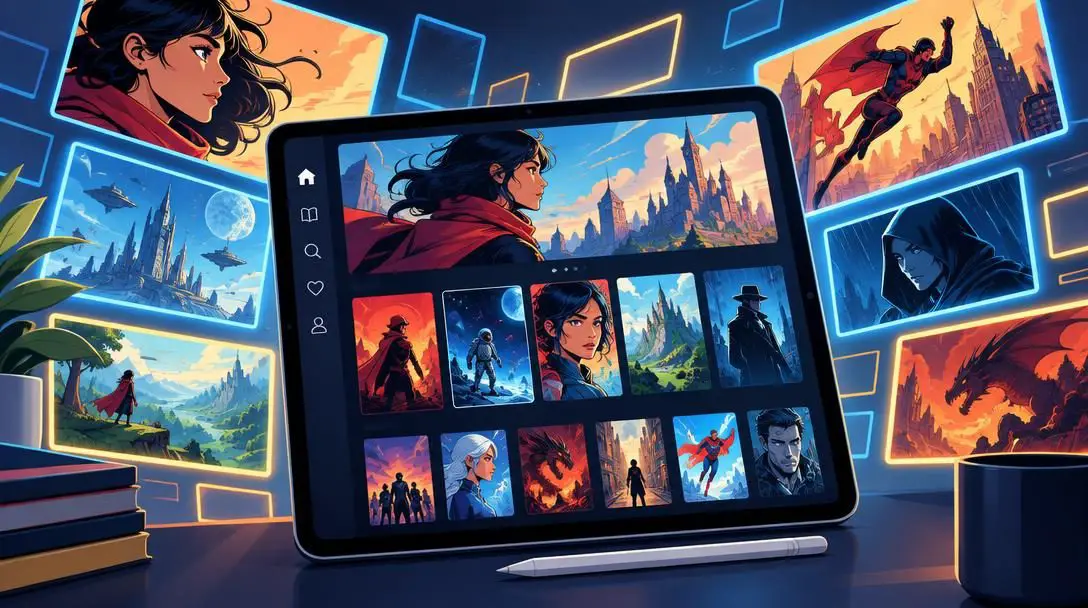
At the center of this technological shift are purpose-built viewing mechanisms. Rather than forcing readers to pinch and zoom across a static high-resolution scan, modern reader software provides guided panel navigation. This system dynamically isolates individual panels, gliding smoothly across the page in the exact sequence the creative team intended. As a consequence, complex visual sequences and subtle background details remain impactful even on compact mobile devices.
Behind the interface, digital comics utilize both proprietary reader architectures and standardized digital document packages. These file formats are engineered to balance compression efficiency with visual clarity, ensuring that intricate linework, subtle color gradations, and delicate lettering styles remain crisp on modern high-pixel-density displays without consuming excessive bandwidth.
Leading Digital Reading Platforms
Modern readers rely primarily on established digital distribution hubs that streamline purchasing, cataloging, and reading into unified software environments.
ComiXology
- Service model: Digital storefront and subscription reading
- Catalog variety: Multi-publisher releases and independent labels
- Hardware support: Smartphones, tablets, and web browsers
As one of the earliest pioneers in the digital comic space, ComiXology established the benchmark for modern screen-optimized reading through its guided view software. The platform functions as both a comprehensive digital retail storefront and a centralized library, enabling comic readers to purchase individual issues on release day or discover older back issues from a wide variety of mainstream and indie publishers.
Marvel Unlimited
- Service model: Single-publisher recurring subscription
- Catalog variety: Marvel back issues and curated series
- Hardware support: Mobile devices, tablets, and web browsers
Marvel Unlimited operates on an all-access subscription architecture, granting subscribers instant access to a vast historical catalog spanning classic golden age releases to recent contemporary story arcs. By concentrating solely on a single publisher's library, the service functions as an exhaustive digital archive that allows enthusiasts to explore decades of superhero continuity on demand.
Comparing Comic Reading Formats
Choosing how to engage with sequential art depends on personal priorities regarding convenience, budget, and archival preferences. The following breakdown contrasts standard reading formats across the modern comic landscape.
| Format | Storage Impact | Accessibility | Interactive Features | Cost Structure |
|---|---|---|---|---|
| Physical Print | Requires physical shelf space, bags, and boards | Limited to local store stock and physical shipping | None; strictly tactile and visual print | Standard retail price per individual issue |
| Digital Subscriptions | Zero physical space; minimal cloud/device footprint | Instant access anywhere with network connection | Guided panel navigation, panel transitions | Predictable monthly or annual recurring fee |
| A La Carte Digital Purchases | Zero physical space; relies on local or cloud storage | Immediate download upon digital storefront checkout | Guided view, display color calibration | Discounted per-issue retail pricing |
Core Advantages of Going Digital
The migration toward digital distribution provides practical benefits that resolve many long-standing hurdles associated with traditional comic book ownership and collection management.
The most immediate advantage is unrestricted accessibility. Historically, collectors relied entirely on the physical inventory carried by local comic specialty stores or newsstands. If an older issue was out of print or an area lacked a dedicated retailer, readers faced difficult searches and delayed shipping times. Digital storefronts democratize reading by providing instant downloads at any time of day, regardless of geographic location.
Furthermore, digital libraries eliminate the logistical complexities of physical preservation. Serious print collectors invest substantial time and money into backing boards, mylar bags, and heavy storage boxes to shield their issues from humidity, light degradation, and physical wear. Digital collections require no physical square footage, enabling readers to carry decades of storytelling directly in a backpack or pocket without worrying about page yellowing or bent corners.
By removing the overhead of physical manufacturing and distribution, digital publishing allows readers to access massive creative archives instantly without taking up an inch of shelf space.
Affordability represents another major incentive. Because digital comics bypass physical printing runs, paper sourcing, freight shipping, and physical warehousing, publishers can pass savings directly to the audience. Readers benefit from discounted digital retail editions, promotional sales bundles, and cost-effective subscription catalogs that offer thousands of issues for a predictable monthly fee.
Interactive Features and Expanded Storytelling
Digital comics offer far more than simple static screen adaptations; they serve as an entirely new creative canvas. Unbound by the static physical page, writers and illustrators can deploy dynamic storytelling techniques that enhance mood and pacing in ways paper cannot replicate.
- Integrated audio and ambient soundscapes: Digital comics can synchronize dynamic musical cues, atmospheric environmental sounds, and sound effects with panel transitions to heighten narrative tension during crucial story beats.
- Subtle animation and motion effects: Creative teams can incorporate animated smoke, flickering lights, shifting perspectives, or sequential art transitions that give the illusion of life without disrupting the reader's self-directed pace.
- Embedded hyperlinks: Interactive panels can link directly to creator commentary, contextual character biographies, developmental linework sketches, and behind-the-scenes production videos.
- Layered storytelling and hidden content: Digital releases can embed interactive easter eggs or alternative panels, rewarding reader curiosity with bonus artwork and deeper narrative lore.
How to Read Digital Comics: A Step-by-Step Guide
Getting started with digital sequential art requires only a few straightforward preparations to establish an enjoyable, comfortable reading environment.
- Select your primary reading hardware: While modern smartphones offer exceptional portability, tablets and touchscreen laptops provide aspect ratios that mirror standard physical comic dimensions, rendering linework and lettering comfortably without excessive zooming.
- Choose your preferred distribution service: Evaluate whether your habits favor a flat-rate subscription service like Marvel Unlimited for expansive catalog streaming or an à la carte storefront like ComiXology for purchasing individual current-run issues across various publishers.
- Calibrate your screen and display settings: Open your reader preferences to test standard full-page viewing against guided panel-by-panel transitions. Adjust screen brightness, disable automatic screen rotation, and select your preferred background margins to minimize eye fatigue during extended sessions.
- Organize your digital library: Use the application's sorting mechanisms to catalog your reading lists. Tag ongoing story arcs, separate completed series into archives, and maintain a designated queue for upcoming issues to keep your collection orderly.
- Download issues for offline storage: Before commuting, flying, or visiting regions with unreliable connectivity, download your selected issues directly to your device storage to guarantee uninterrupted reading.
Common Mistakes to Avoid in Digital Reading
Transitioning from traditional print to digital environments can occasionally lead to frustrating experiences if readers overlook the operational nuances of digital applications.
- Ignoring guided navigation tools: Attempting to read entire pages on smaller smartphone screens without guided view tools makes lettering illegible and disrupts the intended pacing of dramatic moments.
- Mismanaging local device capacity: Because digital comics require no physical room, users frequently forget that downloading multiple high-definition story arcs consumes valuable onboard hardware storage over time.
- Disregarding platform licensing and portability: Purchasing issues haphazardly across multiple disconnected digital ecosystems can fracture your library. Always verify account sync capabilities and licensing terms before building an extensive catalog.
- Treating digital as an absolute replacement for print: Assuming digital media must entirely eliminate physical collecting often results in regret. Many enthusiasts find that balancing digital reading for everyday serials alongside print purchases for deluxe editions and variant covers yields the most rewarding hobby experience.
Challenges Facing the Digital Medium
Despite rapid technological improvements and expanding audiences, the digital comic book industry faces structural and aesthetic obstacles that complicate its ongoing development.
The widespread issue of digital piracy remains a significant threat to sustainability. Because digital files can be easily captured, duplicated, and distributed across unauthorized internet channels, independent creators and established publishers struggle to protect their intellectual property. Unauthorized distribution directly siphons vital revenue from writers, pencilers, inkers, colorists, and letterers, making sustainable livelihoods difficult to maintain.
Another major obstacle is the emotional and sensory attachment many long-time fans feel toward physical print. Sequential art has spent over a century flourishing as a tactile medium. The distinct texture of specialized paper stocks, the scent of fresh ink, the mechanical satisfaction of turning a page, and the decorative appeal of an organized bookshelf cannot be replicated by a flat piece of glass. For readers who value physical ownership, digital reading can sometimes feel detached and ephemeral.
Finally, the transition introduces technological barriers. Digital reading necessitates dependable access to relatively expensive mobile hardware, recurring subscription fees, and reliable high-speed internet connections. Readers who lack modern devices or robust network access find themselves excluded from digital distribution channels, demonstrating that physical comic books remain vital for universal cultural accessibility.
Frequently asked questions
Do digital comics cost the same as physical print editions?
Digital comics are often priced lower than their physical print counterparts because they bypass physical printing, warehousing, and transportation expenses. Furthermore, subscription platforms offer massive libraries for a single recurring fee, significantly reducing the per-issue cost.
Can I read my digital comics without an active internet connection?
Yes. Most major comic reading platforms, including ComiXology and Marvel Unlimited, allow users to download individual issues or entire story arcs directly onto their devices for offline reading during flights or commutes.
What is guided view, and why is it important?
Guided view is an automated navigation technology that zooms in on and highlights individual comic panels in the exact order intended by the creative team. This feature ensures that dialogue remains legible and visual beats stay dramatic, particularly on compact smartphone displays.
Do I permanently own the digital comics I buy?
In most mainstream storefronts, purchasing a digital comic grants you an active license to read the title within that specific app ecosystem. Unless you purchase DRM-free backup files, your ongoing access depends on the terms of service and library hosting of the platform provider.
Which device is best suited for reading digital comics?
Tablets and touchscreen laptops featuring displays around ten inches or larger are widely considered ideal because their physical dimensions and aspect ratios closely align with standard comic book pages, rendering both full spreads and lettering clearly.
The Bottom Line
The evolution of comic books into digital formats does not signify the extinction of print, but rather the opening of an expansive new chapter for visual storytelling. By harnessing panel-by-panel navigation, interactive audio-visual integrations, and cloud-based subscription libraries, the medium has made sequential art more accessible, flexible, and versatile than ever before.
Sustaining this positive momentum will require the industry to address digital piracy responsibly, support creator compensation, and respect the unique artistic traditions of print. As digital and physical formats continue to coexist, comic books will retain their power to captivate readers, blending timeless illustrations and words across printed pages and modern backlit screens alike.