How To Get Started Surfing

Surfing has captivated ocean lovers for generations, inspiring newcomers to dream of emulating legendary watermen like Duke Kahanamoku and mastering classic maneuvers such as hanging ten. Yet before anyone can execute delicate footwork along the nose of a surfboard, they must build a rock-solid foundation in the water. Heading into the open ocean without an understanding of wave dynamics, gear, and board control can lead to rapid exhaustion and frustration, but approaching the sport methodically transforms an intimidating environment into an exhilarating playground.
Every accomplished surfer begins at the same starting line: standing on the sand, observing the rolling sets, and practicing balance mechanics. Transitioning from a curious beachgoer into a confident rider requires patience, humility, and a willingness to master foundational motor skills. By choosing the right beginner equipment, understanding ocean etiquette, and committing core movements to muscle memory, you can safely catch your first waves and embark on a lifelong connection with the sea.
Key takeaways
- Large foam-top boards and secure leashes provide the stability, buoyancy, and safety beginners need to learn comfortably.
- Practicing pop-up mechanics on the dry sand builds essential muscle memory before facing unpredictable ocean swells.
- Spending 30 minutes observing the break reveals wave size, takeoff zones, paddling channels, and current lineup traffic.
- The surfer closest to the breaking peak always holds wave priority, except on split-peak A-frame waves that break in both directions.
- Waiting until you feel the physical acceleration of the wave beneath you ensures a clean, stable pop-up without losing forward momentum.
Essential gear for your first sessions
Selecting appropriate equipment removes unnecessary obstacles during the early learning curve. High-performance fiberglass shortboards may look appealing, but they lack the volume and stability required to catch unbroken rollers or maintain balance while standing up. Starting on high-volume, user-friendly gear maximizes wave count and keeps you safe in the water.
| Equipment Item | Primary Purpose | Key Beginner Advantage |
|---|---|---|
| 10-Foot Soft-Top Surfboard | Floatation and wave catching | Maximum buoyancy and a cushioned, forgiving deck during falls |
| Surfboard Leash | Board retention and personal tether | Prevents runaway boards from drifting to shore or striking other swimmers |
| Fitted Wetsuit | Thermal regulation and body protection | Retains core warmth while preventing wax rash and sun exposure |
10-Foot Soft-Top Surfboard

- Length: 10 feet
- Construction: High-density foam deck
- Primary Role: Maximum buoyancy, stability, and wave-catching ease
A 10-foot-long soft-top surfboard serves as the gold standard for beginner progression. The generous length and wide outline provide immense surface area and flotation, enabling novices to generate glide with minimal paddling effort. Because waves transfer energy more effectively to high-volume crafts, beginners can catch rolling whitewater and gentle green waves well before they break. Furthermore, the soft foam deck cushions impacts when you inevitably slip, protecting your body from hard knocks while building your confidence.
Matching Surfboard Leash
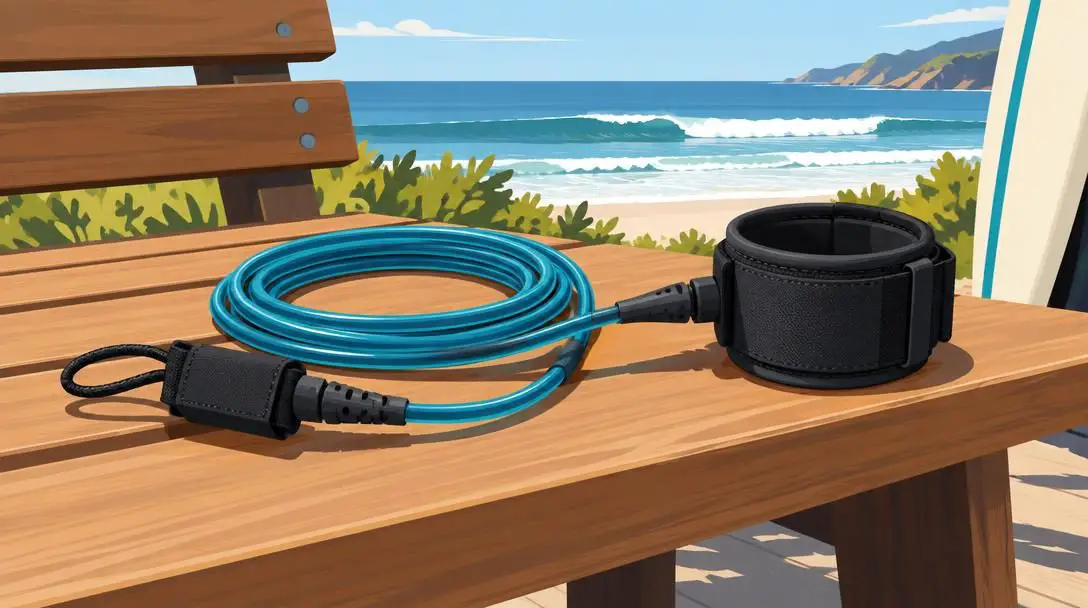
- Attachment Point: Trailing ankle
- Length: Matched to surfboard length
- Primary Role: Equipment retention and water safety
A surfboard leash tethers the tail of your board directly to your body. Whenever you wipe out, the board remains within arm's reach rather than washing completely into the shallows or tumbling uncontrollably toward other surfers. The leash must match the length and strength rating of your board; using a shortboard cord on a 10-foot longboard can cause awkward recoil or snap under heavy strain. Keeping your board secured ensures you have a reliable floatation device nearby after an exhausting tumble in the whitewater.
Properly Fitting Wetsuit
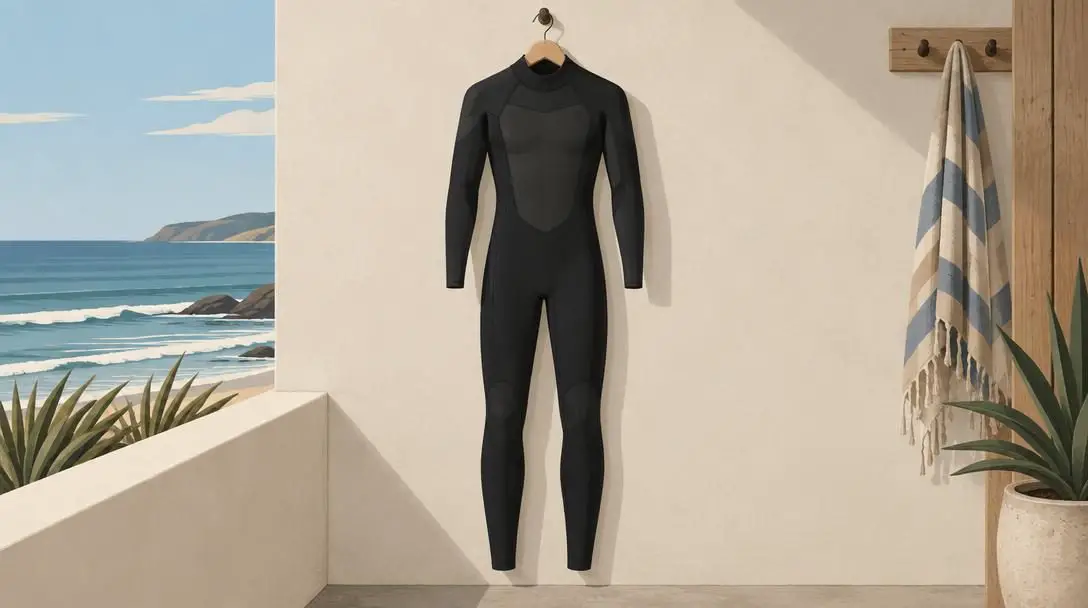
- Material: Neoprene
- Fit: Snug against the skin without restricting shoulder mobility
- Primary Role: Thermal insulation, chafe prevention, and sun defense
Water conducts heat away from the human body far more rapidly than air, making a properly fitted wetsuit essential in all but the warmest tropical waters. A snug wetsuit traps a thin layer of water against your skin, which your body warms to keep your core temperature stable during long practice sessions. In addition to thermal defense, the neoprene barrier protects your chest, stomach, and inner thighs from friction rashes caused by rubbing against the board deck, while shielding exposed skin from harmful ultraviolet rays.
Understanding wave dynamics and lineup etiquette
Surfing differs fundamentally from land-based board sports because the riding surface constantly shifts, evolves, and dissipates. Ocean swells originate far out at sea, traveling across deep water until they encounter the rising bathymetry near the coast. As the seafloor becomes shallower, the lower portion of the swell slows due to friction against the bottom, forcing the wave to compress, grow taller, and steepen. When the water depth can no longer support the wave's height, the crest trips forward and topples over, transforming clean ocean energy into foamy whitewater.
The designated ocean zone where waves peak, break, and assemble surfers is known as the lineup. Navigating this shared space requires strict adherence to an unwritten code of water conduct designed to prevent collisions and maintain mutual respect.
The surfer positioned closest to the curling peak holds the right of way, ensuring that every ride remains safe, clear, and collision-free.
Under standard etiquette, only one surfer claims ownership of a wave. Priority belongs to the individual positioned deepest—closest to the curling peak where the wave first begins to break. Dropping into a wave when another rider has already established position closer to the curl is called "dropping in" and represents the cardinal violation of lineup etiquette. The only universal exception occurs on defined "A-frame" waves, which break symmetrically like an inverted letter V from a central peak. On an A-frame swell, two surfers can share the wave by communicating clearly; one rider calls "left" to angle down the left shoulder, while the other shouts "right" to peel down the opposing face.
Step-by-step roadmap to catching your first wave
Riding waves requires fluid transitions between paddling, reading water speed, and popping up into an athletic stance. Breaking the process into discrete, repeatable steps on dry land and in the water helps build reliable instincts under real ocean pressure.
- Drill the pop-up on the beach: Lay flat on your stomach directly on the sand or over your soft-top deck. Position your chest elevated, your neck neutral, and your palms placed flat against the deck alongside your lower ribs—avoiding the instinct to wrap your fingers around the outer rails. In a single explosive motion, push downward through your palms and spring your hips forward, planting your feet beneath your center of mass with your knees bent and chest upright. Repeat this drill on dry land dozens of times until the motion occurs without hesitation.
- Determine and verify your natural stance: As you complete your dry-land pop-up drills, observe your feet as they land on the board. If your left foot naturally leads forward while your right foot anchors the back, you ride with a regular stance. If your right foot lands forward with your left foot behind, you ride goofy foot. Neither stance offers an inherent advantage; comfort and balance govern the choice. Secure your leash cuff to your rearward ankle so the cord trails cleanly behind you rather than tangling around your front leg during takeoffs.
- Conduct a 30-minute shoreline assessment: Arriving at the beach and rushing directly into the surf is a frequent beginner error. Spend at least 30 minutes studying the break from the sand. Track the size of incoming sets, note where the waves consistently pitch and fold, and observe the paddling paths experienced riders use to bypass the impact zone. Identifying these deep-water channels allows you to reach the lineup without expending your energy battling breaking whitewater head-on.
- Paddle through the surf with situational awareness: Wade into the water, lie centered along the middle stringer of your board, and establish a steady, rhythmic stroke. Maintain continuous awareness of other water users. If an incoming surfer rides toward you, paddle toward the broken whitewater behind them rather than slicing across their open shoulder. Always maintain physical contact with your surfboard; never abandon your board to dive under a wave, as a free-floating board propelled by moving whitewater poses an immediate hazard to anyone downstream.
- Catch the swell and execute the stand-up: Sit patiently outside the impact zone and monitor the rotation of the lineup. When your turn arrives, rotate the nose of your board directly toward the beach and lie centered. Cup your hands and dig deep, powerful strokes into the water to build initial speed. As the approaching swell lifts the tail of your board, deliver a final burst of aggressive paddling until you feel the distinct roller-coaster drop of the wave taking hold. Lay your hands flat by your ribs, pop up onto your feet in one fluid motion, and keep your gaze fixed on the beach ahead with your knees bent to absorb chop.
Common beginner mistakes and how to fix them
Every surfer experiences numerous wipeouts while building physical competence in the ocean. Recognizing the mechanical errors that cause missed waves and falls will dramatically shorten your learning curve.

- Paddling with relaxed or flat hands: Scooping water with loosely separated fingers yields little forward thrust. Slightly cup your hands, engage your core, and pull deep through the water along the rails to generate the speed required to match the incoming swell.
- Grabbing the rails during the pop-up: Clamping your fingers around the board edges torques the craft, causing it to rock violently. Keep your palms flat on the deck surface right under your pectoral muscles to create a stable base of support.
- Fixating your eyes on your feet: Your body naturally tracks your line of sight. Looking directly down at the deck pulls your head and shoulders forward, throwing your weight off balance and pitching the board nose-first underwater. Keep your chin up and look straight ahead toward the shoreline.
- Rushing the pop-up too early: Attempting to stand before the wave's kinetic energy has completely grabbed your board causes you to stall at the crest and slip off the back of the wave. Keep paddling until you feel unmistakable forward acceleration before pushing up.
- Diving headfirst into shallow water during falls: Jumping headfirst off a surfboard risks severe neck injury if you strike a hidden sandbar or shallow reef. Whenever you lose balance, fall flat like a leaf onto the surface, and always cup both hands over your head and face as you surface to protect yourself from your board.
Progression beyond the basics
Once you consistently catch small rolling waves and whitewater while maintaining an upright, athletic stance, the wide world of surfing progression opens up. Moving past the beginner stage involves shifting from riding straight toward the dry sand to navigating the open, clean face of an unbroken swell.
The first progression milestone involves angling your takeoff. Rather than pointing the nose directly toward the sand, turn your board at a slight diagonal in the direction the wave is unzipping—either to the left or right. Angling allows you to drop smoothly into the pocket of the wave without losing momentum in the turbulent whitewater soup. Once you are gliding across the unbroken wall of water, you can begin applying deliberate pressure through your heels and toes to initiate gentle carves, control your line, and generate speed.
As your ocean comfort expands, you will develop the refined wave-reading ability needed to anticipate changing sections, duck-dive or turtle-roll through heavier sets, and experiment with different equipment designs. Over time, practicing cross-stepping footwork along the deck can lead you all the way to the nose, allowing you to hang ten just like the classic wave-riding pioneers who established the sport.
Frequently asked questions
How long should my first surfboard be?
A 10-foot-long soft-top board is the recommended size for beginners. Its substantial volume, buoyant foam core, and wide platform make paddling efficient and provide the stability needed to master the pop-up.
What is the difference between regular and goofy stance?
A regular stance means your left foot is planted in front while your right foot remains near the rear tail of the board. A goofy stance is the opposite, with your right foot forward and your left foot trailing. Neither stance is superior; it is purely a matter of personal comfort.
Why is it important to attach the leash to my rear foot?
Securing the leash to your rear ankle keeps the tether positioned behind your body while riding. This prevents the cord from tangling around your legs during the pop-up or interfering with your footing as you balance.
What should I do if a surfer is riding a wave directly toward me?
Always paddle toward the broken whitewater behind the rider rather than paddling across into their open path on the wave face. Yielding the clean face protects the working surfer's line and avoids dangerous open-water collisions.
How can I tell when it is time to pop up on a wave?
You should continue paddling until you feel the swell lift the tail of your board and experience a clear downward roller-coaster acceleration. Once the wave's momentum takes over the board, stop paddling and execute your pop-up immediately.
The bottom line
Learning how to surf is an immensely rewarding pursuit that demands patience, environmental respect, and deliberate physical preparation. By equipping yourself with a forgiving 10-foot foam board, dialing in your pop-up mechanics on the sand, and honoring the etiquette of the lineup, you will build the confidence required to catch unbroken swells. Take time to study the ocean before wading in, treat fellow surfers with courtesy, and embrace the learning process one wave at a time.