The Art of Staking: Tips for Supporting Your Garden’s Plants and Flowers
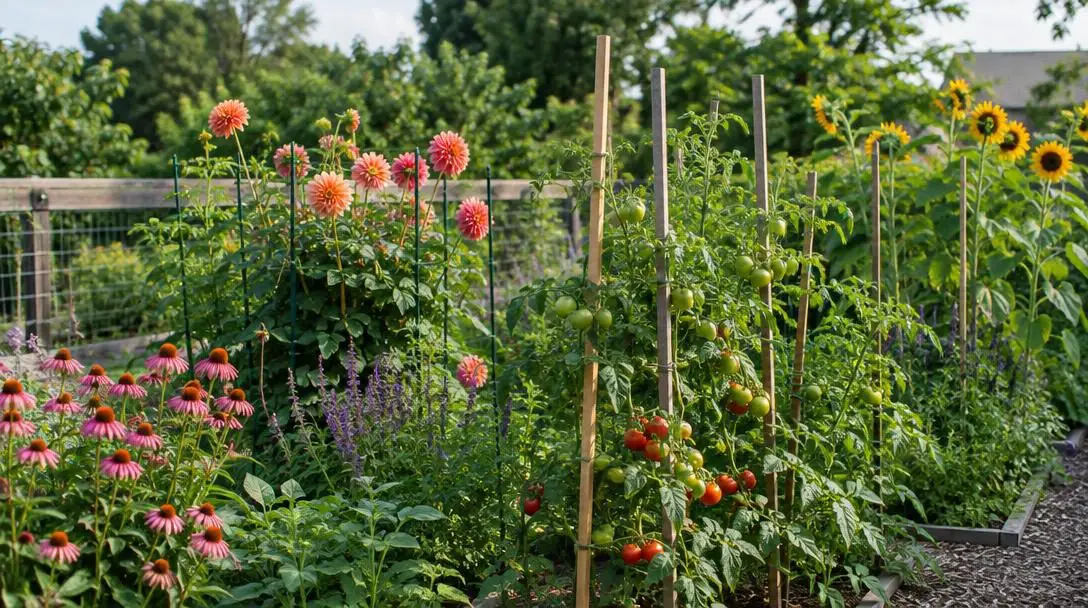
Few experiences in gardening match the satisfaction of watching tiny seedlings transform into robust, leafy specimens reaching toward the sun. Yet this rapid surge in vegetative growth frequently presents a mechanical dilemma. As stems stretch taller and produce heavy foliage, expansive blooms, or bountiful crops, they become increasingly vulnerable to bending, sprawling, and snapping under their own structural weight.
To prevent stems from collapsing during critical growth phases, gardeners rely on plant staking. Staking is a mechanical support technique where an upright rod or post is anchored into the soil and secured to a plant stem. By providing an external framework, staking protects vulnerable plant tissue, maximizes vertical garden space, and keeps developing crops clean and clear of wet soil.
Key takeaways
- Staking acts as an artificial spine, transferring the mechanical load of heavy foliage and fruit away from fragile stems.
- Select stakes that measure at least two-thirds the anticipated height of the mature plant to prevent snapping near the top.
- The optimal time to install supports is early in the plant's life cycle or right before flower buds develop.
- Flexible, soft ties like garden twine or velcro should be secured with balanced tension so circulation remains unrestricted.
- Routine maintenance involves loosening ties, guiding growth around supports, and adjusting stakes after severe weather.
The Mechanics of Garden Staking: Why Plants Need Support
At its core, plant staking resolves the physical challenges of gravity, lateral wind forces, and rapid weight accumulation. As a plant develops, its internal vascular framework must carry an expanding load of leaves, lateral branches, and water-dense tissues. When a variety produces slender stems—such as indeterminate tomatoes or vining beans—the plant reaches a mechanical tipping point where stem diameter cannot support the increasing mass above it.
Without intervention, overburdened stems sag toward the dirt, where moisture, soil-borne fungi, and crawling pests degrade the plant's foliage. Furthermore, unexpected wind gusts can exert severe bending stress, causing partial fractures or complete breaks along the main stalk. Staking effectively redistributes this physical burden, channeling lateral and downward forces into a rigid post firmly set in the earth.
Staking creates an artificial spine that absorbs the relentless forces of gravity, wind, and heavy yields so plants can channel their energy into upward growth.
Beyond disaster prevention, physical support actively supports plant vascular health. Inside every stem, specialized xylem and phloem tissues transport water, dissolved minerals, and photosynthetic sugars between the root system and upper leaves. Kinked, crimped, or bruised stems constrict these internal channels, stunting growth and depressing yields. By steadying the plant without crushing its vascular pathways, staking preserves continuous nutrient flow across the entire seasonal cycle.
Choosing the Right Staking Materials
Selecting the right support structure requires evaluating the ultimate height, weight, and growth habits of your target plants. A lightweight flower stem demands a very different solution than a heavily laden heirloom tomato vine or a woody perennial shrub.
Bamboo Stakes
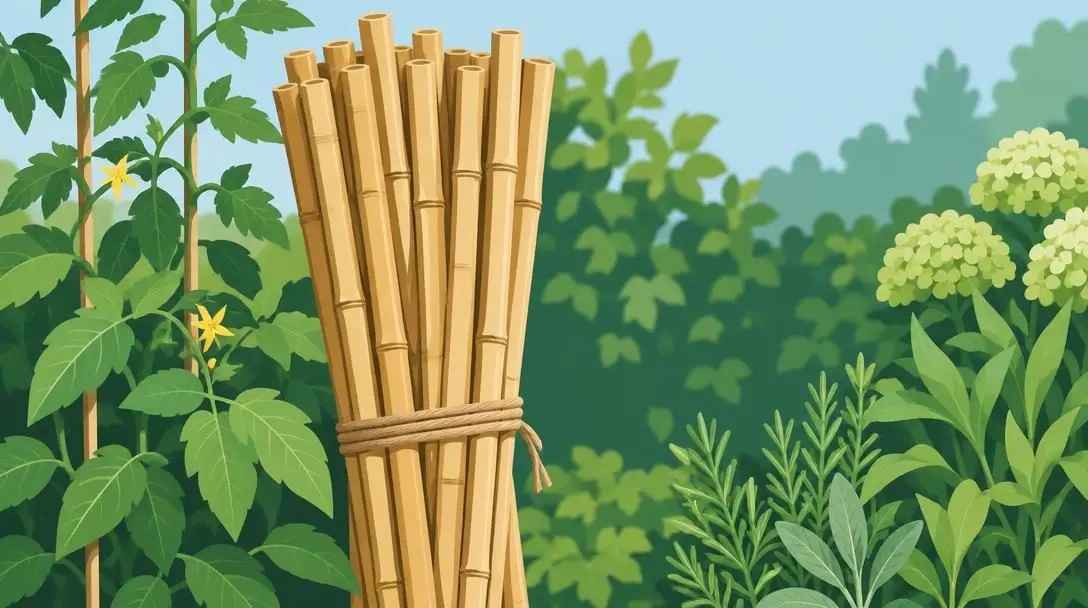
- Material Profile: Natural, hollow-stemmed woody grass
- Best Applications: Standard garden flowers and medium-sized plants
- Primary Advantage: Lightweight and blends naturally into garden beds
Bamboo remains one of the most popular and versatile materials among home gardeners. Because bamboo poles are naturally lightweight, they are effortless to transport and install across broad planting beds. Their earthy, tan-to-green appearance blends seamlessly into natural foliage, maintaining an organic aesthetic. Bamboo offers ample strength for medium-duty annuals, though exceptionally heavy crops may test its flexibility.
Wooden Stakes
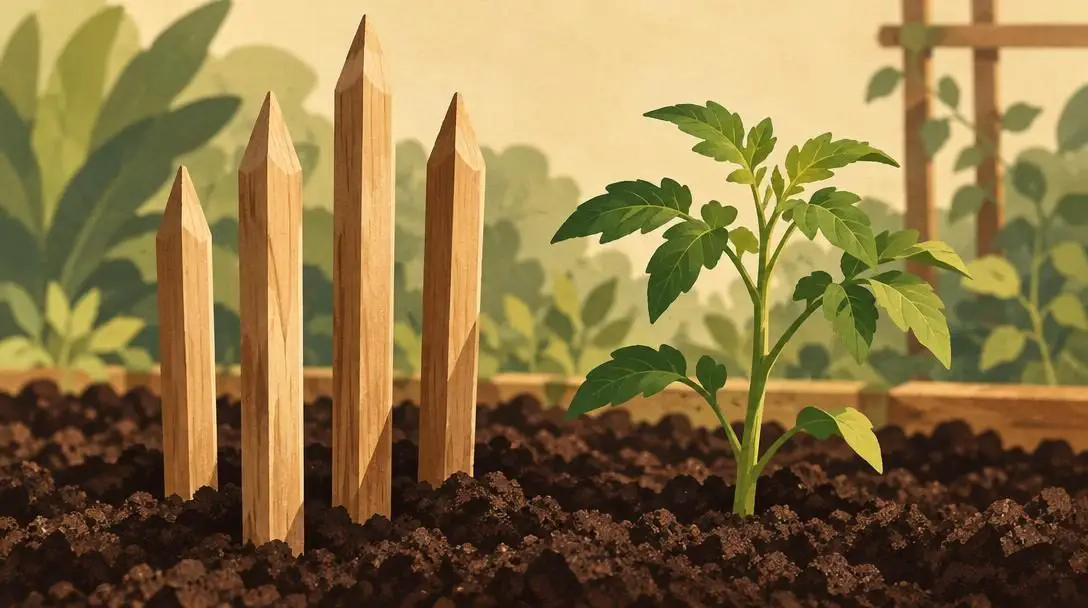
- Material Profile: Milled or split lumber stakes
- Best Applications: Vegetable gardens and flowering shrubs
- Primary Advantage: Traditional, reliable anchoring for medium to tall stems
Wooden stakes deliver traditional vertical strength and broad accessibility. Often cut with a sharpened bottom point, they drive smoothly into firm garden soils. They provide dependable, rigid anchoring for tall vegetable crops and bushy flowering perennials. While durable through the growing season, unfinished wooden stakes can slowly degrade when exposed to prolonged soil moisture over multiple years.
Metal Stakes
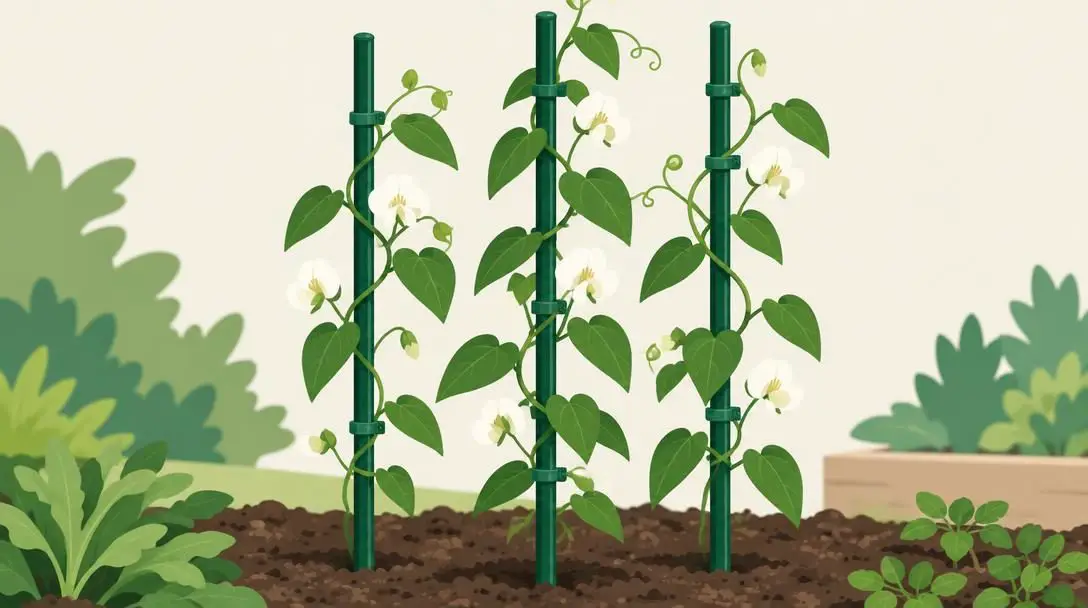
- Material Profile: Heavy-gauge coated steel or iron
- Best Applications: Dense, weighted crops and heavy-yielding plants
- Primary Advantage: Superior rigidity that will not bend under intense loads
When maximum rigidity and resilience against strong environmental forces are required, metal stakes outperform other options. Coated steel posts, spiral stakes, and rebar rods resist bending under heavy harvests of large fruit. Their slender profile penetrates compact or rocky ground with minimal soil displacement, making them a premier choice for long-term reliability in high-wind regions.
Plastic Stakes
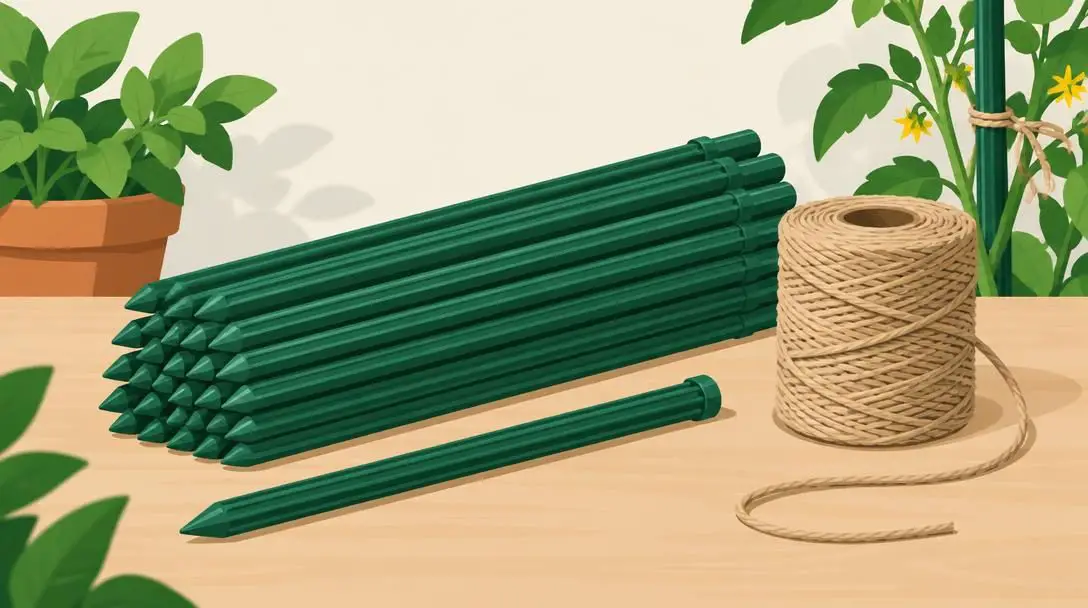
- Material Profile: Molded synthetic polymers, often hollow or ribbed
- Best Applications: Medium to heavy garden plants
- Primary Advantage: Smooth, rot-resistant, and easily sanitized for reuse
Plastic stakes provide a clean, weather-proof alternative to natural fibers. Because they are completely impervious to soil moisture, fungal colonization, and rot, plastic stakes can be washed, sanitized, and reused across many growing seasons. Their smooth exterior protects soft plant stems from abrasive friction during windy periods.
Creative Alternatives
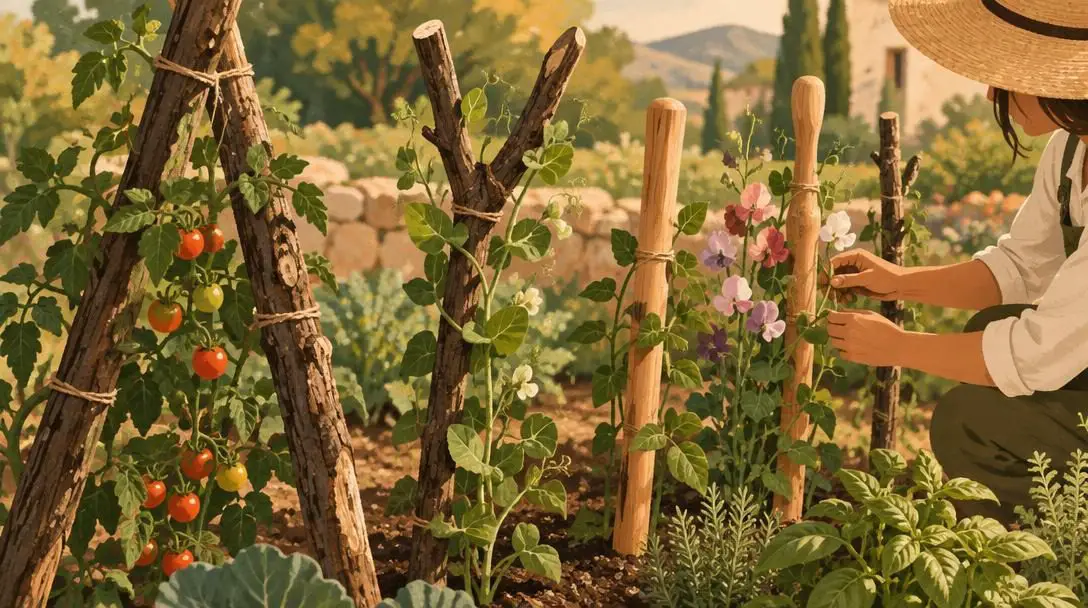
- Material Profile: Repurposed household items and pruned yard debris
- Best Applications: Budget-friendly, resourceful backyard plant support
- Primary Advantage: Accessible without purchasing commercial supplies
Resourceful gardeners do not always need to rely on store-bought equipment. Repurposed items such as fallen tree limbs, trimmed saplings, or old wooden broom handles can be repurposed into steady garden anchors. Pruned branches with natural branch forks provide intuitive resting cradles for leaning flower stems, lending a rustic charm to landscape borders.
| Support Material | Durability | Weight Profile | Relative Rigidity | Ideal Plant Types |
|---|---|---|---|---|
| Bamboo Stakes | Moderate | Lightweight | Moderate flex | Garden flowers, medium annuals |
| Wooden Stakes | Moderate to high | Medium weight | High rigidity | Vegetables, flowering shrubs |
| Metal Stakes | Very high | Heavy | Superior rigidity | Heavy crops, high-yield vegetables |
| Plastic Stakes | High (rot-resistant) | Lightweight | Moderate to high | Medium to heavy garden plants |
| Creative Alternatives | Varies by item | Varies | Varies | Casual garden plots, varied borders |
Timing It Right: When to Stake Your Garden
Timing plays a defining role in successful plant staking. Introducing stakes at the incorrect moment can inadvertently damage root systems, twist growth, or result in permanent structural deformities.
Staking too early can inadvertently disturb delicate, newly forming feeder roots if stakes are driven carelessly close to tiny seedlings. Conversely, staking too late frequently creates far more work and risks serious plant shock. If a heavy stem has already flopped over and hardened along the soil surface, forcing it back into a vertical position can snap vascular fibers or shear the stem in two.
For most upright and climbing varieties, such as tomatoes and climbing beans, the ideal window arrives early in the life cycle while stems remain small, pliable, and responsive to guidance. If you miss this initial vegetative stage, a dependable rule of thumb is to install supports midway through early growth or immediately before flower bud formation. Once blossoms emerge, blooms and swelling fruit quickly multiply the mechanical load, making pre-bloom installation essential.
Step-by-Step Guide: How to Stake Plants Properly
Proper staking demands precision, thoughtful spacing, and gentle fastening. Executing the task systematically safeguards both the underground root system and above-ground stems.
- Identify candidates needing support: Walk your garden beds to spot plants prone to leaning or bearing heavy future harvests, particularly tomatoes, beans, and tall ornamental flowers.
- Prune damaged tissue before staking: Inspect the plant carefully and prune away any broken, diseased, or damaged branches. Removing compromised tissue encourages thicker central growth and simplifies stake positioning.
- Prune lower foliage: Remove low side branches and leaves located near the soil line. Clearing this lower growth focuses the plant's energy upward and provides clean, unobstructed clearance for stake placement.
- Drive the stake into the soil: Position the stake close to the stem without piercing the core root crown. Drive the post deep enough into the soil so that it remains completely rigid and does not wobble when subjected to moderate lateral force.
- Distribute weight across multiple points: If you are managing an exceptionally heavy, spreading, or multi-stemmed plant, install two or more stakes around its perimeter to evenly distribute the mechanical load.
- Select gentle tying materials: Choose soft, non-abrasive fasteners such as soft garden twine or garden velcro strips. Avoid sharp wire or thin thread that can slice into expanding tissue.
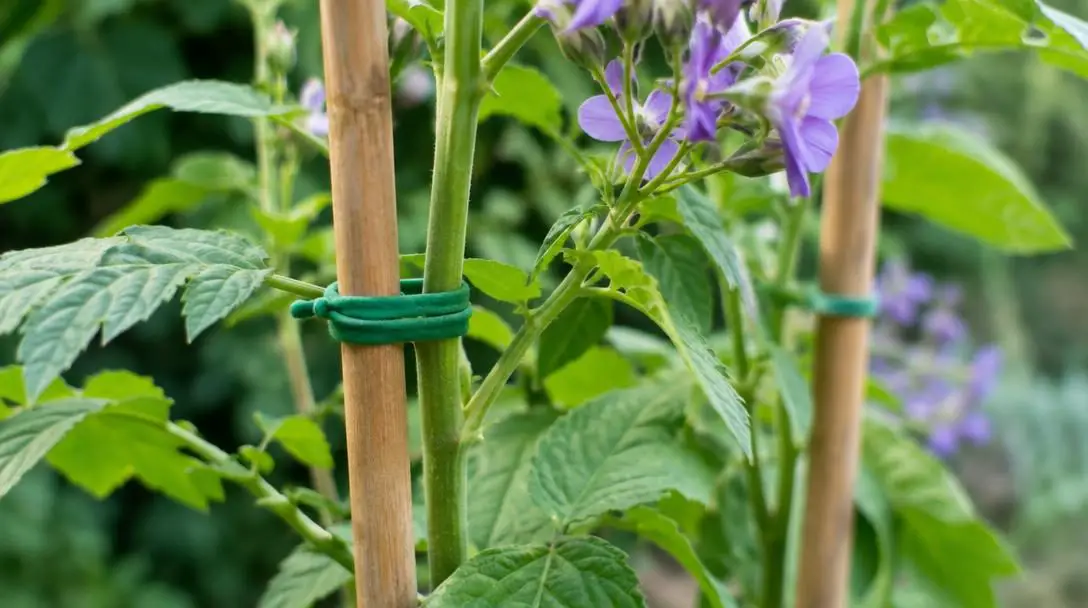
- Fasten ties with balanced tension: Secure the stem to the stake using moderate tension. The tie must hold the stem close to the support without pinching the skin, leaving adequate clearance for the stem to expand in diameter.
Ongoing Care and Routine Maintenance
Staking is never a one-time project. As your garden matures through changing weather patterns and vigorous growth spurts, the relationship between stems and stakes evolves continuously.
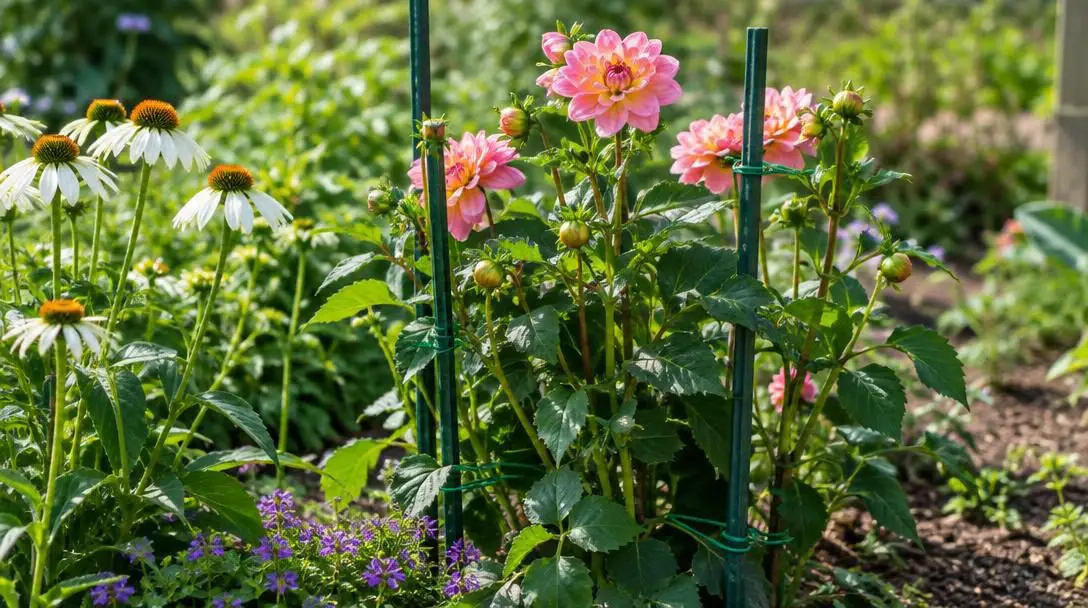
A frequent challenge during periods of accelerated vegetative development is directional leaning. Plants driven by directional sunlight or persistent winds may pull their ties off-center and begin growing crookedly. Inspect your garden beds regularly and adjust stakes or ties before this crooked alignment hardens into rigid wood or dense fibrous tissue.
Ensure that you encourage stems to grow around the stake rather than grinding directly against it. When a flexible green stem repeatedly chafes against rough wood, bamboo, or metal under windy conditions, the friction rubs away the protective epidermal layer, leaving open wounds. Carefully adjusting ties allows the main stem to spiral or rest comfortably beside the stake with minimal surface friction.
Finally, continue adding new ties as the plant ascends. A plant that was properly secured at twelve inches tall will quickly become top-heavy when it reaches three or four feet. Attaching additional ties along the upper stem ensures stability throughout the entire seasonal cycle.
Critical Staking Mistakes to Avoid
While the fundamental concept of staking appears straightforward, simple operational mistakes can jeopardize plant vitality. Keeping these common pitfalls in mind will keep your garden thriving:
- Binding ties too tightly: Overly tight fasteners compress the stem, restricting nutrient distribution and creating lesions where pests and pathogens gain entry.
- Leaving ties completely slack: Excessively loose ties fail to transfer the mechanical load, allowing winds to whip the plant around and causing stems to bend or abrade.
- Using undersized stakes: Installing posts that do not reach at least two-thirds of the plant's expected mature height leaves top growth vulnerable to sudden breakage.
- Driving posts through established roots: Inserting thick stakes late in the season directly through a dense root mass can sever major root structures, triggering wilting and root rot.
- Skipping preliminary pruning: Neglecting to prune away weak lower foliage or dead lateral stems leaves unnecessary weight on the plant and crowds the staking zone.
- Adopting a set-and-forget mindset: Failing to monitor plants post-installation leads to girdled stems, leaning posts, and broken tips after summer rainstorms.
Preparing for Weather and Seasonal Transitions
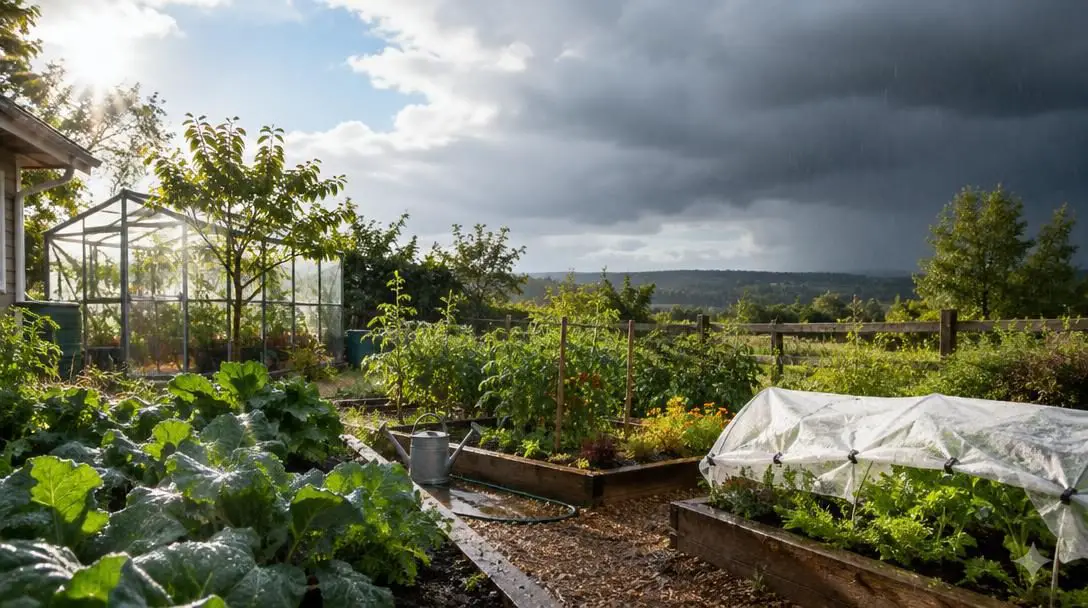
A well-maintained staking system must withstand seasonal weather extremes. Strong midsummer thunderstorms, heavy downpours, and gusty winds place intense pressure on garden supports. Checking your stakes prior to forecasted storms and inspecting them immediately afterward allows you to reset loose anchors, replace torn ties, and realign any plants that have shifted off-center.
End-of-season management is equally vital for maintaining a productive garden. When annual crops like tomatoes and beans reach the conclusion of their lifecycle, carefully withdraw the stakes alongside the spent vines. Clean away clinging dirt and vegetable debris, then store your wooden, bamboo, plastic, or metal stakes in a dry, covered shed or garage. Sheltering them from winter frost, snow, and rain prevents warping, rot, and rust, ensuring your structural equipment remains sturdy and ready for the next spring planting.
Frequently asked questions
How do I know if my plant actually needs staking?
Plants that develop tall, slender stems, heavy flower heads, or dense edible fruit—such as tomatoes, climbing beans, and tall decorative blooms—almost always require staking to keep from bending or breaking under their own weight.
What is the best material to use for tying plants to stakes?
Soft, broad materials like standard garden twine or adjustable garden velcro work best. These materials hold stems securely against the support while flexing enough to prevent cutting into tender stem tissues.
Can I install stakes late if my plant is already leaning?
Yes, but you must exercise caution. Drive the stake carefully outside the central root zone and gently draw the stem toward the stake over several days. Forcing a mature, stiff, leaning stem upright all at once can snap it.
How deep should a garden stake be driven into the ground?
A stake must be driven deep enough into firm soil that it does not wobble, lean, or shift when pressure is applied to the top. The depth depends on soil density and the overall height of the stake.
Why do lower leaves need to be pruned before staking?
Removing low side foliage and leaves below the stake clears working room near the soil line and directs the plant's resources toward vigorous upward growth and strong central stem development.
The bottom line
Mastering the art of plant staking is an indispensable skill for any dedicated gardener. By choosing appropriate materials, introducing supports at the ideal developmental stage, and maintaining balanced tie tension, you establish a reliable foundation for your garden. With regular observation and post-storm maintenance, your plants will channel their vital energy upward, yielding healthier canopies, cleaner crops, and breathtaking blooms all season long.