The Benefits of Vertical Gardening: Maximizing Your Space and Yield
For aspiring growers, the ambition to cultivate fresh herbs, homegrown produce, and vibrant ornamental blooms is frequently thwarted by the spatial constraints of modern life. Conventional horticultural techniques depend on expansive horizontal land plots. As metropolitan populations expand, private suburban yards are increasingly replaced by high-density housing, leaving apartment residents with little more than a sunlit window ledge, a narrow patio, or a compact balcony. Even for homeowners with modest outdoor spaces, traditional ground-level beds can devour valuable recreational room, making large-scale cultivation impractical.
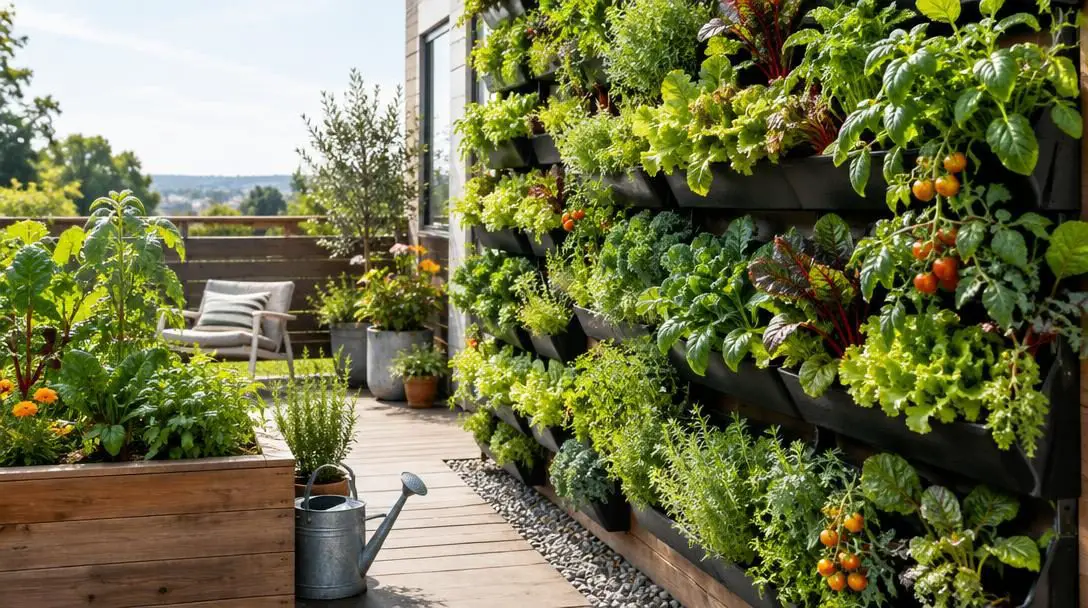
Vertical gardening offers an ingenious solution to these spatial limitations by shifting cultivation from a horizontal plane into a multi-tiered vertical format. Rather than sprawling outward across topsoil, plants are trained and stacked upward along walls, railings, trellises, and freestanding columns. This transition from two-dimensional gardening to three-dimensional architecture allows urban and suburban growers alike to repurpose unutilized vertical surfaces into lush, highly productive ecosystems.
Key takeaways
- Vertical gardening maximizes tight footprints by shifting plant growth upward onto walls, posts, and multi-tier structures.
- Stacked plant arrangements create tailored microclimates, where sun-loving crops thrive on top and shade-tolerant species flourish below.
- Multi-level watering allows upper tiers to hydrate lower containers, cutting water consumption by up to 50 percent compared to traditional ground plots.
- Core configurations include wall-mounted pocket planters, climbing trellises, five-foot hydroponic towers, and overhead hanging baskets.
- Proper structural anchoring and high-quality container potting mixes are essential to handle heavy water saturation and prevent root compaction.
The Mechanics of Vertical Growing Systems
At its foundation, vertical gardening relies on the strategic stacking of planters, modular pockets, climbing supports, or hydroponic channels. This vertical architecture alters the way water, illumination, airflow, and root systems interact, delivering distinct horticultural advantages over standard flat plots.
One of the primary benefits of an upward orientation is the creation of layered microenvironments. In an open garden bed, all plants generally receive uniform exposure to overhead conditions. In a vertical setup, however, a single vertical plane offers diverse microclimates. The highest levels catch unfiltered, intense sunlight and experience the highest rates of airflow, creating a warm, bright microclimate ideal for fruiting crops. Conversely, broader foliage on upper tiers casts gentle, natural shade over the lower levels, generating cooler, protected zones where moisture-loving plants can thrive without scorching.
By shifting cultivation from a horizontal footprint into a three-dimensional vertical plane, growers can expand their harvest while slashing water usage by up to 50 percent.
Soil management is similarly transformed. Conventional in-ground cultivation forces gardeners to work with whatever native soil is on-site, which is frequently stripped of nutrients, laden with heavy clay, or compacted by foot traffic. Amending an entire backyard requires substantial labor and continuous additions of amendments. In contrast, vertical designs rely on compact, contained volumes of premium potting media and compost. Because the soil volume is strictly restricted to individual containers or pockets, every plant receives targeted, nutrient-dense growing media tailored specifically to its needs.
Additionally, vertical gardens deliver exceptional resource efficiency and controlled hydration. When water is applied to the summit of a vertical structure, gravity guides excess moisture down to lower tiers, irrigating cascading root zones rather than losing water to deep subsoil seepage. This closed or downward-filtering design minimizes runoff and evaporation, allowing gardeners to reduce water usage by up to 50 percent compared to conventional ground beds. Simultaneously, elevating foliage away from damp, ground-level dirt improves air circulation, which discourages root rot and keeps fungal pathogens from spreading through crowded foliage.
Core Vertical Gardening Techniques
Gardeners can adapt vertical systems to nearly any architectural setting. Depending on the strength of your mounting surfaces, floor dimensions, and harvesting goals, several distinct techniques provide practical avenues for vertical cultivation.
| Technique | Primary Support | Best Suited Spaces | Ideal Crops | Growing Medium |
|---|---|---|---|---|
| Vertical Planters | Walls and sturdy fences | Blank interior or exterior walls | Greens, kitchen herbs, compact flowers | Potting soil and compost |
| Trellises | Lattices, posts, or frame screens | Patios, fence lines, and feature walls | Vining crops (cucumbers, peas, tomatoes) | In-ground or base planters |
| Tower Gardens | Freestanding vertical columns | Compact courtyards and small balconies | Leafy vegetables, herbs, strawberries | Hydroponic nutrient solution or light media |
| Hanging Baskets | Ceiling hooks, overhangs, and railings | Covered balconies, porches, and walkways | Trailing berries, compact greens, flowers | Lightweight container mix |
Vertical Planters
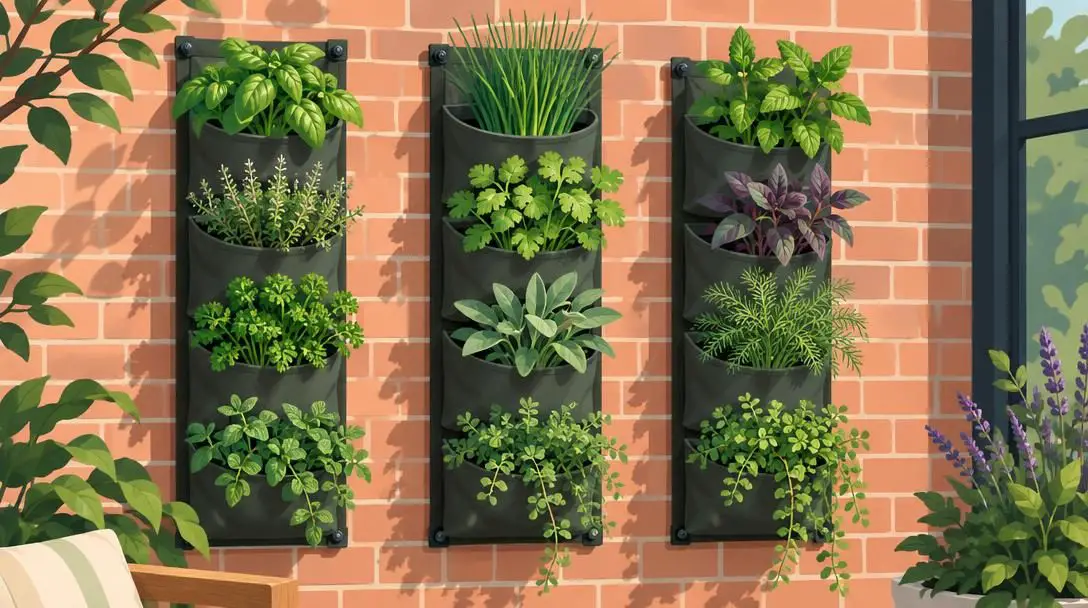
- Structure: Rigid frames with fabric or plastic pockets
- Mounting: Direct wall attachment for interior or exterior surfaces
- Target Plants: Compact greens, culinary herbs, and ornamental flowers
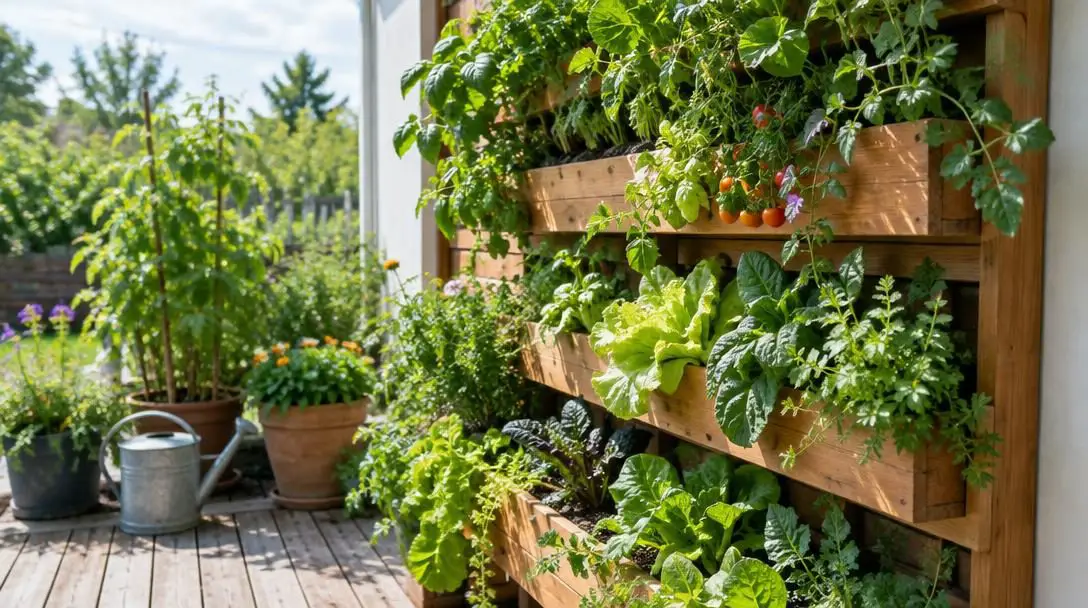
Vertical planters are among the most popular and straightforward configurations for residential gardeners. These systems consist of rigid backing frames fitted with rows of durable plastic containers or breathable felt pockets that fasten directly onto building facades, courtyard masonry, or sturdy wooden fences. Gardeners fill the pockets with high-quality potting mix and rich compost. Beyond their practical yields, vertical pocket planters act as living green tapestries, softening harsh structural concrete and adding vibrant aesthetic texture to otherwise plain architectural walls.
Trellises
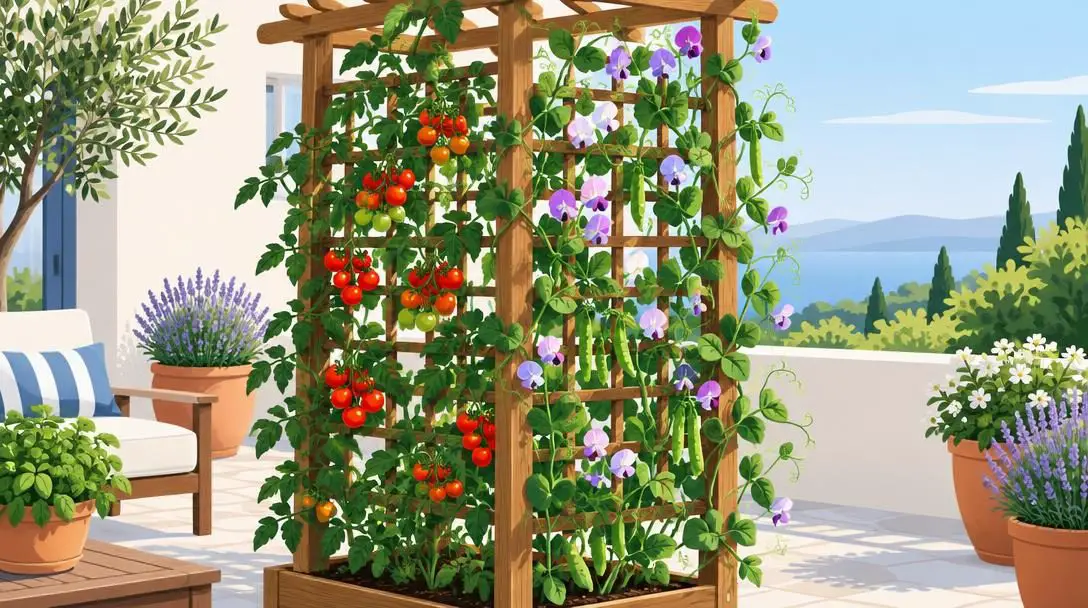
- Structure: Open framework made of wood, metal, or wire lattice
- Mounting: Anchored against walls, fences, or seated in large base pots
- Target Plants: Vining species such as peas, cucumbers, and tomatoes
Trellises represent a classic, time-tested approach to vertical cultivation. Rather than allowing sprawling, vigorous vines to creep outward across precious balcony or patio tiles, trellising trains plants to climb upward using tendrils or supportive ties. Gardeners can position a freestanding or mounted trellis screen in front of an unappealing exterior wall to create an attractive living privacy partition. Climbing cultivars of peas, pole beans, cucumbers, and vining tomatoes flourish on trellises, as the open structure keeps developing vegetables elevated away from damp ground conditions while guaranteeing balanced light absorption across the entire vine.
Tower Gardens
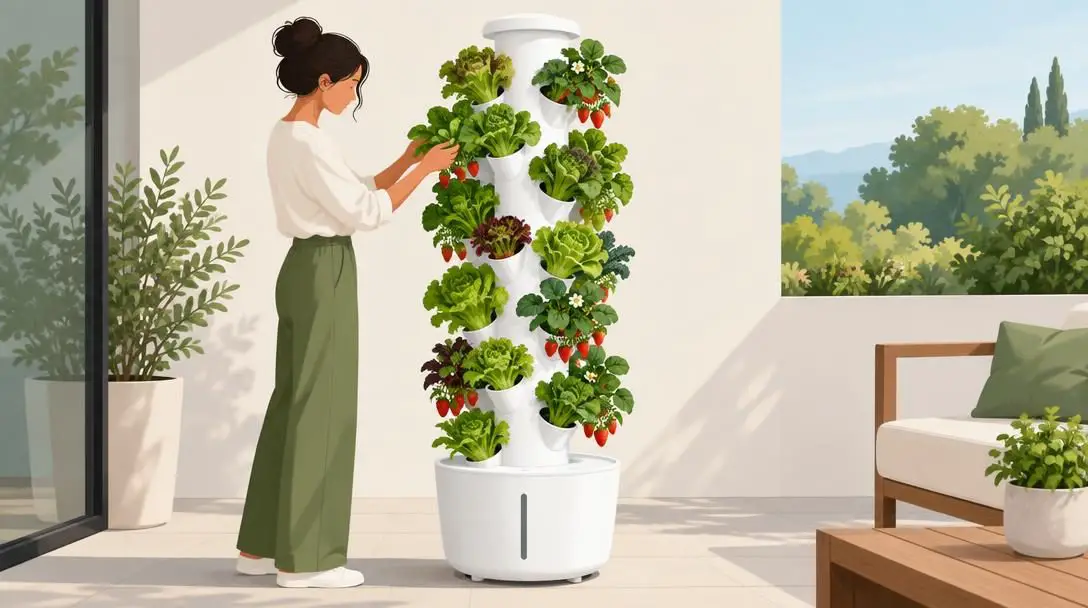
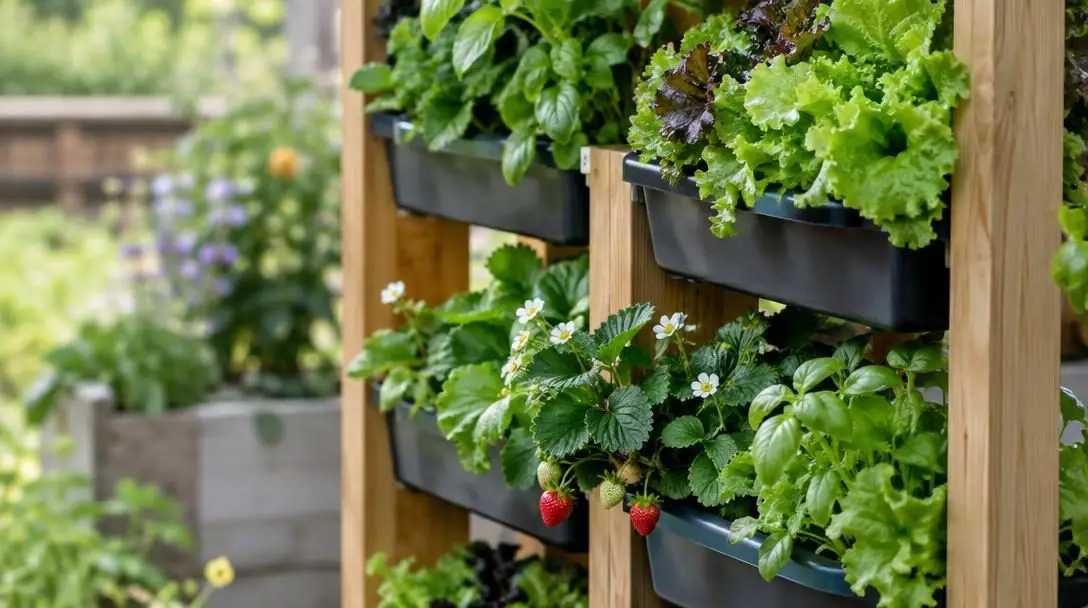
- Structure: Freestanding vertical columns reaching up to five feet
- Mounting: Self-supported base with a minimal ground footprint
- Target Plants: Quick-harvest vegetables, compact herbs, and strawberries
For growers with limited floor area, tower gardens provide an exceptionally compact and productive cultivation system. Typically reaching a maximum height of five feet, these freestanding units fit comfortably into tight corners, narrow apartment patios, or small courtyards. Many garden towers utilize hydroponic cultivation, circulating nutrient-infused water directly to plant roots inside internal chambers without using conventional soil. By dispensing with heavy dirt, tower gardens reduce structural strain, eliminate weed management, and yield high volumes of clean vegetables and herbs in remarkably tight quarters.
Hanging Baskets
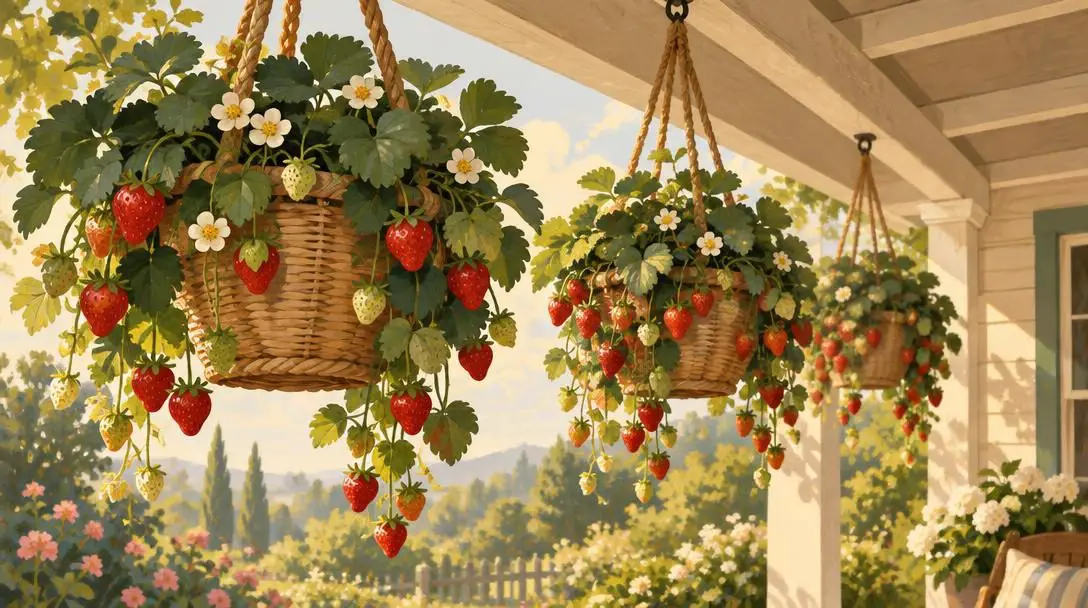
- Structure: Suspended containers hung via chains, brackets, or hooks
- Mounting: Overhead beams, ceiling rafters, or sturdy balcony rails
- Target Plants: Trailing fruits, low-growing herbs, and cascading flowers
Hanging baskets capitalize on underused overhead space, making them a staple for narrow walkways and covered balcony perimeters. Suspended securely from structural ceilings, overhangs, or balcony railings, baskets elevate plant growth entirely off the floor. They are particularly well suited for trailing crops such as strawberries, creeping herbs, and tumbling cherry tomatoes, which cascade downward naturally over the rims. This hanging orientation preserves precious walking space while turning empty vertical clearances into colorful, productive zones.
Maximizing Space, Yield, and Environmental Impact
The core appeal of vertical agriculture lies in its ability to generate high crop volumes within small square footage. In a standard horizontal garden bed, a single sprawling vegetable variety can monopolize the ground, leaving zero room for companion species. By expanding upward, growers can combine contrasting plant profiles in one integrated space. Climbing vines like cucumbers or tomatoes can ascend vertical trellises above, while compact companion greens and culinary herbs occupy the mid-tier pockets below, finished with bright flowers on bottom tiers to invite pollinators.
Beyond increasing dietary variety, vertical structures solve the common issue of diminished yields caused by ground-level overcrowding. Traditional plantings often compete for uneven light, resulting in lower leaves that turn yellow from shading and stagnant air. Elevating crops in stacked formations ensures every layer receives balanced light exposure. When paired with controlled hydration and rich compost mixtures, vertical systems produce significantly more food per square foot of real estate than horizontal beds.
Furthermore, vertical gardening delivers notable ecological benefits within urban landscapes. Modern horticultural practices prioritize water conservation, and vertical designs achieve this by minimizing soil evaporation and recycling drain water through stacked tiers. Additionally, coating blank urban walls and balconies with lush foliage improves immediate microclimates: the dense canopy absorbs ambient carbon dioxide, traps airborne particulate matter, and cools hot building envelopes during peak summer heat.
Step-by-Step Guide to Setting Up Your Vertical Garden
Creating a dependable, thriving vertical garden requires careful assessment before introducing plants to their new elevated home. Follow this organized progression to establish a durable system:
- Assess your available space: Inspect your site carefully to confirm whether you have a load-bearing wall, an overhead beam suitable for suspended hooks, or flat patio space capable of holding a five-foot vertical tower. Monitor the path of daily sunlight across the chosen area to ensure it receives adequate exposure for your desired crops.
- Select the right system: Match the vertical setup to your architectural layout. Use wall-mounted fabric pockets or trellises to screen bare walls and fences, pick a hydroponic tower garden for high-density growing on narrow balconies, or suspend hanging baskets where floor space must stay entirely clear.
- Secure the structural framework: Anchor all framing securely. Soil saturated with water, fully mature crops, and integrated water reservoirs are surprisingly heavy. Fasten wall brackets, masonry screws, and ceiling hooks into reinforced wall studs, concrete, or load-bearing beams rather than thin decorative paneling.
- Prepare high-grade growing media: For soil-based planters and hanging baskets, blend premium potting soil with rich organic compost. Avoid unamended garden dirt, which compacts inside containers and restricts root breathing. If you are operating a hydroponic tower, assemble the components and calibrate the nutrient water reservoir according to manufacturer specifications.
- Plan your plant placement: Position your crops intentionally across the vertical gradient. Place trailing and climbing varieties where trellises or supports can bear their weight without casting shade over adjacent plants. Designate upper tiers for high-sun varieties, and use intermediate and lower tiers for shade-tolerant culinary herbs or decorative flowers.
- Plant and hydrate thoroughly: Settle seedlings or young nursery starts gently into their containers, pockets, or tower ports. Saturate the entire system with water immediately after planting to settle the soil, remove unwanted air pockets around the root balls, and confirm that drainage channels allow water to flow freely from top to bottom.
Common Mistakes to Avoid
Although vertical gardens offer unmatched spatial efficiency, their elevated nature introduces distinct maintenance requirements. Avoiding these typical management pitfalls will keep your vertical setup healthy and productive:
- Underestimating system weight: Dry containers appear lightweight, but thoroughly watered soil and mature, fruit-bearing crops add considerable mass. Attaching vertical systems to drywall, unstable siding, or rotted deck rails risks structural failure. Always calculate saturated weight before mounting.
- Allowing inconsistent moisture levels: Because vertical planters, fabric pockets, and hanging baskets are elevated and surrounded by circulating air on multiple sides, their soil dries out significantly faster than in-ground earth. Monitor containers frequently, especially top-level planters that face heavy wind and strong sun.
- Ignoring individual sunlight requirements: Stacking plants vertically produces dynamic lighting zones. If bushy, heavy foliage on higher tiers blocks natural light from reaching lower tiers, shade-intolerant crops below will become leggy and fail to produce. Always match a plant's sun tolerance to its position on the structure.
- Neglecting drainage pathways: Cascading irrigation can be a double-edged sword. If lower tiers lack unobstructed drainage ports, runoff from upper levels will accumulate, waterlogging bottom root zones and suffocating roots. Ensure every tier drains reliably.
- Filling containers with standard topsoil: Digging up native garden dirt and packing it into vertical pockets causes rapid soil compaction, sluggish drainage, and weak root development. Always use light, aerated potting mixes formulated specifically for container cultivation.
Long-Term Maintenance and Next Steps
Maintaining a vertical garden over multiple growing cycles requires attention to seasonal changes, nutrient depletion, and dynamic plant growth.
First, plan for shifting seasons. If you live in a region that experiences freezing winters, evaluate whether your vertical structures can be dismantled or moved inside. Freestanding hydroponic tower gardens and modular wall planters are especially convenient in this regard, as they can be transitioned indoors to provide fresh kitchen greens year-round under supplemental LED grow lights.
Second, establish a routine nutrient replenishment plan. Because vertical planters hold contained amounts of soil, fast-growing and heavy-feeding plants like tomatoes and cucumbers deplete available soil reserves quickly. Replenish your containers by regularly top-dressing with aged compost, applying organic slow-release fertilizers, or refreshing liquid nutrient solutions in hydroponic reservoirs.
Finally, monitor how your vertical garden matures through the season. Observe which microclimates receive more sun or shelter than anticipated, and note how different climbing plants interact with trellising. Use these practical observations to refine your layout in subsequent years, rotating your crops across different tiers to maximize yields.
Frequently asked questions
Can I grow vegetables in a vertical garden without a yard?
Yes. Vertical gardens are well suited for apartment balconies, compact patios, and bright courtyards. Freestanding tower gardens, wall-mounted planters, and hanging baskets use zero lawn space, allowing you to grow fresh produce, herbs, and flowers entirely on walls, railings, or small floor footprints.
How much water does a vertical gardening system save?
A well-designed vertical garden can reduce water consumption by up to 50 percent compared to traditional horizontal garden beds. Because water cascades downward from the top levels to hydrate lower tiers, moisture loss from deep ground seepage and soil runoff is minimized.
Which vegetables perform best in vertical setups?
Vining and compact crops thrive exceptionally well. Climbing varieties like pole beans, cucumbers, and tomatoes succeed on trellises, while leafy greens, strawberries, and culinary herbs flourish inside wall-mounted fabric pockets, hanging baskets, and hydroponic tower gardens.
Why is native backyard soil discouraged in vertical planters?
Native topsoil dug directly from the ground is dense and compacts quickly inside containers, restricting root growth and impeding water drainage. Vertical containers require lightweight, well-aerated potting mixes enriched with compost to maintain airflow and root health.
What is the maximum typical height for a home tower garden?
Most freestanding residential tower gardens reach a maximum height of around five feet. This allows them to fit easily onto small urban balconies and patios while keeping plants accessible for convenient watering, pruning, and harvesting.
The bottom line
Vertical gardening redefines the possibilities of modern cultivation by turning unused vertical surfaces into productive, vibrant growing spaces. By replacing sprawling horizontal plots with stacked wall pockets, climbing trellises, suspended baskets, and compact hydroponic towers, growers can produce substantial harvests of fresh vegetables, herbs, and blossoms regardless of their living situation. With thoughtful plant placement, dependable structural support, and consistent moisture management, vertical cultivation delivers a resource-efficient, environmentally friendly way to cultivate green space in compact homes.