The Best Flowers for a Rock Garden: Tips and Suggestions
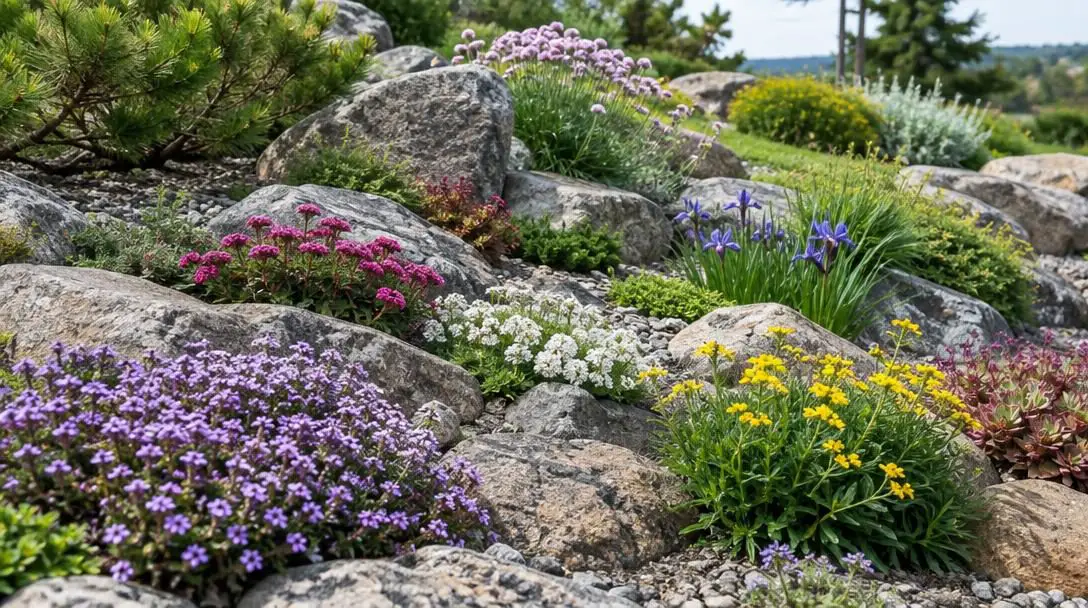
Rock gardens, also known as alpine gardens, have become an increasingly popular landscaping feature in modern residential design. Originating as a way to mimic the craggy, stone-strewn slopes of mountainous regions, these rugged installations rely on an artful combination of pebbles, angular stones, and massive boulders paired with resilient botanical plantings. The stones establish a permanent architectural framework that holds visual appeal throughout every season, turning slopes into stable beds, mitigating soil erosion, and transforming difficult or poor-draining yard sections into naturalistic centerpieces.
A truly successful rock garden depends on understanding the dynamic relationship between mineral materials and living plants. Dense stones absorb heat during the day and radiate it into the soil at night, forming specialized microclimates and moisture pockets. Selecting the right flowers requires thoughtful consideration of sunlight, water drainage, growth habit, and visual texture. By matching tough, compact flowers with complementary rock formations, you can build a balanced, enduring micro-ecosystem that looks naturally formed rather than artificially assembled.
Key takeaways
- Rock gardens recreate alpine conditions where stone thermal mass and rapid drainage protect plant roots and dictate moisture movement.
- Compact, low-growing groundcovers soften hard stone edges without obscuring the distinct shapes and textures of boulders and pebbles.
- Matching plant varieties to specific site conditions—such as full sun versus cool shade—prevents leggy growth, foliage scorch, and rot.
- Staggering flowering schedules across spring, summer, and late autumn ensures the garden retains visual interest all year long.
- Drought-tolerant perennials reduce supplemental irrigation and maintenance needs while thriving in grit-heavy, rapid-draining soils.
Understanding Rock Garden Ecology and Microclimates
To cultivate healthy flowers among boulders and gravel, gardeners must understand the unique physical environment created by dense stone installations. A rock garden functions quite differently from a standard, flat garden bed. Stones serve as natural thermal conductors, absorbing solar energy during peak daylight hours and slowly releasing that stored warmth back into the ground as the evening cools. This continuous moderation shields fragile root zones from rapid temperature swings. In shaded settings, stones perform the inverse function, keeping the underlying subsoil cool and curbing surface evaporation.
Water dynamics in a rocky terrain are equally distinct. Non-porous stones intercept rainfall and overhead irrigation, channeling moisture down their slopes directly into surrounding crevices and deep root runs. Because of this runoff pattern, plants positioned at the base of large boulders often encounter concentrated moisture pockets, while specimens planted high on a rock terrace or nestled between vertical crevices experience exceptionally swift drainage. Loosened pebbles, crushed stone, and specialized gritty soil promote high root aeration, preventing standing water and shielding root crowns from dampness and decay.
How to Build and Plant a Rock Garden
Creating a functional alpine bed demands a clear sequence of construction and planting steps to ensure the stones stay anchored and the plants have the drainage they need to thrive.
- Evaluate the Site: Monitor the garden location throughout the day to measure hours of direct sun, dappled light, or full shade, and observe how quickly the native ground dries after rain.
- Map Your Stone Layout: Position the largest boulders first, setting their bases slightly below grade so they look naturally embedded, then cluster medium and small stones around them to form planting pockets, ledges, and crevices.
- Prepare the Planting Soil: Blend topsoil with sharp sand, fine grit, or small gravel to establish the rapid drainage rock garden perennials need, and pack this mix firmly into the stone crevices to eliminate air pockets.
- Group Plants by Exposure Needs: Reserve open, elevated, sun-drenched pockets for heat-tolerant varieties, and tuck moisture-loving or shade-dependent plants onto the cooler, protected northern faces of stones or under overhanging canopies.
- Plant with Care: Excavate small pockets within the stone gaps, gently loosen the root systems, set each plant in place, and keep the plant crown level with or slightly elevated above the surrounding soilline.
- Mulch with Stone: Blanket the exposed soil around the plants with a clean layer of gravel, crushed stone, or river pebbles to prevent soil erosion, keep foliage elevated away from wet dirt, and moderate ground temperatures.
- Establish Watering Routines: Soak the new bed thoroughly immediately after planting to eliminate residual voids in the soil, transitioning to an as-needed watering routine once root systems settle.
Rock Garden Plants at a Glance
| Plant | Light Requirement | Growth Habit | Water Needs | Primary Bloom Window |
|---|---|---|---|---|
| Sedum | Full sun | Low carpet or compact clump | Drought-tolerant | Late summer through autumn |
| Creeping Phlox | Full sun | Spreading, dense mat | Low to moderate | Mid-to-late spring |
| Lavender | Full sun | Upright, woody subshrub | Drought-tolerant | Early to mid-summer |
| Yarrow | Full sun | Clumping with flat-topped blooms | Drought-tolerant | Summer |
| Sea Thrift | Full sun | Compact grass-like mounds | Moderate to drought-tolerant | Late spring into summer |
| Candytuft | Full sun to light shade | Low trailing mound | Moderate to low | Early spring |
| Aubretia | Full sun to partial shade | Spreading rock cushion | Moderate to low | Early spring |
| Dianthus | Full sun | Dense mat of narrow foliage | Low to moderate | Late spring to mid-summer |
Essential Flowers for Sunny Rock Installations
Open, sunny rockeries represent the classic alpine setting. Because stone surfaces reflect light and trap solar heat, sun-loving varieties must tolerate high temperatures and rapid soil drying without wilting.
Sedum
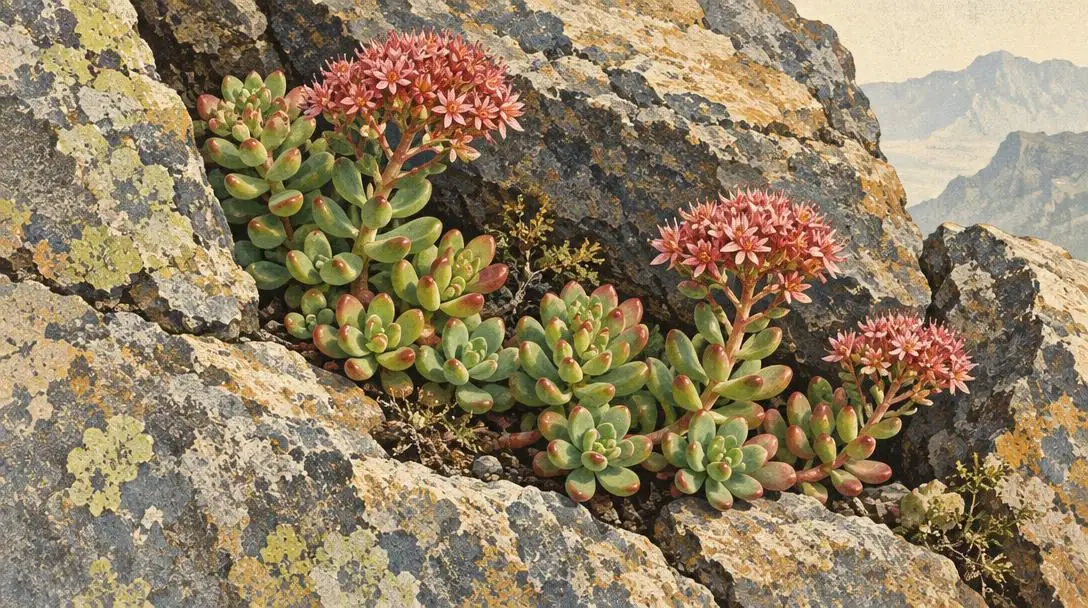
- Light requirement: Full sun
- Moisture needs: High drought tolerance
- Seasonal role: Summer flowers and winter structural interest
Sedums stand out as indispensable rock garden plants due to their exceptional water storage capacities and versatile growth habits. Their fleshy succulent leaves withstand baking heat reflected from surrounding boulders without scorching. As the season progresses, sedums produce nectar-rich blooms that transition into decorative, rigid seed heads, providing subtle visual interest through the winter months. Because they demand minimal trimming and survive on sparse moisture, they thrive effortlessly in shallow stone pockets.
Lavender
- Light requirement: Full sun
- Moisture needs: Drought-tolerant once established
- Growth type: Aromatic, semi-woody perennial
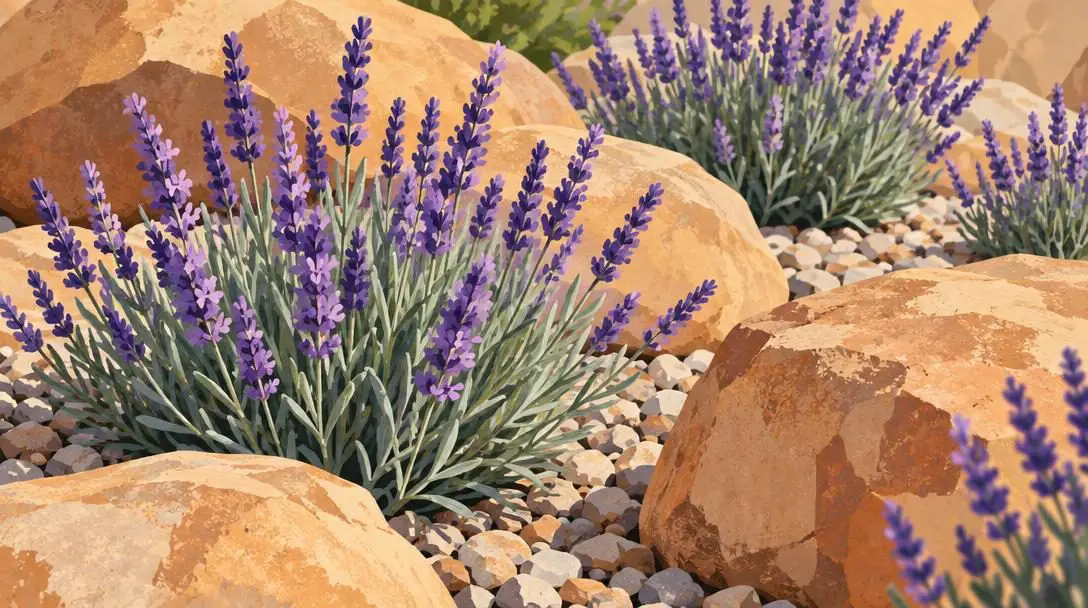
Lavender thrives in the bright, heat-retaining environment created by stone terraces and gravel beds. It benefits greatly from the accelerated water drainage characteristic of rock gardens, which shields its root base from fungal damage and excessive humidity. Its silvery-gray foliage forms a striking contrast against dark or warm-toned stones, while its fragrant purple spikes attract beneficial pollinators to the garden during the summer.
Yarrow
- Light requirement: Full sun
- Moisture needs: Drought-tolerant
- Maintenance level: Minimal pruning required
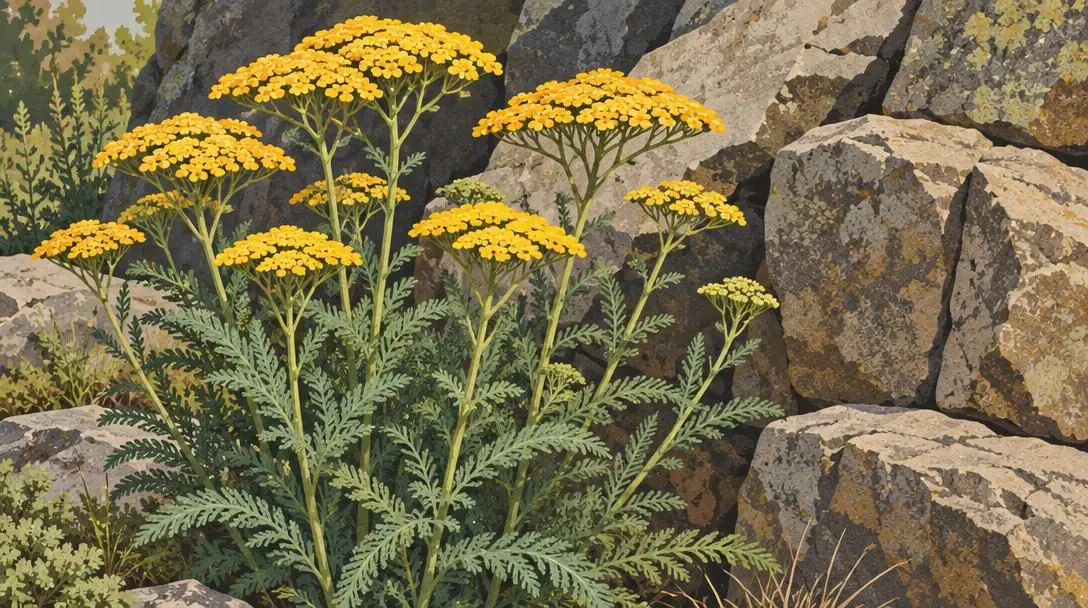
Yarrow is a tough perennial tailored for nutrient-poor, rocky ground. Featuring finely divided, fern-like foliage and broad flower clusters, it handles long stretches of hot, dry weather without dropping leaves or requiring supplemental hydration. Its sturdy stems hold their shape along windy outcroppings, and its modest leafy growth ensures it never overtakes adjacent boulders.
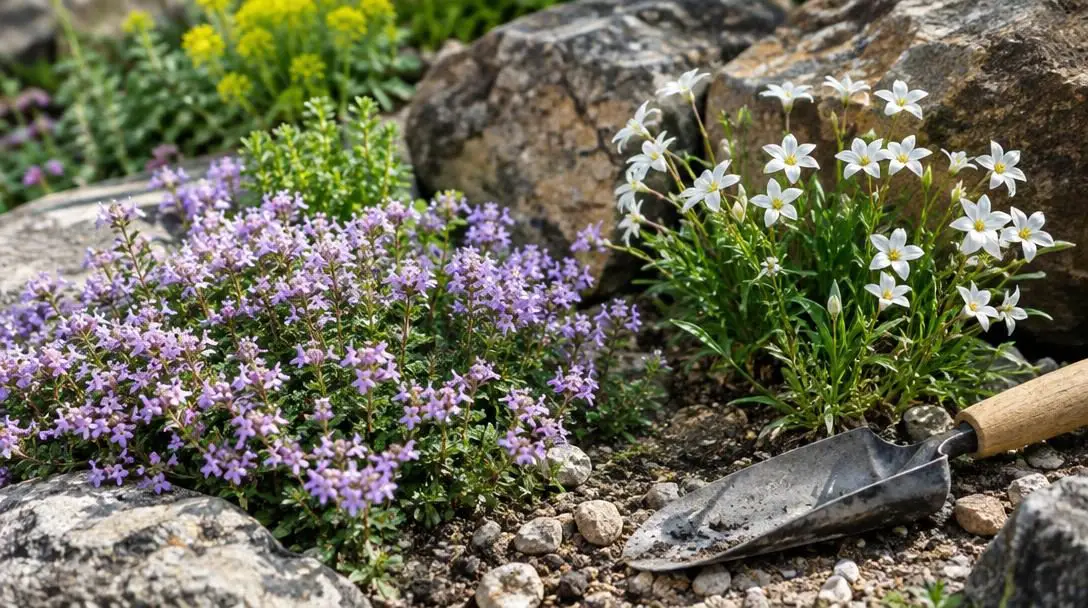
A rock garden relies on visible stone forms to achieve its signature style, requiring compact plants that soften rugged contours without burying them.
Coneflower and Coreopsis
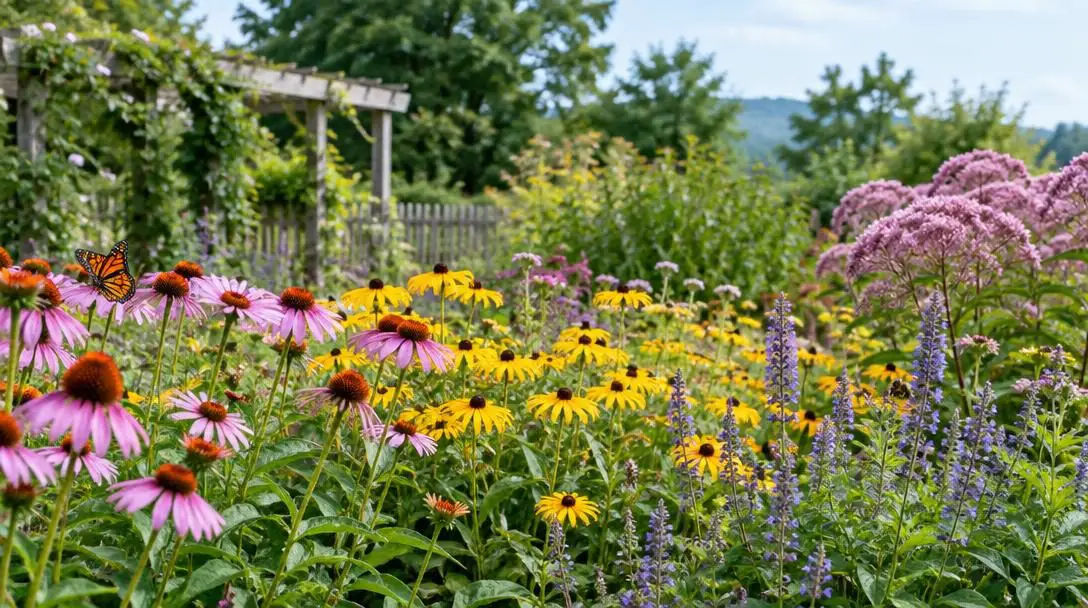
For gardeners looking to add vertical cheer to sunny rock pockets, coneflower and coreopsis offer reliable summer color. Both species tolerate heat and poor soil, sending their vibrant, daisy-like blossoms above basal foliage to provide height variation without casting dense shadows over smaller rock-hugging neighbors.
Low-Growing Groundcovers and Trailing Varieties
Low-growing species are essential for bridging the gap between hard rock surfaces and soft soil. Instead of obscuring the stones, these carpeting varieties weave through fissures and spill over edges, producing natural-looking transitions.
Creeping Phlox
- Growth habit: Mat-forming groundcover
- Bloom window: Mid-spring
- Landscape function: Softens harsh boulder edges
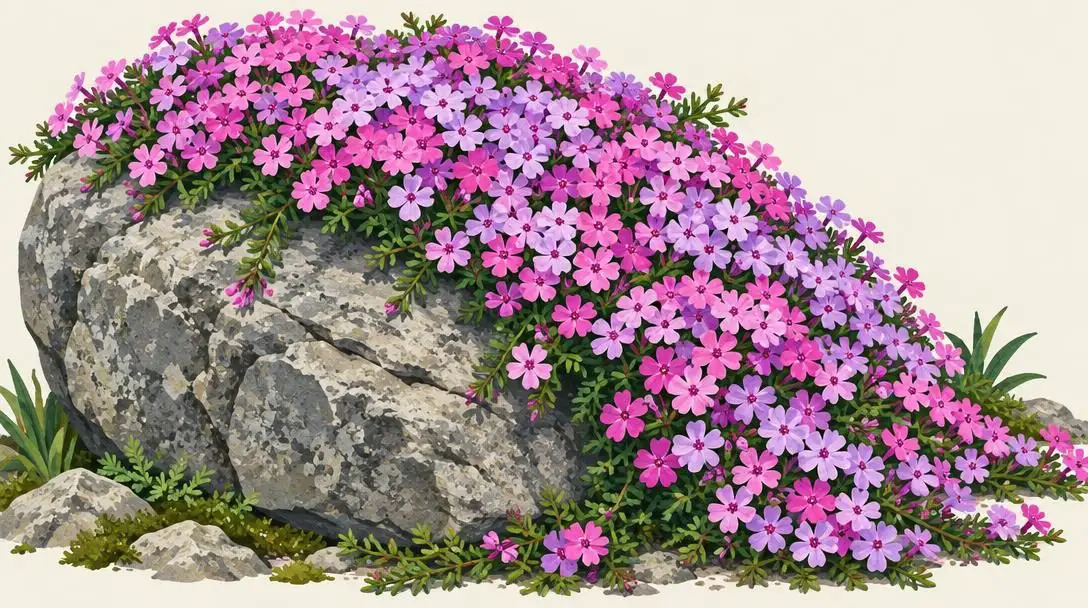
Creeping phlox forms thick, evergreen mats that hug ground contours and drape over the rims of ledges. During its spring flowering surge, the foliage is nearly obscured by an unbroken blanket of color, after which the fine-textured green leaves continue to carpet gravel beds throughout summer and fall. Positioning the plant crown level with or slightly elevated above the soil surface keeps it healthy through seasonal downpours.
Creeping Thyme
- Growth habit: Prostrate trailing carpet
- Moisture needs: Drought-tolerant
- Landscape function: Crevice filler and gravel cover
Creeping thyme hugs the contours of underlying stones, threading through thin gaps where deeper-rooted perennials cannot anchor. Its aromatic leaves release fragrance when stepped on or brushed, and its miniature summer flowers add a fine texture that emphasizes the broad, smooth surfaces of nearby stones.
Moss and Baby's Breath
Compact varieties of baby's breath produce airy sprays of delicate flowers that contrast nicely with heavy boulders, lending visual lightness to stone beds. Moss fills moist, shaded niches between low stones, creating rich green cushions that suggest age, weathering, and natural permanence.
Textural Accents and Seasonal Timing Flowers
Carefully planned rock gardens balance visual textures and bloom schedules so that changes in season are celebrated across the garden bed.
Sea Thrift
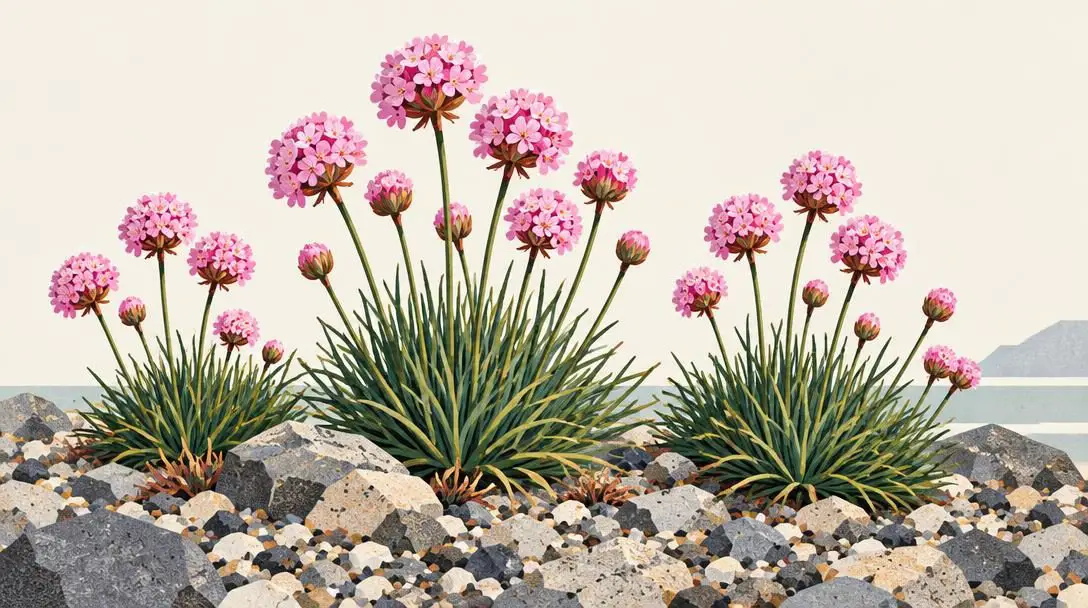
- Flower shape: Dense, globe-like heads
- Foliage habit: Compact, grass-like cushions
- Visual feature: Architectural textural contrast
Sea thrift is prized for its tidy, tufted mounds of narrow leaves that closely resemble miniature grass tufts. From these tight cushions, slender leafless stems rise upward, topped with distinctive, globe-shaped flower heads that resemble round balls suspended above the stone. This geometric contrast softens jagged rock faces while pairing naturally with smooth river pebbles.
Candytuft
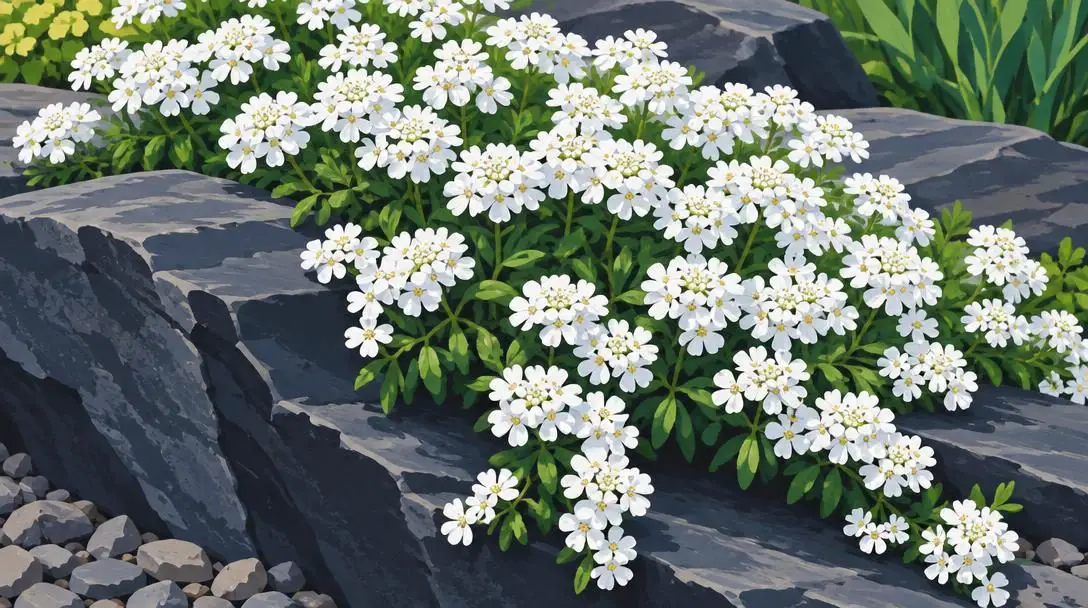
- Bloom timing: Early spring
- Foliage type: Semi-evergreen, woody base
- Seasonal role: Early seasonal color transition
Candytuft blooms early in the spring, producing flat clusters of bright petals that stand out against dark mineral backdrops. As an evergreen to semi-evergreen perennial, it maintains structural presence year-round, anchoring stone borders before warmer-season varieties awaken from dormancy.
Aubretia
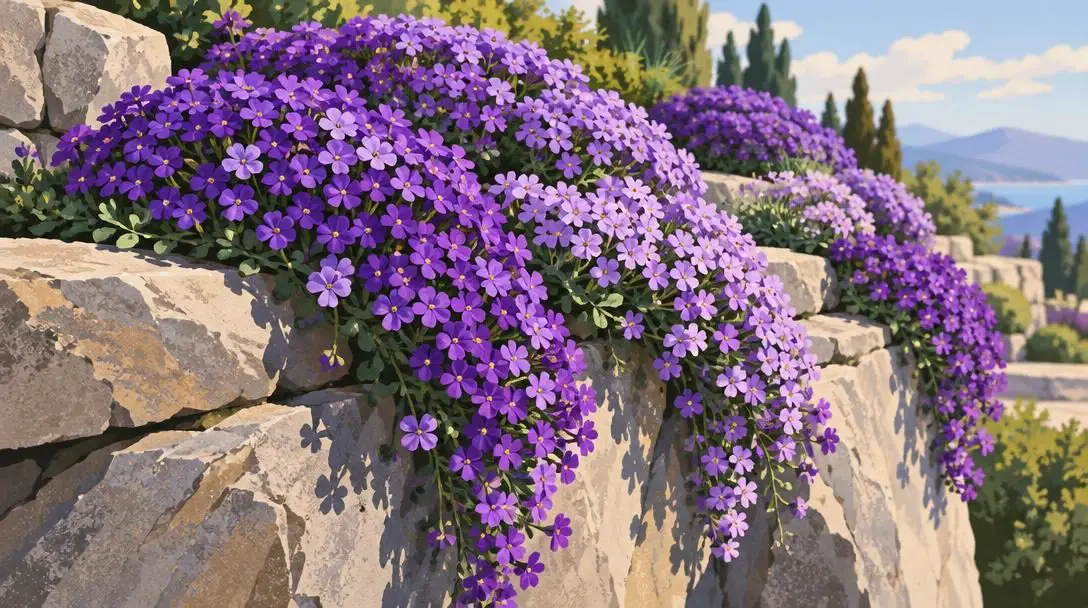
- Growth habit: Cushion-forming rock trailer
- Bloom timing: Early spring
- Seasonal role: Signals the end of winter
Aubretia is a traditional alpine favorite known for cascading down vertical rock faces, drywall crevices, and terrace edges. Emerging in early spring alongside candytuft, it marks the end of winter with dense sheets of vibrant blooms that spill over stone margins without climbing out of control.
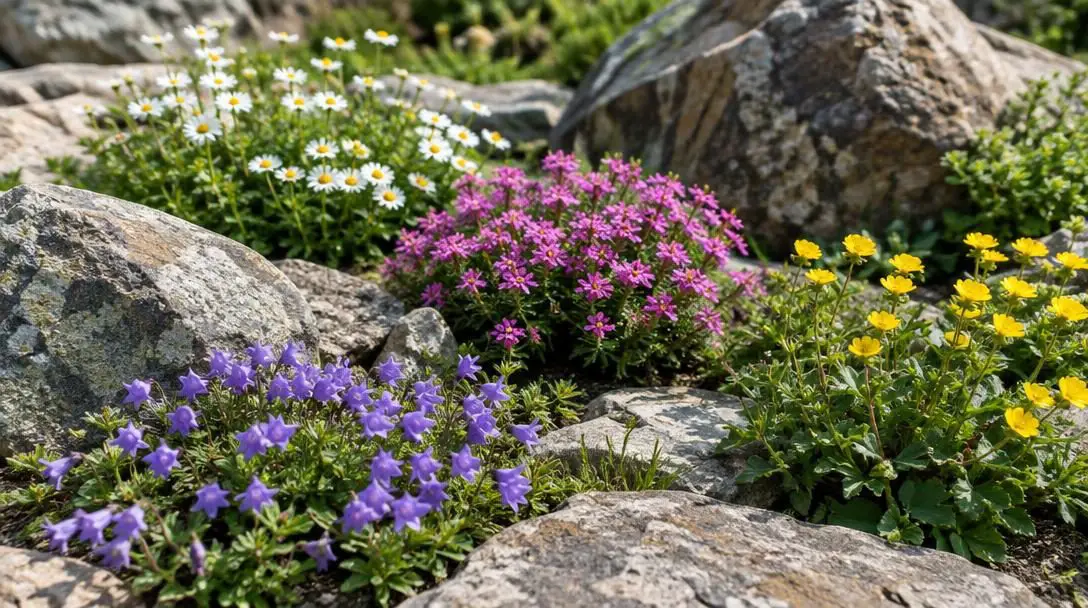
Dianthus
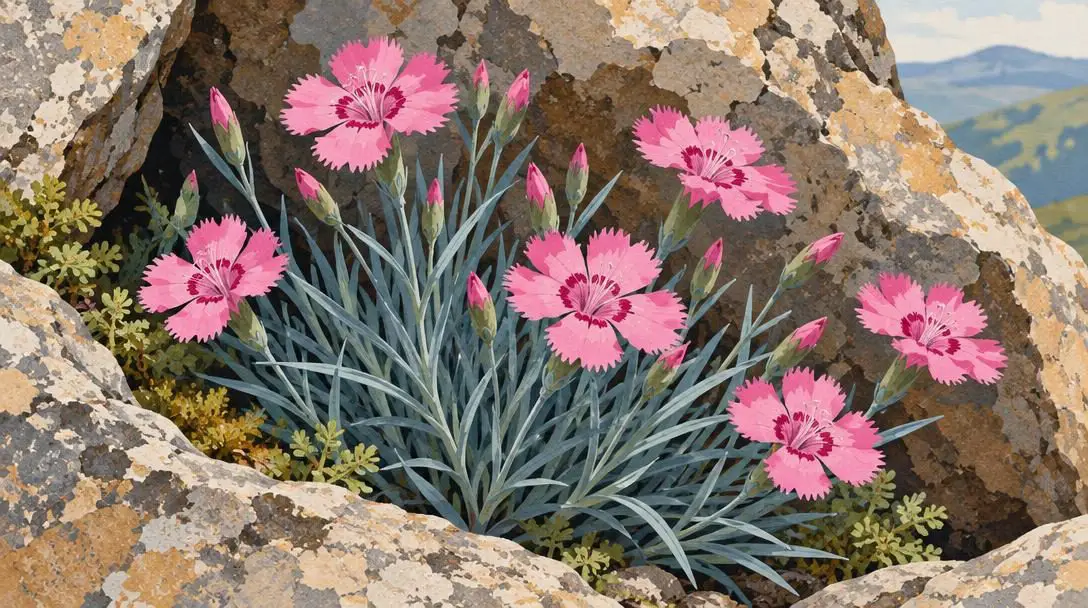
- Bloom timing: Late spring through summer
- Foliage type: Slender blue-gray blades
- Landscape value: Bridges spring and summer bloom cycles
Dianthus carries color through late spring into the heart of summer. Its compact mounds of narrow, blue-gray foliage provide subtle color harmony with slate, granite, and limestone, while its fringed petals introduce fine detail to foreground planting pockets.
Plant Choices for Shaded Rock Gardens
Not every rockery sits under baking sun. Shaded rock installations—tucked beneath mature trees or positioned on the northern side of a home—require plants that thrive in cooler temperatures and tolerate soil that holds onto moisture longer.
For low-light stone landscapes, consider these reliable selections:
- Hostas: Broad, patterned leaves create a clean contrast against small gravel mulches and sharp, jagged stones.
- Primrose: Provides early-season color in cool, damp pockets situated near the base of large boulders.
- Ferns: Delicate, feathery fronds emerge between shadowed stone fissures, introducing graceful movement and arching vertical texture.
- Forget-me-nots: Dainty blossoms self-seed gently in cool gaps, adding a soft haze of color beneath stone overhangs.
Principles of Color, Texture, and Drought Resilience
Designing an appealing rockery involves balancing plant colors and textures against the underlying stonework. Rocks provide a steady, neutral backdrop, which means plant foliage and blooms define the garden's overall feel.
Pairing cool purple or blue blooms with warm, iron-stained rocks produces crisp contrast, whereas light-colored petals stand out dramatically against dark basalt or slate. It is best to avoid scattering every imaginable hue across a single installation. Limiting your palette to two or three harmonizing or contrasting shades preserves the serene, organic appearance of a wild mountainside.
Drought-tolerant selections like gaillardia, thyme, and sage are particularly well-suited for rockeries. These resilient perennials handle sparse rainfall, save time and water, and rarely suffer from fungal decay in coarse, gravelly soils. Their tidy growth habits keep the garden looking maintained without requiring frequent pruning or shearing.
Common Rock Gardening Mistakes to Avoid
Building an alpine landscape takes patience and planning. Avoiding these common mistakes will protect your garden investment and keep your plants thriving over the long haul:
- Mismatching plant species to light exposure: Forcing sun-worshipping perennials into dark, damp pockets causes weak, spindly growth and crown rot, while exposing shade-dependent ferns or hostas to baking stone faces scorches their leaves.
- Planting tall, vigorous species: Fast-growing or upright varieties quickly swamp boulders and gravel beds, hiding the underlying stone framework that defines the rockery.
- Overcomplicating the color palette: Packing dozens of clashing bloom colors into a compact space results in visual clutter that detracts from the subtle, natural textures of stone and foliage.
- Neglecting soil drainage: Using heavy, unamended clay in planting pockets traps water against root crowns, rotting drought-adapted alpine roots during damp seasons.
- Setting stones on top of the ground: Piling rocks loosely on top of the soil without burying their bases looks unnatural and makes the bed vulnerable to erosion and shifting during heavy rains.
Frequently asked questions
Why are low-growing flowers preferred in a rock garden?
Low-growing plants keep the underlying boulders, stone veins, and gravel visible. They soften hard mineral edges without burying the rocks, preserving the rugged balance of the landscape.
How do rocks protect plant roots from extreme temperatures?
Rocks act as thermal mass. They absorb ambient solar warmth throughout the day and gradually radiate that heat back into the soil after sunset, sheltering root zones from abrupt drops in temperature.
Which flowers grow best in a shady rock garden?
Shaded rock gardens do best with species adapted to lower light and cooler, moist soil pockets. Hostas, ferns, primroses, and forget-me-nots are all reliable choices for these sheltered microclimates.
Why is gritty soil necessary for rock garden perennials?
Most rock garden and alpine plants are adapted to mountain slopes where water drains away quickly. Mixing gravel, sharp sand, or grit into topsoil aerates root zones and prevents crown rot caused by standing water.
How do I keep a rock garden colorful across multiple seasons?
Plan a staggered bloom sequence. Early spring bloomers like candytuft and aubretia start the year, dianthus carries color into summer, and sedums provide late-season blossoms along with structural winter seed heads.
The bottom line
A thriving rock garden is built on balance between living plants and permanent stone structures. By working with the microclimates created by boulders, preparing gritty, quick-draining soil, and selecting compact, drought-tolerant perennials, you can establish an enduring landscape that requires minimal maintenance while showing off dynamic color and rich texture in every season.