The Best Perennial Flowers for a Beautiful Garden Border
Creating an inviting outdoor space requires deliberate planning, and few landscape features provide as much lasting value as a perennial garden border. A border defines the boundaries of your outdoor living area, lining walkways, edging lawns, bordering fences, or accenting patios with layered foliage and vibrant blossoms. Unlike annual flowers that exhaust their life cycle in a single year and must be purchased anew each spring, perennial plants develop robust, deep root systems that endure through seasonal shifts, reemerging reliably every year with fresh growth and seasonal blooms.
Because perennials arrive in an expansive variety of growth habits, mature heights, foliage textures, and color palettes, they establish a versatile structural framework suited to nearly any landscape style. Whether your goal is a neat, structured border flanking a paved entrance or a full, relaxed cottage garden softening a backyard boundary, matching the right plants to your property's specific growing conditions is the key to lasting success. As perennials mature, their expanding root networks anchor the surrounding soil, creating an enduring living tapestry that enriches your yard year after year.
Key takeaways
- Perennials return over multiple seasons through deep, resilient root systems, avoiding the annual expense and effort of replanting.
- Arranging plants in tiered heights ensures that low, intermediate, and tall varieties receive adequate sunlight while remaining clearly visible.
- Evaluating site-specific factors such as sun exposure, soil drainage, pH, and mature plant dimensions prevents overcrowding and root loss.
- Incorporating varied flowering species supports local biodiversity by providing sustained nectar, pollen, and seeds for bees, butterflies, and birds.
The Architecture and Ecology of a Perennial Border
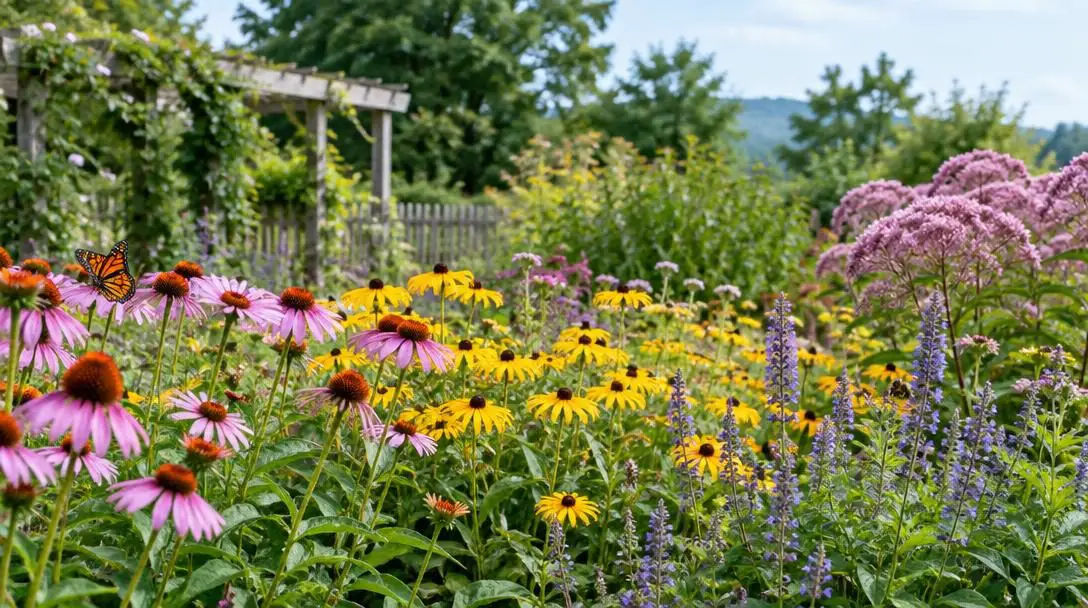
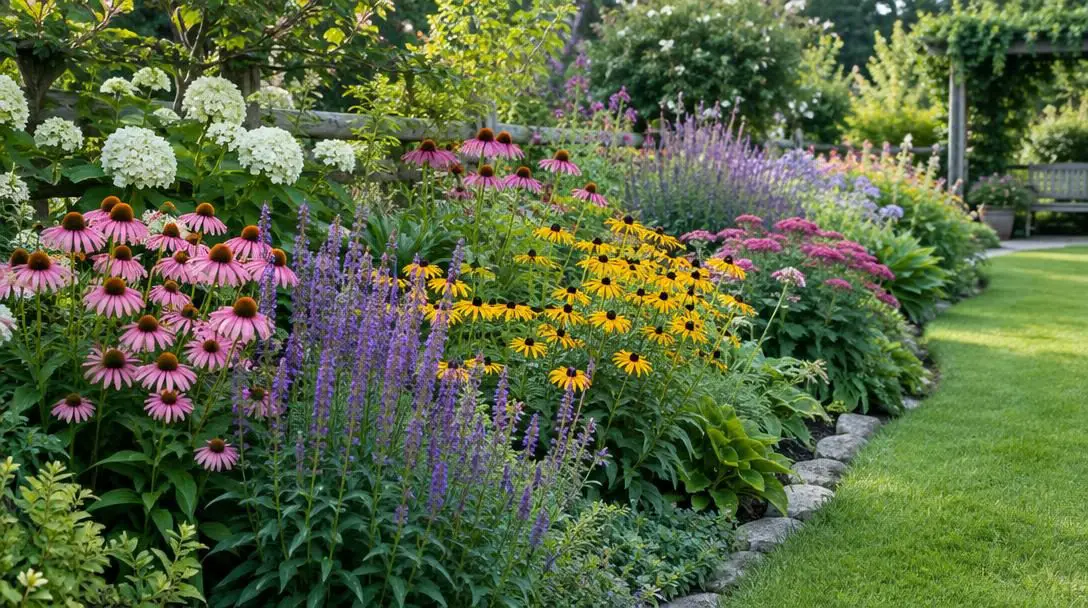
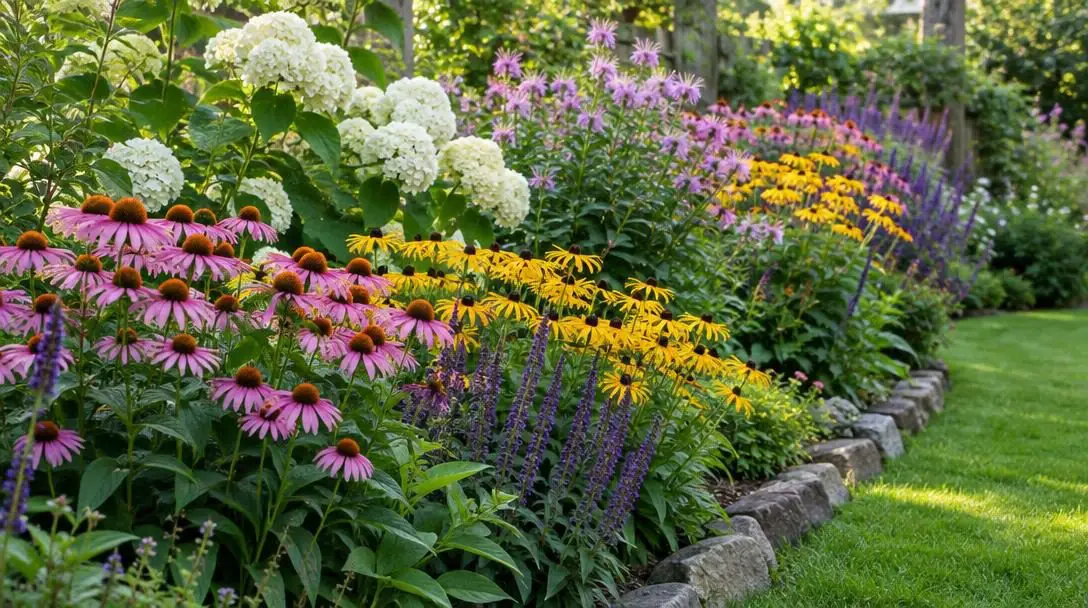
A successful garden border relies on the intentional arrangement of layered heights, contrasting textures, and harmonizing colors. In landscape design, borders are typically viewed from distinct vantage points, such as across an open expanse of turf, along a garden pathway, or from a back patio seating area. To create depth and ensure that every plant remains visible, gardeners position specimens in progressive tiers. Taller varieties anchor the rear of the bed against fences or foundation walls, intermediate growers occupy the center, and low-growing, compact plants establish a tidy perimeter along the front edge.
Beyond structural height, designing a perennial border involves orchestrating sequential bloom times. While individual perennial varieties flower during specific environmental windows, assembling plants with staggered or overlapping schedules keeps the garden dynamic from mid-summer into early autumn. As early blossoms begin to fade, later-blooming companions take center stage, maintaining continuous color across the bed rather than leaving bare expanses.
A well-designed perennial border functions as a dynamic, layered tapestry that grows stronger and more resilient with each passing season.
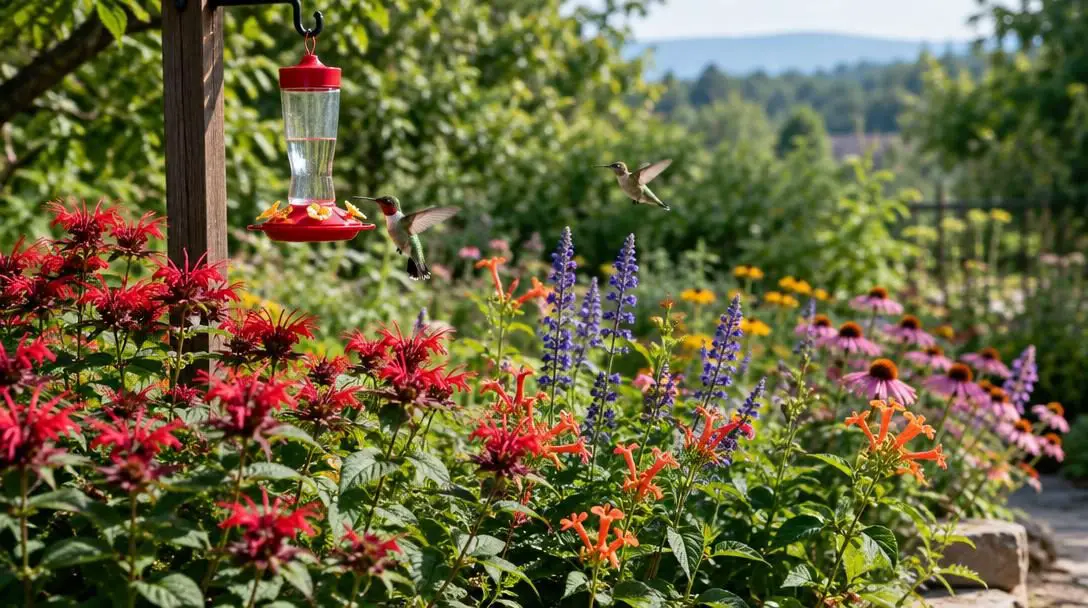
Alongside its aesthetic qualities, a perennial border functions as an active biological haven. Flowering perennials supply crucial food sources in the form of pollen and nectar. Numerous classic border varieties naturally draw beneficial pollinators like bees and butterflies, while species that develop nutrient-dense seed cones attract local birds. By assembling a diverse selection of perennial specimens, you build an interconnected environment that sustains backyard wildlife while elevating the aesthetic appeal of your home grounds.
Site Conditions to Evaluate Before Planting
Before purchasing plants from a local nursery, taking time to thoroughly inspect your planting area will prevent disappointing losses and unnecessary expenses. Matching plant species to the native environment of your yard is the most reliable way to ensure a border that thrives with minimal intervention.
- Regional climate: Climate remains the foremost consideration. Perennials possess varied tolerances for winter freezes and summer heat, making it vital to choose varieties adapted to survive the temperature ranges common to your specific geographical location.
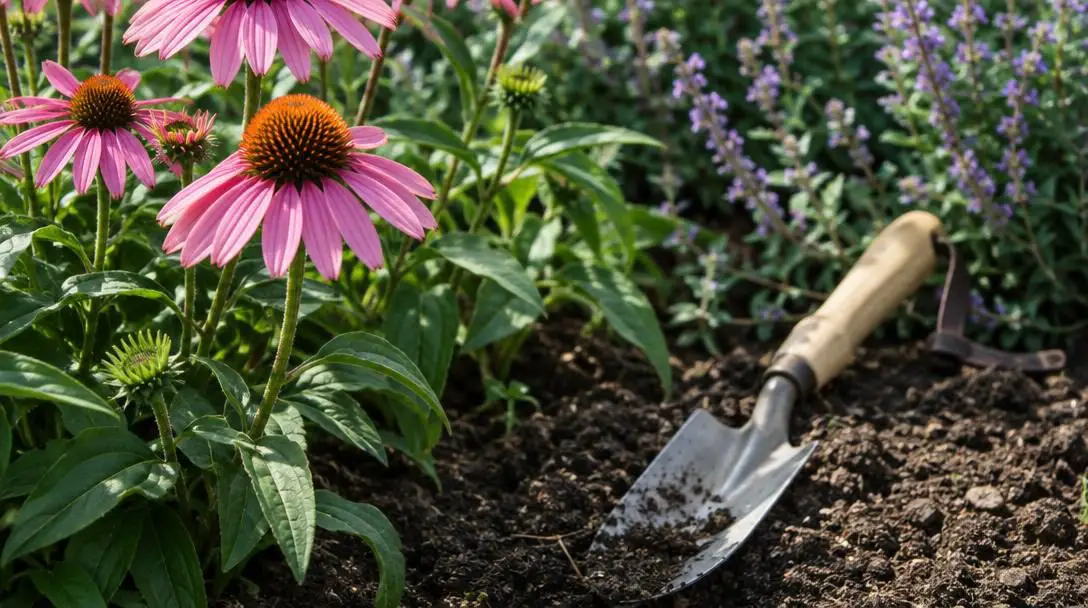
- Soil drainage and pH: Test native soil composition before breaking ground. While certain perennials favor acidic ground and others thrive in neutral or alkaline soil, nearly all border perennials demand well-drained conditions. Persistent standing water suffocates root networks and promotes destructive root rot.
- Sunlight duration: The amount of direct sunlight striking your border dictates plant vitality and flower production. Some perennials require unfiltered, full sun to support strong stems and prolific blooms, while others tolerate partial shade. Track the sun's trajectory across your bed throughout the day to assess true light levels.
- Border dimensions and plant spread: Account for the mature height and lateral spread of every plant you select. Compact starter pots can be misleading; failing to allocate adequate square footage can cause vigorous varieties to overwhelm adjacent, slower-growing plants.
- Maintenance expectations: Consider the time you can realistically commit to garden upkeep. Selecting naturally hardy, low-maintenance selections prevents your border from becoming an unmanageable burden during peak summer growing periods.
Top Perennial Flowers for Border Displays
Selecting reliable, time-tested perennials allows you to build a resilient border capable of delivering bold color, architectural interest, and wildlife support. The following comparison highlights key characteristics of top-performing varieties suitable for border arrangements.
| Plant | Mature Height | Flower Color | Sun Exposure | Wildlife Value |
|---|---|---|---|---|
| Black-Eyed Susan | Up to 3 feet | Rich yellow with brown center | Full sun | Attracts bees and butterflies |
| Purple Coneflower | 2 to 5 feet | Pink-purplish with brown center | Full sun to part shade | Attracts bees, butterflies, and birds |
| Daylily | 1 to 3 feet | Red, yellow, orange, and pink | Full sun to partial shade | Pollinator friendly |
| Russian Sage | Up to 5 feet | Bluish-purple | Full sun | Attracts bees and butterflies |
| Shasta Daisy | 2 to 3 feet | Crisp white with yellow center | Full sun | Pollinator friendly |
Black-Eyed Susan
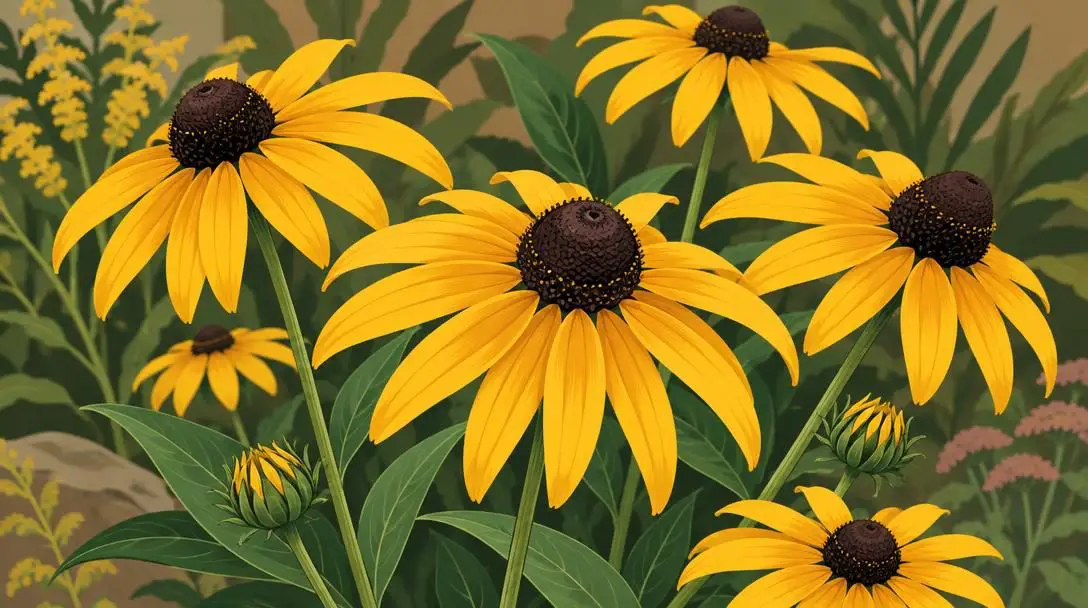
- Mature Height: Up to 3 feet
- Bloom Window: Mid-summer into early fall
- Color Profile: Yellow petals around a dark brown cone
- Wildlife Support: Butterflies and bees
The Black-eyed Susan is a quintessential border favorite recognized by its cheerful, daisy-like blossoms. With golden-yellow petals surrounding a distinctive dark brown central cone, this plant injects warm, sunny coloration into garden beds during the hottest months of the year. Reaching a mature height of up to 3 feet, it settles comfortably into the intermediate or front sections of a planting bed. Its sustained blooming window extends from mid-summer straight into early autumn, supplying a steady source of nectar that regularly draws visits from local bees and butterflies.
Purple Coneflower
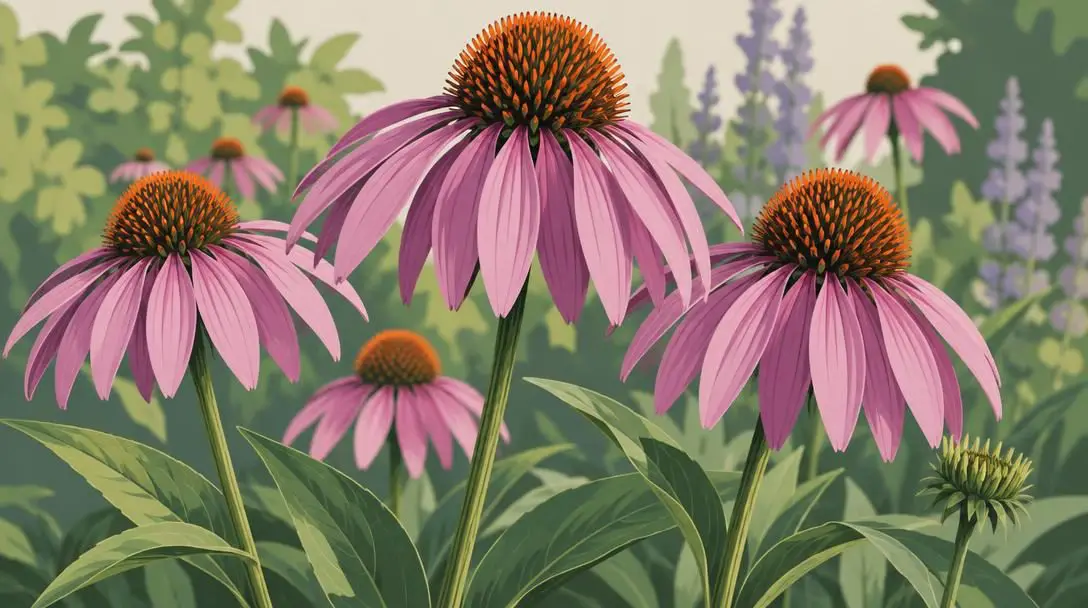
- Mature Height: 2 to 5 feet
- Light Needs: Full sun to part shade
- Color Profile: Drooping pink-purplish petals with brown cone
- Wildlife Support: Bees, birds, and butterflies
Gardeners seeking high visual impact paired with dependable hardiness frequently turn to the purple coneflower. This rugged perennial displays unique pink-purplish petals that droop gracefully away from a prominent, raised brown central cone. Capable of growing anywhere from 2 to 5 feet tall, coneflowers serve equally well as mid-border anchors or structural backdrops in modest beds. They adapt smoothly to full sun or partial shade conditions and provide exceptional ecological value, sustaining bees and butterflies through summer and offering nourishing seeds to visiting birds later in the season.
Daylily
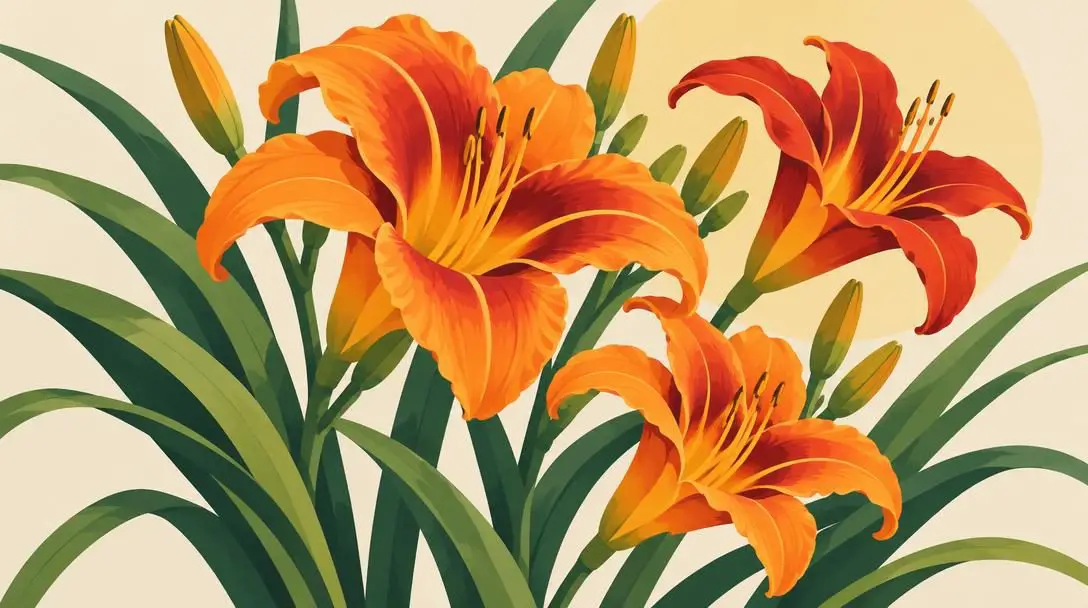
- Mature Height: 1 to 3 feet
- Bloom Window: All summer long
- Color Spectrum: Red, yellow, orange, and pink varieties
- Light Needs: Full sun to partial shade
Renowned for an exceptionally forgiving nature, the daylily is a versatile workhorse in perennial borders. These plants produce graceful, trumpet-shaped flowers in a vast spectrum of warm hues, including shades of orange, yellow, pink, and deep red. Reaching heights between 1 and 3 feet, daylilies are ideally suited for the front and central zones of a border layout. Their notable capacity to produce blooms continuously throughout the entire summer provides dependable color continuity, and their resilience allows them to prosper across varying exposures from full sun to partial shade.
Russian Sage
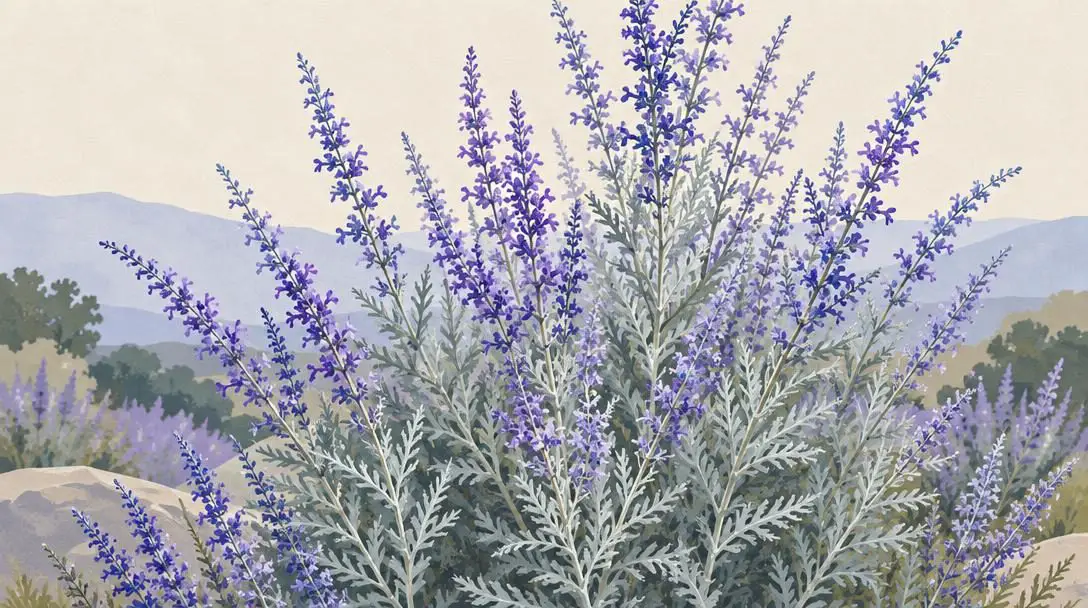
- Mature Height: Up to 5 feet
- Foliage & Flower: Fine foliage with bluish-purple blooms
- Light Needs: Full sun
- Wildlife Support: Bees and butterflies
For gardeners looking to add height, soft movement, and airy texture to the rear of a border, Russian Sage is an exemplary selection. This plant features finely cut, aromatic foliage capped by hazy plumes of miniature bluish-purple blooms. Reaching up to 5 feet in height, it creates an elegant, textured backdrop that accentuates the bold forms of shorter foreground companions. Russian Sage thrives in planting sites that supply full sun and loose, well-drained soil, and its cloud-like flower spikes act as a powerful magnet for foraging bees and butterflies.
Shasta Daisy
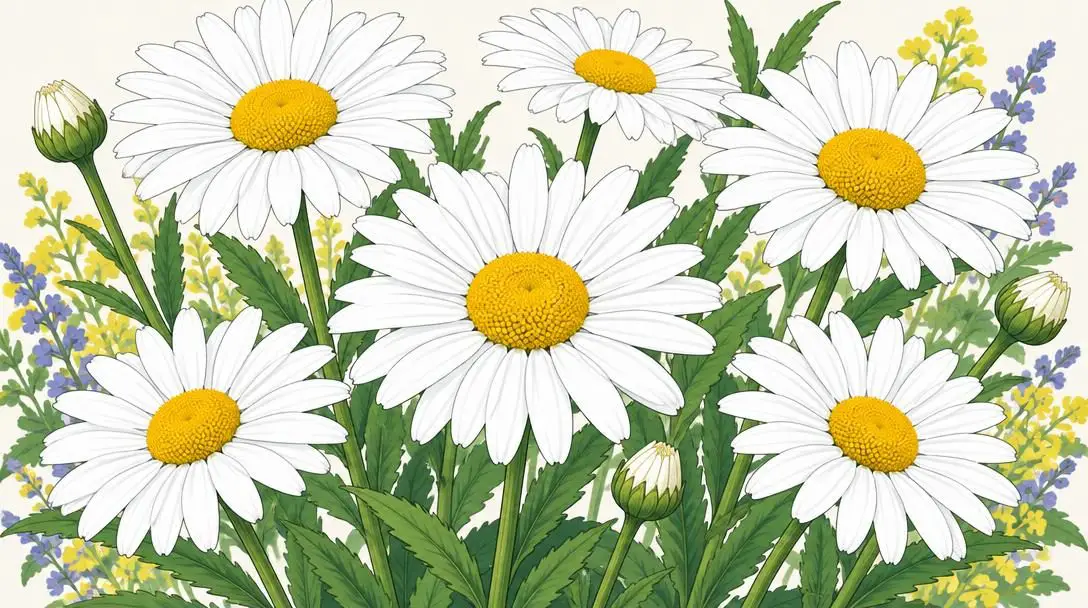
- Mature Height: 2 to 3 feet
- Color Profile: Pure white petals with sunny yellow centers
- Garden Style: Cottage, contemporary, and formal borders
- Care Level: Low maintenance
The Shasta daisy brings a timeless, refreshing presence to landscape borders. Featuring pristine white petals radiating from bright yellow button centers, this classic bloom offers crisp visual contrast against deep green foliage and surrounding saturated flower colors. Growing to an intermediate height between 2 and 3 feet, it balances front-row groundcovers and towering background perennials. Shasta daisies integrate seamlessly into informal cottage-style layouts as well as neat, formal garden borders, demanding very little maintenance while returning year after year with clean, bright blossoms.
Step-by-Step Planting and Care Routine
Proper soil preparation and sound planting practices provide your perennial border with the foundation needed for sustained vigor. Executing these practical steps during installation ensures your plants transition smoothly into their new environment.
- Prepare the planting bed thoroughly: Loosen the native soil across the entire border footprint down to root depth. Breaking up compacted ground gives tender root tips ample room to branch outwards, while ensuring excess moisture can drain freely away from the plant crowns.
- Time your planting appropriately: Install your perennial selections during the milder temperatures of early spring or early fall. Planting within these temperate windows allows root systems to anchor deeply into the soil before the onset of scorching summer heat or hard winter frosts.
- Position plants by mature dimensions: Space each potted perennial according to its expected mature height and lateral spread, placing taller backdrops like Russian Sage behind mid-sized coneflowers and daylilies.
- Apply a protective layer of mulch: Distribute a uniform 2- to 3-inch layer of organic mulch across the exposed soil around the plants. Mulch conserves moisture in the upper soil layers during warm weather and suppresses competing weed seeds.
- Establish a regular watering schedule: Provide consistent, thorough moisture while new plantings develop their root infrastructure. Steady irrigation is particularly vital during extended stretches of dry, hot weather when upper topsoil dries out rapidly.
- Prune and fertilize for vitality: Apply balanced fertilizer to supply necessary nutrients for ongoing foliage and bloom development. Regularly prune away spent flower heads and declining stems to preserve a tidy border appearance and stimulate fresh growth.
Mistakes to Avoid in Perennial Borders
Even hardy perennial flowers can struggle if basic cultural requirements are neglected during bed creation or maintenance. Avoiding these widespread mistakes will keep your border vibrant and structurally sound across the seasons.
- Overlooking drainage requirements: Setting perennials in low depressions where rainwater pools leads to oxygen starvation around roots. Always ensure the planting site drains efficiently after heavy downpours.
- Mismatched sun exposure: Locating sun-loving varieties in shaded conditions produces weak, sprawling stems and few blooms, while placing shade-tolerant varieties under harsh midday sun leads to foliage scorch.
- Installing plants out of season: Digging and planting during mid-summer heatwaves places extreme water stress on unestablished roots, while planting too late in autumn exposes vulnerable crowns to immediate freeze damage.
- Crowding mature dimensions: Packing young plants tightly together to create an instantly dense look frequently results in poor air circulation, fungal vulnerabilities, and aggressive species outcompeting smaller neighbors within two seasons.
- Improper mulch management: Leaving soil completely unmulched encourages rapid moisture evaporation and weed growth, whereas piling mulch deep against plant stems traps excess dampness that invites stem rot. Maintain a steady depth of 2 to 3 inches away from the plant bases.
- Neglecting seasonal pruning: Leaving dead blooms and tattered foliage unchecked throughout the summer makes the border look neglected and wastes plant energy that could otherwise support root strength.
Planning Future Expansion and Refinement
After completing the first growing season with your new perennial border, take time to evaluate its development. Document how the color relationships between your Black-eyed Susans, coneflowers, daylilies, Russian Sage, and Shasta daisies evolved from early summer into autumn. Identify any seasonal windows where few blossoms were active, noting spots where intermediate bloomers could fill the gap.
As the border enters its second and third years, perennials naturally expand into wider clumps. Tracking which varieties grow most vigorously allows you to divide dense root clusters when necessary and replant them elsewhere. You can also evaluate moisture patterns across the bed during atypical weather, refining your watering habits accordingly. Finally, look for opportunities to repeat successful plant combinations along walkways or surrounding garden beds to create a unified, harmonious design across your entire landscape.
Frequently asked questions
What is the difference between perennial and annual flowers?
Perennial flowers live for multiple seasons, establishing deep root networks that allow them to survive winter dormant periods and return each year. Annuals complete their entire life cycle—from germination to flowering and seed production—in a single growing season and must be replanted every spring.
When is the best time of year to plant a perennial border?
The optimal times to install a perennial border are early spring or early fall. During these cooler transitional seasons, root systems can settle securely into the soil without enduring the intense stress of mid-summer heat or frozen ground.
How deep should mulch be applied around perennial border plants?
Apply mulch to a consistent depth of 2 to 3 inches across the soil surface. This depth effectively prevents weed seeds from sprouting and insulates the soil to retain moisture without smothering plant crowns.
Which perennial flowers are best for attracting pollinators to a border?
Black-eyed Susans, purple coneflowers, and Russian Sage are particularly effective at attracting bees and butterflies. Purple coneflowers also produce seed heads that provide food for birds later in the season.
How should different perennial heights be arranged in a border?
Organize perennials in progressive tiers: place taller plants, such as Russian Sage or taller coneflowers (up to 5 feet), at the back; position intermediate plants like Shasta daisies and daylilies in the center; and reserve the front edge for compact, shorter varieties.
The bottom line
Building an eye-catching perennial border is one of the most rewarding investments you can make in your home's landscape. By understanding your yard's unique environmental conditions—from sunlight patterns and soil drainage to mature plant sizes—you can assemble a thriving collection of Black-eyed Susans, purple coneflowers, daylilies, Russian Sage, and Shasta daisies. Arranged in layered tiers and maintained with proper watering, mulching, and pruning, these resilient perennials will continue to deliver color, structure, and wildlife value year after year.